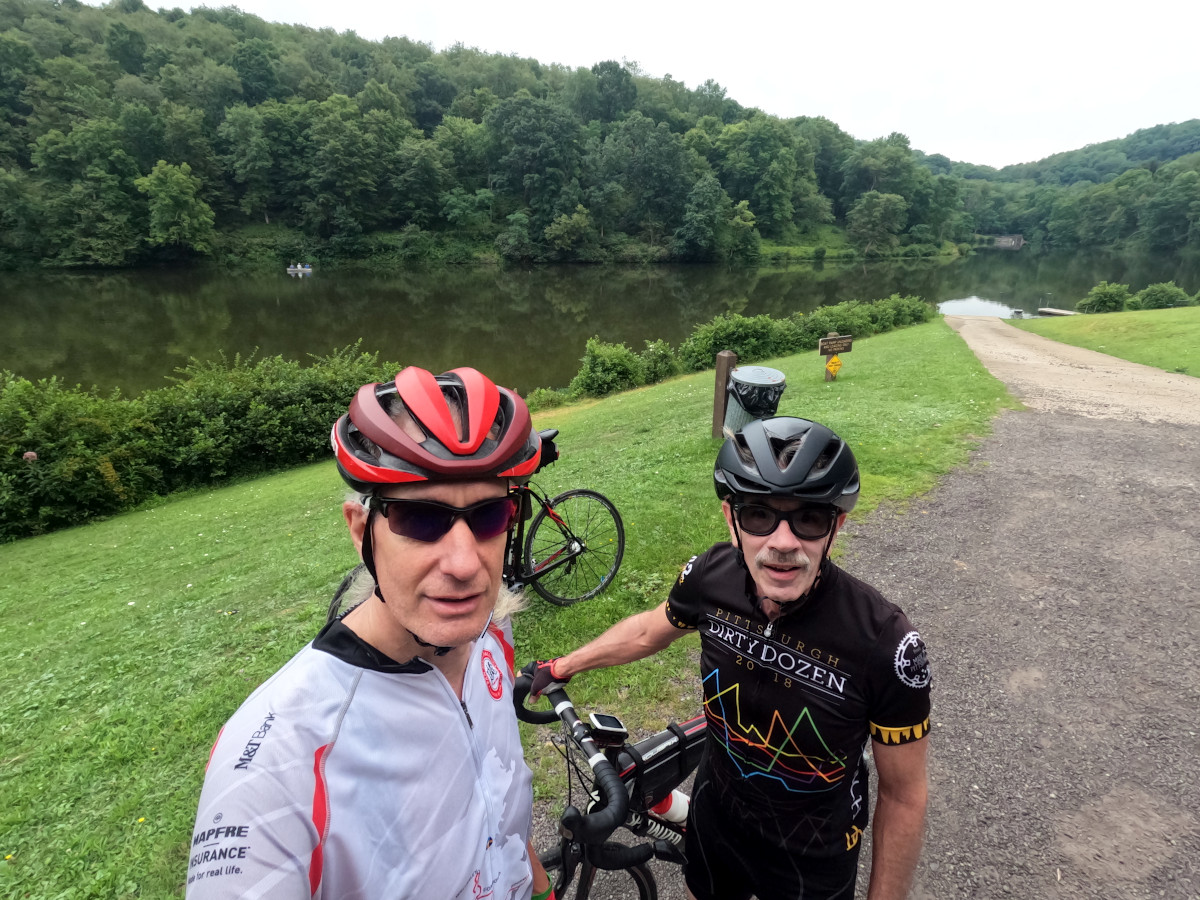
Back on September 10th, I completed the 100-mile Livestrong Challenge Austin ride and raised $875 for the Livestrong Foundation.

Rather than give you the usual chronological ride report, I’m gonna organize this mostly by themes, in hopes that it will be both more effective and readable. Are you with me here? Let’s start with the elephant in the peloton

The Decision

My decision to participate will surprise those of you who know my feelings about Lance Armstrong, the Livestrong Foundation’s disgraced founder. I don’t ever want to contribute in any way to the fame or fortune he has amassed from lying to the public and terrorizing the people around him.

So what convinced me to do the Livestrong ride? Here are the factors that went into my choice:

  • Lance has left the organization and is no longer involved in any official way. After suffering due to their association, Livestrong have wisely distanced themselves from him, although he remains their largest financial backer.
  • There are surprisingly few century rides here in Austin, and it’s been a long eleven months since my last one (back in Pittsburgh).
  • I hate cancer even more than I hate Lance, and Livestrong does admirable work for cancer survivors.
  • I have two friends who are Livestrong bigwigs, and their vocal support of the foundation earns it a degree of approval. My childhood friend Scott is on their Board of Directors and is a survivor of testicular cancer; and Steven, the leader of the Pan-Mass Challenge’s popular Team Kermit, is a Livestrong Ambassador (i.e. a distinguished volunteer).
  • Along with Steven, several other PMC friends from Boston come down to Austin for the Livestrong ride.

So while I hate the idea of being associated with Lance Armstrong, I don’t think it’s unreasonable for me to take part in this ride. But I took perverse pride in wearing my 2011 PMC jersey during the event.

Poor Training and Lead-Up

Ornoth with Scott & MJ

Ornoth with Scott & MJ

Scott, Ornoth, & Steven before the start

Scott, Ornoth, & Steven before the start

Ornoth lined up in the VIP starting area

Ornoth lined up in the VIP starting area

MJ & Scott, Steven & Ornoth ready for the start

MJ & Scott, Steven & Ornoth ready for the start

Ornoth rolling out with Team Kermit

Ornoth rolling out with Team Kermit

Rolling through the ranchland in Driftwood

Rolling through the ranchland in Driftwood

Scenic level crossing on the Blanco River

Scenic level crossing on the Blanco River

ClimbPro showing Fulton Ranch hill

ClimbPro showing Fulton Ranch hill

Team Kermit's Ornoth, Christophe, and Steve after conquering Fulton Ranch hill

Team Kermit's Ornoth, Christophe, and Steve after conquering Fulton Ranch hill

Real-Time Stamina, estimating 21% or 17km remaining before bonking

Real-Time Stamina, estimating 21% or 17km remaining before bonking

Ornoth dragging himself toward the finish

Ornoth dragging himself toward the finish

Ornoth crossing the finish line

Ornoth crossing the finish line

And having finished, collapsing

And having finished, collapsing

Not looking good post vomiting after the finish

Not looking good post vomiting after the finish

Solar power gain, showing 71 minutes gained over a 9-hour ride

Solar power gain, showing 71 minutes gained over a 9-hour ride

May, June, and July were filled with short rides focused on becoming Local Legend on the Ladera Norte hill. So I didn’t begin training for distance until August. And August’s training was cut short after badly throwing my back out. Right when my training should have been peaking, I was off the bike for ten days, while the small training effect I’d gained atrophied away.

Four days before the event, I was just getting back onto the bike when Team Kermit members started assembling in Austin. They were looking to meet up and ride every day, right when I would normally be tapering my training in order to be well-rested for the event.

Instead, on Thursday before the (Sunday) event, local Austin Kermit member Scott led a group of five of us up the Walnut Creek Trail, then back to 51th Street for lunch at Jewboy Burgers. Then on Friday I led a sightseeing ride up the Shoal Creek bikeway and back down Scenic Drive. We finished at event packet pickup, where I received a Livestrong Challenge cycling jersey and VIP rider bib tag #28.

I took Saturday off while the Kermiteers spent the day doing another long ride down to the Veloway park. I’d ridden 150 km in two days and was suffering for it. My back was still iffy, my ass was abraded, and my legs were too tired to tackle a hundred-mile ride without rest. At the same time, I hadn’t eaten or slept well, was already dehydrated, and down 1.8 kilos of body weight in a week. For the first time, my final ride prep included zip-tying a stuffed Kermit doll to my helmet, complete with white cowboy hat and rodeo bull-riding pose.

Quick Ride Summary

My Strava activity’s description summed my Livestrong Challenge up best: it was very good until it wasn’t.

After about five hours of sleep, I got up at 4:30am and set out in darkness at 5:45 on the 15 km ride downtown. I rode with Team Kermit from their hotel to the start, where we lined up in the VIP section before being set loose on the streets of Austin at 7:30am.

At the tail end of a brutally hot summer, the ride began under pleasant temperatures that warmed considerably, but not to the extremes that we’ve lived under for the past three months. South from Austin to Buda, then west and south through Driftwood.

Enjoying the freedom of having two water bottles rather than one, I skipped the first three rest stops out of a desire to stay ahead of the pack and beat the time limits for the 100-mile route, which the organizers had shortened by 30 minutes. So my first break came two hours in, after 57 km, (or 72 km if you include my 15 km commute to the start). As you might guess by such a long stretch without a break, I had been feeling good thus far.

I refilled my bottles and marshaled some strength for the long, steep hill at the end of the next segment. I enjoyed the pleasant tree-lined streets near Wimberley, and a stunning level crossing of the Blanco River. Then came the 15% grade climb up Fulton Ranch hill, which is essentially the halfway point of the course. It was quite manageable for a cyclist used to the much lumpier terrain back in Pittsburgh. At the top, a water stop beckoned; I pulled in at 10:30am, having taken three hours to knock out 77 km (or 92 km).

While resting here, Team Kermit members Christophe and Steve rolled in, and we would leapfrog each other for the rest of the 110 km trek back to Austin. But this would be the point when things slowly started going to hell. The temps climbed through the 30s, and I was feeling the effort in my feet, legs, lower back, traps, and hands.

As my reserves dwindled, my speed and power dropped, and my horizon shrank to simply reaching the next rest stop. I hadn’t eaten any solid food during the whole ride, and was pounding fluid in an attempt to address both heat and thirst. Extended 15-minute rest stops and hand towels soaked in ice water were just enough to keep me from blowing up.

I stopped twice to battle fatigue and nausea during the last segment to the finish, but completed the final loop around Auditorium Shores. The event photographers captured my grim visage as I crossed the finish line at 3:07pm. I’d completed the official 158 km official course in 7h 37m, but had fulfilled my 108th imperial century by riding 15 extra km to the start.

I collapsed in exhaustion underneath the Team Kermit tent and waved off others’ attempts at congratulations, accepting only a folding chair and an ice-water towel. And then came that feeling we’re all familiar with: a particular certainty that it’s time to find a convenient but discreet place to deposit some biological material. So I staggered nonchalantly over to a nearby trash can and retched about three gallons of undigested fluid that I’d carried with me over the preceding few dozen kilometers.

So my Livestrong Challenge ended successfully but ignobly. I managed to recuperate enough to stand for a team picture before I said goodbye, then met up with my partner Inna, who mercifully drove me those extra 15 km back home.

My First Century in Eleven Months

This was my first 100-mile ride since October 2022. Eleven months is a long layoff; I haven’t gone that long between centuries in fifteen years (since 2007-2008)! You ask me how it went? Go back and read the summary: it was very good until it wasn’t.

Mistakes were made. Looking back on it, nearly all of them were about my personal physical fitness and decisionmaking, not my equipment or the location or the event. So I guess that would be the logical place to start…

My Fitness and Decisionmaking

A century always demands a lot of stamina and will power from me, but this was an exceptional case. Despite being one of the first dozen riders out of the gate, then skipping three rest stops, I only marginally beat the last finishers on the course.

I could blame the Texas heat, but even at 37°C (98°C) it was mercifully moderate in comparison to the seventy days above 38°C (100°F) that Austin experienced over the summer.

Or I could blame my age. After all, I’m only weeks away from my sixtieth birthday, and that’s the kind of thing that can slow a guy down.

While those are valid considerations, there was a whole panoply of other factors that impaired my performance, leaving me with weak legs and zero stamina toward the end of the ride.

Despite not doing any long rides in nearly a year, I barely did any lengthy training rides prior to the event. I went into it fatigued and dehydrated from too little sleep and too much riding just before the event. I was insufficiently fueled due to an irregular eating schedule and not eating any solid food during the ride. And I still had lingering injuries to my lower back and my backside (the latter attributable to insufficient time in the saddle).

But the biggest wildcard was hydration. Consuming two bottles over the first five segments of my ride – especially since the first segment was a casual commute – doesn’t seem like an especially egregious error. But it set me up poorly for the second half of the ride, where my perceptions of thirst and heat were clearly malfunctioning, causing me to take in more fluid than I could digest. This is the biggest thing I’ll have to monitor on future long rides.

There were lots of physical niggles along the road, of course. Early on, I had to make a quick roadside stop to flush some stinging sunblock out of my eyes. In my cycling sandals, some pain developed in my big toes, but I got away without a repeat of the abrasions I’d gotten on top of my feet a couple weeks earlier.

And I’d expected pain in my hands due to a slight change in my position on the new bike. I did have some discomfort, but not the severe palsy that I’d feared. It would be prudent to address this soon by buying new cycling gloves and plush handlebar tape.

The New Bike

Like its owner’s ride, my new Specialized Æthos was very good until it wasn’t.

It looked like Pæthos came through its first century in flying colors, to the extent that I had very little to say about it, other than that it suited me well and earned my full confidence.

Two weeks before the event, I’d gotten a flat on a pair of brand new tires. That got me so worried about the rough chipseal of Texas back roads that I’d carried two spare inner tubes, in addition to a pump, a CO2 dispenser, and a Shrader-to-Presta adapter in case I needed an automotive air compressor. That was all overkill; Pæthos appeared to handle everything that was thrown at it.

Just before the ride, I’d also converted from one water bottle cage to two, which was a big win. That gives me the flexibility to ride farther unsupported or without stopping (e.g. skipping three water stops). But it also gave me the option of carrying both sport drink for hydration and clear water to pour over my head and body when the heat was at its worst. And I did lots of that on the Livestrong ride!

But those Texas roads did get me in the end. After I got home, I noticed a break in the carbon rim of my rear wheel, which most likely happened due to a rock strike somewhere along the Livestrong route. I took it in to Specialized to see if it was rideable or a case for a warranty replacement, and they chose to replace the rim. Pretty ridiculous that my first set of carbon wheels lasted a mere 4,000 km.

The New GPS Bike Computer

This was also the first century-length test for the Garmin Edge 840 Solar that I picked up last month, which delighted me in nearly every way. On top of flawlessly handling mapping and turn-by-turn navigation, it now sports graphical data fields (e.g. power and heart rate charts), and the new ClimbPro feature, which tracks your location on an elevation profile of the current climb.

While cool, I had already tested that stuff; I was more eager to try out some other features that could only be done on a century-length ride. After all, I couldn’t finish my full review until I’ve put it through all my typical use cases.

Top of the list was battery life. The battery on my old Edge 820 had deteriorated to the point where I had to plug it into a portable USB battery for any rides longer than 90 minutes. The new unit claimed 26 to 32 hours, and I finished my 10-hour day with a whopping 72% charge remaining. I think I can finally leave my USB charger at home for good!

Of course, that includes the benefit I derived from the unit’s solar charging feature, which in Texas is a painless way to give the battery slight boost. Over 9h 15m the unit gained about 72 minutes worth of solar power, or about 8 minutes per hour. Not revolutionary, but not trivial either!

The other major feature I wanted to test was Garmin’s new “real-time stamina” estimate, which supposedly learns your physiology and provides a real-time guess about how long you can go until exhaustion. At my first rest stop, it estimated that I had 55% stamina remaining, and – ominously – that my reserves would run out 40 km before the end. I monitored that number all afternoon as it fluctuated, but it consistently told me that I’d have nothing left in the tank for the last 25-35 km of the ride, which is exactly how things played out. It was surprisingly accurate, given the variables that it didn’t know about, like fueling and hydration.

One feature came as a complete surprise to me. When Kermit team leader Steven texted us to ask where we were on the course, I deliriously scrolled down through the usual canned, stock responses for something appropriate as I continued pedaling. At the bottom of the list was something my old unit had lacked: the ability to actually type a freehand text response right there on the head unit! So I was able to pound out a response that truly captured my feelings in the moment. In response to his “How far out are you??”, I answered “Lifetimes”.

The only glitch I had was a minor one. I’ve always had an alert set to pop up when I reached the 100 mile threshold, but it never showed up on the new computer. I’ll have to re-test that, the next time I get the opportunity to pound out a hundred-mile ride.

My Friend Scott

As I mentioned above, my childhood friend Scott is on the Livestrong Board of Directors and is a survivor of testicular cancer.

Our friendship goes back fifty years to 1972: 3rd grade back in Maine, Cub Scouts, then French and several other classes through middle and high school. After going separate ways for college, 25 years later we rediscovered each other and our common commitment to cycling to combat cancer. In 2008 he rode the Pan-Mass Challenge, so it seemed appropriate for me to take part in his preferred event, especially since I’m now based in Austin.

I ran into him and his partner MJ outside the hotel as we were both heading to the start, and got to chat with them a little more just before we lined up for the depart. It was the first time I’d seen him in ten years, and it was wonderful to touch base, although it was much briefer than it deserved… Hopefully another time.

Steven and Team Kermit

My friend Steven is both a Livestrong Ambassador and the captain of the Pan-Mass Challenge’s very popular Team Kermit, founded in honor of – and continuing in memory of – his son Jared. I have several connections in the group and have ridden alongside numerous Team Kermit riders in the PMC all the way back to their founding in 2005. Most recently, I’ve nurtured friendships with several Kermiteers by riding with them virtually on the weekly PMC Zwift indoor trainer rides.

While I’ve never ridden the PMC as part of a team, I thought it would be fun to bolster Team Kermit’s numbers on the Livestrong ride, so I registered as an official team member. The days preceding the ride were spent tagging along – and even leading – some fun local sightseeing rides for our traveling visitors. Taking charge was local Austinite and Team Kermit member Scott.

Riders Christophe and Steve I only knew from the Zwift group rides, so it was nice to put names with their faces. They rode with me for the second half of the century route, and their companionship was absolutely invaluable.

I’m very much a lone wolf, so there were several times when I felt awkward as a member of a team, especially a team who decorates our helmets with large, stuffed Kermit toy dolls, which gets a ton of attention and comments! But they’re truly good people, and I was happy to be allowed to represent them.

Riding in Texas

This was my first century-length ride in the Lone Star State, which I view as a milestone, since it’s such a vastly different environment from my familiar riding in the Northeast.

My top concern was the Texas heat, especially after months of temperatures hovering at or above 40°C. Riding in that kind of heat is seriously dangerous, and I wanted to be sure my first long ride offered the kind of generous support you get on large charity rides. Wisely, most centuries down here take place in the spring and fall, and we were lucky that event day hovered just below 40°C. But temperature concerns will always be present for every ride I do down here.

My second concern was the roads, not knowing quite what to expect in terms of traffic, surface quality, and space to ride. In the end, those things all vary. There were trafficky bits and quiet bits; there was smooth tarmac and ample rough chipseal; broad roads with dedicated bike lanes and narrow, single-lane roads without even a shoulder. Finding quiet, comfortable roads for long, solo rides is just going to require some investigation.

Once outside of the city and its immediate suburbs, the terrain was mostly what I’ll call scrubland. Plots of large ranches with low, hardy, weatherbeaten vegetation like juniper (which Texans call “cedar”) and live oak. There aren’t a ton of rivers and creeks – and those are nearly all dry after the summer’s heatwave – where you often see dramatic exposed limestone. It has a lot of character, without being entirely desert or prairie. The Blanco River crossing was really interesting, and I even shared the road with a roadrunner while climbing out of it.

At a macro level, riding in Texas is going to take some adjustment, but it should be amply doable, with careful scouting and route selection, and more experience managing my hydration.

Livestrong: the Event

This was also my first Livestrong ride. How was that?

The route was mostly fine. My only complaint was is that because the start/finish is downtown, a large percentage of the ride was urban and suburban strip mall hell, leaving less than a third of the route for scenic rural country roads. The entire second half of the ride paralleled ugly Interstate 35 on the run back to Austin. But the scenic bits we did get were thoroughly pleasant.

Ride support was generally great, with no less than nine water stops spaced about 16 km apart, well-stocked with ample ice and wet towels, although no cola was available until the end.

As a rider, the cutoff times for the century route were not especially generous, particularly after they were shortened an extra 30 minutes. Fortunately they weren’t an issue for me, though.

The fundraising minimum (ZERO!) was surprisingly welcoming, with premiums offered at varying – and entirely voluntary – fundraising thresholds. By raising $875, I earned an on-course tribute sign, a tote bag, a tee shirt, a cheap mini Bluetooth speaker, the ubiquitous water bottle, an event cycling jersey, and a finisher’s medal, plus the right to line up in the VIP section at the head of the ride. That’s a much friendlier model when compared to the PMC’s $2,000 to $6,000 fundraising requirement just to participate!

Unlike the PMC, where thousands of spectators — often former patients and their families – line the entire route and thank you for riding, community support was mostly non-existent on the Livestrong ride. Other than the crowd at the start/finish, a few bystanders waving from nearby bus stops, and water stop volunteers, during the entire ride I only encountered one couple sitting at the side of the road in the middle of nowhere, cheering their hearts out. The two events couldn’t be more different in that respect.

It all adds up to a mixed picture: a well-run and rider-friendly event for an organization that has wisely distanced itself from its shameful founder, and which Scott and Steven have convinced me does admirable work helping cancer patients and their families. And even if it’s no Pan-Mass Challenge or Dana-Farber Cancer Institute, I’m very likely to participate again in the future, for the same reasons I outlined above.

Epilogue

So there you have it; it was a landmark ride. To encapsulate, it was:

  • My first Livestrong ride
  • My first imperial century in 11 months
  • My first century of 2023
  • My first century in Texas
  • My first century on Pæthos, my new bike
  • My first century with my new Garmin bike GPS
  • My first event as an official member of Team Kermit (or any team, for that matter)

While this century included a grim struggle and an ignoble footnote, I hold to my words that it was very good until it wasn’t. Troubles aside, I completed the course safely and enjoyed the overwhelming majority of it, and gained lots of lessons to bring forward for future rides. I enjoyed it immensely and am glad to have done it.

I wouldn’t normally post a ride report for a mere 100k (62-mile) ride, but there are reasons why I’d like to share my experience of my first Fire Ant Tour.

Big sky fulla giant Ornoths!

Big sky fulla giant Ornoths!

Riding straight past the first rest stop

Riding straight past the first rest stop

Rolling into the second rest stop

Rolling into the second rest stop

... and limping over the finish line

... and limping over the finish line

To begin with, I haven’t found many (imperial) century-length rides around Austin, which means very little to talk about. I’m hoping to get one or two under my belt soon, but this is summer in Texas: not the smartest time to undertake my first century in a while. So I might not have any century-length ride reports to post until fall.

On top of that, my last outdoor ride of more than 80 KM (half a century) was back in October, so it’s already been eight months since I posted my last ride report. So the Fire Ant Tour was a test of my physical readiness for a long ride after such a long hiatus.

In the same spirit of testing things, this was a ride full of important firsts. It was a chance to try my first major event on the new bike: Pæthos. It was my first major event in Texas after our move down here in January. It was also my first ride out in the rural Texas countryside, well outside of the proverbial “Austin city limits”. And it was my first long ride facing the extreme heat of summer in Texas, coming just eleven days before the summer solstice.

I didn’t maximize my physical preparation. I was pretty casual about my fitness level in the weeks leading up to the event, and I didn’t bother tapering my riding just beforehand. I wasn’t feeling particularly strong, but I figured I was ready enough for a little 100k.

In short: this ride was going to be a big test of several factors, and I was very interested in learning from how it went.

So with Inna away visiting family back in Pittsburgh, I hopped in the car at 5:30am – after waking up at 2:30am due to a thunderstorm – and drove 90 minutes north toward Waco and rural Gatesville TX. Although there was still lightning when I left Austin, the sky had cleared by the time I checked in and got the bike ready for the 8am start. Over 325 riders set off in very pleasant 24° morning sunshine.

We rolled along, mostly north and east, often topping 40-50 km/h and averaging over 30 km/h, knocking off the first two of the route’s four small 50-meter hills. There were almost no cars on the roads, and the landscape surprisingly reminded me of the very open, flat-to-rolling farmland in Ohio. At this point, it was really delightful.

It was when we turned back west to complete our first, clockwise 20 KM loop that we learned how much of a tailwind we’d enjoyed on the outbound leg: about 18 km/h gusting to 26. Despite putting much more effort into overcoming the headwind, I was going slower, and that variation in power and speed would continue all day, depending on which direction we were going.

After a tedious westward slog, the route continued with a larger 55 KM loop, counter-clockwise, with the wind cutting my average speed to a painful 18 km/h on the westward portion. That loop ended with a 3 KM section of rough gravel that stung my hands, followed by the last of the climbs on the route.

After that challenging segment, I took some extra time at the last rest stop to douse myself with water and rest my legs. It was now the heat of the day, and the former cooling wind had become hot. I wish I could quantify that, but after a forecast high of 36°, on the ground readings ranged from 31° on one feed, to 35° from the National Weather Service’s intermittent rural monitor, to 40° recorded by my GPS. After having increased my sport drink intake, my stomach was bloated and queasy, my feet were hurting, and my power numbers were flagging.

The last segment was short and partially downhill, and I rolled across the finish shortly after 1pm, having taken 5 hours to cover 107 KM, with just 750 meters of climbing. I certainly didn’t finish strong, but picked up my finisher’s medal, doused myself with water, and packed up. I gratefully jumped in the air conditioned car and drove straight home, my stomach wanting no part of post-ride hot dogs, drinks, or ice cream.

Despite the discouraging finish, I really enjoyed the ride. The roads were quiet and reasonably well surfaced – except for that gravel section – and car traffic was minimal. The Texas landscape wasn’t dramatically different from what I’m used to, and less sere than I expected. The tailwind was awesome, the headwind was annoying, and overall the breeze did clear some of the heat off the road surfaces.

That heat wasn’t extreme by Texas standards, but I did gain a healthy respect for it. I’ll have to be more assertive about hydrating early, and accept the limits of my endurance when it gets really hot. Whether I want to push myself for summer century+ rides is still a bit of an open question, knowing that it’ll entail an extra, dangerous level of suffering.

The organizers did a good job, with frequent rest stops amply stocked with ice, and I’m always delighted to receive a finisher’s medal.

As for Pæthos, it did marvelously. I had no issues with mechanicals or fit or unwelcome squeaks and creaks. My only complaint was some pain in my hands, which was aggravated by the short gravel section. I’ll be keeping an eye on that in the future.

So for a first event, the Fire Ant Tour was fun and provided the desired learning experience. With a hot five-hour ride under my belt, I have a better idea what to expect if I choose to undertake my first century in this summer’s extreme Texas heat.

Sunday was my third century of the year – the PMTCC 3-State Century – and for the first time in five tries, it wasn’t boiling hot. My previous editions were in 2016, 2017, 2019, and 2021.

I left the house at 5:45 to get to Neville Island for check-in and a planned 7am depart. It was a pleasant 17° and overcast, and I chatted with riding buddies Phil and Gary and Oscar as we waited for the group to roll out.

Ornoth & Phil at Tomlinson Run SP

Ornoth & Phil at Tomlinson Run SP

Phil, Ornoth, & Gary at the start

Phil, Ornoth, & Gary at the start

Phil on Longs Run Rd

Phil on Longs Run Rd

Ornoth & Phil receive their finishers' medals!

Ornoth & Phil receive their finishers' medals!

Immediately after crossing the Ohio River backchannel into Coraopolis, the shorter metric century riders split off from the few of us who were doing the full imperial century. Although the organizers said there were fourteen registered, our initial group numbered just seven – including Phil and I – and that was reduced by one when the sole woman in our group fell off the pace on the first climb.

The first leg was identical to last year’s route, featuring a stupidly hilly 22 KM loop up the ridge into Moon and back down a screaming descent back to Coraopolis before going downriver a bit and climbing right back up and over the ridge to the first rest stop.

We pulled in with 40 KM complete in 2¼ hours. I shed my arm warmers, hit the porta-potty, downed some chips, and the only sport drink they had on hand: Gatorade Zero. Why the hell would you offer a zero-calorie sport drink on a hundred mile bike ride?

After the rest stop came the first of two route changes for this year. Instead of staying on Route 151 / Bocktown Road, the route took Longs Run Road, a back road that paralleled it for about 6 KM. It was heavily wooded and scenic, with huge imposing cliffs looming over the road at one point, but much of it had degraded into loose gravel, so it was slow going on a road bike.

We returned to Bocktown Road briefly before turning onto busy Route 30 and passing the highest point on the route, which was followed by the second, larger change from last year. Last year we left Route 30 and cut across West Virginia to New Cumberland and then up the Ohio River; this year we didn’t quite go that far, instead riding down Gas Valley Road to Tomlinson Run State Park, then riding back up to Route 30.

The transition from Pennsylvania’s terrible roads into West Virginia was just as noticeable as last year, although the roads inside the state park were still pretty bad. We circumnavigated the pond that was the park’s central feature and I got a selfie with Phil (top), whom I’d been riding with all morning. We made our way back up to Route 30 and had just started down to screaming descent into Chester WV when I took a big, black bug right on the bridge of the nose.

We pulled into the “World’s Largest Teapot” rest stop at 10:47am with 82 KM complete. We were making good time and it was still only 22° and windless, making for ideal riding, even if the lack of sun made it less than spectacular visually. Like last year, all the climbing came in the first half of the ride, so it would all be flat and easy on the back half as we made our way upstream along the Ohio River. We had leapfrogged the other four century riders from time to time, and since the metric riders had passed through earlier, there weren’t many other riders behind us. Unfortunately, the rest stop was out of everything but water, which is just about the only thing that could be worse than Gatorade Zero!

The third segment featured the same terrifying crossing high over the Ohio River on the decrepit Newell Toll Bridge as last year. The less said about that the better; if you’re curious, go back and read last year’s ride report. I want to block it out of my memory as quickly as humanly possible. Then 8 KM of lousy Ohio roads were followed by 7 KM of terrible Pennsylvania roads before we pulled into the Subway lunch stop in Midland PA. It was 11:50am and I felt it could begin sprinkling at any minute. I dumped the water out of my bidon and replaced it with cola, downed a small meatball sub, and wistfully deferred getting a Dilly Bar from the Dairy Queen that shared the building.

From there it was up along River Ave in Beaver and back across the river into Monaca. After a two-minute rest we headed down the high-speed Route 51 highway, where Phil did a good portion of the pulling. I was just starting to feel the effort in my knees and neck, but was only just starting to tire. Then back across the river into Ambridge and our final rest stop at Sweetwater Bikes. We’d covered 133 KM in 6½ hours, and it was still a pleasant 25°, although we’d felt the first sprinkles as we were crossing the bridge. A mini cinnamon bite and more pointless Gatorade Zero, and we were back on the road.

The drizzle kept coming off and on as we made our way through Sewickley, across the Ohio once more into Coraopolis, then back across the backchannel to Neville Island and our starting point. But we were far from done. In order to add mileage, the official route did a big extra 9 KM loop around the heavily-industrialized island. But even then, we’d still be short of the official 100-mile mark, so Phil and I planned to keep going until we could claim an official century, even if the rain had picked up and we were both wet and dirty.

And so, with just 8 KM left to go, I found myself rolling along at speed, crossing the fourth or fifth set of train tracks on the island. But this one crossing featured big, wide, deep rail beds. I tried to jump the gaping holes, but you can’t jump three sets of rails, and I came down and hit the edge of one of the cement rail beds hard, causing a slowly-leaking pinch flat.

Fifteen minutes of wet, grimy work later, Phil and I had replaced and re-inflated my rear inner tube, after discovering that my spare tube was defective. Between the rain and my flat, it was a frustrating end to what had otherwise been a good day. We finished the “official” route by going back to the start, where I pulled my floor pump out of the car and topped up my tire while Phil got our finishers’ medals from the organizers.

Then we set off for a second loop around the island to complete our century. The sprinkles had stopped and the roads were drying out. We ticked over 100 miles almost exactly at the place I’d flatted on our previous circuit, then rolled back to the cars to pack up and head home. 164 KM at a 24.4 KM moving average and 1,524 meters of climbing. Although we’d completed the ride in 6:43 moving time, it was 3:15pm, so we’d been gone nearly 8¼ hours of clock time thanks to my flat, the long stops, the climbing, and the rain.

Thanks to the moderate temperatures, I finished feeling very comfortable and strong, which bodes well for next weekend’s remote Pan-Mass Challenge rides. My only physical complaint is a blister I gained on top of my left foot, which was probably due to irritation from my cycling sandals combined with rain and road grit. I’ll have to care for that over the coming week.

I will say that I’m noticeably slower this year, especially while ascending, which is understandably frustrating, but not the end of the world, considering how scarily the year started. There was always going to come a time when I stopped being able to keep up with the pack, and it’s probably good to accept that as I approach 60 years of age.

And with that, the stage is set for next weekend’s “remote” Pan-Mass Challenge. Even at this late date – the ride is in four days – I’m still trying to work out what my ride will look like. This is a very busy week, and I’m nervous about both the weather and the course. Hopefully I’ll be able to relax and be flexible enough to let the ride be a positive experience.

And, of course, if you have not yet supported my ride by making a donation to the Dana-Farber Cancer Institute, I’d be delighted if you could contribute something. While the actual ride looms large in my mind right now, the most important thing is advancing cancer research and treatment: a cause I’ve been riding for since 2001. Please give here.

Whether I’d ever ride another century has been in question since the chest pains I had back in January. Since then, I’ve slowly increased the distances I’ve been doing, and on Tuesday completed my first 100-mile ride in eight months.

Ornoth and the Allegheny River and Pittsburgh skyline

Ornoth and the Allegheny River and Pittsburgh skyline

Ornoth riding in Highland Park

Ornoth riding in Highland Park

Ornoth and the Ohio River with Pittsburgh's skyline

Ornoth and the Ohio River with Pittsburgh's skyline

R2-Di2 at Mon Wharf with river tug hauling coal barges beneath the Fort Pitt Bridge

R2-Di2 at Mon Wharf with river tug hauling coal barges beneath the Fort Pitt Bridge

Right after my last update in April, I spent eight days in Austin, but was disappointed that I never got to do any cycling down there (full trip report here). I’ve been ramping up since then, including Team Decaf group rides every Tuesday, doing some weekend rides with my buddy Ben, and knocking out a couple 100ks.

But that really didn’t answer my health concerns, nor help me decide whether to commit to upcoming major events or even another remote Pan-Mass Challenge this year. With these questions gaining urgency, it was time to put myself to the test with a long ride.

I’d considered doing my familiar route up to Saxonburg, Butler, and back, but that was made impossible by a huge freight train derailment in Harmar that closed Freeport Road indefinitely. So I fell back on another favorite: along the Monongahela River on quiet Bunola Road down to Mon City. I’d fill out the full 100 miles by starting with a circuit around Pittsburgh and down the Ohio River bike path, and also include a side spur up the Youghiogheny to Boston. And before you ask, “Youghiogheny” is an Indian word that literally translates to “stream that runs the wrong way”.

Knowing it was going to be a hot, sunny day, I applied a layer of sunblock and set out early. It was already a comfortable 19° at 7am. 

The first segment took me north to the Allegheny, then on a relaxed circuit around Pittsburgh, down the Ohio River bike path to the penitentiary and back. It was a very picturesque morning, and there were numerous stops for photos: overlooking the Allegheny in Highland Park, downtown to capture the skyline, watching a ferry take cars across the Ohio, and a river tug pushing coal barges underneath the Fort Pitt Bridge. Setting the theme for the ride, I think I passed every tugboat, train, and bunny rabbit there was to see in all of Western Pennsylvania.

The GAP trail to McKeesport featured two separate sets of senior citizens on bicycles trying to kill me, especially the moron near Sandcastle who was single-mindedly playing with his bike computer while riding in the oncoming lane, oblivious to everything around him. The temperature had climbed to 24° and my sweat-slimed and sunblock-sticky arms and legs were quickly coated with road grime and midges.

Leaving the trail, I followed the Monongahela on the sketchy road segment from McKeesport through Glassport and Elizabeth. Then the surprisingly quiet, undulating, riverside bliss of Bunola Road and across the bridge to Mon City just after 11am. After picking up some Gatorade, Funyuns, and Twizzlers at the local Sheetz, I moseyed over to Mr. Dick’s Aquatorium for my mid-ride break. I watched one river tug pull away and another one dock while munching my lunch.

With 94 K complete, I was about 60% done the ride. I’d rationed my effort and felt pretty good, although my neck and upper back were starting to hurt. Now reaching 28°, it was a classic summery day, and I was drenched in sweat. The promised afternoon headwind was just starting to pick up, but I figured I’d be okay if I watched my effort level, tried not to overheat, and caught up on my hydration. Unwisely, I’d only consumed one 26oz bottle of sport drink over four hours of riding, so I tried to make up for that.

Mounting back up, I backtracked up Bunola Road to McKeesport, then followed my familiar route along the Yough to Boston. Along the way, I was harassed by a vigilante driver in Glassport, somehow avoided a pinch-flat while jumping a curb in McKeesport, nearly got thrown from my bike in front of an oncoming car by a huge pothole on the dirt road approaching Versailles (“vur-SAYLZ”), and fought off leg cramps on the three-block 13% climb up to Walnut Street.

After a brief rest, I left Boston at 1:30pm with 130 KM on the odometer. Historically, I usually start to struggle about 80% of the way through century rides, and this was no exception. My power and speed dropped precipitously, so I stopped at the Kennywood water fountain to refill my bottle and doused myself with water to cool off. With nothing left in the tank, I continued on in purely survival mode.

When I got to Homestead, I stopped at the GetGo gas station for a cola and ice, only to discover their ice machine was broken. The cola – and a text message of encouragement from Inna — kept me going for the remaining distance up to the Hotmetal Bridge and the trailhead, where I poured more water over myself, contemplated the stupidity of living at the summit of a 110-meter climb, and phoned Inna solely to delay the inevitable. At least I was on the doorstep of 161 KM and wouldn’t have to tack on any additional wandering around to complete a full century.

Century complete, I crawled up the 8% grade on Forbes Ave, then passed my house and went down around the “Fruit Loop”, my usual 2-kilometer cooldown. That was probably a mistake, because my legs finally cramped up, forcing me to limp gingerly home. I arrived at 4pm and promptly used our garden hose to completely douse myself in cold water – the first time I’d ever thought to do so, and it was utterly delightful!

Although I finished 167 KM (103 miles) in exactly seven hours of ride time, that had taken nine hours of clock time, which is a pretty lame performance, especially for such a flat course. I climbed 940m, and my normalized power was 141W, or 1.8 W/kg.

My most immediate lesson learned is to do a better job hydrating and fueling. One bottle in the first four hours is not enough, even on a day that isn’t sweltering. I would have done better had I not sabotaged my own performance.

But overall, it was a great ride. It was a beautiful summery day, and the warm sunshine was delightful… until it wasn’t. And it was great getting my first legit century of the year in.

As I mentioned up top, this was an important test for me, to determine if I could plan to take part in my usual major events of the summer. The bottom line there is that yes, I’m still capable of completing a century, but that I still need more training and conditioning if I want to finish in comfort.

Sadly, it’s both too late and probably not advisable for me to undertake this weekend’s 2-day Escape to the Lake MS ride, but I’m giving serious thought to the following weekend’s “Sunday in June” over in Ohio. That ride consists of three loops that all begin and end in a central location, which provides convenient opportunities to abort the ride early if needed. Then there’s nothing on the schedule before the second week in July.

Which leaves the final question about whether I am going to sign up and ride my 17th Pan-Mass Challenge (again, remotely). This proves I’ll be physically capable, but the next question is whether I want to. The fundraising can be onerous, but I should have a couple weeks to myself to focus on it. To be honest and transparent, it’d be an easier decision if this year’s PMC event jersey wasn’t such a bland, stock design. But in the end, so long as physical limitations don’t prevent it, I’ll probably register, because the cause still resonates. I should still get another long ride under my belt before I decide, but watch this space!

Judged against other years, my 2021 cycling season wasn’t bad. It was a refreshing return to a rough approximation of normality after the Covid-19 pandemic mostly cancelled the 2020 season.

In 2021, I enjoyed my first group rides, first centuries, and first major organized event in two years. I also achieved a new record level of fitness, reached Zwift’s maximum experience level, rode my 100th lifetime century, and completed my 16th Pan-Mass Challenge.

Summarized that way, it’s actually a hard year to beat! But I’ve got plenty more to say about it…

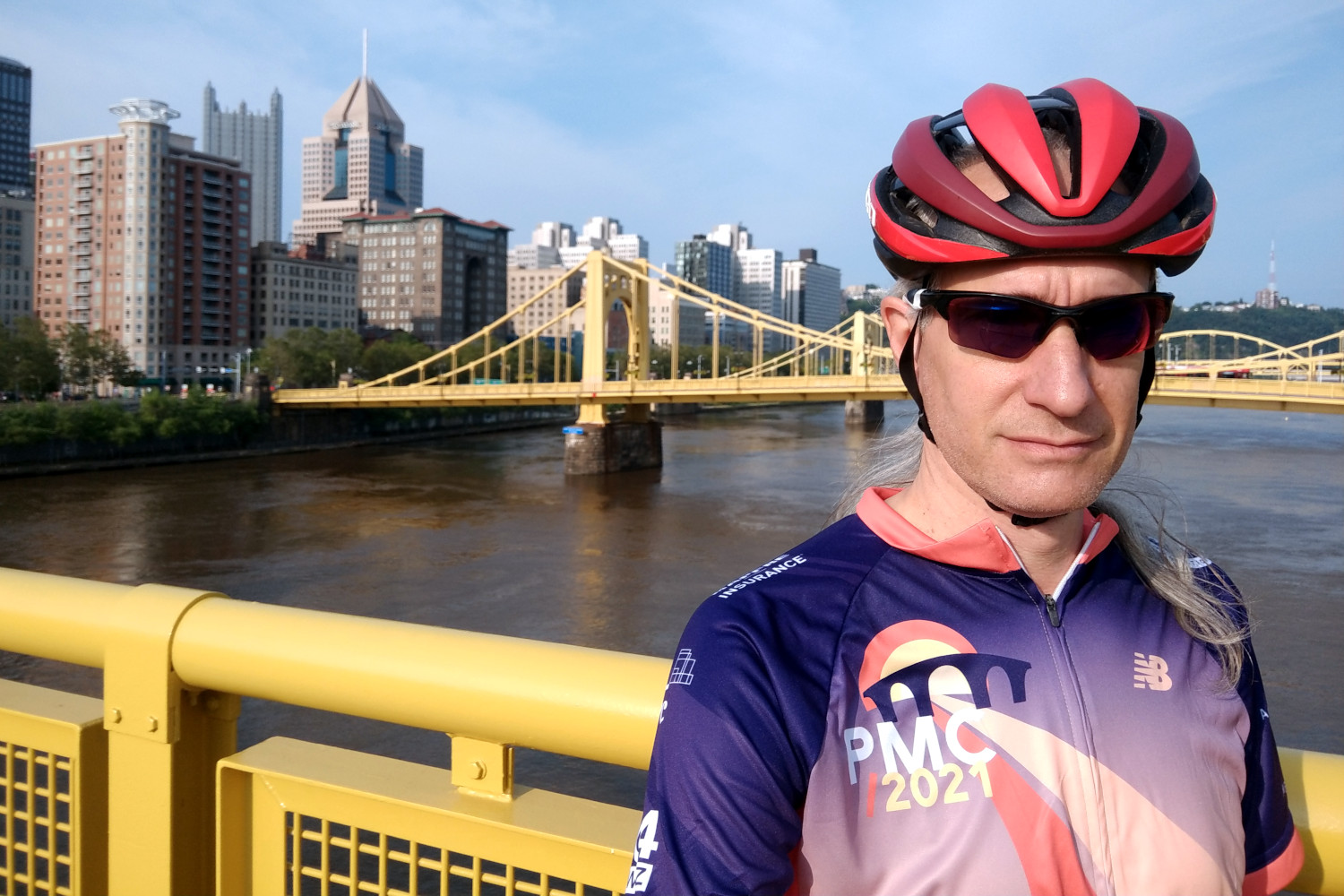
Modeling the 2021 PMC jersey in downtown Pittsburgh.

Modeling the 2021 PMC jersey in downtown Pittsburgh.

The first post-Covid Team Decaf group ride

The first post-Covid Team Decaf group ride

Ornoth & Phil overlooking the Ohio River during the Three-State century.

Ornoth & Phil overlooking the Ohio River during the Three-State century.

I completed 42 stages of Zwift's Tour of Watopia.

I completed 42 stages of Zwift's Tour of Watopia.

Banner for achieving Level 50 in Zwift.

Banner for achieving Level 50 in Zwift.

Celebrated completing another Pan-Mass Challenge, backed by my 16 PMC jerseys.

Celebrated completing another Pan-Mass Challenge, backed by my 16 PMC jerseys.

My Original 2021 Goals

A year ago, in the midst of the pandemic and with vaccines just starting to be manufactured, my goals for 2021 were only guesses. However, my predictions were pretty accurate.

Normality

I wanted to be comfortable stopping at convenience stores, so I could resume longer rides than I could on a single water bottle. Following my vaccinations in May, I finished a metric century on June 12th (writeup), and many more long rides thereafter.

I also longed to resume attending group rides, and did my first weekly Team Decaf ride on June 1 (writeup). Over the summer I’d join 14 of their 17 rides.

I wanted to return to my normal major events and century rides. However, most organizers shortened or cancelled their events. And after foregoing one century due to rain, I completed my first big event in two years on September 12: the PMTCC Three-State Century (writeup).

I also addressed my imbalance between indoor and outdoor riding. In 2020, 81% of my total 6,043 miles happened indoors. In 2021, I rode 6,215 miles (10,000 kilometers), and only 56% were on the trainer: a much healthier balance!

Zwift Level 50

After 2½ years, my biggest achievement to chase on Zwift was the game’s top experience level. In April I rode 42 (!) stages of the Tour of Watopia (since it offers double XP) and achieved Level 50 on April 27th, simultaneously setting an all-time fitness record (writeup).

But the cost for riding 860 miles in one month was a case of achilles tendonitis that kept me off the bike for the month of May. Oopsie!

Another Virtual PMC?

After riding all winter with several Pan-Mass Challenge luminaries on Zwift, I rode a second remote PMC, mimicking the distance and climbing of the traditional route. And happily rode outdoors instead of on the trainer!

Although different from the mass participation rides back in Massachusetts, I still enjoyed it, and raised 60% more for cancer research than last year. After 16 PMCs, my lifetime fundraising for Dana-Farber stands at $119,000! (writeup)

And my PMC fulfilled another of my annual goals:

My 100th Century+ Ride

This was the highlight of my year. I wanted to mark this achievement on a major organized ride, however that wasn’t possible. But even though I rode alone, finishing my lifetime 100th century+ on PMC weekend made it special. Read more toward the bottom of my PMC writeup.

Toronto Epic Tour Redux?

My registration for this 2020 ride – planned as a Herd cycling club gathering – was deferred to 2021, but with travel still inadvisable, I took the 50% refund they offered.

Which was fine; the 2021 Epic Tour was held on the same day as the PMTCC Three-State Century, which I rode instead, marking my first major event in two years.

Charts

This year’s fitness charts include a couple significant changes.

First: the static charts you see below are now available on a dynamic Fitness Charts page on my cycling website. They’re automatically updated after every ride to reflect my training throughout the year.

Second: the vertical scale changed on these charts to accommodate my new record fitness. For five years, my CTL (chronic training load) fit onto a vertical axis that ran from 0 to 100, but it now goes to 125, making everything look a little flatter than my previous summaries.

Let’s see what the charts say about my year:

Cycling Fitness: 2011-2021

This 11-year view shows that 2021 was incredibly similar to 2020. Let’s break down the similarities.

Both years began with steady winter training, ramping up to an early peak. In both years those were new fitness records.

However, in both years my fitness then fell quite substantially, dropping back to my long-term average at the end of May.

Over the summers, I maintained my level of fitness. My CTL followed a repeating up-and-down sawtooth pattern as I alternately trained hard, then tapered before major events, then completed a big ride, and recovered afterward. That pattern repeats all summer long.

As usual, my fitness tailed off in the autumn and I took time to recharge before another winter of indoor training.

Those are the similarities between 2020 and 2021. Zooming into this year’s chart in detail highlights some of the differences.

Cycling Fitness: 2021 Calendar Year (vs. average)

In 2020 I reached max fitness in January, whereas this year I timed my buildup a lot better, not peaking until the end of April.

The bad news: this year I lost as much fitness in the single month of May as I lost over four months in 2020, as tendonitis kept me from riding. That’s how I wound up back at the same point on June 1st.

However, another difference is that my fitness throughout this year was about 5% higher than 2020.

Which brings me back to that new fitness record, with my CTL reaching 103.97. Although it has no specific significance, breaking 100 CTL was a long-anticipated achievement, which only happened after my 860-mile blitz in April to reach Level 50 in Zwift.

But the biggest difference this year was how many centuries I completed. After doing 11 indoor centuries in 2020, this year I only did 4 (but three were outdoors)! So let’s talk about:

Riding with PMC President Jarrett Collins in the weekly Zwift group ride.

Riding with PMC President Jarrett Collins in the weekly Zwift group ride.

Proudly showing off the new in-game PMC jersey in Zwift.

Proudly showing off the new in-game PMC jersey in Zwift.

Sunrise on the castle climb in Zwift's new Japan-themed world.

Sunrise on the castle climb in Zwift's new Japan-themed world.

Enjoying the view from a rooftop ride in Zwift's new Neokyo expansion.

Enjoying the view from a rooftop ride in Zwift's new Neokyo expansion.

The Centuries

Starting with the unadorned list:

There are several reasons why I completed only four rides beyond 100 miles.

After doing 11 of them in 2020, I was sick and tired of indoor centuries, so I only did one of those. Solo centuries didn’t excite me, so I completed my PMC ride, plus one other. And Covid limited me to one major event.

I wasn’t motivated to push myself hard, following an intense two years that included 24 centuries (12 indoor/12 outdoor) and 12,600 total miles. After all that, I needed a relaxed year.

But it could also be… aging. Having another year on the odometer, my tolerance for high-intensity efforts is waning. Of course, I’ll continue fighting it, but I don’t relish the effort, since we know how that story inevitably ends.

Additional Highlights

Since indoor riding made up half my mileage, I’ll share a couple noteworthy developments on Zwift.

I began the year as a regular on weekly Pan-Mass Challenge group rides on Zwift that were led by Jarrett Collins, the newly-named PMC President. Those were suspended over the summer, but resumed in November.

To everyone’s delight, Jarrett got Zwift to approve an in-game PMC jersey that riders can unlock for their avatars to wear. The design honors the red tee shirts from the first Pan-Mass Challenge, in 1980. It quickly replaced the Zwift “Level 50” jersey I’d previously preferred!

Zwift also released a major new world called Makuri Islands. The fictionalized version of Japan was released in two phases: “Yumezi” features rural Japanese villages and countryside, and “Neokyo” is a neon-lit urban analogue to Tokyo. Both were well-received, but everyone’s holding their breath, hoping that a Mt. Fuji-like climb will materialize.

In the real world, health issues remained top-of-mind. May was torpedoed by achilles tendonitis, heart palpitations, and Covid vaccinations. I also addressed a longstanding irritation by swapping out my saddle (writeup). Seasonal asthma slowed my autumn riding, and aging-related performance declines remain an annoyance.

Another challenge was getting replacement bike parts due to the collapse of the bike industry’s supply chains in the pandemic’s wake, as well as Mavic’s receivership. My LBS jerry-rigged my recalcitrant rear wheel, but I can’t put high power through the pedals due to worn chainrings that I can’t replace.

Finally, in 2021 I gathered a collection of Strava Local Legend awards, which go to whomever has ridden a road segment most frequently. Here’s some of the segments I was named Local Legend on this year:

Riverview Park is the center of Pittsburgh's cycling universe.

Riverview Park is the center of Pittsburgh's cycling universe.

The Team Decaf group ride stops to admire the Pittsburgh skyline from the Fineview overlook.

The Team Decaf group ride stops to admire the Pittsburgh skyline from the Fineview overlook.

Noteworthy Purchases

Despite the bike industry’s disarray, I made several beneficial acquisitions.

Not a purchase, but (as mentioned above) I swapped out my extremely worn saddle for a less-used one off one of my other bikes. It’s not brand new, but don’t tell that to my butt! (writeup)

My biggest purchase was the new GoPro Hero 10 action video camera and accessories. It was too late in the year to produce much, but I have huge hopes for future rides. Tho I did create this 72-second vid:

Also on the topic of optics… Back in 2015, I bought plastic HydroTac stick-on bifocals that adhere to any pair of glasses with water: perfectly functional and cheaper than prescription sunglasses! This year I bought stronger ones and stuck ‘em on my Oakley sunglasses and some clear lenses I bought for night riding.

For evening and nighttime rides, I added a new headlight: a Niterider Lumina OLED 1200. Featuring LED bulbs and lithium batteries, it’s immensely better than my old AA-powered incandescent one. Along with the action cam, this was my best purchase of the year.

Having trouble procuring my preferred Michelin Power Endurance tires, I tried a pair of Continental GP5000s, a new model in a popular line of road tires. I like them a lot, although I miss my Michelins’ red sidewalls.

Also replaced the Shimano SM-BTR1 battery for my Di2 electronic drivetrain. After 8½ years, its original battery had lost capacity, and I needed a replacement, since they’re being discontinued.

I occasionally replace the caps on my Camelbak Podium Ice insulated water bottles due to mold. I bought four replacement lids after learning they were recently redesigned, making them easier to clean.

Finally, I got new ice cube trays. These ones are nicely-sized. I also got these thinking 2” cubes would work inside a hydration pack, but that proved unnecessary once I was vaccinated and could stop at convenience stores to refuel.

My 2021 cycling calendar/log.

My 2021 cycling calendar/log.

My 2021 Strava "Year in Sport" summary, averaging 62 minutes and 17 miles per day.

My 2021 Strava "Year in Sport" summary, averaging 62 minutes and 17 miles per day.

Blogposts

Goals for 2022

2021 was a big improvement over Covid-plagued 2020. But what will 2022 look like? I’ve got a whole checklist of idears:

  • Going 100% metric
    I’m taking the plunge. Far broader than just cycling, this impacts cooking, weather, travel, health… Don’t you think it’s about time?
  • Another 10,000 km year
    Here is where that transition begins. Having ridden 10,000 km in two of the past three years, my goal for 2022 will be to make it three out of four.
  • More major events
    Most ride organizers are resuming full-length events in 2022. I’m excited to revisit events I’ve missed since 2019.
  • Video ride reports
    It’s been eight years since my last ride video, and the GoPro should produce immensely better results. I wanna see what I can do with it.
  • Another remote PMC?
    I’ll probably sign up for a 17th Pan-Mass Challenge, again remotely. I’m awaiting the event jersey reveal, and considering potential routes. One remote possibility is a two-day, 200-mile ride crossing Western PA from south to north, ending on the shore of Lake Erie.
  • Zwift team time trial?
    I don’t race, but the Herd sponsors several teams for the WTRL team time trial series. The format is intriguing, so I’d like to try it out.
  • Bike repairs?
    This will be a concern until the bicycle industry recovers. My biggest problem is putting down sprinting power without my chain falling off my worn chainrings.

That’s 2021… It could have been better, but it was a big improvement over 2020, and there were several memorable highlights. 2021 fulfilled my hopes of getting closer to normality, and leaves us with the promise of an almost normal year as we roll into 2022.

For the past four years, I’ve ridden the two-day Escape to the Lake MS Ride, which goes from Lake Arthur in Moraine State Park, through rolling Pennsylvania farmland, finally dropping gently to the shore of Lake Erie in at Conneaut Township Park in Ohio. It’s been the first big ride of each summer century season since I moved to Pittsburgh back in 2015.

Pseudo MS Ride Day 1

Of course, it was cancelled this year thanks to the still-prevalent Covid-19 pandemic.

Per my M.O., I chose to do makeup rides on the indoor trainer using Zwift, donning my in-game BikeMS kit and adding the #VirtualBikeMS hashtag to my name. My intention was to cover the same distance and amount of climbing as the actual course.

For Day 1 I consulted my new Zenturizer page to figure out what Zwift route would most closely match last year's 102.8 mile route with 6,024 feet of climbing. It recommended 3.2 laps of Watopia’s Dust in the Wind route, which begins with Titans Grove, climbs up and does the jungle circuit in reverse direction, goes back to repeat Titans Grove, then finishes through the desert flats.

Upon completion, I’d ridden 104.14 miles and gained 6,020 feet: a very accurate prediction from the Zenturizer! Even more impressive: my elapsed time in Zwift (6h 57m 13s) was just four seconds longer than my time on the IRL route in 2018… although I did spend 16 more minutes off the bike at rest stops during the real ride.

The real and virtual routes also required the same extreme level of effort. I definitely do not recommend any route that requires you to do the heinous rolling hills of Titans Grove seven times!

With temperatures in the high 80s, my biggest lesson learned was to have more ice and drinks on hand than you think you’ll need. Having fresh strawberries and pineapple straight out of the fridge sure helped, too!

That’s the story of Day 1, which was my sixth Zentury of the year. (link)

Pseudo MS Ride Day 2

For Day 2, the Zenturizer suggested four laps of the more mellow Greatest London Flat route.

However, that route’s plan is an absolute mess, so the numbers didn’t work out as expected. After three laps, it was obvious I wasn’t going to have done enough climbing, so on my fourth lap I veered off course and ascended Leith Hill. I had been targeting 63.75 miles and 2,234 feet of climbing; at the end of four laps I finished with 64.03 miles and 2,431 feet of climbing. That’s not bad, but if the course had been properly laid out I wouldn’t have needed to take the detour up Leith Hill. The Zwift course overall took me 15-25 minutes longer, depending on whether you use moving time or total clock time.

Between the flatter and shorter course, slightly lower temperatures, and a more moderate pace, Day 2 felt much easier than Day 1.

And around Mile 50 I finally reached Level 40 in Zwift, which was my last lingering indoor goal for the spring training season. (link)

That’s a convenient segue to talking about what’s next, which is a transition from almost exclusively indoor training to mostly outdoor riding. Pittsburgh has moved to “green” pandemic status, so I feel a little safer, but I’ll still be riding alone and avoiding the bike paths. Having done a grand total of three outdoor rides in the past seven months, I’m really looking forward to getting back outside, even if group rides aren’t in the plan just yet.

And I’ve recently acquired this hydration pack, letting me handle longer expeditions without having to stop for fluids at convenience stores.

In another Coronavirus-induced blast from my Boston past, a couple weeks ago I saw a posting about Zwift meetups organized by the Pan-Mass Challenge, the cancer charity ride I devoted 14 years to. I’ve joined them for two informal meetups, and it was great talking to folks about shared memories. But even more noteworthy: this week they got Zwift to add a permanent PMC group ride to the calendar, every Thursday at 5:50pm Eastern. You can look for me there!

Like the Escape to the Lake, the PMC is another huge charity ride that will not go on this year. They’ve always offered a “virtual ride” for people who couldn’t make it, and I’ve been giving the virtual PMC serious consideration, both as a reason to spend time in the saddle, as impetus to reach out and get in contact with old friends, and as a way to help fundraise for an important cause. So don’t be surprised if you find a note from me in your inbox in the next month or so!

That’s where things stand now, as of early June. Nothing has been normal this year, and we’re all still making it up as we go along. Stay healthy, and stay in touch with one another!

We’re halfway through August, and 2018 persistently continues to be a lackluster year. Even this “catch up on miscellaneous topics” post consists almost entirely of disappointments.

In one of my least exciting accomplishments, I’ve reached 16,800 miles on my 2013 Specialized Roubaix, surpassing the miles I put on my first bike, a steel 2000 Devinci hybrid. Still need 6,000 more to eclipse the Plastic Bullet, my 2006 Roubaix.

Another less than earth-shattering development: I bought this Kool Stop tire bead jack. Why? Well, I guess it does prevent me from pinching and puncturing the inner tube when installing a tire. But that’s about as positive as anything that’s happened this year.

Another unnecessary purchase yielded a worse result. By installing this funky combination headset spacer and Di2 junction box mount, I could clean up my cockpit by getting rid of an ugly rubber band around my handlebar stem. Except it broke one of the junction box’s tiny plastic mounting pins, leaving the whole assembly dangling from my handlebars. Now I have to either spend $90 on a whole new junction box or permanently glue the junction box onto the mount with epoxy. Sigh.

Next, the rider’s—and the bike mechanic’s—worst nightmare: mysterious clicking and creaking noises. First we replaced the bottom bracket. Didn’t fix shit, but the cranks spin a little smoother, and I was pleasantly surprised that a new BB only costs about $30!

After more tinkering, figured out that the noises were because the stem and headset cap bolts weren’t tight enough. Unsurprisingly, those were the exact bolts I’d loosened to fit the aforementioned headset spacer / junction box mount… The ones every mechanic goes to great lengths to tell you *not* to over-tighten. Well that’s annoying. Locked those puppies down, and so far so good.

And then there’s the Gatorade saga. For almost 20 years, my go-to sports drink has been orange Gatorade powder, the most effective and palatable thing I’ve found. And they made me a loyal customer after a lucrative customer service escapade I blogged about.

In May I ordered another three canisters of powdered drink mix, but what they contained was nothing like Gatorade. The powder didn’t mix in water, had neither flavor nor color, and tasted like a moldy bag of burnt plastic. Yup, in the interest of “progress”, instead of just adding some electrolytes to their tried-and-true formula, Gatorade had some evil scientists completely redesign their product, and the resulting “new formula” is simply unusable. And now I’ve got $70 worth of it sitting in the back of a cupboard.

Speaking of companies fucking up something that already works well, Strava recently took the reliable TRIMP-based Suffer Score training tool that I have blogged about and replaced it with an updated metric called “relative effort”. The major difference is intentionally removing exercise duration from their calculation of exercise intensity, so that a tough 10-minute ride has the same training effect as a tough 10-hour ride.

The result? Ludicrous values that make Relative Effort completely worthless as a training tool. Using actual examples from my own riding: if a 9-hour 127-mile ride scores a relative effort of 230, why would a 3-hour 34-mile ride rack up 568 points? A 3-hour ride should have a much lower training effect than a 9-hour ride, but Strava says it was two and a half times the workout?!?! Bullshit! And this doesn’t just go for new activities; they fucked up all my historical trend charts. Way to ruin your product, Strava! And don’t get me started on their unctuous labels for varying levels of effort: tough, massive, and historic.

So yeah, I’m kinda discouraged by all of this. I’ve been hoping this year’s malaise would pass, but it hasn’t yet. But that’s a bigger story which will receive its own blogpost in the near future.

The only thing that’s motivated me to hop on the bike is the Tag-o-Rama game. I’ve claimed 19 tags this year, and with just three more I’ll become one of the top ten players (out of 124 people).

It’s been five years, so it’s probably safe to tell the long-suppressed tale of my Gatorade Escapade.

Prior to 2012, I could walk to some shop like GNC and find two-pound tubs of Gatorade’s special Pro Endurance Formula powder/mix in my preferred flavor (orange). It worked out nicely, because one of those tubs would last nearly one full season/year.

Gatorade Pro formula

Then GNC stopped carrying it. It was kinda a specialized thing, and I couldn’t find it stocked anywhere. So I did what any normal bitnaut would do: I went directly to Gatorade’s online store.

Figuring I’d save on shipping costs, I ordered a two-year supply: two of those two-pound packs. That’d be perfect, right?

However, someone in Gatorade’s fulfillment department didn’t look at the “quantity” field when picking and packing my order, so they only shipped one of the two packs I’d ordered. I called customer service, who said they’d ship me the other pack free of charge. So far, so good.

Imagine my surprise when, a week later, a seventeen pound box arrived on my doorstep. A package containing not the one missing tub of Gatorade, but six of them! Thanks to their use of the ambiguous term “pack”, instead of shipping me one tub, they’d shipped me one case (six tubs) of Gatorade!

It was like they’d given me a “Buy 2, Get 5 Free” sale. In dollar terms, I spent $58 and received $203 worth of product! Score!!! I’m sorry PepsiCo, but I kept it all.

From the grocery store, you probably know how big a pound of flour or sugar is. I’d basically ordered four pounds of Gatorade powder, and received fourteen pounds! If I continued using it at the same rate of one tub per season, that was enough Gatorade to last me seven years!!!

So here I am, four and a half years later, having consumed six of the seven canisters, with a full one still left to use. I might not need to buy any sport drinks until 2018.

But when I do, I know exactly what brand I’m buying and from where. It might have cost them in the short term, but Gatorade has earned lifetime consumer loyalty from this rider!

And that’s the story of my Gatorade Escapade.

Frequent topics