Ornoth modeling the 2025 Team Kermit jersey.

Ornoth modeling the 2025 Team Kermit jersey.

Just as 2024 was all about my late-season stroke and return to fitness, 2025 was defined by my heart surgery in March, and my post-op recovery.

Happily, the procedure went well, and after a two-month break, I was able to resume training, taking three months to build up to a successful remote Pan-Mass Challenge ride in August, followed in November by the 100-mile Livestrong Challenge.

In the end, 2025 was a very successful year, and there were lots of milestones and noteworthy highlights along the way. Here’s my year-in-review post to distill it all down to a coherent narrative.

My Original 2025 Goals

Last December 31st, my 2025 New Year’s Eve began with a visit to my cardiologist to schedule my PFO closure heart surgery, which I learned would take place on March 7th. After that appointment, I drove home, finalized my list of cycling goals for the coming year, and posted them in my 2024 annual summary blogpost.

At that time – just months after my stroke and facing impending heart surgery – it was hard to commit to any concrete goals, but here’s what I thought made sense at this time last year, and how it played out.

Stroke & Cardiac Recovery

The Amplatzer Talisman Patent Foramen Ovale Occluder they implanted inside my heart!

The Amplatzer Talisman Patent Foramen Ovale Occluder they implanted inside my heart!

Ornoth meets the sunrise, already four hours into his Day 1 PMC ride.

Ornoth meets the sunrise, already four hours into his Day 1 PMC ride.

Taking a quick break as a freight train passes Austin's 1947 Amtrak station.

Taking a quick break as a freight train passes Austin's 1947 Amtrak station.

Obviously, my primary goal was to get back to full health and fitness following my heart surgery.

I was off the bike for 10 days surrounding the March procedure, and wasn’t allowed to do any meaningful training for another month. Although I hoped to recover as quickly as I could, it would be a long, gradual process, exacerbated by my bike being in the shop for an unexpected two weeks.

However, from today’s vantage point, it went miraculously well. Just 2½ months after resuming training, I was able to complete the Fire Ant Tour: a metric century. That gave me the confidence to register for my big remote PMC ride, which I completed in August. And in November I rode the 100-mile Livestrong Challenge, which I’d missed in 2024 due to my stroke.

It took me four or five months to get back to my normal level of fitness and endurance, but I’m as confident and capable as cyclist today as I was before my stroke, and that’s an immensely satisfying feeling.

My 19th Pan-Mass Challenge

Although I listed riding another PMC as one of my goals for 2025, it was with a humongous questionmark. Would it even be physically possible?

After surgery in March, I would have barely enough time to recover, train up to adequate physical fitness, and do the necessary fundraising work. Thankfully, I suffered no physical setbacks, and on PMC weekend I completed my usual two-day, 300 kilometer remote PMC ride. It was incredibly heartening to show that I’d overcome my health issues, and a poignant reminder of what a blessing it is to be able to spend a long day in the saddle.

Given the Trump administration’s 44% cuts to the NIH budget, this year’s PMC fundraising was more important than ever, and I brought in a post-hiatus and post-pandemic record of $9,450 for the Dana-Farber Cancer Institute. I chose to earmark 25% of my fundraising for the pediatric neurological cancer lab favored by Team Kermit, and the rest was unrestricted, so that DFCI can use it wherever it is most needed.

That’s all I’ll say about this year’s PMC. For my full writeup – plus my 5-minute highlight video – be sure to check out my 2025 Pan-Mass Challenge Ride Report.

And look below for my Goals for 2026 and some exciting news about next year’s PMC!

More, Better Videos!

In terms of video, I could have done better. I made limited use of the new selfie drone and its expanded capabilities, but I did capture a number of short video clips here and there.

On the plus side, I pushed out another 30-second PMC ride jersey reveal, produced another PMC ride video, and gathered many of my little clips into a second yearly highlights reel, which appears just below.

I hope to do even better next year, especially since I recently picked up a wireless DJI mic that’ll hopefully allow me to capture decent in-ride audio.

Some Anticipated Purchases

When I wrote last year’s goals, I was grasping for anything I could, so I included a “goal” of pulling the trigger on several planned upgrades. That was kinda lame, since I always devote an entire section of my annual review to stuff I’ve bought, anyways.

But briefly: I made those expected purchases, as well as several others. As expected, 2025 was an interesting year in terms of equipment; however, I’ll enumerate all that in detail in the “Noteworthy Purchases” section below.

But taken as a whole, while 2025 won’t top my list of greatest cycling achievements, I’m absolutely delighted by the success I’ve had in achieving these goals and exceeding the expectations I had, coming into 2025.

Highlight Video

Here we go: a quick 2½ minute look back at some of this year’s highlights (or at least the ones I got on camera).

For my Pan-Mass Challenge buddies, you might see how many different PMC jerseys you can count!

Charts

Let’s start this section with a new chart to understand how my cycling has changed in recent years. Here’s how many kilometers I’ve logged each year since getting back on the bike as an adult cyclist 25 years ago.

Kilometers per Year: 2000-2025

There are two things I want to call out. The first is that I’ve ridden considerably more each year after 2018. As you can see, that extra ~4,000 km per year is almost entirely attributable to Zwift and the indoor trainer I purchased at the end of that year. And that trend has surprisingly continued even after our 2023 move to Texas.

The second thing has to do with 2025 in particular. This year I logged 9,500 kilometers in the saddle, split pretty evenly between the indoor trainer (47%) and the open road (53%). It might not look like much on the chart, but despite losing a big chunk of time due to my surgery, I still rode more this year than any year since 2021!

Now let’s look at my cycling Fitness numbers, which only go back to 2011. Still, that’s a full 15 years of Fitness data, as you can see in the following chart.

Cycling Fitness: 2011-2025

Looking at this, I’d concentrate on the right half of the chart. 2017 was a normal year, but it ended with my only Dirty Dozen ride, which left me shattered, leading to a very mediocre 2018.

But at the end of 2018, I bought an indoor trainer, which allowed me to begin each spring at a higher level of Fitness, leading to higher summertime peaks. In terms of Fitness, the four years from 2019 through 2022 were my lifetime peak.

My most recent inflection point was at the end of 2022 when we moved to Austin. Two years ago I wrote a blogpost entitled “The Shape of Things to Come”, considering how my riding might change following the move. I expected my Fitness to be much more steady throughout the year, with fewer lows during the winter months and fewer peaks in the summer. And, as you can see above, that’s exactly how the past three years played out.

Now, let’s look more closely at 2025:

Cycling Fitness: 2025 Calendar Year (vs. average)

Having regained my Fitness following my stroke, and with heart surgery coming in March, I spent January and February doing as much cycling as I could and maintaining a fairly high Fitness level.

March and April show two consecutive dips in my Fitness, as I recovered from heart surgery and then sat around doing nothing while my bike was serviced. My Fitness plummeted to its lowest point since I bought my new bike three years ago.

In May, June, and July, I was committed and focused on steadily rebuilding my Fitness in time for August’s two-day Pan-Mass Challenge. I was overjoyed to complete it, which also marked my maximum Fitness of the year.

For the rest of 2025, I tried to keep my Fitness at a reasonably high level, including a secondary peak leading up to November’s Livestrong Challenge century. Then things fluctuated a bit in December, while I recovered from a pulled hamstring and broken toe.

The Centuries

Crossing the finish line after 100 miles of the Livestrong Challenge.

Crossing the finish line after 100 miles of the Livestrong Challenge.

Last year, I wrote that – due to my age and health issues – I might have ridden my last 100-mile ride. I’m happy to tell you it wasn’t true. This year I trained back up and knocked out two imperial centuries. You already know what they were, but here are my ride reports:

  • 8/3: Remote PMC Day 1 Century This year’s Pan-Mass Challenge was my 111th imperial century and a signal accomplishment in my recovery from stroke and heart surgery.
  • 11/2: Livestrong Challenge A full year after my stroke, I enjoyed a triumphant return to the Livestrong Challenge, capping an insanely busy week that included a big concert the night before my 112th 100-mile ride.

My Year in Zwift

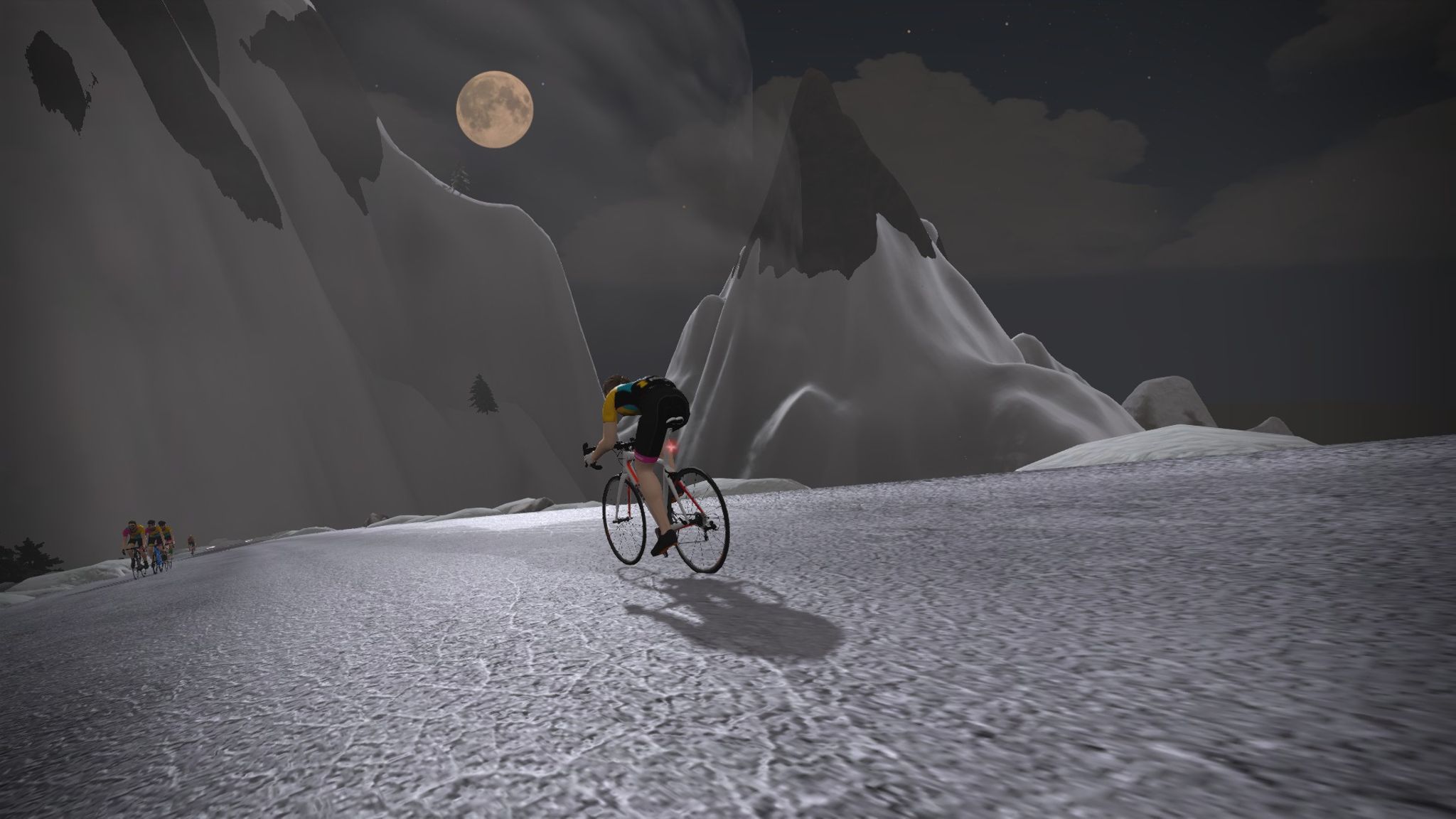
For the first time since the COVID lockdown, I rode nearly as many kilometers on my indoor trainer using Zwift as I did outdoors. And because Zwift usually gives me several things to talk about, I’m going to put all the Zwift-related business into this new section. And since there’s so much of that this year, I’m just gonna do bullet points.

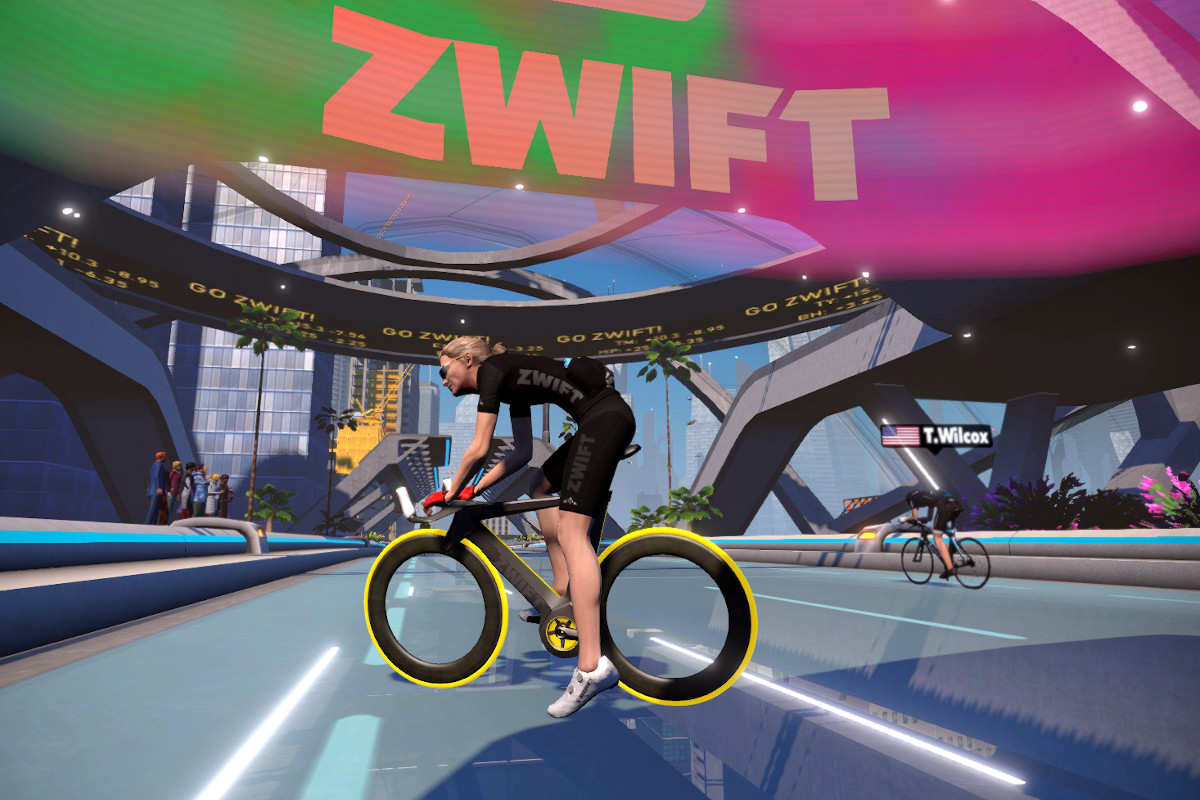
Modeling the Level 100 jersey in front of Zwift's Austin-inspired 360 Bridge.

Modeling the Level 100 jersey in front of Zwift's Austin-inspired 360 Bridge.

Ornoth (in his Didi the Devil cap) leading the PMC group ride on Zwift.

Ornoth (in his Didi the Devil cap) leading the PMC group ride on Zwift.

  • I started the year at XP Level 81 and successfully made my way to Level 100, which is the highest you can go… for now! This was a huge achievement that was 7 years and 34,000 kilometers in the making (see blogpo).
  • When I reached Level 85, Zwift sent me a free pair of Zwift Play controllers, which replaced my old ones that had been malfunctioning. But Zwift also decided to stop making them.
  • Zwift started granting experience points for regular outdoor rides, with four outdoor kilometers earning the same XP as one km in Zwift. Yaay!
  • Zwift held big events to introduce major expansions and new routes in France and New York City, plus a handful of miscellaneous other routes.
  • By completing the “Tour Fever” Climb Portal challenge, I earned a full Didi the Devil cycling kit. While I usually wear the in-game PMC kit, my avatar still wears the skullcap with devil horns from the Didi kit.
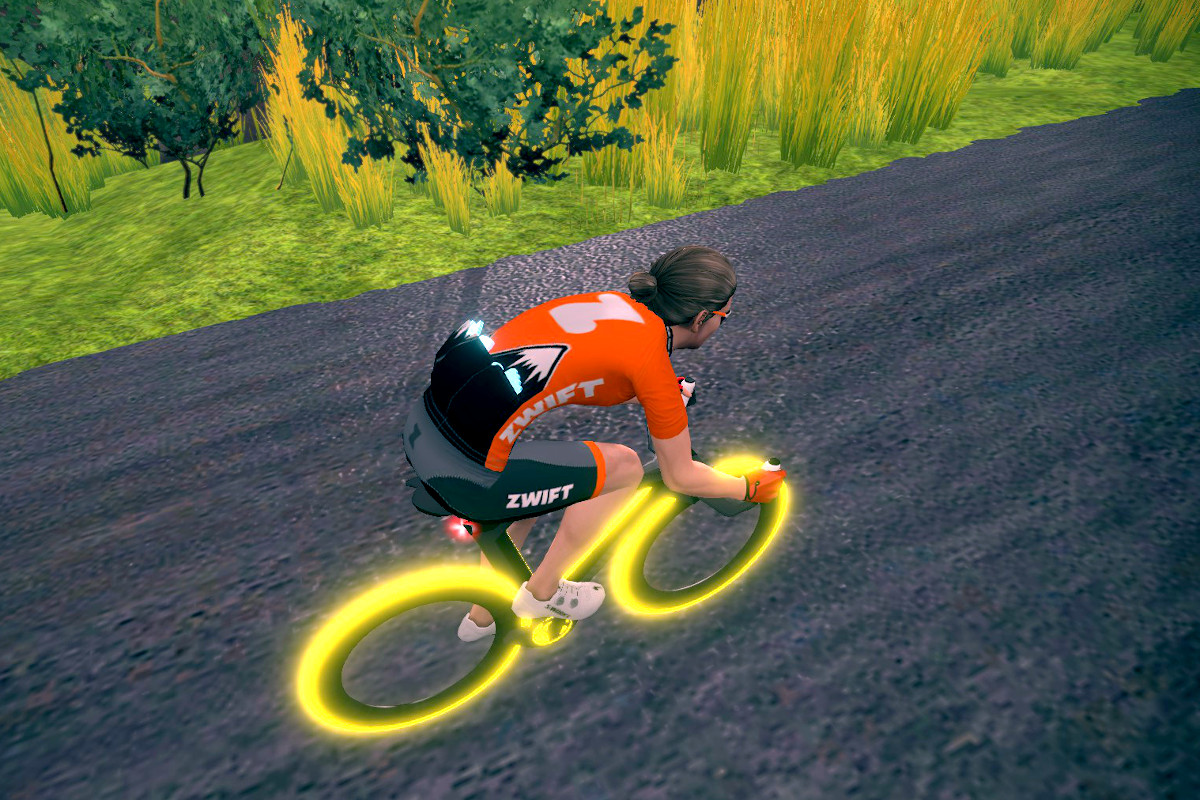
  • Zwift introduced a handful of new in-game bikes, but also implemented ways for users to earn five levels of upgrades for their bikes, and the ability to unlock (frankly stupid looking) “halo” bikes.
  • They also introduced a major new long-term challenge: the Factory Tour, which eventually unlocks “lightning socks”.
  • Zwift also finally added TSS points, Fitness, and Form charts and trendlines: the same data I’ve tracked and charted for the past 14 years.
  • They also replaced the beloved double-XP Tour of Watopia with a new Zwift Unlocked Tour. It still grants 2x XP, but they moved the time frame from late winter (when you’re building fitness for spring) to mid-autumn (when you should be relaxing), which is disappointing.
  • The PMC’s Zwift group rides decreased from weekly to monthly, and moved to 7am on Saturdays. Not a huge fan, but we’ll make it work somehow.

All this (plus the XP bonus for keeping a weekly ride streak alive) actually kept me Zwifting throughout the summer, when I would normally put the indoor trainer away. There’s no denying that Zwift has been a major contributor to both my recovery from medical issues and my overall fitness each year since 2019.

Noteworthy Purchases

It was a good year for shopping, and there’s a lot to cover. To conserve spacetime, let’s divide this year’s purchases into two groups and just list them out.

First the new kit:

  • Two pair of Craft bibshorts, which were discounted by 20% after I talked with customer support
  • A new pair of Shimano SD501 cycling sandals to replace my old ones
  • The 2025 Team Kermit cycling jersey
  • Of course, the 2025 Pan-Mass Challenge jersey
  • A blue & gold Reggie Miller “BoomBaby” cycling jersey
  • Doublewide wrist sweatbands for Zwifting and occasional outdoor use; although I never used to sweat, having it running down my arms has been a problem since moving south!

A lot of my cycling equipment purchases were covered in my October blogpost “Rolling Resistance”, so here’s just a quick enumeration:

  • My inexplicably slow and expensive tune-up included new brake pads, chains, bar tape, and cassettes (I erroneously ordered the 30-tooth version rather than the 34), and a long-awaited firmware update for my Di2 shifters.
  • New Pirelli P-Zero clincher tires were great, if prone to cuts, but TPU plastic inner tubes proved completely unusable.
  • Fanttik battery-powered pocket air compressor/inflator has been a lifesaver.
  • I enthusiastically recommend the Rehook Tyre Glider to easily mount & dismount even stubborn tires; I will never ride without one!
  • Replaced my outer chainring, after I bent the old one when I dropped the bike.
  • Installed a pair of cheap but very useful plastic enlargers for the hidden buttons on my Di2 shifters.
  • A new CamelBak Podium Ice water bottle (plus a new dishwasher to clean them!)
  • DJI Mic Mini Bluetooth microphone to capture quality audio to go with the video I capture while riding (to debut next year).

Finally… This might be a bit odd, but it’s worth mentioning three products that I was eagerly awaiting, but did not purchase. Coincidentally, all three were announced on the same day: September 9th! Those were:

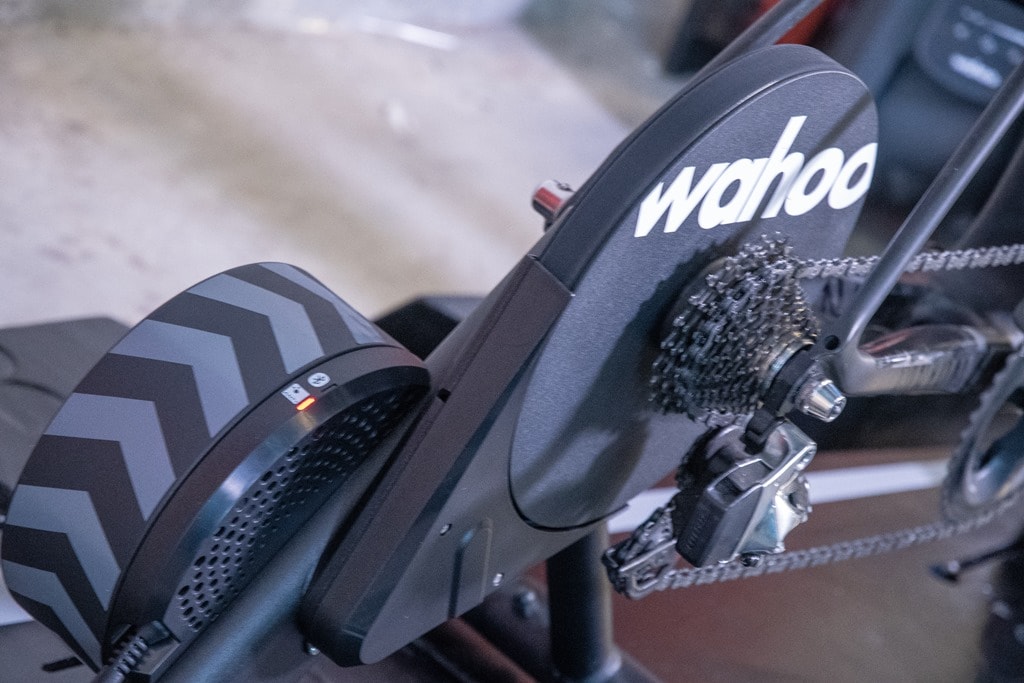
Wahoo Kickr CORE 2 indoor trainer
My original Kickr CORE – from 2018! – is still working fine after 34,000 simulated kilometers, and the new, revised version doesn’t have any compelling improvements, other than being $250 cheaper. It can wait.
Garmin Rally 210 SPD power meter pedals
Similarly, the second generation of my power meter pedals aren’t significantly better than my old ones, and come with a 10% price increase. Plus they’re a whopping 60% more expensive than Assioma’s equivalent power meter pedals! No thanks.
Garmin Edge 850 GPS bike computer
I’m a huge fan of advanced bike computers, but Garmin’s newest generation is a big step backward compared my two year old Edge 840. Garmin cut the battery life in half; they removed the solar charging feature; its weather maps are awkward and crash the unit; and they raised the price 30-40%! Those are the kind of “improvements” I can live without.

Additional Highlights

Riding past Salado Creek on the Volksride 100k.

Riding past Salado Creek on the Volksride 100k.

Friday Truancy group ride on Austin's Pfluger Pedestrian Bridge.

Friday Truancy group ride on Austin's Pfluger Pedestrian Bridge.

The Bicycle House ride regrouping at Walnut Creek Park.

The Bicycle House ride regrouping at Walnut Creek Park.

Ornoth's 2025 cycling calendar/log.

Ornoth's 2025 cycling calendar/log.

Other than that, Mrs. Lincoln, what else stood out about 2025? Here’s a small handful of significant bits.

Outside of my centuries, I did a few noteworthy event rides. My first long ride after surgery was June’s Fire Ant metric century (my third year). And my late-season included doing the Barrow Volksride metric for the first time. And I made it out to the Circuit of the Americas F1 track once in May, just before they closed it up for the year (they didn’t open for their usual fall dates).

Between surgery, Zwift, and event rides, I didn’t do as many Friday Truancy group rides (about 20), and when I did I was mostly alone off the back, as I’m really not able to hold the pack’s pace anymore. But I tried a half dozen Saturday morning shop rides out of Bicycle House, and those went really well (except for having to get up at 6am on a weekend).

I also reported out on my experience consulting with a nutritionist, which was marginally useful.

In one of the more noteworthy developments, I finally canceled my paid membership on Strava, which is why you won’t see my “Strava Year in Sport” summary image for this year. Although they’re the default social network for cyclists, in recent years Strava has taken numerous corporate actions that are overtly hostile to their users. I complained about them in last year’s annual summary, and somehow it got even worse in 2025! Those actions have included: banning all users from posting any links in activities, comments, or posts; claiming ownership of users’ data; surprise price increases; lack of new feature development and bug fixes, especially on the website; drastically restricting their API and thereby breaking numerous popular third-party tools and services with no warning; and filing a frivolous lawsuit against Garmin – their closest business partner and number one data provider – for requiring the exact same data attributions that Strava themselves force on their third party developers. Strava’s corporate “leadership” is deluded, out of touch, and utterly out of control, and I (along with many other users) are done giving them money to enable their asinine, hostile behavior. Don’t let the door hit you in the face as we leave, Strava!

Blogposts

I only post about once a month, but when I do, my articles are kinda long and jammed with detail. Here’s this year’s inventory, in case you wanna dig deeper into any particular topic:

Goals for 2026

So that was 2025. Let’s talk about next year’s goals, because now that I’m fully back, there’s some big things I’m looking forward to. Let me share ’em with you…

Surpass 100,000 Adult Cycling Miles

In the arbitrary milestone category, I am about to surpass 100,000 miles of riding since I took up cycling as an adult back in 2000.

100,000 miles is a common lifespan of the typical family car. It’s the equivalent of riding around the Earth at the equator… four times. Or perhaps it’ll make sense if I tell you that it’s like traveling the whole Oregon Trail 46 times, without dying of dysentery!

That also means I’ve averaged nearly 4,000 miles a year for the past 25 years. That’s a measure of how devoted I’ve been to this particular pastime.

With good weather and only a couple hundred miles left to go, I ought to tick this one off soon. Look for a commemorative blogpo before the end of January.

Return to Boston to celebrate my 20th PMC and $150,000 in fundraising

Yes, it’ll be my 20th Pan-Mass Challenge. Yes, I’m coming back to Boston to do the in-person ride for the first time since 2014! It’ll be my 15th traditional PMC, having ridden my last five alone and remotely in Pittsburgh or Austin. And in 2026 the PMC will be inaugurating a new starting location in Worcester, rather than the traditional (and now former) start in Sturbridge. Very exciting!

Plus, I have a huge fundraising goal: to surpass a lifetime total of $150,000 raised for cancer research at the Dana-Farber. Raising the necessary $10,000 is a makeable stretch goal, and I’m asking you and all my amazing sponsors past and present to help. Plus if fundraising goes exceptionally well, it could also mark my return for a 10th year as a PMC “Heavy Hitter”.

The PMC has always been the most important highlight of my year, but next year’s PMC is going to be out-of-this-world special, and deeply emotional. I hope you will be part of it too, in one way or another!

Conclusion

My Previous
Annual Summaries

2024 2023 2022 2021
2020 2019 2018 2017
2016 2015 2014 2013
2012 2011 2010 2009
2008 2007 2006 2005
2004 2003

So that’s 2025 in the books.

Starting with last year’s stroke, and through my heart surgery nine months ago, I had no idea whether I’d be able to continue riding. After eight long months of uncertainty, I’ve worked my way back to full fitness and proved that – even in my sixties – I’ve still got what it takes.

Despite my age and health challenges, 2025 was a surprisingly successful and memorable year, highlighted by covering more ground than any year since 2021, strong performances in my solo PMC and Livestrong century rides, tripping Level 100 in Zwift, raising another $9,450 for Dana-Farber, as well as all the other bits I’ve mentioned in this writeup.

After nearly a year of uncertainty, today life as a cyclist is pretty much back to normal again, and that’s an incredibly rewarding and reassuring feeling.

And it’s great to be able to look forward to an exciting 2026 season, featuring a very special trip back to Boston to ride and enjoy and celebrate my 20th Pan-Mass Challenge, with renewed confidence and free of worry.

Ready? Let’s do it!

Back in June, on my third Bicycle House shop ride, I had a flat tire. Replacing my inner tube (plus a second tube and CO2 cartridge given to me by the ride leader) required a trip to the bike shop to replenish my parts inventory. In turn, that was an opportunity to finally try some changes to my wheel setup that I’d been considering for more than a year.

New other stuff

One change I made was simply making use of a new-ish tool that had been sitting in a drawer for months. I’ve struggled for years with how difficult it is to mount and dismount my tires, especially in a roadside repair. And recently moving to tighter-fitting “tubeless-ready” tires and wheels made that problem significantly worse.

The Tyre Glider is a little blue plastic device that makes both removing and installing tires considerably easier, replacing traditional tire levers and bulky tire jacks. After finally pulling mine out and putting it to the test, I can say it delivers on its promise. Not only can I get stubborn tires onto the rim, but I also don’t run the risk of puncturing brand-new inner tubes while mounting them. Two greasy thumbs-up!

Another item I’d been contemplating for years was a pocket-sized battery-powered inflator, which could replace both my frame pump and CO2 cartridges. These innovative little devices have become commoditized, and I used Amazon Prime Day to pick one up at 30% off. It’s the Fanttik X10 Ace Mini, from the same brand that makes the larger inflator I use for our car. While I haven’t used the Ace Mini a ton, my early results have been very positive.

Having struggled (as I said above) with mounting my tubeless-ready Continental GP5000 tires onto my rims, I’ve wanted to try a different brand, to see if they might go on easier. I’d heard positive things about Pirelli P-Zeros, and discovered that they still offered an expressly non-tubeless clincher version, which would be an easier fit. I picked up a pair of those and have been running them ever since. They feel great, and my only complaint is that they don’t seem quite as durable as other tires I’ve used.

New tires

At the same time, I also picked up some Pirelli TPU (plastic) inner tubes that I was eager to try. They are considerably lighter than traditional butyl rubber tubes, and are more manageable than the third alternative: latex tubes. A lot of riders keep TPU tubes as spares because they’re lighter and more compact, but I’d rather run TPUs all the time and have a reliable old butyl tube as my emergency backup.

Because I swapped tires and tubes at the same time, I can’t say whether the changes in my bike’s ride-feel were due to the P-Zeros or the TPU tubes… probably a combination. On top of that, the differences were pretty subtle, and I’m not the best at discerning minuscule differences in ride feel.

In comparison to my previous tires and tubes, it’s possible the new combination of P-Zeros and TPU tubes felt lighter, rode smoother, was a little quieter, held air a little better, and had a little less rolling resistance. But any difference was slight.

But there were two huge differences that were specific to the TPU tubes.

First was price. At around $30, each TPU tube cost three times as much as a butyl tube. We’re not talking huge dollars here, but for triple the price, I expected a vastly superior product.

And then there’s durability, which is where I’ve struggled to justify running TPU tubes at all, even though I really, really wanted to switch over to them. My first TPU tube lasted just 180 kilometers: 5 rides, or 8½ hours of ride time. The second went flat just 23 km into its first ride. The third didn’t survive 3 rides, or 86 km. That’s your three strikes; yer out.

So while running TPU tubes, I had 3 flats in 290 km; in contrast, my last butyl tube had served for more than 7,800 km! At that rate, I could run butyl tubes for $10 per year, or burn through $2,900 per year on TPU tubes!

The confounding thing is that those TPU flats were all on my rear tire, while the TPU tube I installed on the front has served flawlessly for more than 2,000 km! I guess the real test will be to move that tube to the rear wheel and see how much longer it lasts…

While I might prefer TPU tubes’ ride feel, they’re just not worth the cost, especially because TPU tubes just don’t work in real-life usage. End of experiment.

New chainring

Before I close, I’ll share three other noteworthy purchases which don’t have anything to do with tires.

One was a set of plastic inserts from Risk that increase the size of the hidden buttons underneath Di2 shifter brake hoods. The stock buttons are really tiny, making them hard to activate. These simple inserts provide a larger active surface area, increasing the usability of those buttons. At $8 for four, they’re cheap, easy to install, and effective: just the kinda thing I like!

I also had to replace my big chainring, which was damaged during one of my many TPU flat repairs (long story). After I ordered the part, it took just 15 minutes for the Trek store to perform a while-you-wait installation. That’s a big improvement over the treatment I got at the Specialized shop earlier this year, which kept my bike for 15 days to do a simple tune-up!

And if you bike in Texas, you need to learn how to manage the copious amount of sweat you generate. So I’m currently testing the efficacy of double-width wrist sweatbands. So far, so good, but I’m afraid of getting even stupider (sic) tan lines, so we’ll see how that goes.

I might not have blogged much lately, but from an “equipment” perspective, it’s been an eventful summer!

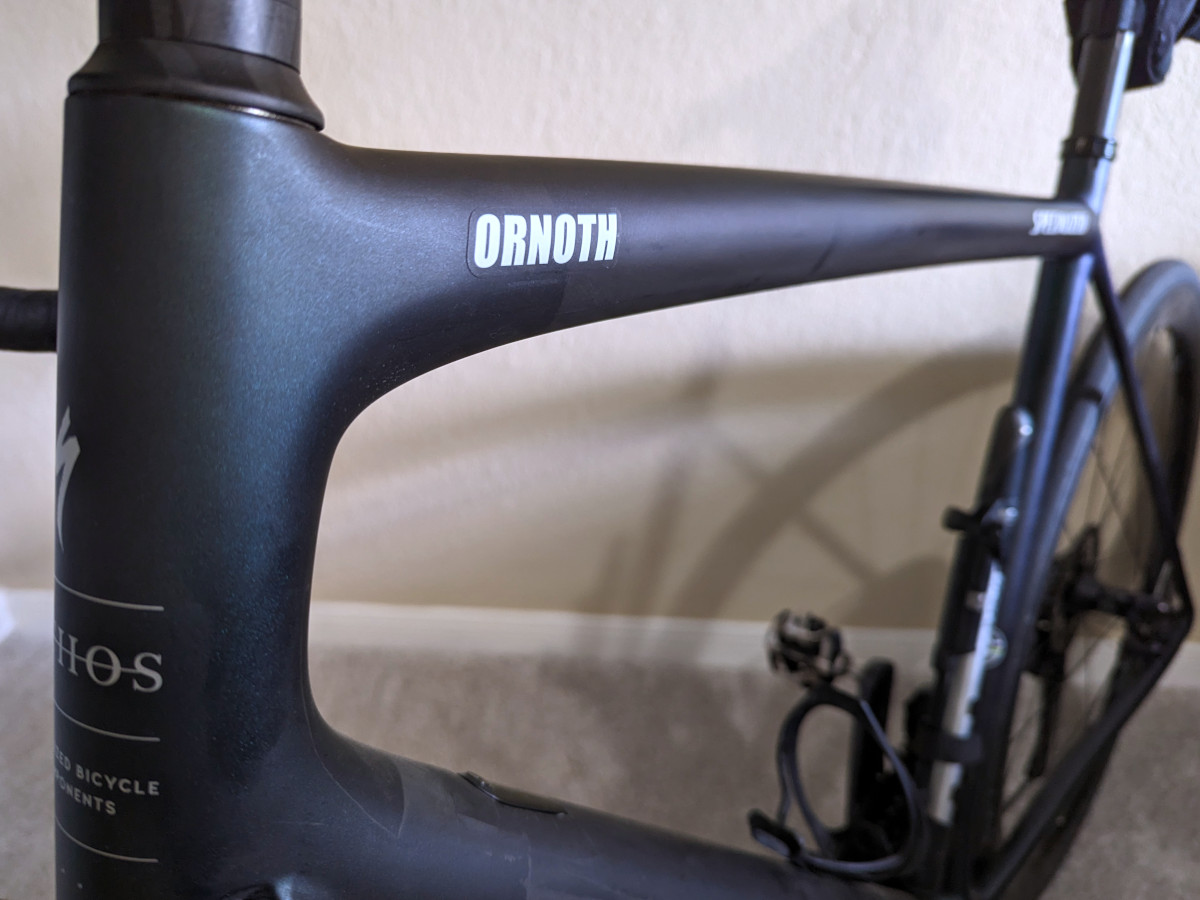
For whatever reasons, a lot of people dislike the major bicycle manufacturers. I’ve ridden Specialized bikes for two decades now, and one question I haven’t talked about is: “Why Specialized”?

So I wrote this big long essay following my progression as a cyclist over time and describing all my bikes and how much I used them and… never got around to answering the question.

So instead of a multi-volume encyclopedic life history, how about I just answer the goddamned question?

Episode One: The Plastic Bullet

The Plastic Bullet at the 2007 PMC.

The Plastic Bullet at the 2007 PMC.

I bought my first Specialized bike in 2005. At that point, I’d already ridden five Pan-Mass Challenge charity rides, and was a regular at Bobby Mac’s long group rides out of Quad Cycles. I’d transitioned into a committed endurance cyclist, after having started out as a short-distance bike commuter.

But that transition wasn’t something that suited my straight-bar hybrid commuter bike. I needed something faster, lighter, and more aerodynamic; something as zippy as the typical racing road bike but more comfortable, tailored for epically long days in the saddle. But no one sold such a thing!

Enter Specialized, who had just designed a carbon fiber bike that was fast enough for pro racing, but more reliable and forgiving in the cobblestone-strewn European spring classics races. They gave it a longer wheelbase, more front fork rake, and elastomer inserts to produce a smoother ride. In their new Specialized Roubaix, they had created the first bike in a whole new category: performance endurance bikes.

When I wanted a bike that combined top performance with all-day comfort, Specialized was the only company that could meet my needs. And the Plastic Bullet delivered on its “performance endurance” reputation, accompanying me through 7 PMCs, 30 imperial centuries, and 35,000 kilometers.

Episode Two: R2-Di2

R2-Di2 at Boston’s Charles River Esplanade

R2-Di2 at Boston’s Charles River Esplanade

Fast-forward seven years, and it was time to replace my trusty steed. Other manufacturers had introduced their endurance bikes, and I had grown into a discriminating roadie, so I took the time to test-ride eight different bikes.

However, nothing held a candle to the fourth-generation Roubaix, which was lighter, stiffer, and came with Shimano’s Di2 electronic shifting. Specialized was still the undisputed king of the performance endurance category.

Besides being my top pick, Specialized offered me a 20% manufacturer’s discount on the new Roubaix. By offering me an amazing bike at an amazing price, they ensured I’d be a loyal Specialized rider for the next chapter in my cycling career.

And R2-Di2 delivered in spades. Together over 10 years, we ticked off 45,000 kilometers, 59 imperial centuries, and another 6 PMC rides… PLUS 22,000 virtual kilometers on the indoor trainer, along with 13 Zwift centuries!

Episode Three: Pæthos

Pæthos at Austin’s Redbud Isle

Pæthos at Austin’s Redbud Isle

I was already delighted with Specialized, but when R2 finally came down with a fatal crack in the frame, they blew me away.

First, they have a discounted replacement plan for frames that break after their 2-year warranty expires. That’s pretty cool to begin with.

Unfortunately, that coverage stops after five years, and R2 was a decade old. But after they inspected my bike, they not only included me in the program, but offered me the 35% discount that you’d only get for a bike that was less than three years old! Imagine trading in a 10 year old bike and getting $2,500 toward a brand new model. Wow!

My only hesitation was that over that decade, the Roubaix had forgotten its “performance” heritage and evolved into a gimmicky, cushy family cruiser that no longer suited me. When I asked if I could apply the replacement discount to a different model… No problem! So they let me order an Æthos, their lightweight climbing race bike. Yay!

But there was a problem. This was toward the end of the Covid pandemic, when bike inventory had all been bought up, and the whole industry’s supply chain was in ruins. There was only one Æthos in my size left in the entire country, and it was in a bike shop in Denver, Colorado. But my incredibly responsive rep persuaded them to surrender it and ship it down to Austin for me.

So although I lost a very dear friend in my 2013 Roubaix, Specialized gave me an upgrade to an amazing, brand-new Æthos at an unbelievable price. I hope to put my new Pæthos through the wringer, too!

The Bottom Line

Specialized logo decal on downtube

So to finally answer the question…

I ride Specialized because their products have been excellent: well-designed, durable, and suited to my needs as a devoted endurance cyclist.

While I’ve come to expect petty greed from big corporations, Specialized has been shockingly generous with me, offering huge discounts well in excess of their corporate policies.

And beyond all that, they’ve been stunningly friendly and flexible, letting me apply my frame replacement discount to a different model, and then helping me track down and acquire the solitary bike in the country that fulfilled my needs.

Buying my first Specialized Roubaix road bike filled me with excitement and delight. That joy has stayed with me through three bike purchase cycles, over 100 imperial centuries, and more than 100,000 kilometers of riding. And Specialized’s bicycles and their treatment of me as a customer have been a significant part of the delight and enjoyment I’ve gotten throughout 20 years of cycling. Thank you, and well done!

The only area where they’ve disappointed me is in not offering more paint schemes or a custom paint program. You’d think that after 50 years in business, they would have figured that out. How about it, Spesh?

Every year has its ups and downs, and its major milestones. But every so often something happens that is so significant that you can divide your whole cycling career — perhaps even your entire life – into “before” and “after”.

2024 started quite well; I was riding consistently, tried some new things, made a few events, but missed a few others. In the first nine months of 2024, I knocked out 7,000 kilometers, an average of 25.75 km per day.

Showing off the Austin skyline during my Pan-Mass Challenge ride.

Showing off the Austin skyline during my Pan-Mass Challenge ride.

And then there was October 4th: my stroke. Thankfully it was extremely minor, but it negated all my plans and goals as a cyclist in an instant. It reduced everything I’d done before then to history, forcing me to begin again from scratch.

The good news is that I’ve recovered remarkably well. As I mentioned in my first post following my stroke, I’ve prioritized riding the indoor trainer over riding outside. Since I got back on the bike in mid-October, I’ve logged another 2,000 km, or about 25 km per day, a rate which is almost even with my pre-stroke riding.

My plan was to get back out on the road this spring to test my capabilities. But that’s the future; for now, let me look back on the past year and give you an idea how things went both before and after October 4th.

All told, I knocked out a total of 9,250 kilometers, or the distance between London and Tokyo, or from Los Angeles to Rome. That actually surpassed my 2023 total by 1,000 km, and my riding was split 63% outdoor rides and 37% Zwift.

As for whether I met the goals I’d set for myself…

My Original 2024 Goals

Ushered in 2024 with a New Years Day Pan-Mass Challenge group ride on Zwift.

Ushered in 2024 with a New Years Day Pan-Mass Challenge group ride on Zwift.

I returned to the Fire Ant Tour metric century for a second year.

I returned to the Fire Ant Tour metric century for a second year.

Tried the Team Tacodeli group rides, but barely saw anyone but these two…

Tried the Team Tacodeli group rides, but barely saw anyone but these two…

I was again a regular at the Friday Truancy group rides, tho I struggled to keep up.

I was again a regular at the Friday Truancy group rides, tho I struggled to keep up.

Last year at this time, things were still up in the air following our move to Austin, so my 2024 goal-setting exercise was short on specifics. But I did call out three specifics areas of focus.

More 100k and Century Rides

2024 was a little better than 2023 in terms of long rides, but there were also a lot of missed opportunities.

On the plus side… I did complete two centuries: my first Red Poppy Ride, and my solo Pan-Mass Challenge Day 1. As for metric centuries, I rode my second Fire Ant Tour, plus two solo rides out to Manor, one of those comprising my PMC Day 2.

But the list of excuses and missed rides is regrettably long. I didn’t feel ready for the early-season Pedaling the Prairie or the two-day Texas MS 150. I skipped the Tour de Boerne so that I could make a rare kyūdō practice at the outdoor range. I canceled my planned Katy Flatland Century when I learned that the local Trek club was hosting a long tour around Austin, which I still missed because I contracted COVID. And my second Livestrong Challenge eluded me when I had a stroke two weeks before the event.

So I was both happy and a tiny bit disappointed with the first nine months of the year. And after my hospitalization, long rides just weren’t in the cards anymore.

Find My Group Ride Niche

I continued my frustrating quest to find enthusiast-level group rides in Austin.

Continuing last year’s trend, I regularly attended the Friday Truancy rides, making 28 of them before being sidelined by my stroke. However, for the first time in my life I was utterly incapable of keeping up with the group. So, for me, these still wound up being essentially solo rides: group rides in name only.

I did try riding with Team Tacodeli on Monday evenings, which were shorter and at a more moderate pace. I joined them five times in June, but three of those were only attended by two other riders, and once I was the only rider to show up at all! Then they went on summer hiatus, and that was the end of that. To my knowledge they haven’t resumed on any regular basis since.

So despite giving Team Tacodeli a fair shot, I still haven’t found what I’m looking for.

A Big Pan-Mass Challenge

On a much more positive note: after skipping the event in 2023, I enjoyed a tremendously successful return for an 18th PMC ride. In brief, it was:

  • My first PMC ridden remotely in Austin
  • My first PMC as a member of Team Kermit
  • My first PMC as a sexagenarian
  • The ride went really well
  • I enjoyed creating an awesome 2024 PMC highlight video
  • And I raised $7,300 for cancer research; a stunning 62% increase over my previous ride (2022), bringing my lifetime fundraising total to $130,800

My ride video and all the deets live in my 2024 PMC Ride Report.

So in terms of meeting the goals I’d set for 2024, I’d say I did okay. It certainly could have been better, but I’m still happy with how it went.

Charts

Because I kept riding throughout the winter of 2023-2024, I had virtually no drop-off in my Fitness level, as measured by my Chronic Training Load (CTL) numbers.

Previous years – including my first year in Austin – featured a lot of variability, characterized by peaks in Fitness during the summers, and troughs in the winter. In contrast, my Fitness stayed almost constant throughout 2024. Thus it wound up being my most consistent year on record, as you can see in the following chart.

Cycling Fitness: 2011-2024

To quantify how steady it was: in the decade from 2012 to 2023, the standard deviation of my Chronic Training Load averaged 16.7 – and it was never less than 11.7 – but in 2024 it was just 4.9! And it was actually a mere 3.5 before I contracted COVID in July and my stroke in October, which were the only noteworthy hiccups in my training all year.

Another way of looking at it is to compare my Fitness with my long-term average, as you see in the following chart, which zooms in on 2024:

Cycling Fitness: 2024 Calendar Year (vs. average)

In a February blogpost, I predicted that my my natural response to having rideable weather year-round would produce a much flatter curve than in previous years. I projected that my Fitness would be higher than average during the winter months, but during the extreme heat of summer it would never reach my usual peaks… and might even decline slightly from springtime highs. And that’s exactly what happened in 2024.

Basically, this is what I think it’s gonna look like to be a year-round cyclist in Austin.

The Centuries

Big turnout at the start of the Red Poppy Ride, my first century of the year.

Big turnout at the start of the Red Poppy Ride, my first century of the year.

Early morning haul down Lime Creek Road toward Volente on my 2024 Pan-Mass Challenge century.

Early morning haul down Lime Creek Road toward Volente on my 2024 Pan-Mass Challenge century.

All I can say is that two is better than one. After one lone imperial century in 2023, I was eagerly planning for Livestrong to bring my 2024 tally to three, but greater concerns intervened. But the two I did complete were:

5/11: Red Poppy Ride

Although marred by a flat tire and criminally bad route markings, this was a delightful return to long-distance riding, and a big relief after the bad experience I had on the 2023 Livestrong Challenge (blogpo). But this ride’s challenges still prompted me to invest in new tire levers and a tire jack.

8/3: Remote PMC Day 1 Century

I’ve already covered this above, but my 110th century and 18th PMC was the biggest high point of my year.

It’s still a little premature to say for sure, but it’s worth mentioning: considering my age and health issues, it’s possible this was the last imperial century that I will ever ride.

Noteworthy Purchases

This year’s spending report falls into two main categories: a ton of mostly minor maintenance stuff, and not one but two automated selfie camera drones.

The first of those drones – the HoverAir X1 – created the entire category of selfie drones, and would have been the best purchase of the year on its own, after giving me the ability to take pretty decent video footage of myself while riding.

But later in the year they released the X1 PRO, which took the groundwork laid by the X1 and improved upon it immensely. I’ll spare you the details, and instead point you to my Gear of the Year blogpost for a full writeup. But in summary, it’s a fantastic piece of equipment that I hope to make even more use of in the upcoming year.

Here’s a two-minute compilation video I made that only uses footage from the original X1. Starting next year perhaps I’ll add a new section to my year-in-review post for an annual cycling highlight video!

Beyond that, my purchases were all pretty regular stuff.

In terms of new kit, I got a new cycling jersey for riding the 2024 Pan-Mass Challenge, and ordered three sets of PMC-branded fingerless gloves. As a team rider, I also purchased a 2024 Team Kermit jersey, and received a couple PMC-branded insulated (non-cycling) water bottles that our team captain had surplused from the ride organizers.

After struggling with hydration on last year’s Livestrong ride, I picked up a bottle of SaltStick electrolyte gelcaps. I’d used them back in Massachusetts in 2010 for cramping, but hadn’t noticed any obvious benefit; however, I was willing to give them another shot in order to help me deal with Texas’ heat. Results continue to be inconclusive.

Routine maintenance included buying inner tubes, CO2 canisters, a new tire, a replacement saddle bag, helmet padding inserts, and a new heart rate monitor. Also had to replace a battery cover on my Garmin power meter pedals, which I’d over-tightened and had to destroy to get into. And I got a new electric shaver (for the legs, of course).

In hopes of alleviating some of my tire-changing worries, I replaced my Park Tool tire levers with ones from Pedro’s, and a funky tire-seating device called the Rehook Tyre Glider; but I actually didn’t get to test either of those, so I can’t say they were of any value. I also tried my hand at patching punctured inner tubes with vulcanizing glue patches, which was an almost universal failure.

So really, aside from the selfie drones, it was a pretty underwhelming year in terms of equipment.

Additional Highlights

Dramatic backdrop on the new Walnut Creek bike path extension to Manor during my PMC Day 2 ride.

Dramatic backdrop on the new Walnut Creek bike path extension to Manor during my PMC Day 2 ride.

A stunning sunset atop Turn 1 at the Circuit of the Americas F1 track.

A stunning sunset atop Turn 1 at the Circuit of the Americas F1 track.

Unlocked Level 80 on Zwift’s indoor trainer platform.

Unlocked Level 80 on Zwift’s indoor trainer platform.

Proved there was no drop in my FTP after my stroke on Zwift’s new “The Grade” hill climb.

Proved there was no drop in my FTP after my stroke on Zwift’s new “The Grade” hill climb.

Team Kermit group photo at the finish line of the 2024 Livestrong Challenge.

Team Kermit group photo at the finish line of the 2024 Livestrong Challenge.

Obviously, the highest-impact unplanned event of the year was my stroke, and starting my cycling life over from scratch. So far, my recovery seems near complete, even though I’ve kept my focus strictly on the indoor trainer so far. And I also recovered from my first bout of COVID in July.

But before my stroke, there were still some nice surprises. The Southern Walnut Creek trail was extended another nine kilometers to the town of Manor, which could serve as a gateway for rides farther to the northeast of Austin. And I made two trips down to the Circuit of the Americas Formula 1 track for Bike Nights, which is the same number of sessions I made in 2023. Sadly, illness forced me to miss their first actual post-sunset “under the lights” night ride.

Life on the indoor trainer was eventful. My Kickr CORE smart trainer got its first firmware updates in 2½ years, adding automatic calibration, which is a nice convenience. I also picked up Zwift Play handlebar-mounted controllers, which provide several convenient functions, including virtual shifting (which I disliked) and in-game steering.

Within Zwift’s virtual world, I began the year at Level 62 and finished at Level 81, although after four poorly-conceived redesigns, they’ve botched the XP system so horribly that levels just don’t mean that much anymore. In addition to an updated heads-up display, Zwift introduced a couple dozen new routes, including two small but noteworthy expansions: The Grade, a hilly section which features a short-form FTP test; and an updated copy of Zwift’s original 8 km Jarvis Island loop. So it took some work for me to reinstate my “Route Hero” status. And after having avoided the initial hoopla, I finally checked out Zwift’s Climb Portal, and had the pleasure of riding up Mt. Fuji while that route was featured back in May. Four years later, I’m still waiting for Zwift to bring it to their permanent Japan-inspired Makuri map.

But I have to call out two of my formerly-favorite vendors, who made stupid, user-hostile decisions that have me seriously reconsidering doing business with them.

Garmin Screws Its Users

I’ve been using Garmin’s portable GPS units to plan routes and record rides since 2000, using the original yellow eTrex, the eTrex Vista, the bike-specific Edge 800 and Edge 820, and about 18 months ago I picked up their newest bike computer, the Edge 840 Solar, which I reviewed here.

For the past two and a half decades, when you connected a Garmin GPS to your computer, it would appear as a disk drive that you could interact with just like any other: copying and moving files on and off the unit as desired. It was incredibly convenient, and one of my top criteria when evaluating bike GPS units.

However, a December update disabled disk access in favor of MTP, simulating an Android device that the user cannot interact with directly.

This is an immense pain in the ass for me. I have automated programs that rely on disk access to automatically save copies of my logs after every activity I complete. Furthermore, I use disk access to backup all my user data, settings, and key system files quarterly. Garmin’s change means there is no way for my programs to read anything on the device, or for me to manually copy files from it.

So far I’ve been able to decline installing the update that does this, but that also means forgoing all future fixes and enhancements. There are shareware programs that give some limited access to MTP volumes, but they’ll never be as scriptable as the simple file system disk interface.

As I said, being able to programmatically read files from the unit is one of my most important criteria when buying a bike GPS. If Garmin is no longer going to support that, it forces this longtime Garmin user to very seriously consider moving to their competitors.

Strava Screws Its Users 

Despite being the incumbent athletic social network, Strava has a long history of lack of innovation and user-hostility. But this year they’ve shown a newfound ability to screw their customers.

First, there was their amateurish handling of a substantial price increase, which was never publicly announced and varied pricing dramatically by country.

Next, Strava alienated or outright forbade the API-based applications that most athletes rely on. By prohibiting third-party applications from showing one user’s data to anyone but that user, they immediately destroyed a whole ecosystem of communities that rely on their data, including athlete coaching, athlete leaderboards, and the ability to sync Strava data with other platforms. Strava has stupidly banned the very apps that make it useful to its customers!

Finally, in another completely unannounced change, Strava stepped up its effort to get rid of spammers. But in typical Strava fashion, they completely botched it. Instead of using technology to identify problematic users, they simply decided one day to ban every Strava user from using URLs. Suddenly overnight, and without any notice, any link posted in a user profile, an activity description, or a post simply disappeared, with no error message or notice. Worse yet, this was so poorly coded that even decimal numbers like “30.4 kilometers” were deleted for looking too much like those dreaded URLs!

This is all just so typical Strava, and it absolutely underscores the company’s completely user-hostile orientation. Needless to say, I’m unlikely to renew my paid subscription when it comes up for renewal next spring.

Blogposts

In recent years, I’ve had less to say in blog form, and loaded more of those things into my usual ride reports or my annual year in review. But here’s this year’s inventory:

Goals for 2025

Ornoth's 2024 cycling calendar/log

Ornoth’s 2024 cycling calendar/log

My 2024 Strava Year in Sport summary

My 2024 Strava Year in Sport summary

For the past few years, this section could have been shortened to just “more of the same”. I wish I could say the same again for 2025, but my life as a cyclist has changed at a fundamental level, forcing a complete reset in my expectations. So we start with my most basic and important goal:

Stroke & Cardiac Recovery

While the symptoms of my stroke have long passed, the followup continues, with several hematology and cardiology visits planned.

I have two more months of relative normailty, but then I will have cardiac surgery to repair a hole between my atria, and will be under doctor’s orders for absolutely zero exercise for all of March and into April.

Once I’m cleared to exercise again, cycling life will start from scratch all over again, while I first test whether I’m okay to ride, then rebuild some fitness, and finally test my endurance and learn what demands my body will still be capable of meeting.

My questions won’t have changed much since I came home from the hospital: Will I be able to participate in group rides? Can I still do a metric century? An imperial? Will I be able to trust my body again? Can I ever return to what used to be “normal”?

My 19th Pan-Mass Challenge?

Sadly, the PMC is once again a big question mark. While I really want to do it, I won’t have any idea what’s physically achievable until May, at earliest.

Even if I were in perfect health, there are still a lot of questions up in the air. Would I try to simulate the full 2-day, 300 km route? Would I still do it in August, or perhaps choose a different time? Would I ride as a member of Team Kermit or return to being a solo rider? And will I have time and energy to fundraise?

Like everything else, I won’t have any way to answer these questions until I get through my upcoming heart surgery.

More, Better Videos!

Whatever riding I do, I hope to capture it with the newer, more capable HoverAir X1 PRO autonomous selfie drone. With video quality, subject tracking, and speed all improved, I’m excited to see what I’ll be able to do with it, and equally excited to share the results with you in this cycling blog and on my Strava feed.

My trusty steed waits, ready for another summer in the Texas sun.

My trusty steed waits, ready for another summer in the Texas sun.

Some Anticipated Purchases

Having spent the past three months on the indoor trainer, I’ve been sitting on a few ideas for next year’s cycling upgrades, including the following:

On the bike: After two years and almost 18,000 kilometers, my bike could probably benefit from its first thorough tune-up. And some new bar tape.

Cycling kit: Although my current ones are only 18 months old, I could probably use a couple new pairs of bibshorts. And my Shimano cycling sandals really need to be replaced.

As for tires: I’m really tired of struggling to get my Conti GP5000 tires mounted on my tubeless-ready rims, so when they wear out, I’m going to replace them with Pirelli P-Zero tires and see how that goes. And I’m perpetually on the fence about whether I should try running lighter and higher-performance latex or TPU inner tubes, instead of the much more convenient and economical default latex. Maybe next year we’ll give those a shot; just don’t expect to ever see me going tubeless!

My Previous
Annual Summaries

2023 2022 2021
2020 2019 2018
2017 2016 2015
2014 2013 2012
2011 2010 2009
2008 2007 2006
2005 2004 2003

Conclusion

2024 started well, but ended on a sour note. The high points that I’ll remember include a very successful first solo Austin PMC ride, and the purchase and videos captured with my first autonomous selfie drone.

But by far the most defining moment of the past year was my stroke. It was a miracle that I came away from it without any significant loss of function, but also a very grim reminder that one’s time is limited, and life can disappear in any instant. And my upcoming cardiac work casts an immense shadow onto 2025 and beyond.

It’s hard to get past that realization and return to making plans and setting goals as if nothing had changed.

And at the same time, it underscores how precious every day – and every ride – is, how big a blessing it is simply to be able to get out, travel around under our own power, and experience nature and the world around us.

That’s the attitude I’ll try to bring with me on every precious ride this year as I deal with my surgery, then try to recover enough to resume outdoor riding.

Happy 2025 to everyone I share these roads with!

Sorry this post is so late in coming. I’ve been sitting on it for months, but the slow holiday season gave me the time to compile the output you’ll see at the bottom of the page. So I’m really happy to finally be able to share it with you!

In the early days of my cycling career, despite thousands of hours in the saddle, cyclists rarely got images of themselves riding. Maybe a fellow rider with a compact digital camera might catch you in a blurry, blocky photo, or you might take part in an organized event that happened to have a competent film photographer on-course. But these were pretty rare opportunities.

That started to change around 2010. Cellphone cameras finally improved to the point where they produced tolerable images. But more important was the 2012 release of the GoPro Hero3 action camera, whose tiny form factor allowed riders to capture usable still images – and even video! – while riding. I still remember the eye-popping wow factor when GoPro first let you take broadcast-quality video from a device the size of a deck of cards, that was easily carried in a jersey pocket.

With the rise in popularity of selfie sticks, you could easily stop and take a quick static portrait. But if you wanted video footage of yourself riding, you still needed to have someone else operating the camera…

Until now. Imagine having an automated camera that has the ability to follow you around, taking professional-grade video from various angles, distances, and heights, without requiring anyone else to operate it. And best of all: it still fits in a jersey pocket!

My Friend, Buzz

My Friend, Buzz

Get ready to surpass the sense of awe you felt when you saw your first GoPro action clip, because last year a company called Zero Zero Robotics blazed the trail with the world’s first and best pocket-sized autonomous-tracking flying selfie drone!

I first heard about their original HoverAir X1 model last March and immediately snagged one. If you read this blog, or follow my Strava feed, or saw my 2024 PMC Ride Report, you’ve already seen what it can do. The drone folds up to the size of a paperback book. Whip it out, select a flight pattern, give it a second to lock onto you visually, and it’ll do its thing – hover in place while keeping you in frame, zoom away from you and back in, zoom high above you and back down, fly in an orbit around you, follow you from behind, float alongside you as you move, or look back from ahead of you as you move toward it – all the while taking pretty usable video (2.7K @ 30 fps). And best of all: you mostly don’t have to worry about the governmental airspace restrictions that apply to larger drones.

When I started using it, I was totally blown away, but at the same time I still wanted more. The usability was great, but it took time to set up some of the shot parameters using their phone app. Once programmed, the drone struggled in windy conditions, and couldn’t keep pace with me above 20 km/h, which is a pretty pedestrian pace on a bike. And it would get fatally confused if you flew it in low light, over a body of water, or above terrain with sharp ups and downs.

Of course, that didn’t stop me from using it to capture various shots of myself and my rides. I used it for half the shots in my 2024 PMC ride video, plus my 2024 PMC jersey reveal, and several clips attached to the ride logs I posted on Strava.

But I also didn’t use it as often as I’d anticipated. See, you really don’t want to fly this thing when there are other people (or riders) around, or if there are cars nearby. So it’s kinda relegated to solo rides on quiet bike paths or completely empty roads. It’s just not safe to let it fly around autonomously on mass participation events or typical roadways.

Soon after I purchased my X1, I started hearing rumors about a potential new model. Of course, I dismissed those as just hopeful speculation, given that until recently Zero Zero Robotics was nothing more than a couple PhD students building prototypes.

But right after I published my PMC ride video in August, we learned that the rumored update – actually two new models – were coming, and a crowdfunding campaign opened for early adopters. I was curious but not that invested, since I already had an X1. I didn’t need a new drone unless they completely addressed all the shortcomings that limited its usefulness to me as a cyclist.

But then I read the spec sheet on their new models, especially the consumer-level X1 PRO, which blew the original X1 away in every respect. Instead of shooting 2.7K video @ 30 fps, it can shoot 4K @ 60 fps and 1080p at 120 fps. Battery duration jumped from 11 minutes to 16. Follow speed jumped from 20 km/h to 42 km/h, with short bursts up to 60 km/h! Instead of programming flight parameters on the phone, you can now do so right on the device. It can now fly against 40 km/h winds, in low light, above water and snow, or over high elevation changes like balconies or cliffs! A new handheld beacon improves how effectively it can track you, while also allowing you to see what its camera sees in real time, and use voice commands to control the drone! They also improved collision avoidance, the distance it can go from the user, and slightly reduced the noise level. And the X1 PRO MAX model is even more capable!

Basically, they addressed almost every complaint anyone had about the original X1. The only downside is that the new model is slightly heavier, slightly larger, and more-than-slightly higher priced… but it still fits in a cycling jersey pocket!

I was so impressed – both with the original X1 as well as the new units’ specs – that I jumped in on the early bird crowdfunding campaign as one of their first 2,400 customers, and received my new drone in early October.

Unfortunately, it arrived the day I came home from the hospital following a minor stroke, so it has sat on a shelf while I recuperated and rode my indoor trainer exclusively. But that was probably a good thing, because the original, hurried software and firmware have received numerous updates to ensure they delivered the functionality they’d promised.

I look forward to sharing the improved video I’ll be able to take on the new X1 PRO when I return to the roads in the spring. But in the meantime, here’s a painless 2-minute compilation of footage I took with the original X1 to demonstrate what even the older unit can do:

And I have every intention of sharing many more – and much better – videos from the new X1 PRO in the coming year. Be on the lookout ferum!

It was the most of times; it was the least of times. My 2023 cycling year was very noteworthy, but in ways that were mostly peripherally related to riding my bike.

Welcome to the new hometown!

Welcome to the new hometown!

On the downside, I began the year off the bike for two months due to our move from Pittsburgh to Austin and subsequent discovery of a fatal crack in my beloved primary bike of the past ten years. Then I lost another month in September for a warranty replacement of the rear wheel on my new, successor bike. I only completed one century – my fewest since 2007 – and vomited right after finishing it. Throw in a couple frustrating flat tires, the challenge of navigating a new town, and the harsh reality of turning sixty years old. 2023 provided a litany of disappointments, and my Fitness and distance numbers reflected it.

But there were a lot of major high points, too. I got a brand new bike that I love, at a steal of a discount! I replaced my old, frail bike GPS with Garmin’s newest model, which has tons of cool new features and reliable battery life! I enjoyed meeting local cyclists and exploring my new hometown of Austin, and even got to bike on a Formula One race track! At my first Livestrong century, my old grammar school friend Scott came down from New Hampshire; it was also my first event as an official member of Team Kermit, and I got to ride with several old and new Pan-Mass Challenge friends who had flown in from Boston!

From an athletic standpoint, 2023 wasn’t a superlative year, but a decent one. And I’m pleased by all the memorable stuff that did happen.

My Original 2023 Goals

At this time last year, my bike and all my cycling gear was locked away in a moving van in an unknown location somewhere between Pittsburgh and Austin, while Inna and I spent our last couple days in Pennsylvania at her mother’s apartment.

Therefore I had no idea what cycling in Austin would be like, or even what our lives would look like when we got there. So it made no sense setting any specific goals for 2023. The new year was going to be imperfect, but that meant that whatever I did achieve would be gravy.

However, I did list four general themes that I thought would be foremost. They were:

Moving and Orienting in Austin

I knew this year’s biggest change would be finding my niche in a new city, and I did okay, as outlined in my Austin On-Ramp blogpost. However, I still need to put more energy into this, in every category of knowledge. I explored a few group rides, but there are several more that I haven’t. I’m familiar with a few bike shops, but still haven’t found “the one”. I’ve done a couple big event rides, but nowhere near as many as usual. Similar to my move to Pittsburgh in 2015, I’ve leveraged Strava’s Flyby feature and other riders to find some good routes for solo riding, but my options are still extremely limited. So orienting myself and finding my crew is still a work-in-progress.

All smiles on a scorching Friday Truancy group ride

All smiles on a scorching Friday Truancy group ride

Showing off the new 2023 Æthos

Showing off the new 2023 Æthos

Celebrating another XP-filled Tour of Watopia on Zwift

Celebrating another XP-filled Tour of Watopia on Zwift

Another looming concern with the move was coping with the Texas heat, and the summer of 2023 delivered, with no less than 78 days above 37°C (100°F). I continued to ride through it, but limited myself to short rides first thing in the morning… Except for the Friday Truancy group ride, which – despite being the most congenial group ride I found – was often a challenging mid-afternoon scorcher!

I knew I couldn’t commit to riding 10,000 kilometers this year, but thought I might be good for 8,000 KM – the same as last year – which I surpassed. In actuality, I rode at an 11,000 KM per year pace for nine months of the year, but couldn’t ride at all for the other three.

Amusingly, in last year’s writeup I mused that “I might go and buy myself a new steed”. That happened unexpectedly at the start of the year, right after the move, when a local shop discovered a crack in my old bike’s frame. More about that below, where I talk about the year’s purchases.

18th Pan-Mass Challenge and $125,000

I kinda knew that I wouldn’t be able to do a remote PMC ride this year. I had no idea what I could use for a route, what the August heat would be like, whether I’d have the time to do the required fundraising, or if I’d be in physical shape for 300 KM over two days. So I bagged it, and rode a lesser substitute: joining the PMC’s visiting Team Kermit to ride Austin’s Livestrong Challenge in September. Goal deferred; I’ll reconsider this in 2024.

Zwift Level 60

I also didn’t know how much I’d use the smart trainer in Austin, but I did rack up 3,400 indoor KM, which was was more than 2022. Although it can be prohibitively hot or cold to ride in our uninsulated and unheated garage, Zwift incentivized me by creating new roads and moving the Tour of Watopia from March to October. And in December I completed my fifth year on their platform.

I advanced from Level 53 to Level 58 on my slow and painful trudge toward Zwift’s pinnacle: Level 60. Then, with a month left to the year and 85% of the way through Level 58, Zwift moved the goalposts. On one hand, they made it easier to reach Level 60 by reducing the amount of XP needed to level up by about 75 percent. But at the same time, they made it harder to reach the top XP level by tacking on forty new levels, from 61 to 100!

The easier leveling let me zip through Level 59 and reach Level 60 in a matter of days, even finishing the year on Level 62. Although I achieved my goal of reaching Level 60, it’s just not as satisfying because Zwift made the last couple steps much easier to achieve.

Health and Turning 60

On the other hand, no one made the “Turning 60 years old” achievement any easier. I definitely checked that one off, and my flagging on-bike performance showed it, as I discussed in this blogpo.

Fortunately, my time in the saddle wasn’t limited by my health. A heart monitor investigating my cardiac palpitations produced a mostly clear result, with the interesting side-note of registering a sleeping low heart rate as low as 37 BPM! Otherwise there were the usual inconveniences: threw my back out, saddle sores, saddle abrasion, and the joys of colonoscopy prep.

The biggest health question I faced was how to manage heat and hydration in order to avoid problems like I experienced on September’s Livestrong century ride. Before moving to Texas, I could easily do a century without paying much attention to that equation, but now it’s something I really need to solve.

Charts

This year I made my Fitness charts a little wider, and added red vertical lines denoting significant dates. These make it a little easier to see major changes and some context for why they happened.

Let’s begin by comparing 2023 to previous years.

Cycling Fitness: 2011-2023

There’s really three things to note here. First, due to the move, I started 2023 at my lowest level of Fitness (as measured by CTL) since January 2017. Second, 2023 continued a clear trend of decreasing Fitness highs from my recent peak in 2021. As any stock analyst will tell you, a sequence of lower highs and lower lows makes for an unhappy trendline.

And finally, my level of Fitness in 2023 was quite similar to 2018, which was my last year without an indoor trainer; a year that was hampered by tons of travel, record-setting rain, plus malaise and fatigue following the intensely challenging Dirty Dozen ride the preceding fall.

That comparison to 2018 is extremely apt. If you count by Fitness or long rides or number of hours on the bike, 2023 was my worst year since 2018.

So let’s take a closer look at how 2023 unfolded in detail:

Cycling Fitness: 2023 Calendar Year (vs. average)

The year breaks down into five distinct periods: down, up, flat, down, and up; all of it swerving above and below the grey line that represents my average Fitness level throughout the year.

I didn’t ride at all in January, while we were still unpacking from our move. In February, I brought my beloved, ten year old bike to the shop for a major overhaul, only to learn that there was a crack in the frame. I put a few miles on my old folding bike while I waited for Specialized to decide whether I was eligible for their Assisted Replacement Policy, and then procure and assemble my new steed. After more than two months off the bike, my Fitness was at a six-year low, way behind where I’d normally be.

Then the “up” phase. When I finally received my new Specialized Æthos, I rode every day for two months straight, as shown by my steadily increasing Fitness in March and April. When my consecutive rides streak ended on May 1th, I was well ahead of my usual training, and at my peak Fitness for the whole year.

I rode regularly during the summer months from May into September, but coped with the Texas summer by only doing short rides, early in the morning, and focusing on the cheeky goal of being the rider who did the most ascents (within 90 days) of the notorious Ladera Norte climb. With no major events and low riding volume, my Fitness plateaued just below my seasonal average. Summer ended with a secondary Fitness peak in September following the Livestrong Challenge, my only imperial century of the year.

But my planned autumnal riding came to a screeching halt when I discovered that during the Livestrong ride, a rock strike had broken my carbon fiber rear wheel rim. I spent the next month off the bike completely, my Fitness plummeting again while I waited for Specialized to get me a warranty replacement.

Once that was fixed, I was back where I’d been in March: spending most of the fourth quarter recovering the Fitness I’d lost during my hiatus. But similar June’s recovery, I ended the year at a tertiary Fitness peak, well ahead of my wintertime average, and that will carry over into the nascent 2024 season.

In the end, it was a year dominated by stops and starts, but I still accrued a respectable 8,250 KM of riding.

The Centuries

I rode with Team Kermit at the Livestrong Challenge

I rode with Team Kermit at the Livestrong Challenge

Ornoth limping across the finish line

Ornoth limping across the finish line

Pæthos at autumnal Lake Austin

Pæthos at autumnal Lake Austin

But it was a terrible year in terms of long rides. Between bike repair woes, lack of fitness, unfamiliarity with the area, and prohibitive Texas heat, I only attempted one imperial century in 2023. That’s the fewest I’ve done in sixteen years, since 2007.

In fact, I only did seven rides over 100 KM (62 miles): four Zwift fondos on the indoor trainer, a ride down to the Veloway and back, the Fire Ant metric, and my one century, which was:

9/10: Livestrong Challenge

While I only did one – and suffered tremendously, vomiting shortly after finishing – at least it was noteworthy. It was:

  • My first and only century of 2023
  • My first imperial century in 11 months
  • My first century in Texas
  • My first century on my new bike: Pæthos
  • My first century with my new Garmin Edge 840 Solar bike GPS
  • My first event as an official member of Team Kermit
  • My first Livestrong ride

Noteworthy Purchases

In contrast, 2023 was an incredibly productive year for the “procurement department”. With so many new toys, I’ll try to keep it brief…

Topping the list is my new bike: Pæthos, a Specialized Æthos that Specialized gave me an unexpectedly generous discount on. It’s been a very worthy addition, carrying on the performance endurance lineage that my previously-favored Roubaix model abandoned when it went all comfort/gravel/gimmicky. I’m slowly transitioning my kit to match its understated “Chameleon Oil Tint / Flake Silver” (aka black & white) design. My only complaint was the short-lived carbon wheels, which Spesh replaced after the rear wheel broke on its first century ride. Otherwise it’s been a complete delight. In-depth review here.

With a new bike came a handful of new accessories. Hearing rumors of fragility, I picked up a spare seatpost clamp and derailleur hanger in case of breakage. Frustration with flat tires led me to pick up a bunch of spare inner tubes, a CO2 dispenser, and a new Lezyne mini-pump. The latter frees up the bottle cage mount that my old frame pump occupied, so I have finally added a second bottle cage, which will be handy for long rides in the Texas heat. Also a handful of plastic disc brake spacers.

There’s been lots of regular gear replacement as well, including a new Garmin HRM-Dual heart rate monitor, and two new pairs of Craft bibshorts. The new bike needed to be supplied with 28mm Conti GP5000 tires, and a new set of name tag stickers (this time in white, to match Specialized’s own logo decals).

After the bike, another huge development was upgrading my bike GPS head unit from my decrepit old Garmin Edge 820 to the long-awaited new Edge 840 Solar. It too has been an absolute delight, so it also warranted its own separate in-depth review. Since that writeup, Garmin has added the ability for the head unit to display images and photos in incoming text messages.

In addition to new daily-wear bibshorts, I gained a couple other bits of new kit. A jersey from the Buddhist Bike Pilgrimage: a ride I completed back in 2012. And a 2023 Livestrong Challenge jersey, which I earned for surpassing $500 in fundraising. And my very own 2023 Team Kermit jersey and bibshorts. The team uniform even included my very own Kermit the Frog stuffed doll for mounting on my helmet: a traditional (but decidedly non-aerodynamic) part of the team kit.

My most recent purchase was an Ekrin Bantam cordless massage gun, which has been delightful to use, but its effectiveness and safety are still under evaluation.

And finally, the most notable addition to my indoor pain cave was Zwift’s Play controllers. These mount to your handlebars and offer lots of shortcut buttons for in-game actions. But the most useful function they provide is the ability to steer, allowing you to position your avatar in or out of the draft or take an optimal line through corners.

Big sky fulla giant Ornoths at the Fire Ant Tour

Big sky fulla giant Ornoths at the Fire Ant Tour

Bike night at the Circuit of the Americas

Bike night at the Circuit of the Americas

Red Bud Isle (more green than red, akshually)

Red Bud Isle (more green than red, akshually)

Additional Highlights

Naturally, moving to a new city produced a lot of new experiences. I rode a challenging Fire Ant 100k up in Gatesville. I got to ride on Austin’s dedicated cycling circuit, the Veloway. I spent two evenings “zooming” around the Circuit of the Americas: Austin’s Formula One grand prix track. I joined more than a dozen Friday Truancy group rides. And it was great hosting old and new New England friends on Team Kermit rides in the lead-up to the Livestrong Challenge.

Flats – and a non-functioning frame pump – were a problem this year. I had to call a Lyft rideshare to get home after a quadruple snakebite on Blue Bluff, and also walked to The Peddler for repairs after taking a screw on 51st in Mueller. Hence all the new flat-repair equipment mentioned above.

I’m tempted to list out the two dozen Strava “Local Legend” achievements I earned by being the person who rode a segment more than anyone else in a 90-day period, but that’d be a waste. I’ll just mention the two biggies: becoming LCL on Austin’s infamous Ladera Norte climb, and the Friday Truancy ride’s spiker up the Arpdale to Cedarview Kicker.

In terms of Zwift highlights, the indoor training simulator released several enhancements. You can now capture short videos of your ride and share them directly to Strava. They added their new Climbing Portal, the Scotland world, the southern coastal road in Watopia, and introduced the Zwift Play controllers and the Repack Rush steering challenge. As mentioned above, they moved the popular double-XP Tour of Watopia to the fall, and introduced some major (and frankly asinine) changes to the XP system when they unveiled new levels 61 to 100. And there are rumors of more changes in the works.

Blogposts

Goals for 2024

Ornoth's 2023 cycling calendar/log

Ornoth’s 2023 cycling calendar/log

My 2023 Strava Year in Sport summary

My 2023 Strava Year in Sport summary

I knew that 2023 was going to be a chaotic year. Looking forward to 2024, I don’t know if I can plan on it being much better. I’m still learning about Austin and what is gonna work for me here, so most of my goals remain pretty vague.

More 100k and Century Rides

For various reasons, I haven’t done as many event rides as I hoped, so next year I’d like to do more. There’ll probably be another Livestrong ride, and I’m hoping to do the two-day Texas MS Ride in April, and possibly a repeat of the Fire Ant metric. Instead of limiting myself primarily to 100-mile events, as I’ve done previously, I’m thinking of signing up for more 100-kilometer rides, which seem more prevalent and feasible for a sixty year old riding in Texas heat.

Find My Group Ride Niche

I just don’t fit anywhere in Austin’s group ride scene, which is mostly divided between flat-out hammerfests for active racers, and short, plodding social rides for non-athletes. I’m hoping someday I’ll find a ride that splits the difference, much like Pittsburgh’s Team Decaf ride or Boston’s old Quad Cycles rides. There’s got to be more mid-tier endurance and charity riders like me in this area; but where are they?

A Big Pan-Mass Challenge

2024 is kind of a big year for both me and the PMC. It will be the organization’s 45th ride, and they will celebrate surpassing the immense and impressive $1 billion fundraising threshold. For myself, it would be my 18th ride, and bring my own fundraising to over $125,000. And it’d be my first PMC as a sixty year old.

I’m committed to ride, but still stumped by what it will look like. A 300 KM solo ride in August heat doesn’t sound very feasible. I’d consider returning to Boston for the in-person ride, but that’s impossibly expensive, between airfare, hotels, car rental, and transporting my bike. Plus the $6,000+ fundraising minimum is far beyond my current ability, and I’ll have to personally cover any shortfall. I could extend my Livestrong Challenge weekend riding while fundraising for the PMC instead of the Livestrong Foundation… But that’d be in October, rather than on the traditional PMC weekend in August.

There’s just no good option, but the decision needs to be made now, as the traditional PMC route will sell out before the end of January. I wish there was a better choice.

Conclusion

So 2023 was a mixed bag. I turned sixty, said goodbye to my beloved primary bike, was off the bike for three months, skipped the PMC, and only attempted one imperial century. But I also had fun exploring my new town, rode with Team Kermit, got a snazzy new bike, new GPS, a cordless massager, and lots more.

After less than a year, my settling into the Austin scene is far from complete, so that process will be ongoing. I’m looking forward to finding more people, places, and events to enjoy in 2024. Stay tuned to hear how it goes!

… the season for a rambling update, because I haven’t shared anything since early September other than turning sixty, which you can read about here. So what has been going on? Let’s see…

As alluded to in my Livestrong Challenge blogpo, Specialized warranty replaced my rear wheel’s carbon rim after a nasty rock strike in the aforementioned ride. Summarizing my feelings about that:

Feeling ballsy

Feeling ballsy

Friday Truancy ride

Friday Truancy ride

Tour of Watopia celebration

Tour of Watopia celebration

Zwift PMC group rides resume!

Zwift PMC group rides resume!

Zwift fondo series returns

Zwift fondo series returns

  • Boy, am I glad I wasn’t running a tubeless setup, because my day would have irrecoverably ended right there. Thanks to my butyl inner tube, I continued riding without getting a flat. I didn’t even notice the break until I got home!
  • My first carbon wheel lasted just six months, or about 4,000 KM. That’s disappointing, unacceptable, and bullshit.
  • It took Spesh four weeks to replace the rim, which meant I was off the bike for a whole month during peak riding season. I need to remember that I have recourse to my indoor trainer and my folding clown bike.

In other news, I’ve purchased a couple new goodies. First is a cycling jersey from the Buddhist Bicycle Pilgrimage: a two-day northern California ride that I rode back in 2012. Read about that whole trip here.

Of greater impact (pun intended) is my one noteworthy birthday present: an Ekrin Bantam cordless vibrating mini massage gun, nicknamed my “Fun Gun”. I’ve long had lingering calf pain during training season, and addressed it by doing tapotement, a Swedish massage technique that involves rhythmically rapping on the muscle with one’s knuckles. Now I’ve got a portable device that can do that work for me, and so far I adore it.

If nothing else, this has been an excellent year for cycling purchases, as I’ll detail in my usual year-in-review at the end of the month.

On a less satisfactory note, the name decals I crowed about in this post failed miserably by de-laminating. I suspect the Texas heat got ‘em, but the manufacturer asserted that my carbon frame’s coating was still “off-gassing”. We’ll see, as I have reapplied a second set of decals.

And speaking of the heat, it got cold fast! We were in full-on summer mode until October 29th, when a strong cold front blew in and dropped temps from about 22°C to 13°C in about an hour, ushering in certifiably cold nights and cool days. Not ideal for riding the stationary trainer in an unheated garage! But other than that cold snap, the weather’s been pleasantly seasonable.

But that brings us reluctantly back to Zwift and the indoor trainer. Anticipating a warmish Texas autumn, I wanted to avoid the trainer and ride outside as much as possible. But then temperatures dropped, Zwift released some nice new roads, the Pan-Mass Challenge’s online group rides started up again, and Zwift moved the always-tempting “double XP” Tour of Watopia from March to October. So even though the weather was often fine for riding outdoors, I put the bike up on the trainer and started riding indoors again.

This year I rode 19 Tour of Watopia stages (plus two half-stages) totaling 950 KM. In the process I hit XP Levels 57 and 58, with new route badges giving me a head start on the road toward Level 59, which I will achieve this month. This year Zwift only awarded double XP the first time you completed a Tour of Watopia stage, but no one stopped you from almost completing one multiple times! In addition to the usual, regularly-scheduled group rides, this year you could also complete stages on your own schedule as free rides.

Then today – December 3th – I celebrated five years and 25,000 KM on Zwift by repeating one of my very first Zwift rides: their December fondo.

Thanks to my recent riding, I’m feeling strong and have regained all the fitness I lost during that month-long break due to my broken rim.

For the remainder of the year, I’ll be focused on reaching my 8,000 KM distance goal, trying to decide what I’ll do for the 2024 Pan-Mass Challenge, and putting the final touches on my inescapable annual year-in-review blogpo.

In addition to the HUI-VUI, I’ve discovered another thing that happens every six years: I purchase a new GPS bike computer. In this case, we’re talking the Garmin Edge 840 Solar, which I picked up last month after it came out back in April. A new GPS head unit is a really big deal for someone who spends as much time in the saddle as I do.

The Garmin Edge 840 Solar

Before diving into the new unit, let’s look at how far we’ve come. I first used a GPS to log bike rides waay back in 2000, using Garmin’s original yellow eTrex handheld, but the tech back then was so primitive that it didn’t have maps or routes or points of interest; just a blank monochrome 64 x 128 pixel LCD with a breadcrumb trail of where you had gone, and even that initially suffered from “Selective Availability”: an intentional inaccuracy imposed by the government on civilian GPS signals. Six years later I grabbed an eTrex Vista (my review), which had finally added color and some very rudimentary maps. In 2011 Garmin released the cycling-specific Edge 800, then 2017’s Edge 820 (my review), and this year’s Edge 840.

Along the way, I’ve watched these units evolve into incredibly useful and sophisticated navigational and analytical tools. Garmin updates their cycling products about every three years, so I’ve usually skipped a generation (e.g., the Edge 810 and Edge 830). So when I buy a new unit, there are some substantial improvements and compelling new features to check out.

And by that point, my old unit is usually pretty worn out. That was certainly true of my loyal old Edge 820. To begin with, its touch screen – a novelty at the time – was very sluggish, and the processor took forever to calculate routes or pan and zoom the map display. And the Micro USB connector was outdated technology from the start. After a few years the screen faded significantly, leaving a prominent grid of its LCD guts showing through its faint display. And its battery life – originally billed as lasting 15 hours – had shrunk to about 90 minutes. These were the shortcomings that I expected the new Edge 840 to fix.

With that, let’s look at the new beast. As always, I’ll divide this review into four sections: things I’m neutral about; features I don’t know much about because I didn’t test them; features I’m excited about; and the things that already disappoint me. With an executive summary at the end.

The Neutrals

My main display: speed, distance, with power and heart rate charts

My main display: speed, distance, with power and heart rate charts

One of the most noticeable changes is a revamped UI. It works fine. Its organization of functions isn’t 100% intuitive. And it’s still based on “activity profiles” rather than gear, which has always seemed a bit clunky to me.

The unit also supports phone-based configuration. I really don’t see a ton of value in that over configuring the unit on a computer or the device itself.

Potentially useful features include alerts for upcoming sharp turns and high-speed roads. But the high-speed road alerts arrive way too late to be actionable (e.g. navigating to avoid them). And the last thing you want when speeding around a sharp turn is having to read and dismiss an alert popping up on your head unit. They’re nice ideas, but not practical (at least not with the current implementation).

An unexpected surprise was that when following a route, the GPS can now have your phone verbally announce navigational cues as you approach them. “In fifty meters turn right on Mesa Drive.” Another cool idea, but they’re just not intelligible when your phone is stuffed into a jersey pocket on your back.

The unit can also walk you through a heart rate variability stress test. This isn’t for general health purposes, but for telling you how well or poorly you have recovered from your previous rides. That’s not something I need to wait around for three minutes for a device to tell me.

The Cycling Ability feature can tell you what your general cycling strengths and weaknesses are, as a very gross training aid. Garmin doesn’t add much value by telling me that I’m an endurance specialist.

Same with their measurement of heat acclimation. A simple percentage is way too simplistic to be of any actionable value.

Another hamstrung feature is showing the battery status for all your sensors (e.g. heart rate monitor, electronic shifters, power meter), where you really need more discrete battery levels than “okay” and “dead”.

There’s also a ton of features that I don’t really care much about, but you might. But to be honest I really don’t have any opinion about things like incident detection, structured training plans, mountain biking metrics, hydration alerts, an integrated bike alarm, lost device finder, etc.

The Unknowns

It might surprise you that I didn’t bother testing the unit’s integration with my indoor trainer. But the only useful function that provides would be the ability to simulate the gradients of riding a known real-world course, which isn’t as engaging as riding in the richer worlds on Zwift.

The Power Guide feature gives you a plan for specific power numbers to match when following a particular route. Just not something I’m likely to want.

Same story with the Event Training Plan feature. I hate structured training and already know how to build and taper for a major event. Not something I need, and not something I’d look to a head unit to provide.

There’s also the new and very promising Group Ride feature, which lets groups of riders share their route, in-ride messages, and live map with everyone’s location. This sounds like a really awesome feature if a critical number of rides and riders adopt it, although it’s limited to Garmin’s most recent units. It’s only in my “Unknowns” section because I haven’t had any opportunity to test it out.

The Positives

My customized boot screen

My customized boot screen

Solar power gain, showing 71 minutes gained over a 9-hour ride

Solar power gain, showing 71 minutes gained over a 9-hour ride

ClimbPro displaying map, elevation profile, current grade and power

ClimbPro displaying map, elevation profile, current grade and power

Real-Time Stamina, estimating 21% or 17km remaining before bonking

Real-Time Stamina, estimating 21% or 17km remaining before bonking

Let’s start with the basics: critical things my Edge 820 did that the 840 still does. I can still download my activity FIT data files to my laptop, as mentioned above. It still communicates with my Di2 electronic shifting and displays what gear combination I’m in. I can still capture screen shots, as you can see at right. I can still set the text that appears on the startup screen. And you can still charge it from a portable USB battery while using it. Good!

Then there’s things that aren’t new, but are features the Edge 840 has improved upon. Starting with the most important improvement: battery duration is now listed at 32 to 60 hours! The touch screen is so much more responsive that it’s actually usable now! Panning and zooming maps is reasonably quick! Calculating and re-calculating routes takes a second or two instead of five to ten minutes! Adding the GNSS GPS system improves GPS accuracy in cities and other challenging areas! And while my old unit would show alerts when calls or text messages came in, the 840 also shows email and all other phone notifications! Very nice!

The passive solar receiver adds around 8 to 10 minutes of extra power per hour in Texas sun, which might not be a huge deal for folks in cloudier locales, and there’s a data page showing the unit’s solar efficiency. Even I debated buying the non-solar model when I learned that the special glass makes the solar screen a little less bright, but it seems fine, and way better than my old, faded Edge 820.

On the topic of charging, we’ve finally made the transition from a MicroUSB to a USB-C charging & data port!

One of the highlights of the new interface is a home screen with “Glances”, little UI widgets that summarize important information and link to the most frequently-used functions. For example, there’s a Weather Glance that shows current conditions and clicks through to a dedicated weather page. And the Navigation Glance will show and give you one-touch access to the route you most recently downloaded onto the unit.

But by far the most massive UI enhancement is the widespread addition of graphical data fields! Heart rate and power are no longer a single number, but also time-series charts that are color-coded for intensity. Solar power, route elevation and gradient, and several other data fields can be shown as color graphs that encapsulate a ton of information in a small screen factor. Very cool!

One special application of charts is the new Climb Pro page. When you begin a climb, a new page pops up to show your current power, how much longer the hill is, its current slope, and a chart that shows where you are on the climb, and color-coded undulations of how steep it gets over its entire duration. It’s a very handy little tool for managing your effort, especially on long or steep ascents.

And if you need to manage your effort over an entire long ride, the Real-Time Stamina page is a great new feature. It uses your history to estimate what percentage of your total endurance you’ve used up – and therefore how much you still have left in the tank – and what that translates to in terms of time or distance until you hit the wall and your performance plummets. This sounds like a gimmicky pseudo-feature, but on my recent 100-mile Livestrong ride, it accurately foretold that I’d run out of juice about 30 km before the finish.

I could have included this in my “enhanced features” above, but it deserves its own paragraph: enhanced text message functionality. On my old Edge 820, when replying to someone’s text message, I could only pick from a pre-set list of 8-10 basic canned responses. Now there’s about three times as many canned responses. And you can customize them in their mobile app. And you can add emoji. And the Holy Grail: you can even compose your own responses on the fly, using the on-device keyboard! Finally Garmin no longer artificially limits me to replying with “Yes”, “No”, or “Almost there”!

The Negatives

The most obvious and glaring negative is that the meager screen resolution (246 x 322 pixels) hasn’t increased. It’s not a huge issue, but a higher resolution display would improve my perception of the unit a great deal.

Garmin advertises a cool feature that will tell you your “fitness age” based on your measured physiology. Why is that a negative? Because you don’t get that piece of data unless you buy both a connected scale and wear a 24-hour fitness watch that’s paired to their central database. Garmin advertising this feature as available on their bike computer is completely misleading.

While I haven’t sussed out exactly which features require it, the bike computer will nag the user to not only install but keep Garmin’s smartphone app open and running in order to take advantage of certain online features (IIRC things like current weather, voice navigation, text messages, and phone notifications).

The only true malfunction I’ve experienced is that a distance alert I set failed to trigger on my recent 100-mile Livestrong ride. Unfortunately, I’ve only done one century ride, so this isn’t something I can test very often!

Finally, the unit often hangs whenever I disconnect it from a cable connection to my laptop. It’s recoverable, and most people probably don’t do this very often, but I download my activity data file after every ride, so it’s a big annoyance for me. Aside from the fact that the unit shouldn’t hang under normal operating conditions to begin with!

The Bottom Line

Six years ago, I was disappointed after buying Garmin’s Edge 820. After defining and owning the GPS bike computer market, they released an underwhelming product that was unimaginative, behind the times, and deeply flawed. As a result, more agile competitors like Wahoo and Hammerhead eagerly and justifiably took major chunks out of Garmin’s once-dominant market share.

Garmin seems to have learned their lesson. The Edge 840 has improved on several old features and introduced a raft of new functions. I’m genuinely excited by the improved UI and graphical data fields, the passive solar charging, ClimbPro, Real-Time Stamina, the enhanced SMS capabilities, and the potential of the Group Ride features. Assuming they figure out the missing distance alert, my only knock on it is the meager screen resolution; but that’s still markedly brighter and more responsive than my old, fading 820’s terrible display.

Am I happy with it? I’m delighted! While it’s not perfect, the Edge 840 is a tremendous improvement over my old 820, with far fewer built-in flaws.

VC Sniper!

May. 10th, 2023 11:08 am

Just a quick note of recommendation for a vendor I’ve used for years. If you’re looking for an inexpensive way to personalize your ride, read on!

Pæthos

Back in 2009 I was in the same boat (nice boat!), looking for ways to snazz up my first true road bike, which at that point was entering its fourth season of service. Having seen the name decals that teams affix to the top tubes of professional bike racers, I looked into what was publicly available and placed an order with Victory Circle Graphix out of Golden, CO.

Since then, each time I get a new bike, I order a new set of custom stickers from VC Graphix: blue for the Plastic Bullet and my folding Bike Friday, red for R2-Di2, and most recently white for Pæthos. You can see the results in the accompanying phots (as always, click thru for teh bigness).

Even though it’s an inexpensive item, VC Graphix has been gracious and accommodating. I’ve always been happy with their product, which I’ve also used to personalize other items, such as my bike helmets, cell phones, and computers.

If you want to add a bit of extra personalization to your bike, I wouldn’t hesitate to direct you to their website: vcgraphix.com

R2-Di2 Plastic Bullet

I’ve already written (here) about turning my beloved R2-Di2 over to the manufacturer’s warranty team after discovering the frame was cracked. What follows is how my bike warranty claim played out and the introduction of my new riding partner.

Assisted Replacement Program

Specialized looked at my old bike and said the crack looked like impact damage, not a defect; but they still offered me 35% assistance on buying a replacement. That was great news, since bikes over 5 years old (mine was 10) get at best a 20% discount; usually a bike would have to be less than 3 years old to get a 35% discount.

Happily, that discount could be applied to other models. Despite riding Roubaixs for the past 18 years, I’m not very enthused by the newer versions, which have abandoned the performance endurance category that I inhabit. My other options were the aggressive, race-oriented Tarmac or their new lightweight climbing bike, the Æthos, both of which have positive reputations as solid, sporty performers. I would be delighted with either of those.

2023 Pæthos

2023 Pæthos

The big challenge was availability, since the post-Covid bike supply chain is still completely shot. To make the most of my chances, I pared all my criteria down to my two most important factors: at my height, I have to have a large 61cm frame; and to match the equipment and quality level of my old bike, I wanted Shimano Ultegra Di2 electronic shifting.

At first, even this stumped my rep Jack, but a national search yielded a single hit: a 61cm Æthos Expert with Ultegra Di2 sitting in a BikeSource shop in Denver, Colorado.

It took time to coerce BikeSource to part with the bike and then box it up and ship it out, but I was willing to patiently wait it out. Since my last pre-move Zwift ride: my old bike had spent three weeks in a box while we moved from Pittsburgh to Austin; then two weeks at the Trek store before they discovered the chainstay was cracked; two more weeks for evaluation at Specialized’s warranty depot; and a final two weeks to have my new bike packed, shipped, and built up. In the end, I was without a bike for over two months.

However, on 2/23/23 I drove to the Specialized warehouse and test-rode the new beast, then took it home for my first real ride on the new bike!

On one hand, picking the bike up was incredibly sketchy. I had to go to a windowless, unmarked building in Austin’s warehouse district and wait in one of two specific parking spots. I wasn’t allowed to go inside, but after texting, a young man with a bike met me at my car. After he took the bike inside for a couple adjustments, I rode it around the block a couple times as an acceptance test. Then I packed the bike into the trunk and was asked to pay by entering my credit card info at an unfamiliar website that he texted to me. It was the kind of sketchy experience you’d see in a film noir.

On the other hand, the young man – Jack, Specialized’s warranty rep, whom I’d worked with from Day One – had consistently exceeded my expectations. He’d offered a replacement discount that was nearly twice as generous as Specialized’s policy required. He was extremely knowledgeable and flexible, and he quickly found a replacement bike that fulfilled all my requirements, despite the ongoing supply chain disaster in the bike industry. He made the process easy and ensured that I came away happy and still a delighted Specialized customer.

Goodbye R2

Of course, this was also the end of the line for my old bike…

R2-Di2

R2-Di2

That bike – my second Specialized Roubaix, which I named R2-Di2 – was supposed to come into my life on April 15th 2013. However, that afternoon was the Boston Marathon, and as I sat in my condo a block from the finish line, two homemade bombs were detonated, killing three people and injuring hundreds. Needless to say, that New Bike Day was delayed by 24 hours and overshadowed by more consequential events. Here are links to that 2013 bike purchase, plus my experience of the bombing, and its Wikipedia article.

In the 10 years since then, R2 carried me for a total of 67,500 km (or 42,000 miles), 45,000 km outdoor, and an additional 22,500 on the indoor trainer. That included five Pan-Mass Challenges: two in Massachusetts in 2013 and my three-day 2014 ride; then, after a five-year hiatus, an indoor Covid PMC in 2020, an outdoor “reimagined” ride in 2021, and a weather-induced mixture of indoor and out in 2022, all taking place in Pittsburgh. Together we ticked off no less than 59 outdoor century+ rides plus 8 more on the indoor trainer.

R2 carried me for more distance and more century+ rides than any other bike I’ve owned. Despite it being my primary bike for longer than any other, I still feel like I could have happily ridden it for another decade. Its ride quality was unsurpassed: a wonderful balance of stiffness and compliance, performance and comfort, that instilled both confidence and ease. From Day One to the end, it felt like the perfect bike for me.

And so our sudden parting had left me stunned and saddened. There was no final ride, no final photograph, nor even time for a lingering glance of appreciation for the best riding companion I’ve ever known. Just a small bag with some parts I’d wanted to salvage. I’ll miss you and mourn you and remember you always, R2.

Hello Pæthos!

But this new bike… Let’s start out with what am I going to name this beastie? After all, names are important to me, as evinced by my previous choices: the Plastic Bullet and R2-Di2.

Specialized named this model the Æthos, which reminded me of ancient Greek words like ‘ethos’ and ‘pathos’. Bringing up the latter’s definition, I found it means “suffering; evoking compassion, pity, or sympathy”. Of course, one’s relationship to suffering is the essential core of both cycling and Buddhism, so the word has particular appeal to me, having written a blogpost about the link between the three as far back as 2003, before I even started practicing meditation!

So in a nod to how suffering is an essential aspect of cycling – and Specialized’s idiosyncratic spelling – my new bike will be known as “Pæthos” (with the long ‘ā’ pronunciation).

Vive la Différence

Now let’s focus on the bike itself. I haven’t ridden anything but a Roubaix since 2005, and the Æthos is a different model serving a different purpose. That’s good for me, because the Roubaix has recently gone from a stiffness-to-weight focused sporty endurance bike into a plush cruiser, compete with a gimmicky shock-absorber mounted to its mamachari-style riser handlebar.

I clearly wanted something racier than the Roubaix’s current generation, and – to my delight – the Æthos provides exactly that. It’s not a back-shattering race bike like the Tarmac, but more of a lightweight hill-climber, with classic round tubes and tastefully understated branding and paint.

Another big way that the new bike will feel different is because bike tech and equipment have changed dramatically in the ten years since I bought my last bike. That is most evident at the back end of the bike. We’ve jumped from 10-speed cassettes to 12, and fitted a long-cage derailleur that can handle a (much easier) 11-34 cassette, when the biggest I could go before was 11-28. Though I’ll be running a (slightly harder) 52-36 on the front, rather than a 50-34, so it all balances out.

Gone are the familiar quick-release skewers keeping the wheels in place, replaced by thru-axles. And I’ve finally had to give up my easy-to-maintain rim brakes, which have been supplanted by heavier but “better” hydraulic disc brakes.

Those disc brakes enable another big change: from alloy wheels with machined aluminum braking surfaces on the rims to all-carbon Roval C38 wheels. And I’m also experiencing deeper rim profiles and tubeless-ready wheels for the first time. I suppose I’ll have to actually try running tubeless at some point, but I’ll save that for a bit further down the road.

So the Æthos incorporates a lot of changes in bike design that have come about over the past decade. Combine that with it being a more performance-oriented model than both the new and old Roubaix models, and I’m expecting it to be a significant upgrade.

First Impressions

As this goes to press, Pæthos has accrued 160 outdoor km (including a 75 km longest ride) and 300 indoor km (including a 100 km longest ride). So after nearly 500 km I think I can verify that the new bike should suit me really well. I haven’t done a century on it yet, but that will come, and I’ll be sure to share my impressions in the inevitable ride report.

Although things didn’t begin very auspiciously: I don’t know whether it was a loose install by Specialized or my own fat fingers while transporting it home, but my gears were stuck in the smaller/easier front chainring for the entirety of my 20 km first ride! Happily, the fix was simply firmly re-attaching the Di2 electronic shifting cable.

Other than that, everything has been absolutely wonderful. I’m comfortable in the saddle and the bike is more eager to climb even the steepest gradients than my legs are. If I had to give up my old bike, the Æthos is exactly what I would have chosen to replace it with.

My few niggles are all minor. Putting the bike onto – and taking it off of – the indoor trainer is a bit more work thanks to the thru-axles. The deeper wheels require a little more attention in high winds. Riding a new bike on unfamiliar roads, I’m really timid descending, but that’s on me and temporary. And I haven’t yet given it a full-power sprint test; again, I’m still un-learning the habit of not sprinting that I picked up due to my old bike’s worn and unreliable chainrings.

But those are overshadowed by the bike’s overall performance and comfort so far. It’s exactly what I wanted: something more sporty and serious than the Roubaix, incorporating current technologies, and able to eat up long miles and help me over the humps when the road tilts skyward. And that’s exactly the kind of bike I need. Pretty darned good, for an emergency replacement during a supply chain collapse!

I hope we have a very long road ahead of us!


15-second Pæthos reveal video!

Pæthos full frontal

Pæthos full frontal

Pæthos head tube badge

Pæthos head tube badge

Pæthos cockpit

Pæthos cockpit

Pæthos top tube branding

Pæthos top tube branding

Pæthos cockpit

Pæthos cockpit

Pæthos seat tube & stays

Pæthos seat tube & stays

Pæthos drivetrain

Pæthos drivetrain

Pæthos drivetrain

Pæthos drivetrain

Pæthos crankset

Pæthos crankset

Measuring power is the gold standard of performance management on the bike. I’ve waited years for the industry to provide a pedal-based power meter that is accurate, uses mountain bike-style SPD cleats, is reasonably easy to use, and “affordable”.

In 2018 I bought a Wahoo Kickr Core indoor trainer, which allowed me to finally measure my power output over the winter. But when I took the bike off the trainer for the summer, I had to give up measuring power, and go back to estimating power (and thus fitness and fatigue) indirectly based on heart rate data.

Garmin Rally XC200 power meter pedals

However, after over a decade of waiting, last month I opened my wallet and acquired a set of Garmin Rally XC200 power meter pedals. Here’s some background and insight into how it’s been for me so far…

Why pedal-based? These days, you can throw a power meter on a bike in several places: pedals, crankarms, chainring spider, rear hub… A pedal-based system made sense for me because it’s the easiest to install, and the easiest to move from one bike to another. And unlike a hub or indoor trainer, it measures your power output earlier in the process, because some power is lost to friction and inefficiency in the drive train (as we’ll see in detail below).

Why the Garmin ones? One other option, the SRM X-Power, was about the same price, but they have a bad rep with pedals, and just didn’t seem able to manufacture them very quickly.

The only other option would be to buy a pair of non-SPD Favero Assioma pedals, rip out the internals, and plug that into a pair of Favero SPD pedal bodies. That would have been a couple hundred bucks cheaper, but would have voided their warranty, which is meaningful on a nearly $1,000 purchase.

Another argument in favor of the Garmins is that they have 2 to 4 times better battery life than the others.

A lot of this gets covered in exhaustive detail by the incomparable DC Rainmaker in his exhaustive Garmin Rally review from last year, as well as this year’s power meter pedal buyer’s guide.

Some miscellaneous notes: All these pedal-based units are double-sided (a necessary convenience), and also transmit your cadence to your bike computer, eliminating the need for a separate cadence monitor.

Like the Assiomas, the Garmin power meter is housed in the pedal spindle, and can be moved between pedal bodies of different styles. So if I ever decided to switch from SPD pedals to SPD-SL or Look Keo style cleats, I could just buy some empty pedal bodies and plug the power meter spindle right in.

Also, although the Garmins were very expensive, I got a tasty $240 discount thanks to REI’s spring members’ sale. Plus forthcoming reward bucks that could be applied to a new Garmin bike computer, if they were to ever release a new model…

Some usage notes: You need to keep a couple things in mind in addition to your battery life. One is that you need to let the unit acclimate to the outdoor temperature in order to get accurate readings, and that can take about ten minutes if you store and ride your bike in very different temperatures. And then you also need to do a zero-offset calibration about 10 or 15 minutes into every ride. It’s a bit of a bother, but it’s much better than we used to do with older power meters.

One big difference is the weight of the pedals. These pedals weigh 443g; they are replacing my current pedals, which weigh in at 306g. Although I’ll also be removing my dedicated cadence sensor from the bike, which is an additional 10g.

So what data do I get? I’ve already mentioned power (in Watts) and cadence, but there’s a shitton more. You get the power balance between your left and right legs. You get how much time you rode seated versus standing. You get measurements of how much power you produce at all points throughout the pedaling circle (even if that’s not of any practical value to anyone). You get measurements of whether your power is being delivered at the center of the pedal, or off to one side, which might indicate a bit of a fitting problem. And all of these are logged second-by-second for later analysis.

Can this get any geekier? I’m glad you asked!

So one of the biggest questions to ask of any power meter is its accuracy. The first units claimed to be accurate to ±5%, and up til now I’ve been assuming my Kickr is performing up to its ±2% claim. Most power meters these days (including my pedals) advertise ±1% accuracy, but how do I know? Well, let’s compare them against one another!

I’m going to look at two indoor trainer rides. The first is a March 31th 50-minute ride of Zwift’s Tour of Watopia Stage 3 on the hilly Downtown Titans route. The second, longer ride is ToW Stage 2’s flatter Watopia’s Waistband route on April 2th.

For each ride, I simultaneously recorded the power data coming from my Wahoo Kickr Core, and also that coming from my Garmin Rally XC200 pedals. So if things are working correctly, the measurements coming from each ride should be almost identical.

First, the numbers: As expected, cadence was virtually identical between the pedals and the crank-mounted dedicated cadence sensor (I did not take cadence from the Kickr, as trainers aren’t reliable for cadence data).

In contrast, the pedals registered an average power that was 2.7 to 4.1% higher than the trainer. Similarly, average weighted power came in 3.0 to 4.5% higher. Does that mean one power meter is slightly off, and how do we know which one?

No, everything’s fine. That small difference is eminently explainable by that thing I mentioned way back in paragraph four: power numbers coming from a trainer will be lower due to drive train losses that occur due to friction and flexion somewhere between the pedals, crankarms, chainrings, chain, cogset, and trainer. So they’ll naturally report a little lower numbers than pedals, which measure power transfer much earlier in the process. That would easily explain the 2.7 to 4.5% variation I saw.

But interestingly, when you look at maximum power (e.g. sprinting), the difference between the pedals and trainer falls to 0.6 to 1.0%. I haven’t got a good explanation for that yet.

But that’s all just summary data, and averages aren’t a great way to validate data over time. Much more revealing (and interesting) is the second-by-second detailed data. For that, we need some charts!

Next, the charts: So let’s compare the power data for each ride in the DC Rainmaker Analyzer Tool, overlaying the numbers for each ride from our two data sources to see how closely they match up. In all these charts, the red line is my Kickr Core trainer’s data, and the Garmin pedals are in green, and hopefully those lines will be almost identical.

First, let’s look at the power charts for the whole duration of both rides.

Chart: 3/31 power over 50 minutes Chart: 4/2 power over 90 minutes

It’s a little easier to see on the first chart, since it’s less busy, but in general the numbers reported by my pedals and my trainer line up really well, with the pedals giving slightly higher numbers, as expected.

Remember tho that the first chart is 50 minutes long, and the second is 90 minutes. So although things look pretty good (yay!), this is at an extremely coarse level. For a better comparison, we really need to zoom in a little closer. Let’s find a couple representative chunks in the 7- to 10-minute range.

Chart: 3/31 power over 7 minutes Chart: 4/2 power over 10 minutes

And there you go. Aside from the pedals’ slightly higher readings, the ups and downs of the charts are almost identical, close enough that the difference could easily be put down by the devices’ different sampling rates. No dropouts, no crazy spikes, or big differences between the curves.

In addition to a simple time-series comparison, there’s another way athletes look at power that might confirm our conclusion. For a sprinter, your overall power doesn’t matter so much as the maximum power you can put out and sustain over five, ten, maybe thirty seconds. So the critical power curve shows the maximum power you sustained over a particular duration. Obviously, the human body can generate a lot of power in short bursts, but can only sustain a more moderate power over durations measured in minutes and hours.

Unfortunately, as I’ve noted before, I’m keeping an eye on some cardiac issues and my chainrings are so worn that I can’t really sprint without dropping my chain, so my numbers are very pedestrian. Still, we can still draw some conclusions from my critical power curves for those two rides.

Chart: 3/31 critical power Chart: 4/2 critical power

And this perfectly confirms everything we’ve seen so far. At just about every duration, the pedals consistently read 3 to 5% higher than the trainer, as expected. The only variance is at durations shorter than 15 seconds, where the devices’ sampling rates might impact the numbers.

So my overall conclusion is that I can definitely rely on these pedals to produce accurate power data that is very consistent with my indoor trainer, keeping drive train losses in mind.

Unless you’re a cyclist, it’s hard to convey how exciting and interesting it is to finally have a power meter on the bike year-round. At the big-picture level, this means my power data will finally be consistent between indoor and outdoor seasons, thus giving me more reliable fitness and fatigue numbers.

This means I can not only monitor my fitness and fatigue month-by-month and year-over-year, but also precisely quantify and properly pace my level of effort and reserves on a minute-by-minute basis during an individual ride of whatever duration.

When a product sucks, I‘ll tell you; and the new revision of the Wahoo TICKR sucks.

For the past two years, I’ve used a first-generation TICKR heart rate monitor chest strap. And it worked flawlessly until the snaps corroded and fell apart at the end of June.

And before that, I used two Garmin HRM straps and then one branded by Bontrager (although I have no idea who actually manufactured it for them). So I’ve had HRMs for around 15 years and know how to care for them and what kind of data to expect.

Shortly before my old TICKR died, Wahoo Fitness had conveniently announced a second-gen version of the TICKR, which I promptly ordered.

That was back in June, and the subsequent two months have been a litany of disappointments. Despite my updating the firmware and other troubleshooting tasks, the data coming out of the new unit was unusably bad, when it produced any data at all.

In feeble hopes that they’d sent me a defective unit, Wahoo shipped me a second unit, which was just as worthless as the first… Then offered me a third.

After giving Wahoo two months and testing multiple devices, I gave up on them and bought an HRM from their competitor Garmin, which was nice, reliable, and accurate straight out of the box.

To give you an idea how bad the new TICKR was, look at the following chart. It shows measured heart rate over the same 5-mile route for those three brand-new HRM straps, alongside estimated power to give you a level of effort to compare against.

Heart Rate Chart

What should you see here? What the Garmin HRM shows: a smooth, undulating curve that responds to and follows the contours of the user's power output, ranging all the way up to the user’s max heart rate.

Instead, both TICKRs spend long periods completely flatlined, when the unit isn’t registering or updating the user’s heart rate, often not responding at all through entire high-intensity efforts. Obviously incorrect, the TICKRs would report a sudden increase in pulse in the middle of a resting period, or a sudden drop in heart rate smack in the middle of a high-intensity interval. And the TICKRs never measured more than 75-85% max heart rate, despite intervals where I put out one-and-a-half times the power of the Garmin run! Hence the unbelievably low average heart rates. Based on my observations, the TICKR has a promising future… not as a heart rate monitor, but as a random number generator!

I saw the same consistent behavior irrespective of which unit I used, and whether I used it outdoors connected to my bike computer or indoors connected through my laptop to Zwift. The only time I was able to get a momentarily reliable reading was if I was sitting up in the saddle, riding no-handed.

Releasing poorly-debugged products has become Wahoo’s claim to fame, due to well-publicized problems they’ve had with their indoor trainers and related accessories, and now something as simple as an HRM strap. The one exception is their well-received line of bike computers, which is in perfect opposition to Garmin, whose recent bike computers (looking at you, Edge 820!) have been terrible.

So while I got great value from my first-gen TICKR, I strongly recommend against the second-gen TICKR. If you want an HRM that works, my endorsement goes to the slightly more expensive (but functional!) Garmin HRM-Dual.

Winnertime

Apr. 20th, 2020 11:24 am

At this time last year, I summarized my first winter using a smart trainer and Zwift to maintain fitness. Now this year's spring blogpost is due, even though the Corona virus and shelter-in-place orders will extend the indoor riding season into April, and May, and June, and...

But let’s start with the good news and winter happenings before turning to the more unpleasant, ominous future.

The Harrogate UCI World Champs course

The Harrogate UCI World Champs course

Epic KoM

Epic KoM

Scenic ride through Titans Grove

Scenic ride through Titans Grove

Not a bad day, for December!

Not a bad day, for December!

My Xmas gift: the Tron bike

My Xmas gift: the Tron bike

New Year's in the Italian village

New Year's in the Italian village

Combo Jersey

Combo Jersey

Halloween dinosaur on a mountain bike

Halloween dinosaur on a mountain bike

The Herd kit

The Herd kit

In the six months from October through March I rode 2,830 miles, 99 percent of them on the indoor trainer. I did one-third more riding than the previous winter, mostly because I didn’t get my trainer until December of that year.

In that time, Zwift has given us a lot of changes and additions. The most noteworthy were the addition of the undulating Titans Grove route, the Yorkshire UCI World Championship course, the short Crit City expansion, and a much needed redo of the half-baked Richmond (Virginia) UCI course. Zwift introduced mountain bikes and even tested steering in a short off-road path. And they debuted individual and team time trials, although I haven’t tried those as of yet.

And one has to mention how well Zwift have handled the dramatic and unexpected growth in usership resulting from the Corona virus lockdowns. A year ago, it was noteworthy if there were 10,000 to 15,000 people Zwifting simultaneously. Recently we’ve been topping out around 35,000: three times last year’s peak.

The biggest farce of the year has to be the Fence, a tool that community organizers have long begged for, to help keep group rides together. I found it inconvenient and fiddly. And ride leaders only transitioned their whining about fly-away riders to complaining about people merely riding close to the Fence. Plus Zwift botched the implementation so horribly that they had to withdraw the feature after a short time.

Meanwhile I made a few improvements to my own Zwifting setup. The biggest win was buying a smart outlet, which allowed me to turn on my cooling fan using my smartphone, without getting off the bike. I also wrote a background program called zwift-pic-monitor that automatically displays any screen shots I take while riding (normally Zwift saves each photo but doesn't show it). And I added a new IRL cycling jersey to my already large collection when The Herd—the club I ride with on Zwift—completed its long-awaited design.

On the negative side, I’ve been plagued by chain drops and slippage, particularly during high-power sprinting efforts. I’ve already installed a new chain, so I suspect my outer chainring is worn; however, I can’t verify or fix that at the bike shop until the current Corona virus lockdown is lifted.

That brings us to this winter's achievements; it’s quite a list.

In December I completed my first year on Zwift. Disappointingly, I never got the anniversary email they usually send out.

I finished the December 100-mile mission, the April 250k mission, the Italy and Everest challenges, the 5-stage Tour of London, the 7-stage Tour de Zwift, the 3-stage fondo series, and the 3-stage Haute Route Watopia. I rode 16 stages of the (nominally 5-stage) Tour of Watopia because they were doling out double experience points; but I only did one out of 3 stages of the Tour of Innsbruck. I earned the Zwift mountain bike & tires, acquired the Zipp 808/Super9 disc wheelset, and was awarded the much-coveted Meilenstein Lightweight wheels upon completing my 10th ascent of the formidable Alpe du Zwift.

I started the now-poorly-titled “off-season” at Level 26, and am currently at Level 38. But after two winters I’m only 56 percent of the way to the current max level (50) because it takes lots more XP to level-up at higher levels.

And then we get into the really noteworthy stuff...

After ascending 5.7 times the height of Mt. Everest, I earned Zwift’s Tron “Concept” bike. Everyone covets it because it takes a long time to get and has ostentatious glowing tires. Although noteworthy, it’s tacky and doesn’t perform any better than several “real” in-game bicycles, so it’s of little interest to me.

I earned the Masochist badge for completing 25 ascents of the Alpe du Zwift. That’s hard and also takes time to complete. A nice, respectable achievement. Tho I’ve just about given up on breaking the 60 minute ascent barrier.

I’ve already written about completing Zwift’s challenge for completing each of the in-game routes: first an initial 25 routes, then the full 67 routes. The second set was my most memorable and noteworthy achievement of the year, because it included several of Zwift’s hardest courses.

The longest of those routes was 107 miles, and I also extended the second-longest one to 100 miles. As you know, 100+ mile rides are how I judge my year. The following week I notched a third one by repeating the 33-mile Stage 1 of the Watopia Tour three times in one day.

With my usual real-world events being cancelled due to the Corona virus, I’m hoping to do rides on Zwift that match the distance and climbing of the outdoor centuries I’ll miss. The first of those was a challenging 200k (125 miles) with 8,400 feet of climbing that I completed yesterday, but that deserves its own separate blogpost. However, that means I’ve already completed four “Zentury” rides so far this year.

Mimicking my first IRL event is a segue to where my training stands now. In a normal year, I’d use this space to summarize my level of fitness and preparedness for the transition to upcoming spring events. Although outdoor riding is going to be severely curtailed, there’s still good reason to review where my fitness stands.

My Chronic Training Load (CTL) bottomed out around 50 at the end of October, as I recovered from a strained achilles, but the aforementioned route challenge motivated me to train hard through November, December, and January. By New Year's, my CTL had risen to 80, which exceeds my usual summertime peak. After those two Zenturies to complete the route challenge, my CTL maxed out at 98, setting a new and unexpected all-time fitness record—in January! Since then, I’ve let it subside back down to 75, which is still above my summertime peak form.

While recovering from last fall’s injury, I produced a disappointing 197W back in my November Functional Threshold Power (FTP) test; but in February I bounced back up to 215W, and a subsequent Alpe run bumped it up to 227W, which are both closer to what I would expect when I’m in form. I’ll see where I stand again in May.

Based on my CTL and FTP, I’m in great shape for whatever riding I'll do, indoors or out. But thanks to the Corona virus, it’ll be more of the former than the latter. All my group rides and major events in April, May, and most of June have been cancelled, and I expect that will also be the case through July at least.

It might make sense, then, to revisit the goals I set for this year. Ironically, four months ago, I wrote the following:

I don’t really expect to surpass my 2019 season, due to this year's confluence of circumstances. Will 2020 also feature great weather, limited travel, no job commitment, and an understanding partner who will loan me her car to get to distant rides? And can I continue to evade the growing concerns of age and health?

While I couldn’t foresee cancellation of the entire cycling calendar along with all other public gatherings, I was skeptical that 2020 would be as good as 2019. That was eerily prescient, huh? Barely two weeks into spring we knew that unless the trajectory of the pandemic suddenly changed, there would be no outdoor centuries for me this summer. We’re left now to do what we can with what we’ve got.

That’s why I can’t tell you how glad I am that I bought my smart trainer and started Zwifting in 2018, so that my indoor setup was up and running a year before we were ordered to shelter in place. I hesitate to imagine how stir-crazy I’d be now if I wasn’t set up for indoor riding!

But I’m not looking forward to spending one of my remaining summers inside. I already miss being warmed by the sun, fresh air, being out in nature, exploring new places, and making lasting memories. But putting miles down on the turbo is infinitely better than not riding at all… or being deceased.

Stay tuned, and stay indoors!

Over the years I’ve collected a huge number of cycling jerseys. Some are purely utilitarian, but most have some personal meaning, whether from a ride or a club or some other association.

As I mentioned in my year-in-review post, in 2019 I picked up three new jerseys, each noteworthy for some reason. And two of them violate cycling’s code of style! That's enough talking points to justify a dedicated blogpo.


La Vie Claire kit

My first new kit breaks both the Velominati’s Rule #17 and my own personal ethics, which is that you should never wear pro team kit unless you are a professional being paid to ride for that team. Lance Armstrong’s team kit manages to simultaneously look amateurish and pretentious when worn by a 50 year-old overweight MAMIL toodling down the local bike path.

But a jersey from a team that shut down 30 years ago, and derived from the work of designer Piet Mondrian… Well, I guess I can flex my values just that far.

So I now own a replica cap and jersey from the 1984-1990 La Vie Claire team, famously worn by Bernard Hinault and Greg LeMond during their infamous intra-team Tour de France battle. Tho to be honest, I’m wearing it primarily in homage to Mondrian.


Kyoto Fushimi kit

I also pulled the trigger on another kit I’ve wanted for years. It too is team issue, but for a completely fictional team: the Kyoto Fushimi high school cycling team who are among the antagonists in Wataru Watanabe’s excellent “Yowamushi Pedal” cycling manga and anime.

The Kyofushi team is led by an eerie and disturbing anti-hero character named Akira Midousuji, my favorite character in the series, with his condescending attitude, mind games, dead-fish eyes, and frequent exclamations of “Kimoi!” (Gross!) in reference to other cyclists’ riding and behavior.

Scary Midousuji-kun aside, Yowapeda is a great series, and highly recommended.

Definitely not recommended is wearing the accompanying team bib shorts, whose crotch area is white. Don’t know why white Lycra is a bad choice? Click here.


The Herd kit

Finally, I had to wait until after the new year for another long-anticipated item: the official Zwift Herd club jersey.

At the end of 2018, I joined Zwift and what was then called the ZBR team just as they were ordering their own custom-designed jerseys. Being new, I didn’t feel enough affiliation to get one, which was fortunate, because a few weeks later most of the group splintered off to form a separate group called The Herd, rendering those ZBR jerseys regrettably inappropriate.

Having tagged along in that move, I offered to help design a replacement, but was rebuffed. I hoped that a new design would be available for everyone to wear six months later at the group’s first major gathering at the Leelanau Harvest Tour, but the new design didn't appear until November. I promptly purchased it, then waited seven weeks longer for the vendor to deliver it. But in September I'll bring it to Toronto for The Herd’s second big gathering.


So those are my 2019-vintage jersey purchases. They’re all meaningful to me for very different reasons, and I look forward to sporting them on the road this spring. Except for those white bib shorts…

The local bike shop. At its best, it can be a place where dreams come true, and the home base of a close-knit community of like-minded friends. Despite eking a meagre livelihood in an endangered corner of the shrinking retail landscape, I’ve rarely known a bike shop to close.

Performance Bicycle

That leaves me a little emotional after the recent closure of Performance Bicycle, a 38 year-old national mail-order chain, with 104 brick-and-mortar retail storefronts.

My history with PerfBike goes back to 2002, when I had just resumed riding as an adult. Back then, they were just another faceless mail-order company whose business was quickly supplanted by Amazon, so I didn’t think about them again until I moved to Pittsburgh in 2015.

In Pittsburgh, Performance had an actual retail storefront in a local strip mall. In fact, it was one of the largest bike shops in the city. Although they were only two miles from my house, they weren’t my go-to shop, since I am fortunate to have two good shops here in the neighborhood, but I made good use of their breadth of inventory.

But what really tied me to PerfBike was their group rides. Every Saturday morning, store staff (Alex, Cheryl, and Scott) led an easy, low-impact jaunt around the city for maybe a dozen riders. That was nice because it gave me a social outlet and way to integrate with the cycling community in my new town. And I could choose my pace based on however I felt on the day, often as a perfect recovery ride. Over three years, I did a couple dozen rides with them. And it was a nice opportunity for me to practice mentoring less experienced riders.

Performance Bicycle

So it was a bit shocking when Performance announced they were filing for bankruptcy and closing all their retail stores. That day I went down to the shop and chatted with Alex, and visited a couple more times in the two months it took to sell what they could and wind down operations.

It felt a bit morbid, like picking over carrion, but I scored a few choice bits of inventory for myself. Two rear cassettes, two chains, 4 inner tubes, a water bottle, new tire levers, bar tape, chain lube.

But the highlight was finally picking up a torque wrench set, which has become a very important tool now that nearly everything is made from carbon fiber. It is about as key as the other favorite purchase I made last year: Performance-branded neoprene shoe covers, which are absolutely awesome for winter riding, so long as you’re not allergic.

And now the storefront is empty and boarded up. The staff have all moved on to the things they lined up, and the group ride’s social media pages have been taken down. I’ll miss those nice, social Saturday morning group rides and the people who tagged along. And I’ll probably never take a local bike shop’s presence for granted again.

When I moved to Pittsburgh in 2015, I didn’t bother bringing my old wheel-on indoor trainer. It was outdated technology, falling apart, and I planned to replace it after the move anyways.

But I was able to do some outdoor riding through the Pittsburgh winter, and I couldn’t bring myself to drop a boatload of cash on a replacement trainer, especially since I’d be moving to still warmer climes sometime soon.

And just like that, three years passed.

What finally spurred me to pull the trigger on a new trainer? And what conditions changed?

Wahoo KICKR CORE

First, why invest in a trainer if I still don’t have any income? Well, I’ve had the intention to do so for five years, and I have the money… I just don’t like parting with it. But I know this is something I’ll use a lot.

But will I? Why invest in a trainer if I plan to move south? Fair point. However, if there’s one thing I’ve learned living in Pittsburgh, it’s that—even when the weather’s great—sometimes you just don’t want to expend the effort of getting out of the city to get a workout in. I might not ride the trainer as much if I lived in Florida or Texas, but it would still get used, especially for fitness tests. And if not, I could always sell it to someone else!

One last question: why bother with a trainer if I’m getting old and will never be as strong or competitive as I used to be? Well, just because I’m not setting any new PRs doesn’t mean I’m giving up completely! I still want to perform at my best, and having a trainer makes it much easier to get a workout in, so that I can better retain the fitness I’ve got left.

Another thing that made the purchase easier was a big $180 discount. Each fall, awesome sports tech reviewer Ray Maker (DC Rainmaker) teams up with a sports tech dealer to offer the best sale of the year. In my case, I got a solid 20 percent discount on the Wahoo KICKR CORE: a state of the art trainer that was only announced four months ago.

The downside: the three-week wait for it to arrive. Even though his dealer stocks up for the big sale, hot new products inevitably get backordered. But eventually it arrived.

In the meantime, I dealt with other logistical issues. Downloading and reading the setup and user manual. Downloading and learning how to use the Wahoo Fitness app, the Wahoo Utility app, the Zwift app, the Zwift Companion app, and the Discord app. Buying a new cassette (gears), along with a chain whip, crescent wrench, and lockring tool to install it on the trainer (as well as for future use). Buying a floor mat, gym fan, and riser block for my front wheel. Buying a handlebar phone mount, a USB ANT+ dongle, and a USB extension cable to go with it. Setting up a television, laptop, speakers, and wireless keyboard and mouse in the new “pain cave”. Buying a membership to the Zwift MMO virtual world. So many new things to buy, set up, and learn!

Now that it’s here, what’s so great about this thing?

First, it’s a direct-drive trainer. That means you take your rear wheel off and connect the bike’s drive train directly to a set of gears on the trainer, rather than pressing a steel roller up against the rear tire, as cheaper and older trainers used to do. That takes a lot of wear and strain off the tire and wheel.

It also allows the entire contraption to be a lot quieter. A vast improvement upon older devices, now the only noise you’ll hear are the bike’s chain, gear shifts, the exercise fan I use. Even while I’m riding in the next room over, Inna is able to sleep through it.

A huge benefit to me is that most trainers now come with built-in power meters. While inexpensive heart rate monitors have been used to guide training in the past, power meters have supplanted them as the gold standard. However, power meters are pricey, so I’ve never been able to justify the expense. But now I can train with power, at least indoor.

There’s a lot to know about training with power, but my primary interest boils down to watching two numbers. Functional threshold power (FTP) is an absolute measure of how much power you can sustain on the bike for one hour (measured in watts), and is a great predictor of performance on the flat. Divide FTP by your weight to get watts per kilogram, which is an equally reliable predictor of performance when the road tilts up. These are today’s gold standard measures of cycling fitness.

To ascertain your FTP, you do a 20-minute FTP Test. But doing FTP tests sucks. The testing protocol is simple: hold the maximum power you can for 20 solid minutes. It hurts, and a lot of people puke before they finish.

It’s also error-prone, because it’s hard to guess how long you can maintain max power. Most people overestimate their ability, going out hard and running out of gas before the 20 minutes is up. Once burned, they do the opposite, keeping way too much in reserve. So how do you figure out what power you should try to hold so you can pace yourself properly?

That calls for another test: the Step Test. It’s not fun either, but it entails slightly less pain. Once you begin pedaling, the trainer gradually increases the resistance every two minutes. Continue cranking on the pedals until eventually the increased resistance causes absolute muscle failure.

I stopped my first Step Test a little after hitting 275 watts. After applying maths, my FTP—what I could hold for an hour—was around 212W, and my climbing ability was 2.72 W/kg. The Step Test only provides a rough estimate of FTP, but most importantly, it also told me I should aim to hold 223W for my 20-minute FTP Test.

Armed with that information, two days later I set out and tried to hold my average wattage above 223 for 20 excruciating minutes. I managed it for about half the test, but I found myself riding the entire test pegged at my max heart rate—not fun!—while watching my average power slowly decline. By the end of the test, I’d faded to an average of 208W, which translates to an FTP of 198W, and 2.53 W/kg: noticeably lower than the numbers I got from my earlier Step Test, but just enough to qualify for the low end of Zwift’s Category C performance level.

I’ll probably test myself every three or four months, to see how much I improve (or deteriorate) over time.

Beyond measuring power, we move into features associated with “smart trainers”. So what makes them think they’re so smart?

Orny leading a paceline in London
Orny descending a mountain in Watopia

Basically, the industry has defined communication protocols so all your devices can work together: trainers, power meters, heart rate straps, cadence and speed sensors, bike computers, electronic shifting, and phone and computer applications. One of the things they’ve done is allow other devices to control trainer resistance: allowing applications to control how hard it is to pedal on the trainer.

That permits trainers to simulate the ups and downs of riding on real roads. In “sim mode”, you can load up any real-world route, and the trainer will precisely mimic the terrain, making it harder to pedal when you reach a “hill”, and easier when you reach a descent. You can simulate any route you can map: from Tour de France stages to last August’s century to your daily commute.

This was the first thing I tested when my trainer arrived. I paired it with my bike computer and told it to re-create a short local route I rode a year ago. As I pedaled along, the trainer automatically changed resistance to reflect the descent down Greenfield to the river, up the Junction Hollow bike path, the little spiker up South Neville, thru CMU, then up and over Schenley Park on Overlook Drive.

The grade simulation worked well, and it made for an engaging workout. However, there were clear shortcomings. The bike computer didn’t display the elevation change, current incline, or total elevation gain; the closest one could get was the graphical display of the past and upcoming elevation profile, which wasn’t detailed. More annoying, the unit didn’t display my current “location” on a map, which would give a little more context to the ride and changes in resistance. While sim mode is an awesome idea, there are obvious improvements that need to be made.

If you combine a smart trainer’s sim mode with internet access, virtual reality, object modeling, and social networking, you get today’s pinnacle of indoor training technology: Zwift. Join Zwift and you’re given an on-screen cyclist avatar who moves along a virtual road in proportion to you pedaling your trainer. Ride around online versions of London, New York, Innsbruck, or Richmond VA, or even the infamous Tour de France climb up Alpe d’Huez. When your avatar reaches a hill, the smart trainer’s resistance kicks in (or off) to simulate the gradient.

Now add other riders: thousands of other riders, all pedaling their own avatars in this massively multiplayer online sufferfest. Add structured workouts, the ability to ride with friends, organized group rides, official races, milestone rewards, instant messaging and shared audio channels, and also a parallel setup for runners. It’s an immense phenomenon.

My first Zwift experiences have been positive, but not always pleasant. Although the app hasn’t crashed on me yet, my laptop has died multiple times due to (1) falling off the pedestal I’d placed it on; (2) running out of battery without warning; and (3) a touchy touchpad that causes spontaneous reboots. I was already thinking about a new laptop, but the slow frame rate on my five-year old graphics card have increased the likelihood of that expense.

So far, in addition to the Step and FTP Tests, I’ve done a 10-mile free ride; a 25-mile, 450-person Team ZBR group ride; and the extremely hilly 30-mile December Bambino Fondo, with several thousand others.

Overall I’m happy. I finally have a new indoor trainer. I can even begin training with power! And with Zwift, I’m more likely to spend time on the trainer than I would have on my own.

That leaves me with one issue I’ve struggled with since I got my first trainer a decade ago: whether to count miles ridden and time spent on the trainer as “real” riding time for statistical purposes. Back in 2009, I decided I would only count outdoor road miles, but as my indoor riding increased, I started informally keeping track of that separately. Now I’m likely to put even more miles in on the turbo, so I’ll record my indoor riding separately, but in the same level of detail as outdoors. That way I can combine the two when it’s appropriate, and keep them separate when needed.

We’re halfway through August, and 2018 persistently continues to be a lackluster year. Even this “catch up on miscellaneous topics” post consists almost entirely of disappointments.

In one of my least exciting accomplishments, I’ve reached 16,800 miles on my 2013 Specialized Roubaix, surpassing the miles I put on my first bike, a steel 2000 Devinci hybrid. Still need 6,000 more to eclipse the Plastic Bullet, my 2006 Roubaix.

Another less than earth-shattering development: I bought this Kool Stop tire bead jack. Why? Well, I guess it does prevent me from pinching and puncturing the inner tube when installing a tire. But that’s about as positive as anything that’s happened this year.

Another unnecessary purchase yielded a worse result. By installing this funky combination headset spacer and Di2 junction box mount, I could clean up my cockpit by getting rid of an ugly rubber band around my handlebar stem. Except it broke one of the junction box’s tiny plastic mounting pins, leaving the whole assembly dangling from my handlebars. Now I have to either spend $90 on a whole new junction box or permanently glue the junction box onto the mount with epoxy. Sigh.

Next, the rider’s—and the bike mechanic’s—worst nightmare: mysterious clicking and creaking noises. First we replaced the bottom bracket. Didn’t fix shit, but the cranks spin a little smoother, and I was pleasantly surprised that a new BB only costs about $30!

After more tinkering, figured out that the noises were because the stem and headset cap bolts weren’t tight enough. Unsurprisingly, those were the exact bolts I’d loosened to fit the aforementioned headset spacer / junction box mount… The ones every mechanic goes to great lengths to tell you *not* to over-tighten. Well that’s annoying. Locked those puppies down, and so far so good.

And then there’s the Gatorade saga. For almost 20 years, my go-to sports drink has been orange Gatorade powder, the most effective and palatable thing I’ve found. And they made me a loyal customer after a lucrative customer service escapade I blogged about.

In May I ordered another three canisters of powdered drink mix, but what they contained was nothing like Gatorade. The powder didn’t mix in water, had neither flavor nor color, and tasted like a moldy bag of burnt plastic. Yup, in the interest of “progress”, instead of just adding some electrolytes to their tried-and-true formula, Gatorade had some evil scientists completely redesign their product, and the resulting “new formula” is simply unusable. And now I’ve got $70 worth of it sitting in the back of a cupboard.

Speaking of companies fucking up something that already works well, Strava recently took the reliable TRIMP-based Suffer Score training tool that I have blogged about and replaced it with an updated metric called “relative effort”. The major difference is intentionally removing exercise duration from their calculation of exercise intensity, so that a tough 10-minute ride has the same training effect as a tough 10-hour ride.

The result? Ludicrous values that make Relative Effort completely worthless as a training tool. Using actual examples from my own riding: if a 9-hour 127-mile ride scores a relative effort of 230, why would a 3-hour 34-mile ride rack up 568 points? A 3-hour ride should have a much lower training effect than a 9-hour ride, but Strava says it was two and a half times the workout?!?! Bullshit! And this doesn’t just go for new activities; they fucked up all my historical trend charts. Way to ruin your product, Strava! And don’t get me started on their unctuous labels for varying levels of effort: tough, massive, and historic.

So yeah, I’m kinda discouraged by all of this. I’ve been hoping this year’s malaise would pass, but it hasn’t yet. But that’s a bigger story which will receive its own blogpost in the near future.

The only thing that’s motivated me to hop on the bike is the Tag-o-Rama game. I’ve claimed 19 tags this year, and with just three more I’ll become one of the top ten players (out of 124 people).

With my recent purchase of a thermal jacket and awesome thermal bib tights from Craft, I’ve become a lot more comfortable riding in colder temperatures. Matched with a balaclava and either thermal gloves or lobster mitts, I’m able to ride comfortably for hours at 20-40°.

Adafruit strainless conductive thread

However, there’s always been one glaring problem with cold-weather rides: full-fingered gloves make it impossible to operate my new bike computer. Its capacitive touch-screen requires contact with skin to complete an electrical circuit to determine where the touch took place.

Although not a critical issue, it was most pressing (pun intended) when relying on the computer for navigational cues. But the computer just won’t respond to fingers insulated (in both thermal and electrical senses) within full-fingered gloves.

This difficulty first came up on the 3-2-1 Ride, a chilly century along the Great Allegheny Passage. Fortunately, being mostly on a bike path, the route didn’t require much navigational work. I easily made do by just bending down low over the handlebars and operating the touchscreen… with my nose!

In later months I’d also work it by removing the computer from its handlebar mount, bringing it up to my face, and rubbing it against my nose. But after a few swipes, it became apparent that a nose just isn’t a particularly good stylus, and a smear of nose grease really detracts from a screen’s legibility.

I considered buying some newfangled gloves with capacitive finger pads, but that seemed unnecessarily expensive, since both my sets of gloves are fairly new and otherwise work great. I looked into capacitive gel and dots that you could apply to the fingers, but those had pretty poor reviews.

Finally, I decided to spend ten bucks on a bobbin of conductive stainless steel thread, sewing it through the fingertip of my full-fingered gloves, lobster mitts, and my non-cycling winter gloves.

While it isn’t perfect, the conductive thread doesn’t work too badly, doing the trick more often than not. And that’s good enough, when the alternative is stopping and taking off one’s gloves in 17° weather!

I’d generally recommend the thread. It’s not too heavy gauge, so it’s plenty flexible and easy to work with. And, of course, it works just as well with capacitive cell phone screens as it does with bike computers.

However, there are a couple things to be aware of.

There’s no need to be cheap here, so buy reputable thread. There are plenty of people out there selling fakes.

Secondly, remember that the thread works by conducting the electrical charge from your body to the screen. Thus, you can’t just sew the outside surface of the glove; you have to go all the way through the material to the inside, ensuring that there’s a good contact with the flesh of your finger inside the glove as well as the screen. When the thread doesn’t work, it’s most likely because it’s not in solid contact with your finger.

And although it’s pretty easy to work with, trying to manipulate a sewing needle in the tiny, narrow inside of a glove’s finger can be difficult. It doesn’t have to be the cleanest sewing job, but you want it to be both effective and at least a little durable, so take your time.

Do that, and you can keep your gloves on and your fingers warm, and keep the nose-grease off your bike computer!

Three months ago, I replaced my aging Garmin Edge 800 GPS cycling computer with the new Garmin Edge 820. After 52 rides and 1,400 miles, it’s time for an in-depth review.

I’m a data weenie. I was logging my weekly miles all the way back in 2000, and saving GPS tracks of significant rides using a handheld GPS long before GPS tracking was integrated into bike computers. So I’m sensitive to the features, usability, and reliability of my bike computer.

Edge 820 Di2 gearing & Strava Suffer Score page

I was really happy with the Edge 800, which I bought when they first came out in 2011. Over the years, Garmin introduced the newer Edge 810 and the larger Edge 1000, plus the smaller Edge 500 and 510, but the 800 was so good that I never felt the need to upgrade.

However, after six years, my Edge 800’s battery had begun to flag, and I was tempted by all the improved features and functions of the new units. Last July, when Garmin released a new unit in the 800 series, I read the reviews like a hawk, and finally picked up my unit in February, after I returned from my five-month stay up in Maine.

I’ll divide this review up into four sections: basic features and things I’m neutral about; features I don’t know much about because I didn’t test them; features I like and am excited about; and the things that disappoint me about the unit. Then the executive summary is at the end.

The Neutral

My biggest problem with my aging Edge 800 was battery life. I need a device that will record GPS data and provide navigational cues through at least a 9-hour 200k ride. I recently completed a 7-hour century ride, and had over 40 percent charge left, which means the Edge 820 can be expected to live up to its spec of 12-hour battery life.

I was a little concerned that the 820 has a smaller screen than the 800. On the other hand, it has better resolution. So far, reading the screen has not been a problem at all.

At a minimum, I need to be able to import GPX-formatted route data from the computer to the unit. No problem with the 820.

I also download all my raw GPS data (Garmin .FIT files) to my computer for archival. Thankfully, the 820 still supports this type of access.

Rather than coming with an SD card slot, this device has a fixed memory capacity of 8 GB. So far that hasn’t been an issue, and I can only see it becoming so if you were to load multiple continents’ worth of map data. Activity .FIT files don’t take up very much space at all.

Sometimes, if you were following a course and deviated from the path, my 800 would simply give up trying to navigate for you. The 820 hasn’t been bad, in that it tries to get you back onto the course.

Some folks have complained about the altimeter being off, or drifting during rides. I haven’t noticed a problem, given the understanding that barometric altimeters have limited accuracy by definition.

One new feature on the 820 is real-time weather alerts. This would be a cool feature, except it only receives major alerts like flash floods. Useful, but only rarely. Given that the device has a live Internet connection through a Bluetooth link to your cellphone, I’d rather see live local radar and notices of impending rain. There’s an app for that in Garmin’s ConnectIQ Store, but I haven’t tried it out yet.

Another new feature is the display of “recovery time” at the end of each ride. Basically, it’s a gratuitous, dumb feature. Recovery varies from person to person, and even a novice rider can sense how long they’ll take to recover from any given effort. I’ve turned that feature off.

One undocumented feature on the Edge 800 was the ability to set the boot screen text that displays when the unit powers up. I had set that to an inspirational message—“Always lead, never follow”—plus my phone number in case the unit was lost. I was happy to learn that the feature still works on the 820.

One evening, I learned that the Edge 820 automatically switches to an inverted-color display at night for better visibility. I’d love to say that’s an improvement, but it’s a feature that was also available on the 800; I had merely turned it off at some point!

The Unknowns

The Edge 820 comes with a power saving mode that comes on when the battery reserves start getting low. I haven’t tested it yet.

It also introduces an “incident detection” feature, where it’ll alert a contact if it thinks you’ve crashed. So many other users reported false positives that I have never turned the feature on.

Presumably you can load your own maps onto the unit. That’s a feature that existed on the Edge 800, but I’ve never felt any desire to mess with the maps that it came with. Though it might be a handy thing if you traveled or moved to a different continent…

Although Garmin did away with the idea of bike profiles, you can still set odometer values based on the sensors that are on each bike. Seems like a lot of work, and I don’t need total odometer readings while riding. I can just get that from the laptop.

The most exciting and useful feature that I haven’t had the opportunity to test is the Edge 820’s FE-C indoor trainer integration, which should allow the computer to set the trainer’s resistance level. In addition to using the Zwift social training app, theoretically you can follow a real-world course that you rode, and the unit will alter resistance to simulate the terrain. I’m looking forward to that, but that’ll require a very expensive trainer purchase, which I’ve been delaying.

The Positives

Edge 820 map page
Edge 820 Strava Live Segment page
Edge 820 Profile page
Di2stats.com gearing pie chart

Let’s start with the obvious. Coming from a seven year old model, the Edge 820 has updated maps, and lots of software updates, both built-in as well as regular firmware updates going forward. It’s nice to be back on a supported platform!

In addition to GPS satellites, the new unit also has the ability to receive signal from the Russian GLONASS constellation, making GPS locks faster, more accurate, and stable. I suspect this is also the reason why the regular signal stops/dropouts/starts I used to have near heavy infrastructure (e.g. bridges, railways) on the Edge 800 are almost completely gone.

With a Bluetooth connection to my phone, the Edge 820 will display incoming SMS messages, and notifications for incoming calls. It works well, and has been a nice convenience, given how many hours I’m on the bike.

For ultra distance rides, you can plug the Edge 820 into a portable battery pack and it’ll charge itself, while continuing to record ride data. To be honest, I think my Edge 800 could do this, but I never bothered to test it. However, I tested the 820 for this review, and it worked well.

With my Edge 800, after a ride I had to connect the device to my laptop and manually kick off a synchronization job to upload my data to Garmin Connect, then manually upload to Strava, as well. The 820 will use Bluetooth or Wifi to automatically upload ride data to both sites without a wired connection. Very convenient, especially when you’re away from home at a multi-day event.

Garmin has created an open API called ConnectIQ for developers to add their own apps and custom data fields to the unit. A favorite is the Strava Live Suffer Score data field, which displays how hard your ride is. I’ve got a great idea for my own custom data field, but setting up the required Windows dev environment is a huge bother.

The Edge 820 also will store your favorite Strava road segments and display a countdown and timer when you are on them, allowing you to measure your effort against your PR or the KoM holder in real time. It’s a cool feature, except for the discouraging Sad Trombone sound it makes when the record-holding time finishes before you do…

With an extra bit of hardware, the Edge 820 will communicate with your Shimano Di2 electronic shifting groupset. That allows me to display which chainring and cog I’m in (both numerically and graphically), as well as the system’s current battery level. It’ll beep when you’re at your absolute highest and lowest gears, and give you a text alert if the Di2 battery goes below 25 percent charge. On top of all that, all your shifting data gets added to your ride logs, which you can analyze later through sites like di2stats.com.

The Negatives

The touch screen is really poor… nearly unusable. Every interaction with the unit must be very deliberate, and often repeated. My unit is barely tolerable, but many people have simply given up and returned theirs for a refund. It’s terrible.

Scrolling and zooming the map are incredibly slow. Like, almost unusably slow. If there’s one thing a mapping GPS should get right…

Loading and calculating routes is even worse! If I have a stored GPS breadcrumb track, it shouldn’t take upwards of five minutes for the unit to begin offering navigation cues. Why would it take even longer than the Edge 800?

When I first started using the unit, it spontaneously turned itself off several times. Fortunately, after a little while, that stopped happening.

Along with SMS and incoming call notifications, it would be nice if the unit offered incoming email notifications, as well. Missed opportunity.

I had a lot of trouble setting my Max Heart Rate. By default, the unit will override any number you specify with whatever it gets from a heart rate sensor. But since HRM straps are notorious for occasionally giving ludicrously high readings (e.g. above 220 BPM), it kept resetting itself until I shut off the auto setting and entered a fixed HR max.

Presumably, the Edge 820 supports Live Track, where you can send a URL to a friend, and they can visit a site that shows where you are in real time. In my experience, the data connection to the phone is too fragile, and I’ve never gotten Live Track to work… not even once. Both Google Maps’ Location Sharing feature and the Glympse app work far better.

Then there’s Group Track, where you and your riding buddies can presumably “Live Track” each other, with the head unit displaying the locations of your other riding buddies in real time. Even if I had other riding buddies with compatible head units (not very likely), the fact that it depends entirely on the utterly non-functional Live Track feature means I can’t use it anyways.

That cool Shimano Di2 integration I talked about above took *way* more time, effort, and money than it should have. First, to get the Di2 to talk to the Garmin, I knew I had to order and add a tiny wireless transmitter and a cable to my Di2 system, plus the special tool to connect the cable. When that didn’t work, I learned that I also had to order and replace my old battery mount. Tiring of the runaround when that didn’t work, I brought it in to the bike shop, where they individually updated the firmware on every piece of my Di2 setup. That didn’t work, either, so I ordered a new front junction box, plus two more new cables. When those came in, we installed them and did two more whole rounds of firmware updates during several phone calls with Shimano support. Then we finally had to pair the Di2 transmitter with the Garmin, and iron out a few minor bugs in the system (not reading battery level, thinking it had 11 sprockets rather than 10). In the end, it took a couple months, three trips to the LBS, a few calls to Shimano support, seven new parts from four separate orders, and an extra $450 in parts and labor to set up, just for my head unit to display what gear I’m in. Had I known that at the beginning, I never would have bothered.

The Bottom Line

Ultimately, the unit mostly works, and is generally okay. It’s a good step up from my aging Edge 800. I like the auto-upload, custom data fields, Di2 integration, phone and text message notifications, and Strava Live Segments. And I’m hoping that the FE-C trainer integration works well. But none of those are must-haves, so I wouldn’t say I’m blown away by the new features.

On the other hand, a lot of people really hate the unit, and I can understand why. The touch interface is terrible, basic functions such as loading routes and map data are ridiculously slow, and key features like Live Track, Group Track, and incident detection simply don’t work.

While Garmin enjoyed a market-leadership position in GPS cycling computers for several years, riders who are frustrated with Garmin’s lack of responsiveness are turning to other vendors, now that quality alternatives are available like the Wahoo Element Bolt.

By all measures, the Edge 820 should have continued Garmin’s domination of the GPS cyclocomputer market. I really hope they have learned the drawbacks of releasing such a flawed product and do a better job next time. In the meantime, hopefully they’ll keep issuing firmware updates that fix the Edge 820’s broken features and provide more compelling functionality.

It’s still a good unit, but it’s definitely not the category-redefining product that I had hoped it would be.

As a conspicuous cyclist, I get this question so often that it’s well worth a permanent blogpost. You want my advice on buying your first bike? Here it is.

If you walk into any bike shop, they’re going to ask you questions like these:

Calle y Libertad!

What kind of riding are you going to do: bike paths, road, off-road, urban, commuting, racing, triathlons, grocery shopping, rainy or snowy wintertime rides?

How often and how far will you ride: trips around the neighborhood twice a year, errands around town a couple times per month, lengthy fitness rides every week, or day-long expeditions of 80 or 100 or 150 miles at a time?

What’s your budget: a hundred dollars; a thousand dollars; ten thousand dollars?

But if you’re brand new to cycling, you probably don’t have answers for those questions. You haven’t formulated a ten-year incremental self-improvement plan, you just wanna ride a bike!

There’s nothing wrong with that. But understand: that it makes it hard for anyone to help you pick out a bike.

So here’s what I suggest you do.

It doesn’t make sense to put a lot of money into a bike until you are certain that you’re actually going to use it. If you buy something inexpensive, you won’t feel guilty if it sits unused in the basement for a year or ten. That means either a very cheap new bike or an inexpensive used bike.

Buying a cheap brand-new bike (not used) gets you a shiny toy, but not a good one. At the entry-level, the brand doesn’t matter much, but you want to stay away from department stores. A bike shop will be a little more expensive, but you’ll get a better and more reliable bike, they’ll know how to properly assemble and adjust it to your size, and they offer service and knowledge that department stores can’t.

You might get an even better quality bike for cheap if you buy used, but you need to be extremely careful. You don’t want to buy a stolen bike, or a broken bike that needs major repairs. It’s okay if inexpensive, replaceable parts are worn (tires, tubes, saddle, bar tape, lubrication), but the major parts (frame, wheels, steering, brakes) should be in good working order. You can find great deals on Craigslist, but caveat emptor big time. It can be better to ask cyclist friends or bike shops if they know of anyone who has a bike they want to unload on a new rider.

Another way to get a deal is to ask a bike shop to direct you to any previous year’s bikes they have on hand. In the fall, they’re looking to clear out old inventory to make room for new, in the winter they’re desperate to sell anything, and any old bikes leftover in the spring will be marked down even further.

Whether you buy new or used, always take a test ride; preferably test a number of bikes so you can compare them. Remember to adjust the saddle height and handlebar reach before your ride, so that the bike fits you as naturally as possible, because proper fit is the most important determinant of your comfort on the bike. Remember that you’re not testing the replaceable bits like the tires, but the permanent bits like the frame and wheels.

When buying, remember that you’ll also spend money on accessories like helmet, lock, lights, flat tire repair kit, multi-tool, saddle bag, water bottles, gloves…

If you’ve read this far, then you probably have enough initiative to actually do some online research. There’s plenty of articles and videos offering advice about how to buy your first bike. The local advocacy group, BikePGH, offers this page describing How to Buy a Used Bike. Or watch this video by Global Cycling Network, which is also entitled How to Buy a Used Bike. Although mostly oriented toward road bikes, GCN offers their Bike Buyer’s Guide: an entire playlist of more than a dozen videos on the topic.

Once you’ve got your inexpensive first bike, ride the living hell out of it! Take a year or two to discover how much riding you’re actually gonna do. If you don’t ride it much or give up on cycling, that’s okay: you haven’t wasted much money!

But if you ride very much, you will figure out what kind of riding you enjoy. Keep track of what you like about your bike and the things that you wish were different.

If you start out with a small investment and a little patience, you will learn more about what you want, what to look for, and whether it’s worth spending more money to get a really nice, new bike. And you’ll be able to answer those important questions the bike shop are going to ask about how much and what kind of riding you do.

Only at that point should you think about reaching into your savings and splurging to buy your amazing ideal dream bike. And because you’ll know what you want and that you’ll make use of it, you shiny new bike will serve you well and loyally for many years and hundreds—or even thousands—of miles together.

That’s pretty much how I got started. In 1998 I spent about $500 on a very basic utility bike that got stolen. But I had used it enough to justify spending $900 on a slightly more upscale hybrid, which carried me 15 thousand miles over the next five years. When it came time to buy my next bike, I knew that spending a lot more money on a high-end road bike would be worthwhile. I got another eight years and 22 thousand miles out of that road bike before upgrading again to my current steed four years ago.

The overall lesson is to keep your purchases modest at first, and grow them in proportion to your skill and level of commitment to cycling.

So if you’re just starting out, get a cheap all-purpose bike, either new or used. If you don’t ride it, you won’t be out much money. But if you do ride it, you’ll quickly learn everything you need to know in order to purchase a much better dream bike a couple years down the line.

Makes sense, doanit?

Frequent topics