But Why?!?

Jan. 20th, 2026 10:30 am

In my previous post celebrating 100,000 miles on the bike, I promised an upcoming post about the motivations that underlie my passion for cycling. Here it is, with a shorter bonus postscript listing some things I actually dislike about cycling.

I started pedaling when I was around five years old, when my parents first plunked my ass down on a Marx Big Wheel plastic tricycle and turned me loose in our driveway. I’ve been pedaling ever since, with the only break happening during college (when I got my first car) through my first full-time job (and my first new car).

That tallies up to about 45 years where cycling has been a central part of my life.

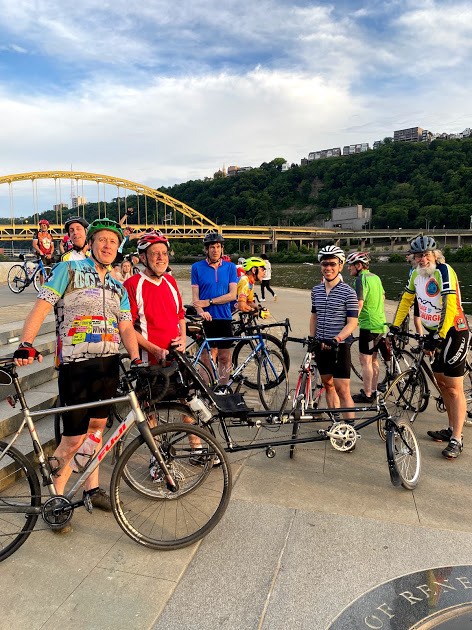
Pæthos After PMC2025

It might seem a little late to think about this, but I’ve decided to take a look at why. What is it that motivates me to keep pedaling, after having already ridden for such a ridiculously long time?

The impetus for looking into that question came from a recent GCN video, wherein one of the presenters asked himself why he never got tired of cycling. It might be worth a watch if the question is meaningful to you. A few of the answers he shared resonated with me, and some of them absolutely did not, but the question remained…

What is it about riding a bike that still appeals to me?

But two items of business need to be mentioned before I can share my own answers.

First, after I’ve shared my motivations, I’ll share the much shorter list of things I hate about cycling, which might actually be more interesting to some.

And second: writing about my motivations is tricky. The list of factors is long and detailed, and it would be difficult to convey my depth of feeling without getting really verbose and boring my audience to death. So I’m going to keep my comments brief, and ask the reader to infer that depth of feeling. So keep that in mind while you read my summary descriptions.

That said, here’s my list. There’s a dozen of them, in single-sentence bullet-list form:

  • Cycling – especially the sensation of speed – is exciting and fun, and that’s just as true at age 60 as it was at age 6.
  • Cycling allows me to enjoy the outdoors, connecting with nature, breathing fresh air, and feeling the sunshine and wind.
  • It gets me out into the world around me, seeing the countryside and the varying contours of the land, while learning all kinds of details about the places I ride through.
  • I’ve always needed a physical outlet for expending excess energy, and cycling provides a healthy way to work myself to fatigue or exhaustion.
  • The health benefits of cycling are greater than almost any other human activity, contributing directly to cardiac, respiratory, circulatory, muscular, and digestive health (without even mentioning mental and emotional health).
  • Cycling can burn a tremendous amount of calories, which makes it great for dieting, or (as in my case) a good way to get away with eating lots and poorly.
  • I get to exercise my analytical side by tracking and comparing all the quantitive data that’s produced, such as my mileage, power, and fitness numbers.
  • With such clear ways to quantify performance, cycling makes it easy to set goals for myself, and a genuine sense of achievement upon reaching my goals.
  • Group rides offer a social element that is lacking in many of my other daily activities, and I’ve made a number of good friends as a result of this pastime.
  • Many rides wind up as treasured memories that I look back upon and will enjoy for a lifetime.
  • As everyone knows, one of the most rewarding things I’ve ever done is raising money to support cancer research at the Dana-Farber Cancer Institute, through my 26-year devotion to the Pan-Mass Challenge charity ride.
  • For all these reasons, cycling is clearly a great use of my time; among the many options I have for spending time, cycling beats nearly all other alternatives.

As far as I’m concerned, that’s an extremely compelling list of reasons to get out and ride, even – or perhaps especially – now that I’m into my sixties.

In contrast, there are certain aspects of cycling that I avoid like the plague. So, as promised, here is my much shorter list of the things that I hate about cycling.

Number one is that I only ride on the road. There are lots of other cycling disciplines, including mountain biking, gravel riding, cyclocross, track riding, bikepacking, downhill, stunt riding, and more. I don’t do those. I am a roadie, and exclusively a roadie.

I don’t race. In the U.S., most bike races are criteriums, taking place on small, technical courses with lots of turns. That kind of close-quarters racing is insanely dangerous, and I’m just not interested in courting crashes and injuries. And while I might enjoy other formats like hill climbs or time trials, I really have no desire to compete against other cyclists. I much prefer challenging myself with completing a long and/or difficult course like a century or a brevet.

I don’t do interval workouts or structured training programs. Although high intensity work is a vital part of any training regimen, I detest the self-induced extreme suffering of riding according to a spreadsheet and a stopwatch. What works best for me is the Swedish idea of “Fartlek” – or “speed-play” – where you emphasize varying your intensity based on the terrain around you, with some degree of both spontaneity and specificity.

I don’t ride a bike with motorized assist. While there might come a day when old age and feebleness force me to accept powered assistance from an e-bike, I will avoid that as long as I possibly can. Since exercise intensity is also an important part of healthy aging, I’m not going to surrender any of my fitness until I’m forced to.

And finally… I don’t mind big hills, darkness, or cold weather – I have appropriate gear for any of that stuff – but I do my best to avoid riding in wet weather. Even though it’s really only miserable at first (once you’re soaked thru, you can’t get any wetter), it wreaks havoc on the equipment and necessitates very thorough post-ride cleaning and maintenance: a messy, tedious chore I’d much rather avoid.

All this might leave you thinking that I‘m always ready and eager to ride, but that’s not always the case. In fact, there’s often times when cycling is the last thing I want to do. Usually that’s because I’m overtrained, when I’ve worked myself too hard for too long, without giving my body sufficient time to fully recover, leaving me tired and irritable. After all, it’s a fundamental cycling truth that you don’t get stronger while riding; that’s when you incur the damage that promotes muscle growth. That growth and strengthening can only happen while you’re resting, so it’s important for cyclists to rest just as diligently as they train.

That’s why I have time to contemplate and share why I’m still in love with cycling… Because I’m taking a much-needed rest day after riding for six days in a row! Now, if you’ll excuse me, I believe there’s a big ole burrito downstairs with my name on it…

Friday I had heart surgery. Even though it was via intravenous catheters and I should fully recover, the recuperation period is still gonna blow a hole in my training and fitness. So this is a good time to get you caught up on what I’ve been up for the past two months, and where things go from here.

So far, 2025 has been a little bit of up-and-down, and a little bit of in-and-out. I took a bit of a break when the calendar flipped, and then it was an odd mix of indoor and outdoor riding, mostly dictated by Austin’s variable winter temps.

Riding with the CEO on a PMC Zwift group ride

Pacing the CEO on a PMC Zwift group ride

Video of Austin's Friday Truancy group ride rolling out

Brilliant Texas skies along Walnut Creek trail extension

Brilliant Texas skies along Walnut Creek trail extension

On the indoor side, I’ve logged about 1,000 km on Zwift, focusing primarily on riding a dozen+ new routes, advancing another four XP levels, and participating in eight delightful PMC group rides, which have just finished up for the season.

But knowing that a surgically-induced enforced break was coming, I did my best to ride outdoors as much as the weather would allow. February in Austin began and ended delightfully, allowing me to rack up over 500 real-world kilometers on a dozen rides, including my first two Friday Truancy group rides since my stroke at the start of October.

My final ride before the operation was last Wednesday’s 80 km trip out the Southern Walnut Creek path to Manor, which was my longest ride – indoor or out – since my stroke. It also marked my max Fitness level for the year (a pretty moderate 56 CTL), having finally recovered all the Fitness I’d lost by resting at the start of January.

So that brings us to the beginning of March, and Friday’s heart surgery. If you want all the details, you can read the accompanying post in my general blog, but here I’ll limit myself to the short- and long-term impacts to my riding.

In the short-term, the surgery is going to require some recuperation time, which means time off the bike. It’s really important that the two incisions into major veins in the hips are allowed to close up and fully heal before attempting any kind of exercise. If things go well, this week I’ll start doing some short walks. A week after that I might introduce some low-intensity work on my partner’s elliptical trainer. Then some easy rides on my indoor trainer. But for the next month I have to always keep my heart rate below an extremely mild 100-110 bpm.

I’ll have some post-op testing and a followup with my cardiologist in about three weeks, at which point I hope to get the green light for a gradual return to actual training. Over the next several weeks of minimal exercise, my Fitness is going to plummet, and April and May will be spent trying to get back to last week’s Fitness level.

And what will the rest of the year look like? It’s hard to say until after that followup appointment. I think I can expect a full return to endurance riding, but when and how long that’ll take is unknown. I’m almost certainly not doing the events I’d hoped to do in April: the American Stroke Association’s CycleNation charity spin-bike ride; and the Red Poppy Ride century. But I might be ready for June’s 100k Fire Ant Tour. We’ll see how it goes.

And what about riding remotely for August’s Pan-Mass Challenge? As I said in December’s annual summary post, that’ll remain a complete unknown until May, so I’ll defer my registration until I have more clarity. Hopefully I’ll be in shape to make it a good couple days of riding, to “properly earn” my sponsors’ donations to DFCI, even if perhaps it might fall short of the traditional 300 kilometers.

But I do expect I’ll be able to return to the endurance riding that I love. It’s just a question of when, and how long it’ll take to train back up to the fitness I need to complete such rides.

But until then I guess I’ll take a few weeks of enforced relaxation!

This one’s just a minor but significant (to me) blog update. It’s not really even worth bringing others’ attention to it, except that I’m pleased with how I was able to make it work. So what is it?

Yawl know that there’s a sticky/pinned post pinned to the top of my blog with charts that track my Fitness as of my most recent ride.

And one of those charts has always shown my Fitness for the current calendar year.

The problem was: when the year is new (like it is now), that chart would be mostly empty, and it would take weeks or months for it to show any kind of meaningful data.

The obvious solution was to stop segmenting the chart by calendar year, and instead have it show my Fitness over a rolling 12-month period, kinda (exactly) like what you see below. That way it always shows a full year’s worth of data, with new data being added every day, and old data points rolling off.

Setting this up to happen automatically – without any user intervention – required a little tech wizardry to implement, but it’s now done and live on that pinned Up-To-Date Fitness Charts posting. I think it’s a nice little enhancement, and just wanted to call it out so that folks can take note of it.

Here’s what it looks like:

I was 35 years old when I started my adult cycling career. In those early years, my rapidly-growing cycling fitness more than compensated for any loss of overall fitness that came as I aged.

As the years passed, my cycling fitness reached a stable plateau, while the effects of aging slowly but consistently gained momentum. But I wasn’t worried; throughout my forties I could easily keep up with riders ten years younger.

But when I turned 50, I noticed it took increasingly more effort to keep up with the kids. And now that I’m 60 years old, I have to admit that I’m simply not keeping up with them anymore, and never will again, no matter how hard I train.

So in case you’re on that same career path, here’s a few observations about my experience as an aging cyclist.

It’s easiest to see in the numbers. It wasn’t as linear as the “220 minus age” formula implies, but my max heart rate has dropped significantly over the past 15 years, from 175+ down to 160. And the inevitable loss of muscle mass has been reflected in my FTP and other measurements of power output like sprinting duration and max power.

The media always invokes the idea that we need more recovery time after hard efforts as we age. For me, that manifests mostly in my ability to do repeated bursts of high-intensity effort within a ride. I don’t feel I need more recovery time between rides; if I need more time for anything after a hard ride, it’s for my motivation to recover! And of course the standard prescription for maintaining fitness as we age is to continue doing severely painful intensity workouts. Ugh!

One generalization I can confirm is that as I’ve aged, my sleep cycle has become shorter and less refreshing. Gotta start embracing the nap, although they’ve always left me feeling nauseous afterward.

Another change is that I’m less willing to tolerate bad weather. I’m good with heat, but I’m kind of done thinking that riding in the cold is any fun. Doubly so for rain, and the annoying cleanup routine that follows a wet ride. Yes, it can be done; no, I don’t think it’s worth it anymore.

But once you’re out on the road on a nice day, what does riding “over the hill” feel like? It feels like having one of those days where you’re not performing at your best… every single day! Whether it’s heavy legs or lack of aerobic fitness, it always feels as if there’s something limiting me. There aren’t many of those strong days when you’re at peak fitness and everything comes effortlessly.

Instead of looking forward to hills as a place to attack your group, you begin to fear them as places where you’ll fall behind the group. And they drop you more frequently on those climbs… and on the flats… and on descents. You still participate in group rides, but you wind up isolated and riding by yourself much of the time.

You get discouraged on group rides, because you’re the last person to each rest stop, which means you always get the least rest before the group sets out again, despite being the person who needs recovery the most. So you give up on the group and spend more time doing solo rides.

That’s what it’s like. I’ve had an undeniable drop-off in physiological performance due to aging. But at the same time, psychologically I’m just less willing to tolerate the suffering inherent in high-intensity, maximal efforts. To keep up with other riders, I have to spend more and more of my time riding at my limit, and it’s harder and harder to marshal the motivation to spend long hours riding at that limit.

While I was slowly getting older, I spent 25 amazing years near the front of the pack. Now that I’m 60 years old, that’s simply no longer a possibility. It’s time to set ego aside and get used to being one of the slower riders that other people have to wait for. It’s either that, or ride solo, which is something I’ve always done quite a lot of.

While I may not be the strongest cyclist in the pack any more, I still have the advantage of being significantly healthier than my sedentary age-group peers. And I still have as much passion for cycling as I’ve ever had. The bottom line is that I need to accept my reduced capabilities, adjust my goals to match them, find groups that will tolerate them, and just ride on.

May the road before you be a long, enjoyable one!

I’m an old man. I’m not gonna set any speed records (aka Strava KoMs) on the melty-sweltery streets of south-central Texas. Especially in a city full of amateur and pro racers like multiple and current Tour de France participant Lawson Craddock.

However, what I can do is ride frequently, and if you’re the person who has ridden a road segment more often than anyone else in the previous 90 days, Strava recognizes you with their “Local Legend” award (aka LCL).

Looking back from the top of Ladera Norte

Looking back from the top of Ladera Norte

So with few century-length rides happening in the unrelenting convection oven heat of summer in Texas, and needing some kind of cycling goal to motivate me, I decided to try to win the LCL on one of Austin’s most notorious hills: the kilometer-long, 100-meter, 16%-max climb up Ladera Norte, where the aforementioned Lawson Craddock holds the fastest ascent.

My first introduction to Ladera Norte (Spanish for ‘North Slope’) was during our apartment-hunting trip last Thanksgiving. We had just completed our second viewing of the house we would eventually lease, and took some time to drive around and explore the neighborhood. Just three kilometers from the house, we randomly turned at a sign for “North Cat Mountain” and up a slope that immediately reminded us of the ludicrous hills back in Pittsburgh, like maybe Hazelwood Ave. It was a huge eye-opener.

Becoming the Local Legend on it wasn’t gonna be an easy task. Not only is it a challenging climb, but the guy who held the title had ridden it over 30 times. I’d have to climb that beast more than once every three days, for three months straight! During… wait for it… June, July, and August.

So I added the climb to the start of my short one-hour recovery ride loop and started doing it as often as I could tolerate. By riding first thing in the morning, I could avoid Austin’s daily 40° C heat, although it gets unpleasantly humid overnight. Doing this route so often really limited my other riding, but I wasn’t planning on many long rides in that heat anyways. Riding straight out to the climb, over the top, then cooling down with my recovery loop became my not-quite-daily ritual.

Because I was riding the same route so often, I became the LCL on a number of other segments along my route: No Hills Drive, Mesa, Greystone, Bull Creek, Hancock. And, eventually… Ladera Norte!

After much repetitive climbing, I finally stole the LCL on July 30th. Having done 30 climbs over 65 days, I’d completed nearly one ascent every other day for 9½ weeks. Mission accomplished, at least temporarily.

See, when you take the LCL from someone, Strava sends them an email letting them know. So the next question was whether the former LCL was in the mood to go out and immediately take it back from me.

It’s been a week since I took the title, and he hasn’t made any attempt to catch up. Meanwhile, I’ve done a few more reps, and our current tallies are 33 to 27. So it looks my status as the Local Legend on Ladera Norte is somewhat secure.

Which means it’s time for me to switch goals, and that’s something I need to do anyways.

Five weeks from today I will be doing my first Livestrong Challenge, which is also my first attempt at a 100-mile ride in Texas, and my first century on the new bike: Pæthos. If I keep doing these dinky 26km morning rides, there’s no way I’ll be prepared to tackle 100 miles, so now I’m changing my focus to: getting lots more kilometers under my belt, and getting better acclimated to the extreme heat of high noon in Texas. Wish me luck!

And of course if you can, it would be wonderful if you expressed your support via a donation to the Livestrong Foundation, which supports cancer survivors. You can do that on my LC rider page: https://give.livestrong.org/ornoth

Thanks for being with me!

Welcome to my cycling blog!

NOTE: This is a perpetual/sticky/pinned post. It’s not my most recent posting; if you’re looking for that, just scroll down or click here.

I pinned this post to the top of my cycling blog because the following charts are automatically updated after every bike ride (both outdoors and on the indoor trainer). So you can easily find this entry, which always shows my up-to-date Fitness numbers.

By “Fitness”, I’m specifically referring to my Chronic Training Load (or CTL), which is an exponentially weighted moving average of my Training Stress (TSS) over the preceding six weeks. You can learn more in this video, this web page, or this book.

So without further ado, here are my up-to-the-minute Fitness charts.

The first chart depicts my Fitness level over the past 12 months. Any red dots that appear represent rides of 100 miles or more. For comparison purposes, I’ve included a light grey line to show my normal/average Fitness over the course of a year.


Calendar-year charts: 2026 2025 2024 2023 2022 2021
2020 2019 2018 2017 2016 2015 2014 2013 2012 2011

The second chart shows my long-term Fitness level since 2011, when I first started tracking my CTL. As expected, it peaks during the summer cycling season, and declines during the wintertime off-season, although less so since 2018, when I bought my indoor trainer. Note: no dots for centuries, cos there’d be more than 90 of ’em.


Measuring power is the gold standard of performance management on the bike. I’ve waited years for the industry to provide a pedal-based power meter that is accurate, uses mountain bike-style SPD cleats, is reasonably easy to use, and “affordable”.

In 2018 I bought a Wahoo Kickr Core indoor trainer, which allowed me to finally measure my power output over the winter. But when I took the bike off the trainer for the summer, I had to give up measuring power, and go back to estimating power (and thus fitness and fatigue) indirectly based on heart rate data.

Garmin Rally XC200 power meter pedals

However, after over a decade of waiting, last month I opened my wallet and acquired a set of Garmin Rally XC200 power meter pedals. Here’s some background and insight into how it’s been for me so far…

Why pedal-based? These days, you can throw a power meter on a bike in several places: pedals, crankarms, chainring spider, rear hub… A pedal-based system made sense for me because it’s the easiest to install, and the easiest to move from one bike to another. And unlike a hub or indoor trainer, it measures your power output earlier in the process, because some power is lost to friction and inefficiency in the drive train (as we’ll see in detail below).

Why the Garmin ones? One other option, the SRM X-Power, was about the same price, but they have a bad rep with pedals, and just didn’t seem able to manufacture them very quickly.

The only other option would be to buy a pair of non-SPD Favero Assioma pedals, rip out the internals, and plug that into a pair of Favero SPD pedal bodies. That would have been a couple hundred bucks cheaper, but would have voided their warranty, which is meaningful on a nearly $1,000 purchase.

Another argument in favor of the Garmins is that they have 2 to 4 times better battery life than the others.

A lot of this gets covered in exhaustive detail by the incomparable DC Rainmaker in his exhaustive Garmin Rally review from last year, as well as this year’s power meter pedal buyer’s guide.

Some miscellaneous notes: All these pedal-based units are double-sided (a necessary convenience), and also transmit your cadence to your bike computer, eliminating the need for a separate cadence monitor.

Like the Assiomas, the Garmin power meter is housed in the pedal spindle, and can be moved between pedal bodies of different styles. So if I ever decided to switch from SPD pedals to SPD-SL or Look Keo style cleats, I could just buy some empty pedal bodies and plug the power meter spindle right in.

Also, although the Garmins were very expensive, I got a tasty $240 discount thanks to REI’s spring members’ sale. Plus forthcoming reward bucks that could be applied to a new Garmin bike computer, if they were to ever release a new model…

Some usage notes: You need to keep a couple things in mind in addition to your battery life. One is that you need to let the unit acclimate to the outdoor temperature in order to get accurate readings, and that can take about ten minutes if you store and ride your bike in very different temperatures. And then you also need to do a zero-offset calibration about 10 or 15 minutes into every ride. It’s a bit of a bother, but it’s much better than we used to do with older power meters.

One big difference is the weight of the pedals. These pedals weigh 443g; they are replacing my current pedals, which weigh in at 306g. Although I’ll also be removing my dedicated cadence sensor from the bike, which is an additional 10g.

So what data do I get? I’ve already mentioned power (in Watts) and cadence, but there’s a shitton more. You get the power balance between your left and right legs. You get how much time you rode seated versus standing. You get measurements of how much power you produce at all points throughout the pedaling circle (even if that’s not of any practical value to anyone). You get measurements of whether your power is being delivered at the center of the pedal, or off to one side, which might indicate a bit of a fitting problem. And all of these are logged second-by-second for later analysis.

Can this get any geekier? I’m glad you asked!

So one of the biggest questions to ask of any power meter is its accuracy. The first units claimed to be accurate to ±5%, and up til now I’ve been assuming my Kickr is performing up to its ±2% claim. Most power meters these days (including my pedals) advertise ±1% accuracy, but how do I know? Well, let’s compare them against one another!

I’m going to look at two indoor trainer rides. The first is a March 31th 50-minute ride of Zwift’s Tour of Watopia Stage 3 on the hilly Downtown Titans route. The second, longer ride is ToW Stage 2’s flatter Watopia’s Waistband route on April 2th.

For each ride, I simultaneously recorded the power data coming from my Wahoo Kickr Core, and also that coming from my Garmin Rally XC200 pedals. So if things are working correctly, the measurements coming from each ride should be almost identical.

First, the numbers: As expected, cadence was virtually identical between the pedals and the crank-mounted dedicated cadence sensor (I did not take cadence from the Kickr, as trainers aren’t reliable for cadence data).

In contrast, the pedals registered an average power that was 2.7 to 4.1% higher than the trainer. Similarly, average weighted power came in 3.0 to 4.5% higher. Does that mean one power meter is slightly off, and how do we know which one?

No, everything’s fine. That small difference is eminently explainable by that thing I mentioned way back in paragraph four: power numbers coming from a trainer will be lower due to drive train losses that occur due to friction and flexion somewhere between the pedals, crankarms, chainrings, chain, cogset, and trainer. So they’ll naturally report a little lower numbers than pedals, which measure power transfer much earlier in the process. That would easily explain the 2.7 to 4.5% variation I saw.

But interestingly, when you look at maximum power (e.g. sprinting), the difference between the pedals and trainer falls to 0.6 to 1.0%. I haven’t got a good explanation for that yet.

But that’s all just summary data, and averages aren’t a great way to validate data over time. Much more revealing (and interesting) is the second-by-second detailed data. For that, we need some charts!

Next, the charts: So let’s compare the power data for each ride in the DC Rainmaker Analyzer Tool, overlaying the numbers for each ride from our two data sources to see how closely they match up. In all these charts, the red line is my Kickr Core trainer’s data, and the Garmin pedals are in green, and hopefully those lines will be almost identical.

First, let’s look at the power charts for the whole duration of both rides.

Chart: 3/31 power over 50 minutes Chart: 4/2 power over 90 minutes

It’s a little easier to see on the first chart, since it’s less busy, but in general the numbers reported by my pedals and my trainer line up really well, with the pedals giving slightly higher numbers, as expected.

Remember tho that the first chart is 50 minutes long, and the second is 90 minutes. So although things look pretty good (yay!), this is at an extremely coarse level. For a better comparison, we really need to zoom in a little closer. Let’s find a couple representative chunks in the 7- to 10-minute range.

Chart: 3/31 power over 7 minutes Chart: 4/2 power over 10 minutes

And there you go. Aside from the pedals’ slightly higher readings, the ups and downs of the charts are almost identical, close enough that the difference could easily be put down by the devices’ different sampling rates. No dropouts, no crazy spikes, or big differences between the curves.

In addition to a simple time-series comparison, there’s another way athletes look at power that might confirm our conclusion. For a sprinter, your overall power doesn’t matter so much as the maximum power you can put out and sustain over five, ten, maybe thirty seconds. So the critical power curve shows the maximum power you sustained over a particular duration. Obviously, the human body can generate a lot of power in short bursts, but can only sustain a more moderate power over durations measured in minutes and hours.

Unfortunately, as I’ve noted before, I’m keeping an eye on some cardiac issues and my chainrings are so worn that I can’t really sprint without dropping my chain, so my numbers are very pedestrian. Still, we can still draw some conclusions from my critical power curves for those two rides.

Chart: 3/31 critical power Chart: 4/2 critical power

And this perfectly confirms everything we’ve seen so far. At just about every duration, the pedals consistently read 3 to 5% higher than the trainer, as expected. The only variance is at durations shorter than 15 seconds, where the devices’ sampling rates might impact the numbers.

So my overall conclusion is that I can definitely rely on these pedals to produce accurate power data that is very consistent with my indoor trainer, keeping drive train losses in mind.

Unless you’re a cyclist, it’s hard to convey how exciting and interesting it is to finally have a power meter on the bike year-round. At the big-picture level, this means my power data will finally be consistent between indoor and outdoor seasons, thus giving me more reliable fitness and fatigue numbers.

This means I can not only monitor my fitness and fatigue month-by-month and year-over-year, but also precisely quantify and properly pace my level of effort and reserves on a minute-by-minute basis during an individual ride of whatever duration.

It really wasn’t anything special, just the regular 25-mile “Team Decaf” Tuesday night group ride out of Highland Park.

At the same time, it was a rare and special event, for several reasons.

Beginning with the most mundane of those reasons: it was the first Team Decaf ride of the year. That’s normally a chance to catch up with riding buddies I haven’t seen all winter long, and perhaps test one’s legs to determine one’s current position in the hierarchy of speed. The first group ride always has a bit of a “reunion” feel to it.

First post-Covid Team Decaf group ride

First post-Covid Team Decaf group ride

Sunrise on the castle climb in Zwift's new Japan-themed world

Sunrise on the castle climb in Zwift's new Japan-themed world

But never mind this year, this was their first group ride in more than 1½ years, as they've been on hiatus since October 2019 due to the Covid-19 pandemic. After such a long break, getting back together felt like an extremely special occasion.

For me, this also (hopefully) marks my return to outdoor riding. I actually did a couple outdoor rides back in March, but Zwift’s Tour of Watopia and my mission to reach Level 50 kept me on the indoor trainer through the end of April. With those out of the way and a new all-time record fitness level, I was all set to rediscover the hilly roads of Allegheny County as the calendar ticked over to May...

I started the month with a couple outdoor rides, only to be sidelined with a bad case of achilles tendonitis. Between my injury and additional downtime around my Covid-19 vaccinations, May was a near-complete write-off. The only things that got me on the bike (gingerly!) were the final PMC group rides of the season on Zwift, and Zwift’s release of a new Japan-themed virtual world (which I must admit is pretty cool). Meantime, my fitness absolutely plummeted. That’s what happens when you cut your training down from 200 miles per week to less than 50.

However, I’m now fully vaccinated, which means this was also my first time riding with any other people in more than 18 months. During the pandemic lockdown, I rode 7,700 miles; only 1,250 of them were outdoor, and all of those were solo.

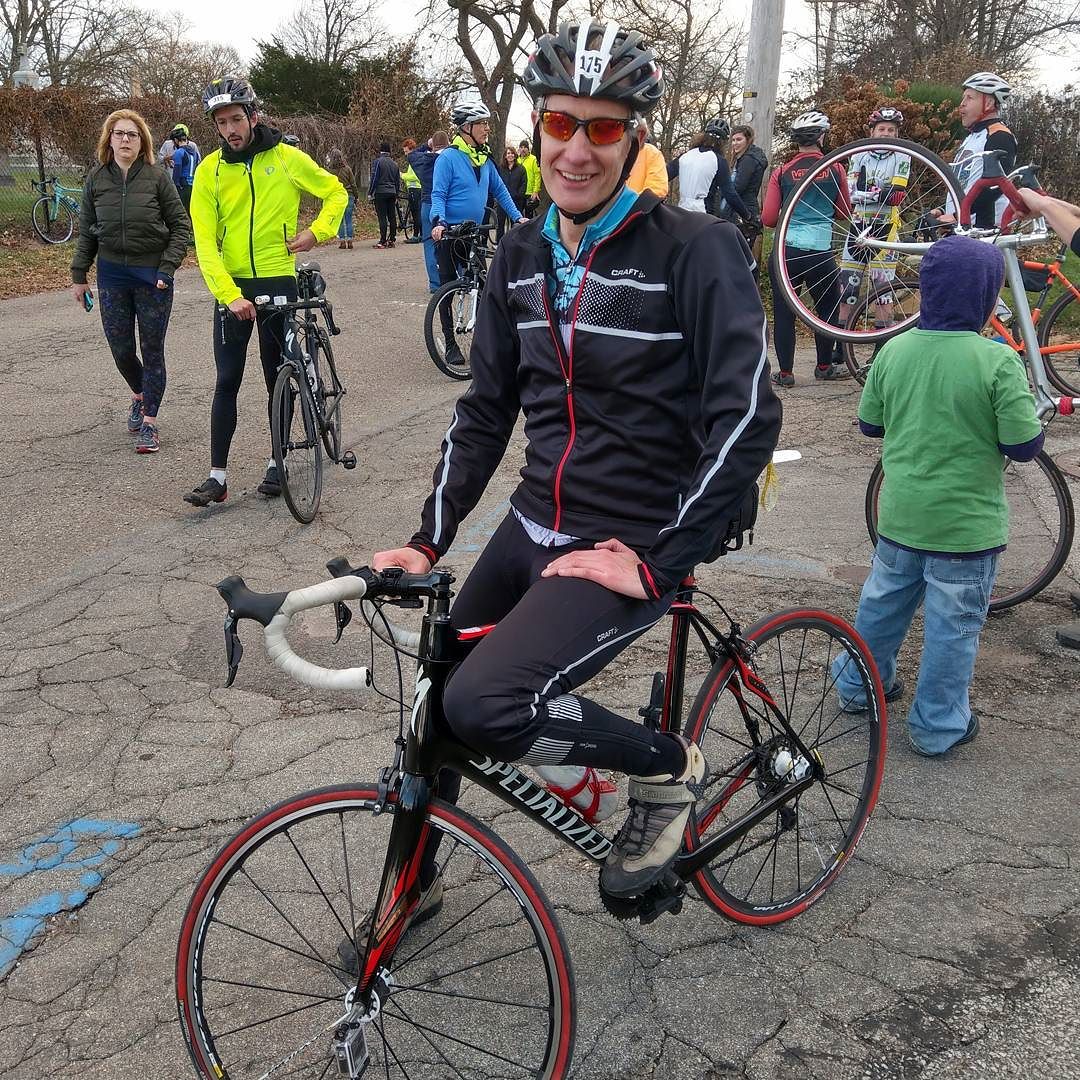
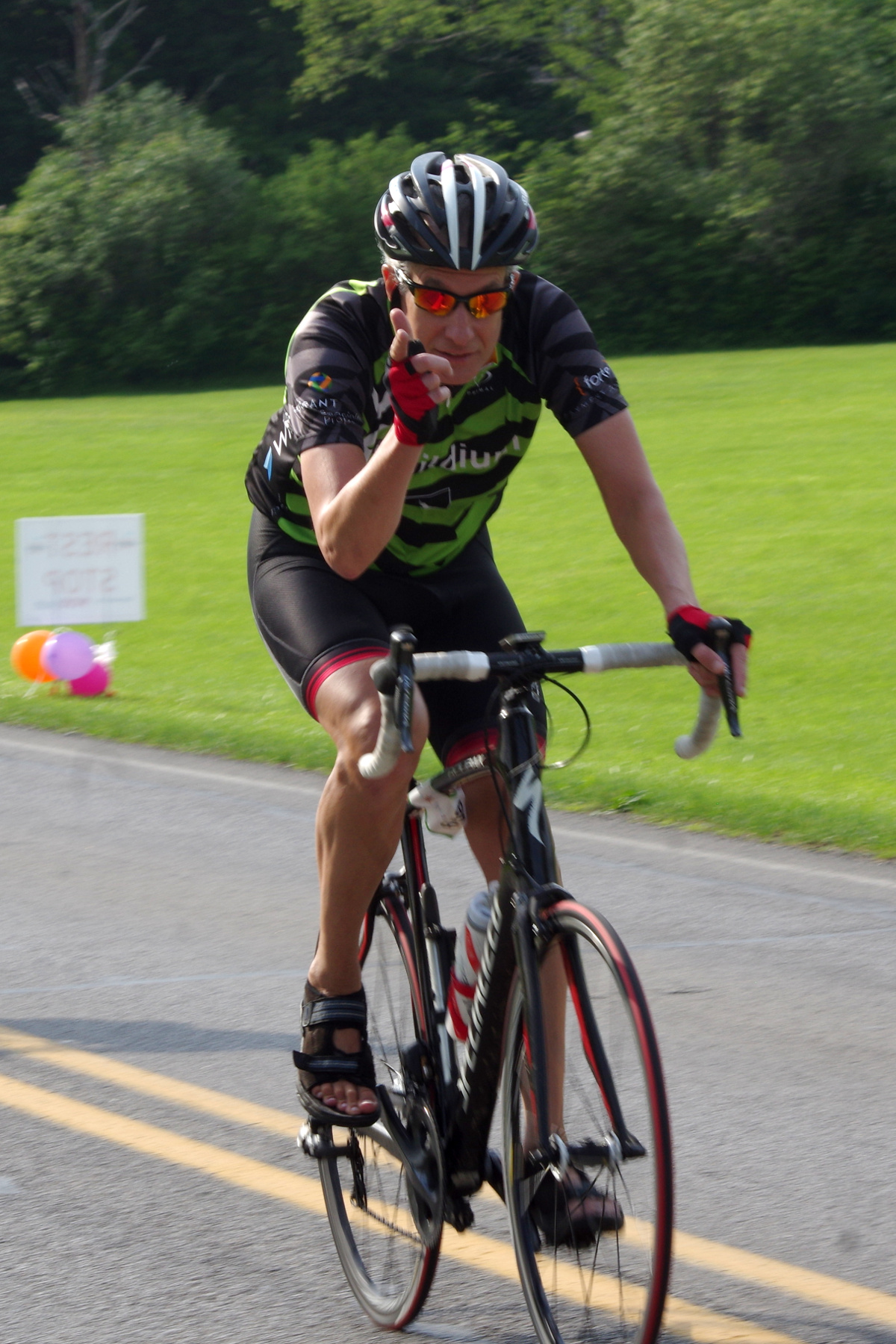
So with all those milestones, yesterday’s group ride was memorable and even a little emotional. Enough so that I felt inclined to actually smile and photobomb. My ankle felt reasonably good, although there’s enough pain — both on and off the bike — to constantly remind me that I’m not 100 percent, or even 90 percent.

The next question is what will the summer of 2021 riding season look like?

The first order of business is getting my achilles fully healed and ramping my mileage back up. That might take quite a while, both because tendonitis is a long-term injury, and it is aggravated by overuse. So returning to long endurance rides is going to be a slow process.

I don’t know when I’ll be able to return to full century rides, which has implications for my goals for this year. I’d like to hit the Akron Bicycle Club’s century in July, do some kind of “reimagined” Pan-Mass Challenge ride in August, and either the Epic Tour in Toronto or the PMTCC’s three-state century in mid-September. And I’m eager to get my milestone 100th century ride under my belt, whatever that winds up being. But there’s no way to know when — or whether — any of that will happen.

In the short term, it’ll be a bunch of short rides, probably sprinkled amongst lots of recovery days. And putting some time into my PMC fundraising, as well. That’s really all I can do until I’m injury-free and back to full fitness.

It looks like my return to normalcy following the Covid-19 pandemic will be a very slow, gradual one.

Four Lakes

Sep. 1st, 2019 11:29 pm

Having made my own “Four Rivers” century two weeks ago, the Labor Day weekend bought a “four lakes” century: the annual Pedal the Lakes tour up in Mercer County, which skirts Conneaut Lake, the Pymatuning Reservoir, Mosquito Creek Lake in Ohio, and the Shenango River Lake.

Pymatuning Reservoir dam gatehouse

Pymatuning Reservoir dam gatehouse

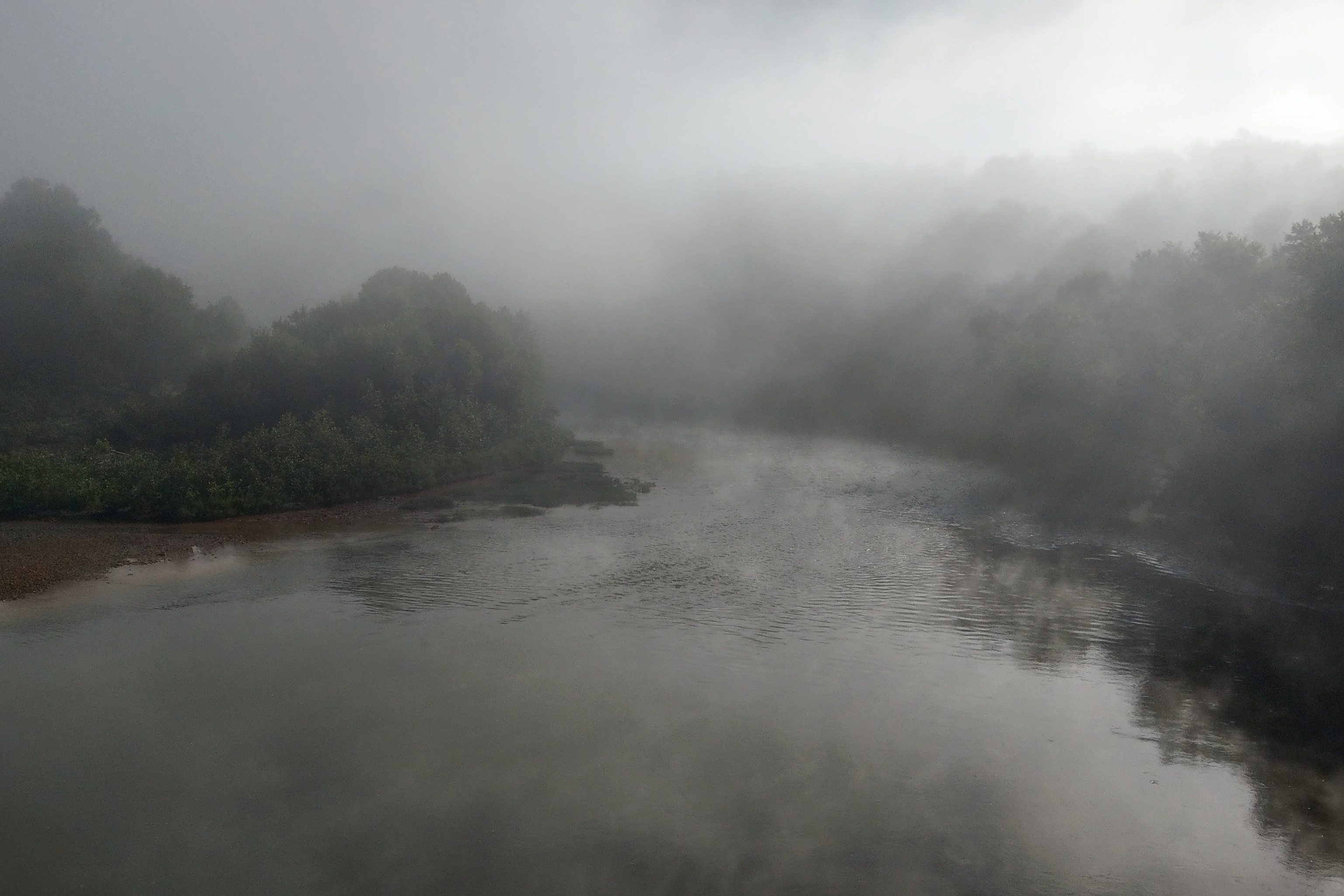
Foggy Conneaut Lake @ 8:15am

Foggy Conneaut Lake @ 8:15am

Amish convention @ Pymatuning Reservoir spillway

Amish convention @ Pymatuning Reservoir spillway

With the holiday marking the transition from summer to fall, my previous rides in 2016 and 2018 were my last 100-mile rides of those years. There wasn’t much visible evidence of autumn this year however, which pleased me!

The day provided perfect riding weather. Skies were clear with some protective high clouds, and temps that began at a cool 54º only climbing to a pleasant 70º. I continue to marvel that I’ve had wonderful weather for every one of my rides this year with firm calendar dates: none of last year’s inescapable rain.

There weren’t a lot of highlights to go over—just a whole lot of farmland—but a few memories stand out: brownies at the first rest stop, on the shore of a very foggy Conneaut Lake; a mysterious gathering of Amish families at the spillway for the Pymatuning Reservoir.

The “lunch” stop is always a favorite, in an attractive little farm/barnyard-turned winery, with delicious catered pizza! I downed a slice of ’roni and another of sassage (sic) while chatting with some local riders.

After riding west into Ohio to the 60-mile rest stop near Mosquito Creek Lake, I was concerned about turning back east into a headwind, but that was nothing in comparison to the horrible chipseal roads, especially the 8-mile stretch of Bradley Brownlee Road, which every rider complained about at the 80-mile stop.

Thanks to the cool weather and being at peak form, I didn’t find myself suffering very much, which made even the final 20 miles of riding a joy. With another week of healing, my achilles was slightly improved, and reliable except for hard out-of-the-saddle efforts.

I ticked over 100 miles in a surprising 6h44m, then rolled back into Greenville feeling very strong to collect the chocolate milk they stock at the finish. In an elapsed time of 6h52m, I shaved a surprising 23m off the pace I logged in 2016 and 2018.

That completed my sixth century in six weeks, and eighth in ten weeks. It was my twelfth century of 2019, which is double what I did in 2018 and 2017. Putting that another way, I’ve done as many centuries this year as I did in the previous two years combined! And so far as I can tell, it’s my 85th lifetime century.

I enjoy the Pedal the Lakes ride for several reasons. It’s inexpensive, and the flat terrain is an invigorating relief from southwestern Pennsylvania's usual punishing hills. By Labor Day, the weather is just starting to cool off, providing ideal riding conditions, and an opportunity to look back fondly on the memorable rides of the high season. At the end of summer I'm still at peak fitness, but don’t feel any pressure to push myself harder than is comfortable.

As the last organized century of most years, Pedal the Lakes is a transition point, where I can enjoy being in top form, allowing myself to take it easy as I begin the de-training phase of the cycling year.

And so it would be now, except I don’t think we’re quite done yet...

Until five months ago, I didn’t have a power meter, so training with power just wasn’t possible. Even today, I don’t have a power meter on the bike—just on the indoor trainer—but that’s enough to start drawing inferences from the power data I’ve generated over the winter.

One analytical tool for interpreting a cyclist’s power data is their Power Curve. Thankfully, it’s conceptually simple and easy to explain: it looks at your power data and plots your maximum power output (in watts) over every duration, from one second to an hour or more.

All riders can sustain maximum power for very short intervals (think finish-line sprints), but lower power at durations of one to five minutes, and less still for sustained efforts of 30 to 60 minutes or more.

That means the Power Curve looks similar for all riders: starting high, sloping sharply downward, then tailing off gradually. Plot a novice rider and a professional cyclist on the same chart, and there wouldn’t be much difference in the shape their lines, other than the pro’s being shifted higher due to their higher power output.

For insight into how it might be useful, let’s look at my current Power Curve (click for full-size):

Ornoth's Power Curve

There are essentially two ways of looking at this information: how much power can I expect to produce for a specific duration; or conversely, how long can I expect to hold a specific power level?

In my case, for a 10-second sprint I can produce 800W, but for a 60-second sprint I can only sustain half that. For a 10-minute max effort I could expect 260W, about 235W for an hour, dropping down to 165W for anything longer than two hours.

Those estimates all hold whether I’m trying to figure out how much power I could hold for a specific time, or how long I might be able to sustain a specific power output.

That’s great information for planning a workout or figuring out how to pace yourself on a max-effort ride; however, it doesn’t tell you anything about my individual strengths and weaknesses or how I compare to other cyclists. To do that, we need to introduce comparative data, which is provided by additional research.

Through empirical testing, a team of researchers—including the well-regarded physiologist Andrew Coggan—calculated expected athletic performance ranges for power output at durations of 5 seconds, 1 minute, 5 minutes, and an hour. Comparing an athlete’s Power Curve against those calculated norms yields an understanding of an individual rider’s strengths and weaknesses.

The research team took riders with similar strengths and weaknesses and aggregated them into commonly-recognizable categories which in true scientific fashion they gave the officious label “phenotypes”. An athlete who excelled at short efforts was a sprinter; whereas someone producing above average power over an hour would be a good time trialist, climber, or steady-state endurance rider; and someone with equal performance across the entire time spectrum would be an all-rounder.

So what can I learn about myself from my own chart?

Ornoth's Phenotype

The obvious first conclusion is that I’m no professional athlete! My 5-second sprint is pretty pedestrian, and my 1-minute power doesn’t even register on the chart! However, my 5-minute power is in the upper half of the “Fair” range, and over 60 minutes I’m a fraction below “Moderate”. In comparison with professional athletes, that’s pretty impressive for a 55 year-old!

The chart shows that although I might lose a two-up sprint with a corpse, I will have unequivocally stronger results the longer an event goes. That marks me as a time trialist, climber, and/or endurance rider: something that shouldn’t surprise anyone who knows anything about my riding style and history. But it’s nice to have that confirmed by quantitative data.

For any athlete who is given this data, the next question is what to do with it; and the answer is a resounding “Do whatever you want.” Do you want to work on strengthening those areas where you are weakest, to improve your overall performance? Or do you want to maximize your strengths to derive the most benefit from them? That’s entirely up to you.

Since my cycling goals are mostly limited to centuries and 200ks, I’m perfectly happy continuing to work my endurance, and living in Western Pennsylvania is guaranteed to build up my power over short, steep climbs.

Armed with this new understanding of the wattages I can sustain over specific durations, I could put a power meter on my bike to get live power readings, which would allow me to perfectly gauge and pace my efforts in real-time. That expense will probably have to wait until the next bike, tho.

It’s been a while since I looked at what a typical year looks like. In the distant past I’ve shared a bar chart that showed my average mileage for each month of the year, and more recently I showed how my weight fluctuated throughout the year.

But those are indirect measures. Now, with eight years of heart rate data available, I can average my chronic training load (CTL, aka “Fitness”) for each day of the calendar year. That’s the chart that follows.

Since this is averaged data, there are absolutely zero surprises here. I train up during the spring, peak in the summer, gradually tail off through the fall, and bottom out in the winter.

Looking more carefully, the year can actually be broken down into six discrete two-month periods:

  • Pre-season: mid-Feb to mid-Apr
  • Training season: mid-Apr to mid-Jun
  • Peaking: mid-Jun to mid-Aug
  • Sustaining: mid-Aug to mid-Oct
  • Detraining: mid-Oct to mid-Dec
  • Off-season: mid-Dec to mid-Feb

There are a few mini-peaks whose dates are worth noting:

  • Feb 13: Lowest Fitness of the year.
  • Feb 20: Apparently spring training begins very suddenly!
  • Jul 9: Peak Fitness, usually after the ABC Ride or a solo century over the holiday.
  • Aug 6: After tapering, a secondary peak around the Pan-Mass Challenge or Every Neighborhood Ride.
  • Oct 1: Autumnal last hurrah; after this, it’s all downhill...

It’s important to note that this chart doesn’t include data since December 1, when I started using Zwift and my new indoor trainer. With my end-of-January CTL now near 60—45 points higher than average—that would dramatically raise my off-season average, so we’ll leave those numbers out for the time being.

Look for this measurement to eventually reappear in my 2019 recap blogpost, as a baseline/average to compare my 2019 training effort against, since this year will be anything but average!

We’re halfway through August, and 2018 persistently continues to be a lackluster year. Even this “catch up on miscellaneous topics” post consists almost entirely of disappointments.

In one of my least exciting accomplishments, I’ve reached 16,800 miles on my 2013 Specialized Roubaix, surpassing the miles I put on my first bike, a steel 2000 Devinci hybrid. Still need 6,000 more to eclipse the Plastic Bullet, my 2006 Roubaix.

Another less than earth-shattering development: I bought this Kool Stop tire bead jack. Why? Well, I guess it does prevent me from pinching and puncturing the inner tube when installing a tire. But that’s about as positive as anything that’s happened this year.

Another unnecessary purchase yielded a worse result. By installing this funky combination headset spacer and Di2 junction box mount, I could clean up my cockpit by getting rid of an ugly rubber band around my handlebar stem. Except it broke one of the junction box’s tiny plastic mounting pins, leaving the whole assembly dangling from my handlebars. Now I have to either spend $90 on a whole new junction box or permanently glue the junction box onto the mount with epoxy. Sigh.

Next, the rider’s—and the bike mechanic’s—worst nightmare: mysterious clicking and creaking noises. First we replaced the bottom bracket. Didn’t fix shit, but the cranks spin a little smoother, and I was pleasantly surprised that a new BB only costs about $30!

After more tinkering, figured out that the noises were because the stem and headset cap bolts weren’t tight enough. Unsurprisingly, those were the exact bolts I’d loosened to fit the aforementioned headset spacer / junction box mount… The ones every mechanic goes to great lengths to tell you *not* to over-tighten. Well that’s annoying. Locked those puppies down, and so far so good.

And then there’s the Gatorade saga. For almost 20 years, my go-to sports drink has been orange Gatorade powder, the most effective and palatable thing I’ve found. And they made me a loyal customer after a lucrative customer service escapade I blogged about.

In May I ordered another three canisters of powdered drink mix, but what they contained was nothing like Gatorade. The powder didn’t mix in water, had neither flavor nor color, and tasted like a moldy bag of burnt plastic. Yup, in the interest of “progress”, instead of just adding some electrolytes to their tried-and-true formula, Gatorade had some evil scientists completely redesign their product, and the resulting “new formula” is simply unusable. And now I’ve got $70 worth of it sitting in the back of a cupboard.

Speaking of companies fucking up something that already works well, Strava recently took the reliable TRIMP-based Suffer Score training tool that I have blogged about and replaced it with an updated metric called “relative effort”. The major difference is intentionally removing exercise duration from their calculation of exercise intensity, so that a tough 10-minute ride has the same training effect as a tough 10-hour ride.

The result? Ludicrous values that make Relative Effort completely worthless as a training tool. Using actual examples from my own riding: if a 9-hour 127-mile ride scores a relative effort of 230, why would a 3-hour 34-mile ride rack up 568 points? A 3-hour ride should have a much lower training effect than a 9-hour ride, but Strava says it was two and a half times the workout?!?! Bullshit! And this doesn’t just go for new activities; they fucked up all my historical trend charts. Way to ruin your product, Strava! And don’t get me started on their unctuous labels for varying levels of effort: tough, massive, and historic.

So yeah, I’m kinda discouraged by all of this. I’ve been hoping this year’s malaise would pass, but it hasn’t yet. But that’s a bigger story which will receive its own blogpost in the near future.

The only thing that’s motivated me to hop on the bike is the Tag-o-Rama game. I’ve claimed 19 tags this year, and with just three more I’ll become one of the top ten players (out of 124 people).

So far, 2018 has been one of those years. Terrible weather that caused the cancellation of several events, lack of motivation following the effort demanded by the Dirty Dozen, a pulled calf muscle, and a two-week trip to Asia that blew a big gaping hole in my training. So there hasn’t been much progress to report thus far this year.

Last year, by May 1st I had 708 miles under my belt, and 937 the year before. In fact, you’d have to go back to 2014 to find a year with as slow a start as the 519 miles I accrued by the end of April 2018.

On the other hand, I got out for several very short cold-weather rides, overcoming my lethargy to claim no less than 10 more tags in the local Tag-o-Rama game, which combines bicycling, photography, and local landmarks.

How’s the future look? Very mixed. The weather has finally turned the corner. I’ve got more international travel in May, which will hopefully include some memorable riding, rather than leaving me completely idle. But then a meditation retreat will probably blow another hole in the month of June.

It’s not a write-off, but my training is going to remain behind schedule through the entire first half of the year. But the calendar looks more open starting in July.

The degree to which I’ll be able to train up to peak form that late in the year will depend on my motivation, which is still marginal. At least I can be somewhat confident it will have stopped snowing by then.

No cutesy lead-in, just the unadorned fact that I completed Pittsburgh’s legendary, epic, ridiculously evil Dirty Dozen ride. And it was awesome!

This blogpost starts out with the high-level whys and hows, followed by a lot detail about the ride and each of the thirteen hills, and ends with my advice, hints, and tips for anyone considering riding the Dirty Dozen. Along with a chunder of photos and links to numerous videos.

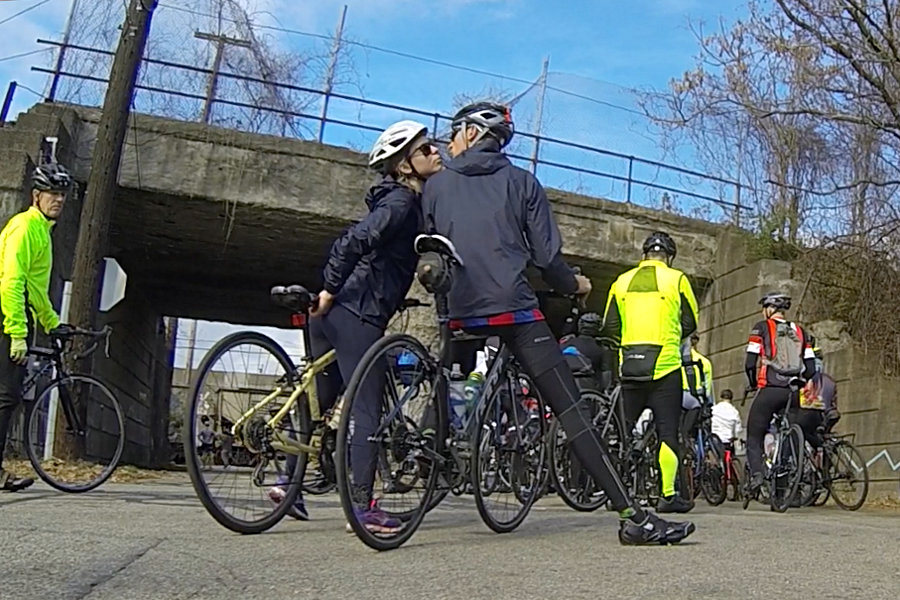
Two riders share a kiss while waiting for a train to pass before climbing Hill 5 (Logan).

Weaving back and forth across Hill 5 (Logan), this rider nearly took me out.

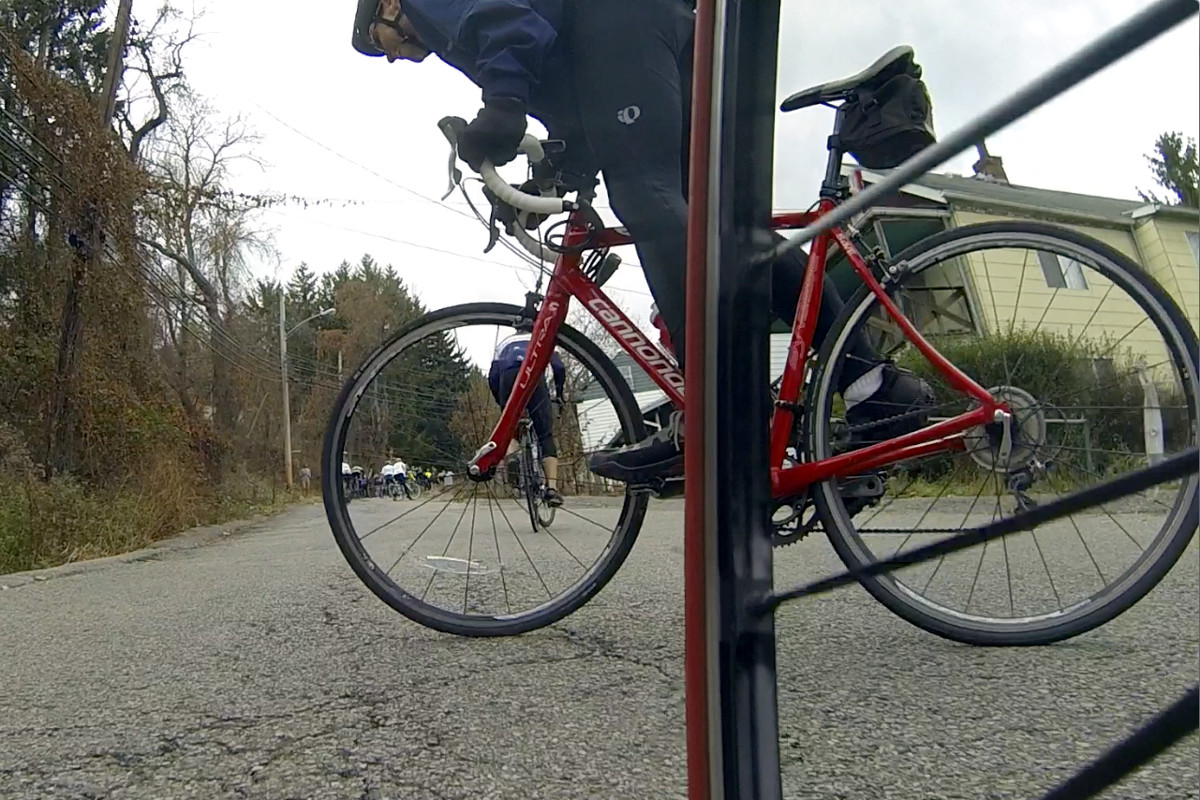
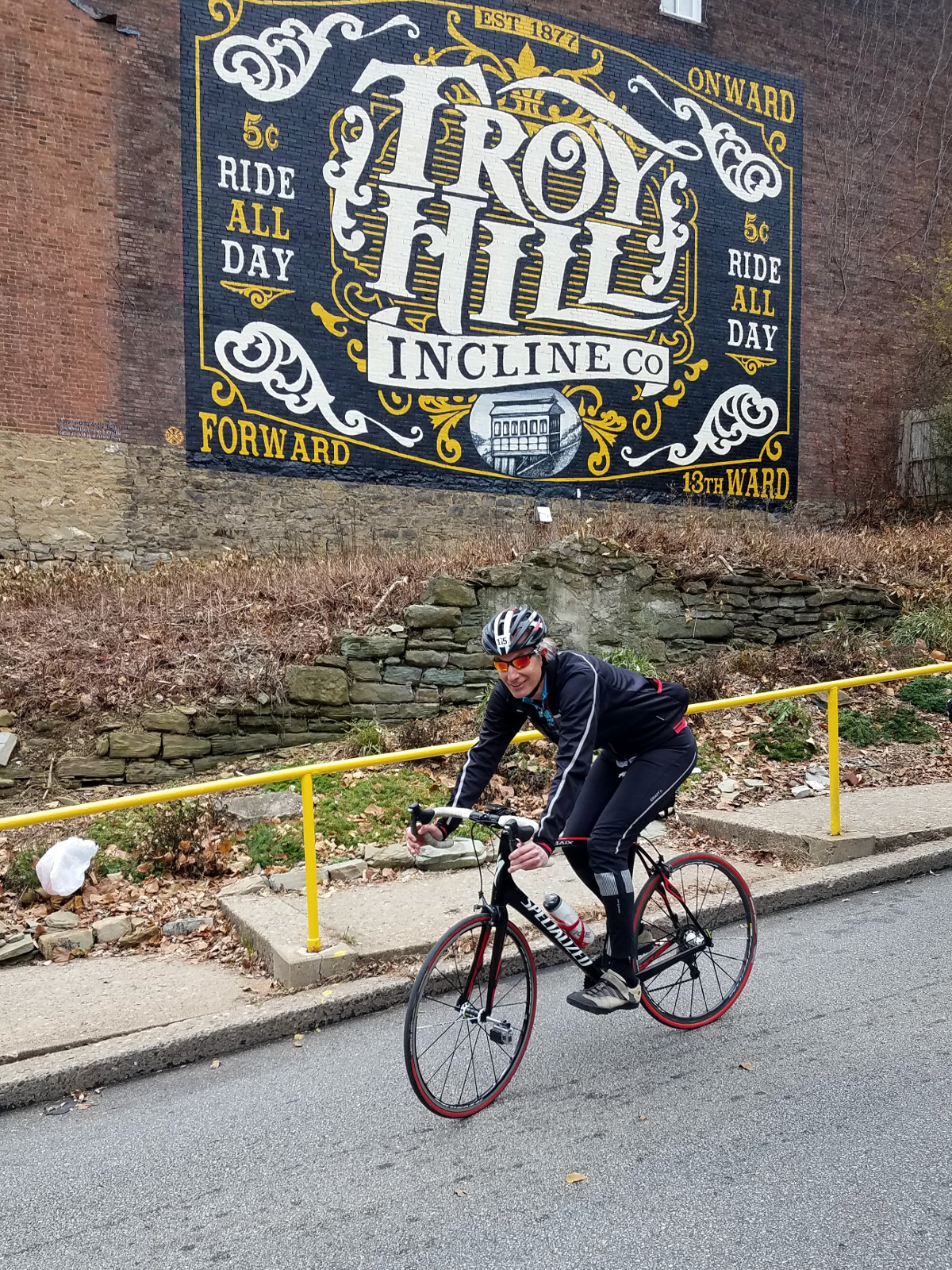
Ornoth descending Hill 6 (Rialto) from the neighborhood of Troy Hill.

Video of Ornoth (around 0:16) rolling up Hill 6 (Rialto).

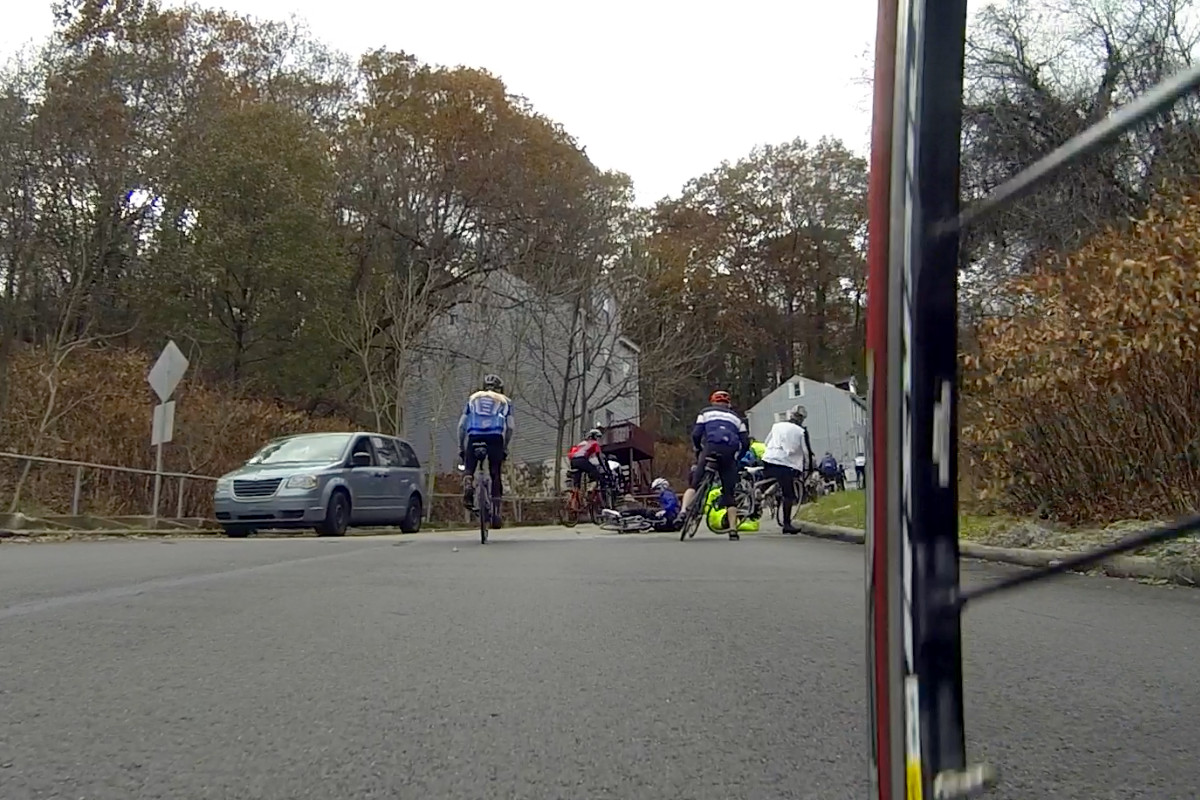
Two riders hit the deck and two others are stopped early on Hill 7 (Suffolk).

Video of Ornoth (in black) amongst a group of riders (around 3:02) to the top of Suffolk St.

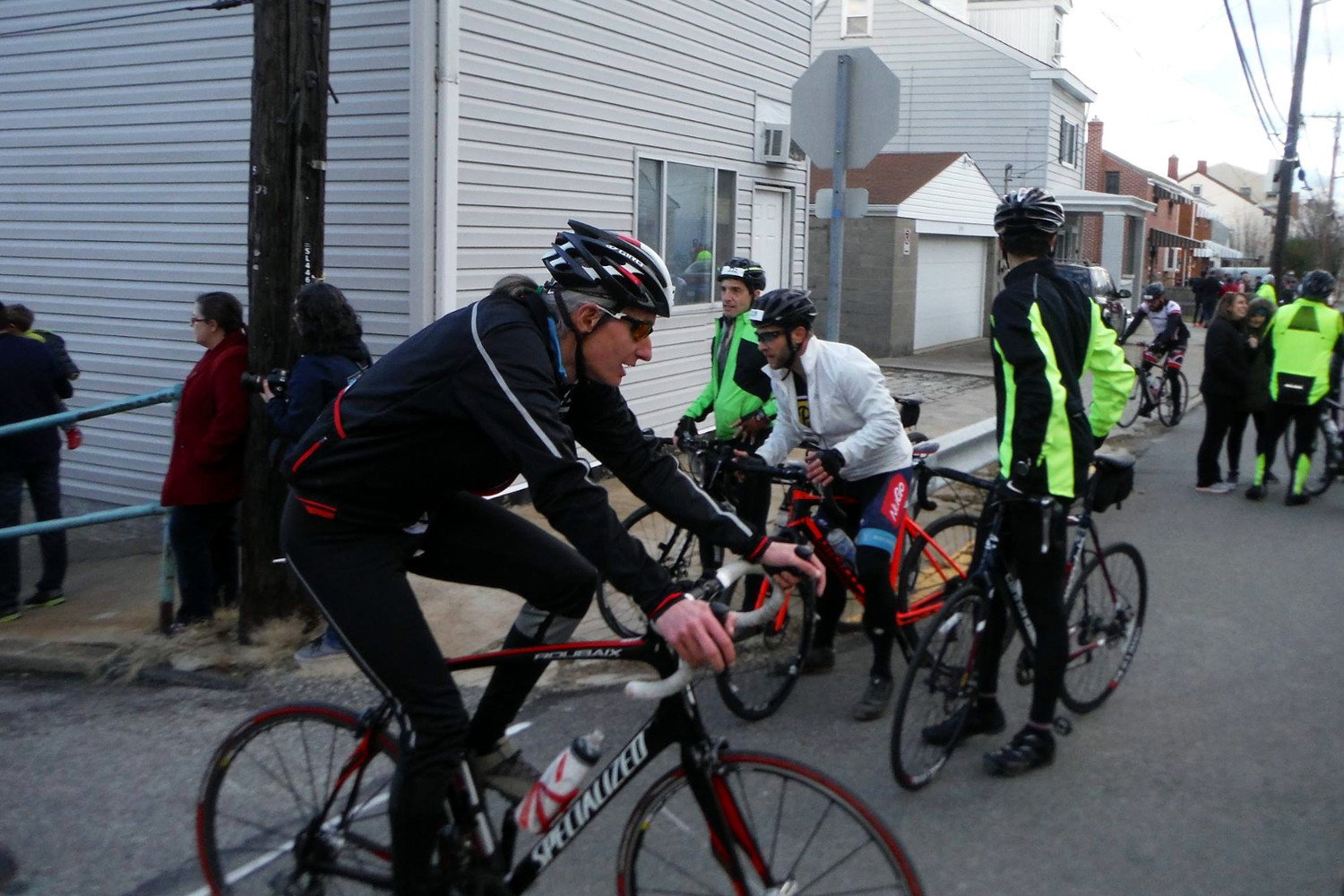
Group 3 after Hill 8 (Sycamore), with helmet-less Ornoth left of center, looking down.

Great closeup action shot of Ornoth ascending Hill 9 (Canton Ave).

Video of Ornoth tackling the lower half of Canton Ave (from 2:43 onward).

Video of Ornoth conquering the upper half of Canton Ave (10:50 to 11:00).

Video of my Canton Ave ascent taken from my front wheel. Camera vibration warning!

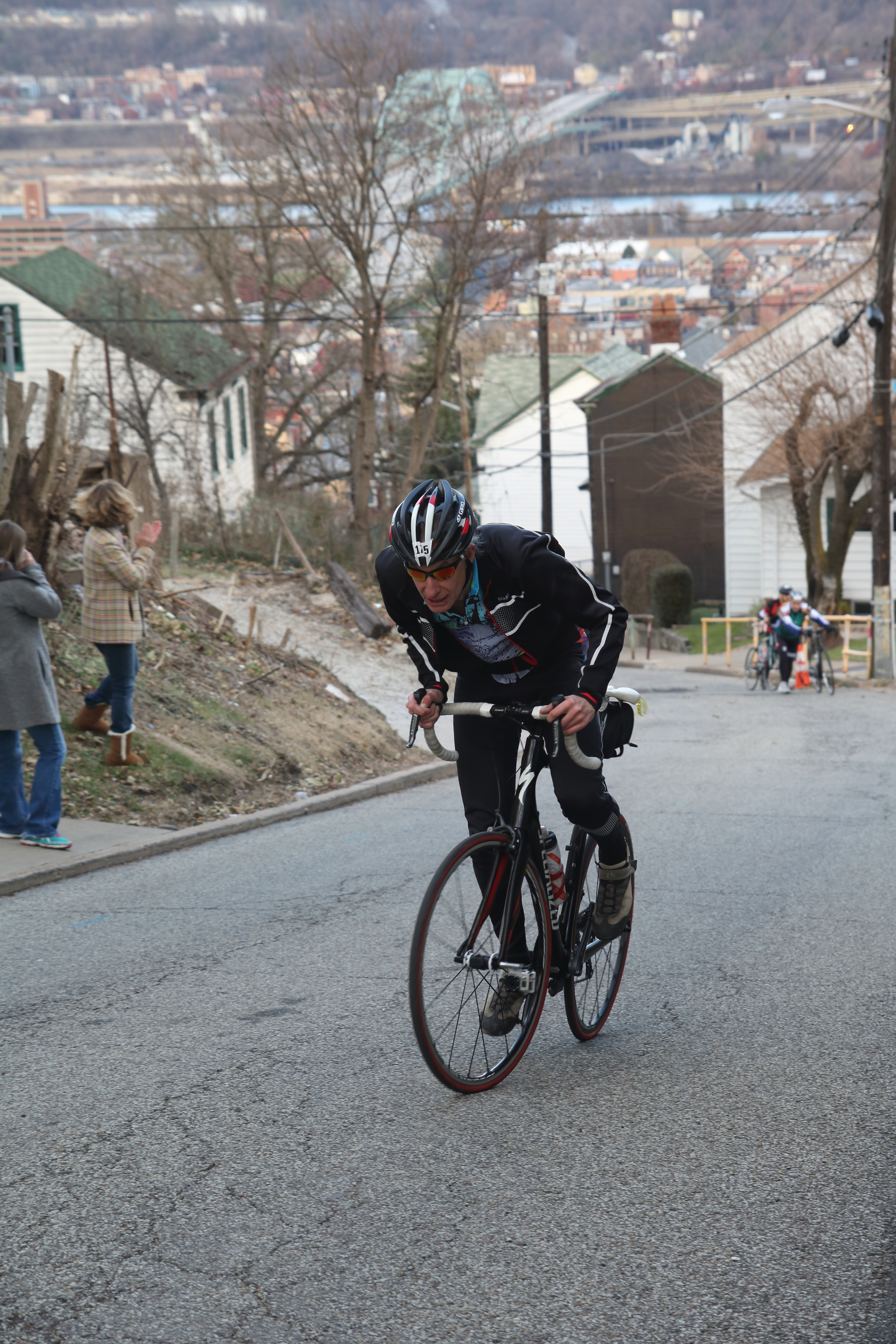
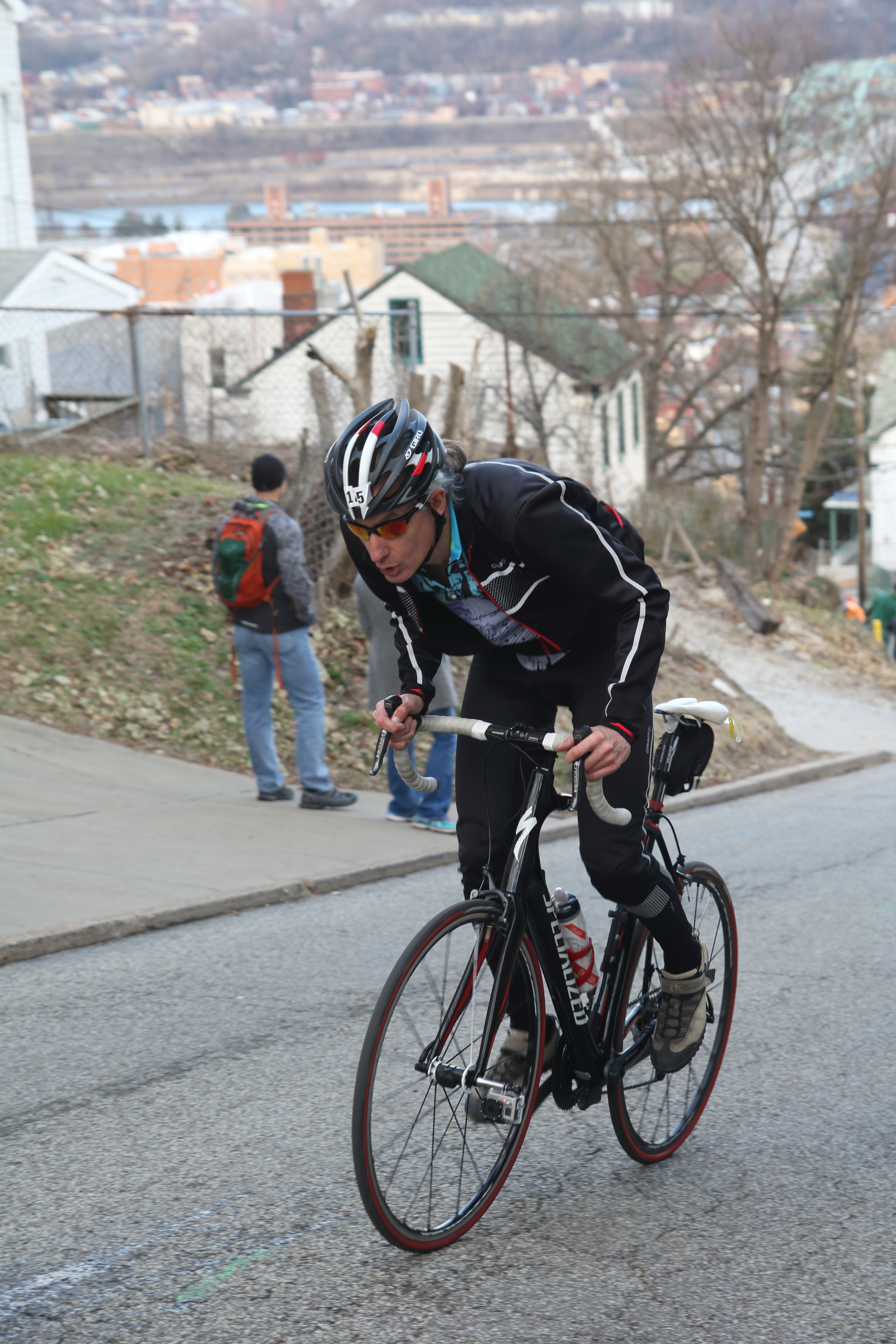
Ornoth on the final ramp of Hill 12 (Eleanor) with the Birmingham Bridge in the background.

Ornoth still climbing that final ramp of Hill 12 (Eleanor).

Gasping for air, just rolling over the top of Hill 12 (Eleanor).

This is on the flat bit (Flowers Ave) at the start of the final climb. My shadow appears more eager than I am to face Hill 13 (Tesla).

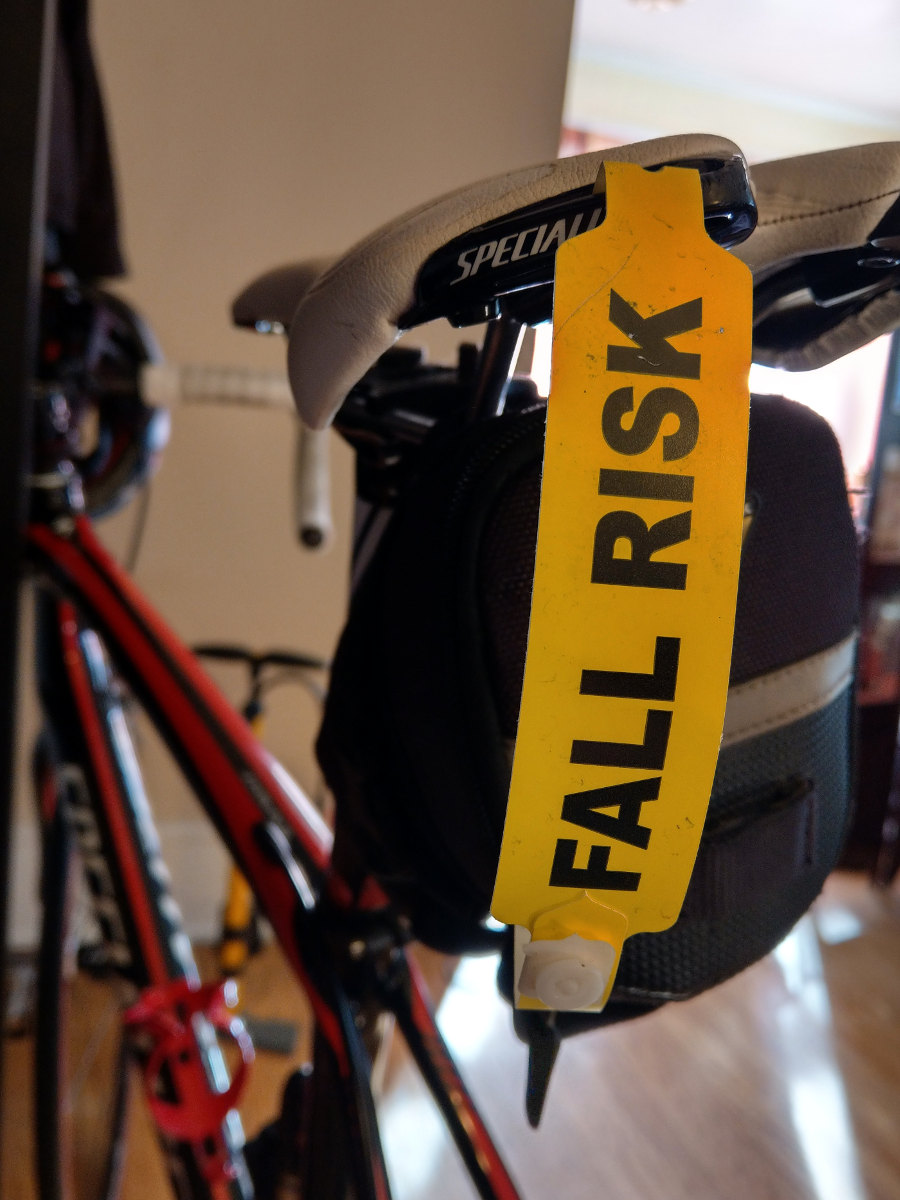
The yellow hospital FALL RISK wristband I hung from my saddle... Very appropriate for the Dirty Dozen!

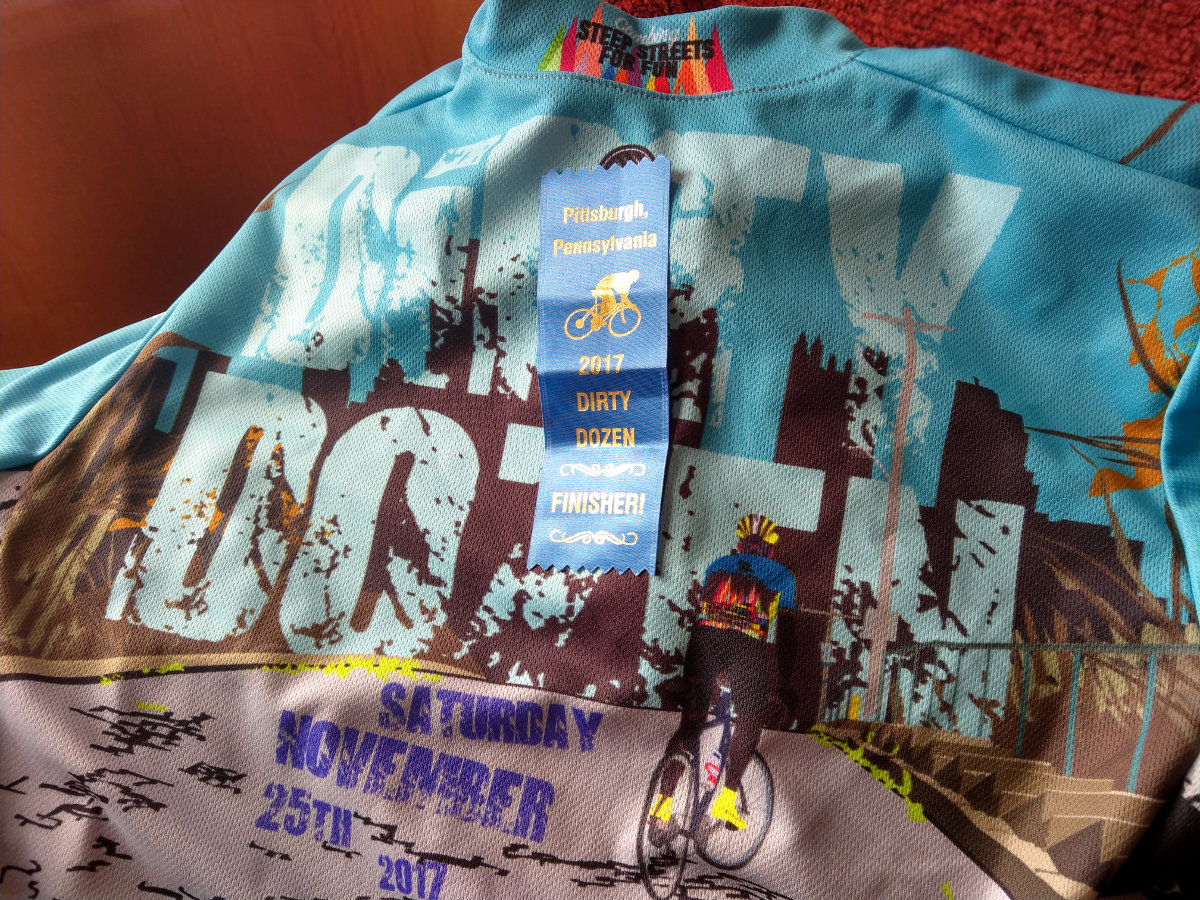
My 2017 Dirty Dozen jersey and that precious, hard-won official finisher's blue ribbon!

The tired-but-happy look of an official Dirty Dozen finisher!

What is it?

Spend the Saturday after Thanksgiving riding your bike up the traditional thirteen steepest hills in Pittsburgh. None are less than 20% max incline, some are over 30%, and at 37% Canton Ave is the steepest street on the entire planet! I am talking absolutely out-of-your-skull ludicrous amounts of pain.

Uhh, that sounds stupid. Why do it?

Each rider has their own motivations, but it usually boils down to the obvious: it’s a remarkable challenge. Do you have the muscle strength to survive the unforgiving length of Suffolk? Do you have the technical skill needed to ride up Canton without falling off the planet? Do you have the mental strength to look at a wall like Berryhill or Boustead and not give up and cry? And do your legs have the endurance to ride thirteen of these unforgiving bastards back-to-back? And can you do all that on cold, blustery day in late November?

Because it’s such a ridiculously extreme challenge, finishers earn lifetime bragging rights and respect. It’s a unique ride you can only do here in Pittsburgh. And between the cheering crowds and the camaraderie of other riders, it’s a whole lot of fun.

The race—yes, it actually is a race, if only for an inhumanly strong few—drew my attention long before I thought about moving to Pittsburgh. Since I was regularly here to visit Inna, years ago I checked out the local bike scene and discovered the event, even watching the live video feed streamed over the internet for several years.

When I moved here two years ago, I missed the 2015 event by just four days. Even if I was in no condition to ride, I would have enjoyed spectating and playing photographer.

Once here, I resolved to ride in 2016, and my resolve was doubled that spring, after the event’s colorful founder—two-time Race Across America winner Danny Chew—was crippled in a bike crash. I registered, scouted out eleven of the thirteen hills, riding them for a combined total of 21 ascents, and participated in the first of seven preparatory group rides…

Then my mother was hospitalized and I spent the next five months in Maine, missing the ride and resignedly watching the live video feed for another year. I consoled myself by creating a tool to compare the steepness of multiple road segments, including the Dirty Dozen hills.

How did I prepare?

This being my first attempt, and knowing I wouldn’t be racing for points, I took a step back and considered what my goals were. At the most basic, I wanted to have fun and to learn a lot. But my stretch goal was to become an “official” finisher, completing all thirteen hills without crashing, stopping, dabbing, or losing uphill progress.

You do not want to go into the Dirty Dozen without training for the rigors of climbing steep hills. My strategy, as with every ride I do, was: train by doing the same kind of riding you expect to encounter in the event. And with eleven of the thirteen Dirty Dozen hills within striking distance, the plan was obvious: climb those goddamned hills!

For eight weeks preceding the race, I spent one midweek day doing solo rides of the hills, both to build up my strength as well as to recon the hills themselves, learning where they were hardest and where I could back off and conserve my strength.

Then, each weekend I would join the weekly group training rides organized by the Western PA Wheelmen. Those started out doing 3-4 hills at a time, graduated to doing 6-7 at a time, and culminated by riding the entire course two weeks before the event, leaving ample time for recovery before race day.

As early as the second group ride I was joining others for “extra credit”, doing an additional four hills for a total of eight at a time. That gave me a lot of confidence that my body could withstand an entire day of hills. My self-assurance grew further when I successfully completed the group ride that covered the first seven hills in the rain!

As I described in my pre-ride blogpost, the final, full-course training ride was a brutally cold 17° ride, and I was disappointed by having to dab no less than four times for various reasons, including insufficient strength to finish off the last two hills.

When the training rides were done, I’d ridden every hill at least three times, some a dozen times, with a combined total of 75 ascents. I was as well prepared as possible. I was pretty confident, except for the difficulties I’d had on that last training ride. And I was really scared.

Although the forecast had called for temps rising from 38 to 50° with 30% chance of rain, I woke up to a pleasant surprise Saturday morning: clear skies and a temperature of 48°, heading toward the mid-50s! I donned my new 2017 Dirty Dozen jersey underneath my thermal jacket.

I set out at 8:15am and ran into other riders heading in the same direction, including one with my friend Ryan. I overheard them saying it was the best weather in the history of the event!

The Start

I swooped into the Bud Harris bike track at 8:30 and was greeted by friends Stef and Jim directing traffic. Stef had come back for the event from her new home in Vermont. She was going to marshal the fourth of four groups of riders—the “Party Bus”—but said she was sure she’d run into me out on the course. Sorry Stef, I wasn’t about to let that happen!

By 8:45 I was signed in and ready. They’d had a lot of last-minute registrations, and people were saying there were a record 450-500 riders for this 35th Dirty Dozen.

I moseyed over to the track infield and chatted with some training ride buddies, including Jeremiah, who has become famous for riding the event on a ponderous HealthyRide rental bike. We waited for the various groups to line up, which would be released in waves staggered by 5-10 minutes.

The first group were the cyclists racing for points on each hill. The second group were experienced cyclists. I had considered starting in Group 2 and then taking a long rest break halfway through the ride and falling back to a later group, but scrapped that idea when they announced that they were limiting Group 2 to riders below age 40.

So it would be either Group 3 or Group 4. The Group 4 Party Bus is slow and waits for everyone, and is filled with inexperienced riders who are dangerous and have no idea what they’re getting into. Since the danger presented by other riders was my biggest fear, I lined up with Group 3.

At 9:30 my group took the ceremonial lap around the track before hopping onto Washington Boulevard for the neutralized ride across the Highland Park Bridge over the Allegheny River to Aspinwall. Way too soon, we turned into a residential area on the flat along the river. The 2-mile ride barely counted as a warmup before the first hill.

Hill 1: Center Ave, Guyasuta St

Center Ave is just a nice warmup hill. You pass under the Route 28 highway and climb a really steep grade that only rates as middling-steep for the Dirty Dozen. After a quarter mile and 200 feet of climbing, it levels out into a second neighborhood. As you catch your breath, you wonder, “Was that all?”

The answer of course is “no”, but you do get a whopping six blocks of near-flat road to recover before turning onto Guyasuta, which stair-steps another 150 feet over another quarter mile without forcing you to go into the red.

Hill 1 will wake you up and get your legs warmed up. And it does make the first selection, turning back the worst of the tourists and newbies who aren’t ready for the challenge. For the real riders, that big rest in the middle is awfully forgiving, making it one of the easier hills we’d face.

According to Strava, Center/Guyasuta is 0.6 miles, gaining 377 feet in altitude, for an average grade of 11%. In training, I’d ridden Hill 1 four times.

Setting a precedent I would follow all day, I decided to ride at the back of the group. Although the weaker riders would be there, I would at least have the ability to regulate how close I got to them, and I could choose my own pace up each hill. It’s important to remember that your speed doesn’t matter in this race; what matters is that you don’t stop, and that you conserve enough strength to complete all 13 hills.

I eased up Center at a slower pace than I’d done in any of my training rides. Halfway up Guyasuta, I caught up with my riding buddy Phil, who has accompanied me on numerous rides. We finished the hill together, with my time a leisurely 8:01.

Unlike the training rides, where the group enjoyed plenty of recovery time at the top of each hill, we immediately set off for the next. If I had been closer to the front, I would have had more time to rest, but that would have meant taking more risk by riding in the middle of the pack.

One of the implications of climbing the steepest hills in town is that nearly every ascent is followed by an equal—but by definition longer and more gradual—descent. Over the neutralized 4 miles we’d drop 400 feet back down Kittanning Pike to the riverside in Sharpsburg for the next climb.

Hill 2: Ravine St, Midway Dr

If Hill 1 was a nice warmup, Hill 2 proceeds to the next level. Ravine/Midway is a carbon copy of Center/Guyasuta, but without that six-block rest zone in the middle. Another moderate climb, it passes under Route 28, then up a challenging slope, climbing 250 feet over a third of a mile.

The route used to bear left onto Sharps Hill Rd, but now the ride turns right onto Midway, which hairpins back on itself, then—like Guyasuta—climbs another 150 feet over a quarter mile. Strava says Ravine/Midway is also 0.6 miles, rising 404 feet at a 13% grade. Also like Center, I’d ridden it four times in training.

The last time I rode it, two weeks before the race, Midway had been partially milled, and I was concerned about what it might be like on race day. However, it had been freshly paved, which was wonderful.

Again, I paced myself casually to the top, following Phil before eventually passing him. Although I again finished in my slowest time all year (8:19), by the top I was getting kinda sweaty.

Before 2016, from this point the route went out Dorseyville Rd to Hill 3: Berryhill Rd. Although it’s short, it’s the first extremely steep hill, and a real kick in the teeth. Strava would tell you that Berryhill rises 164 feet in just a tenth of a mile at 17%.

You approach Berryhill at the end of a fast descent down Brownshill Rd, and—unlike most other hills—you get a demoralizing full view of its impossible slope rising ahead of you. Many riders are too gobsmacked to downshift before they hit the incline, which causes an immense pileup of riders. Berryhill is the first bloodbath.

Typically, the town of O’Hara closes Berryhill for the season once snow flies; it’s the only Dirty Dozen hill that closes. In 2016, with Danny not in charge, his backup organizers decided to replace Berryhill with a different hill back on the Pittsburgh side of the Allegheny. Needless to say, it wasn’t the same challenge as Berryhill.

Despite warm temperatures and no snow, this year the organizers again opted to forego Berryhill and repeat the 2016 route. For my money, it’s not a real Dirty Dozen without Berryhill. In training for this year, I only rode Berryhill three times, suspecting it might be replaced again.

So after gathering up at the Midway Dr VFD, instead of heading toward Berryhill we rolled up to Kittanning St and down into Etna. From there we took the 62nd St Bridge back over the Allegheny for a brief visit to Lawrenceville, passing Group 2 as they came back across the bridge in the opposite direction. In three miles we approached the alternate version of Hill 3.

Hill 3 (alternate): 57th St, Christopher St

Turning off Butler onto 57th St one starts a gentle 6-8% grade. After a jog onto Christopher, the grade becomes a steady 13%: it’s a hill, but not one where you need to get out of the saddle until a steeper bit at the end.

“Hill 3-B” is three times as long as Berryhill, but lacks the challenging slope. 57th/Christopher climbs 258 feet in a third of a mile (13% average). It’s simply not a Dirty Dozen hill. But having expected the change, I had rode Christopher St five times before the event.

By Hill 3-B I had determined which of the weaker riders posed any danger, so I gave them a wide berth. It was another calm, steady ascent, but my 5:13 wasn’t a new slowest time.

As warm riders regrouped at the top, ride marshal Jason generously offered to carry riders’ discarded layers of clothing in his panniers!

We enjoyed the descent down Stanton and the three miles right back across the 62nd St Bridge, hopping back onto the ride route right at the base of the next climb.

Hill 4: High St, Seavey Rd

Right off the main drag in Etna, High St ramps up to a pretty respectable slope. Then it takes a cambered right turn, followed by switchback reversing to the left onto Seavey. This right-left chicane is the most memorable and challenging feature of Hill 4, and provides a rare—and sometimes demoralizing—opportunity to see other riders just above or below you as you climb the terraced hillside.

After the switchback, Seavey stair-steps, giving you a brief rest before a steep kick to the top. Altogether, High/Seavey is a third of a mile, and gains 224 feet (12%). I also rode High St five times in training.

Because of the view, Hill 4 drew our first sizable crowd of spectators cheering us on. I went wide through the turns, avoiding the steeper inner line, and made it up nicely, despite a headwind blasting me right at the end. Finishing in 4:33, I set another slowest time of the year. I was flawlessly executing my strategy of taking it as easy as possible!

A lumpy three miles brought us down to Millvale Riverfront Park, the first rest stop, at 11:25am. I tucked away my gloves because it was too warm, and I wanted a good grip on the bars for the next section of the route.

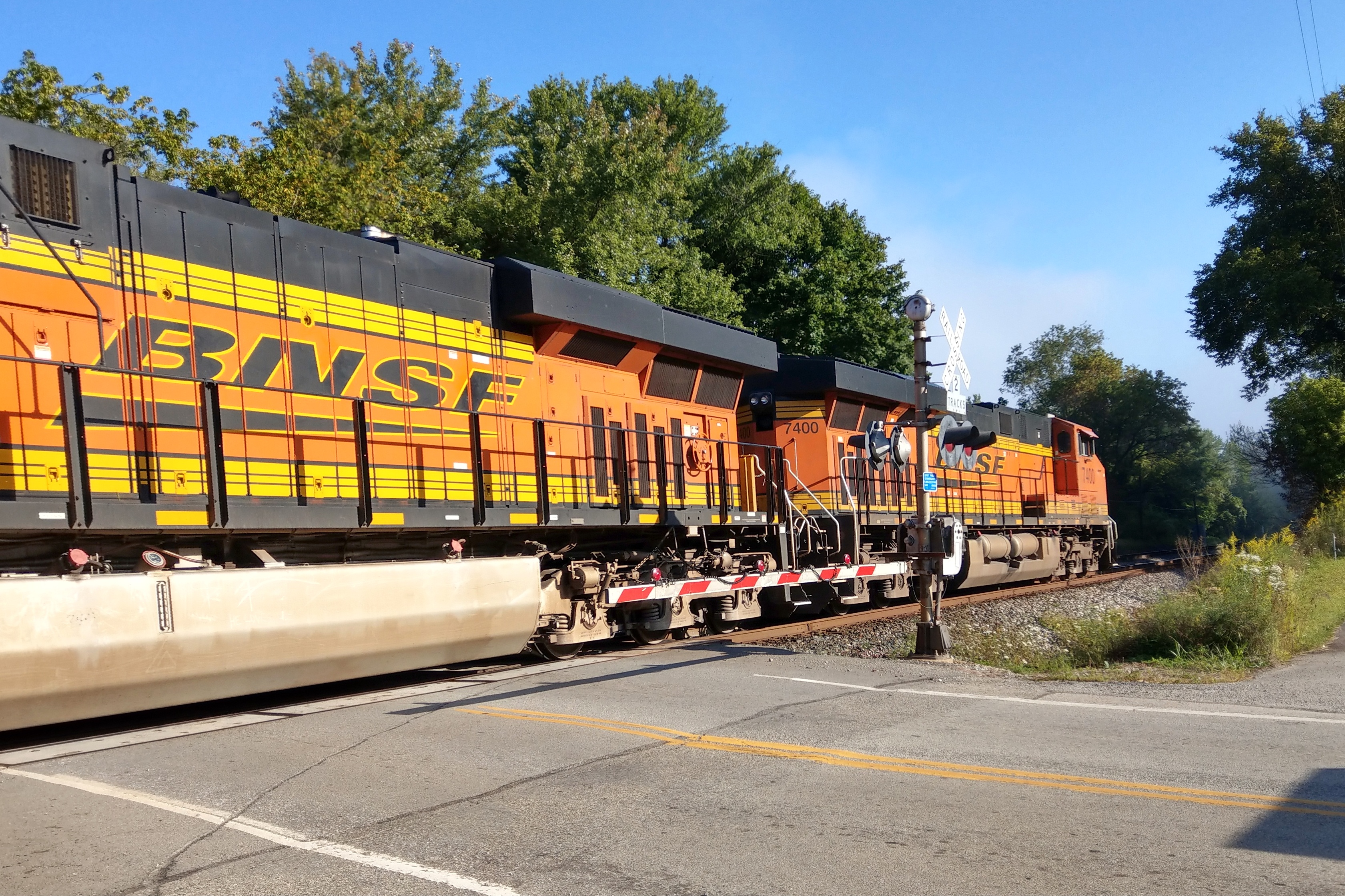
After a 25-minute break we rolled out, only to get caught behind a train for 3-4 minutes at a level crossing. A couple blocks later, we were delayed another 3-4 minutes waiting for a garbage truck to come down the hill we wanted to go up. It brought back memories of the 2014 Dirty Dozen, when a belligerent garbage truck driver had blocked the way up Hill 4.

With four hills complete, you might start getting comfortable with the idea of nailing this ride. But the first four hills are nothing more than a friendly warmup, and all conception of “friendly” hills is about to come to a screeching halt.

Hill 5: Logan St

Mere blocks from the rest stop, you’re faced with the steep slope, narrow roadway, and broken pavement of Logan Street. Logan is only a quarter mile, but it climbs a full 244 feet (20% average). The first section through some trees, although steep, doesn’t seem terrible, but the trees part to reveal a veritable wall that ramps up in front of you, and it just keeps getting steeper. This is not a manageable slope like Center or Ravine, and it’s not a steep-but-short sprint like Berryhill. The last tenth of a mile is an unfailing 100% effort, and even that doesn’t guarantee that you’ll make it to the top, because the road surface can be slick, causing many falls. I had slipped out and nearly fell yards short of the top on one of the rainy group training rides.

Hill 5 is the first serious kick-ass hill on the route, and you have to be both strong and a skilled bike handler to overcome it. Logan is where any lingering casual riders whimper, fall over, and die.

I inched up the lower section, then clawed my way through the steep bit, dodging numerous participants walking up the hill, and yelling at one rider who weaved back and forth across the road toward me. Like many of the Dirty Dozen hills, Logan saves its steepest slope for the very top, and I had to pour everything I had left into a vicious sprint to the line.

I had done four ascents of Hill 5 in training, and as expected my time of 4:06 was the slowest I’d done all year.

From Logan, we rode for a mile along the top of the ridge, enjoying views of downtown before diving back down toward the Allegheny. Just mind the construction zone where half the road has fallen off the side of the cliff into the woods below…

Hill 6: Rialto St

Once upon a time, the pig farmers living at the top of this ridge—called Pig Hill—used to herd their swine through a narrow, muddy path straight down the cliff to the slaughterhouse at the riverside. This being Pittsburgh, they poured some concrete down the hill and called it “Rialto Street”. At some point they built some stairs along the side, too, just to make it even narrower.

Not being satisfied with this ridiculous “street”, they decided to build a five-way traffic light-controlled intersection right at the bottom of this stupendously steep street, controlling both sides of the Route 28 divided highway, the busy 31st Street Bridge over the Allegheny, another road from Herrs Island, and River Ave. It is a complete and utter cluster, and you’d better have good brakes if you go down that hill.

The good news for riders is that Hill 6 is a short, monotonic sprint of a hill. Climb 123 feet up Rialto in about 750 feet (18%), and you’re done before your body even registers the effort. The bad news is that before you can climb it, you have to carefully inch down it, somehow come to a sudden stop at the bottom to avoid getting splattered on the divided highway, then turn around in a tiny space and climb back up the stupidly narrow road from a dead stop, while other riders are still descending toward you.

This was where my partner Inna had chosen to watch the event. I called out to her as I started my descent, and she got some nice footage of me as I powered back up. Although I had no opportunity to stop, it was encouraging and gratifying for her to share in the event by cheering me on.

Although it does take an intense sprint effort, Rialto is one of the easier hills, which is a blessing, sandwiched as it is between two of the most difficult. On the other hand, car traffic makes it difficult to train on it on your own, so I only rode it four times before the event. Although I completed it in just 1:56, that was still my slowest time of the year.

Between hills the riders would chat, and this is as good a place as any to note how many comments I got. Several people asked about my hub-based Nut-R GoPro camera mount; a couple asked about my little Ass Saver clip-on fender; and one asked about my Di2 electronic shifting. Everyone loved the yellow “FALL RISK” wristband that I’d picked up during my mother’s hospitalization, which I’d attached to a loop on my saddle; that was particularly appropriate for a Dirty Dozen rider! And a guy who knew me from group rides observed that I wasn’t wearing my usual Shimano cycling sandals.

Leaving Rialto, we had a mile and a half of descent before hitting East Street, which in turn comprises a half mile of climbing. This is another section where conserving energy is important, because when you make the left onto Suffolk, you’re gonna need every ounce of strength you’ve got left.

Hill 7: Suffolk St, Hazelton St, Burgess St

After dipping beneath I-279, there’s a sharp, steep climb back up the other side. As the road curves around to the right, you expect the slope to level off, but it never does. It just keeps going, and then gets even steeper. A quarter mile later you see the top of Suffolk and claw your way up to a flat that looks like the top of the hill.

But that’s only the first section, and just when you think you’ve crested the hill, you’re immediately faced with another viciously steep ramp on Hazelton that you somehow have to power up. If you make it up that, there’s still a left turn onto Burgess, which isn’t as steep, but it makes up for it by being paved in granite setts, aka Belgian block, which most people wrongly call “cobblestones”. Altogether the three sections of Suffolk/Hazelton/Burgess are 0.4 miles and gain 358 feet (16% average).

For me, Hill 7 is the hardest of all the hills. It’s long, it’s steep, there’s nowhere to ease off and recover, and before it ends it hits you with the demoralizing wall on Hazelton and the Belgian block on Burgess. It’s a hard, long, intense challenge that will take everything you’ve got, and then some. Like Logan, I also rode it four times in training.

I was wary of Suffolk because on my ill-fated final training ride, I had been taken out by another rider on the lower section coming up from underneath I-279. So for the event, I took a wide line around that corner and was glad I did when I saw two riders come together and fall, stopping two more riders, in exactly the same place I’d been taken out two weeks before.

I nursed my way up to the top of Suffolk, dodging the spectators, weaving riders, walking riders, and riders sitting on the roadside with leg cramps. When I reached the flat bit between Suffolk and Hazelton, I used all the room I could to soft-pedal and rest, nearly getting walked into by a pair of oblivious spectators.

Attacking the narrow ramp on Hazelton, I trailed another weaving rider who just happened to swerve out of my way as I got onto the setts of Burgess, then bounced my way up the rough surface to the top. I finished in 6:37, which is a decent time for me.

I had my thermal jacket partially unzipped to vent the heat from that effort, and the 55° air temperature would work perfectly for me all day. I unzipped my jacket before the hot climbs; enjoyed the cool breeze on the descents, which felt lovely; and zipped it up once I fully cooled off again.

After Suffolk you have lots of time to recover, as the four-mile transfer to the next hill includes a long descent, winds through downtown, and crosses two rivers on two bridges to get from the north side to the south side.

Hill 8: Sycamore St

From the Monongahela riverside, Sycamore climbs straight up Mount Washington to the overlooks on Grandview Ave. Thankfully, Sycamore is another one of the middling-hard hills, rising 296 feet in 0.4 miles (12%). It begins moderately hard, gets a little harder before hitting a cambered switchback. Then it eases off for a quick rest before a final kick that isn’t too difficult.

Four weeks before the Dirty Dozen, Sycamore had been milled, making for a treacherous, gravely ascent during the height of training season. Thankfully, a new surface was laid down a week before the race.

The climb wasn’t bad, but there were a lot of cars trying to get down the hill at the same time. Having stopped to let us pass, many of the occupants were screaming encouragement. There was some runoff water on the road surface in places, which I instinctually avoided, lest I lose traction. I was surprised that there were no spectators near the switchback.

Since it’s easy for me to get to, I had ridden Sycamore eight times in training; three of those while it was milled, and once to check out the new surface. I finished in 7:00, which was a slow time, but faster than when the road had been milled!

A short but painful section of cobbles leads the riders to the Mt. Washington overlook, where a group photo is traditional. I took the opportunity to bleed air pressure from my tires, so that I’d have maximum traction on the upcoming setts of Canton Ave.

The next two hills are three miles away down in Beechview, in Pittsburgh’s south hills. They’re hard to get to for two reasons: first, it requires riding on two extremely busy high-speed arterials; and second, you have to traverse two major hills and valleys to get there.

The second of those intermediate hills—Crane Ave—would qualify as a Dirty Dozen hill in any city other than Pittsburgh. Climbing 263 feet in a half mile (9%), it’s a long, steep climb that inevitably causes tiring riders to whine. It also loads some extra fatigue into your legs: the perfect preparation for the steepest street on the whole damn planet!

Hill 9: Coast Ave, Canton Ave

From the Banksville Road divided arterial, you turn onto Coast Ave, which is the start of Hill 9. Although the entire Coast/Canton hill rises 106 feet in a tenth of a mile (135), you have a gentle 50-foot climb up Coast before the left onto Canton.

Canton is only 200 feet long, but you climb 65 feet in that distance. It’s a full-out 30-second sprint, but you’re at the top before your body has time to react to the effort. From a physiological standpoint it’s one of the easiest hills on the course.

But at 37% grade, Canton is the steepest public street in the world, and it is totally unlike any hill you’ve ever ridden. It’s a special kind of challenge, for many different reasons.

First, it asks whether you have the mental strength to even look at that stupid, obscene hill and not give up. Then there’s the technical challenge of riding something steeper than you’ve ever experienced. If you put your weight too far forward, your back wheel will lose traction, slide out, and you’ll fall; but if your weight is too far back, your front wheel will lift right off the ground and you’ll lose control and fall. And trying to swerve back and forth across the narrow street ain’t gonna help you.

During the Dirty Dozen there are additional complications. You need to make it up amongst lots of other riders, who will be at the limits of their control and likely to fall in front of you or into you. You also need to block out the hundreds of screaming spectators lining the street, drawn by the spectacle of widespread carnage.

But those are just the obvious challenges. Like stalking a lion on safari, Canton is wily and treacherous, and you should not approach it casually.

At the bottom, the road is cambered wildly, so the left side of the street is a dramatically steeper grade than the right. Furthermore, trees and shrubs encroach into the road, blocking the left third of the street. There’s deadfall and moss making the surface very treacherous, and don’t forget the likely complications of November rain and snow and salt, as well.

And then there’s the surface. You start out on nice, sticky asphalt. As the incline begins, it switches to broken concrete, with broad cracks filled with grass or nothing or maybe a pile of leftover asphalt. Then, at the point where the slope requires the most traction, you drop off the concrete surface onto loosely-joined Belgian block setts. You have to somehow lay down maximum power on the steepest slope while bouncing along atop the granite paving stones and hopefully avoiding the occasional holes left by missing stones. Then pull yourself over a thin strip of concrete and back onto some asphalt to crest the hill. So you have to manage four changes of road surface on top of everything else you’re supposedly focusing on.

On the training ride when I first attempted Canton, I started bouncing around and immediately lost traction when the road transitioned from cement to setts. I went back down and dropped about 20 PSI of air from my tires to get better traction, then decided to take it easy until I had gotten firmly onto the Belgian blocks before putting down maximum power; those two changes seem to have unlocked the hill for me. But heading into the race, I had only ridden it two times in my life.

Coming up Banksville just prior to 2pm, I chatted with Phil, which completely distracted me from thinking about all those things I should have been worrying about. Once I turned onto Coast and soft-pedaled to fall well behind the rest of the field, I could hear the band and screaming crowd who had come out to watch the spectacle.

Since there is no such thing as momentum on a hill that steep, I slowly approached the turn, only looking up long enough to register that my way wouldn’t be clogged with fallen bodies or riders walking their bikes up or down the hill (the video actually shows I would thread the needle between three of them). Then I looked straight down at the road in front of me, blocked out absolutely everything going on around me, rolled slowly over the edge of the cement surface onto the Belgian block, and gunned the living hell out of it.

Not thinking about anything but laying down power, I tracked arrow-straight right up the hill, bouncing around but managing to keep traction and forward progress. And in 30 seconds it was done, and I was looking for a place to park the bike.

My time was 2:47, but like everything else, times on Canton aren’t what they seem. Most of that was spent pussyfooting my way up Coast, saving my strength and letting the carnage play out for the rest of the group in front of me before my rabid sprint to the top.

Since I blocked everything out of my mind, it was nice to find some video footage so that I could later hear the cheering and look at what was going on around me while I was locked on: in the Canton Zone. Someone got a nice still of me, and I appear in this video at 2:43 and this video at 10:50. And then there’s my own on-bike POV video

Since we’re often at the top of Canton for some time as people who fail to crest the hill the first time try again (and again), that’s also where the race’s second rest stop is located. I took on a banana and Gatorade, and put some air back into my rear tire to handle the mere 30% grades remaining.

After a 15-minute break, we set off for Hill 10. Along the way, a kid tried to race me up the steep hill behind Canton. I let him go, saying, “I’d race ya, but I’ve got four more hills to ride!”

Hill 10: Wenzell Ave, Boustead St

People are usually elated after Canton. They’ve beat nine hills, including the steepest one of all. It’s all “downhill” from here, right?

No, no it isn’t. There’s a lot of difficult riding still ahead, starting just three blocks later, when you are smacked in the face by Boustead, which is nearly as steep as Canton, but longer, and you get a nice long view of the ridiculous wall ahead of you.

There’s a moderately steep (80 feet in a tenth of a mile) climb up Wenzell before the turn onto Boustead, which has a little dip in it before it launches skyward, climbing another 120 feet in a tenth of a mile. The Wenzell/Boustead combo is 220 feet in 0.3 miles (12% average). But it gets viciously steepest right at the top. Like Canton, I had only ridden Boustead twice in training.

On my final training ride, I’d cleared Boustead, but it had cost me, and after that I hadn’t had the strength to complete two of the three hills that remained. So Boustead was the hill I was most afraid of coming into the race. I was concerned about whether I would be strong enough to get over it, and if I did, would I have anything left in the legs for the three hills after that?

The wily old veterans Phil and I hung back before hitting the hill ourselves. Halfway up, I found myself having to swerve back and forth across the road to make it up, but at least I knew I wasn’t interfering with anyone behind me! At it steepest, when I was about to bust, I pulled out all the stops in a full-bore sprint, which somehow got me far enough over the crest to crawl toward the line. It was deathly hard, even at my slowest time of the year (5:58).

After commiserating with the others at the top, we had another four-mile ride back up to the south side, along those busy arterials and back over two climbs that were very meaningful (to the legs) but utterly meaningless (in race terms). That included descending P.J. McArdle, which was surprisingly free of runoff water from the hillside above, which usually makes it very dangerous.

Hill 11: Welsh Way

Welsh Way is a clone of Rialto: same monotonic incline, same narrowness, same shortness; the only differences are that there’s no divided highway at the bottom to contend with, and you go up it first, then have to come right back down again, because it’s a dead-end street.

For my money, Welsh is the easiest of the Dirty Dozen hills. It’s manageably steep, 123 feet of climbing, and only 800 feet long (11%). And it’s the last easy hill amongst the satanic hills that precede and follow it. Though on these narrow ones you do have to watch out for other riders, especially out-and-back streets like Rialto and Welsh, where riders are going up/down while you’re going down/up.

Along with Sycamore (Hill 8), hills 11-13 are all close to home, so I’ve done them many times in training. For Welsh, that came to nine ascents.

Hill 11 was an opportunity for me to take it slow and easy as I kept my distance from other riders. My 3:11 time was on the slow side, but what surprised me was the number of riders who were cramping up, or that had to stop and walk the hill: the easiest hill of them all!

At the top, the group took a long, unexpected 10-minute rest; I was thankful for the recovery time, because I was dreading Hill 12. After coming back down Welsh Way, there’s a little more than a mile before you get to the next climb: the one most cyclists fear more than any other.

Hill 12: Barry St, Holt St, Eleanor St

And here we have it: the last truly vindictive hill. Many people think Eleanor is harder than Suffolk; I disagree, because Hill 12 does offer riders a precious mid-climb rest, but I can definitely see where they’re coming from. Barry/Holt/Eleanor climbs 343 feet over 0.4 miles at 15%. If it’s not the hardest, it’s the next one on the list, and by this point your legs are completely used-up.

Riding along the flat of Josephine Street, Barry is a sudden switchback up and to the right. You climb up to a 90-degree turn, which reveals a hard drag leading up to a steeper ramp in the distance. This is another one where you have to save your strength for the end.

That distant ramp is a one-way the wrong way, but we go up it anyways. After two tenths of a mile and 150 feet of climbing, you turn 90 degrees into Holt St, leveling off quickly for a very short breather, followed by tiny second kick, then a longer breather as you soft-pedal on the blessedly well-placed flat bit of Holt. Milk it for every picosecond of recovery you can, because…

Then you’ll see riders turning left onto Eleanor St and climbing at an unbelievable angle. You hit it and are faced with a long, steep slope: 25% grade, or 130 feet over a little more than a tenth of a mile. It’s a slow drag for several blocks and it just keeps getting steeper the farther you go. Finally the road bears right and you fight your way gasping over the final—even steeper!—rise to the line. Like Welsh, I’d ridden Eleanor nine times before the race.

I was noticeably much slower than normal up Barry. I barely managed the ramp between Barry and Holt, only to be pinched with two other riders in a two-foot space between a guardrail and a line of cars waiting to come down.

While I soft-pedaled as slowly as possible on the flat, one rider asked if we had finished the hill, and several riders passed me before they realized they still had the entire painful length of Eleanor to go. And therein is the best demonstration why you scout these hills before the race.

Even with my precious extra picoseconds of rest, Eleanor was a hard, long, painful death march. The three riders just in front of me were swerving wildly in slow-motion back and forth across the narrow road, but I watched gratefully as every one of them gave up and veered off onto the flat side-streets a mere third of the way up.

I heard “Ride of the Valkyries” played inexpertly on trumpet up ahead, and the cheers of a boisterous crowd of spectators. Just like on Boustead, on the vicious final kick near the top—where I’d dabbed on my last training ride—I reached the end of my strength, but somehow dug deeper and managed a leg-searing low-speed “sprint” over the top. My 7:34 was—can you guess?—my slowest time of the year. You can see my progress near the top in photos one, two, and three.

The neighborhood—bless them, including the trumpeter!—have a big party and rest stop in a garage on Cobden St, at the top of Eleanor. Between that celebration, waiting for the slower riders, and recovering before setting off for the final hill, there’s always a happy little extra time to rest here. Just one hill left; what a wonderful thought! If I rest up here, and take it easy on the approach, I might just be able to make it up the horrible final climb…

After 15 minutes, we set off on the long 4-mile transfer, ripping down the Josephine descent, over the Hot Metal Bridge across the Monongahela, then down Irvine Street to Hazelwood. Along the way, ride marshal Jason reminded people of the after-party taking place at a local brewery… and that the celebration had officially started 49 minutes ago!

Hill 13: Flowers Ave, Kilbourne St, Tesla St

Way too soon for my legs—but not too soon for my shadow!—we took a left turn off the main drag onto Flowers Ave, where the ride’s longest hill begins. However, it starts out perfectly flat, becomes a false flat, then a turn onto a slightly steeper—but still easy—ramp. A turn onto Kilbourne: another long climb that—at about 15% grade—doesn’t warrant the term “steep”.

That long lead-up is just there to soften you up. Kilbourne ends at a flat spot where you can gather your breath before the final sprint. At this point you’ve climbed 280 feet over three-quarters of a mile. Turning onto Tesla reveals another short but intimidatingly steep wall that is all that stands between you and the finish line.

Although it’s by far the longest, people don’t put Hill 13 on their list of the hardest climbs. It’s not that bad until the end, but it’s a hard battle getting up the punishingly steep final slope, especially with the residue of 12 other ludicrous climbs already weighing down the legs. It’s another 140 feet of climbing, jammed into a little more than a tenth of a mile. The flat sections make it misleading, but the entirety of Flowers/Kilbourne/Tesla is 430 feet of climbing over 0.9 miles (9% average).

But eventually it tops out in a tiny neighborhood: six houses sandwiched between a cemetery and a huge water storage tank. And, thankfully, the finish line.

As I turned onto the flat part of Flowers, I passed three riders stopped off the road, cramping: cramping on the flat! That wasn’t the only time I was grateful to have ridden 75 Dirty Dozen hills in training!

Tesla is my “local” hill, so I’m very familiar with it. Having done Hill 13 a dozen times in the past two months, I took my time on the preliminary slopes of Flowers and Kilbourne. Then I did everything I could to recover, slow-biking on the flat spot at the top of Kilbourne. I didn’t have any strength left for the final ramp up Tesla, but it had to be done, and it was all that stood between me and my goal of being an official Dirty Dozen finisher… And more importantly, putting an end to this long day’s interminable pain and suffering!

I hit the base of the hill with everything I had, which was damned little. I don’t know how I made it even halfway up. When the slope reached its most punishing, I tried to pull out the stops and sprint over the crest, but there just wasn’t any more strength to call on. But somehow I clawed my way over the magical point where the grade lowers just a little, then crawled up the remaining slope toward the water tower just ahead.

A spectator ran right up to the rider in front of me and made noises and hand gestures like he was revving a motorcycle engine. I think that was supposed to be encouraging. Then a kid came up to that rider and handed him… a blue ribbon? A *finisher’s* ribbon!!! I rolled slowly toward him and claimed one for myself: “Pittsburgh Pennsylvania; 2017 DIRTY DOZEN; FINISHER!” (the righteous caps and exclamation point are theirs).

Finish

With my blue ribbon clutched in my teeth, I coasted through the small crowd and off to the side and panted for a while, recovering and trying to sort out my feelings.

I was filled with an incredible sense of accomplishment and satisfaction. I’d surpassed all the goals I’d set for myself: I had enormous fun, learned a ton (which you’ll see below), and successfully finished the entire event without crashing, stopping, or dabbing. In this later stage of a long life that’s been filled with lots and lots of cool shit, finishing the Dirty Dozen ranks as Certified Cool Shit.

After catching my breath, I went over and chatted briefly with my buddy Mike, who had also ridden in Group 3, and got him to take a picture for me. I think it’s a perfect representation of the moment. It’s clear that I’m exhausted, but also really, really happy, and you won’t find another picture of me with a more genuine smile.

However, my fellow riders were dispersing, many headed toward the after-party. Few people were hanging around, since that neighborhood doesn’t like our presence. It was 4:15pm and time for me to go home.

Epilogue

Thankfully, home is only two miles from Hill 13, with much of it flat or downhill before a shallow climb to the apartment. Along the way, my odo ticked over 50 miles for the day. I pulled into our driveway 8 hours and 15 minutes after leaving, having climbed 5,971 feet, well more than a vertical mile.

After having been preoccupied and anxious leading up to the event, it was wonderful to have it over and done with. I piled up a plate of leftover turkey and observed a heartfelt Thanksgiving meal. It was only then that I understood the real meaning of Thanksgiving: not having to even consider riding any of those verdammten Dirty Dozen hills for six months or more!

Although I’d proclaimed this would be my toughest challenge, going by feet per mile of ascent it was number four, and Strava’s “suffer score” feature, which measures heart rate and duration, lists it as number 51. My preparation helped me go into the event strong. I was lucky and a little wily in managing to avoid any crashes and falls, and you couldn’t have asked for better weather. There’s no guarantee that the experience would be similar in the future, or for anyone else, but for me it was a damned fine day all around.

Will I do it again? That’s impossible to say. At my age, it requires a lot of dedicated training, and willingness to ride in inclement conditions. I’ll surely do those hills again from time to time, and maybe some of the group training rides, which were fun. But the full event is an immense undertaking, and I’m not sure whether it’s something I want to commit so heavily to. We’ll see.

For now, I’m completely happy and satisfied to have completed it once.

Strategies to Beat the Dirty Dozen

When I was preparing for my first Dirty Dozen, I looked all over the place for advice, hints, and tips. So I want to offer this distilled advice to other cyclists considering this event.

Here are several of the things I learned. All this preparation and training might not be easy, but in my opinion this is how to beat the Dirty Dozen and have a good time doing it.

The most obvious first step is to know what you’re up against. Don’t go into the event unprepared; this isn’t an event you want to take lightly, unless you’re someone with a deep affinity for failure.

Pre-ride all the hills at least a couple times, so that you intuitively know when you need to give 100%, and—more importantly—where you can rest and let your legs recover. You can recover a lot of muscle power by backing off for just a few seconds. Use the organized training rides to learn valuable pointers from the veterans who have done it before.

Second, prepare your body. Climbing is all about your power-to-weight ratio. Maximize your power by training for the effort you have to put out. Build up the necessary strength over time by riding those hills. The full-course group ride two weeks before the race is valuable for getting your body used to doing not just 4-6 hills, but all thirteen. At the same time, make it easier on yourself by losing any extra weight you’re carrying.

Unless you’re racing, your only goal is not to dab; don’t worry about your time or speed, because no one cares about your finish time. Knowing how to pace yourself and conserve your strength is the most important thing to learn. That means saving your strength for the worst part of any given hill, but also conserving your energy over the duration of the entire course. Even knowing how long and how hilly the neutral sections are can be a valuable way to manage your effort and recovery.

Know what your equipment needs are. How low of a set of gears do you need to make it through the day? What tires—and what tire pressures—will give you enough traction to make the hills? What clothing are you going to need in order to endure the alternating max efforts, freezing descents, and lots of standing around in the cold? What can you take off your bike in order to make it lighter?

I ran a low gear of 34x28 (32 gear-inches), which is a moderately easy gear for a standard compact chainset. I would have run a larger cassette—a 30 or 32—but my older Ultegra Di2 won’t take anything bigger than a 28. On the other hand, the electronic system produced much more reliable shifting under load than a mechanical groupset.

Then there’s climbing technique. Most riders know that you use much less energy seated than when you get out of the saddle and stand to power over a rise. But with hills this steep and long, you need to be able to alternate between both techniques to balance muscle fatigue, even at extreme slopes. Pulling up on the handlebars helps, but your biceps can wind up cramping. And as I said in the section on Canton Ave the steepest slopes require a mastery of balance. You need to know where your balance point is, especially on wet Belgian block at a 37% incline.

Though your strength and equipment and technique will always be secondary to external conditions. These steep roads don’t get much maintenance, so they have potholes, broken-up surfaces, can be off-camber, or even paved with granite setts. You might encounter loose gravel, sand, or salt spread across the road, or spots made slick by snow, ice, wet leaves, or just leaked automotive fluids. And sometimes your way can be blocked by cars or something else completely out of your control.

Now take all of that, and try to do it amidst 400 riders of mixed ability, all riding at different paces, many of them completely unprepared for the conditions. In that situation, your biggest threat comes from other riders weaving in front of you, dropping their chains, falling into you, or blocking you and forcing you to stop. While you’re fighting the hill and the road surface, you have to watch for dangerous riders.

Finally, you need to be psychologically prepared. The best advice I have here is to explicitly not psych yourself up; treat the event as if it were just another fun weekend out. Take all the stress and pressure out of it, and you’ll be better able to deal with whatever comes up.

As for dealing with the pain and suffering… I’m sorry, but that’s what you signed up for. You have to welcome the worst the course can throw at you. Think about the bragging rights you’ll gain and the stories you’ll have!

Finally, enjoy the camaraderie of your friends and fellow Dirty Dozen riders, as well as the spectators’ encouragement and awe. Whether you finish the course or wind up walking several of the hills, have fun, because if there’s one phrase that captures the essence of the Dirty Dozen, it’s “ridiculous fun!”

The training rides are over. Now it’s time for the main event: my first ever Dirty Dozen, climbing 13 of the steepest hills in this stupidly hilly town. I give a little more background in this blogpost following last year’s first (and last) training ride.

It’ll probably be the most difficult athletic achievement of my life. It’s been a long time since I experienced the dread I felt when the “2017 Pittsburgh Dirty Dozen Bike Ride” event started showing up in the sidebar of my Facebook page last weekend!

My (center left) first time riding up the steepest street on the planet: Canton Ave! Yow!

My (center left) first time riding up the steepest street on the planet: Canton Ave! Yow!

This ride has been my sole focus for the past two months. In the middle of each week I did solo training rides on those hills, then group training rides organized by the WPW on the weekends.

There were seven of those official group training rides. The first four weeks introduced riders to each of the successive quarters of the route (3-4 hills per ride). The next two weeks stepped it up to traverse the first and second halves (6-7 hills per day). And then the final session a week and a half ago spanned the entire route, all 13 hills in one day!

That was a day for the Flahutes: the hard men. When I set out, it was 17°—setting a new daily low temperature record in Pittsburgh—and the wind chill was a mere 7°. Despite all my training and preparedness, I wound up dabbing four times: once on Suffolk when someone fell in front of me (video), once on Boustead to wait for a huge moving van, and on the last two hills because my legs were just done. And for the first time ever, I had serious biceps cramps from pulling so hard on the handlebars. That’s when I learned that there really is an immense difference between climbing 4-8 impossible hills and doing 13.

Since the middle of September, I’ve done every hill at least twice, some more than a dozen times. Add all those sessions together, and I’ve climbed a total of 75 Dirty Dozen hills. Aside from the as yet unknown (but usually inclement) weather (current forecast: 38-50° with 30% POP), I’m as ready as I could ever be.

Along the way I’ve learned a lot about these specific hills, and about how to tackle steep climbs in general. I’ll save all that for my post-ride report, once the pudding has been proofed.

If you’re sitting around bored next Saturday, the race is going to be live streamed by Cycling Fusion on perhaps Facebook Live or YouTube or Vimeo, and it should run from around 9am to 3pm or so.

Otherwise, stay tuned for the full ride report. It should be pretty superlative.

I’ve been logging my weight every week since 2011, and the primitive data always left me with the impression that I put a little weight on in the off-season, then trimmed down to “race weight” during the summer. But I wasn’t really sure…

So I did what any OCPD data junkie would do and made a pivot table to average those six years worth of body weight data and charted the result. Here’s what my average year looks like:

Not wanting to humiliate anyone, rather than disclosing my weight, I’ve labeled my seasonal weight change as pounds above and below my long-term average weight.

Now, what did I learn?

First, it sorta confirmed my hypothesis of seasonally-correlated weight gain and loss. I do gain a little weight in the winter, and lose it in the summer.

However, as the flatness of the curve shows, the range of variance is surprisingly narrow. Leaving aside specious outliers, we’re basically talking about a range of plus-or-minus two pounds from average. So that big seasonal swing usually amounts to a total of just four pounds.

But the thing that most surprised me was that the timing was off.

I expected my weight loss to begin in February, when I typically commit to my training diet, and to start gaining it back in August, after all my major events are done and I take full advantage of being free of those dietary restrictions.

But in reality the transitions occur a couple months later than expected. Even though I start dieting in February, I keep gaining weight until May; and although I end my training diet in August, I keep losing weight until mid-November!

The poor correspondence between dieting and weight confused me for a minute, until I realized that there’s something else that has a better correlation with this data: my cycling.

Due to the weather, I don’t start riding in February; the overwhelming bulk of my riding takes place between late April and the beginning of December. Taking that into account, my seasonal weight change is far more closely correlated with my activity level during the cycling season than with my self-imposed training diet.

Obviously correlation doesn’t imply causation, and I don’t know if the same result would hold for anyone else, but I found that really interesting.

September’s been a dud as far as riding goes. It’s been unseasonably cold and rainy, I started the month still suffering from a summer cold, and to be honest even when the weather’s conducive I just haven’t had much desire to lay down the miles. Poop on that!

WPW Fall Rally: Morning on the Yough

WPW Fall Rally: Morning on the Yough

WPW Fall Rally: Soutersville Train

WPW Fall Rally: Soutersville Train

I skipped the Pedal the Lakes century up in Mercer County due to a showery forecast and the organizers’ persistent refusal to provide GPS route data, something which has become de rigueur for everyone else.

I had the opportunity to do a 1am night-start 200k brevet, but just couldn’t motivate myself. It was a cold night, a very hilly route, I haven’t got the form, and it was Inna’s last night at home before a long trip. Having seen the weary finishers—all three of them!—I’m glad I gave it a pass.

That 200k ended at the Western PA Wheelmen’s fall rally, which I did go to (at a more respectable 9am). It was still cold and foggy, but it wasn’t dark, and I only had to pedal 35 miles instead of 135! I still went off course twice, and it was hilly enough to dissuade my lazy ass from undertaking an additional 32-mile route after lunch.

On the other hand, I saw the 200k riders finish, got to socialize with a bunch of folks, picked up the snazzy new argyley WPW jersey I’d ordered, and got a free (surplus) WPW “ride leader” tech tee and wind vest.

This month of poop gets even worse going forward, as I’m leaving to join Inna for a week in Seattle and Victoria. There goes what’s left of my late-season fitness!

Unfortunately, I could really use that fitness, because with the change of seasons comes the transition from endurance riding to obscenely steep and painful hill repeats in preparation for my first infamous Dirty Dozen ride. And if I get enough climbing in, I’m hoping to hit a quarter million feet of ascending by the end of the year. But in order to do any of that, I need to re-find my lost bikey mojo.

The sole bright spot has been new advances with my Edge 820 bike computer. First, I was able to wirelessly connect my new phone to my Di2 electronic shifters, download new firmware patches, and install those patches myself. Previously, you had to pay a bike shop to have their mechanics do all that; and even when Shimano’s hardware and firmware supported it, my old phone didn’t. Now, when Shimano introduces new functionality, I can just download and install it myself. So that’s quite a convenience.

And after posting an idea for a new data field on Garmin’s product forum, I found a guy who wrote a ConnectIQ app called AppBuilder that you can download to your bike computer and program to calculate your own data fields, which is exactly what I did. So now, in addition to the regular fields that Garmin supplies, my bike computer now displays how many feet of ascent I’ve done per mile for the current ride. That’s something I’ve been following since moving from flat Boston to hilly Pittsburgh, and having my cyclocomputer display it for the current ride is pretty darned cool.

But the reckoning is coming… DD minus 10 and a half weeks.

Lake Eerie

Jun. 23rd, 2017 09:10 am

One of my cycling goals for 2017 was to ride both days of this year’s Escape to the Lake MS Ride.

Last year I rode the 100-mile first day, which was brutally hot and my hardest ride in more than seven years according to Strava’s “Suffer Score”, but I avoided the logistical challenge of riding the 65-mile second day.

However, this year I convinced Inna to provide the extra support I needed to make riding both days possible by holding out the carrot of spending an extra day after the ride on the beaches of Lake Erie.

Ornoth riding MS Ride Day 1

Ornoth riding MS Ride Day 1

Bike MS Century Challenge medal

Bike MS Century Challenge medal

Ornoth crushing a hill

Ornoth crushing a hill

Ornoth finishing MS Ride Day 2

Ornoth finishing MS Ride Day 2

Ornoth at Lake Erie with finisher's medal

Ornoth at Lake Erie with finisher's medal

As the ride approached, I had three serious concerns: whether we’d have a repeat of last year’s brutal heat; lack of training from having been off the bike for five months this winter; and not having ridden more than 72 miles at a time so far this year.

To address my fitness concerns, I focused on training, and specifically the TRIMP charts provided by Strava and Stravistix, which I described back in this blogpost. It’s a model that provides quantitative metrics for fitness, fatigue, and overall form.

By keeping an eye on my numbers I could strategically decide when to train hard and when to rest. I arranged things such that I came into the ride about 4 percent more fatigued than last year, but that was more than offset by being 20 percent more fit. Numerically, Strava said my readiness had gone from last year’s -3 to a +7. Stravistix used different numbers but came to the same conclusion: an improvement from -6.7 to +9.9. The TRIMP charts were comforting and remarkably effective in getting me where I needed to be.

Saturday morning Inna drove me up to Moraine State Park where I checked in and got ready to ride. Right at 7am, just as I was about to line up, a thunderstorm came through, delaying the start by forty minutes while I scurried back to wait in the car.

After the storm’s passage, I found myself lined up at the back of the pack. Once we departed, I concentrated on making steady progress toward the front while simultaneously rationing my effort. Skipping the first two rest stops were helpful in that regard.

The first segment was more up-and-down than I remembered, and the roads were slick from the rainfall. But that soon burned off, and the terrain flattened out for the next two segments. The only curveball was a short detour in the middle of the third segment that added about a mile to our route. Finally a big hill led us into the third rest stop, where I quickly refueled and headed out. I was joined by a guy named Jay for the painless fourth segment, which led us into the lunch stop. By this time my stomach was starting to feel a little ooky, so I downed part of a ham and cheese sandwich and continued on alone through the fifth segment, which featured a few long, gradual hills.

Leaving the Cochranton rest stop at Mile 63, the landscape decides to assert itself. A very steep climb out of town eases off a little before continuing on for some distance, followed by a second long, slow climb. Then the 100-mile route forks off into open, rolling farmland punctuated by some leg-sapping spikers. By that point, my legs were tiring, but nothing like last year, and surprisingly no one seemed to be passing me!

After a brief rest at the Mile 81 rest stop, I pushed on through a very manageable penultimate segment, breezing past a couple of last year’s forced resting places. I stopped at a new rest stop at Mile 87 before climbing the big hill that followed. My power was down a lot over that last segment, but I successfully (i.e. without stopping) dragged myself over another long climb that heralded the final descent into Allegheny College, where we’d stay overnight.

I arrived at 2:43pm after 7 hours and 3 minutes, averaging 16 mph and 57 feet of climbing per mile over 102 miles: finally completing my first century ride of 2017! Between better fitness and a temperature that was 12-15 degrees cooler, I was a lot less blown at the end than last year. My 2016 ride’s “Suffer Score” of 465 still stands as the hardest ride I’ve ever recorded on Strava, while this year’s 305 only ranks as my 27th hardest, despite having shaved more than half an hour off last year’s ride time!

I checked in, stored my bike, got my bag, found my room, showered, and ate dinner. I felt good, but still decided to forego swimming and massage, choosing instead to relax in my dorm room and recharge my phone and bike computer.

I slept poorly, so at 5am Sunday morning I got up and had an early breakfast before getting kitted up, packing, putting my bag on the truck, fetching my bike, and lining up in the first group to depart at 7am.

Right from the gun, I concentrated on getting over the first big hill of the day and putting some space between myself and the rest of the riders. I skipped the first stop and made a quick in-and-out at the second. My legs were good, and I had little problem getting over the only other big climb of the day, at the start of the third segment. From there, although the route trended downward, it featured many more leg-sapping rollers than I had expected.

The penultimate section was bound to be difficult, turning west, straight into the teeth of an 18 mph headwind; however, it was nothing like the stories I’d heard about 2016’s Day 2 headwinds. The temperature was heating up, and at the final rest stop I washed off with an ice water towel and stuffed ice into my jersey pockets to melt while I rode. That last leg—finally crossing into Ohio!—was an easy descent to the lakefront park at Conneaut Ohio, aided by a tailwind and the absence of rolling hills.

I was one of the early finishers, completing 63 miles at 11am after 4 hours of riding, averaging over 17 mph and only 33 feet per mile of ascent, with a much more pleasant Suffer Score of 121.

I had time to wade in Lake Erie and take in some food—including two Dilly Bars!—while waiting for Inna to pick me up. I also chatted with my friend Kai and a couple other guys from the Saturday Performance Bike group rides, who all seemed in good spirits.

After the event, Inna and I reconstituted a tradition my friend Sheeri and I used to have following my Pan-Mass Challenge rides: taking Monday as an extra day off to play tourist and relax on the beach… With the obvious difference that this year we were on Lake Erie rather than Cape Cod.

Our Sunday night hotel room had a jacuzzi, but I didn’t have the time or energy to put it to use in-between dinner and two significant sporting events: the US men’s soccer team earning a draw in Mexico in World Cup qualifying on an astonishing goal, and the Pittsburgh Penguins scoring in the waning moments of regulation to win a second consecutive Stanley Cup title. Monday was spent enjoying one of eleven beaches on the peninsula of Presque Isle State Park before driving back to Pittsburgh for a good night’s rest.

Overall, it was a great weekend. The MS Ride was successful, enjoyable (i.e. much less painful), and a really great experience. I got plenty of sunshine, fresh air, and exercise. The saddle time will put me in better shape for the numerous long rides scheduled in July, August, and September. And I had a great time with Inna, both in terms of her support for my ride as well as sharing some fun times together afterward.

April and May is the time of year when you go out and suffer, laying down the miles and gaining the fitness which will serve as a base for your major summertime events in June, July, and August.

Team Decaf group ride at the Point

April was a good month for me. I covered 425 miles, including two 72-mile runs (down Bunola Road to Monongahela, and up Sun Mine to Saxonburg), earning both my Strava Gran Fondo (100 km) and Climbing (24,600 ft) Challenge badges. With respect to making up for five months off the bike, I’d describe my fitness level then as: not feeling strong, but not feeling weak anymore, either. But boy, Western PA sure likes to put up detours for road work in the spring… Closed roads *everywhere*!

My improvement continued this past month, when I covered 567 miles, including regular group rides and three Tag-o-Rama pickups. I finished the month out by bagging the monthly Gran Fondo and Climbing (29,000 ft) Challenges. The only noteworthy event in the entire month was the ceremonial Ride of Silence in memory of cyclists killed and injured by automobiles. By Memorial Day I’d finally caught up with last year’s pace for distance, climbing, and time in the saddle. I’d also surpassed 1,200 miles for the year and 12,000 miles on my four year old R2-Di2 steed.

One new development is that I am participating in the summer-long National Bike Challenge, which I never bothered with before. The competitive nature of the game has gotten me out for more frequent and longer rides, and logging rides is easy now that they just scrape your Strava data. After one month of point-gathering (20 points per day of riding, plus 1 point per mile), I’m 90th percentile among Pittsburgh riders, 88th percentile in PA, and 90th percentile nationally.

As a segue into June, yesterday was the Western PA Wheelmen’s annual Spring Rally, a picnic down in Washington County which included really pretty road loops of 39, 14, and 11 miles. I did all of them (and all 14 ridge climbs, accumulating 4,550 feet of ascent), and generally felt pretty good except for the sitbones.

So despite my abnormally long winter layoff, after a few months of hard riding I feel pretty much back up to an appropriate fitness level again. That’s good, because next weekend is June’s big event: the Escape to the Lake MS 150 ride. It was brutally hot and hard last year, and this year I’m going to ride both days instead of just one.

The one thing my training lacked this year was completing a full century ride before June. Last year I did the Pittsburgh Randonneurs 200k in April, but that was out of the question this year, and I just haven’t chosen to tackle a 100-mile ride recently.

Fortunately, Strava’s incredibly useful Fitness & Freshness chart confirms that I’ll start the MS ride at a higher fitness level than last year. And so long as I taper my training properly this week, I should be fresher and in better form overall. Stay tuned for the results!

It’s been seven weeks since my February post, which related my having ridden six days out of seven. After that, March was pretty much a write-off from a cycling standpoint, but April is coming together nicely.

I guess I can’t complain too loudly about being unable to ride in March. It was still winter, after all, and the weather was cold and rainy. I’ve aged out of the desire to ride in weather below 40 or 50 degrees. But even on the passable days, I found it hard to self-motivate. Trying to recover lost fitness each spring is always painful, but I’ve been more discouraged than usual this year, since I spent so many months completely off the bike.

Spring is for cobbled climbs
Neighborhood switchback
Rolling Pennsylvania farmland

Once you do motivate yourself to ride, there’s a certain amount of “training stress” that is necessary for building fitness, and that training stress is really good… until it isn’t. Working too hard too soon, without proper recovery time, leaves one with heavy legs, dreading heading out, intimidated by the traffic and so many hills to climb. There’s no real good way to tell when you’ve crossed that line from good stress to bad, but with repeated experience one learns to carefully monitor one’s desire to ride.

That was pretty much how March went for me. Although the Pittsburgh Randonneurs held a 100k and 200k in March and another 200k in early April, I skipped them all. They were earlier in the year than usual, which ensured that I was nowhere near trained up enough to succeed, and the early date also meant that the weather was near freezing. Not the kind of ride I’d enjoy.

Three good things did happen last month, tho. First, I got to play around with my new Garmin Edge 820 bike computer and get it all settled, including the frustratingly finicky Shimano Di2 integration; a full review of the unit will come after a little more road testing. I also picked up a Tag-o-Rama tag down in Turtle Creek, and set my new one in Garfield.

Finally, I learned of another alternate route up to Squirrel Hill (home) from the Eliza Furnace trailhead. Unlike the other two routes, which are kinda hilly, the new one is *obscenely* hilly, taking a couple switchbacks up a steep hill from Greenfield to Bigelow Street, which itself is a very long, steep uphill drag (involving both bricks and Belgian block) to the top of Hazelwood. It’s a nice workout, if I am capable of taking it on after whatever ride leaves me at the end of the EFT.

Although April began with a late-season snowfall, winter couldn’t hang on forever, and the past week provided great riding weather. Since last Sunday’s always-inspiring Paris-Roubaix, I’ve matched my February achievement of riding six days out of the past seven, but logged 236 miles rather than February’s mere 166.

On the 9th, I undertook a 33-mile ride east to visit the sites of two of Allegheny County’s seven active underground coal mine fires, some of which have been burning for more than fifty or sixty years!

The 10th I followed the route of a local club ride north for my first 50-mile ride in seven and a half months. The wind made it extra difficult, and my lack of training (and lack of acclimatization to the sun) produced a mild sunburn on my arms. It hasn’t taken long for my “distinctive markings” to return!

The 11th was a flat 30-mile recovery ride down the GAP bike path.

The 12th I went short (20 miles), but packed several really steep climbs to (further) stress the legs.

That was followed by my one rest day on the 13th.

With beautiful weather scheduled for Friday the 14th, I opted for a long 100k ride down Bunola Road to Monongahela, which wound up being 72 miles when bridge repairs necessitated a surprisingly pleasant and scenic detour up Raccoon Run and down Church Hollow. That capped my first 200-mile week in—believe it or not—nearly two years (since June 2015)!

Then on Saturday I got 30 more recovery-ish miles in my first group ride of the year with the Performance Bike crew. Hopefully I’ll get out one of these Tuesday nights for a spirited ride with the Team Decaf group.

But before I do that, I could use a day or two of recovery to consolidate my fitness gains and take the fatigue out of my legs. I figure it’d be nice to give the bike a rest too, since today is R2-Di2’s fourth birthday!

But the bottom line is that after a fallow March, the first half of April has featured a lot more miles in the saddle, with more expected. But happily, I can afford to take my time building up to peak fitness; with the Pittsburgh Randonneurs’ 200k rides already past, I don’t have any other significant events planned until mid-June.

Frequent topics