As I mentioned in my winter training summary post, my plan this year is to ride my normal outdoor events on the indoor trainer, thanks to the Covid-19 pandemic situation causing event cancellations and making long outdoor solo rides inadvisable.

2020-04-19_13185022_clean-C

The first big event on my calendar was the Pittsburgh Randonneurs’ Meanville-Greenville 200k brevet, scheduled for Sunday April 19th (but subsequently cancelled). This was the same route out of Zelienople that I rode last July: my seventh century of 2019 and the first in an impressive streak of six centuries in six weeks.

My intent was to ride the same distance and climbing on Zwift as I would have done in the IRL event. The easiest way to do that was to find existing Zwift routes that added up to the required 123 miles and 7,700 feet of ascent. In the end, I settled on doing the difficult Mega Pretzel, followed by Big Foot Hills, and finishing with Sand & Sequoias.

For the Zwifters out there, that meant doing the Volcano climb twice, the Epic Climb in both directions, the Hilly KoM four times (twice in each direction), Titans Grove three times, and the jungle in both directions, plus a bunch of connecting bits.

The first four hours were tolerable. I had covered a metric century—half my total distance—and two-thirds the climbing, got a ton of supportive “Ride Ons”, and achieved Level 38. I took a three-minute break to refill my bidons.

But it got increasingly difficult thereafter. Ride Ons came less frequently, there was no one on Discord to chat with, and my right calf started bothering me. I needed another 5-minute break at 150k, and again at 175k. As I reached five, six, seven hours, my power dropped, but I’d wisely front-loaded all the climbing, so my final sections were sort-of flat.

In the end, I finished in exactly 7h30m, tallying 202km (125 miles), and an unexpected 8,400 feet of climbing. It was my first 200k on the trainer, and my longest indoor ride by 18 miles. And I received 176 Ride Ons!

After five centuries, I’ve gotten a good grasp on the plusses and minuses of doing endurance rides on the indoor trainer. Here are some of those lessons.

Starting with the downsides:

  • Boredom. If you don’t have both a meaningful goal and something to keep your mind occupied, six or eight hours on the trainer will seem like a complete waste of a day.
  • Frustration. Zwift’s pretty good, but it still can crash, and the stakes are raised when you’re six hours into a ride when Zwift chokes, leaving your log file corrupt.
  • Fatigue. In the real world, you get little micro-rests when you stop for traffic lights, turns, filling bottles, ice cream, and so forth. In Zwift, there’s no reason to stop… ever!
  • Fatigue II. In the real world, you get even more little micro-rests when you’re descending. In Zwift—believe it or not—they have intentionally reduced how much gravity helps you when descending, so that you can’t coast downhill much. Hey, Zwift is a training platform, not a simulation, and if you aren’t pedaling, you’re not training!
  • Temperature regulation. You generate a ton of heat riding indoors, raising your core temperature. You offset that by having a fan blowing cold air on you. So when you finish a workout, your core is overheating, your skin’s surface is freezing, and your body’s ability to regulate its temperature is completely broken. For me, this is probably the most difficult problem I have training indoors. After a ride, I’ll spend 45 minutes in a steaming hot shower, only to be shivering again five minutes later.

Now for the upsides of doing endurance rides on the trainer:

  • Safety! A complete absence of distracted, intoxicated, negligent, violent monkeys piloting multi-ton murder machines at ludicrous speed... Need I say anything more?
  • No mechanicals! For the most part, you don’t get flats or other mechanical difficulties on the trainer. And when you do, your entire home workshop is immediately available. You never need to worry about being stranded at the side of the road in the middle of the woods or some hick town.
  • Comfort! You have immediate access to anything your stomach wants, from pizza to sausage subs to cold ice cream. If you need your favorite cheering section, call them in from the other room. And where else can you find a water stop complete with your own queen-sized bed?
  • Easy, Breezy, Beautiful! Zwift's lack of micro-rest stops has one positive side: riding the same distance takes less time on Zwift than in the real world. Plus there are lots of other riders to draft, and Zwift assumes you’re riding great equipment on an ideal surface. Although my Zwift 200k had 10 percent more climbing than my IRL Greenville ride, I finished it 35 minutes faster.
  • Company! It’s difficult being social on a long IRL ride. Not everyone wants to do a 125-mile ride, and those that do often ride at different paces. With cars around, it’s hard to hear what people are saying, and riding two-abreast would be inconsiderate to those murderous monkeys I mentioned earlier. But indoors, using Discord allows you to easily converse with anyone who wants to stop by, even if they’re not riding! It’s the one thing in Zwift that I wish we could port to the real world.

So that’s Zentury #4 of the year—and IRL substitute ride #1—in the books. I don’t have another (cancelled) real-world event until June, which begins with my only two-day event: an imperial century followed by a metric.

Until then, you can look for me on Zwift...

Cyclists come in many flavors: roadies, commuters, mountain bikers, racers. Then within the ranks of roadies, you have sprinters, climbers, all-rounders, endurance riders, and more.

It might sound odd then that after such a long time—exactly 1,000 weeks, in fact—I still struggle to find where I fit in that spectrum.

Cycling Roman legionnaires

It’s obvious I’m not a sprinter. My top-end power is perfectly described by the term “pedestrian”.

Does that mean I’m a climber: a grimpeur, as they say? Not if you judge by my build, or my performance in the Dirty Dozen! True climbers are much lighter than my (reasonably scrawny) 77kg, and usually much shorter, too. My best strategy for becoming a climber involves losing 6kg of weight and nine inches of height by cutting my head off at the neck.

But I do drop people on short, steep climbs. Perhaps that makes me a puncheur. Tho to be honest, rolling hills wear me out and leave me more exhausted than any other kind of terrain.

I might be a rouleur, an all-rounder: another word for someone who sucks equally at all elements of the sport. Not exactly a flattering image to have of oneself.

Fifteen years ago, I considered going down the very, very, VERY long road to becoming a randonneur: a long-distance rider. I enjoy spending a day in the saddle as much as anyone, but for a randonneur, 125 miles is the shortest ride they’ll do. Their normal rides run 250, 375, or 750 miles at a time, and sanity (at least my sanity) has its limits!

But enjoying (moderately) long rides is what defines me as a cyclist. The label “endurance cyclist” would fit perfectly, except that an “endurance ride” might be 400 miles for a randonneur, or maybe just 30 miles for a casual rider. That’s so vague that the title “endurance cyclist” is essentially meaningless.

I define an endurance ride—and the type of ride I enjoy—as 100 to 125 miles (200km). The ride that matters to me most is the 100-mile imperial century. That’s what I do, what I enjoy, and how I judge my success. So if I were to give myself a label, it would have to reflect that.

That’s where things have stood for the past twenty years: no real resolution, and no real identity. But last week I was thinking… If the sport didn’t provide me with a category, maybe I should come up with one myself. What word would convey the idea of a person with an affinity for centuries?

Once I thought about it, the answer was pretty obvious: a centurion!

By leveraging the common term for a 100-mile ride, it’s instantly recognizable among cyclists, denoting a long-distance cyclist while removing the ambiguity associated with “endurance riding".

It also has the positive connotations of a warrior—strength, experience, self-discipline, and leadership—which translate equally well to cycling.

So if you ask me what kind of rider I am, I can finally answer you: I’m a centurion!

Welcome to “high season” week 1: Pittsburgh Randonneurs Meanville Greenville 200k. If weather, equipment, fitness, and motivation all hold together, I’ll log six century rides over the next eight weeks.

This first weekend featured the longest ride of the summer: a 125-mile 200k with the Pittsburgh Randonneurs. It took place just four days after I returned from a week in Denver. I wasn’t sure whether I’d suffer more after losing fitness from time off the bike; or whether I’d benefit from the extra rest and any physiological adaptations from a week spent at altitude. Prolly a little of both…

Greenville 200k

Up at stupid o’clock for a 45-minute drive up to Bill’s house in Zelienople, where I got to meet his cats before setting out with four other randonneurs. Weather was absolutely perfect, with scattered clouds and temps climbing from 61° to 84° through the day.

RBA De’Anna kept a moderate but steady pace all day. The four stops were evenly-spaced at 30 miles per, which was a bit of a stretch for someone with only one bottle cage. However, we made up for that with surprisingly long rest stops (by randonneuring standards). Not being a RUSA member (see here), I didn't even bother getting my brevet card certified at the control points.

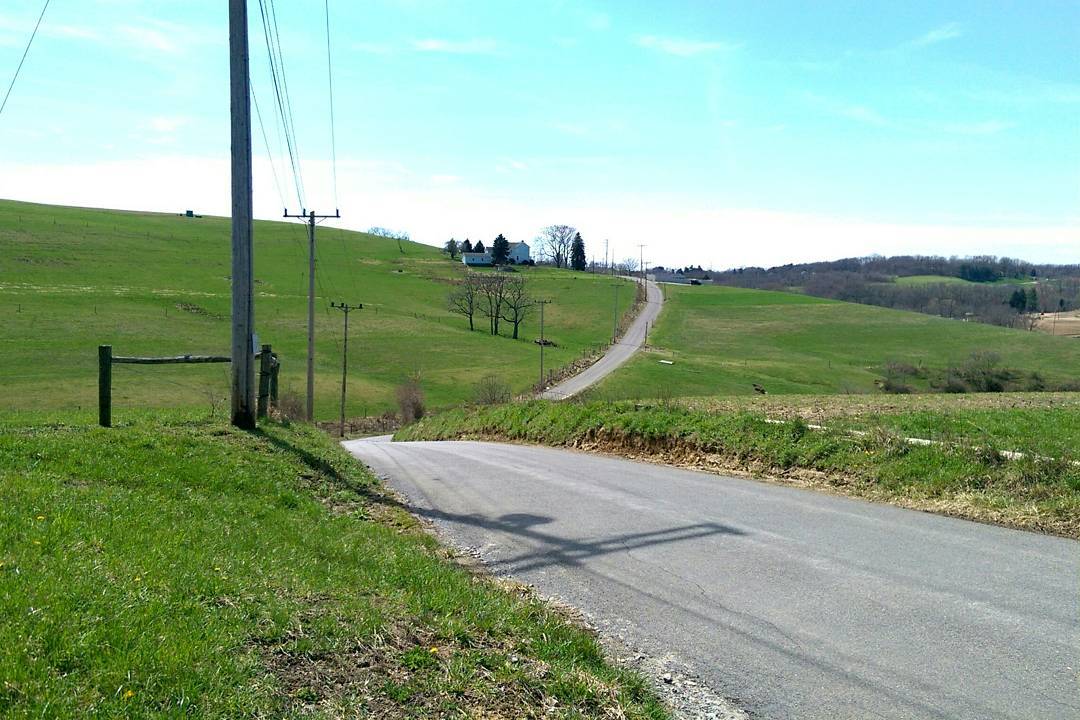
The route was scenic, especially if you like endless farmland. By the end of the ride, everything smelled and tasted of manure. But we saw two dozen or more Amish buggies out on the roads, presumably on their way to some top-secret Amish conclave.

The course was also very rolling. With 7,700 feet of climbing, it was the third most climbing I’ve done in a single ride in ten years—surpassed only by two other 200k rides, one of them my April Sandy Lake brevet.

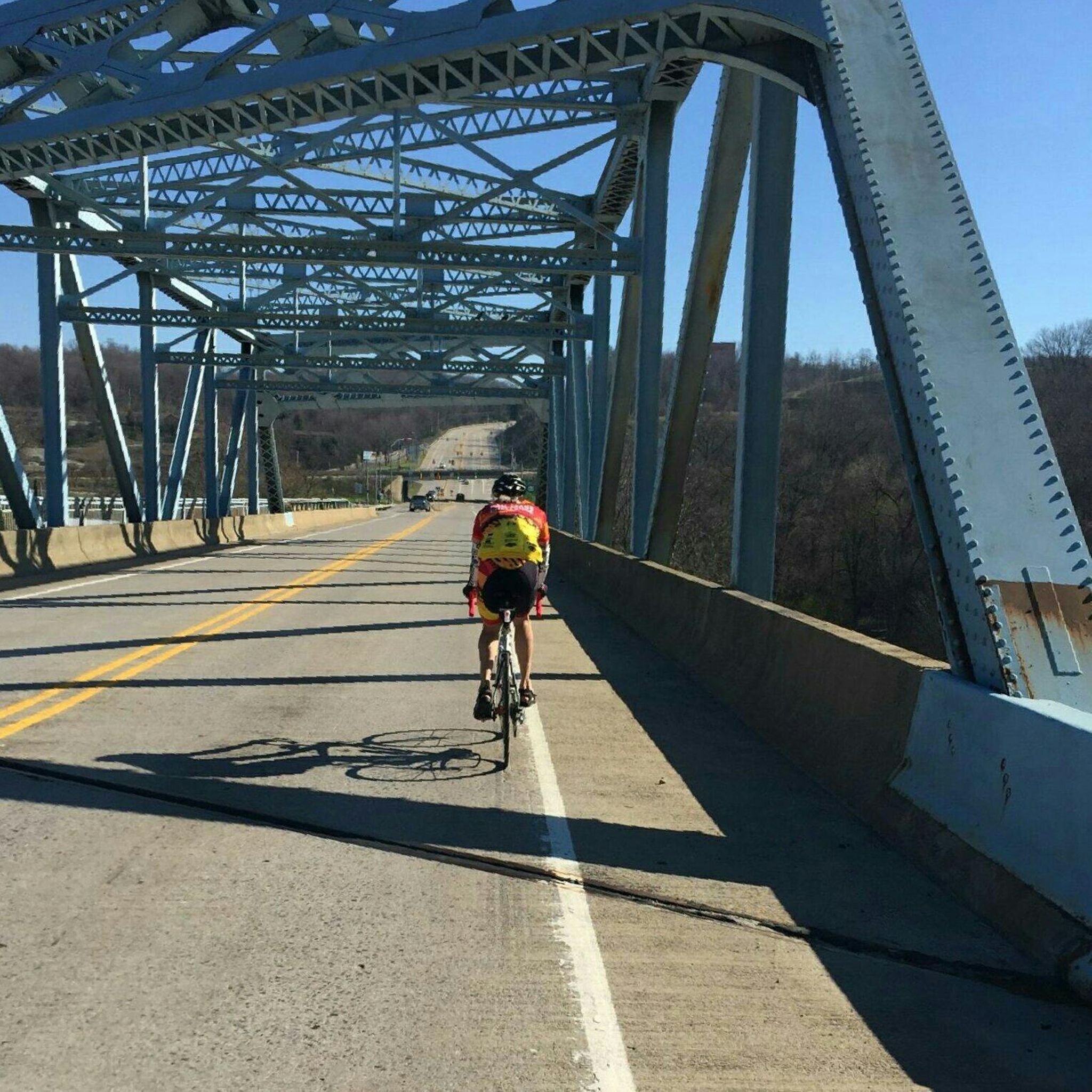
I was strong through 80 miles, but then spent the next 37 miles yoyo-ing off the back of the group. In the hottest part of the day, with just 6 miles left to go I finally fell off and limped to the finish at a reduced pace, utterly wiped; but justifiably so, after ten hours in the saddle.

That was a good effort tho, as it restored both my acute and chronic training loads to the level I was at before a week off the bike in Denver. It also tallied as my seventh century (plus) of 2019, my second 200k of the year, and—so far as I can tell from my records—my 80th all-time ride of 100+ miles.

And also the first of as many as six centuries in an eight-week "high season”. Now it’s time for focused recovery in preparation for ride #2...

Six days after I finished my winter training with my first indoor century, I brought the bike outside for my first substantial ride of the year: the Pittsburgh Randonneurs’ 125-mile Sandy Lake 200k brevet.

I had more than the usual nerves leading up to the ride. After all, it would be the longest ride I’ve done in two years, and I was going into it with essentially zero prep. In the past four months, I’ve only done a couple short rides outside, none of which I’d count as “training”.

Honest, I'm stretching!!! #notamidget

Honest, I'm stretching!!! #notamidget

For the first time ever, all my winter riding was done indoors, on the trainer, using Zwift. I’d done a lot of that, but would that be sufficient to power me through a 10-hour, 125-mile ride? I was about to find out!

And what better way to put Zwift to the test? The rolling route from North Park to Sandy Lake and back has over 8,000 feet of climbing, making it the second hilliest ride I’ve done since 2009.

It didn’t begin auspiciously. Eight of us set out promptly at 7am in unexpectedly chilly 45-degree weather, and I somehow scraped my calf on my pedal pretty nastily as I first clipped in.

As the miles and hours passed, the sky cleared and the sun slowly warmed the air, and riders started shedding layers of clothing. Although it’s too early in the season for the leaves to be out, it was heartening passing outbursts of forsythia, cherry, dogwood, and magnolia. My legs felt good, but I rationed my strength, knowing I hadn’t done much (i.e. any) training for endurance. After a while, both my knees and my traps complained insistently (the latter are my biggest weakness on long-distance rides).

An undetected tailwind that had helped us ride north became a much more noticeable headwind on the return leg. My strength faded and I remained with slower riders at a casual pace, rather than burn my few remaining matches.

We eventually plodded back to our starting point at 5:10pm. That’s 40 minutes faster than the roughly comparable McConnell’s Mills 200k brevet I did back in 2016. As measured by Strava’s “Relative Effort” metric, it was the fifth hardest ride I’ve done since 2009.

Although this was my second 100-mile ride of 2019, it was my first IRL / outdoor century of the year, after last weekend’s indoor century on the trainer. And discounting that “Zentury”, this was the earliest in the year that I’ve done a 100 mile ride, beating my 2016 brevet by four days. As far as I can figure, it was also my 75th confirmed overall century; there might be others, but records from my early years are incomplete.

It was a satisfying day; I got some sun, hung out with friends, and knocked out my biggest athletic goal for the spring. I’m very pleased at how well it went.

But before I finish, I have to revisit my preparation. I went into this event with the goal of putting my wintertime indoor Zwift training to the test. Was it effective? Was it valuable? Let’s look at that in more detail…

Tan lines starter pack

Tan lines starter pack

On the plus side, Zwift is fun; it makes indoor workouts more than tolerable, even attractive. It ensured I started the event with excellent cardiac and aerobic conditioning, with leg strength that was up to long miles and hard climbs, and with touch points (hands and seat) that could tolerate time in the saddle. In terms of building early-season fitness, Zwift was an unqualified, smashing success.

There’s another side of the equation, however. Although I’d done some long efforts on the trainer, other than my grueling indoor “Zentury”, none were more than half the duration of my 200k. While I gained strength and aerobic conditioning, I wasn’t building up the endurance needed for 10-hour rides.

At the same time, all the high-resistance work I put in compromised my joint health, specifically my knees, where I’ve been experiencing pain both on the trainer and during outdoor rides. I’ll keep a close eye on that, so I can ride as long as possible without needing joint replacement surgery and the associated time off the bike.

A much lighter consideration (pun intended) is that indoor training didn’t allow my skin to adjust to the seasonal increase in sun—and specifically UV—exposure. Yeah, I came home with a bit of sunburn, on a five-inch spot just above each knee. For proper springtime training, my Zwifting setup might need a couple sun-lamps!

More seriously, the net-net on Zwift is that it has been a complete success, and I’m pleased that the investment produced the desired and worthwhile improvement.

My previous post, following my Zentury, summarized my winter training and said that I had achieved my two expressed goals for 2019: using Zwift to both get over my 2018 malaise, and to begin spring at a high level of fitness. Sunday’s Sandy Lake 200k brevet was the final proof (the proverbial pudding), and I couldn’t be pleaseder (sic) with the result.

I also couldn’t be pleaseder that I’m now on break, with no major events until the middle of June. I’ll be riding—and might get another century in—but a good training plan includes periodization, wherein peak training is followed by recovery and consolidation before kicking it up another level. Fortunately, I’ve got a few weeks to kick back before the solid block of summertime events line up like dominoes.

But so far—and for the first time in a year and a half—things are looking really good!

Me and randonneuring, we have a history, and it’s not all wine and roses. But as with my Gatorade Escapade, enough time has passed that I feel safe sharing another hidden aspect of my cycling history.

Randonneurs USA badge

Twenty years ago, when I returned to cycling as an adult, it was clear that I was going to be a long-distance (endurance) rider. And in looking for clubs and events that emphasized long rides, I learned of the New England Randonneurs and their Boston Brevet Series of rides.

What’s all that, then? To explain, here’s an excerpt from the ride report for my first brevet, back in 2006:

First, what’s a brevet? A brevet or randonnée is an organized long-distance bicycle ride. Cyclists—who, in this discipline, are referred to as randonneurs—follow a designated but unmarked route (usually 200km to 1200km), passing through check-point controls, and must complete the course within specified time limits. Randonnée is a French word which loosely translates to ‘ramble’ or ‘long journey’. Brevet means ‘certificate’ and refers to the card carried by randonneurs which gets stamped at controls; it is also used to refer to the event itself. Randonneurs do not compete against other cyclists; randonnées are a test of endurance, self-sufficiency, and cyclo-touring skills.

The ultimate randonnées are Paris-Brest-Paris and Boston-Montréal-Boston, both of which are 1200k (750 miles). You must complete a series of four brevets of increasing distance to qualify for PBP or BMB: the lengths of those qualifying rides are 200k (125 miles), 300k (190 miles), 400k (250 miles), and 600k (375 miles).

Twelve years ago, I’d just completed that first 200k brevet, and was eager for more. I scoured the internet for blogs by experienced randonneurs and online discussions.

It was on one such forum that I came across a discussion between riders about what handguns they preferred to carry during rides.

Yeah, you read that right: the loaded firearms they packed while riding, for shooting other road users.

I was shocked and horrified. I have no interest in being a bit player in some redneck moron’s Budweiser-fueled Mad Max gunfight fantasy. Guns have no place on the road, and absolutely no place in a cycling event.

I immediately fired off an email to the membership coordinator and the president of RUSA, our national organization, inquiring whether firearms were allowed on the rides they organized. They have ridiculously strict rules regarding rider safety, requiring helmets, front and rear lights, reflectors, reflective vests, sashes, and anklets, and so forth. But no, apparently that’s all safety theater, because they were—and still are—perfectly happy to hypocritically allow riders to carry loaded, concealed firearms, endangering the entire group and exposing RUSA to significant legal risk.

Having just mailed in my payment for my second year of RUSA membership, I put a stop payment on my check and informed them that I would not give any money to an organization that allowed my safety to be compromised, and that I wouldn’t be participating in any further RUSA events. After feeling that I’d found my community as an endurance rider, I was saddened to go into self-imposed exile to protest a policy I found outlandish and extremely dangerous.

Over the next decade, I participated in hundreds of centuries and 200k rides, but not a single RUSA-organized brevet. It’s unfortunate that I never felt safe enough to progress any further in my career as a randonneur. I’m sure I would have enjoyed it, and done numerous events, if they’d taken rider safety (if not their own legal exposure) seriously.

Only in the past couple years, since moving to Pittsburgh, have I chosen to meet up and ride with the local randonneuring group. It’s a tiny group—usually just four to six people—whose character I trust, and I’m hopeful that none of them are stupid enough to carry guns. But after all this time, I still will have nothing to do with RUSA unless and until they start taking the safety of their riders seriously.

I rarely write up rides of less than 100 miles, but given how disappointing 2018 has been, it’s worth mentioning how nice Sunday’s Pittsburgh Randonneurs Kittens & Puppies 100k (that’s 62 miles) was.

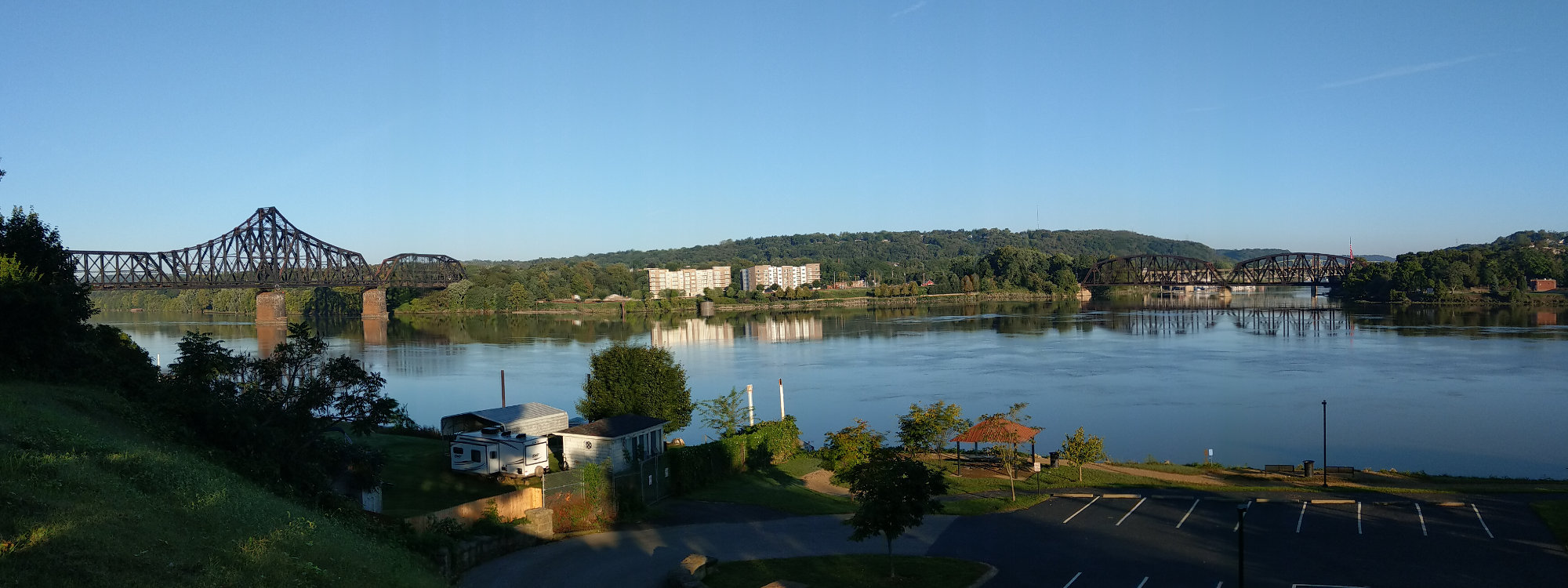
We started 25 miles down the Ohio River in Monaca PA, then headed north along the Beaver River—almost to Ellwood City—then paralleled the PA Turnpike northwest to New Middletown OH, and back along the same route.

Ohio River Beaver

So what was so good about it?

First and foremost, the weather was stunning, and the view from the start on the Ohio riverbank was gorgeous. We’ve had 14 inches more rainfall than average this year, which soaked or canceled several events and regular weekly rides. So we were very appreciative of a beautifully sunny late summer day. Later some high clouds from Hurricane Florence rolled in, which conveniently kept the afternoon heat at bay.

The Kittens & Puppies route is a gentle welcome for new randonneurs, being shorter and less hilly than their typical routes. So the ride was relaxed and enjoyable, and my legs appreciated a break after my first couple days of pre-Dirty Dozen hill work,

I also got to ride with friends I haven’t seen much this year, including De’Anna and Jim.

I enjoy riding with randonneurs, because they keep a perfect pace: a good clip, with businesslike rest stops, but easy enough to keep riders from blowing up. It’s the perfect middle ground between group rides composed of either hammerheads trying to ride each other into the ground or lazy tourists who are horrified at expending any effort at all.

Not a highlight, but something to be thankful for: at one point I missed a turn and made a sudden, sharp retracement in a patch of gravel. Both wheels skidded out from under me, but I somehow managed to keep it up, and no apparent harm was done to tires or wheels.

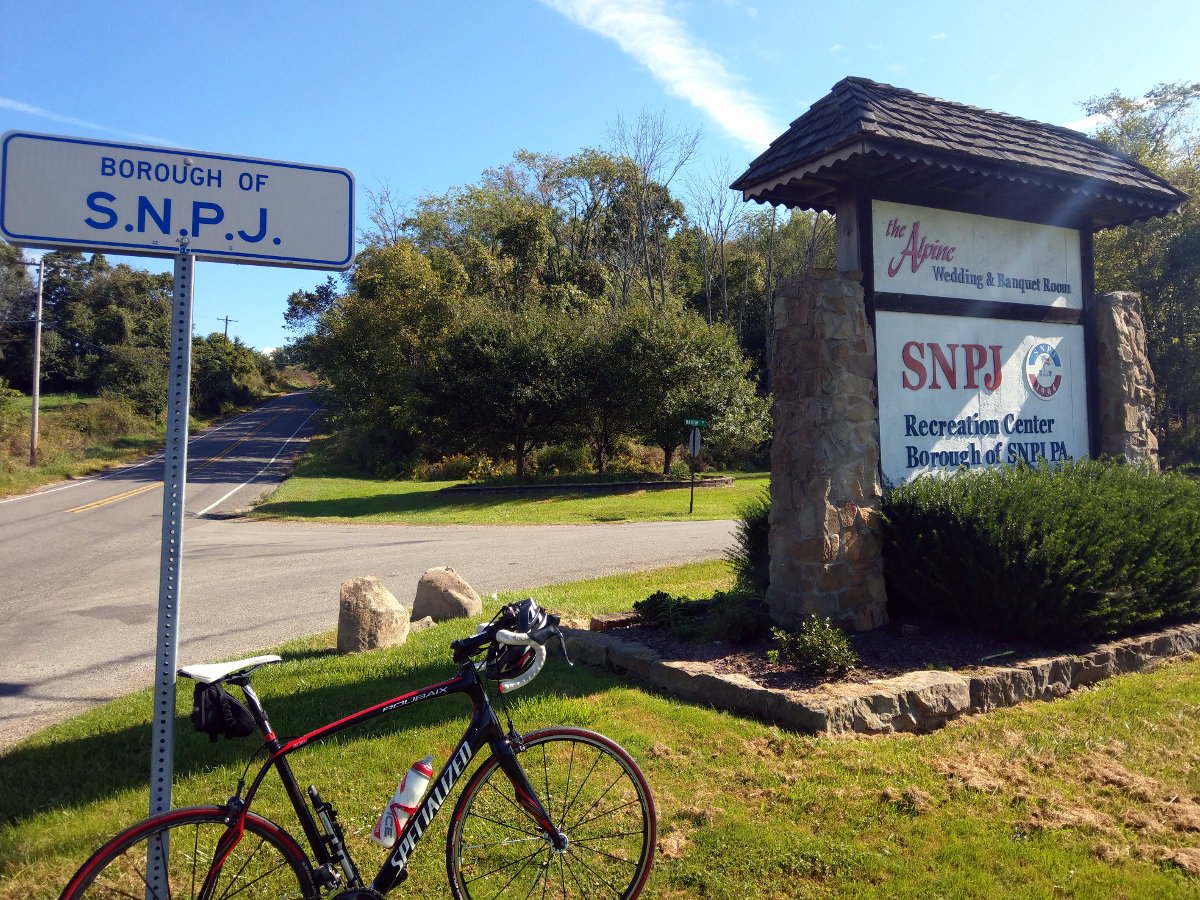
S.N.P.J. Pennsylvania

S.N.P.J. Pennsylvania

Two-thirds through the outbound leg, I took a four-mile detour off the route in order to check in at a place I’d always wanted to visit: the oddly-named town of S.N.P.J. Pennsylvania.

The turn-around rest stop was a sandwich shop, where the cashier chose not to charge me for the cola I grabbed. I’m not sure whether that was because I’d waited and let a couple other customers precede me or if it was some other “thing”.

After the ride, four of us stopped at Yolanda’s Pizza, where I acquired a much-anticipated pepperoni, sausage, and ham calzone.

But above all, it was nice to be out there and enjoy one of the few beautiful days we’ve had all year.

The outlook for the rest of 2018 is cautious. I won’t be training as hard for this year’s Dirty Dozen, but I’ll probably do a few of the friendly prep rides. I may or may not do the event itself—that’ll depend on weather and how I feel—but if I do, it’ll be as a fun ride that I won’t take terribly seriously.

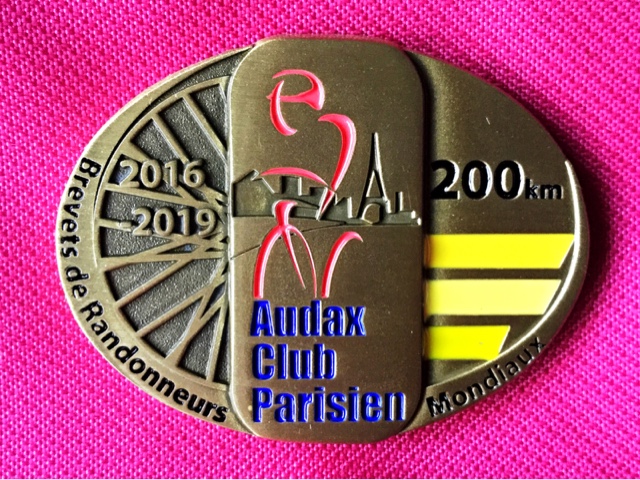
I biked in Boston for 15 years, doing over 50 centuries in numerous events. To my recollection, in all that time I only ever received two medals as a result. The first was from the Audax Club Parisien for my first 200k brevet; the other was for the 2015 Cape Cod Challenge MS Ride.

Although I rode 14 consecutive Pan-Mass Challenges, the most I ever got from them was a tiny pin; and that wasn’t for my riding, but for raising over $100,000 for them. Despite repeated mentions in my post-ride feedback, the PMC never gave ribbons or medals to finishers.

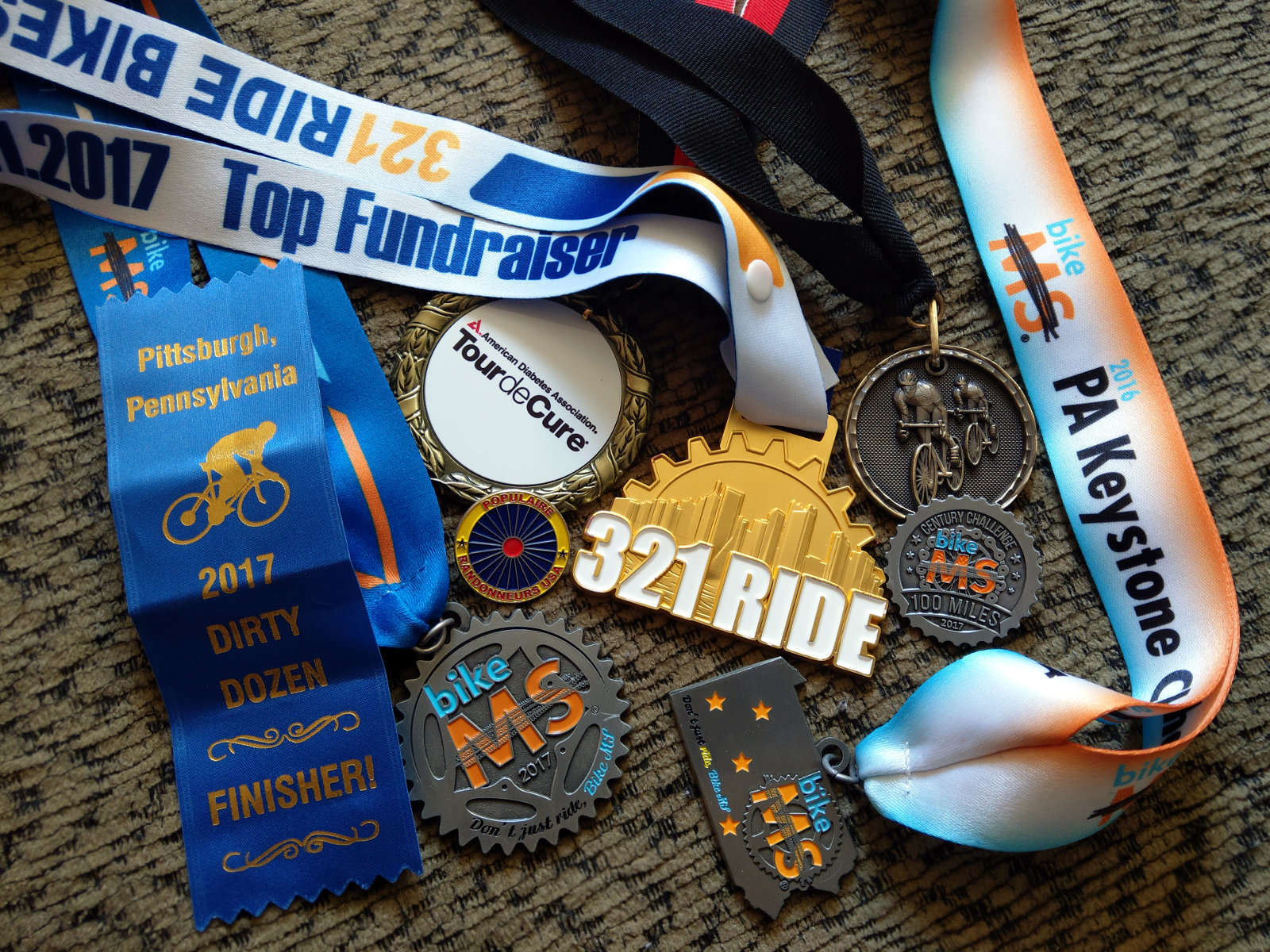
Cycling Awards

My 2016-17 Cycling Awards

I mention this to provide contrast with the two short years that I’ve lived in Pittsburgh, where I’ve received no less than eight medals and ribbons, as shown in the accompanying photo.

A surprising number of rides here give participants something to go home with. I’ve received three medals from two MS Rides (the extra one for doing their optional full century route), plus medals from a Randonneurs USA 100k brevet, the 3-2-1 Ride, the Pittsburgh Tour de Cure Gran Fondo, the PMTCC Three-State Ride, and my finisher’s ribbon from the recent Dirty Dozen. I should have received another ACP 200k medal, as well.

And you know what? As tacky and worthless as those tchotchkes are, they still mean something to me. They bring back memories of those rides, and I enjoy watching the hardware accumulate by my desk over the course of the season.

If I find them meaningful, I’m sure there are other riders who feel similarly. For anyone running a major event—especially a fundraising ride—such trinkets seem like a very inexpensive way to say “Thank you” and foster a rider’s loyalty to an event from year to year.

I’ve certainly had very positive associations with the rides here in Pittsburgh that have given them out, so I’m not sure why folks in New England have resisted it.

Two noteworthy rides to report on from this past weekend: the Pittsburgh Randonneurs’ Summer Populaire 100k, and the Akron Bicycle Club’s Absolutely Beautiful Ride century.

I was concerned coming into the weekend, because I’d had a couple slack weeks, thanks to a trip to Cleveland to visit friends and another to Boston, Maine, and New Hampshire for family. I didn’t feel particularly strong, having let my training lapse.

Ornoth & Monica finishing the 100k

Ornoth & Monica finishing the 100k

On Saturday, the Pittsburgh Randonneurs held a 100k followed by a potluck picnic. The inevitable hills made the ride a lot harder than I expected, and I endured some painful saddle chafing. I rode much of the route with Monica VanDieren, as we seem pretty well matched, pace-wise. We put up with a bit of rain just as we finished, but it passed.

It was nice hanging out, eating, and chatting with the dozen other riders afterward. And they’re the only group where the assertion “When I get old, I’ll take up an easier hobby, like marathons or Iron Man triathlons” is actually a believable statement!

Aside from an irritated butt, my other complication was the mileage. On top of the 100k, I added twenty miles riding to the start and back, for a day’s total of 85 miles… Not bad on its own, but a bit much for the night before a century!

After a shower, a hurried dinner, and abbreviated sleep, I was up again at 4am Sunday morning for a two-hour drive to Ohio for the Akron Bicycle Club (ABC)’s Absolutely Beautiful Country (ABC) century ride.

I can’t say “Absolutely Beautiful” is how I’d describe Akron. My impression of the area is more along the lines of: endless farmland stinking of manure, large clouds of midges, and nearly every vehicle was (for whatever reason) a white SUV.

The landscape was flattish with some rolling hills: way less strenuous than Pittsburgh! The open farmland left riders more exposed to wind and sun, but it fortunately wasn’t a real hot day, and some passing clouds provided some respite from the sun. And the wind was at our backs on the northbound home stretch.

On the positive side, there was free soft-serve ice cream at the 68-mile rest stop, and the sandwiches they provided were perfect: a quarter-inch of bread, one slice of swiss cheese, surrounding a two-inch tower of cold cut meat. Awesome! On the other hand, I was refused ice at the 85-mile rest stop because “It’s important that we keep the drinks cool.” Probably not as important as keeping *the riders* cool, but that’s how people think these days.

Another highlight was meeting and chatting with Michael Coburn, a local rider who had ridden several Pan-Mass Challenges with Team Forza-G after his wife received treatment at Dana-Farber. He’d noticed me wearing my 2013 PMC jersey.

I completed the course—and my second century of 2017—in a respectable 7h10m. Due to the fatigue (and ventral abrasions) of doing 85 miles the previous day, I’d taken it pretty easy on the road, so it was actually easier than the 100k. After some snacking and refreshment, I piled back into the car for the long two-hour drive home.

My goal in doing the ABC Ride was to find out what it was like and whether it was an event I’d like to repeat in future seasons. I mostly enjoyed the ride, it was well supported, and the lack of hills was a really nice change of pace! But on the other hand, I fear how painful it might be on a truly hot, sunny day. If it were closer to home, I’d certainly do it again; but I’m just not convinced it’s gonna be worth four hours of driving on short sleep.

Still, it’s another local(-ish) century to keep on the calendar, it’s another century under my belt for 2017, and good training for the blitzkrieg of long-distance cycling events bearing down on me over the next two months.

It’s been seven weeks since my February post, which related my having ridden six days out of seven. After that, March was pretty much a write-off from a cycling standpoint, but April is coming together nicely.

I guess I can’t complain too loudly about being unable to ride in March. It was still winter, after all, and the weather was cold and rainy. I’ve aged out of the desire to ride in weather below 40 or 50 degrees. But even on the passable days, I found it hard to self-motivate. Trying to recover lost fitness each spring is always painful, but I’ve been more discouraged than usual this year, since I spent so many months completely off the bike.

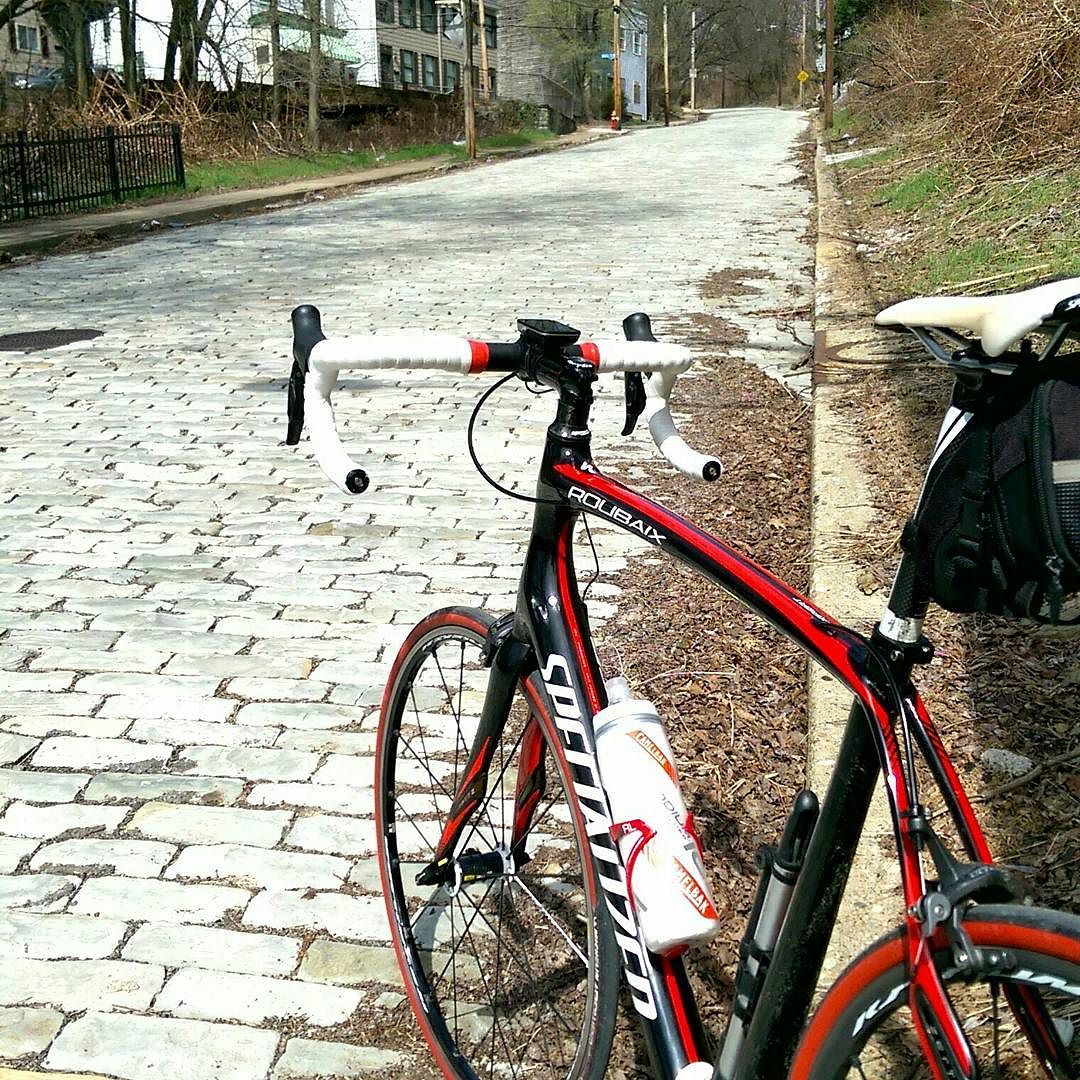
Spring is for cobbled climbs
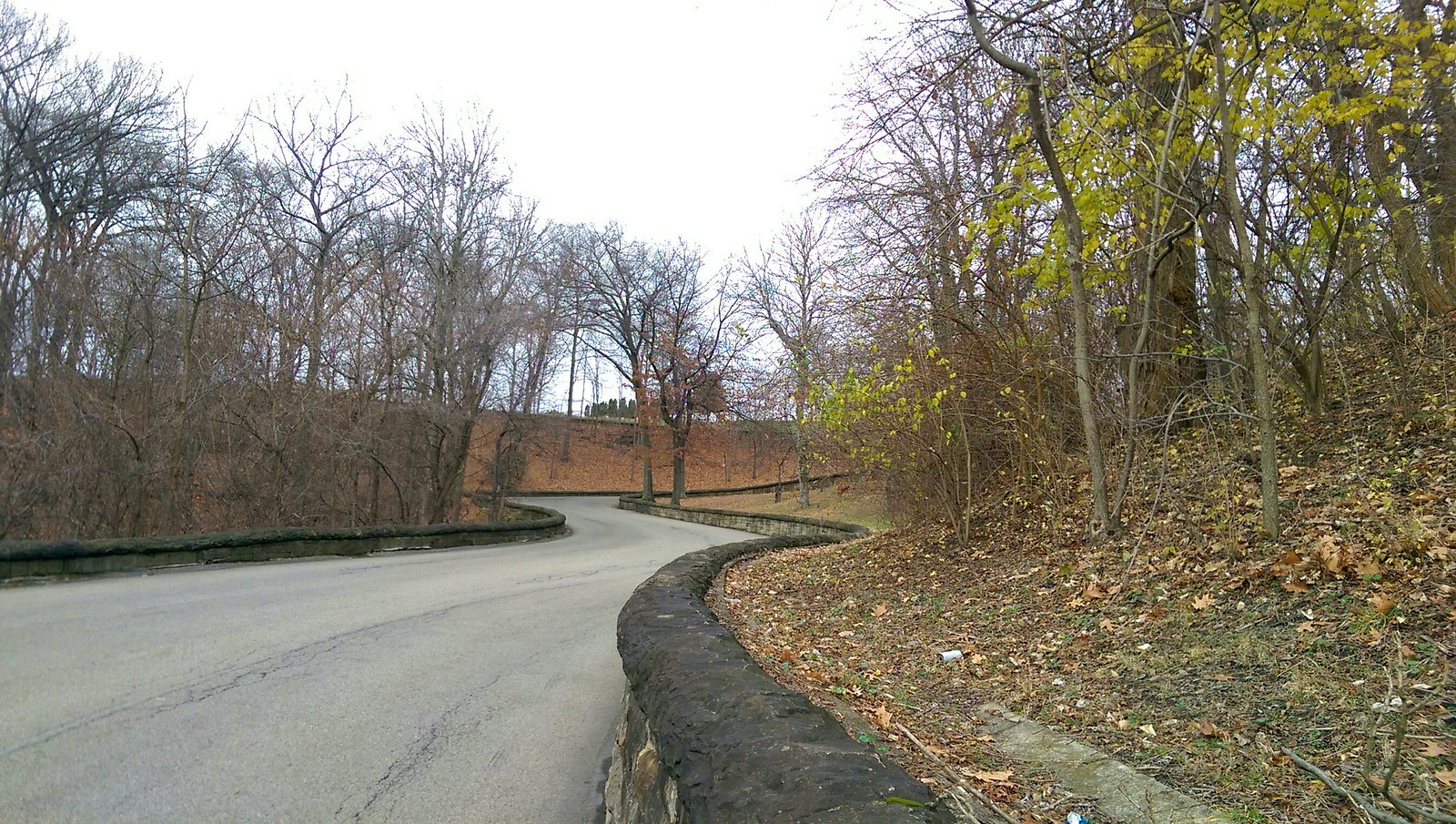
Neighborhood switchback
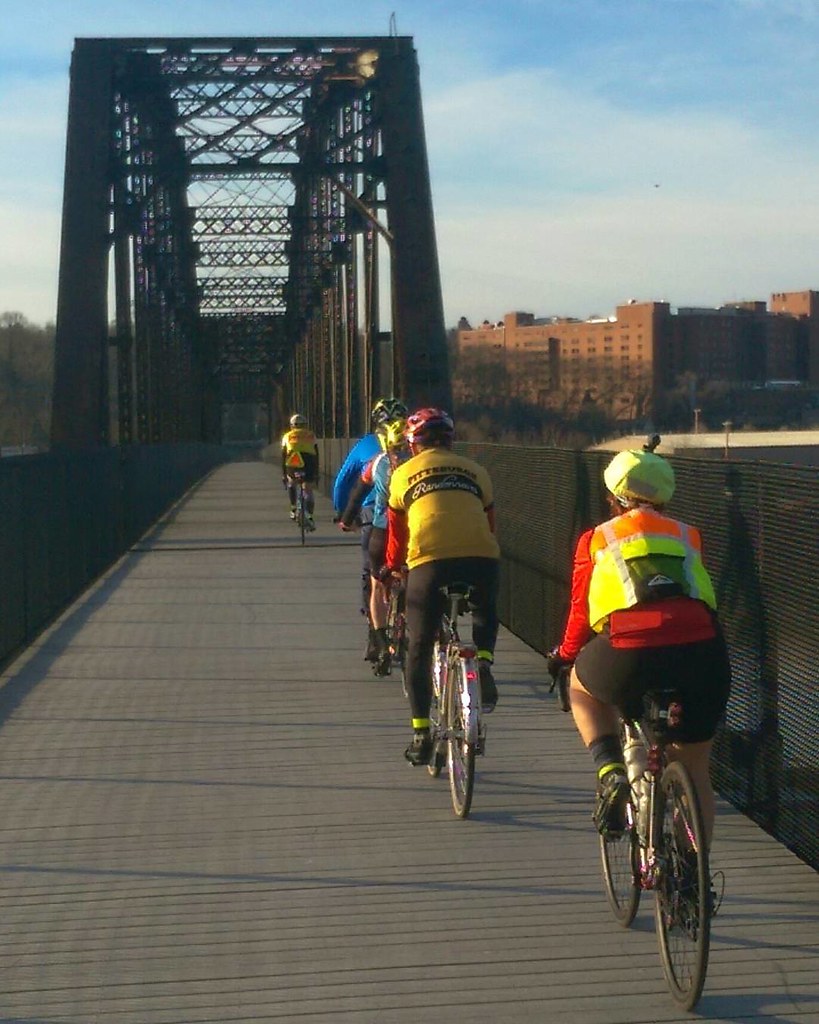
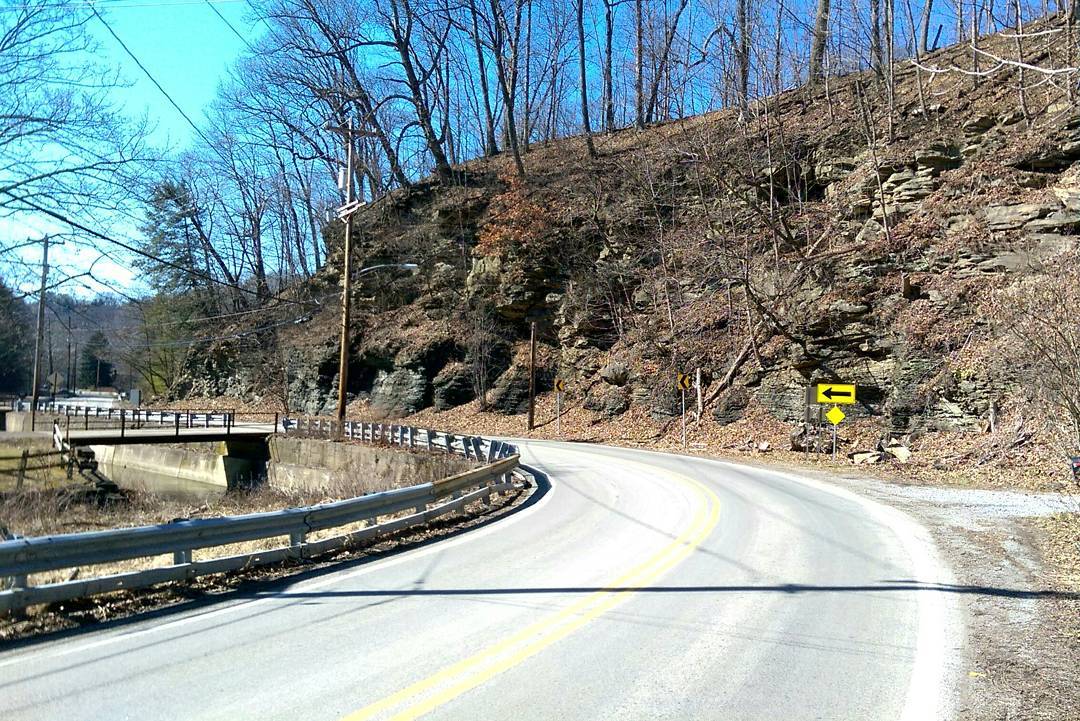
Rolling Pennsylvania farmland

Once you do motivate yourself to ride, there’s a certain amount of “training stress” that is necessary for building fitness, and that training stress is really good… until it isn’t. Working too hard too soon, without proper recovery time, leaves one with heavy legs, dreading heading out, intimidated by the traffic and so many hills to climb. There’s no real good way to tell when you’ve crossed that line from good stress to bad, but with repeated experience one learns to carefully monitor one’s desire to ride.

That was pretty much how March went for me. Although the Pittsburgh Randonneurs held a 100k and 200k in March and another 200k in early April, I skipped them all. They were earlier in the year than usual, which ensured that I was nowhere near trained up enough to succeed, and the early date also meant that the weather was near freezing. Not the kind of ride I’d enjoy.

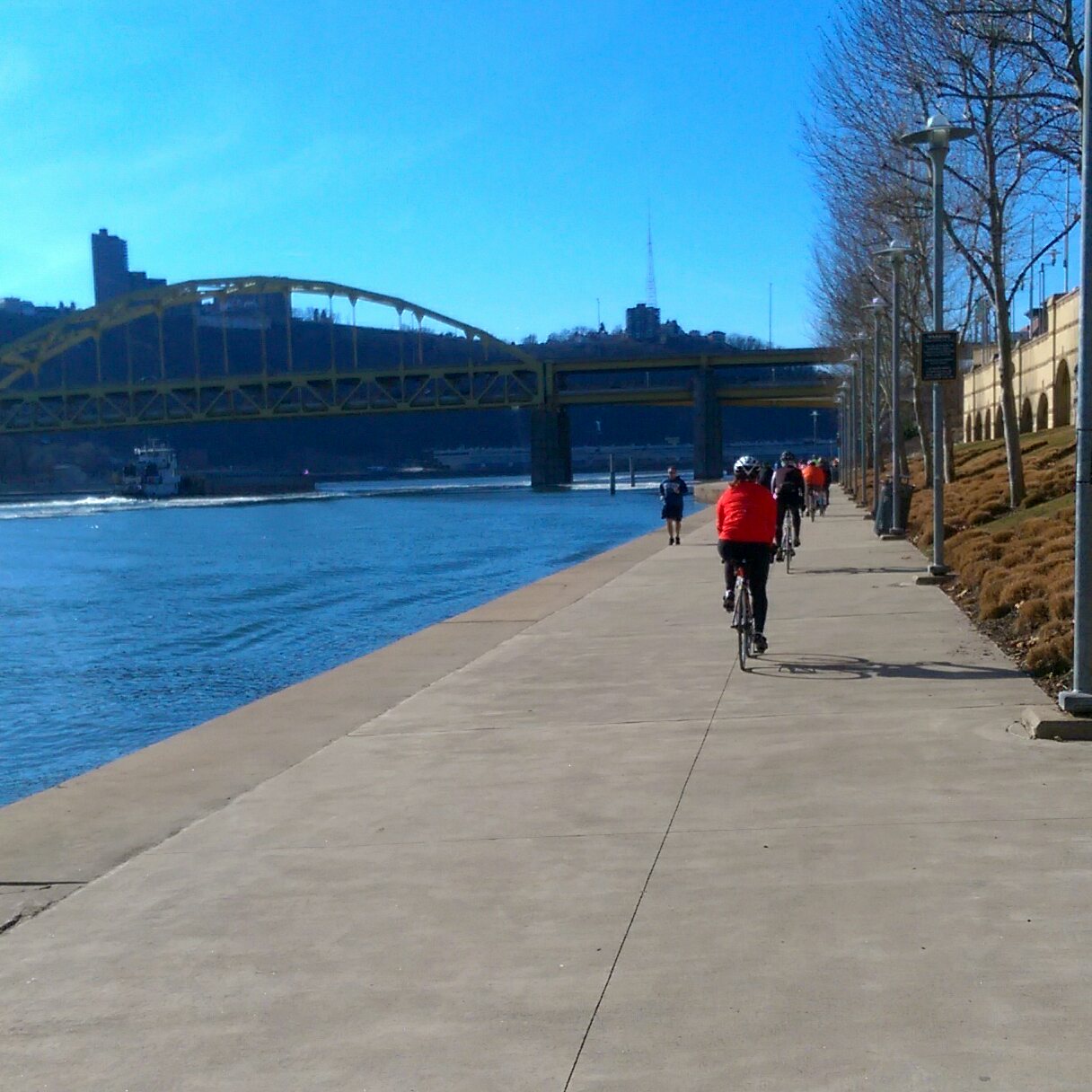
Three good things did happen last month, tho. First, I got to play around with my new Garmin Edge 820 bike computer and get it all settled, including the frustratingly finicky Shimano Di2 integration; a full review of the unit will come after a little more road testing. I also picked up a Tag-o-Rama tag down in Turtle Creek, and set my new one in Garfield.

Finally, I learned of another alternate route up to Squirrel Hill (home) from the Eliza Furnace trailhead. Unlike the other two routes, which are kinda hilly, the new one is *obscenely* hilly, taking a couple switchbacks up a steep hill from Greenfield to Bigelow Street, which itself is a very long, steep uphill drag (involving both bricks and Belgian block) to the top of Hazelwood. It’s a nice workout, if I am capable of taking it on after whatever ride leaves me at the end of the EFT.

Although April began with a late-season snowfall, winter couldn’t hang on forever, and the past week provided great riding weather. Since last Sunday’s always-inspiring Paris-Roubaix, I’ve matched my February achievement of riding six days out of the past seven, but logged 236 miles rather than February’s mere 166.

On the 9th, I undertook a 33-mile ride east to visit the sites of two of Allegheny County’s seven active underground coal mine fires, some of which have been burning for more than fifty or sixty years!

The 10th I followed the route of a local club ride north for my first 50-mile ride in seven and a half months. The wind made it extra difficult, and my lack of training (and lack of acclimatization to the sun) produced a mild sunburn on my arms. It hasn’t taken long for my “distinctive markings” to return!

The 11th was a flat 30-mile recovery ride down the GAP bike path.

The 12th I went short (20 miles), but packed several really steep climbs to (further) stress the legs.

That was followed by my one rest day on the 13th.

With beautiful weather scheduled for Friday the 14th, I opted for a long 100k ride down Bunola Road to Monongahela, which wound up being 72 miles when bridge repairs necessitated a surprisingly pleasant and scenic detour up Raccoon Run and down Church Hollow. That capped my first 200-mile week in—believe it or not—nearly two years (since June 2015)!

Then on Saturday I got 30 more recovery-ish miles in my first group ride of the year with the Performance Bike crew. Hopefully I’ll get out one of these Tuesday nights for a spirited ride with the Team Decaf group.

But before I do that, I could use a day or two of recovery to consolidate my fitness gains and take the fatigue out of my legs. I figure it’d be nice to give the bike a rest too, since today is R2-Di2’s fourth birthday!

But the bottom line is that after a fallow March, the first half of April has featured a lot more miles in the saddle, with more expected. But happily, I can afford to take my time building up to peak fitness; with the Pittsburgh Randonneurs’ 200k rides already past, I don’t have any other significant events planned until mid-June.

Normally I wouldn’t consider doing a long-distance ride like the Pittsburgh RandonneursMcConnell’s Mill 200k brevet this early in the season. April is way too cold for long rides, and there’s no way I could have completed the training required to be prepared for 130 miles.

On the other hand, this winter has been so mild that I’ve ridden more than usual this year. Although none of that riding was anything near century-length rides, I figured I had enough miles under my belt to consider undertaking the hilly 130-mile challenge.

That desire was reinforced when Pittsburgh suddenly found itself in the middle of an unprecedented week of cloudless sun and temperatures in the 70s. With sunny days at a premium here, there was no doubt I’d spend the weekend in the saddle, and the 200k seemed perfectly timed.

On the other hand, there was reason for trepidation. This wasn’t just any hilly ride. Out of all the rides I’ve done since getting a GPS, the Mt. Washington Century, which traverses three mountain passes and claims to be the most challenging century in New England, contains the most climbing: around 5,900 feet by my records. The brevet route climbs 8,800 feet, the equivalent of one and a half Mt. Washingtons! Not a ride for someone who hasn’t trained for it.

But wait; there’s more. I couldn’t do the ride on my current bike (R2-Di2) because a week earlier I’d discovered cracks in the wheel rim and was waiting for a brand new rear wheel to arrive at the bike shop.

In the meantime I’d been riding my old bike (the Plastic Bullet), but two days before the brevet, its rear wheel also started acting up, making a horrible screeching noise anytime I coasted at speed, which I eventually traced to the freehub. In theory it was rideable, so long as you constantly pedaled and didn’t ever coast…

So that was the decision I had to make the day before the event. 130 miles, ten hours in the saddle, far more climbing than I’ve ever done, on very limited training, without coasting, on a broken bike? Yeah, sign me up for that!

Ornoth hammering

So Saturday morning I found myself riding 8 miles to the start in Shaler, pedaling all the way. It was a pretty cold 52 degrees at 6am, but the forecast expected it to warm up a lot.

There were a mere eight starters, and I knew several of them from a ride down to Monongahela back in February. After photos and a briefing, we left the organizer’s house at 7am and immediately dove down a very steep 125-foot hill to the banks of the Allegheny. After having to brake and spin the pedals all the way down, I found myself off the back, but I caught up again easily.

The first segment was a flat 16 miles along the river on Freeport Street to Tarentum. The group mostly stayed together. My hands and feet (in my cycling sandals) went numb, but with the sun rising, warmer temps were coming. Thankfully, it was going to be a rare windless day.

From there, the route turned away from the river and up Bull Creek Road, one of many routes that follow stream beds up to the high plateau that surround the three rivers. But we soon left the stream valley and began the first serious climb of the day up Sun Mine Road.

That splintered our happy little group into shards, with myself and two experienced cyclists—Monica & Stef—leaving the rest of the group strewn along the climb in our wake. 23 miles into the ride, we now faced 100 miles of interval training: constantly rolling steep hills with zero flat to provide any respite.

Just after 10:30am we reached the West Sunbury country store that was the 53-mile checkpoint. The three of us refueled, and I jumped into the bathroom to quickly strip off my arm warmers, base layer, and cycling cap since the day had warmed substantially. The last one out of the store, I had to run to catch up to the girls as they left. It was then that I realized that after taking off my base layer, I hadn’t pulled the shoulder straps of my bib shorts up before putting my jersey back on! I stopped and quickly executed the reverse of the women’s “remove my bra straps without taking off my shirt” maneuver and set off to catch back up.

After passing through more hilly farmland, at noon we traversed Cooper’s Lake Campground. This is the site of the Society For Creative Anachronism medieval recreationist group’s huge Pennsic War, which my ex-wife and I attended three times, our first time being our honeymoon trip. Passing through the area brought back lots of memories, but it was hard to correlate 30-year old memories of a crowded campground with the open fields I saw as I rode past.

An hour later the temperatures were climbing toward 80 degrees, and with no shade in sight I was starting to fall behind Stef and Monica. I caught up with them at the 83-mile checkpoint at a 7-Eleven in Ellwood City. Stef left soon after I arrived, and that was the last we saw of her that day. Monica and I rode off after a rest, staying within shouting distance for the remaining 40 miles.

By half past two we hit the century mark while passing through the town of Cranberry. 7.5 hours, which is no record, but it’s pretty good, given the endless climbing we’d endured.

Half an hour later we stopped at another convenience store to refuel and rest. We’d take a couple more short stops for breathers over the remaining route, because I was flagging and Monica was having difficulty with her exercise-induced asthma. Another half hour had us passing through North Park and over the last major climbs of the ride.

Eventually we came out on Wible Run Road, a sustained stream-bed descent that led us finally back down into the valley of the Allegheny near the start.

A mile from the finish my GPS finally conked out. Losing the last mile of data isn’t a big deal, except that it included the vicious 12-percent grade climb back up to the organizer’s house, which reminded me a lot of the brutal finishing climb to the Mt. Washington Century, except shorter. Only later did the organizer reveal that he had chosen not to have us take an easier route to his home!

ACP 200k finisher medal

Monica and I pulled in at 4:56pm, just shy of 10 hours in the saddle. Stef, the only rider who finished ahead of us, had already checked in and gone home. The others drifted in and out over time while I waited for Inna to pick me up and munched on some well-earned pizza and soda.

Normally at this point I’d be all hyped up about getting my randonneur’s 200k finishing medal, but the organizing body and I had a parting of ways back in 2007, so I won’t be giving them the membership fee necessary to get the medal I earned.

So let’s do some context-setting here, because this was a milestone ride in many ways. My longest ride in Pittsburgh, longest ride and first century or double metric this year, first brevet in ten years, earliest in the year that I’ve ever done a century or 200k, exceeded my previous max climbing on any ride by 50 percent, probably only my sixth ride with more than a mile of climbing, and it also put me well over 50,000 feet of climbing (nearly 11 miles of vertical) so far this year.

Between the distance, the heat, the hills, and the broken bike, I’m pretty proud to have completed what will be one of the longest rides of the year, and notched my first century amongst the hills of western Pennsylvania.

Before I close, a quick review of how March went.

March was without question an excellent month: 400 miles of riding, with a stoopid 26,000 feet of climbing.

The month included exploration rides around McKeesport, Days Run up near Tarentum, Lowries Run into Emsworth, the GAP trail up to Boston (PA) and back, Dorseyville and Indianola, Munhall and the South Hills.

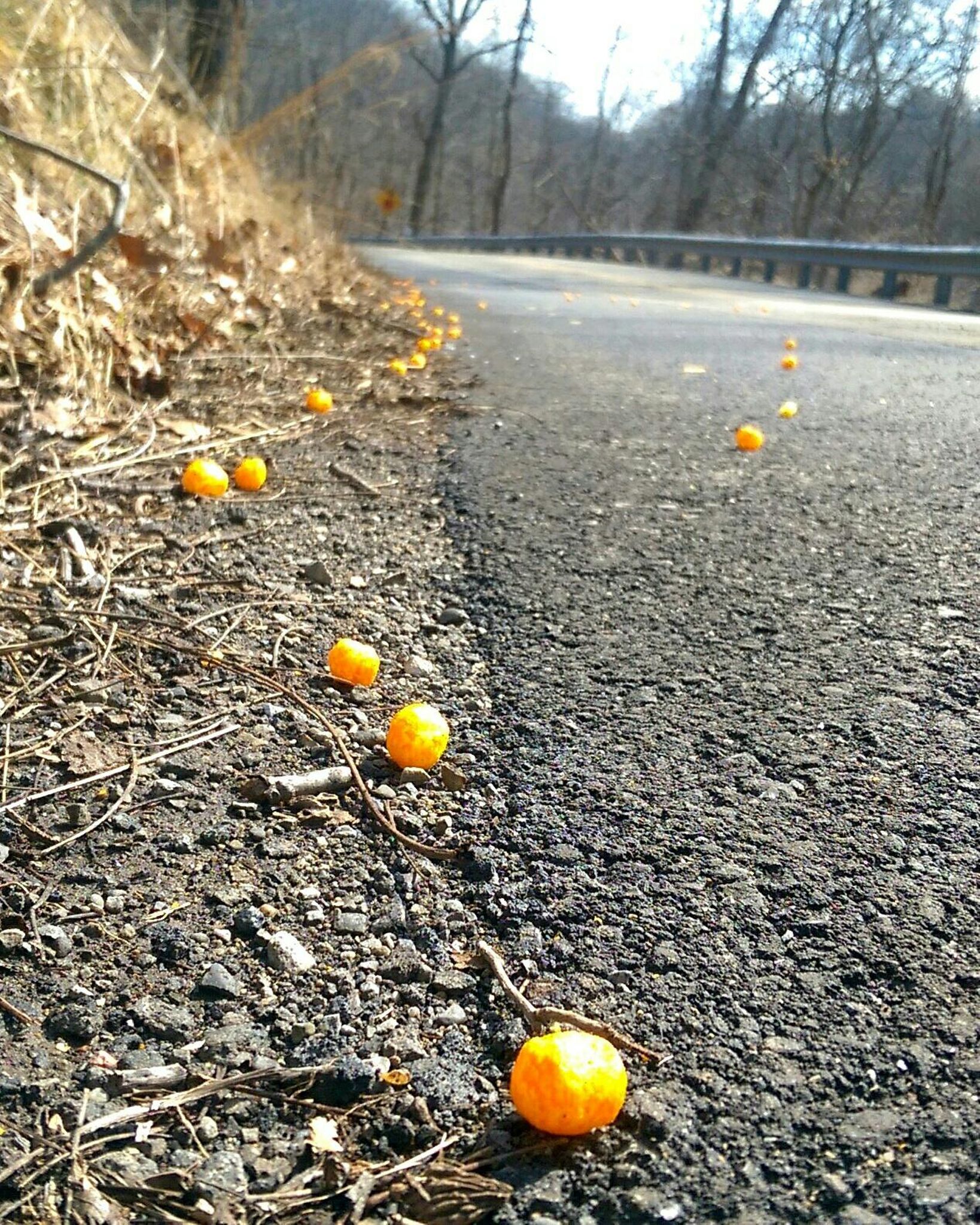
There were several particular highlights. One was finding and setting my first Tag-o-Rama locations, as described in an earlier post. I conquered four more of Pittsburgh’s brutal Dirty Dozen hills on the way to my first-ever Strava Climbing Challenge victory, although the worst of the hills— Barry/Holt/Eleanor—required a dab near the top after I pulled my shoe out of the pedal cleat. That same ride took me down the Montour Trail to the town of McMurray in memory of my mentor and hero Bobby Mac, where I stopped and had a memorial ice cream at a roadside stand that offered—appropriately enough—a “Dino Sundae”. My longest (now superseded, of course) was a 72-mile expedition out to Bakertown and over to Ambridge, where I came across a massive cheez ball spill in the middle of the woods in Sewickley.

So things seem to be going really well so far this year, aside from both bikes currently having broken rear wheels, of course.

A couple posts back I wrote: “Unless January and February get back to setting temperature records, you won’t see much from me in the next couple months.”

Pittsburgh from overlook
Serpentine Drive
North Shore Riverfront Park
Great Allegheny Passage in McKeesport
O'Hara Manor Park
Old Mill Road

Well, sometimes miracles do happen! January had five days above 50 degrees. Then February also had five days above 50°, plus five more days above 60°! And you can bet your sweet bippy that I took advantage of them.

So far in 2016, I’ve done 11 rides, which included some neighborhood explorations, plus:

  • The mostly ceremonial New Years Day Icycle Bicycle ride around town. (GPS log)
  • A processional ride in honor of a local rider who was killed. (GPS log)
  • A northside expedition out Fox Chapel, returning via Old Mill, Squaw Run, and Guyasuta. (GPS log)
  • Another expedition up the southside slopes, including stops at all the overlooks above the Monongahela and the ridiculous climb up Greenleaf. (GPS log)
  • Local explorations of Duck Hollow, Johnston Ave to Glen Hazel, the swoopy and dangerous Swinburne shortcut from Oakland to Greenfield, and discovering Parkview Blvd as a superior route to Homestead Grays.
  • A 65-mile riverside ride including Bunola River Rd up to Mon City and back with the Pittsburgh Randonneurs. (GPS log)
  • Another northside ride, going out Dorseyville and back via Saxonburg (GPS log).
  • Trying out my first and second Dirty Dozen hills. Tesla, the last hill on the Dirty Dozen route, is only a little ways from home. It’s mostly an easy hill until the last quarter mile, which shoots up painfully. But it’s short and doable, unless perhaps you’ve already covered a dozen insane climbs already… (GPS log)
  • And I also did Ravine/Sharps Hill, which is the second hill on the DD route. It’s much longer, starting out steep, getting much worse through its middle section, then ending with a long, straight uphill grind. That middle section was pretty damned hard. (GPS log)

It’s fun seeing the Dirty Dozen hills and conquering them, even if I’m taking them in isolation, rather than altogether.

So my stats for the past two months are actually really good. In the five preceding years back in Boston, I averaged only 4.2 rides and 94 miles by the end of February. But this year I’ve done 11 rides totaling 275 miles. So you can see that it’s been a great start to the year.

More significantly, by this time I normally would have accrued an average of 1,300 feet of climbing. My total this year is no less than 18,228 feet! Which reinforces the implication from my last post: that every ride in Pittsburgh is the equivalent of going out and doing hill repeats in Boston.

And I’ve been posting ride photos regularly, some of which appear here, but you can see more—plus new ones as they come in—on Instagram, Flickr, or Strava.

But now the calendar has turned to March, and genuine early season things are happening. The pros have opened up the European season with the Het Volk and Kuurne-Brussels-Kuurne cobbled classics, and the local randonneurs are ramping up for their characteristically early 200k and 300k brevets.

It might not be quite time to break out the SPD sandals, but I’ve gotten enough sun exposure to begin making progress on what the little woman calls my “distinctive markings”.

Hopefully March and April will bring more of that, please!

More developments, more negative than positive.

I’ve read a couple biking-related books recently: Graeme Fife’s “The Beautiful Machine” and Bill Strickland’s “Ten Points”. Unfortunately, I can’t wholeheartedly recommend either of them. The former is rambling, self-indulgent, off-topic, and lacking in cohesiveness, although it does have a couple chapters that describe rides along many of my favorite Massachusetts routes. The latter, despite being written by Bicycling magazine’s former editor, isn’t really about cycling, but is more of a disturbing tale about domestic abuse and recovery.

Oh, but I didn’t mind Jamie Smith’s amusing and informative book “Roadie: The Misunderstood World of a Bike Racer”. In fact, I’ve gotten some ideas from it about how to write this year’s Pan-Mass Challenge travelogue.

On that topic, I have registered for this year’s ride. This is the event’s 30th anniversary year, and my ninth. Unless all my sponsors bail on me, this year I’ll surpass $50,000 in lifetime fundraising.

Despite wanting to take part in the Boston Brevet Series’ 200k (125-mile) and 300k (185-mile) rides this spring, I withdrew my membership in Randonneurs USA after learning that some riders carry firearms on their rides, and the organization does not discourage it. I don’t want anything to do with riders who carry firearms, period.

Finally, I borrowed Jer’s indoor cycling trainer and have been doing interval training on it—to either a 45-minute Spinervals DVD or a 64-minute Carmichael Training Systems one—every other day. I expect it to help my early season performance, although that matters a lot less now that I’ve withdrawn from the brevet series. Aside from taking the old bike out just to play around in the middle of big snowstorms, I guess I’ve become too sensitive to the cold to do as much winter riding as I once did, so the trainer helps, even though I’m not recording those “miles” in my training log.

Although the calendar has only recently changed to February, I’m anxious to get out on the road again, but that won’t happen until things warm up a bit!

Most of you will have already gotten this via the email I sent to all my contributors, but I thought I’d post it here as well, just so that I have a record of it in my blog.

Each year I send out a final debrief after the Pan-Mass Challenge presents the Jimmy Fund with the proceeds from the year’s ride. Here’s a description of what you and I and the thousands of other riders, sponsors, and volunteers achieved in 2006.

If there’s a theme for 2006, it’s breaking records. Having raised $23 million in 2005, the PMC began this year with a $24 million goal. That in itself would be a new record, but even before the ride began, the organizers openly increased their goal to $25 million. And at last Thursday night’s check presentation, PMC founder Bill Starr announced that we’d eclipsed even that, surpassing $26 million in 2006 alone. That’s the largest single gift ever made to the Jimmy Fund, and more than twice the amount ever raised by any other athletic fundraiser in the nation. For the complete story, I encourage you to read the PMC press release or view a two minute video story about the check presentation from NECN.

Ornoth and 26 million dollars

My personal experience also exceeded expectations and broke records. I started this year with a brand new road bike and a goal: raise more money for the Jimmy Fund than ever before. In 2005 I raised a surprising $3,850, but this year I hoped I could raise $4,000, which would bring my lifetime fundraising to $20,000. You came through with an astonishing $6,260, blowing away my most ambitious goals and beating my prior fundraising record by more than 62 percent!

And when your donations broke $6,000, I became what’s called an official PMC “Heavy Hitter”. I haven’t ever mentioned Heavy Hitters before, because I never dreamed I’d qualify for that elite status, which requires raising nearly twice the fundraising minimum! Heavy Hitters get commemorative biking shorts, are invited to a special celebratory dinner, and their names are listed in the PMC’s annual report.

So the first and most important thing I want to say in this email is: thank you. I am truly blessed to have so many incredibly generous friends, and you should take a great deal of pride in the life-saving research you have made possible.

You may get tired of hearing and reading my thanks, but I can’t say enough about everyone who sponsored my ride, and I want to thank certain people in particular. Profuse thanks go to Nicole, my friend who was undergoing chemo who let me tell her story in my fundraising letters. I also want to recognize David, who lost his mother to cancer earlier this year. I want to thank Randy, my employer, who encouraged my coworkers to sponsor me, then generously more than matched their donations. More thanks to my perpetual #1 sponsor, Liam, for breaking a record he already owned for the largest donation I’ve ever received. As always, I have to recognize Sheeri for driving me around and all the support she provided over the PMC weekend. And I want to express my sincere gratitude to all of my nineteen first-time sponsors, to the twelve people who have sponsored me in every one of my six PMC rides, and to the dozen other people who made a larger donation this year than they had before.

I’m incredibly proud that I can say that over the past six years I’ve raised $22,325 to improve the state of cancer research. treatment, and prevention through the Dana-Farber Cancer Institute. However, that’s entirely due to your generosity; without your support, I wouldn’t have done anything.

Looking back on 2006, it was a record year in nearly every category. In past years I’ve had 35-40 sponsors, but this year I had a record 50 contributors. In addition, the average donation I received went up again this year; it has gone up every year like clockwork, from an average $63 per person back in 2001 to over $125 per person in 2006.

But in addition to fundraising, I managed to set a few records on the bike, as well. Over the past twelve months, I rode 4,600 miles, which exceeds my previous record by 800 miles (21 percent), and brought my total riding over the past six years to 20,000 miles! That’s an average of 65 miles per week, every week: summer and winter. It’s also a whopping 1.2 million kilocalories: the caloric equivalent of 341 pounds of body fat, 375 gallons of ice cream, 7,500 ears of corn on the cob, or over 16 thousand Lindt chocolate truffles!

Along the way, I set a new one-day record by riding 153 miles in a single day, after earning my first cycling medal by completing the Boston Brevet Series 200k in May, a ride I’d wanted to do for years. With the help of a 28 mile-per-day commute, I also set new monthly mileage records in eight of the past twelve months: November, December, March, April, May, August, September, and October.

After all that, I probably don’t need to tell you that the new bike I bought a year ago has been absolutely great. The poor thing’s already got 4,000 miles on it! But I anticipate a very restful off-season for us both.

I received a lot of positive feedback from the voice posts I left on my LiveJournal during this year’s ride, as well as the PMC route map I put up. Since you guys have been so good to me, I thought this might be a good time to ask if you had any ideas about other ways I could make the ride more interesting for you. More photos? More voice posts? More (or fewer) email updates? A map that shows my progress throughout the ride? More descriptions of events preceding and post-ride? Is there anything you’d be especially interested in hearing or seeing about the ride? Let me know, and I’ll see what we can do for next year.

And if you haven’t read it yet or seen the photos, feel free to peruse my description of this year’s ride, which you can find at: http://users.rcn.com/ornoth/bicycling/travelogue2k6.html

This end-of-year update ends on a bittersweet note. Nicole, the friend whom I rode for this year, finished her chemo last spring, has grown back her hair, and has already been to India twice since then, so she’s doing exceptionally well.

At the same time, I have a friend (and two-time PMC sponsor) named Christine whose fiance was treated last year for Hodgkin’s Disease. Ken became quite a cancer fundraiser himself, promoting Camp Ta-Kum-Ta, a free summer camp in northern Vermont for kids who have cancer. Although Ken was given a clean bill of health last summer, just hours before I left for the PMC check presentation last week, I learned that his cancer had recurred and metastasized.

It was a very, very unkind reminder that no matter how many hundreds of millions of dollars we’ve raised, cancer is still an elusive and prevalent threat. However much we can celebrate this year’s recordbreaking event, there are many more miles to be pedaled and dollars to be raised, and I hope I can count on your support again next year, as I ride for Ken and Nicole and David and all the people in my life whom cancer has touched.

Thank you again for your generosity.

Ramble On

May. 7th, 2006 10:04 pm

So yesterday I rode. And rode. And rode and rode. And rode and rode and rode and rode and rode and rode. That’s one “rode” per hour I was in the saddle. Yeah. From 6am to 6pm, plus or minus four brief rest stops.

It was my first attempt at the Boston Brevet Series 200k.

First, what’s a brevet? A brevet or randonnée is an organized long-distance bicycle ride. Cyclists—who, in this discipline, are referred to as randonneurs—follow a designated but unmarked route (usually 200km to 1200km), passing through check-point controls, and must complete the course within specified time limits. Randonnée is a French word which loosely translates to ‘ramble’ or ‘long journey’. Brevet means ‘certificate’ and refers to the card carried by randonneurs which gets stamped at controls; it is also used to refer to the event itself. Randonneurs do not compete against other cyclists; randonnées are a test of endurance, self-sufficiency, and cyclo-touring skills.

The ultimate randonnées are Paris-Brest-Paris and Boston-Montréal-Boston, both of which are 1200k (750 miles). You must complete a series of four brevets of increasing distance to qualify for PBP or BMB: the lengths of those qualifying rides are 200k (125 miles), 300k (190 miles), 400k (250 miles), and 600k (375 miles).

I’ve wanted to at least try this ride for several years. The problem is that the 200k is held on the first weekend in May, when it’s just as likely to be 40 degrees and snowing as 60 degrees and sunny. And coming so early, it’s difficult to get enough training miles in before the event. However, this year I started commuting to Woburn in March, which enabled me to get over 600 miles in during the past six weeks. So I was in better shape this year than ever before.

I’ve done a number of double metric (200k) rides, although none of them were official randonnées. I’ve stretched the first day of the Pan-Mass into a double metric, and that wasn’t unmanageable at all, although that takes place at the peak of my training in August. And for this event, I would also have to bike home from the finish, which would add another hour in the saddle. It was going to be by far the longest one-day ride I’ve ever attempted.

The good news was that I had a friend in Lexington who put me up the night before, which meant that I only had a six-mile ride to the 7am start. I registered and got my brevet card, then hung around for a while as the hundred-fifty-odd riders were staged out of the parking lot at Hanscom Field. I departed at about 7:15am. The temperature was near 60 degrees, and the sky was mostly clear, but the weatherman said there’d be increasing clouds and a 20 percent chance of a sprinkle.

The route profile is pretty straightforward. There are two rest stops that divide the course into three segments: the first and last segments are both pretty flat, except for two small spikers. The middle of the course, however, is all mountains. There are five main peaks. The first one takes the rider up to 750 feet just before the first checkpoint, sort of as a shot across the bow, before the four-mountain middle section.

That first segment was a nice ride: I was always with a group of riders, conserving my energy, until shortly before we got to that first climb. I made it into the checkpoint at New Boston, New Hampshire at 10:14am, and noticed that it had really clouded over. I stripped off my jacket, loaded up on food and water, got my brevet card signed, and headed out for the hard part of the course.

This was only the second time I’ve ridden from one state into the next, and both times it was into New Hampshire. The first time, I started out from my house in Boston, but only just crossed the border into Salem and came home, whereas this time I got a good 25 miles into New Hampshire, and probably half of the brevet was north of the border.

Almost as soon as I left the New Boston control, it started sprinkling, and it continued sprinkling intermittently throughout the afternoon, although at least it wasn’t cold. This middle segment was a rapid succession of leg-breaking climbs followed by screaming descents. Over the next three hours I yoyoed from a starting elevation of 440’ up to 835’, down to 235’, up to 890’, back down to 450’, back up to 1030’, 475’, 825’, then back down to 250’ for the second checkpoint, where I arrived at 1:04pm.

The final segment had us return to Bedford the same way we’d come. It was mostly flat except for those two spikers I mentioned before, which were considerably harder with seven hours in our legs already. But I managed to get back to Hanscom, and gladly so. I had expected a time in the 7-8 hour range, but I think I wound up on the road about eight and a half hours. Eventually my time will be posted on the BBS 2006 Results page.

2006 ACP 200k Brevet medal

One thing I made sure to do as soon as I finished was get my medal. One of the reasons I wanted to do the ride was to come away with some commemorative hardware, since the PMC doesn’t do any such thing, and I’d like to have something to show people that I’m a serious and somewhat accomplished cyclist.

After that, I took a well-earned break, sitting around talking with other riders at the finish, the sun having broken through the clouds once again. Eventually I limped back to Boston and collapsed on my bed before taking a long shower and making a big ole curry for supper.

By the halfway point of the ride, certain parts of my body had lodged formal complaints, and I was in a lot of pain by the time I got home. My neck muscles were extremely painful, although that’s something I’ve encountered before. However, my left knee and right ankle were also in a great deal of pain, and they’ll need some recovery time, because today I could barely walk at all. It makes me question whether doing any longer distances would be desirable at all, although there’s some possibility that I might try a 300k that they’re holding in July. We’ll see how I feel about it once we get there. There’s something to be said for medals, although you definitely have to work hard to earn them, and the 300k requires some night riding.

If you’re wondering what the final tally is, yesterday I spent 9 hours, 33 minutes in the saddle over 12 hours of clock time, covering 153.5 miles with over 6000’ of climbing hills with grades as high as 13% at an average speed of 15.7 mph and a max speed of 44.8 mph. I actually finished the brevet with an average of 16 mph, but that declined due to my leisurely ride back to Boston.

And I think I could be quite happy if I never exceed that one-day distance again in my life!

Frequent topics