For whatever reasons, a lot of people dislike the major bicycle manufacturers. I’ve ridden Specialized bikes for two decades now, and one question I haven’t talked about is: “Why Specialized”?

So I wrote this big long essay following my progression as a cyclist over time and describing all my bikes and how much I used them and… never got around to answering the question.

So instead of a multi-volume encyclopedic life history, how about I just answer the goddamned question?

Episode One: The Plastic Bullet

The Plastic Bullet at the 2007 PMC.

The Plastic Bullet at the 2007 PMC.

I bought my first Specialized bike in 2005. At that point, I’d already ridden five Pan-Mass Challenge charity rides, and was a regular at Bobby Mac’s long group rides out of Quad Cycles. I’d transitioned into a committed endurance cyclist, after having started out as a short-distance bike commuter.

But that transition wasn’t something that suited my straight-bar hybrid commuter bike. I needed something faster, lighter, and more aerodynamic; something as zippy as the typical racing road bike but more comfortable, tailored for epically long days in the saddle. But no one sold such a thing!

Enter Specialized, who had just designed a carbon fiber bike that was fast enough for pro racing, but more reliable and forgiving in the cobblestone-strewn European spring classics races. They gave it a longer wheelbase, more front fork rake, and elastomer inserts to produce a smoother ride. In their new Specialized Roubaix, they had created the first bike in a whole new category: performance endurance bikes.

When I wanted a bike that combined top performance with all-day comfort, Specialized was the only company that could meet my needs. And the Plastic Bullet delivered on its “performance endurance” reputation, accompanying me through 7 PMCs, 30 imperial centuries, and 35,000 kilometers.

Episode Two: R2-Di2

R2-Di2 at Boston’s Charles River Esplanade

R2-Di2 at Boston’s Charles River Esplanade

Fast-forward seven years, and it was time to replace my trusty steed. Other manufacturers had introduced their endurance bikes, and I had grown into a discriminating roadie, so I took the time to test-ride eight different bikes.

However, nothing held a candle to the fourth-generation Roubaix, which was lighter, stiffer, and came with Shimano’s Di2 electronic shifting. Specialized was still the undisputed king of the performance endurance category.

Besides being my top pick, Specialized offered me a 20% manufacturer’s discount on the new Roubaix. By offering me an amazing bike at an amazing price, they ensured I’d be a loyal Specialized rider for the next chapter in my cycling career.

And R2-Di2 delivered in spades. Together over 10 years, we ticked off 45,000 kilometers, 59 imperial centuries, and another 6 PMC rides… PLUS 22,000 virtual kilometers on the indoor trainer, along with 13 Zwift centuries!

Episode Three: Pæthos

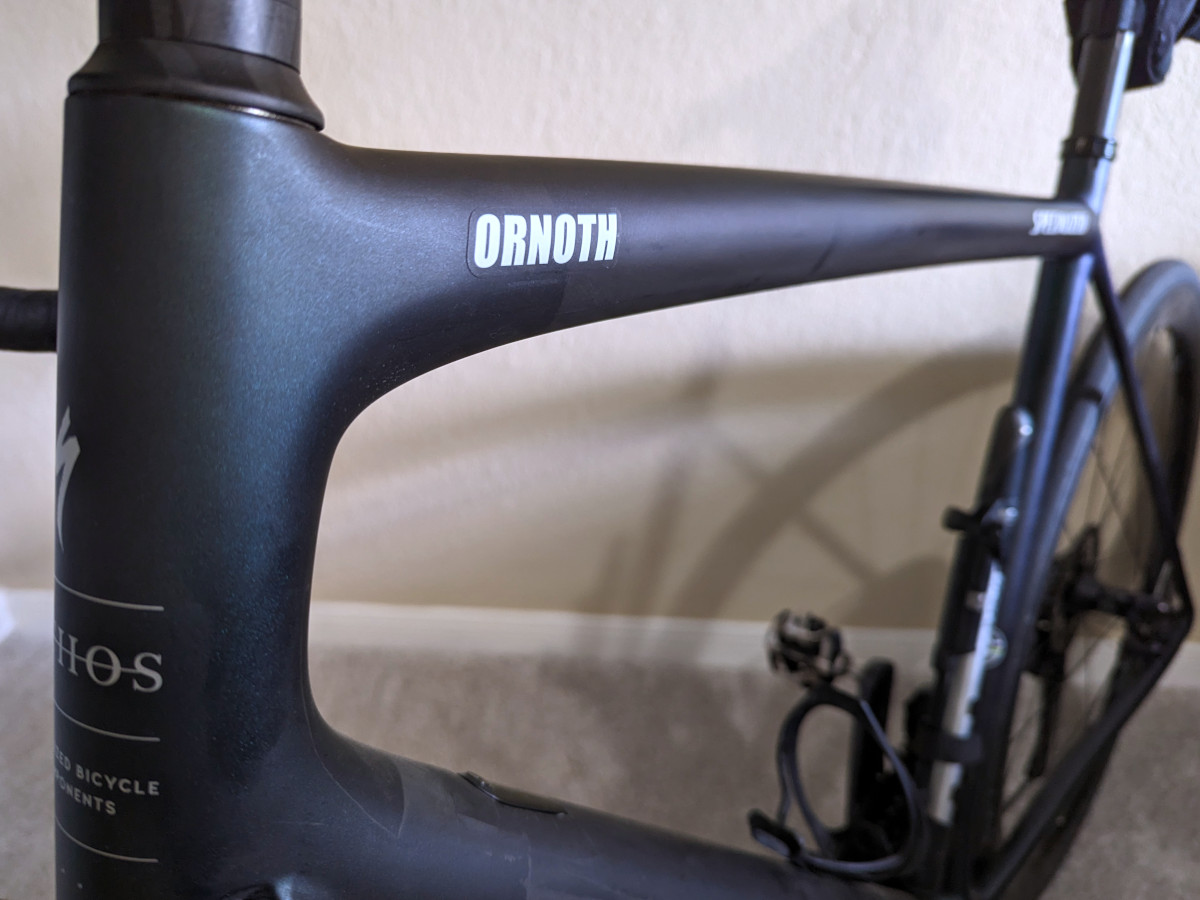
Pæthos at Austin’s Redbud Isle

Pæthos at Austin’s Redbud Isle

I was already delighted with Specialized, but when R2 finally came down with a fatal crack in the frame, they blew me away.

First, they have a discounted replacement plan for frames that break after their 2-year warranty expires. That’s pretty cool to begin with.

Unfortunately, that coverage stops after five years, and R2 was a decade old. But after they inspected my bike, they not only included me in the program, but offered me the 35% discount that you’d only get for a bike that was less than three years old! Imagine trading in a 10 year old bike and getting $2,500 toward a brand new model. Wow!

My only hesitation was that over that decade, the Roubaix had forgotten its “performance” heritage and evolved into a gimmicky, cushy family cruiser that no longer suited me. When I asked if I could apply the replacement discount to a different model… No problem! So they let me order an Æthos, their lightweight climbing race bike. Yay!

But there was a problem. This was toward the end of the Covid pandemic, when bike inventory had all been bought up, and the whole industry’s supply chain was in ruins. There was only one Æthos in my size left in the entire country, and it was in a bike shop in Denver, Colorado. But my incredibly responsive rep persuaded them to surrender it and ship it down to Austin for me.

So although I lost a very dear friend in my 2013 Roubaix, Specialized gave me an upgrade to an amazing, brand-new Æthos at an unbelievable price. I hope to put my new Pæthos through the wringer, too!

The Bottom Line

Specialized logo decal on downtube

So to finally answer the question…

I ride Specialized because their products have been excellent: well-designed, durable, and suited to my needs as a devoted endurance cyclist.

While I’ve come to expect petty greed from big corporations, Specialized has been shockingly generous with me, offering huge discounts well in excess of their corporate policies.

And beyond all that, they’ve been stunningly friendly and flexible, letting me apply my frame replacement discount to a different model, and then helping me track down and acquire the solitary bike in the country that fulfilled my needs.

Buying my first Specialized Roubaix road bike filled me with excitement and delight. That joy has stayed with me through three bike purchase cycles, over 100 imperial centuries, and more than 100,000 kilometers of riding. And Specialized’s bicycles and their treatment of me as a customer have been a significant part of the delight and enjoyment I’ve gotten throughout 20 years of cycling. Thank you, and well done!

The only area where they’ve disappointed me is in not offering more paint schemes or a custom paint program. You’d think that after 50 years in business, they would have figured that out. How about it, Spesh?

VC Sniper!

May. 10th, 2023 11:08 am

Just a quick note of recommendation for a vendor I’ve used for years. If you’re looking for an inexpensive way to personalize your ride, read on!

Pæthos

Back in 2009 I was in the same boat (nice boat!), looking for ways to snazz up my first true road bike, which at that point was entering its fourth season of service. Having seen the name decals that teams affix to the top tubes of professional bike racers, I looked into what was publicly available and placed an order with Victory Circle Graphix out of Golden, CO.

Since then, each time I get a new bike, I order a new set of custom stickers from VC Graphix: blue for the Plastic Bullet and my folding Bike Friday, red for R2-Di2, and most recently white for Pæthos. You can see the results in the accompanying phots (as always, click thru for teh bigness).

Even though it’s an inexpensive item, VC Graphix has been gracious and accommodating. I’ve always been happy with their product, which I’ve also used to personalize other items, such as my bike helmets, cell phones, and computers.

If you want to add a bit of extra personalization to your bike, I wouldn’t hesitate to direct you to their website: vcgraphix.com

R2-Di2 Plastic Bullet

2022 began poorly. For the second year in a row, my winter training was interrupted by worrying chest pains, and also a lengthy scouting trip to Austin in April.

However, the majority of 2022 was pretty satisfying. Another year brought another incremental step toward normality following the Covid-19 pandemic. I got to enjoy many of the major events that Covid had interrupted, although I missed some opportunities due to weather and other considerations. As summer turned to fall, I was pretty pleased with how my season had gone.

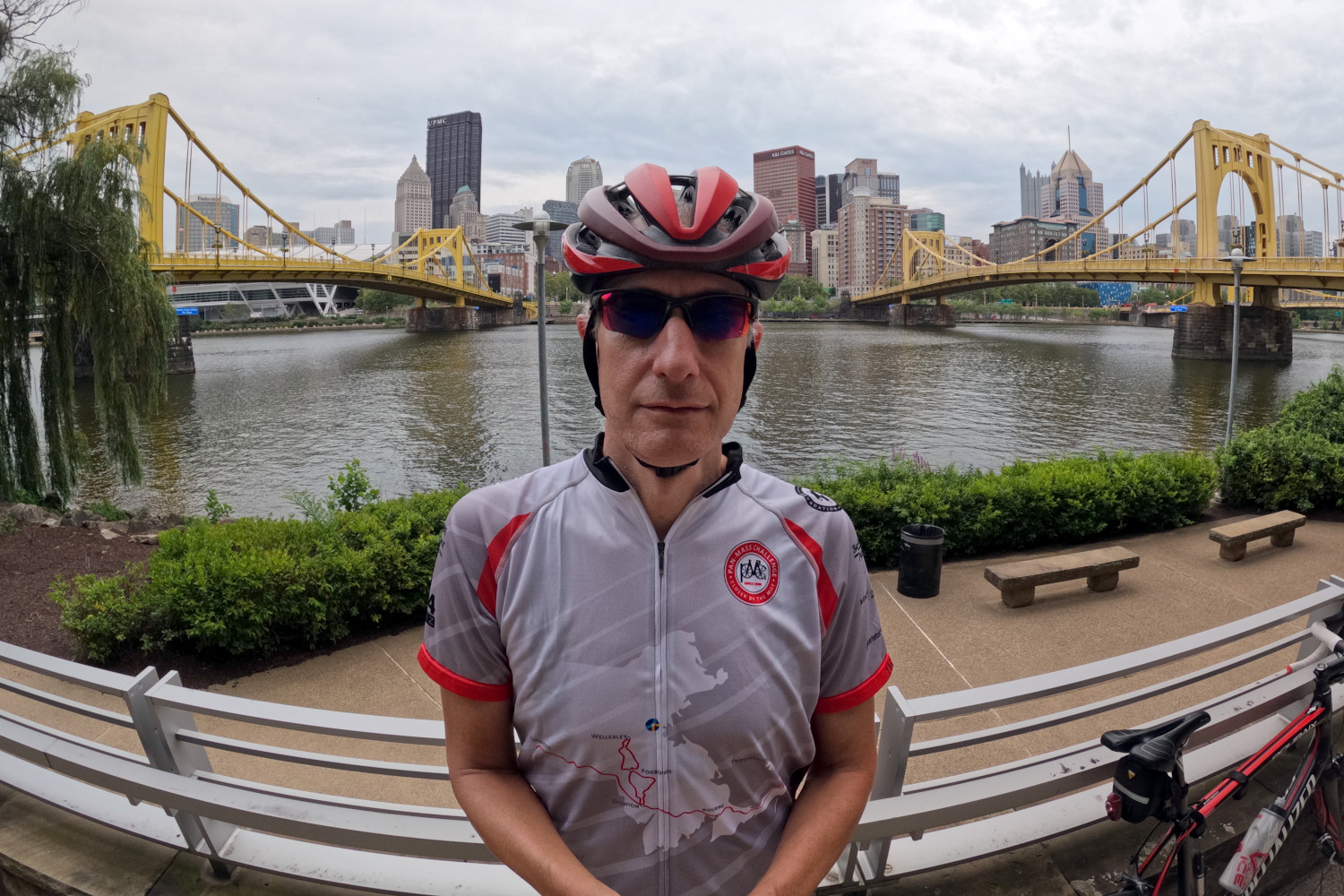
Ornoth and the Allegheny River, with the downtown Pittsburgh skyline in the background.

Ornoth and the Allegheny River, with the downtown Pittsburgh skyline in the background.

The FTP test that set off my January chest pain and interrupted my training.

The FTP test that set off my January chest pain and interrupted my training.

The first Team Decaf group ride of 2022 at the Point State Park fountain.

The first Team Decaf group ride of 2022 at the Point State Park fountain.

Four friends' ride out to Sewickley, with Suraj, Ornoth, Ben, and Oscar.

Four friends' ride out to Sewickley, with Suraj, Ornoth, Ben, and Oscar.

Ornoth modeling the 2022 PMC Jersey with downtown Pittsburgh as a backdrop.

Ornoth modeling the 2022 PMC Jersey with downtown Pittsburgh as a backdrop.

But the year also ended abruptly. I spent some time off the bike in November, recovering from saddle sores and a tooth extraction, and that was followed by another two-week trip to Austin over Thanksgiving to secure housing. My early winter training was crowded out by the hectic insanity of packing up house in preparation for our move, which is currently in-process. Really… We said goodbye to all our belongings – including my bikes and indoor trainer – on Wednesday, and won’t see them again for a couple weeks!

2022 was a pleasant return to my “normal” summertime routine. However, it might be the last year I’ll enjoy the standard six-month summer cycling season I’ve always been accustomed to. I expect the seasonality of my riding might look somewhat different once I set my wheels down in Austin!

My Original 2022 Goals

As always, let’s begin with how well I achieved the goals I set out for myself when 2022 began…

Go 100% metric

My big New Years resolution was to go fully metric, and that was surprisingly easy. It was like learning a new language, but one with only a couple dozen words and prefixes, so it quickly became familiar to me, to the annoyance of my life partner.

Another 10,000 KM year

My January chest pains and our April travel immediately put me behind the pace I needed to ride 10,000 kilometers in 2022. And my late-year health issues, November travel, and packing meant this goal just couldn’t be met. But I still racked up a thoroughly enjoyable 8,000 KM.

While I’m on that topic, I should mention that 61% of that distance was outdoors, making 2002 the first year since 2019 that I’ve ridden more outside than I did indoors on Zwift!

More major events

This year I enjoyed several events that had been suspended or shortened in recent years due to Covid. In addition to 18 weekly Team Decaf group rides, I returned to the Absolutely Beautiful Country ride, the PMTCC 3-State Century, Pedal the Lakes, and Pittsburgh’s Every Neighborhood Ride. But travel, weather, and cancellations meant I still missed several annual favorites.

Video ride reports

I expected to put together a handful of ride videos this year, following last year’s purchase of a new GoPro action camera. Unfortunately, videos are a lot of work to assemble and put together, so I wound up doing just one 7-minute video for my “reimagined” 2022 Pan-Mass Challenge ride. Still, the GoPro was handy to carry around to capture still photos.

Although not full ride reports, I did capture and post a few brief video clips. Strava began allowing users to attach short videos to their activities, so I took advantage of that cool new feature several times.

Another remote PMC?

Although I attended 21 consecutive PMC group rides on Zwift over the winter, I delayed registering for my 17th Pan-Mass Challenge – my third riding remotely – due to my chest pains. At the last minute, the event I’d planned this year’s ride around changed its date, and then wet weather caused me to do a 130 KM indoor ride on Saturday, followed by a 170 KM outdoor century up to Butler and back. It wasn’t the ride I’d planned for, but it was still fun, and I raised another $4,500 for cancer research and treatment.

Zwift team time trial?

Although a TTT has been on my radar for several years, I’ve always been stymied by the chest pains that come when I push myself to my maximum. Needless to say, it was absolutely not happening this year. I might just have to let this one go.

Bike repairs?

My worn chainrings have become a huge issue, causing frequent chain drops when trying to sprint, but my options for fixing them remain very limited. All the bike shops I’ve gone to have told me the only thing I can do is scour Ebay for used, second-hand parts, which I’m reluctant to do.

I could, of course, replace my entire bike. I’d rather not do that because I really love my R2-Di2, and would rather keep riding it. But after our impending move, this might be something I can look into in the next year or so, once I know exactly what kind of riding I’ll be doing in our new location.

Charts

Every year I post and discuss my training and fitness as measured by my Chronic Training Load (CTL). That’s nice, but I update these charts after every ride, and I thought it might be cool to share that up-to-date data. So this year I added constantly-updated charts to a pinned/sticky post that will always appear at the top of my cycling blog. So now you can see how my year is going anytime you want, here.

But let’s talk about how my 2022 performance compares to previous years. Here’s the chart:

Cycling Fitness: 2011-2022

While it looks like a pretty good year, I never reached the same level of fitness I had in the previous three years. That’s because I started ramping up my training a lot later in the year, thanks to taking time off for chest pains and our trip to Texas. That was followed by a great summer, but I tailed off pretty quickly toward the end of the year due to health and relocation.

Now let’s zoom in on this year in more detail:

Cycling Fitness: 2022 Calendar Year (vs. average)

Here you can really see how much my fitness declined in January, and then again during that April trip to Austin. But after training back up in May and June, I enjoyed a productive summer, with six century-plus rides (the red dots). And note how my fitness plummeted due to health issues in October, travel in November, and packing and moving in December.

Still, six centuries is two more than I did last year. Let’s talk about those…

The Centuries

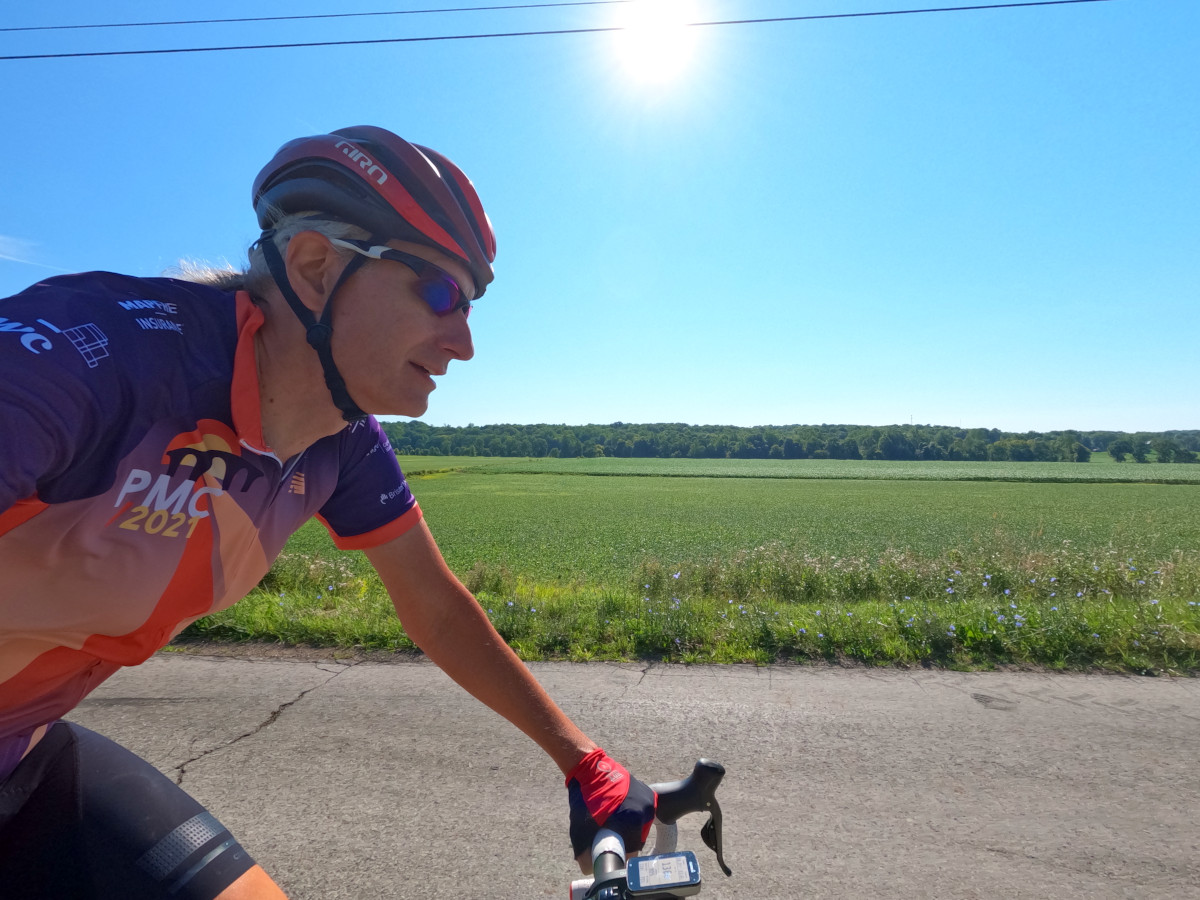
Rolling through flat, exposed Ohio farmland on the Akron Bike Club's ABC Century ride.

Rolling through flat, exposed Ohio farmland on the Akron Bike Club's ABC Century ride.

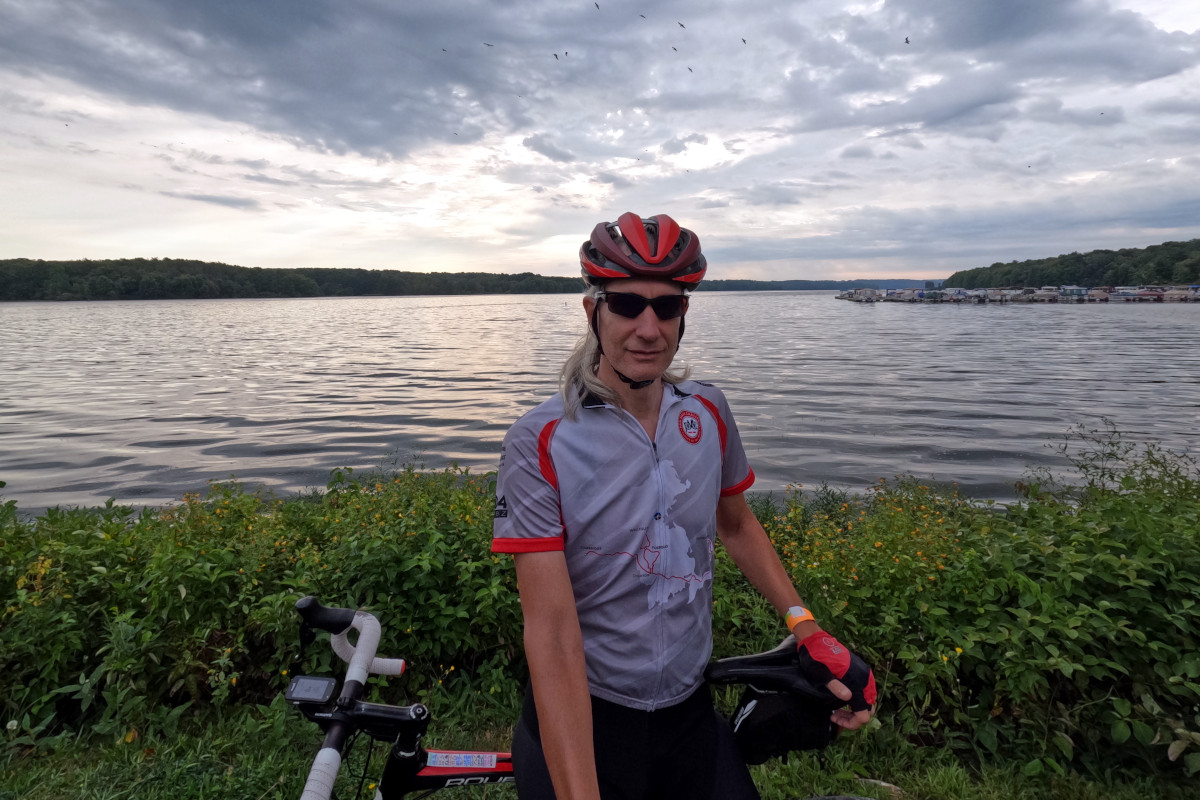
What passes for a Pittsburgh sunrise over Lake Wilhelm before setting out on the 2022 PtL ride.

What passes for a Pittsburgh sunrise over Lake Wilhelm before setting out on the 2022 PtL ride.

Ornoth & Phil at Tomlinson Run SP in West Virginia during the 3-State Century.

Ornoth & Phil at Tomlinson Run SP in West Virginia during the 3-State Century.

Ornoth & Phil receive their finishers' medals following the 3-State Century.

Ornoth & Phil receive their finishers' medals following the 3-State Century.

My new Garmin Rally XC200 power meter pedals!

My new Garmin Rally XC200 power meter pedals!

In addition to being two more than last year’s total, none of this year’s six centuries were simulated on the indoor trainer. I hadn’t done six or more outdoor centuries in one year since the good old days before Covid (2019)! And now I haven’t done an indoor “Zentury” in nearly two years (March 2021)!

Not that it was all great. The only reason why I didn’t do an early-season “Zentury” was because of my chest pain. Then I wanted to do the Pittsburgh Randonneurs 200k, but was away in Austin that weekend. I wasn’t trained up enough to do June’s two-day Escape to the Lake. I was rained out of doing my first Sunday in June. The Tour of Mercer County cancelled its century route due to insufficient registrants. The cursed Mon Valley Century cancelled yet again. And the Rough Diamond century on PMC weekend both changed its date on me, and then got rained out!

But neither you nor future-me want to read about rides I didn’t do, so let’s celebrate the long rides that did come off.

5/31: Bunola solo
This familiar route was an important test of both my cardiac health as well as my delayed training. I enjoyed the summery weather, but I really suffered from lack of form.

7/10: Absolutely Beautiful Country
Six weeks later, I drove to Ohio for one of my favorites – the ABC ride – which I last rode back in 2019. The weather was stellar, and my performance felt pretty normal. My only disappointment was that my power meter decided to conk out for the last 30 KM.

7/31: PMTCC 3 State Century
My friend Phil always seems to be my constant companion for this ride, and so it was in 2022. The day was temperate and a bit grey, providing (for once) unchallenging weather. It was a pleasant ride up until about 10 KM from the finish, when it started to drizzle. And then I pinch-flatted on a poorly-set railroad crossing on our finishing loop. But we made repairs and finished the ride.

8/7: Butler solo Reimagined Pan-Mass Challenge
I’d planned my “Reimagined” PMC as the Rough Diamond century on Saturday, but when they moved the date, I was left with no specific plan. When it rained on Saturday, I decided to do a shorter ride indoors, then made up the lost distance with a full outdoor century on a slightly-drier Sunday, using the familiar route up to Butler and back. It wasn’t the ride I’d hoped for, but it was successful enough.

9/3: Pedal the Lakes
Another ride I hadn’t done since 2019, the PtL route had been largely redesigned, broken into 50 and 110 KM loops. It wound up being an overcast, solitary ride, but pleasant, and I finished in exactly seven hours.

10/8: Every Neighborhood Ride
My final century was the always-challenging ENR, which I last rode back in 2018. I rode with the slower group and enjoyed a much less taxing ride. Between the pace, rest stops, and extending it to a full century, it was a 12-hour marathon. It seems appropriate that ENR was my last century before leaving Pittsburgh.

Noteworthy Purchases

This year’s most noteworthy addition has to be my Garmin Rally power meter pedals. I’ve wanted an SPD pedal-based power meter for many years, and I’m delighted with these.

A smaller but memorable change was when I got new brake pads, after suffering three straight flat tires when my worn, misaligned old pads wore through the sidewall of my tire! Gotta remember to keep an eye on that!

I also picked up the Fanttik Apex battery-powered tire inflator, mostly for our car’s steady leaks, but it also came with a Presta valve. However, its compressor is way too loud for indoor use, so I’ll probably only use it to top off before rides I’ve driven to, rather than packing my floor pump.

And I finally picked up something I’ve thought about for a long time: white brake hood covers! I’ll put these on next spring with some new white bar tape. Unfortunately, it doesn’t look quite as good as when I still had my bike’s stock white saddle, but maybe that can be switched up, too, depending on how long the R2-Di2 continues to be my primary vehicle.

Does a cardboard bike box and movers count as purchases? Perhaps not, but this is the first time I’ve ever had to box and ship a bike. Stay tuned to see whether that winds up being a success or a tragedy!

Additional Highlights

I’ve written enough about my chest pains interrupting my early-season training.

Aside from that, this year’s overarching theme has been enjoying my last season in Pittsburgh. But return visits are expected, due to intolerable Texas summers and Inna’s mother still living in Pittsburgh.

This year I was very consistent: I rode almost every single Tuesday, either the Team Decaf outdoor group rides or indoor PMC rides. I only missed a couple weeks, usually because I was in Austin at the time.

I was also pleased when a small riding crew spontaneously formed with locals Ben, Gary, Suraj, and Oscar. But it was also a year marred by friends having big crashes: Ben on a trip to Toronto, Suraj coming off multiple times, and a woman being seriously hurt on one of the Decaf rides.

Another big development was finally moving my blogs off Russian-owned Livejournal. As you know, my cycling blog now lives at https://ornoth-cycling.dreamwidth.org/ and also has a sticky post with my up-to-the-minute fitness charts.

In other social networking news, I started posting short videos of up to 30 seconds on Strava, and started using the ActivityFix plugin to automate some previously manual tasks when I post. And I started moving my fitness data over to the Elevate app rather than the browser plugin, which is being de-emphasized.

I did manage to assemble a video ride report for this year’s PMC ride. Although I haven’t used it yet, I also learned how to synchronize and overlay data from my bike computer on top of video, which could be fun and useful in some circumstances.

And there have been developments on the indoor training front, too. Zwift recently added roads in a new region called Urukazi, which is modeled after Japan’s Ryukyu Islands, and they’ve said that a small Scotland expansion will arrive in the next month or two. Another major update was their release of Levels 51 to 60, and I advanced to Level 53 on my last ride of the year. That also came with some new “fire socks” that leave a cool trail of fire during hard sprints. And I also unlocked the rider jersey from the “Long Riders” cycling anime series.

And then there was a final goodbye to the Plastic Bullet, my first road bike, which saw me through 30 centuries and seven PMCs.

Blogposts

Goals for 2023

Ornoth's 2022 cycling calendar/log.

Ornoth's 2022 cycling calendar/log.

My 2022 Strava "Year in Sport" summary, averaging 22 kilometers per day.

My 2022 Strava "Year in Sport" summary, averaging 22 kilometers per day.

That pretty much covers 2022. What does 2023 hold? Thanks to the move, I have almost no idea! But here’s a couple aspirational guesses:

Moving and Orienting in Austin

This will be a chaotic year, for sure. I’ll be trying to orient in a new city and region, trying to find riding friends, group rides, and some noteworthy major events. I’ll be dealing with Texas heat, belligerent redneck drivers, and SUV-centric roadway design. And I expect my usual seasonality to get all screwed up. After all, Texas presents the possibility of riding more through the winter, but will perhaps force me to ride less in the summer, reversing my usual annual riding pattern!

I certainly won’t be committing to any 10,000 KM distance goal this year, and might even find my time taken up by gainful employment for the first time in years. And then there’s also the possibility that I might go and buy myself a new steed, or at least repair the old one. The move is going to be the biggest change my 22-year cycling career has ever seen.

And for the Yinzers in the audience… Just getting out of our new house’s cul-de-sac is a short 15-20% climb, and there’s a certifiable Dirty Dozen-difficulty hill called Ladera Norte (“North Slope” in Spanish) just 4km from home . So I can’t throw those Pittsburgh climbing legs away just yet!

18th Pan-Mass Challenge and $125,000

Even my remote participation in this year’s PMC is in question. Will Texas provide a suitable outdoor course and tolerable weather – and will I be ready to fundraise and ride it – in August heat? I have absolutely no idea! But I’m on the threshold of $125,000 in lifetime fundraising for cancer research, which is a tempting milestone.

And perhaps a summer trip back to Boston might be in order sometime… although the traditional route’s $6,000+ fundraising minimum would be nearly impossible to meet.

Zwift Level 60

How much use will my indoor trainer get over an Austin winter? Or summer? I have absolutely no idea! But I do know that I’ll continue doing the weekly PMC virtual training rides and progressing toward Zwift’s new peak: Level 60.

Health and Turning 60

While I’m here expressing my hopes for 2023, how about just getting through the year without a cardiac scare or other health issues such as dental surgery, saddle sores, calf pain, whatever… While aging comes with inevitable limitations and loss of performance, it’d be nice to enjoy a healthy last summer before I turn the big six-oh. And maybe I should start giving some thought to how I want to spend this milestone birthday…

Conclusion

R2-Di2 at Mon Wharf with river tug hauling coal barges beneath the Fort Pitt Bridge.

R2-Di2 at Mon Wharf with river tug hauling coal barges beneath the Fort Pitt Bridge.

2022 saw the end of a seven year long chapter in Pittsburgh. I won’t try to summarize my time in Western PA; you need only read backwards through my blog to review those experiences. The cycling here has been superlative in both positive and less-positive ways, but in both cases it’s certainly been memorable, and I’m happy to have met some good people and gotten so much use of the topography of Western PA.

As the calendar transitions to a new year, I find myself making an immense, intimidating, and exciting change as Inna and I relocate to Austin. I hope you’ll stay tuned and continue to share this road with me!

Today I said another goodbye, dropping the Plastic Bullet off at Free Ride Pittsburgh, the local bicycle repurposing charity, in much the same way as when I donated my first bike, a Devinci hybrid, eight years ago.

The Plastic Bullet at the Provincetown finish line after a 3-day trek across Massachusetts in 2010 to celebrate my 10th Pan-Mass Challenge

The Plastic Bullet at the Provincetown finish line after a 3-day trek across Massachusetts in 2010 to celebrate my 10th Pan-Mass Challenge

The Plastic Bullet appears in a hundred regional newspapers in a thank-you ad from Dana-Farber following the 2011 Pan-Mass Challenge

The Plastic Bullet appears in a hundred regional newspapers in a thank-you ad from Dana-Farber following the 2011 Pan-Mass Challenge

Like that Devinci, the Plastic Bullet had been relegated to a backup bike, and then left to a lonely retirement, forgotten in a closet. And like the Devinci, an inter-state move is prompting its final fate. Hopefully it will find some new life beyond my custodianship.

And like the Devinci, the P.B. served me very well. It was my first road bike, a Specialized Roubaix Expert that arrived in October 2005. Being a carbon-fiber frame it was immediately nicknamed the Plastic Bullet, derived from the lyrics to the Shriekback song “Go Bang!”, which also provides this blogpo’s title.

It was my primary bike for the next seven years, seeing me through 30 century+ rides, including seven Pan-Mass Challenges, my first 200 KM brevet, and my 2010 three-day 10th anniversary PMC ride all the way across Massachusetts.

It also featured in my most treasured cycling photo ever: a shot of me leading a paceline in the 2011 Pan-Mass Challenge that was used in a quarter-page thank-you ad from the Dana-Farber Cancer Institute that appeared in over a hundred regional newspapers.

The Plastic Bullet was demoted to backup in early 2013, when I splurged on my current steed, nicknamed R2-Di2. It came out of storage whenever the R2 was in the shop, and was brought along when I moved to Pittsburgh seven years ago. But it has seen virtually no use since then, and retired with a final odometer reading of 36,711 KM (22,811 miles).

Before the Plastic Bullet, I had always been a bit of an outlier as a road-riding enthusiast riding a flat-bar hybrid bike. But the Plastic Bullet allowed me to fit into my niche and complete my transition into the roadie that I am today.

It’s hard to say goodbye to something that was such an important part of one’s life for so long, but it’s a good opportunity for me to practice with the laws of impermanence and non-attachment.

And it also opens a bit of space for someday welcoming a new resident in my stable of bicycles, which is a distinct possibility once I get a better idea what the riding is going to be like in Austin. After all, no cyclist should have to live with owning n-1 bikes!

I’m not a fan of PedalPGH, for reasons I’ve repeated in my 2018, 2017, and 2016 ride reports. So I won't belabor the same shortcomings yet again, though rest assured nothing changed with this year’s populist urban ride. But there’s plenty of other stuff to talk about, anyways.

Grandview Park overlook

Grandview Park overlook

Jim Logan with Ornoth following

Jim Logan with Ornoth following

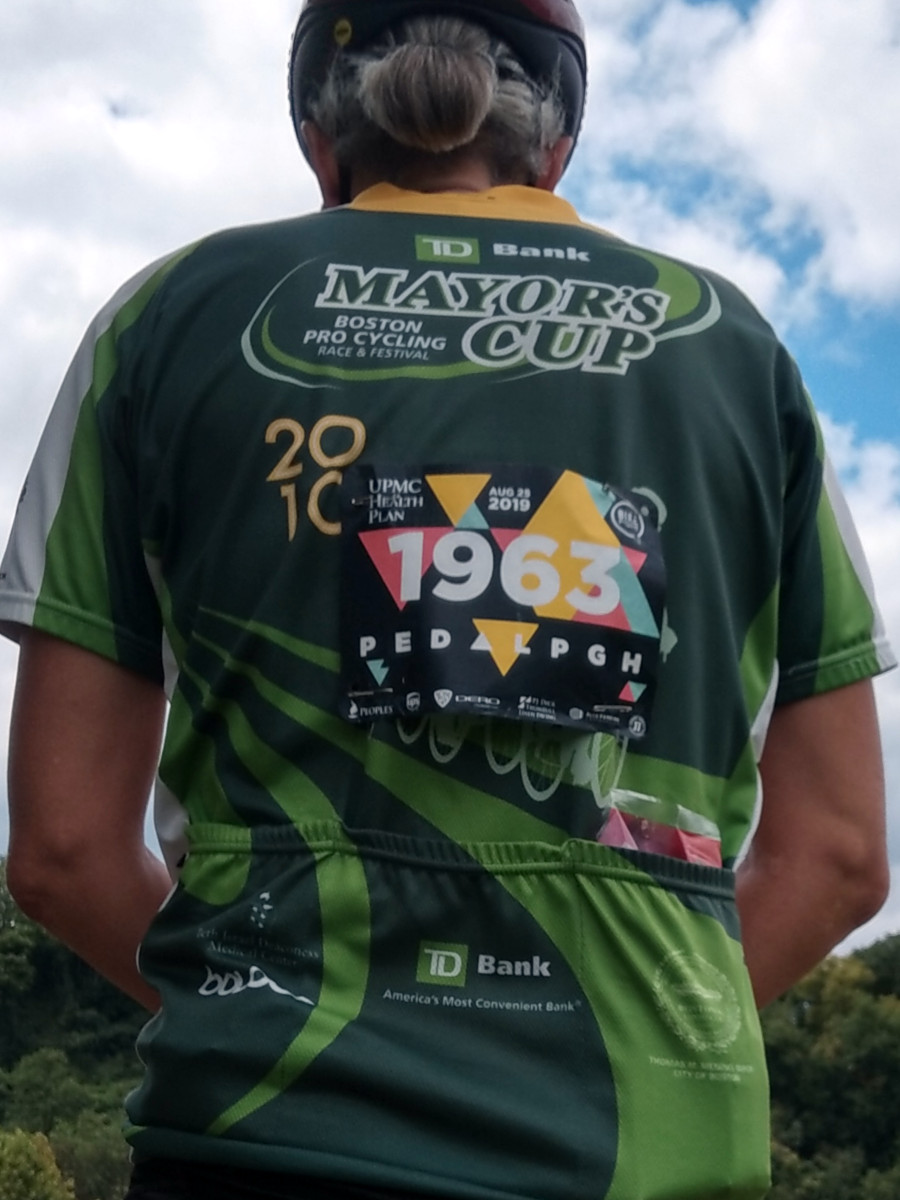
Birthy bibnum

Birthy bibnum

The most salient being that I somehow injured my achilles tendon last Wednesday, making it difficult to walk or stand. After three days of rest, it was a little better, but nowhere near normal.

In order to gauge whether I could ride, I made a ten-mile bike trip to pick up my PedalPGH registration packet. It went okay, but not well enough to inspire a lot of confidence. They let me pick my bib number, and I went with my birth year.

I decided I’d try it, and see how it went. Sunday morning was a cool 53º, so I added a baselayer shirt and arm warmers, and swapped my usual sandals for my winter cycling shoes, for more ankle support.

Naturally, I took it pretty gingerly. Other than being stiff and weak, the ankle worked okay, albeit with a few painful twinges. Where I was able to excel was descending, which is usually a weak point. I also had good luck slicing through groups of slower riders, sneaking my way to the front while they were stopped at traffic lights.

Along the way I saw numerous friends: Ben, Jason, Scott, Jim, Stephen, Paul, and others. And the event photographers caught me a couple times.

This year, the organizers added a new wrinkle to inconvenience everyone. The 50-mile rest stop at Highland Park had no water at all, and no apparent fix. How do you run group ride—in August!—without providing anything for riders to drink? This oversight was especially ironic, because the rest stop was just 60 feet from two of the city’s biggest freshwater reservoirs.

I can’t speak to whether the other rest stops had issues, since I didn’t use them. But with iffy support, poor route design, and a registration fee north of $75 that funds a cause I don’t agree with, I probably won’t do this ride again.

On the positive side of the ledger, due to the closure of Serpentine Drive, the ride was re-routed right past my house, so I made a quick stop at home to drop off my now-unneeded arm warmers and baselayer.

I rode straight through the official finishing arch around Mile 65 and made my way down the GAP trail to McKeesport and back in order to complete a full imperial century. Along the way I stopped at a convenience store where another rider came by, riding a 2006 Specialized Roubaix: an exact copy of my old bike, the Plastic Bullet!

Due to waiting for the start of the ride, some long rest stops, and an intentionally slower pace, my 11th century of the year took a full eight hours.

Neither of my legs were particularly happy afterward, but by the next day they were back to where they were before the ride: “a little better, but nowhere near normal”. That’s good enough for the time being, and I expect more healing as I take it easy for the rest of this week.

After all, there’s another century coming up on Saturday…

Last fall, when I kicked off my search for a new bike, it was clear what I wanted: something just like my old bike, but better. The “Plastic Bullet”—a 2006 Specialized Roubaix Expert—had served me very well over the years, and I had nothing to complain about, save that it was showing the signs of age. Because of that, the new version of the Roubaix was at the top of my list when I started thinking about a new bike.

However, a lot has changed since 2006. There are a lot more bikes out there, and I didn’t want to stick with the Roubaix if there was something better to be had. So I decided to shop around and ride a bunch of bikes, exploring new technologies like disc brakes, electronic shifting, SRAM shifters, and so forth.

I tried everything out and enjoyed the process. I test-rode eight bikes, with a collective price tag of $32,300. I learned that I hate disc brakes, SRAM shifters, FSA components, integrated seatposts, and pretty much all bikes manufactured by Trek. On the other hand, I really liked Shimano’s electronic shifting, the Cervelo R5, and Giant Defy Advanced.

Roubaix

But above all, I learned that the Roubaix still seems to be the best all-around bike for me. It fits me and my style of riding well, does a great job absorbing road vibration, and strikes a good balance between ride-all-day comfort and ride-all-out performance.

To make a final decision, I had my LBS bring in a Roubaix that was nearly identical to the one I was looking at. After test riding it, I went home pretty well convinced that I’d be buying the exact same damned bike I bought back in 2006: a Specialized Roubaix Expert. I’d still have to special-order it though, because dealers simply don’t stock bikes my size.

An hour after that test ride, I received an email from the shop, indicating that the following week Specialized would be offering a manufacturer’s discount on that bike: a 20 percent price cut, or a $1,000 savings! Needless to say, I jumped at that. A long two weeks later, I took delivery.

So how is the new bike different from the Plastic Bullet? Aside from being newer, there are really only two significant ways.

One is the Shimano Di2 electronic shifting. I’m pretty excited about that, but I don’t need to say too much about it here, having already written about it in one of my test ride roundups back in September.

The other is that while both bikes are primarily clear-coat over carbon fiber, the new bike has red and white highlights (ironically, those are my high school colors), rather than blue and silver. So the blue tires are gone, and I’ll have some extra work coordinating accessories to match the new color scheme!

Which brings me to the real question: what to name it! This is also a little two-part story.

First, it’s my second Roubaix. To honor that, let’s call it Roubaix-2, or just “R2”.

Second, its most interesting feature is the electronic shifting: Shimano’s “Digital Integrated Intelligence” or Di2.

Put those together and you get the new bike’s moniker. Allow me to introduce you to R2-Di2! The reference to the iconic Star Wars robot is intentional, and appropriate for a bike with electronic shifting. It even makes cool robot noises as the servos shift the derailleurs to change gears!

Having only received it Tuesday, I haven’t got much to say about its riding characteristics just yet. I’ve still got to get it properly fitted and add a bunch of accessories to it before I share any pictures. So it’ll be a few weeks before I have a lot to share, but be patient; those’ll all come in due time.

Of course, saying hello to R2 means saying goodbye to “R1”: the Plastic Bullet. After seven years and 22,000 miles—including seven Pan-Pass Challenges and dozens of century rides—we’ve unrolled an awful lot of road together. It’ll still see the tarmac from time to time—on rainy days or city errands where I don’t want to break out the new bike.

But as of today, she’s second saddle. It’s time to start making a new history of travel adventures with the R2. Stay tuned!

My 2011-2012 cycling season has come to a close, and it’s time to look back and reflect on the year gone by and think about what next year holds.

This year I rode 3,000 miles, which is exactly the same distance I rode in the previous year. On the other hand, that’s a little below my usual average, thanks in large part to spending my weekdays working for a living. I also fell just 500 miles short of surpassing 40,000 miles since I took cycling up again back in 2000, but that’s a milestone that will fall soon enough. (charts)

In 2012 I only did five centuries (Tour d’Essex, Outriders, Mt. Washington, PMC, and Maine Lighthouse Ride), and fell just five miles short of a sixth when I overheated and opted not to finish a solo ride in June. That too is below my usual pace of seven or eight rides of a hundred miles or more.

On the other hand, I went into this year with an intention to enjoy myself more by doing some new and different rides, and in that respect I really succeeded. In addition to the aforementioned Tour d’Essex, Mount Washington Century, and Maine Lighthouse Rides, I also did my first ride with the Kennebec Valley Bike Club, and fulfilled a longtime dream in going to California to do the Buddhist Bicycle Pilgrimage. (If you’re interested in the BBP ride report, you’ll find it here, in my regular blog.) And I have to say that I really enjoyed every one of those five new routes, so the experiment was an unalloyed success.

And I can’t say I missed the two familiar rides that they displaced: the Climb to the Clouds and the Flattest Century. Overall, I enjoyed the new rides, and felt it really added a lot more interest to my riding. My only regret is that my riding buddies weren’t able to join me on several of those rides, and it’s not quite as fun when you’re riding alone.

I did, however, get to ride with my buddy Jay during this year’s Pan-Mass Challenge, which was our last ride together before he moved to Florida. That made this year’s PMC extra special. And I raised over $11,000 this year for cancer research, treatment, and prevention at the Dana-Farber Cancer Institute, which puts me in good shape to reach my lifetime goal of $100,000 in 2014.

So while 2012 didn’t feature huge miles or dramatic turns of events, it was both interesting, fun, and very satisfying.

This was also probably the last season for the Plastic Bullet, the Specialized Roubaix that has been my primary ride for the past seven years. Ironically, after sitting idle for a week while I was in San Francisco, the lower set of headset bearings rusted solid, freezing my steering and requiring a trip to the bike shop to have the entire headset replaced. It’s just another instance of the old girl showing her age.

Which brings me around to my predictions for the upcoming 2012-2013 season.

I’ve begun the process of test riding new bikes, but there’s still a lot more evaluation to do before I pull the trigger, and unless the weather improves, that may not happen until spring. I am taking the time to ride just about everything I can put my hands on, so you can expect to read more about that in the future.

As I mentioned above, I should crack the 40,000-mile barrier shortly, too. That’s quite an achievement, I think.

I definitely expect to return to some of the new rides I did this year. Those were fun, and hopefully I can convince my buddies to tag along.

But that’s going to be the big question for next year; Jay was really the social center of our group, and now that he’s gone I’m not sure our riding group will survive. My other two buddies, Paul and Noah, are both married and living in the distant Metrowest suburbs, and neither of them ride the PMC anymore, so we may not synch up very often.

That could be a problem for me, because it may be hard for me to find transportation to most of the major rides in the area. So even if I have the desire to ride, next year might look a little bit different than recent years, when there was usually someone to beg a ride from.

But we’ll see. For now I’m content to use the remaining fall weekends to test ride potential new bikes, which is a luxury unto itself. Then next spring I’ll hopefully be ready to hit the road with renewed enthusiasm and a zippy new machine.

That should make 2013 another interesting cycling season. I’m looking forward to it!

September’s riding was a little different this year, and in some ways that’s a good thing.

The obvious difference is that Jay’s not here anymore, having moved to Florida a couple weeks ago. That meant no Labor Day cookout after a morning ride up Mount Wachusett, and no NBW Flattest Century in the East.

The Flattest Century (which of course is not actually the flattest century) has always been a pain in the neck. Over the past four years I’ve struggled with flat tires, a hurricane, crackhouse lodgings, and riding the entire 100-mile distance on my folding travel bike. Last year, after being violently ill the night and morning before the ride, I dragged myself through it, then pretty much vowed not to do the ride again.

Instead, I wanted to try another ride that happened on the same weekend—the Eastern Trail Alliance’s Maine Lighthouse Ride (MLR)—another coastal century that starts in South Portland and promised coastal views and nine lighthouses. It sounded like a great way to do something new and make a break with the Flattest ride.

On the other hand, none of my remaining riding buddies bit, so (having no car) I had to arrange my own transportation. Since the ride was only a few miles from the Portland train station, I figured Amtrak would be better than renting a car. On the plus side, I’d have the opportunity to ride as easily as I pleased, having no buddies around to keep up with and hours between when I finished and my 8pm train back to Boston.

So Friday afternoon I left work, stopped at home to grab my bike, rode to North Station, and hopped the Downeaster. We pulled into Portland a little after 8pm, and I checked into a hotel room right next to the Regional Transportation Hovel.

Now, the downside of not renting a car was… Since I didn’t have any place to lock things up, I could only bring as much stuff as I was willing to lug along with me on a 100-mile bike ride. So I didn’t bring any clothing beyond my cycling kit. So I’m sure I got a few odd looks as I walked down to the CVS and picked up some drinks, then to Espo’s Trattoria, where I grabbed a “funky chicken” pizza: BBQ sauce, chicken, onions, and hot peppers. Tasty!

As I munched on the pizza in the hotel room, I watched the weather with no small degree of anxiety. In recent days, the forecast had fluctuated from party cloudy with rain late in the day to a complete weekend-long deluge. Between my discomfort with the weather and the travel arrangements, I also mused about ways I could be more comfortable with the uncertainties of life.

When my alarm went off at 6am, conditions weren’t great. Temperatures were okay, but it was very humid, with a clammy, misty fog and a leg-tearing 30 mph wind. At least it was coming from the southeast, so it would be at our backs on the second half of the MLR.

I set out from the hotel and rode five miles through a deserted downtown Portland and across the mile-long Casco Bay Bridge into South Portland to Southern Maine Community College, where I checked in and was one of the first people to gather at the starting area.

Having a few minutes to kill, I walked out the 900-foot granite breakwater to Spring Point Ledge lighthouse and back again. I also got a nice photo of a trawler motoring past the lighthouse, and the event photographer got an excellent shot of me (right) as I waited for the official depart.

Ornoth at Spring Point Ledge Light
Bug Light
Two Lights
Portland Head Light

Shortly thereafter we were off, but not for long, since our second lighthouse—tiny little Bug Light—was less than a mile away. After a brief stop there, we picked up the South Portland Greenbelt for a 6-mile ride out of town. With a couple hundred riders, the path was quite crowded, and a bit dangerous thanks to the poorly-placed bollards that appeared at every intersection, but it made for an easy roll-out and warm-up.

Finally we picked up some local roads for a while, but it wasn’t long before we reached the Scarborough salt marsh and the 2-mile crushed gravel path that traversed it: not a great option for road bikes, but the only option we had. Still, it was nice riding across the tidal bogs.

Then it was back on blessed tarmac again, where I hooked up with a paceline going slightly slower than I was as we rolled into Old Orchard Beach. Now, Maine is a hole, but all the rest of Maine looks down on OOB as an even worse hole: a cheap, kitchy, squalid copy of any low-budget seaside “resort”, swarming with French-Canadian tourists. And yeah, it was about that, although having never visited there in my adult life, I found it somewhat interesting. That was the location of our first rest stop, which I hit at 8:51am.

Pulling out of OOB, I caught a gentleman in a Pan-Mass Challenge team jersey for Brielle’s Brigade. Four weeks earlier, he’d ridden his first PMC all the way from the New York border, but the team’s young hero and inspiration lost her battle with cancer just weeks after the ride. He and I chatted for a while on the run into Saco and across the river into Biddeford. When he shipped his chain at the foot of a big hill out of town, I rolled on and left him behind.

Except for the brief stretch at Old Orchard, the entire outbound leg was a ways inland, so there weren’t any real ocean views. I reached the second rest stop in Arundel at 10:07, having covered 36 miles. I’d been facing a ridiculously strong headwind, but it hadn’t seemed to effect me much, and the fog had thinned out a little bit. I noticed that I’d lost a handlebar end cap somewhere along the line, which seems to be a common annoyance for me.

I pulled out of the rest stop with a group of about eight girls, and we would leapfrog one another for the next 50 miles. After a short jaunt down into Kennebunkport, I reached the coast and made the halfway turn northward. I passed the Bush compound, which was, of course, arrogantly flying the Texas flag over Maine territory. Then I passed an ambulance and rider down, which was a reminder that cyclists are subject to life-threatening injury at any moment during a ride.

The sun started peeking between the clouds, but the wind grew even fiercer, sometimes helping, but more often not. The coastline was quite beautiful, with a raging surf churned up by distant Hurricane Leslie crashing against the rocks. Much of the second half of the ride followed the same route as friends of mine take during their Seacoast Safari for Cystic Fibrosis ride.

At 11:11am I had completed 57 miles and arrived at the rest stop at Fortunes Rocks. My legs were tightening up, and they’d felt a bit crampy all day due to the high humidity. The sun had disappeared again when I rode on through Biddeford Pool, where I looked around for more lighthouses. Then back down that hill and through Saco, where I briefly ran across a huge group of people from another charity ride before our paths diverged.

I found myself back at the Old Orchard rest stop at 12:12, having covered 73 miles. There were 22 very hard miles—including going back over the crushed stone path through the Scarborough bog—between there and the final rest stop in Cape Elizabeth, where my father once ran the Chamber of Commerce. When I finally reached mile 95 and stopped there at 1:46pm, I flopped on the ground near the food table. A thoughtful volunteer looked down at me and actually said, “I was thinking I’d offer you my chair, but you’ve been sitting all day and probably don’t need it.” Yeah, thanks lady.

The sun had finally burned through the clouds, and I took some extra time to recover from that long sustained effort, where I’d really been tapped out and my knees had complained. The rest definitely helped, because I felt much better on the final segment back to South Portland.

Before I left, I also noticed that the magnet that records my pedaling cadence had fallen off my crankarm, so I’ll need to replace that sometime soon.

Coming out of the rest stop, we zoomed down a big hill to Two Lights in Cape Elizabeth, but then had to turn around and climb right back out again. Just a few miles further we entered Fort Williams Park to visit the last lighthouse: Portland Head Light, which is one of the most photographed lighthouses in the world.

By then the number of out-and-back portions of the route had gotten me thinking about comparisons to the Flattest Century, which winds around up and down coastal peninsulas in a desperate attempt to rack up 100 miles before the end. For MLR it was more a question of how many times we actually doubled back on ourselves (if you care to count, we backtracked eight times).

Just a short distance beyond Portland Head, I found myself back in South Portland and arriving at the SMCC campus. I completed the ride at 2:44 with 106 miles (five of those were the commute from the hotel to the start). The actual ride took about 7:15 in clock time, which is pretty respectable given the number of lighthouse stops and the fact that I wasn’t pushing myself. My average speed was only 16.1 mph.

After checking in, I decided to head right back across the bridge to Portland, just in case the promised rain came abruptly. I stopped at a convenience store and stocked up on recovery food and took up residence on a bench in Deering Oaks, a beautiful little park in the neighborhood where I lived until the age of eight. My train wasn’t until 8pm, so I had five hours to kill. I spent three of them resting, watching the park’s water fountain, the seagulls whirling overhead, the squirrels panhandling, and the clouds screaming across the sky.

As the sun lowered and the September afternoon cooled, I headed back to the train station and hung out there until the train departed. Fortunately, there were only two other people in the business class car, because I’m sure I smelled pretty ripe in my cycling kit.

Despite all my fears, I had completed the ride and gotten out of Portland without getting wet. But the fierce line of thunderstorms I’d been dreading finally blew through the area while I was on the train. Ironically, a leak developed in the train’s ceiling right next to me, so I did wind up getting rained on for a few moments before I changed seats.

Fortunately, by the time we got to Boston at 10:30pm the storm had passed, and although the roads were wet, I managed to get home without undue discomfort. It had been a long but rather successful day.

In the end, I really enjoyed the ride. The people were friendly and the route enjoyable, and (continuing a three-time theme for my 2012 season) it made a really good change of venue from the all-too-familiar Flattest Century.

It also was memorable as my fifth and probably final century of 2012. And it is entirely possible that it was the last century that I’ll do with the Plastic Bullet which has served me well for so many years. If so, it was a pretty memorable way to close that bike’s long history.

Prelude

Epic rides deserve epic ride reports, so here’s the tale of the 2012 Mt. Washington Century…

The story begins with last July’s Climb to the Clouds ride. For at least the past three years, my Pan-Mass Challenge training culminated with that century ride up Mt. Wachusett a couple weeks before the PMC. But that ride isn’t well run, and last year my buddies and I reached the breaking point (ride report). As we sat around recovering from a brutal ride, all four of us concluded that we never wanted to do that ride again.

So this year I proposed a different ride that occupies the same spot in the New England cycling calendar: the Mt. Washington Century. It took very little convincing that a different ride would be more fun than yet another disappointing Climb to the Clouds.

The bonus is that this isn’t just another ride; it is an epic 108-mile ride over three named passes in the White Mountains. The route accumulates more than a mile of vertical by traversing the well-known Kancamagus Highway, Bear Notch, Crawford Notch, and Pinkham Notch. Billed as “New England’s most challenging century”, it circumnavigates most of the Presidential Range, including Mt. Adams and, of course, Mt. Washington, which is the highest peak in the northeastern US.

Preparation

In anticipation of the most difficult route I’d ever attempted, I spent a couple weeks doing hill repeats on the biggest hills in the area. On July 3rd I did four ascents of Great Blue Hill… and, of course, four high-speed descents, which I would also need to be ready to tackle. And on July 8th I did six trips up Eastern Ave to Arlington’s water tower… again with six screaming descents down the Route 2 on-ramp. While I wasn’t sure I was ready for 108 miles of mountains—especially after my self-destruction on my attempted Harvard century two weeks earlier (ride report)—I figured I was as ready as I was ever going to be.

I also wanted the Plastic Bullet to be ready, and it needed help. After a recent cleaning, my shifting had started skipping around. It had been more than a year since my last tune-up, so on Tuesday I brought it in and had them true the wheels and replace the chain and cassette. Seemed like a wise idea, right? Let the shop make sure everything was in good order for the big ride.

On Wednesday I biked to work, and the shifting was just as bad, if not worse. It was bad enough that after work I rode directly to the shop and asked them to fix it up properly. But as soon as the tech touched it, the shifter cable snapped at the shift lever: a problem that has happened to me two or three times in the past. When it happens, your shifter locks into the hardest gear and there’s nothing you can do about it. In short, had that happened during the Mt. Washington ride, I would have been absolutely screwed. I had really lucked out.

Getting There

The day before the ride, I left work at 4pm and met my buddy Noah drove me from my place out to Jay’s in Waltham. Rather than try to fight Friday rush hour traffic, we followed the first of several insightful suggestions I offered: get Thai from the restaurant around the corner. Everyone loved that idea… even me, who’d already eaten Thai for lunch for two days in a row. Hey, I figured it was good veggies and carbs! So that was my first good call.

Hanging at Jay’s, the sandbagging began. It was clear that each of us had some level of anxiety about the ride. Paul hadn’t ridden in a while. Noah hadn’t ridden much all year. Jay was surprised to learn that the ride’s site had lied about how much climbing was involved, proclaiming 4800 feet of vertical instead of a more realistic 6000'.

We also took a moment to acknowledge that this would be our last major ride together as a group, with Jay moving to Florida next month. We’ve had a great run together, and I think everyone’s sad to see it pass. On the other hand, doing the White Mountains would be a fitting and memorable way to go out!

The 3-hour ride up was pretty uneventful, and we arrived at the hotel Jay had booked at 10:30pm. That’s when the fun began: the woman at reception couldn’t find our reservation. Jay whipped out his laptop, but all he could come up with was some followup spam that Marriott had sent him. Apparently their central booking agent had added him to their spam list, but never bothered to make our reservation! Thankfully, by the time all was said and done, the local manager gave us a two-bedroom for a ridiculously low price; another crisis averted!

Departure & the Kanc

After grabbing some stuff from the hotel breakfast, we hit the road to the start: the Tin Mountain Conservation Center just outside Conway. We were already running later than Noah or I wanted, since it promised to be a very hot day. We signed in, got all our stuff together, and finally rolled out at 7:30am. The first mile featured a screaming descent which we all knew would be a kick in the teeth on the way back.

Within a mile, we turned left onto the Kancamagus Highway, arguably the most famous road in New Hampshire. It was a bright, beautiful morning. The road was smooth and steady. The mountains towered above us, the evergreens covering the hillsides offered fragrant shade, and the granite boulder-strewn bed of the Swift River ran along the road, keeping us company as we climbed toward its source.

My buddies stopped to stretch for a while, but I was eager to keep moving, so I went on ahead alone. The Kanc climbs gradually but steadily, but I kept a comfortable pace, knowing that I’d need lots of strength in reserve for the peaks that lay ahead. Still, I kept my buddies at bay until shortly after making the left turn onto Bear Notch Road. The Kanc had ascended about 800 feet in 12 miles.

Bear Notch

Ornoth climbing Bear Notch

On the course’s elevation profile, Bear Notch looked like the easiest of the three ascents, with more gradual, easy climbing. And that’s pretty much how it turned out. It never seemed to get steep for any sustained period of time, and I climbed alongside my buddies, who had finally caught me. It was cool that three of us were together when we passed the event photographer, who captured us.

The climbing we’d done on the Kanc (800 feet over 12 miles) had put us more than halfway to the top, so the actual climbing on Bear Notch Road really only amounted to another 600 feet over 4 miles.

Then, without really expecting it, we were over the top and coasting at 35 mph down a winding, wooded road. Thankfully, the road surface was beautiful, and we zoomed down almost without touching our brakes, admiring the mountain and valley vistas that opened up on our left.

After a long descent (over 1000 feet in 5 miles)—but still too soon—we were dumped into a little village called Bartlett, where the first rest stop sat in a public common. We all had big grins on our faces as we recounted our experiences to one another. So far it had been a wonderful day, and the temps were still in the low 70s.

Crawford Notch

We rolled out and turned left onto Route 302, a somewhat busier road. Paul and Noah caught and passed me, but Jay hung with me as we fought an unexpected northwest headwind—the only time that happened all day.

Again, the ascent was long and gradual but very manageable (550 feet over 12 miles). As we got close to Mt. Jackson, we stopped for a photo opp at the Willey House pond, close to the source of one of my favorite rivers (the Saco).

We caught a slower paceline just as the road started kicking up at the summit. Jay and I debated passing them, but that soon sorted itself out, as some of them distanced us while others went backwards. The last two miles or so was a real struggle, gaining another 550 feet, but that made it all the sweeter when Jay and I crested Crawford Notch together, yelling weightlifter Ronnie Coleman quotes at each other (“Yeah buddy!”, “Whoooo!”, “Lightweight baby!”, and the ever-popular and slightly-modified “Everybody wanna be a cyclist; nobody wanna climb these big-ass hills… I’ll do it tho!”). It felt like a victory worthy of celebration, and thus it was nice to share that moment with Jay.

The problem with Crawford was that there wasn’t any real descent afterward. The road leveled out and angled down just a hair, but not enough to really make a big difference. The road was also barren, having emerged from the woods, and the temperatures were into the mid-80s.

Fortunately, the second water stop materialized in a convenience store parking lot. Surprisingly, the organizers had run out of sports drink, and we had to go buy our own from the convenience store. That was the organizers’ one obvious shortfall: we shouldn’t have to pay for Gatorade out of our pocket on a ride we’d paid to do!

Going Round the Mountain

Jay and I left Crawford and continued north on 302. I pulled him for a few miles as we turned east by cutting across Route 115 to Route 2. Here there was a mix of rolling climbs and a few long descents, but nothing like that off Bear Notch. Jay pulled away but Paul caught up and rode with me for a while before he too moved on.

Then, shortly before we reached Gorham, I rounded a corner to find myself facing an immense wall known as Randolph Hill. In the distance, the road looked like it took off like a jetliner, soaring into the sky (in reality it climbed 200 feet in less than a mile). By this point, temps had climbed to 90 degrees, and there was little if any shade along the route. I poured the last of my Gatorade over my head and plodded up the brutally steep climb.

Fortunately, the third water stop was at the top of the hill, where I collapsed in the heat. Thankfully, the organizers had cold drinks on ice in coolers, and I shoveled ice into my water bottle for the next segment. I also had a couple sips of Coke, which certainly went down nicely.

It was at this point that my stomach started doing flip-flops. At the rest stops, I felt bloated and queasy, full of too much liquid, which I’d been pouring down my throat; but on the bike, I felt pretty good for the most part. This would continue for the rest of the day.

Mount Washington and Pinkham Notch

Jay and Paul left the rest stop shortly after Noah showed up. Noah was pretty cooked, but I rested for a few more minutes and we left the stop together. The good news is that the road continued to descend (650 feet in 4 miles) after the rest stop, and Noah and I rode together through Gorham, where we finally turned south onto Route 16 for the climb up to the base of Mt. Washington.

Route 16 was a really long, steady climb, but a bit steeper than the easy slopes we’d taken to approach the other notches. It was grueling, but I found it manageable, so long as I kept pouring water on myself. On the other hand, Noah was still struggling and fell behind quickly, although he stayed within sight of me much of the way up.

Eventually I pulled into the gravel parking lot at the base of the infamous Mt. Washington Auto Road. Again, no shade was to be found, but with the temp peaking at 95 degrees, I loaded up on ice and headed out with Jay and Paul, who quickly gapped me as the climbing continued for another 4 miles to the top of Pinkham Notch. Overall, that climb had ascended 1200 feet over 11 miles.

Then came the final payoff: a 15-mile, 1500-foot descent down from Pinkham Notch, into the woods and down to Jackson. My legs were so beat that I didn’t push the descent, but just rolled with it. Just as I was thinking I could go wade in a mountain stream, Noah caught up with me and left me behind, so I plodded on.

I eventually reached the town of Glen, where 16 rejoins 302 and again becomes a major thoroughfare. As I looked left, I saw a moderately-sized hill that just wasn’t going to happen. So I pulled into a Dairy Queen parking lot and rested for a few minutes before finishing the final two miles to the last rest stop. That was the only unscheduled stop I made during the ride; I hadn’t gotten off on any of the hills, but I needed to gather my strength before attacking that one just before the rest stop.

The Final Countdown

The last rest stop was a grassy lawn—essentially someone’s yard. I laid on my back and just gasped due to the heat. It was only 13 miles to the finish, so I would certainly finish it, but I needed another good rest first. I downed half a can of Coke, filled up with ice, and poured ice water over my head before following my buddies, who had left five minutes earlier in hopes of finishing within eight hours.

Again, once I was back on the bike things settled into place, and I made okay time. I wasn’t strong, but made steady progress. With all the climbing behind me, it was just a question of closing it out, and surviving that final mile.

The final segment—West Side Road—was a long but nice ride, although it felt like I was still climbing a false flat. Finally I came back out onto Route 16, and half a mile later passed the point where we’d turned onto the Kancamagus. I marshaled my strength and made the turn onto Bald Hill Road that led up a punishing ascent up to the finish at Tin Mountain (officially it gains 300 feet in 1 mile). It was as steep and difficult as anything we’d done, but I finally drifted into their driveway and hung gasping over the bars for a minute before signing in and meeting up with the guys.

Final tally: 108 miles in 8:15, with 5800 feet of climbing and an average speed of 16 mph. For the mappy junkies, here’s a link to the GPS log.

The After-Party

I tried to eat a bit as we sat outside the Tin Mountain cabin, but really only managed to down a couple chocolate milks. It was still too hot to let our core body temperatures drop, and we all were feeling the effects. But this is where my second grand pre-planning idea paid off in a huge way.

I knew it was going to be hot. I knew we were going to be near lakes and streams. I knew we were going to be four stinky, grimy, sweaty guys stuck in a car for three hours. So one of my pre-ride emails suggested that everyone bring swim trunks, and they had. We briefly discussed where to go, then went back to the truck and exchanged our sweaty kit for trunks and drove to the nearest possible water: the Swift River we’d ridden by on the Kancamagus at the start of the ride.

We quickly found a swimming hole others were using, pulled off the road, and picked our way down to the torrent. As I said earlier, the whole area was just a pile of granite boulders: the smallest being the side of a dog; the largest being as big as a tractor trailer. The water was absolutely blissful: cold yes, but not blisteringly frigid. We dunked in the deeper parts, then sat in the middle of the rapids and let the cold water flow over us. Jay clambered around and found a way to swim underneath a huge monolith in the middle of the river. Everyone agreed it was the perfect way to relax and cool off.

At this point, I saved the day again. Jay jumped into the water and lost his sunglasses in the torrent, but I was able to spot them, so that was gratifying. Less gratifying was learning that Noah had stolen a towel from the hotel, when we had earnestly promised them we wouldn’t incur any incidentals. That was the one sour note of the trip.

The road home included a stop at a donut shop that featured (for me) more chocolate milk and a blissful rest in a big overstuffed armchair. Then we hit the Wolfetrap, a restaurant in Wolfeboro, Paul’s home town, so that was kinda cool, and my huge burger and cornbread were precisely what the chirurgeon prescribed. That was also where I saved the day yet again, pointing out to Paul that—despite his claiming otherwise—he really was about to leave his credit card behind with the check.

We got that straightened out and hoofed it back to Boston, where I was anxious to begin my next task: recovery! It was still Saturday night, and I had all day Sunday to shower, relax, fuel up, and rehydrate.

Das Ende

I really enjoyed the Mt. Washington Century. I think it lived up to its billing as a very challenging ride, but it was also just an awesome day all around. The scenery—the rivers, the mountains, the woods—was just breathtaking. The climbs were long and steady which made them very manageable but they still packed some challenging sections, and the descents were long and smooth. Sure, with a newer bike I could have pushed the top speed on the descents, but it was just as nice to let gravity do all the work.

The Plastic Bullet once again did its job admirably for an old bike with more than 20,000 miles on it. After the cable was swapped out, I literally didn’t once think about the shifting problems I’d had earlier that week.

This was my third complete century of the year, which puts me about on pace with my previous two years, and it certainly puts me in good shape for the PMC, which is only two weeks away (as of this posting). I’d love to do this ride again, but I’m not sure whether that will happen, with Jay moving away and the group likely to fragment.

Which brings me back to the idea that this was the last major organized ride for Jay, Paul, Noah, and I. From the ride to the post-ride swim in the Swift River, this was a perfect day and a fitting way to honor our friendship and our mutual encouragement. It was epic.

And I’m so glad I was able to convince them to go for Mt. Washington instead of the Climb to the Clouds. After last year’s CttC, we were too exhausted, overheated, and demoralized to even stay for a post-ride swim in nearby Walden Pond. The contrast between that and this year’s relaxing dip in a wild mountain stream just underscores what a truly awesome time we had on the Mt. Washington Century, making memories that we’ll take with us for years and years to come.

Chapeau, boys!

It’s June, so the cycling season has gotten serious. Here are the three most recent developments…

After opening the month with my first Tour d’Essex County (see previous post), last weekend I went to Maine to visit my mother. Except I did so by bike.

No, I didn’t ride the whole 360-mile round trip, but after taking Amtrak to Portland, I rode the 66 miles from Portland to Augusta on Saturday, then back again the next day.

Not that anyone reading this knows the area or cares, but my route basically follows Route 9 from Portland, past Bradbury Mountain in Pownall, crosses the Androscoggin at Lisbon Falls, endures some more serious hills going up to Sabbatus, then finally dumps Route 9 for the Litchfield Road and the Whitten Road into Augusta. It’s very hilly, and doubly hard when there’s the usual northwest headwind.

Still, it was well past time for my first back-to-back long rides of the year, and doing 136 miles over two days was good training for the upcoming Outriders ride.

On the other hand, I’d done the hills of Waltham’s Trapelo Road only two days before, and by the end of the Maine trip, my right knee was complaining pretty loudly. So I spent a few days off the bike to let it recuperate.

Item number two: yesterday was the 130-mile Outriders ride from Boston to Provincetown, at the far tip of the Cape of Good Cod.

I rode pretty strong, but started slowing down a bit after mile 80. My knee wasn’t happy, so I took it a bit easier on the hills and didn’t do any jackrabbit starts.

My buddy Noah came with, which was nice. He’s a strong, young rider, but he was undertrained, and had a bit of the bonk about the time we hit the century mark. Not only was this his first Outriders ride, but it was also his first time riding on the Cape, so I had fun taking him on the rollercoaster Route 6 Access Road and the CCRT and Ocean View Drive.

Despite our travails, we recovered and finished well. The ride seemed shorter than usual to me, and I felt better at the end. Part of that might be because it was a very cold day—about 61 degrees, with a stiff northeast headwind—but even so, nine hours and 130 miles makes for a very long, exhausting day in the saddle!

And, of course, this was my second century of the year, which keeps me on pace with previous years. Here's the GPS log.

After dinner and ice cream in Provincetown, we hopped the 8:30pm ferry back to Boston. I’m thinking perhaps next year I should host a pre-ride breakfast at my place, since I’m only a few blocks from the start.

The third item is that toward the end of Outriders I rolled over 20,000 miles on the Plastic Bullet, which has been my primary bike for the past six and a half years.

That bike’s been very good to me, and I don’t look forward to replacing it with a new, unknown quantity, but it’s definitely showing its age. My previous (steel hybrid) bike was retired with a little shy of 17,000 miles, so the PB has done a very admirable job. But as much as I hate to say it, it’s almost time to relegate it to "beater" status and find myself something new and shiny.

But first, we’ve got to spend another couple thousand miles together, doing my first Mount Washington Century and this year’s PMC, and maybe my first Maine Lighthouse Ride. So there’s still some more good times ahead for the old steed…

Last year’s summary concluded with the assertion that 2010 was probably my best year on the bike, and that it would be all downhill from there.

Well, so far I’ve been right. After riding 5,000 miles last year, this year I could only muster 3,000. Much of that reduction was due to my rejoining the work force.

On the other hand, 925 of this year’s miles came from 40 22-mile round trip commutes to Quincy. The unfortunate part is that I really can’t do my commute safely in the dark, so it’s only a five-month affair from April to September.

Despite doing 40 percent fewer miles, I still did seven centuries this summer (only one less than last year’s eight), and brought my total 11-year mileage up to 36,500. I especially enjoyed my second Outriders and Hub on Wheels rides, and sort of enjoyed riding Jay Peak (despite the rain), but was discouraged by both the CRW’s Climb to the Clouds and the Flattest Century.

This was the year that my road bike—the Plastic Bullet—finally passed my old hybrid in terms of mileage. That’s a nice accomplishment, but it also means the Bullet’s getting old. It has a bunch of dings from careless mechanics and car racks, and a worrisome crack we discovered near the bottom bracket. She may not have much more than a year or two left in her.

One benefit of wage slavery is that I had the disposable income to replace and upgrade a whole bunch of equipment this year, including a new helmet, new SPD cycling sandals, a body composition bathroom scale, and a major overhaul of the entire bike. I replaced my rear wheel (again) after discovering large cracks in the rim. But most noteworthy was my purchase of a Garmin Edge 800 GPS/cyclocomputer, which I’ve enjoyed immensely (when it works properly).

This was a year of superlative highs and lows for my Pan-Mass Challenge charity ride. The Dana-Farber’s new Yawkey Center for Cancer Care opened, and I attended the dedication of the PMC Plaza that comprises the building’s main entrance, and also went to the Heavy Hitter banquet for the first time. But several of my riding buddies—Paul and Lynda and Noah—didn’t ride this year. My buddy Jay rode for the first time, but I only got to ride with him for 6 out of 192 miles. One first-time rider thought enough of my web posts to express his thanks while we rode through the hills of Truro; but when I got to Provincetown, I discovered that a spiteful volunteer had stripped ten years of souvenir PMC luggage tags from my bag. I rode in record form, but had to dodge sprinkles most of the weekend. I came close to raising $10,000 this year, but was unable to convince people to pony up the last $295 I needed. As I said, highs and lows.

It’s also worth noting a few things that happened online in 2011. I had a health and fitness question answered in RoadBikeRider magazine; I completely revised my cycling charts and statistics page; and I published a 10-part series of hints and tips for PMC riders.

But most noteworthy was that a photo of me leading a paceline was the largest picture on the PMC’s home page for months after the ride. It was an excellent shot, and I was deeply honored and delighted to be featured on the same page as Lance Armstrong, Senator John Kerry, and PMC founder Billy Starr. Truly something I’ll remember for the rest of my life, and a good way to cap a mixed year.

Now, at the end of the 2011 season, I find myself tired and frustrated. My performance has declined a lot this year, and some of my favorite rides were difficult slogs. I tried to keep up with my younger riding buddies, but pretty much rode all alone through every organized ride this year. Maybe my frustration will go away over the off-season, and I’ll wake up next spring with renewed desire, but right now it feels like I just need some time off the bike. I can’t say yet whether that’s four months off the bike or fourteen; we’ll just have to see when we get there.

I do know that I’m not likely to do Climb to the Clouds or Flattest Century next year. I’m more interested in riding for fun again. Perhaps doing some different events will renew my interest, although that means selling my buddies on the idea or somehow finding my own transportation to those events.

If I do ride, I’ve got three significant milestones coming up. Assuming it holds together, I should pass 20,000 miles on the Plastic Bullet, which is quite a nice accomplishment. And if I somehow put 3,500 miles down next year, I will break 40,000 miles since I took cycling up again back in 2000. That would be nice, but right now hitting stretch mileage goals is at the absolute bottom of my priority list. And of course there’s my 12th Pan-Mass Challenge, where I’ll surpass $75,000 in lifetime fundraising for cancer research.

But now that the season’s over, I’m done pushing myself. I’ll ride a few miles if and when I feel like it, and spend the next four months thinking about next spring, coming up with new rides and new ways to enjoy time in the saddle.

Well, May’s rain finally ended, and the season’s upon us, so it’s time to get you caught up on every little thing.

First off is a happy update to my cycling website—specifically the Charts & Statistics page. Instead of a long page full of static images, now it’s all interactive and prettified. Check it out, it’s very cool.

It’s also much easier for me to maintain, since it’s updated automagically, but that’s not anything you care about.

Another big piece of news is that I managed to sneak into one of the most memorable events in the Pan-Mass Challenge’s history: the dedication of the PMC Plaza which fronts the Dana-Farber Cancer Institute’s new Yawkey Center for Cancer Care. Rather than dive into that here, I’ll point you to the article in my main journal for a full writeup and pictures.

Aside from that, we been riding! In addition to the regular commuting, I completed my second century of the year. Like the first, it was a regular weekend Quad ride that I extended past all normal dimensions. This one went out to Framingham to stop by my buddy Paul’s housewarming.

The other big ride I’ve done was an epic excursion up to Vermont with my buddy Jay. We rode a great 70-mile loop over and back the gigantic Jay Peak (no relation), which in pro cycling terms means two Category 2 climbs.

Jay captured a lot of the action in his blog post, which I strongly encourage you to read, but I want to underscore a few things he passed over. First is my GPS data; check it out, if only for the ride elevation profile! I don’t think he captured how ridiculously high/long the ascents were, or how much the rain/cold sucked. He didn’t mention his flatting a tire, or our quick trip to the bank, or the fact that we were both sleep- and food-deprived at the start. And I think he overlooked my glorious post-ride hot tub dip and our Thai food extravaganza that followed. It was indeed an epic trip!

And I should note that another milestone occurred during that ride: the Plastic Bullet’s odometer tripped 16,793. That means it has finally surpassed my old Devinci hybrid as the bike I’ve ridden the most. Chapeau to both of my reliable old steeds.

In the way of a preview, on Saturday is another of my major rides: Outriders. I’ll be pedaling my way from Boston down to Cape Cod and out to Provincetown, then taking the ferry back. At 130 miles, that will almost certainly be the longest one-day ride I’ll do all year. I’m really looking forward to it, even though my riding buddies will all be elsewhere that day.

You might note the lack of any mention of PMC fundraising; that’s because I haven’t even started yet. The one thing I can say is that I did finally complete my 2011 fundraising video, which I hope you’ll peruse. That frees me to start sending out emails; look for yours to appear soon, or get a jump on me by bringing your underutilized credit card to http://ornoth.PMCrider.com/

It hardly seems possible, but the Plastic Bullet is definitely getting old. I’ve had it over five years and ridden it more than 16,000 miles.

The past couple years I’ve been a little hesitant to trust the bike, knowing that the wear and tear from all those miles can stress bike parts to the point of failure.

Every spring, I’ve taken the bike in for a free tune-up at my LBS. But that’s really only good for really obvious problems and making simple adjustments.

So this year I brought the bike in for a complete overhaul, where the shop spends a whole day stripping it down to the frame, cleaning and lubing everything, truing the wheels, and replacing all the parts that are prone to wear: brake pads, cables, housing, chain, and cassette.

It’s a damned pricey service, but after five years of use, the bike really needed the attention. And the expense is well worth it for the renewed peace of mind and knowing the bike’s in proper working order.

Of course, like all trips to my LBS, it wasn’t without issues. When I got home, I discovered that they hadn’t bothered tightening the stem bolts, which meant there was absolutely nothing keeping the handlebars and the front wheel pointing in the same direction. Thanks so much, guys!

They also think there might be a hairline crack in the (all carbon fiber) frame where the chainstays meet the bottom bracket. If true, that could worsen or result in a structural failure at some unspecified future date.

That’s not necessarily all bad, tho; Specialized warrantees the Plastic Bullet’s frame for life, so a failure might result in a significant discount on a brandy-new frame. But until then, be assured that I’ll be keeping an extremely watchful eye on it, because that kind of failure could be… traumatic.

The other item I want to note is that just before I brought it in for service, I flipped the stem on the bike. What that basically means is that I took apart the steering mechanism and reassembled it so that the bar is about an inch lower than it used to be. It was the first time I’d done that, and I was happy to get everything back together properly. Not being mechanically inclined, every new repair I complete provides a brief moment of pride.

Lowering the bar does a couple things. First, it makes you more aerodynamic, since you’re hunched down more, rather than sitting upright and catching wind like a sail. So that should increase my speed a tiny bit.

On the other hand, that position also puts a lot more stress on the body, especially the back, neck, hands, and wrists. In the past, I’ve used a more upright position because it’s a lot easier to tolerate for long hours in the saddle and for us older, less flexible athletes.

But my new position isn’t ridiculously aggressive; it’s just more so than I had before. And if it works especially poorly, I can always raise the bar back up… or lower it further if it works well.

The key will be seeing how my body adapts to the alteration, which I plan on monitoring throughout the spring.

Spring… I’m ready! I’m ready!

Bicycling magazine used to have a monthly feature called “The Big Question”, queries which solicited short, witty contributions from readers. After my recent review of my old magazines, I decided to post my responses to a few of them. I’m sorry they’re more serious than witty, but that’s my nature, and hopefully they’ll give you a little more knowledge about me as a cyclist.

How did you get into cycling?

When I moved into Boston, I spent several years inline skating. For some reason, I decided to start commuting to work (2 miles) by bike, and then the challenge of a long ride started to call to me.

Who would you most like to turn into a cyclist?

Without question, my former, future, and present significant others. Part of that is to promote healthy activity, but the other half is to share all the beautiful places I’ve seen and experiences I’ve had in the saddle, which just can’t be communicated in words. It’s a part of my life that they have never been able to share or fully appreciate.

When do you feel most like a cyclist?
What’s your bike’s favorite season?

This one’s easy: late summer. Winter’s too cold, and spring is beset by strong headwinds and the painful process of training up to peak fitness. In late summer, it’s still beautifully warm out, but with all one’s major events done, one can forget training and ride for the pure enjoyment of it, reveling in the ease that comes with peak fitness.

How did you pick your bike?

First I identified the criteria I’d use to make a decision. Second, I reviewed the literature to identify bikes that would meet those criteria. Then I went out and rode lots of bikes, because the real final determiner is how the bike feels under you. Then I bought from the closest LBS to my house.

How do you know when you’ve found the right bike?

When it feels like a part of you, allowing you to move through the world almost effortlessly.

What does your bike want?

The Plastic Bullet would love to have its youthful vigor and health back. After 12,000 miles of riding, it’s had tires, wheels, cranks, bottom bracket, chainrings, chains, cassettes, and a brake/shift lever replaced, and the frame has acquired a bunch of little dings. It’s starting to look a bit beat, but it should continue to serve for a while yet.

What gender is your bike?

My bike doesn’t have a gender. “Bicycle” *is* a gender.

Old-school or cutting-edge?

Cutting-edge, no question. I never want to become one of those old-school cranks with their Brooks saddles and Sturmey-Archer hubs and DPW-surplus reflective vests.

Eat to ride or ride to eat?

Can you tell me any reason why I should need to choose between them?

Faster climb or faster sprint?

Climbs have always motivated me, whereas sprints just seem like typical male dicksizing. And I’ve never been a fast-twitch muscle fiber guy. My sprint lasts about 3400 milliseconds.

Faster or farther?

Definitely farther. See previous question! Plus by going farther you get to see more interesting places. Going faster just means you’re less present to experience the beauty of the locale you’re riding through.

How far do you go?

How far *can* I go?

What finally makes you quit?

My knees are rapidly going to hell, and I get terrible neck pain on longer rides. I was always surprised that lack of strength is never the limiting factor; instead, it’s these niggling little incapacities that have nothing to do with your actual stamina, endurance, and desire.

When do you go slow?

I go slow a fair amount of the time. Unless you’re training, there’s no real need to push yourself to go faster.

What’s the best cycling advice you ever got?

Probably the best suggestion was a meta-suggestion: go check out the rides Bobby Mac puts on at Quad Cycles. I have to credit Bobby with nurturing the inspiration, drive, and know-how for me to develop into an experienced and accomplished cyclist.

What’s the dumbest thing you’ve ever done on a bike?

This is a tough one, but I think my big childhood bike accident qualifies. A friend grabbed my baseball glove and rode off. When I caught up to him on my bike, I veered into him sideways to intimidate him so that he’d give it back. In the process, his pedal went into the spokes of my front wheel, and I instantly was thrown over the bars. Not my best planned strategy.

What makes a ride great?

A great ride consists of enjoying the spectacle of nature, the inner quietness that comes with focused riding, the physical ease that comes with peak fitness, and sharing all of that with close friends.

What did you smell on your last ride?

It’s spring, so typical seasonal smells include dogwood, lilacs, spreadered manure, and the cool, watery smell of lakes and rivers.

Where’s the best place to end a ride?

The ice cream shop, duh!

How has cycling changed you?
Has cycling made you a better person?

Absolutely. I’m healthier, wealthier, more philanthropic, and more at peace with nature, all because I’m a cyclist.

What’s the greatest thing you’ve ever done on a bike?

I don’t think I could answer this any other way than to say that I have derived a ton of satisfaction from the $60,000 I’ve raised (so far) for cancer research by riding in the Pan-Mass Challenge.

What was your best moment on a bike?

This is a tough one, but the thing that immediately comes to mind is the first time I crossed the PMC finish line in Provincetown.

What was your toughest mile?

At 112 miles, the first day of the PMC is always tough. Although that first time I finished in Provincetown was also hard, because I was having severe knee pain.

How is bicycling like a religion?

Cycling has its own ethics and culture, along with many different “sects”. Cycling is a solitary activity that promotes quiet contemplation. Cyclists know that although we each understand the joy of the ride, it’s something that can’t be communicated in words to someone who hasn’t experienced it themselves. Even between cyclists, that feeling can only be shared, not fully captured in words.

Why don’t the others understand?

Because they view the bike in a very limited way. There’s one thing that bicycles share with automobiles and trains and motorcycles, which is a sense of freedom and exploration. That’s why all these conveyances inspire enthusiast groups who all share a very similar kind of passionate devotion. If you compare cycling to the great American love affair with the automobile and the open road, you will actually see an awful lot of similarities.

What’s cycling’s greatest lesson?

Simplicity of life has immense payoffs that easily eclipse the hectic, self-obsessed, compulsiveness and materialism of modern life.

I don’t even know where to start with this tale.

In June I stepped into my LBS (local bike shop), looking for a cycling cap and dry lube. They were out.

A week or two later, I went back to see if they’d happened to restock those items. A girl I’d never seen before immediately jumped on me and asked what I wanted. When I told her I was looking for cycling caps, she said they were out. When I asked for dry lube, she said “Right here!” and handed me a bottle. I didn’t look at it until I got home, when I realized she didn’t know the first thing about bikes and had sold me wet lube: precisely the thing I didn’t want. Newb.

That wasn’t a big deal, and I just shrugged it off as a one-time thing. I only mention it here because it was the prelude to the four month demonstration of astronomical incompetence that comprises the rest of this lengthy posting.

Fourth of July weekend my bike started making ticking/clicking noises whenever I pedaled hard. Since it was coming from the bottom bracket area—the drive train—I figured it needed to be looked at, since I was in the intense final month of training for this year’s Pan-Mass Challenge.

On Monday, July 6, I brought the bike in to the shop. After a quick examination, they had me make a service appointment for later that week.

When I brought the bike in, the first thing they did was ignore my report that the ticking was coming from the bottom bracket, and opined that it was coming from the steering area. So they clamped my headset down so tight that the handlebars barely turned. Uh, yeah. When that didn’t fix anything, they put a new Shimano bottom bracket in the bike and called it done.

But for some reason, that wasn’t the right bottom bracket, and they had to order a different one, which wouldn’t be in for a week. When they asked, I requested that they put my old bottom bracket back in, so that I could at least ride the bike in the interim. The mechanic said he’d do that, and that I could pick the bike up in 45 minutes.

90 minutes later, when I showed up for my bike, the mechanic had gone to lunch without swapping the bottom brackets. Another mechanic said it was okay to take the bike, even with the new (temporary) bottom bracket, which I didn’t pay for. Fine, whatever; if you want to loan me a new part, that’s your problem.

When I went to ride the bike home, I was rudely surprised. The seatpost hadn’t been tightened, so it slid down into the seat tube as soon as I sat on it. I tightened it up myself and rode the bike home, wondering why they would have touched the seatpost at all while working on the bottom bracket. Idiots.

Oh, and over that next week I discovered that even though they thought the new bottom bracket had fixed the problem, it hadn’t. The bike continued to make the same rhythmic ticking noises as before. Morons.

On Thursday, July 16 I brought the bike into the shop for the new, correct bottom bracket, and to replace the middle chainring, which I had noticed was worn. I didn’t hear anything by end of day. Or the next day. On Saturday, July 18 I went in and learned they’d forgotten my bike, but that they’d have it ready by end of day.

When I went to pick it up, I brought gift certificates to the corner ice cream shop for the two mechanics who had worked on the bike, to show that I appreciated their effort. When I picked up the bike and handed the mechanic the gift certificates, he told me that while working on the bike, he’d broken the mount for my cyclocomputer’s detector, so I’d have to figure out some other way of attaching it to the fork, since the mount was completely broken. Thanks, guy.

Before I took the bike, I mentioned to the mechanic that I was doing the Climb to the Clouds century the next day, and asked whether he was absolutely sure that the bike was solid and ready to ride. He said it was. I paid for the chainring and rode homeward. But I only got about three blocks before the entire left crankarm assembly and pedal simply fell off the bike. This fucking moron gave his word that the bike was fit for a century, and I couldn’t even get three blocks before it fell apart! When I brought it back to the shop, he said, “Oh yeah. I thought I heard a crunching sound when I tightened everything up.” Brilliant!

As he ran the bike through the gears on the work stand, I noticed what looked like a hop in the rear tire. Indeed, when I stopped the mechanic, we confirmed that part of the tire’s bead wasn’t even seated inside the rim. It would have been an absolute danger to ride. And, again, I have no idea why they would have had to touch the tire in order to replace the bottom bracket and chainring. Mushy nipple-lick.

I also learned that our adventure wasn’t done yet. Since the new bottom bracket didn’t solve the ticking problem either, they declared that the real issue was the cranks. So they were going to talk to the manufacturer (FSA) and see if they could get a replacement. Joy!

On Tuesday, July 21 the mechanics were still trying to reach the manufacturer, whom they said was singularly hard to reach. I was told to sit tight and wait. With just ten days until the Pan-Mass Challenge, I was wary of bringing the bike in for more work, and although it continued to tick at me, it had survived the Climb to the Clouds. So I decided to leave things alone until after the PMC. I’d ride it as it was, and hope it held together for the most important event of the year.

The PMC went well for me, but poorly for the bike. The cranks were no longer just ticking, but chunking and skipping as I pedaled. As if the crank issue wasn’t enough, just 25 miles into the 190-mile ride I discovered that I’d broken a spoke on my supposedly bulletproof $900 Mavic wheelset. Thankfully, I had blown the additional $200 for their product protection program, so I was hopeful they’d just replace the wheel. I gingerly rode all of PMC day one and part of day two on a broken wheel, hoping it didn’t collapse underneath me. Thankfully, both it and the cranks held together long enough to get me to the finish. But after the PMC, I had some work to do.

Which, unfortunately, was delayed. Sixty hours after I got home from the PMC, I had to leave for a week on Vancouver Island, so I couldn’t get the bike to the shop until I got home.

I finally brought it in on Monday, August 17. The wheel didn’t just have a broken spoke; it had a hop that wasn’t reparable, so they were definitely going to have to send the whole wheel back to Mavic. But the imbeciles couldn’t find their copy of my protection program paperwork, so I had to run home and turn the house inside out to find my copy. We discovered that they’d given me both copies of the paperwork when I’d bought the wheels. No wonder they couldn’t find it!

Fortunately, back when I put those wheels on the bike, I’d saved my old ones, so I had a spare rear wheel that I could use, so that I could continue to ride while the new one went to Mavic. But when I brought it in, the shop discovered that the cassette I was using on the Mavics wasn’t compatible with the old rear wheel, so it couldn’t be used, after all. Suckage.

In the end, it didn’t matter anyways, since there was also the crankset to deal with. The mechanic claimed to have called FSA 15 times before finally getting a response and convincing them to take them back and look at them. So both the cranks and the rear wheel were off to their respective manufacturers, and the 60 percent of my bike that was left was completely unrideable. Fortunately, I still had my folding Bike Friday, which saw a thousand miles of use over the next couple months.

Seventeen days later, on September 3, having no word from the shop, I checked in. Although they’d sent the parts off, they’d heard nothing from the manufacturers at that time.

Another week later, on September 9th, they called to let me know that FSA had replaced the left crank arm, and would be shipping the assembly back in one or two days.

On 9/11, 25 days after they’d dissected my bike, the bike shop called to notify me that Mavic had replaced my wheel and it had arrived. We both agreed that since the cranks were already on their way (lies!), it made sense to wait until they arrived before putting everything back together again.

But a week later, having heard nothing, on September 18th I checked in, and the store had yet to receive anything from FSA.

On September 21, I called again. The mechanic had talked to FSA, whose entire staff was apparently in Las Vegas at the Interbike trade show except one grumpy person. The FSA guy said that although they’d promised to ship the cranks by the 11th, they actually hadn’t bothered to ship them until the 15th. The shop had still not received them, so there was nothing to do but continue to wait. That’s okay, it’s only been five weeks so far…

On the next day, Tuesday the 22nd, the cranks arrived. But the shop’s first open repair appointment wasn’t until Friday. Of course!

That was September 25th. The good news was that Mavic respected their protection plan, so I got a brand new rear wheel and was only charged $15 for labor to install it. Yay!

But the cranks… The half-new-half-old FSA cranks still had the same problem. Surprise! The mechanic naturally couldn’t raise FSA on a Friday, so it would be the next week before we even knew what the next step was, but his plan was to send them back to FSA and demand a completely new replacement crankset. So I had my new wheel, but no way of testing it, and the bike was going to continue to sit in drydock.

On October 1, the mechanic called to let me know that FSA had agreed to ship a whole new crankset, and that I should be really, really thankful, since “They never do that”. They’d let me know when they arrived. It did seem odd to me to get a warranty replacement on a crankset that was four years old and had over 10,000 miles on it, but I wasn’t going to argue with one of the few bits of good news I’d had in three months!

Unlike the previous mailing cycle, which had taken 36 days, the new crankset only took 14 days to arrive, appearing at the shop on Friday, October 9. But, of course, the first repair appointment wasn’t until the following Tuesday. That’s okay, I’m not expecting this repair to work, either.

Tuesday, October 13. I brought the bike back to the shop to have the new cranks installed. And oh my gawd they installed ’em! Brand new, FSA SL-K Light hollow carbon fiber cranks, complete with a brandy-new FSA bottom bracket and three new chainrings (disregard the fact that I had replaced and paid for the middle ring on my old cranks on July 18). And after all that hassle, the mechanic said that all he would charge me was $45 labor.

Of course, you can’t blame me for being skeptical on my first ride in 10 weeks. I rode 46 miles out through Waltham, Lincoln, Concord, and back via the Minuteman, without a single glitch or hiccup. In fact, it was really, really awesome.

While I hadn’t detected a huge difference when I went from riding the Roubaix to the Bike Friday (other than the fact that I couldn’t climb as well on the latter), transitioning back from the folder to the road bike really surprised me. Let’s see if I can capture it…

The first thing that struck me was how light the Plastic Bullet felt in my hands. That shouldn’t be a surprise, since (despite being a much bigger bicycle) it’s actually a good ten pounds lighter. That makes an immense difference on the road, and especially on the hills. I zipped up hills much faster, and without breaking a sweat. Neat!

And overall, propelling the Roubaix just felt effortless, even against a stiff autumn wind. My legs did feel the results of the effort after I got home, but during the ride, it felt like I soft-pedaled the whole day. And despite that, I maintained a better speed overall, and in particular had easy access to top speeds that would have been difficult on the folder.

The machine also felt incredibly smooth; the larger wheels glided down the road like butter. And I was struck by how whisper-silent the Roubaix was: no fidgety gears, no creaks, no chain noise, and of course no more ticking coming out of the bottom bracket. Solid!

After getting used to the folder, it feels like I’ve got a brand new bike. While all those repairs were going on, I bought a nice new air pump (Topeak Road Morph with gauge), and added that to the bike. I also swapped the old saddle with the newer version of the same model that I’d bought for my Bike Friday. The bottom line is that the Roubaix now has a new rear wheel, new bottom bracket, new cranks, new chainrings, new saddle, and a new pump, and all that cost me a measly $140.

So the shakedown cruise really was an inspiring ride, and I’m looking forward to many more, even though it’s only 37 degrees outside as I write this.

All this leaves me perplexed about how I should feel about my bike shop. They repeatedly demonstrated their incompetence, took over three months to fix a simple ticking noise, and kept me off my primary bike for no less than 10 weeks at the height of the season. On the other hand, they are within easy walking distance of my house, the eventual fix appears to work very nicely, and they only charged me a total of $60 for a brand new bottom bracket, chainrings, and crankset, and the warranty replacement of my rear wheel, plus all the time they put in over those months.

But more important than any of that is that finally, after a month of jerry-rigged patches and two full months in drydock, the Plastic Bullet is back on the open road and performing optimally! Even if it’s freezing outside and practically November, you can’t imagine how happy that makes me.

Most of you will have already gotten this via the email I sent to all my contributors, but I thought I’d post it here as well, just so that I have a record of it in my blog.

Each year I send out a final debrief after the Pan-Mass Challenge presents the Jimmy Fund with the proceeds from the year’s ride. Here’s a description of what you and I and the thousands of other riders, sponsors, and volunteers achieved in 2006.

If there’s a theme for 2006, it’s breaking records. Having raised $23 million in 2005, the PMC began this year with a $24 million goal. That in itself would be a new record, but even before the ride began, the organizers openly increased their goal to $25 million. And at last Thursday night’s check presentation, PMC founder Bill Starr announced that we’d eclipsed even that, surpassing $26 million in 2006 alone. That’s the largest single gift ever made to the Jimmy Fund, and more than twice the amount ever raised by any other athletic fundraiser in the nation. For the complete story, I encourage you to read the PMC press release or view a two minute video story about the check presentation from NECN.

Ornoth and 26 million dollars

My personal experience also exceeded expectations and broke records. I started this year with a brand new road bike and a goal: raise more money for the Jimmy Fund than ever before. In 2005 I raised a surprising $3,850, but this year I hoped I could raise $4,000, which would bring my lifetime fundraising to $20,000. You came through with an astonishing $6,260, blowing away my most ambitious goals and beating my prior fundraising record by more than 62 percent!

And when your donations broke $6,000, I became what’s called an official PMC “Heavy Hitter”. I haven’t ever mentioned Heavy Hitters before, because I never dreamed I’d qualify for that elite status, which requires raising nearly twice the fundraising minimum! Heavy Hitters get commemorative biking shorts, are invited to a special celebratory dinner, and their names are listed in the PMC’s annual report.

So the first and most important thing I want to say in this email is: thank you. I am truly blessed to have so many incredibly generous friends, and you should take a great deal of pride in the life-saving research you have made possible.

You may get tired of hearing and reading my thanks, but I can’t say enough about everyone who sponsored my ride, and I want to thank certain people in particular. Profuse thanks go to Nicole, my friend who was undergoing chemo who let me tell her story in my fundraising letters. I also want to recognize David, who lost his mother to cancer earlier this year. I want to thank Randy, my employer, who encouraged my coworkers to sponsor me, then generously more than matched their donations. More thanks to my perpetual #1 sponsor, Liam, for breaking a record he already owned for the largest donation I’ve ever received. As always, I have to recognize Sheeri for driving me around and all the support she provided over the PMC weekend. And I want to express my sincere gratitude to all of my nineteen first-time sponsors, to the twelve people who have sponsored me in every one of my six PMC rides, and to the dozen other people who made a larger donation this year than they had before.

I’m incredibly proud that I can say that over the past six years I’ve raised $22,325 to improve the state of cancer research. treatment, and prevention through the Dana-Farber Cancer Institute. However, that’s entirely due to your generosity; without your support, I wouldn’t have done anything.

Looking back on 2006, it was a record year in nearly every category. In past years I’ve had 35-40 sponsors, but this year I had a record 50 contributors. In addition, the average donation I received went up again this year; it has gone up every year like clockwork, from an average $63 per person back in 2001 to over $125 per person in 2006.

But in addition to fundraising, I managed to set a few records on the bike, as well. Over the past twelve months, I rode 4,600 miles, which exceeds my previous record by 800 miles (21 percent), and brought my total riding over the past six years to 20,000 miles! That’s an average of 65 miles per week, every week: summer and winter. It’s also a whopping 1.2 million kilocalories: the caloric equivalent of 341 pounds of body fat, 375 gallons of ice cream, 7,500 ears of corn on the cob, or over 16 thousand Lindt chocolate truffles!

Along the way, I set a new one-day record by riding 153 miles in a single day, after earning my first cycling medal by completing the Boston Brevet Series 200k in May, a ride I’d wanted to do for years. With the help of a 28 mile-per-day commute, I also set new monthly mileage records in eight of the past twelve months: November, December, March, April, May, August, September, and October.

After all that, I probably don’t need to tell you that the new bike I bought a year ago has been absolutely great. The poor thing’s already got 4,000 miles on it! But I anticipate a very restful off-season for us both.

I received a lot of positive feedback from the voice posts I left on my LiveJournal during this year’s ride, as well as the PMC route map I put up. Since you guys have been so good to me, I thought this might be a good time to ask if you had any ideas about other ways I could make the ride more interesting for you. More photos? More voice posts? More (or fewer) email updates? A map that shows my progress throughout the ride? More descriptions of events preceding and post-ride? Is there anything you’d be especially interested in hearing or seeing about the ride? Let me know, and I’ll see what we can do for next year.

And if you haven’t read it yet or seen the photos, feel free to peruse my description of this year’s ride, which you can find at: http://users.rcn.com/ornoth/bicycling/travelogue2k6.html

This end-of-year update ends on a bittersweet note. Nicole, the friend whom I rode for this year, finished her chemo last spring, has grown back her hair, and has already been to India twice since then, so she’s doing exceptionally well.

At the same time, I have a friend (and two-time PMC sponsor) named Christine whose fiance was treated last year for Hodgkin’s Disease. Ken became quite a cancer fundraiser himself, promoting Camp Ta-Kum-Ta, a free summer camp in northern Vermont for kids who have cancer. Although Ken was given a clean bill of health last summer, just hours before I left for the PMC check presentation last week, I learned that his cancer had recurred and metastasized.

It was a very, very unkind reminder that no matter how many hundreds of millions of dollars we’ve raised, cancer is still an elusive and prevalent threat. However much we can celebrate this year’s recordbreaking event, there are many more miles to be pedaled and dollars to be raised, and I hope I can count on your support again next year, as I ride for Ken and Nicole and David and all the people in my life whom cancer has touched.

Thank you again for your generosity.

Well, PMC weekend is here. Are you ready?

I think I’m ready. It’s been an interesting spring, though.

Last fall I got a new road bike—a carbon fiber jobbie I’ve nicknamed “The Plastic Bullet”—and have really enjoyed it, having put 2200 miles on it since last October.

In the first five months of the year, I rode 1500 miles, which included my new 28 mile per day commute and the Boston Brevet Series 200k, a 125-mile ride that I’ve long wanted to do, and completed in eight and a half hours.

Unfortunately, in May and June Boston received record-shattering amounts of rainfall. That, combined with three weeks of travel for work, made it really difficult to train during the months leading up to this weekend.

That business travel also made it difficult to get started on my fundraising. Although I usually send my first letters out at the end of May, this year I waited until the Fourth of July. But despite that, my sponsors have really been very generous, and I’ve already fulfilled my my personal goal for 2006 of raising a record $4,000. That means that over the past six years I’ve raised over over $20,000 for cancer research, treatment, and prevention. I actually think I’ll break $5,000 this year, because I’ve got a dozen more sponsors who haven’t sent their donations in yet!

So if you’ve already sponsored me, let me say thank you once again for your amazing generosity, and the opportunity you’ve given me for doing something so meaningful.

And if you haven’t made a contribution yet, please consider doing so: if not now, then sometime soon (I can take contributions throughout August and September). My page on the PMC site is here— http://www.pmc.org/mypmc/profiles.asp?Section=story&eGiftID=OL0003 —and you can go directly to the donation page here: https://www.pmc.org/egifts/MakeADonation.asp?eGiftID=OL0003

There have been some changes to the route this year. Most notably, we’ll be on the Cape Cod Rail Trail more than we have in the past, as it is partway through being renovated. If you’re interested in looking at it, I’ve created an interactive map of the route using the Google Maps API. You can find it here: http://users.rcn.com/ornoth/pmcmap.html

As usual, New England Cable News will be covering the ride live all weekend. They’ll also have the opening ceremonies Friday evening, and a wrap-up show Sunday evening.

As I did last year, I’ll be phoning in end-of-day posts to my main LiveJournal. So you will be able to get the latest updates at http://ornoth.livejournal.com/

And, of course, shortly after the ride I’ll be posting photos and a writeup of how it went. But right now I’m ready to go, and it looks like it’s going to be an absolutely stella weekend! Even the weather looks to be ideal!

See ya out on the roads!

Again!

Apr. 3rd, 2006 08:54 pm

I guess training season is officially here. All the health issues I had in February and March are past, and last week I began a new assignment at work.

For the past nine months I had a three-mile commute to work, which was nice during the winter months. Equally nice, now that spring is here: I’m working at a client out near our corporate office in Woburn, which is about a one-hour, 14-mile ride.

That means I’m biking as much each day as I rode per week over the winter. My weekly commute is now 140 miles; the last time I rode that much in one week was September 9th, when I biked from Portland to Augusta and back, and the time before that was last year’s PMC ride (August 6-7th).

So all of a sudden, I’m putting in Big Miles, which you can see on my training charts page. That much saddle time is pretty atypical for this early in the season. However, so far all’s gone well, and hopefully it’ll allow me to do the Boston Brevet Series 200k, which is only a month from now. That is… if I still want to ride my bike 125 miles on the weekend, on top of the 140 miles I ride during the week!

So far, I’ve been splitting my commuting miles between the old bike and the new Roubaix, which has now accumulated 750 miles, and continues to perform very nicely. I’m looking forward to seeing how it feels at the end of a lengthy ride, as I don’t think I’ve put more than 60 miles on it at any one time.

So here we go again. So far I think my motivation’s lower this year than it’s been in previous years, but we’ll see. The commute will certainly keep me in the saddle, although it might mean fewer weekend rides. You gotta find your recovery time somewhere!

See ya out on the road…

Well, someone on RoadBikeReview was looking for pictures of 61cm bikes, so I finally took a couple of my new ride. I figured I’d shared ’em with you. So here’s what I’m riding—or what I would be riding if the weather cooperated…

By now you should know all about “click for bigness”.

side   front

Frequent topics