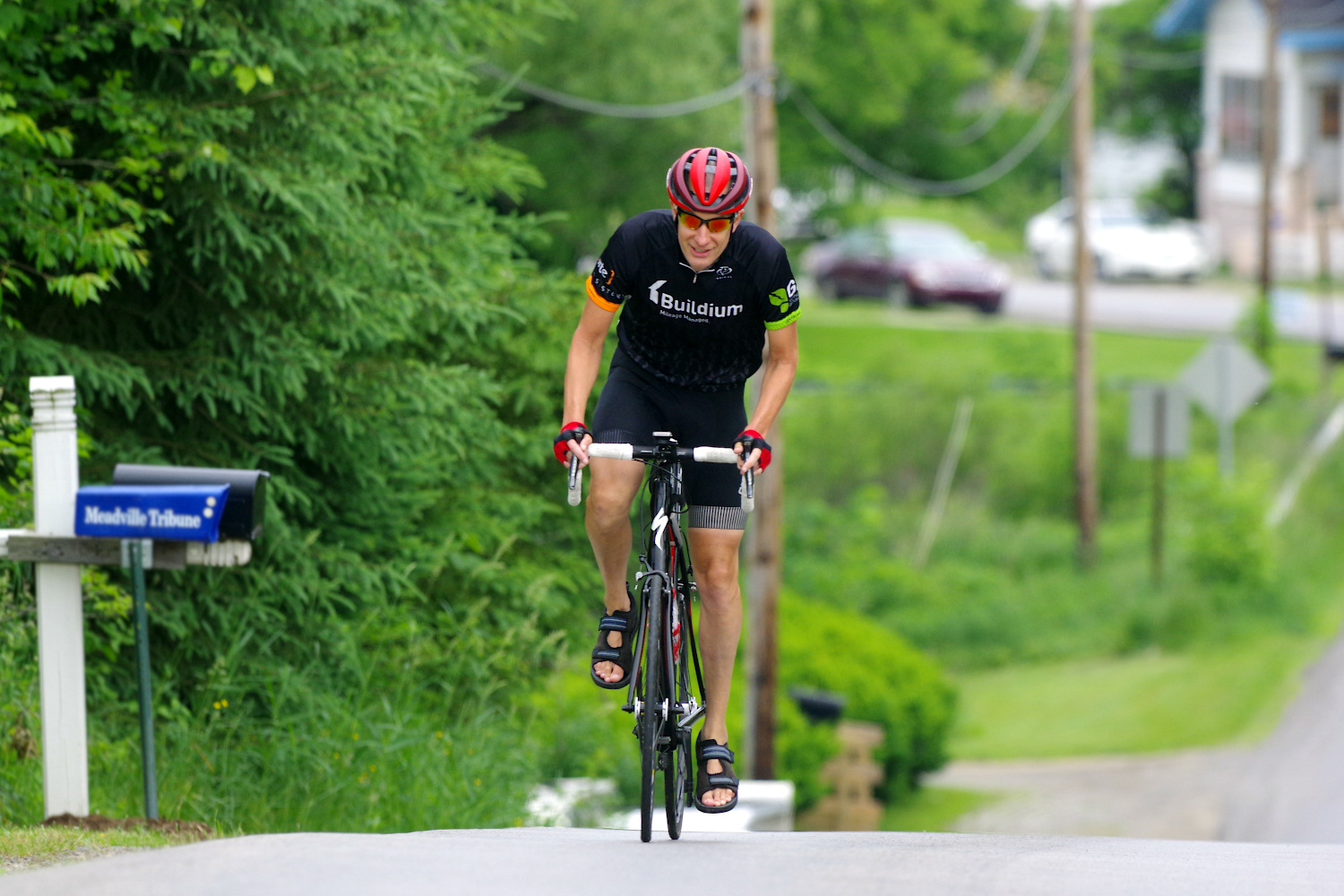
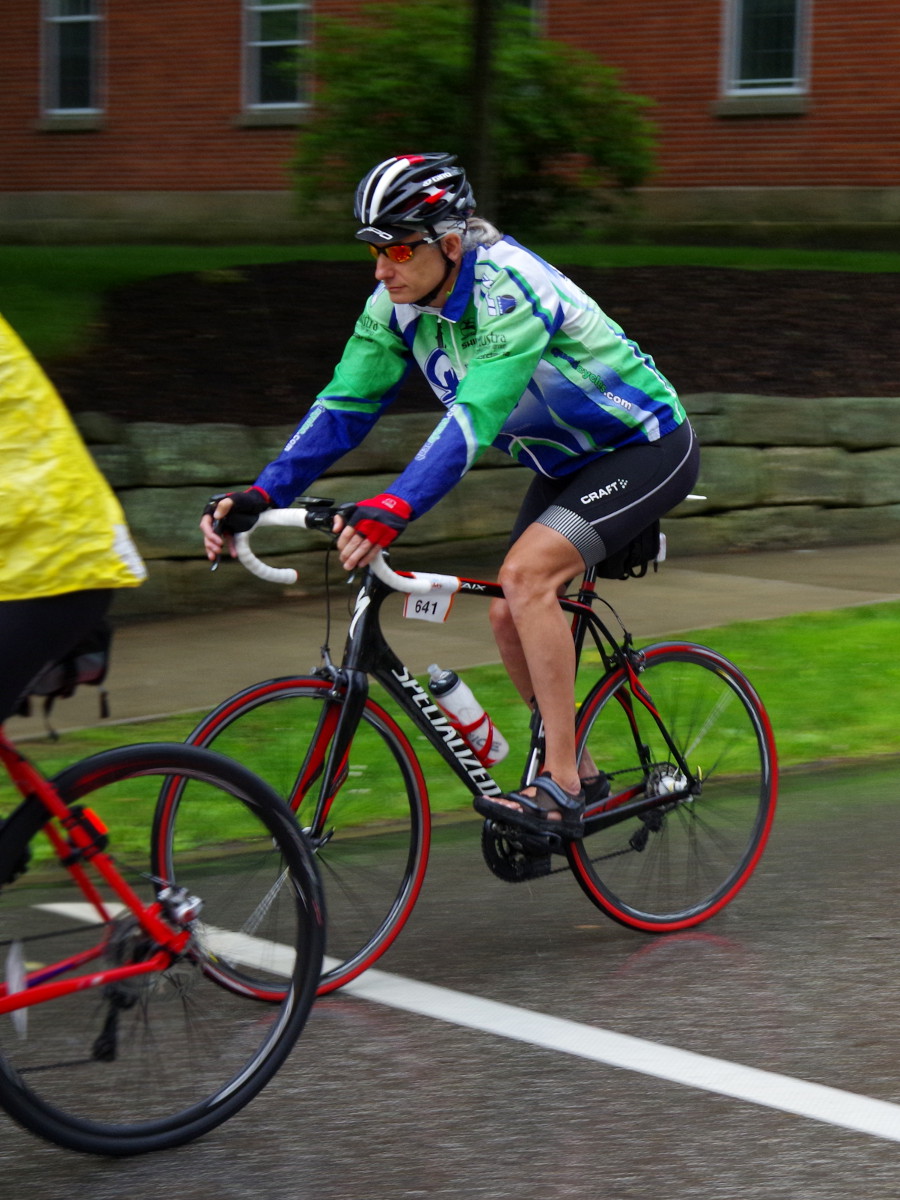
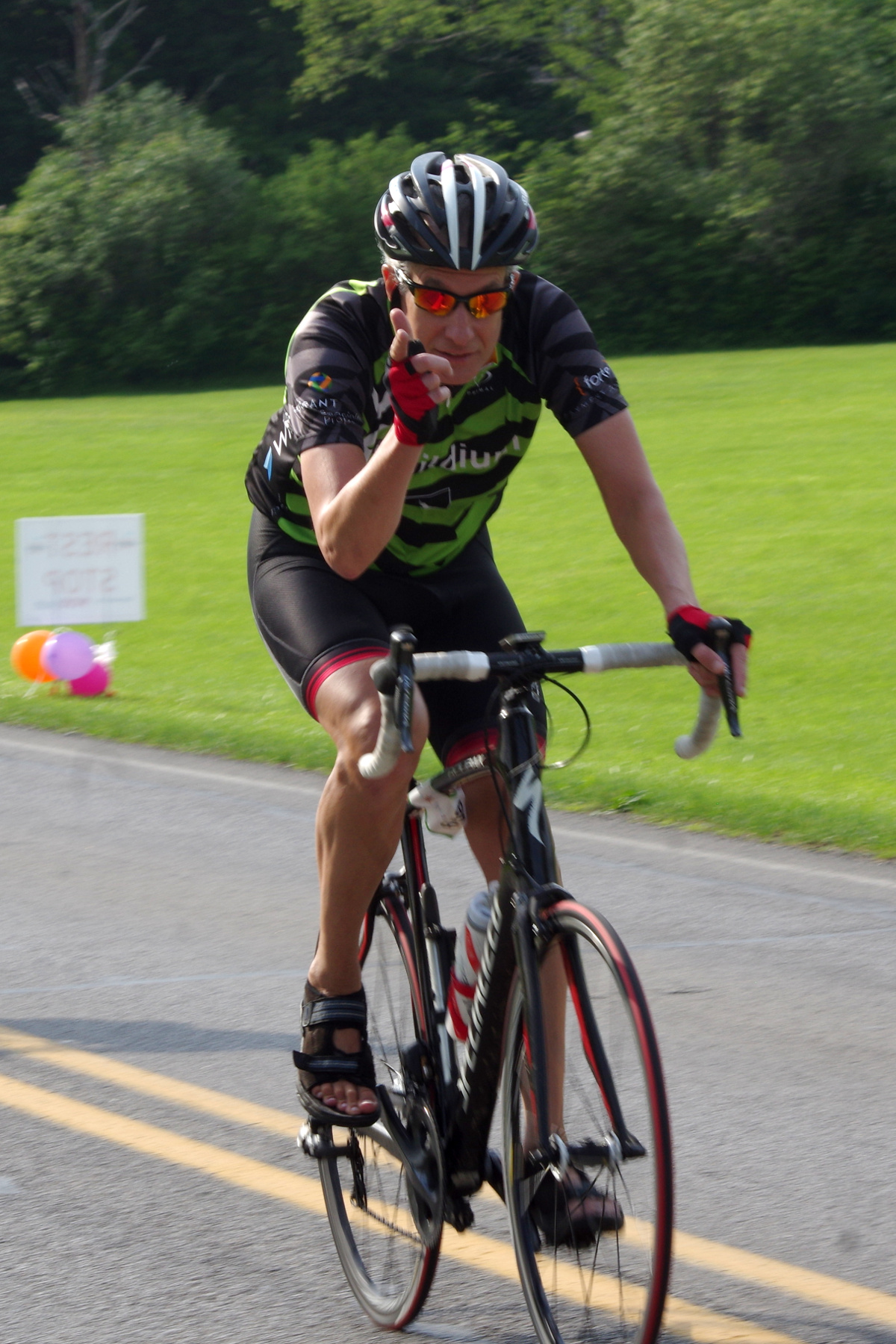
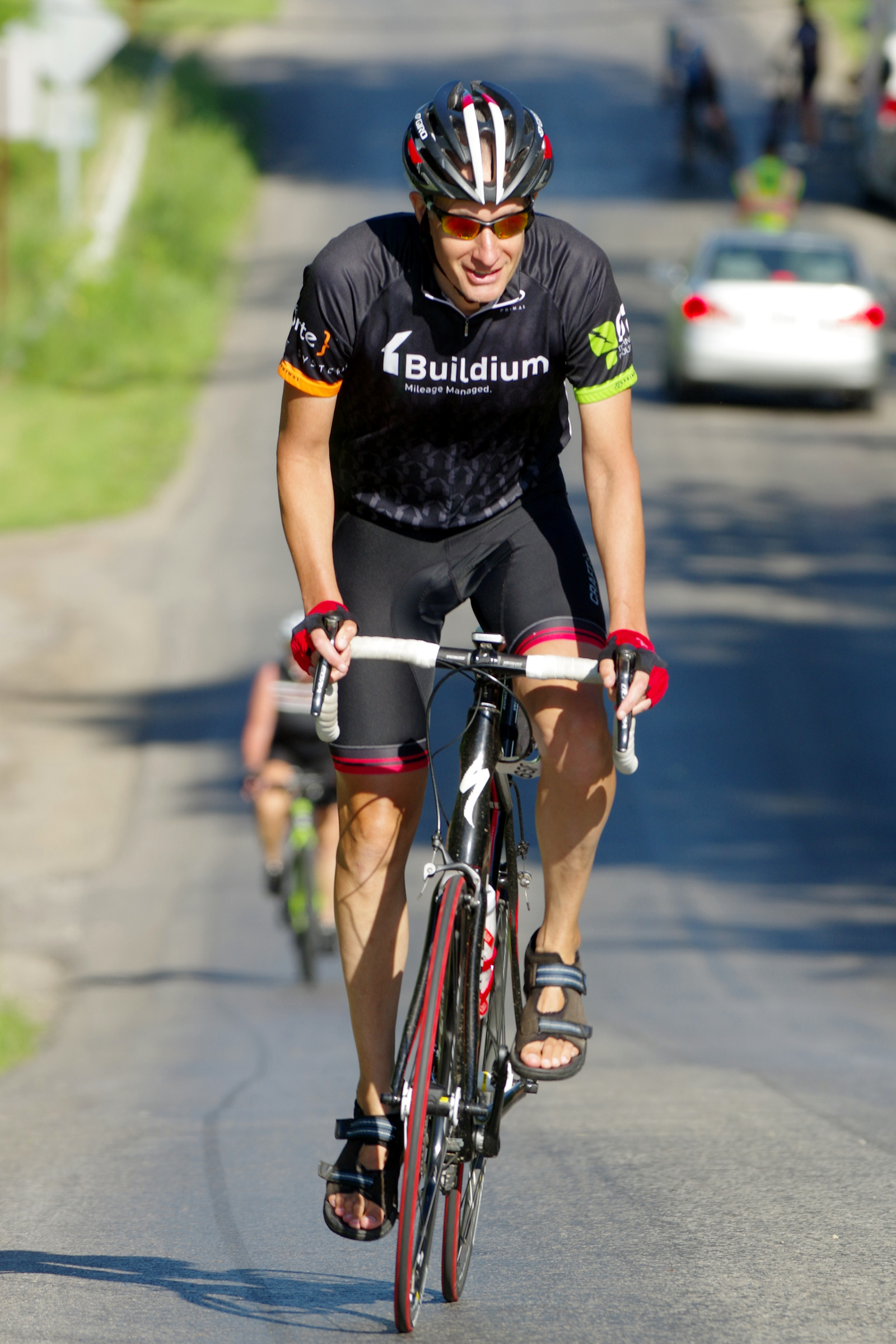
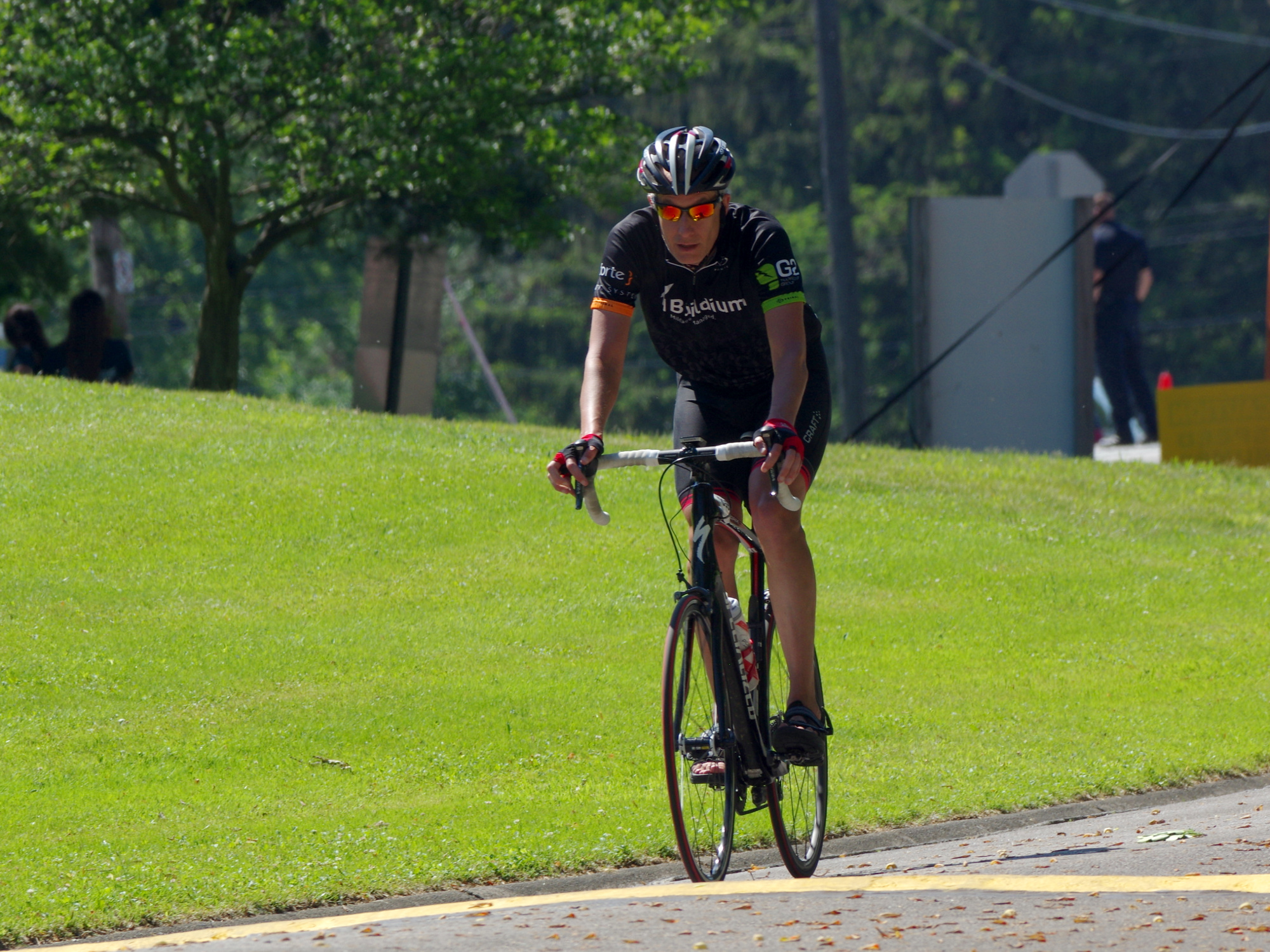
Preview of the 2026 PMC rider's jersey.

Preview of the 2026 PMC rider's jersey.

Welcome to 2026! A new year has begun, and with it, new aspirations and goals. By far my biggest objective for the year is my 20th Pan-Mass Challenge.

In a sense, this will be my most ambitious PMC ever. Not because of the riding, but because – instead of riding remotely as I’ve done since 2020 – this year I’m undertaking the trip back to Boston to take part in the mass in-person event for the first time since 2014, while also surpassing a lifetime fundraising total of $150,000 for the Dana-Farber Cancer Institute.

Having never traveled with my bike before, the logistics of getting myself and my bike to Boston, renting a vehicle, securing lodging, and doing the ride are intimidating. That’s why I‘ve done my last five PMC rides solo and remotely in Pittsburgh and Austin.

When I wrote about this year’s PMC in my 2025 end-of-year summary a couple weeks ago, it was with a measure of precaution. I figured I could always back out of the trip if necessary. After all, I’ve come up short on some previous annual goals, so it wouldn’t be the end of the world, right?

But time has a cruel sense of humor. Only nine days after posting about this year’s goal, registration for the 2026 PMC ride opened. And since the most desirable routes sell out very quickly, you really have to sign up as early as you can.

So today I registered for the traditional two-day route, which – beginning this year – now runs from Worcester to Provincetown. Registration includes a binding promise to raise a minimum of $6,000. And for me, it sets in stone my commitment to make the trip back to Boston to ride.

For me, the most insidious of the Pan-Mass Challenge’s slogans is “Commit: you’ll figure it out”, referring to the dual challenge of a formidable 300-kilometer bike ride and the daunting $6,000 fundraising minimum.

The PMC's 'Commit: You'll Figure It Out' tee shirt

But this year it also applies to my individual challenge: the logistics of getting myself, my bike, my support person, and all my gear from Texas to the starting line in Worcester… A journey that I’m now fully committed to, after having completed my registration.

Of course, I have enough wisdom to realize that these are just typical jitters about doing something new and unfamiliar. The travel will be planned and executed. And my Team Kermit buddies are a helpful example, having made this commute annually for Austin’s Livestrong Challenge. So now that I’m committed, I just need to trust that I will indeed “figure it out”.

And I know it’s going to be worth the discomfort. I’ll see lots of very dear New England riding buddies whom I’ve missed greatly. And I’ll get to celebrate with some of my oldest friends and most loyal and generous PMC sponsors. I’ll be riding over roads I haven’t seen in 12 years that hold so many personal and poignant memories, while cancer patients and their families line the entire route, thanking us for helping fund the research that they or their loved ones have benefited from. I’ll be celebrating my 20th PMC ride, and taking pride from the accomplishment of raising $150,000 for cancer research. And with enough help from my donors, I might even qualify for PMC “Heavy Hitter” status for the 10th time. It’s gonna be an awesome trip, I know.

There’s so much to look forward to, and I’m certain the reality will be far more powerful than I can convey to you here, or in my followup ride report.

You’ll hear me say it often, once I kick off this year’s fundraising push in a few months, but I do hope you’ll be part of my celebratory 20th PMC ride, in one way or another.

But until then, in addition to lots of anticipation and a whole lot of riding, I’ve gotta get to work on that “figure it out” part of my 2026 Pan-Mass Challenge. Let’s get to it!

Ornoth modeling the 2025 Team Kermit jersey.

Ornoth modeling the 2025 Team Kermit jersey.

Just as 2024 was all about my late-season stroke and return to fitness, 2025 was defined by my heart surgery in March, and my post-op recovery.

Happily, the procedure went well, and after a two-month break, I was able to resume training, taking three months to build up to a successful remote Pan-Mass Challenge ride in August, followed in November by the 100-mile Livestrong Challenge.

In the end, 2025 was a very successful year, and there were lots of milestones and noteworthy highlights along the way. Here’s my year-in-review post to distill it all down to a coherent narrative.

My Original 2025 Goals

Last December 31st, my 2025 New Year’s Eve began with a visit to my cardiologist to schedule my PFO closure heart surgery, which I learned would take place on March 7th. After that appointment, I drove home, finalized my list of cycling goals for the coming year, and posted them in my 2024 annual summary blogpost.

At that time – just months after my stroke and facing impending heart surgery – it was hard to commit to any concrete goals, but here’s what I thought made sense at this time last year, and how it played out.

Stroke & Cardiac Recovery

The Amplatzer Talisman Patent Foramen Ovale Occluder they implanted inside my heart!

The Amplatzer Talisman Patent Foramen Ovale Occluder they implanted inside my heart!

Ornoth meets the sunrise, already four hours into his Day 1 PMC ride.

Ornoth meets the sunrise, already four hours into his Day 1 PMC ride.

Taking a quick break as a freight train passes Austin's 1947 Amtrak station.

Taking a quick break as a freight train passes Austin's 1947 Amtrak station.

Obviously, my primary goal was to get back to full health and fitness following my heart surgery.

I was off the bike for 10 days surrounding the March procedure, and wasn’t allowed to do any meaningful training for another month. Although I hoped to recover as quickly as I could, it would be a long, gradual process, exacerbated by my bike being in the shop for an unexpected two weeks.

However, from today’s vantage point, it went miraculously well. Just 2½ months after resuming training, I was able to complete the Fire Ant Tour: a metric century. That gave me the confidence to register for my big remote PMC ride, which I completed in August. And in November I rode the 100-mile Livestrong Challenge, which I’d missed in 2024 due to my stroke.

It took me four or five months to get back to my normal level of fitness and endurance, but I’m as confident and capable as cyclist today as I was before my stroke, and that’s an immensely satisfying feeling.

My 19th Pan-Mass Challenge

Although I listed riding another PMC as one of my goals for 2025, it was with a humongous questionmark. Would it even be physically possible?

After surgery in March, I would have barely enough time to recover, train up to adequate physical fitness, and do the necessary fundraising work. Thankfully, I suffered no physical setbacks, and on PMC weekend I completed my usual two-day, 300 kilometer remote PMC ride. It was incredibly heartening to show that I’d overcome my health issues, and a poignant reminder of what a blessing it is to be able to spend a long day in the saddle.

Given the Trump administration’s 44% cuts to the NIH budget, this year’s PMC fundraising was more important than ever, and I brought in a post-hiatus and post-pandemic record of $9,450 for the Dana-Farber Cancer Institute. I chose to earmark 25% of my fundraising for the pediatric neurological cancer lab favored by Team Kermit, and the rest was unrestricted, so that DFCI can use it wherever it is most needed.

That’s all I’ll say about this year’s PMC. For my full writeup – plus my 5-minute highlight video – be sure to check out my 2025 Pan-Mass Challenge Ride Report.

And look below for my Goals for 2026 and some exciting news about next year’s PMC!

More, Better Videos!

In terms of video, I could have done better. I made limited use of the new selfie drone and its expanded capabilities, but I did capture a number of short video clips here and there.

On the plus side, I pushed out another 30-second PMC ride jersey reveal, produced another PMC ride video, and gathered many of my little clips into a second yearly highlights reel, which appears just below.

I hope to do even better next year, especially since I recently picked up a wireless DJI mic that’ll hopefully allow me to capture decent in-ride audio.

Some Anticipated Purchases

When I wrote last year’s goals, I was grasping for anything I could, so I included a “goal” of pulling the trigger on several planned upgrades. That was kinda lame, since I always devote an entire section of my annual review to stuff I’ve bought, anyways.

But briefly: I made those expected purchases, as well as several others. As expected, 2025 was an interesting year in terms of equipment; however, I’ll enumerate all that in detail in the “Noteworthy Purchases” section below.

But taken as a whole, while 2025 won’t top my list of greatest cycling achievements, I’m absolutely delighted by the success I’ve had in achieving these goals and exceeding the expectations I had, coming into 2025.

Highlight Video

Here we go: a quick 2½ minute look back at some of this year’s highlights (or at least the ones I got on camera).

For my Pan-Mass Challenge buddies, you might see how many different PMC jerseys you can count!

Charts

Let’s start this section with a new chart to understand how my cycling has changed in recent years. Here’s how many kilometers I’ve logged each year since getting back on the bike as an adult cyclist 25 years ago.

Kilometers per Year: 2000-2025

There are two things I want to call out. The first is that I’ve ridden considerably more each year after 2018. As you can see, that extra ~4,000 km per year is almost entirely attributable to Zwift and the indoor trainer I purchased at the end of that year. And that trend has surprisingly continued even after our 2023 move to Texas.

The second thing has to do with 2025 in particular. This year I logged 9,500 kilometers in the saddle, split pretty evenly between the indoor trainer (47%) and the open road (53%). It might not look like much on the chart, but despite losing a big chunk of time due to my surgery, I still rode more this year than any year since 2021!

Now let’s look at my cycling Fitness numbers, which only go back to 2011. Still, that’s a full 15 years of Fitness data, as you can see in the following chart.

Cycling Fitness: 2011-2025

Looking at this, I’d concentrate on the right half of the chart. 2017 was a normal year, but it ended with my only Dirty Dozen ride, which left me shattered, leading to a very mediocre 2018.

But at the end of 2018, I bought an indoor trainer, which allowed me to begin each spring at a higher level of Fitness, leading to higher summertime peaks. In terms of Fitness, the four years from 2019 through 2022 were my lifetime peak.

My most recent inflection point was at the end of 2022 when we moved to Austin. Two years ago I wrote a blogpost entitled “The Shape of Things to Come”, considering how my riding might change following the move. I expected my Fitness to be much more steady throughout the year, with fewer lows during the winter months and fewer peaks in the summer. And, as you can see above, that’s exactly how the past three years played out.

Now, let’s look more closely at 2025:

Cycling Fitness: 2025 Calendar Year (vs. average)

Having regained my Fitness following my stroke, and with heart surgery coming in March, I spent January and February doing as much cycling as I could and maintaining a fairly high Fitness level.

March and April show two consecutive dips in my Fitness, as I recovered from heart surgery and then sat around doing nothing while my bike was serviced. My Fitness plummeted to its lowest point since I bought my new bike three years ago.

In May, June, and July, I was committed and focused on steadily rebuilding my Fitness in time for August’s two-day Pan-Mass Challenge. I was overjoyed to complete it, which also marked my maximum Fitness of the year.

For the rest of 2025, I tried to keep my Fitness at a reasonably high level, including a secondary peak leading up to November’s Livestrong Challenge century. Then things fluctuated a bit in December, while I recovered from a pulled hamstring and broken toe.

The Centuries

Crossing the finish line after 100 miles of the Livestrong Challenge.

Crossing the finish line after 100 miles of the Livestrong Challenge.

Last year, I wrote that – due to my age and health issues – I might have ridden my last 100-mile ride. I’m happy to tell you it wasn’t true. This year I trained back up and knocked out two imperial centuries. You already know what they were, but here are my ride reports:

  • 8/3: Remote PMC Day 1 Century This year’s Pan-Mass Challenge was my 111th imperial century and a signal accomplishment in my recovery from stroke and heart surgery.
  • 11/2: Livestrong Challenge A full year after my stroke, I enjoyed a triumphant return to the Livestrong Challenge, capping an insanely busy week that included a big concert the night before my 112th 100-mile ride.

My Year in Zwift

For the first time since the COVID lockdown, I rode nearly as many kilometers on my indoor trainer using Zwift as I did outdoors. And because Zwift usually gives me several things to talk about, I’m going to put all the Zwift-related business into this new section. And since there’s so much of that this year, I’m just gonna do bullet points.

Modeling the Level 100 jersey in front of Zwift's Austin-inspired 360 Bridge.

Modeling the Level 100 jersey in front of Zwift's Austin-inspired 360 Bridge.

Ornoth (in his Didi the Devil cap) leading the PMC group ride on Zwift.

Ornoth (in his Didi the Devil cap) leading the PMC group ride on Zwift.

  • I started the year at XP Level 81 and successfully made my way to Level 100, which is the highest you can go… for now! This was a huge achievement that was 7 years and 34,000 kilometers in the making (see blogpo).
  • When I reached Level 85, Zwift sent me a free pair of Zwift Play controllers, which replaced my old ones that had been malfunctioning. But Zwift also decided to stop making them.
  • Zwift started granting experience points for regular outdoor rides, with four outdoor kilometers earning the same XP as one km in Zwift. Yaay!
  • Zwift held big events to introduce major expansions and new routes in France and New York City, plus a handful of miscellaneous other routes.
  • By completing the “Tour Fever” Climb Portal challenge, I earned a full Didi the Devil cycling kit. While I usually wear the in-game PMC kit, my avatar still wears the skullcap with devil horns from the Didi kit.
  • Zwift introduced a handful of new in-game bikes, but also implemented ways for users to earn five levels of upgrades for their bikes, and the ability to unlock (frankly stupid looking) “halo” bikes.
  • They also introduced a major new long-term challenge: the Factory Tour, which eventually unlocks “lightning socks”.
  • Zwift also finally added TSS points, Fitness, and Form charts and trendlines: the same data I’ve tracked and charted for the past 14 years.
  • They also replaced the beloved double-XP Tour of Watopia with a new Zwift Unlocked Tour. It still grants 2x XP, but they moved the time frame from late winter (when you’re building fitness for spring) to mid-autumn (when you should be relaxing), which is disappointing.
  • The PMC’s Zwift group rides decreased from weekly to monthly, and moved to 7am on Saturdays. Not a huge fan, but we’ll make it work somehow.

All this (plus the XP bonus for keeping a weekly ride streak alive) actually kept me Zwifting throughout the summer, when I would normally put the indoor trainer away. There’s no denying that Zwift has been a major contributor to both my recovery from medical issues and my overall fitness each year since 2019.

Noteworthy Purchases

It was a good year for shopping, and there’s a lot to cover. To conserve spacetime, let’s divide this year’s purchases into two groups and just list them out.

First the new kit:

  • Two pair of Craft bibshorts, which were discounted by 20% after I talked with customer support
  • A new pair of Shimano SD501 cycling sandals to replace my old ones
  • The 2025 Team Kermit cycling jersey
  • Of course, the 2025 Pan-Mass Challenge jersey
  • A blue & gold Reggie Miller “BoomBaby” cycling jersey
  • Doublewide wrist sweatbands for Zwifting and occasional outdoor use; although I never used to sweat, having it running down my arms has been a problem since moving south!

A lot of my cycling equipment purchases were covered in my October blogpost “Rolling Resistance”, so here’s just a quick enumeration:

  • My inexplicably slow and expensive tune-up included new brake pads, chains, bar tape, and cassettes (I erroneously ordered the 30-tooth version rather than the 34), and a long-awaited firmware update for my Di2 shifters.
  • New Pirelli P-Zero clincher tires were great, if prone to cuts, but TPU plastic inner tubes proved completely unusable.
  • Fanttik battery-powered pocket air compressor/inflator has been a lifesaver.
  • I enthusiastically recommend the Rehook Tyre Glider to easily mount & dismount even stubborn tires; I will never ride without one!
  • Replaced my outer chainring, after I bent the old one when I dropped the bike.
  • Installed a pair of cheap but very useful plastic enlargers for the hidden buttons on my Di2 shifters.
  • A new CamelBak Podium Ice water bottle (plus a new dishwasher to clean them!)
  • DJI Mic Mini Bluetooth microphone to capture quality audio to go with the video I capture while riding (to debut next year).

Finally… This might be a bit odd, but it’s worth mentioning three products that I was eagerly awaiting, but did not purchase. Coincidentally, all three were announced on the same day: September 9th! Those were:

Wahoo Kickr CORE 2 indoor trainer
My original Kickr CORE – from 2018! – is still working fine after 34,000 simulated kilometers, and the new, revised version doesn’t have any compelling improvements, other than being $250 cheaper. It can wait.
Garmin Rally 210 SPD power meter pedals
Similarly, the second generation of my power meter pedals aren’t significantly better than my old ones, and come with a 10% price increase. Plus they’re a whopping 60% more expensive than Assioma’s equivalent power meter pedals! No thanks.
Garmin Edge 850 GPS bike computer
I’m a huge fan of advanced bike computers, but Garmin’s newest generation is a big step backward compared my two year old Edge 840. Garmin cut the battery life in half; they removed the solar charging feature; its weather maps are awkward and crash the unit; and they raised the price 30-40%! Those are the kind of “improvements” I can live without.

Additional Highlights

Riding past Salado Creek on the Volksride 100k.

Riding past Salado Creek on the Volksride 100k.

Friday Truancy group ride on Austin's Pfluger Pedestrian Bridge.

Friday Truancy group ride on Austin's Pfluger Pedestrian Bridge.

The Bicycle House ride regrouping at Walnut Creek Park.

The Bicycle House ride regrouping at Walnut Creek Park.

Ornoth's 2025 cycling calendar/log.

Ornoth's 2025 cycling calendar/log.

Other than that, Mrs. Lincoln, what else stood out about 2025? Here’s a small handful of significant bits.

Outside of my centuries, I did a few noteworthy event rides. My first long ride after surgery was June’s Fire Ant metric century (my third year). And my late-season included doing the Barrow Volksride metric for the first time. And I made it out to the Circuit of the Americas F1 track once in May, just before they closed it up for the year (they didn’t open for their usual fall dates).

Between surgery, Zwift, and event rides, I didn’t do as many Friday Truancy group rides (about 20), and when I did I was mostly alone off the back, as I’m really not able to hold the pack’s pace anymore. But I tried a half dozen Saturday morning shop rides out of Bicycle House, and those went really well (except for having to get up at 6am on a weekend).

I also reported out on my experience consulting with a nutritionist, which was marginally useful.

In one of the more noteworthy developments, I finally canceled my paid membership on Strava, which is why you won’t see my “Strava Year in Sport” summary image for this year. Although they’re the default social network for cyclists, in recent years Strava has taken numerous corporate actions that are overtly hostile to their users. I complained about them in last year’s annual summary, and somehow it got even worse in 2025! Those actions have included: banning all users from posting any links in activities, comments, or posts; claiming ownership of users’ data; surprise price increases; lack of new feature development and bug fixes, especially on the website; drastically restricting their API and thereby breaking numerous popular third-party tools and services with no warning; and filing a frivolous lawsuit against Garmin – their closest business partner and number one data provider – for requiring the exact same data attributions that Strava themselves force on their third party developers. Strava’s corporate “leadership” is deluded, out of touch, and utterly out of control, and I (along with many other users) are done giving them money to enable their asinine, hostile behavior. Don’t let the door hit you in the face as we leave, Strava!

Blogposts

I only post about once a month, but when I do, my articles are kinda long and jammed with detail. Here’s this year’s inventory, in case you wanna dig deeper into any particular topic:

Goals for 2026

So that was 2025. Let’s talk about next year’s goals, because now that I’m fully back, there’s some big things I’m looking forward to. Let me share ’em with you…

Surpass 100,000 Adult Cycling Miles

In the arbitrary milestone category, I am about to surpass 100,000 miles of riding since I took up cycling as an adult back in 2000.

100,000 miles is a common lifespan of the typical family car. It’s the equivalent of riding around the Earth at the equator… four times. Or perhaps it’ll make sense if I tell you that it’s like traveling the whole Oregon Trail 46 times, without dying of dysentery!

That also means I’ve averaged nearly 4,000 miles a year for the past 25 years. That’s a measure of how devoted I’ve been to this particular pastime.

With good weather and only a couple hundred miles left to go, I ought to tick this one off soon. Look for a commemorative blogpo before the end of January.

Return to Boston to celebrate my 20th PMC and $150,000 in fundraising

Yes, it’ll be my 20th Pan-Mass Challenge. Yes, I’m coming back to Boston to do the in-person ride for the first time since 2014! It’ll be my 15th traditional PMC, having ridden my last five alone and remotely in Pittsburgh or Austin. And in 2026 the PMC will be inaugurating a new starting location in Worcester, rather than the traditional (and now former) start in Sturbridge. Very exciting!

Plus, I have a huge fundraising goal: to surpass a lifetime total of $150,000 raised for cancer research at the Dana-Farber. Raising the necessary $10,000 is a makeable stretch goal, and I’m asking you and all my amazing sponsors past and present to help. Plus if fundraising goes exceptionally well, it could also mark my return for a 10th year as a PMC “Heavy Hitter”.

The PMC has always been the most important highlight of my year, but next year’s PMC is going to be out-of-this-world special, and deeply emotional. I hope you will be part of it too, in one way or another!

Conclusion

My Previous
Annual Summaries

2024 2023 2022 2021
2020 2019 2018 2017
2016 2015 2014 2013
2012 2011 2010 2009
2008 2007 2006 2005
2004 2003

So that’s 2025 in the books.

Starting with last year’s stroke, and through my heart surgery nine months ago, I had no idea whether I’d be able to continue riding. After eight long months of uncertainty, I’ve worked my way back to full fitness and proved that – even in my sixties – I’ve still got what it takes.

Despite my age and health challenges, 2025 was a surprisingly successful and memorable year, highlighted by covering more ground than any year since 2021, strong performances in my solo PMC and Livestrong century rides, tripping Level 100 in Zwift, raising another $9,450 for Dana-Farber, as well as all the other bits I’ve mentioned in this writeup.

After nearly a year of uncertainty, today life as a cyclist is pretty much back to normal again, and that’s an incredibly rewarding and reassuring feeling.

And it’s great to be able to look forward to an exciting 2026 season, featuring a very special trip back to Boston to ride and enjoy and celebrate my 20th Pan-Mass Challenge, with renewed confidence and free of worry.

Ready? Let’s do it!

Coming into the 2025 event, my history with the Livestrong Challenge was not pleasant. In 2023 I suffered mightily in extreme heat, puking my guts out just after completing the 100-mile route, then needing to call my partner to drive me home; all later documented in a blogpo entitled “It's Not Easy Being Green in the Face”. And in 2024 I had to cancel my ride, having been hospitalized with a stroke less than two weeks before the event. But in 2025, with all that behind me, would the third time be the charm?

Chilly, Foggy Morning in Austin

Chilly, Foggy Morning in Austin

Team Kermit

Team Kermit

Lined Up at Sunrise

Lined Up at Sunrise

Crossing the Finish Line

Crossing the Finish Line

Greeted by Team Leader at the Finish

Greeted by Team Leader at the Finish

Ride 'Em Cowboy

Ride 'Em Cowboy

One thing was certain: it was gonna be a hectic week. Within seven days of the ride, I observed my birthday, took my partner Inna to the airport for a 6-day trip and picked her up on her return, dealt with Halloween, voted in the state election, attended a baroque concert, waited for big news from the Pan-Mass Challenge’s record-setting check presentation ceremony, booked my hotel on Cape Cod for next year’s PMC, balanced riding in Zwift’s “Unlocked” series of rides with tapering my training, replaced my cell phone, and watched local team Austin FC’s brief run in the MLS Cup playoffs. That doesn’t even include the group rides and social events organized by my Team Kermit buddies who came down to Austin from New England, plus the seasonal daylight saving clock change and a big concert by Devo and the B-52s , both of which took place the night before the ride!

Anything else noteworthy in the lead-up? My training featured the Barrows Volksride 100k and the new Zwift Unlocked series of rides on the indoor trainer. But I was still iffy about whether I’d have the legs to do the 100-mile imperial century versus the 100-kilometer metric. It was also my first test of setting intermediate waypoints on my Garmin Edge bike computer, which worked marginally well (the waypoint list being useful, but the associated popup messages disappeared too quickly while riding). I also was shocked to learn that despite fielding over 500 riders, Livestrong hadn’t bothered to set up a “SAG” telephone number for riders who needed assistance on-route.

As usual, my Team Kermit buddies were down from New England, tho we were short a couple people I was looking forward to seeing. Sadly, I missed the team’s ride and meals on Thursday because I’d initially been left off the group emails.

Once that was corrected, I joined them on Friday for a ride out the Walnut Creek Trail, even though the 70 KM I accrued probably hurt my freshness form Sunday’s main event. Then Friday evening the team held an all-you-can-meat extravaganza at the Salt Lick BBQ joint way down in Driftwood.

Saturday I did all my prep and gathered my kit for the ride, then met the Kermits for packet pickup and a publicity photoshoot at Livestrong HQ. Then an early dinner of Thai food before heading down to the Devo & B-52s concert, where I basically spent a long 4½ hours standing around – including through a downpour and thunderstorm – the night before the ride! You can read about that here. That left me four hours to sleep – plus another hour gained thanks to the seasonal clock change! – before my pre-ride wakeup call.

Sunday morning I arose to dense fog and a chilly temperature of 10° C, so I added a base layer, arm warmers, and a windbreaker to my normal cycling kit. Since Inna was out of town, I drove myself down to the event, rather than endure a cold and time-consuming bike ride. Knowing I’d need space to store that extra clothing once the day warmed up, I decided to forego bringing my video selfie drone. But I got to the start, found my Team Kermit buddies, lined up with them in the VIP starting area, and kicked the ride off at 7:30am.

One of my goals was to start out at a relaxed pace, conserving some energy. In 2023, the combination of a fast start and extreme heat had taken an immense toll, as my pace faltered and slowed to a crawl as the ride wore on. By keeping a moderate pace, I hoped to avoid blowing up and beat that previous time.

But as soon as 25 KM in, I questioned that aspiration and the wisdom of doing the full 100-mile route. I was cold, sleep-deprived, dehydrated, poorly fueled, and not fully recovered from Friday’s 70 KM ride. I felt pretty lousy as I pulled into the Driftwood rest stop at 45 KM. However, I downed a banana and grabbed a couple chocolate chip cookies, and seemed to recover my strength. I was also buoyed as the skies cleared and the temperature rose.

Shortly after leaving that Driftwood stop, I picked up a wheelsucker, which would be the salient feature of the day. By riding just behind another cyclist, you can save anywhere from 15 to 35% of your power, so sitting on another rider’s wheel is a tactic for riders who want a brief rest. In pacelines, riders rotate from front to back, spending a little extra effort at the front in exchange for lots of time to rest in the protected draft of everyone else.

That wasn’t what my wheelsucker did, tho. He sat on my wheel for the next four hours, benefiting from my draft for 90 KM, without once taking a pull on the front. Through the next five rest stops, whether I stopped for 10 minutes or didn’t pull in at all, he remained glued to my wheel. To be fair, I didn’t complain – having no real reason to – and he did apologize, but it was kinda disconcerting nonetheless. I shrugged it off and just did my own ride, and when I took a little extra time to recover at the last rest stop, he finally chose to continue on without me.

As I mentioned above, one of my goals was to beat my 2023 time. While I started out slower this year, I figured I’d gain a lot of time in the latter half of the course, because in 2023 I’d slowed significantly as I fatigued, plus I had wasted a lot of time at rest stops, trying to recover. My theory more than proved out. Although I was 20 minutes behind my 2023 time in reaching the Driftwood stop, I’d begun pulling that back by the halfway point. And in the end I crossed the finish line at 2:08pm, beating my previous time by exactly an hour!

After the ride, I was in a much better physical state than I’d been in 2023. I grabbed my finisher’s medal, hung out to cheer the teammates who finished after me, and downed 4 slices of pizza and a couple cans of cola. In my email I found the announcement that this year’s Pan-Mass Challenge (which I’d ridden remotely) had donated a record $78 million to the Dana-Farber Cancer Institute. And in another unexpected surprise, one of our Team Kermit riders won a gorgeous hand-built wooden kayak after entering the Livestrong raffle!

When the team eventually moseyed back to their hotel, I hopped back on the bike to ride an extra 11 KM. See, the Livestrong route is actually a little bit short of 100 miles, and I wanted to make sure I did a full century. Plus, during the ride I’d accidentally paused my bike computer’s activity for about 15 minutes, so my recorded mileage was short by another 7 KM. So I chose to ride a little extra, to avoid any controversy about my second 100 mile ride of the year and 112th in total. Only then did I pack up and head home for my appointment with a massage gun and a bowl of ice cream.

As I said at the top, it was an intensely hectic week, culminating with a difficult endurance event. But I came through it successfully, and felt really accomplished, as well as exhausted. I spent a little more social time with Team Kermit, and enjoyed a couple brief conversations with my grammar school buddy turned Livestrong board member, Scott.

It was an immense improvement over last year, when I had to cheer from the sidelines following my stroke, and over 2023, when I struggled to complete the ride before promptly retching liters of undigested sports drink into a handy trash bin. The 2025 Livestrong Challenge weekend was just as intense as those previous years, but it was memorable for far more positive reasons.

This is just a placeholder to direct you to my 2025 Pan-Mass Challenge Ride Report. It contains the full details of this year's “Reimagined” PMC ride, which I rode solo at home in Austin. As always, a lengthy writeup is supplemented with photos, videos, maps, charts, and GPS tracklogs.

Like 2024, this year I created a 5-minute ride summary video montage, which you see below. I hope you enjoy it!

This year’s ride report also includes a big announcement about next year’s ride, which I hope you’ll read.

This is just a placeholder to direct you to my 2024 Pan-Mass Challenge Ride Report, for the full details of this year's remote "Reimagined" PMC ride. As always, my lengthy writeup is supplemented with photos, videos, maps, and GPS logs.

This year, I also created the following 4½-minute summary montage. I hope you enjoy it!

Back on September 10th, I completed the 100-mile Livestrong Challenge Austin ride and raised $875 for the Livestrong Foundation.

Rather than give you the usual chronological ride report, I’m gonna organize this mostly by themes, in hopes that it will be both more effective and readable. Are you with me here? Let’s start with the elephant in the peloton

The Decision

My decision to participate will surprise those of you who know my feelings about Lance Armstrong, the Livestrong Foundation’s disgraced founder. I don’t ever want to contribute in any way to the fame or fortune he has amassed from lying to the public and terrorizing the people around him.

So what convinced me to do the Livestrong ride? Here are the factors that went into my choice:

  • Lance has left the organization and is no longer involved in any official way. After suffering due to their association, Livestrong have wisely distanced themselves from him, although he remains their largest financial backer.
  • There are surprisingly few century rides here in Austin, and it’s been a long eleven months since my last one (back in Pittsburgh).
  • I hate cancer even more than I hate Lance, and Livestrong does admirable work for cancer survivors.
  • I have two friends who are Livestrong bigwigs, and their vocal support of the foundation earns it a degree of approval. My childhood friend Scott is on their Board of Directors and is a survivor of testicular cancer; and Steven, the leader of the Pan-Mass Challenge’s popular Team Kermit, is a Livestrong Ambassador (i.e. a distinguished volunteer).
  • Along with Steven, several other PMC friends from Boston come down to Austin for the Livestrong ride.

So while I hate the idea of being associated with Lance Armstrong, I don’t think it’s unreasonable for me to take part in this ride. But I took perverse pride in wearing my 2011 PMC jersey during the event.

Poor Training and Lead-Up

Ornoth with Scott & MJ

Ornoth with Scott & MJ

Scott, Ornoth, & Steven before the start

Scott, Ornoth, & Steven before the start

Ornoth lined up in the VIP starting area

Ornoth lined up in the VIP starting area

MJ & Scott, Steven & Ornoth ready for the start

MJ & Scott, Steven & Ornoth ready for the start

Ornoth rolling out with Team Kermit

Ornoth rolling out with Team Kermit

Rolling through the ranchland in Driftwood

Rolling through the ranchland in Driftwood

Scenic level crossing on the Blanco River

Scenic level crossing on the Blanco River

ClimbPro showing Fulton Ranch hill

ClimbPro showing Fulton Ranch hill

Team Kermit's Ornoth, Christophe, and Steve after conquering Fulton Ranch hill

Team Kermit's Ornoth, Christophe, and Steve after conquering Fulton Ranch hill

Real-Time Stamina, estimating 21% or 17km remaining before bonking

Real-Time Stamina, estimating 21% or 17km remaining before bonking

Ornoth dragging himself toward the finish

Ornoth dragging himself toward the finish

Ornoth crossing the finish line

Ornoth crossing the finish line

And having finished, collapsing

And having finished, collapsing

Not looking good post vomiting after the finish

Not looking good post vomiting after the finish

Solar power gain, showing 71 minutes gained over a 9-hour ride

Solar power gain, showing 71 minutes gained over a 9-hour ride

May, June, and July were filled with short rides focused on becoming Local Legend on the Ladera Norte hill. So I didn’t begin training for distance until August. And August’s training was cut short after badly throwing my back out. Right when my training should have been peaking, I was off the bike for ten days, while the small training effect I’d gained atrophied away.

Four days before the event, I was just getting back onto the bike when Team Kermit members started assembling in Austin. They were looking to meet up and ride every day, right when I would normally be tapering my training in order to be well-rested for the event.

Instead, on Thursday before the (Sunday) event, local Austin Kermit member Scott led a group of five of us up the Walnut Creek Trail, then back to 51th Street for lunch at Jewboy Burgers. Then on Friday I led a sightseeing ride up the Shoal Creek bikeway and back down Scenic Drive. We finished at event packet pickup, where I received a Livestrong Challenge cycling jersey and VIP rider bib tag #28.

I took Saturday off while the Kermiteers spent the day doing another long ride down to the Veloway park. I’d ridden 150 km in two days and was suffering for it. My back was still iffy, my ass was abraded, and my legs were too tired to tackle a hundred-mile ride without rest. At the same time, I hadn’t eaten or slept well, was already dehydrated, and down 1.8 kilos of body weight in a week. For the first time, my final ride prep included zip-tying a stuffed Kermit doll to my helmet, complete with white cowboy hat and rodeo bull-riding pose.

Quick Ride Summary

My Strava activity’s description summed my Livestrong Challenge up best: it was very good until it wasn’t.

After about five hours of sleep, I got up at 4:30am and set out in darkness at 5:45 on the 15 km ride downtown. I rode with Team Kermit from their hotel to the start, where we lined up in the VIP section before being set loose on the streets of Austin at 7:30am.

At the tail end of a brutally hot summer, the ride began under pleasant temperatures that warmed considerably, but not to the extremes that we’ve lived under for the past three months. South from Austin to Buda, then west and south through Driftwood.

Enjoying the freedom of having two water bottles rather than one, I skipped the first three rest stops out of a desire to stay ahead of the pack and beat the time limits for the 100-mile route, which the organizers had shortened by 30 minutes. So my first break came two hours in, after 57 km, (or 72 km if you include my 15 km commute to the start). As you might guess by such a long stretch without a break, I had been feeling good thus far.

I refilled my bottles and marshaled some strength for the long, steep hill at the end of the next segment. I enjoyed the pleasant tree-lined streets near Wimberley, and a stunning level crossing of the Blanco River. Then came the 15% grade climb up Fulton Ranch hill, which is essentially the halfway point of the course. It was quite manageable for a cyclist used to the much lumpier terrain back in Pittsburgh. At the top, a water stop beckoned; I pulled in at 10:30am, having taken three hours to knock out 77 km (or 92 km).

While resting here, Team Kermit members Christophe and Steve rolled in, and we would leapfrog each other for the rest of the 110 km trek back to Austin. But this would be the point when things slowly started going to hell. The temps climbed through the 30s, and I was feeling the effort in my feet, legs, lower back, traps, and hands.

As my reserves dwindled, my speed and power dropped, and my horizon shrank to simply reaching the next rest stop. I hadn’t eaten any solid food during the whole ride, and was pounding fluid in an attempt to address both heat and thirst. Extended 15-minute rest stops and hand towels soaked in ice water were just enough to keep me from blowing up.

I stopped twice to battle fatigue and nausea during the last segment to the finish, but completed the final loop around Auditorium Shores. The event photographers captured my grim visage as I crossed the finish line at 3:07pm. I’d completed the official 158 km official course in 7h 37m, but had fulfilled my 108th imperial century by riding 15 extra km to the start.

I collapsed in exhaustion underneath the Team Kermit tent and waved off others’ attempts at congratulations, accepting only a folding chair and an ice-water towel. And then came that feeling we’re all familiar with: a particular certainty that it’s time to find a convenient but discreet place to deposit some biological material. So I staggered nonchalantly over to a nearby trash can and retched about three gallons of undigested fluid that I’d carried with me over the preceding few dozen kilometers.

So my Livestrong Challenge ended successfully but ignobly. I managed to recuperate enough to stand for a team picture before I said goodbye, then met up with my partner Inna, who mercifully drove me those extra 15 km back home.

My First Century in Eleven Months

This was my first 100-mile ride since October 2022. Eleven months is a long layoff; I haven’t gone that long between centuries in fifteen years (since 2007-2008)! You ask me how it went? Go back and read the summary: it was very good until it wasn’t.

Mistakes were made. Looking back on it, nearly all of them were about my personal physical fitness and decisionmaking, not my equipment or the location or the event. So I guess that would be the logical place to start…

My Fitness and Decisionmaking

A century always demands a lot of stamina and will power from me, but this was an exceptional case. Despite being one of the first dozen riders out of the gate, then skipping three rest stops, I only marginally beat the last finishers on the course.

I could blame the Texas heat, but even at 37°C (98°C) it was mercifully moderate in comparison to the seventy days above 38°C (100°F) that Austin experienced over the summer.

Or I could blame my age. After all, I’m only weeks away from my sixtieth birthday, and that’s the kind of thing that can slow a guy down.

While those are valid considerations, there was a whole panoply of other factors that impaired my performance, leaving me with weak legs and zero stamina toward the end of the ride.

Despite not doing any long rides in nearly a year, I barely did any lengthy training rides prior to the event. I went into it fatigued and dehydrated from too little sleep and too much riding just before the event. I was insufficiently fueled due to an irregular eating schedule and not eating any solid food during the ride. And I still had lingering injuries to my lower back and my backside (the latter attributable to insufficient time in the saddle).

But the biggest wildcard was hydration. Consuming two bottles over the first five segments of my ride – especially since the first segment was a casual commute – doesn’t seem like an especially egregious error. But it set me up poorly for the second half of the ride, where my perceptions of thirst and heat were clearly malfunctioning, causing me to take in more fluid than I could digest. This is the biggest thing I’ll have to monitor on future long rides.

There were lots of physical niggles along the road, of course. Early on, I had to make a quick roadside stop to flush some stinging sunblock out of my eyes. In my cycling sandals, some pain developed in my big toes, but I got away without a repeat of the abrasions I’d gotten on top of my feet a couple weeks earlier.

And I’d expected pain in my hands due to a slight change in my position on the new bike. I did have some discomfort, but not the severe palsy that I’d feared. It would be prudent to address this soon by buying new cycling gloves and plush handlebar tape.

The New Bike

Like its owner’s ride, my new Specialized Æthos was very good until it wasn’t.

It looked like Pæthos came through its first century in flying colors, to the extent that I had very little to say about it, other than that it suited me well and earned my full confidence.

Two weeks before the event, I’d gotten a flat on a pair of brand new tires. That got me so worried about the rough chipseal of Texas back roads that I’d carried two spare inner tubes, in addition to a pump, a CO2 dispenser, and a Shrader-to-Presta adapter in case I needed an automotive air compressor. That was all overkill; Pæthos appeared to handle everything that was thrown at it.

Just before the ride, I’d also converted from one water bottle cage to two, which was a big win. That gives me the flexibility to ride farther unsupported or without stopping (e.g. skipping three water stops). But it also gave me the option of carrying both sport drink for hydration and clear water to pour over my head and body when the heat was at its worst. And I did lots of that on the Livestrong ride!

But those Texas roads did get me in the end. After I got home, I noticed a break in the carbon rim of my rear wheel, which most likely happened due to a rock strike somewhere along the Livestrong route. I took it in to Specialized to see if it was rideable or a case for a warranty replacement, and they chose to replace the rim. Pretty ridiculous that my first set of carbon wheels lasted a mere 4,000 km.

The New GPS Bike Computer

This was also the first century-length test for the Garmin Edge 840 Solar that I picked up last month, which delighted me in nearly every way. On top of flawlessly handling mapping and turn-by-turn navigation, it now sports graphical data fields (e.g. power and heart rate charts), and the new ClimbPro feature, which tracks your location on an elevation profile of the current climb.

While cool, I had already tested that stuff; I was more eager to try out some other features that could only be done on a century-length ride. After all, I couldn’t finish my full review until I’ve put it through all my typical use cases.

Top of the list was battery life. The battery on my old Edge 820 had deteriorated to the point where I had to plug it into a portable USB battery for any rides longer than 90 minutes. The new unit claimed 26 to 32 hours, and I finished my 10-hour day with a whopping 72% charge remaining. I think I can finally leave my USB charger at home for good!

Of course, that includes the benefit I derived from the unit’s solar charging feature, which in Texas is a painless way to give the battery slight boost. Over 9h 15m the unit gained about 72 minutes worth of solar power, or about 8 minutes per hour. Not revolutionary, but not trivial either!

The other major feature I wanted to test was Garmin’s new “real-time stamina” estimate, which supposedly learns your physiology and provides a real-time guess about how long you can go until exhaustion. At my first rest stop, it estimated that I had 55% stamina remaining, and – ominously – that my reserves would run out 40 km before the end. I monitored that number all afternoon as it fluctuated, but it consistently told me that I’d have nothing left in the tank for the last 25-35 km of the ride, which is exactly how things played out. It was surprisingly accurate, given the variables that it didn’t know about, like fueling and hydration.

One feature came as a complete surprise to me. When Kermit team leader Steven texted us to ask where we were on the course, I deliriously scrolled down through the usual canned, stock responses for something appropriate as I continued pedaling. At the bottom of the list was something my old unit had lacked: the ability to actually type a freehand text response right there on the head unit! So I was able to pound out a response that truly captured my feelings in the moment. In response to his “How far out are you??”, I answered “Lifetimes”.

The only glitch I had was a minor one. I’ve always had an alert set to pop up when I reached the 100 mile threshold, but it never showed up on the new computer. I’ll have to re-test that, the next time I get the opportunity to pound out a hundred-mile ride.

My Friend Scott

As I mentioned above, my childhood friend Scott is on the Livestrong Board of Directors and is a survivor of testicular cancer.

Our friendship goes back fifty years to 1972: 3rd grade back in Maine, Cub Scouts, then French and several other classes through middle and high school. After going separate ways for college, 25 years later we rediscovered each other and our common commitment to cycling to combat cancer. In 2008 he rode the Pan-Mass Challenge, so it seemed appropriate for me to take part in his preferred event, especially since I’m now based in Austin.

I ran into him and his partner MJ outside the hotel as we were both heading to the start, and got to chat with them a little more just before we lined up for the depart. It was the first time I’d seen him in ten years, and it was wonderful to touch base, although it was much briefer than it deserved… Hopefully another time.

Steven and Team Kermit

My friend Steven is both a Livestrong Ambassador and the captain of the Pan-Mass Challenge’s very popular Team Kermit, founded in honor of – and continuing in memory of – his son Jared. I have several connections in the group and have ridden alongside numerous Team Kermit riders in the PMC all the way back to their founding in 2005. Most recently, I’ve nurtured friendships with several Kermiteers by riding with them virtually on the weekly PMC Zwift indoor trainer rides.

While I’ve never ridden the PMC as part of a team, I thought it would be fun to bolster Team Kermit’s numbers on the Livestrong ride, so I registered as an official team member. The days preceding the ride were spent tagging along – and even leading – some fun local sightseeing rides for our traveling visitors. Taking charge was local Austinite and Team Kermit member Scott.

Riders Christophe and Steve I only knew from the Zwift group rides, so it was nice to put names with their faces. They rode with me for the second half of the century route, and their companionship was absolutely invaluable.

I’m very much a lone wolf, so there were several times when I felt awkward as a member of a team, especially a team who decorates our helmets with large, stuffed Kermit toy dolls, which gets a ton of attention and comments! But they’re truly good people, and I was happy to be allowed to represent them.

Riding in Texas

This was my first century-length ride in the Lone Star State, which I view as a milestone, since it’s such a vastly different environment from my familiar riding in the Northeast.

My top concern was the Texas heat, especially after months of temperatures hovering at or above 40°C. Riding in that kind of heat is seriously dangerous, and I wanted to be sure my first long ride offered the kind of generous support you get on large charity rides. Wisely, most centuries down here take place in the spring and fall, and we were lucky that event day hovered just below 40°C. But temperature concerns will always be present for every ride I do down here.

My second concern was the roads, not knowing quite what to expect in terms of traffic, surface quality, and space to ride. In the end, those things all vary. There were trafficky bits and quiet bits; there was smooth tarmac and ample rough chipseal; broad roads with dedicated bike lanes and narrow, single-lane roads without even a shoulder. Finding quiet, comfortable roads for long, solo rides is just going to require some investigation.

Once outside of the city and its immediate suburbs, the terrain was mostly what I’ll call scrubland. Plots of large ranches with low, hardy, weatherbeaten vegetation like juniper (which Texans call “cedar”) and live oak. There aren’t a ton of rivers and creeks – and those are nearly all dry after the summer’s heatwave – where you often see dramatic exposed limestone. It has a lot of character, without being entirely desert or prairie. The Blanco River crossing was really interesting, and I even shared the road with a roadrunner while climbing out of it.

At a macro level, riding in Texas is going to take some adjustment, but it should be amply doable, with careful scouting and route selection, and more experience managing my hydration.

Livestrong: the Event

This was also my first Livestrong ride. How was that?

The route was mostly fine. My only complaint was is that because the start/finish is downtown, a large percentage of the ride was urban and suburban strip mall hell, leaving less than a third of the route for scenic rural country roads. The entire second half of the ride paralleled ugly Interstate 35 on the run back to Austin. But the scenic bits we did get were thoroughly pleasant.

Ride support was generally great, with no less than nine water stops spaced about 16 km apart, well-stocked with ample ice and wet towels, although no cola was available until the end.

As a rider, the cutoff times for the century route were not especially generous, particularly after they were shortened an extra 30 minutes. Fortunately they weren’t an issue for me, though.

The fundraising minimum (ZERO!) was surprisingly welcoming, with premiums offered at varying – and entirely voluntary – fundraising thresholds. By raising $875, I earned an on-course tribute sign, a tote bag, a tee shirt, a cheap mini Bluetooth speaker, the ubiquitous water bottle, an event cycling jersey, and a finisher’s medal, plus the right to line up in the VIP section at the head of the ride. That’s a much friendlier model when compared to the PMC’s $2,000 to $6,000 fundraising requirement just to participate!

Unlike the PMC, where thousands of spectators — often former patients and their families – line the entire route and thank you for riding, community support was mostly non-existent on the Livestrong ride. Other than the crowd at the start/finish, a few bystanders waving from nearby bus stops, and water stop volunteers, during the entire ride I only encountered one couple sitting at the side of the road in the middle of nowhere, cheering their hearts out. The two events couldn’t be more different in that respect.

It all adds up to a mixed picture: a well-run and rider-friendly event for an organization that has wisely distanced itself from its shameful founder, and which Scott and Steven have convinced me does admirable work helping cancer patients and their families. And even if it’s no Pan-Mass Challenge or Dana-Farber Cancer Institute, I’m very likely to participate again in the future, for the same reasons I outlined above.

Epilogue

So there you have it; it was a landmark ride. To encapsulate, it was:

  • My first Livestrong ride
  • My first imperial century in 11 months
  • My first century of 2023
  • My first century in Texas
  • My first century on Pæthos, my new bike
  • My first century with my new Garmin bike GPS
  • My first event as an official member of Team Kermit (or any team, for that matter)

While this century included a grim struggle and an ignoble footnote, I hold to my words that it was very good until it wasn’t. Troubles aside, I completed the course safely and enjoyed the overwhelming majority of it, and gained lots of lessons to bring forward for future rides. I enjoyed it immensely and am glad to have done it.

This is just a placeholder to direct you to my 2022 Pan-Mass Challenge Ride Report, for the full details of this year's remote "Reimagined" PMC ride. As always, my lengthy writeup is supplemented with photos, videos, maps, and GPS logs.

This year, I also created the following 7m summary video. I hope you enjoy it!

This is just a placeholder to direct you to my 2021 Pan-Mass Challenge Ride Report, for the full details of this year's remote "Reimagined" PMC ride, as well as my thoughts and feeling upon completing my 100th ride of 100 miles or more.

As always, my lengthy writeup is supplemented with photos, videos, maps, and GPS logs.

Unlike other rides which appear here, I post all my Pan-Mass Challenge ride reports as pages on the cycling section of my personal website.

So if you're interested in reading about my 15th PMC — my first as a virtual rider due to the Covid-19 pandemic causing the real-world ride's cancellation — you'll find my writeup, photos, videos, screenshots, charts, maps, and stats at the following link:

Ornoth's 2020 Virtual PMC Ride Report

Last weekend was my fourth Escape to the Lake MS Ride, and fourth century of 2019. It was a beautiful and enjoyable two-day odyssey up to the Lake Erie shore.

Of course, the most pertinent element of my preparation was spending the winter on Zwift, plus the three centuries I’d recently completed.

I also put into practice two lessons gleaned from the Allen & Coggan book “Training + Racing With a Power Meter”. Specifically, doing less pre-ride tapering (because endurance events require fitness more than peak power and freshness), and conserving energy by keeping a steady power output, rather than having big spikes when I attacked hills.

I also transitioned my usual course notes written on tape attached to my top tube, instead using the “Multi Page Race Notes” ConnectIQ app to load them onto my bike computer, which worked okay.

Climbing out of Conneautville

Climbing out of Conneautville

Lined up at the start

Lined up at the start

Saturday morning Inna drove me up to the start in Moraine State Park, and I set off at 7am.

I rode solo over the first 60 miles, within the first 6-8 riders on course. We had absolutely perfect riding conditions: mostly sunny, temperatures rising from the 60s through the 70s, and a cross-tailwind.

Instead of skipping the first two stops and refueling at the third stop (in Mercer), I decided to balance it more by stopping at the second water stop (Grove City) and then skipping the third, which worked out well.

I pulled into the “lunch” stop in Sandy Lake at 9:50am and downed a ham sandwich before pressing on. The whole time, I was conserving energy for the second half of the day, although I had enough spare strength to pull one guy from the PJ Dick team back up to two of his buddies.

After leaving the Cochranton stop just after 11am, the climbing got serious. Those of us doing the full century route vectored right, straight into the teeth of a gusty 24 mph headwind. My legs were tired and I’d lost top-end power, but I wasn’t suffering because I wasn’t fighting against it. I reached the 80-mile rest stop at 12:25pm and received my “century challenge” pin.

The penultimate segment flattened out and turned downwind, which provided a welcome respite before the dreaded final hills into the finish at Meadville’s Allegheny College. I still wasn’t feeling bad, and marveled as I cruised past spots along the road where I’d had to stop and take breathers back in 2016. Even plodding up the final hills, I was less preoccupied by the landscape and more with my GPS, which told me I’d completed 100 miles in a surprisingly quick 6 hours 45 minutes. I rolled through the finish with 103 miles at a personal record 1:53pm.

Saturday afternoon was the usual: I got my bag, parked my bike, got into my dorm room, showered, feasted, rested, and recharged all my devices. Brownies were a welcome snack at the finish line. And dorm rooms now come with microwave and mini-fridges, which was convenient. I watched a few anime episodes and some soccer before rolling over for a fitful night’s sleep.

Grove City rest stop

Grove City rest stop

Sunday morning I was tired, achey, and stiff, but the weather was encouraging: 63°, with a strong 28 mph wind that would be behind us for most of the 65-mile run into Ohio and down to Lake Erie. Sailing along with the wind at my back, my legs came around, and I wasted no time at the rest stops (aside from a cookie I gnawed in Cranesville). My only complaint was my aching neck, which is inevitably my biggest pain-point on long rides. I shared the road from Cranesville to the final rest stop with Pittsburgh riding buddies Stephen and Miguel, but set out on the final segment alone because I was eager to finish. Riding the gale into Conneaut Township Park, I crossed the tape at a record 10:45am after 64 miles.

I finished so early that I had the men’s changing room completely to myself. With Inna still driving to the finish, I had some time to hang out and enjoy the beautiful weather, having a Dilly Bar, wading in Lake Erie, debriefing with Stephen and Miguel, having another Dilly Bar, meeting another Pittsburgh buddy Ben, having another Dilly Bar…

Lake Erie finisher

Lake Erie finisher

Eventually Inna drove up and we stowed my bike and bags. She asked about the blood on my elbow, which turned out to be ketchup from one of the picnic tables! We checked out the lakeshore beach, and I convinced her wade into the surf, to her annoyance.

Although we’d planned to stay overnight in Erie and visit the beaches of Presque Isle on Monday, we discovered that our hotel reservation had been lost. With ominous storms predicted to roll in, we decided to punt and drive back to Pittsburgh that night.

Sitting in the parking lot—weary after 167 miles of riding and not excited at the prospect of a two-hour drive home—I called out, “Okay Google, navigate to home”. Google Maps, which I’d apparently earlier set to provide cycling directions, promptly responded: “Navigating to home… Start pedaling!” which was met with uproarious glee by the non-cyclist in the vehicle.

In summary, it was a wonderful ride. The weather was absolutely perfect, with neither rain nor excessive heat, and the gusty wind was mostly at our backs, making pedaling a (literal) breeze. And with the record level of fitness I’ve been at thanks to my wintertime training on Zwift, I felt strong all weekend long, never feeling like I was tapped out or suffering at all.

And of course, this major event that I built up to only serves as further build-up to additional upcoming events on my summer calendar. If those go as well as this year’s Escape to the Lake, it’ll make for a wonderful year in the saddle.

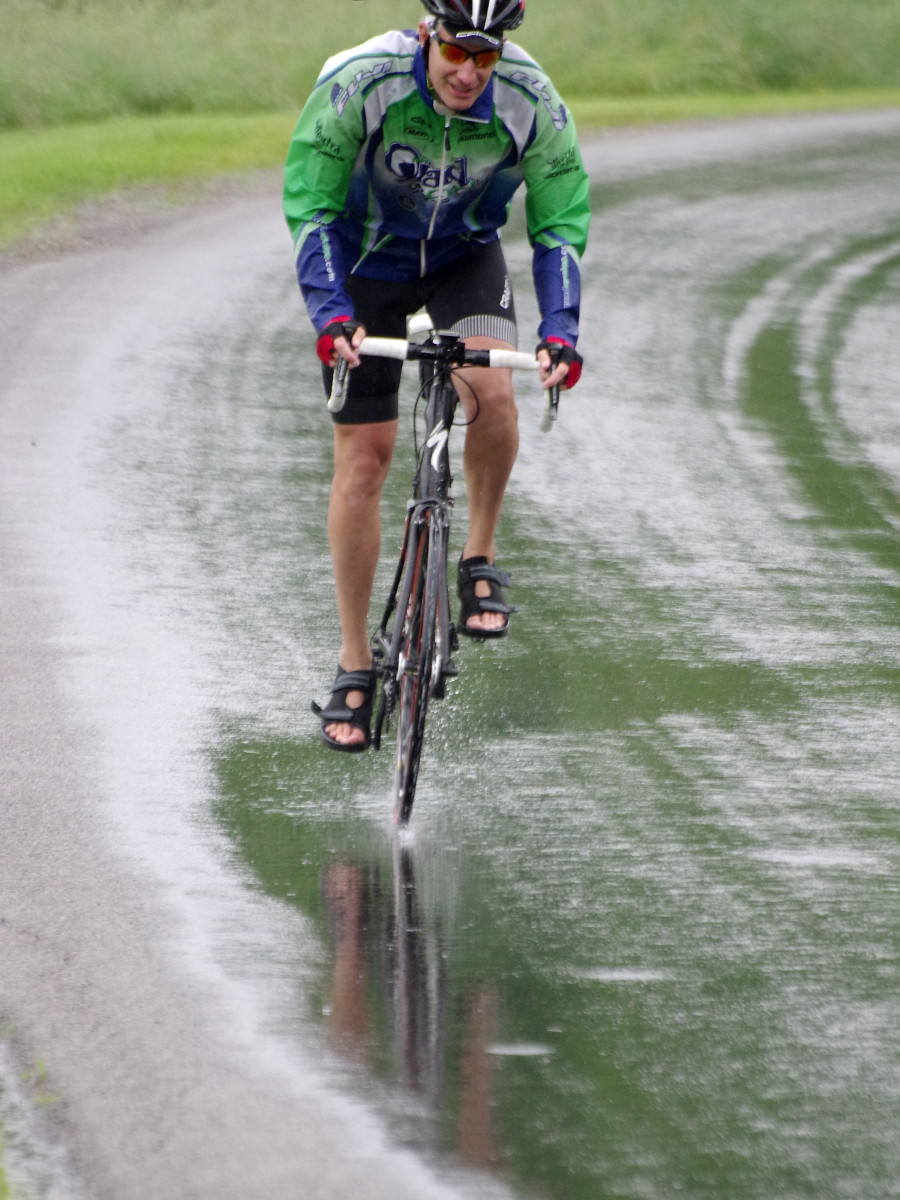
There are two kinds of rainy days on the bike. There’s days with passing showers but things dry out quickly; and there’s day-long pouring rain that leaves you no choice but to slog through to the end of the ride.

This year’s Escape to the Lake MS Ride had one day of each kind.

To be fair, it’s been that kind of year. As I wrote in my last post, my week in Tuscany was almost exclusively rainy and cold; and our horrible spring weather was the topic of the post before that.

Rolling thru the second rest stop on Day 1

Rolling thru the second rest stop

A wet, grim start to Day 2

A wet, grim start to Day 2

Midway thru a very wet Day 2

Midway thru a very wet Day 2

After a disappointing week in Italy, I had two weeks to train up (and then taper for) the annual two-day Escape to the Lake MS Ride.

I stumbled into some form by doing a slow ride up the Montour Trail with Pittsburgh Randonneurs Bill and De’Anna, for her last warm-up ride before her first 750-mile event. Understandably, it was a casual ride, but on the way home, I vectored off on my own down Bunola Road, which brought me up to an even hundred miles: my first century of the year. It’s nice to be able to do a century, completely unplanned!

Three days later I did a metric century up Sun Mine and Guys Run, which was pleasant. I had just enough ascending to earn Strava’s May climbing badge, in addition to their gran fondo distance badge. It was the first month that I’ve earned both badges since last August.

A week before the MS Ride, I did the regular moderately-paced Saturday morning group ride out of Performance Bike, but also did their inaugural fast-group ride on Sunday, which was fun. Then, a week before my event, it was time to taper my training.

I hate having to register for events (or reserve hotel rooms) ahead of time. You’re forced to gamble on having good weather, and monitoring the long-range forecast occupies me in the lead-up to any event.

After waiting, I registered for the MS Ride a week before, when the forecast said there’d be a small chance of rain and summerlike temperatures. Over time that changed to likely rain on Saturday and clearing on Sunday morning. We’d be directly beneath a stationary front, which would oscillate north and south all weekend, with disturbances traveling along it.

That was the story Friday night, but on Saturday morning’s forecast shifted most of the rain to Sunday. When riders lined up for the 7am start on the lakefront at Moraine State Park, it was a cool and dry 59°, but heavy overcast with ominous clouds.

The first segment was lots of up and down, and there was a patch of wet, puddle-filled roads where we’d just missed a shower. We got through it without setting soaked, but on one steep hill my slick tires kept trying to slip out on the wet pavement.

As usual, I skipped the first rest stop, which put most of the pack behind me. The crowds thinned out, and a group of a half dozen guys and I passed each other back and forth until the second rest stop, where they pulled off while I rolled on.

Mostly-shootable rolling hills punctuated the third segment. A group of five guys blew past me in a paceline, but those were the only other riders I saw on that entire 13-mile run. There didn’t seem to be as many riders on the road this year, which was probably attributable to the weather forecast.

After the steep ascent into Mercer, I took my first rest of the day. I was ten minutes behind my schedule, but that was fine, because I wanted to conserve my strength, being so under-trained this year.

The soaking-wet roads were reinforced with another round of sprinkles as I rolled along the up-and-down farmlands of the next leg. I arrived at the Sandy Lake lunch stop at 10:20am, still trailing my goal by a few minutes, so I had a quick ham sandwich and carried on.

After the lunch stop, the route follows a major road that carries high-speed traffic. It’s not my favorite part of the ride, but it does end in a ripping downhill to the Cochranton rest stop at mile 65.

But in cycling what goes down must come up, and there are two long, legendary hills leaving town, after which the small number of us on the full 100-mile route vector off on a big loop to add the extra miles.

At mile 77, my GPS told me that I was no longer on the route provided by the ride, so I backtracked a mile to the last intersection to verify the route markings. Okay, I continued, again leaving the GPS route, but after a couple miles with no signage, I stopped and started to call the support number to verify that I was on course. But another rider rode past, so I followed him until more signs appeared. It was probably a short detour, but I was uncomfortable that we weren’t on the route I’d downloaded.

Not long after, we rolled into an unexpected rest stop, where I learned that both the route and the mile 83 rest stop had been moved at the last minute. The town had stripped one of our roads and had planned to resurface it the day before the ride, but had been delayed.

At the ad hoc rest stop, I had to admit my fatigue and accept that I’d have to plod and nurse my way over the last 20 miles. The final rest stop at mile 91 came just before the last big hill, and I took a ten-minute rest there before setting out.

The last segment was a painful challenge, but I made it to the top of the ridge and enjoyed the final 300-foot descent to the finish line at Allegheny College in Meadville.

I arrived at 2:42pm, which was the slowest of my three times doing this ride, but most of that will have been due to added mileage from the detour, combined with my confusion and backtracking along the route. Although there had been sprinkles and some roads were wet, the predicted rain had held off. It was still really cool and overcast, but that had protected us from the summertime sun.

Evening was predictable. I checked in, got my bag, stored my bike, got into my dorm room, showered, and collapsed until suppertime. The food’s always good, and I shoved down a tray full of chicken, rice, pickles, berries, ice cream, and a cola. Afterward, I relaxed and watched a New England Revolution soccer match on my phone.

I also checked the weather. Originally, Sunday was supposed to be clearing and approaching 80°, but the oscillation that had given us a mostly rain-free Saturday was about to reverse. That was verified when, after a fitful night’s sleep, I got up at 5am to steady rain and a gusty breeze. Between the cold, wet weather, an aching back, and an unsettled stomach, I was not looking forward to setting out.

After breakfast, I kitted up with all the gear I’d brought and set off with the rest of the unfortunates at 7am into a heavy, soaking rainstorm. The worst part about riding in the rain is the initial getting wet, because once you’re soaked through, no amount of rain and puddles and road spray is going to make you any wetter. At only 54°, the first segment was just miserable. My only consolation was that I’d only have to ride in it for 65 miles: about four and a half hours.

After skipping the first rest stop, the rain lightened to the point where you could almost convince yourself it was going to stop. But the sprinkles returned throughout the second segment.

At the second rest stop, I gathered strength for the ride’s final noteworthy hill. Continuing through serious farmlands, I distinctly recall the absurdity of passing a group of a dozen girls in simple Amish dress, sitting in three neat rows on what looked to be a small choral riser by a driveway. I weakly waved a greeting and they all called out cheerful hellos. It was absolutely surreal.

After having slackened for a while, the skies opened up again after the final rest stop. However, the ride was almost over, and the final ten miles were mostly downhill. I arrived in Conneaut and rolled down into the lakefront park at 11:26am with no ceremony, but delighted to get out of the rain.

After steady rain and temperatures that never exceeded 57°, I spent no time enjoying the lakefront reception. I grabbed my finisher’s medal, a small square of oregano-laden pizza, and a Dilly Bar. Once the ice cream had disappeared, my only goal was to get warm and dry. So I biked up to the upper parking lot, grabbed my bag, commiserated with other finishers in the changing tent, loaded my bike onto the truck, and hopped on the chartered bus that would bring me back to the start line.

With Inna out of town, I couldn’t repeat what we did last year: staying in Erie and spending a leisurely Monday on a lakefront beach before driving home. Having left my car at the start line in Moraine State Park, the only way back was the bus. That was for the best anyways, because it was terrible beach weather, and I just wanted to go home and dry out.

Obviously, the ride’s salient element was the weather. The ride itself went well enough, and I’m glad to have a second century under my belt for 2018. But the rain and cold temperatures took most of the fun out of the experience. Happy to put the event behind me, I drove 45 minutes back to Pittsburgh, where—lo and behold!—I returned to a very welcome 80° and sunshine!

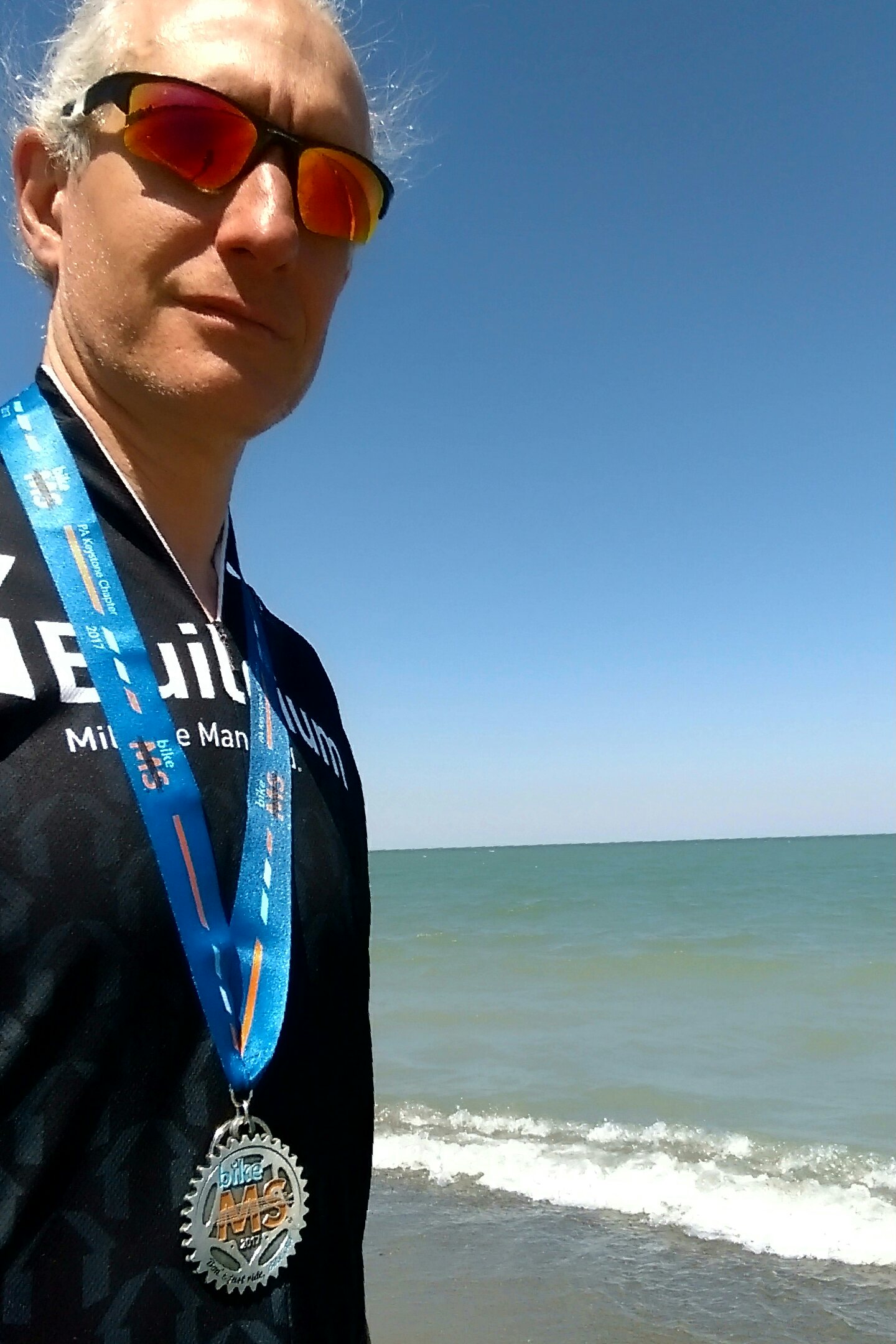
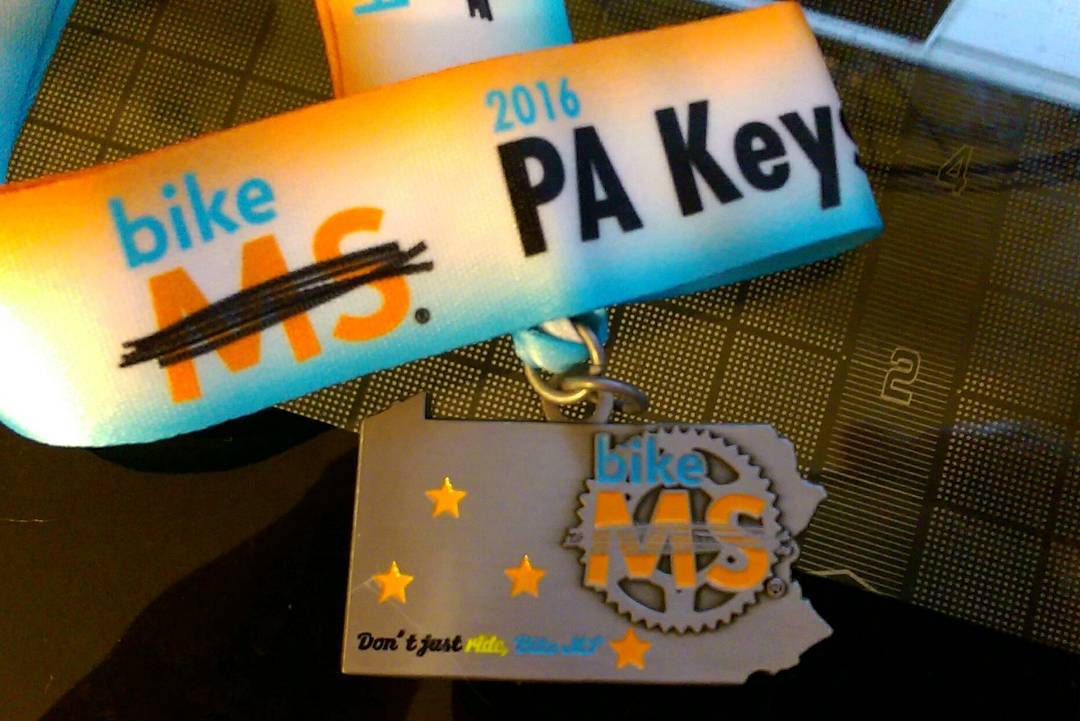
I biked in Boston for 15 years, doing over 50 centuries in numerous events. To my recollection, in all that time I only ever received two medals as a result. The first was from the Audax Club Parisien for my first 200k brevet; the other was for the 2015 Cape Cod Challenge MS Ride.

Although I rode 14 consecutive Pan-Mass Challenges, the most I ever got from them was a tiny pin; and that wasn’t for my riding, but for raising over $100,000 for them. Despite repeated mentions in my post-ride feedback, the PMC never gave ribbons or medals to finishers.

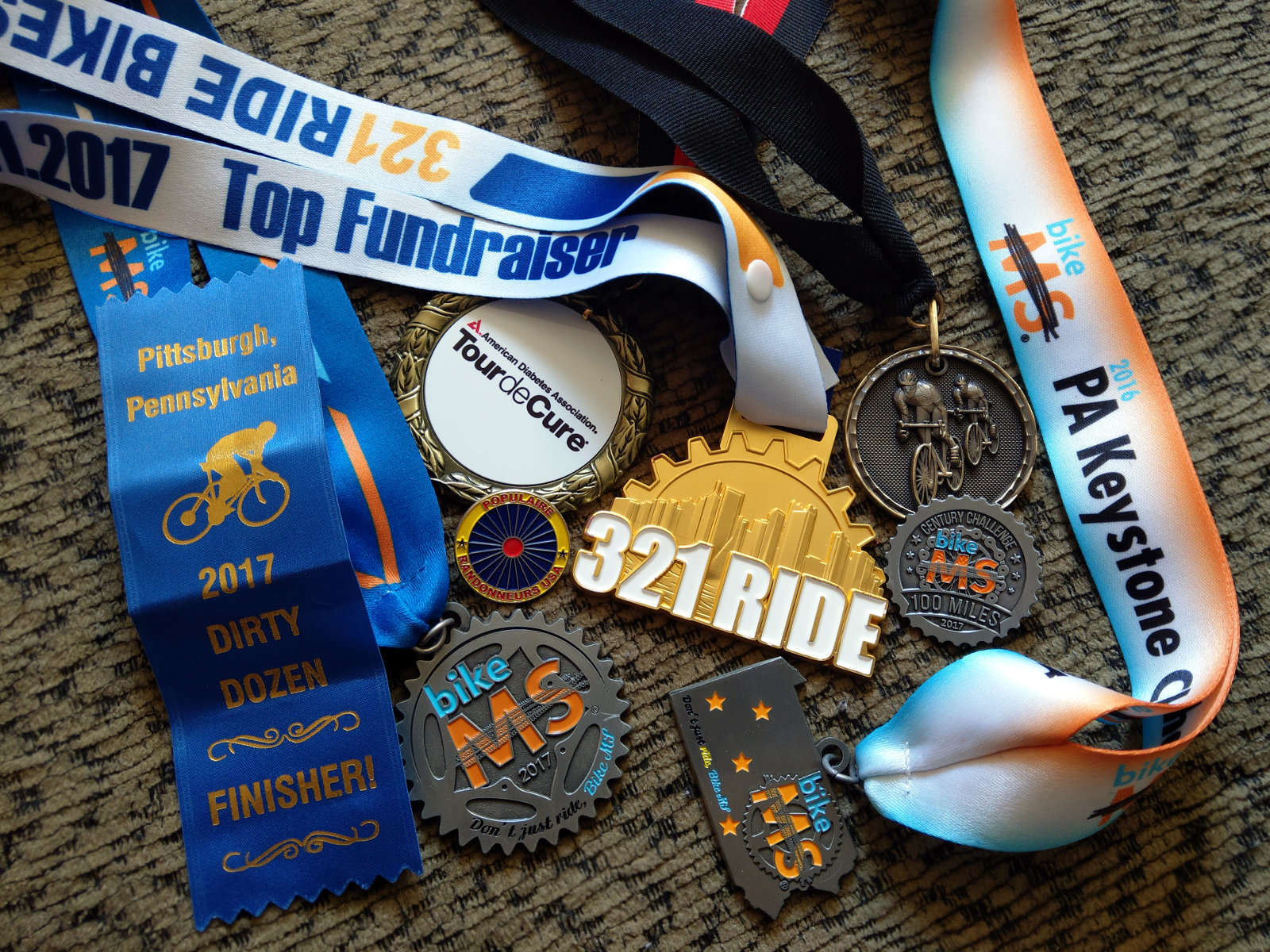
Cycling Awards

My 2016-17 Cycling Awards

I mention this to provide contrast with the two short years that I’ve lived in Pittsburgh, where I’ve received no less than eight medals and ribbons, as shown in the accompanying photo.

A surprising number of rides here give participants something to go home with. I’ve received three medals from two MS Rides (the extra one for doing their optional full century route), plus medals from a Randonneurs USA 100k brevet, the 3-2-1 Ride, the Pittsburgh Tour de Cure Gran Fondo, the PMTCC Three-State Ride, and my finisher’s ribbon from the recent Dirty Dozen. I should have received another ACP 200k medal, as well.

And you know what? As tacky and worthless as those tchotchkes are, they still mean something to me. They bring back memories of those rides, and I enjoy watching the hardware accumulate by my desk over the course of the season.

If I find them meaningful, I’m sure there are other riders who feel similarly. For anyone running a major event—especially a fundraising ride—such trinkets seem like a very inexpensive way to say “Thank you” and foster a rider’s loyalty to an event from year to year.

I’ve certainly had very positive associations with the rides here in Pittsburgh that have given them out, so I’m not sure why folks in New England have resisted it.

3-2-1 Go!

Oct. 10th, 2017 07:53 pm

The first weeks of focused Dirty Dozen training are interrupted by the final long charity ride of the year: the Woiner Foundation’s 3-2-1 Ride.

At this time of year a completely flat metric century requires very little effort, so I don’t worry about any physical impact on my training. The biggest risk is if the date collides with one of the Dirty Dozen training rides, which this year it did not.

The Woiner Foundation supports research and treatment of pancreatic cancer and melanoma. Although I registered and fundraised for last year’s 3-2-1 Ride, I couldn’t participate because I had to unexpectedly fly to Maine to take care of my mother. So participating in and completing the 3-2-1 Ride was one of my expressed cycling goals for 2017.

Ornoth Starting 3-2-1 Ride @ Ohiopyle

Ornoth Starting 3-2-1 Ride @ Ohiopyle

Misty Morning Yough

Misty Morning Yough

Yough at Ohiopyle from GAP trail

Yough at Ohiopyle from GAP trail

The Red Waterfall

The Red Waterfall

For the event’s fifth year, in addition to the traditional metric century route starting in Connellsville, they gave top fundraisers the option of an 80-mile VIP ride starting in Ohiopyle, the site of Frank Lloyd Wright’s Fallingwater house, as well as a memorable stop for me during the 2000 DargonZine Summit. Between the ride itself and the additional 14 miles of riding to and from the start at Heinz Field, I figured I’d extend it for my sixth (and final) century of the year.

Friday’s pre-ride packet pickup should have been named “luggage pickup”, as I collected my bib number, VIP rider’s jersey, a windbreaker, the event tee shirt, two water bottles, and two goody bags full of keychains, chain lube, sunblock, coupons, event info, assorted flyers, etc. I was given the choice of any bib number from 2 to 50, and opted for number 11.

Saturday was the off day between packet pickup and Sunday’s ride. But it was also the date of the first Dirty Dozen group training ride of the year. I attended that, which was of course a hard workout, covering four of the thirteen hills. Not ideal preparation less than 24 hours before a century…

Sunday morning I was up at 4:30. The temp was only 45 in Pittsburgh, and a stingy 37 in Ohiopyle, necessitating extra cold-weather gear. However, it was supposed to be 67 by the time we finished, and that huge temperature spread meant that I’d eventually have to stow all my extra gear, as well. The extra-quiet 5am ride to the start was cold, but I was fine except for my ears.

After checking in, I waited until the last minute to put my bike on the truck, thinking “last in, first out”. There were only about 25 riders on the bus to Ohiopyle, but that included FOAF Jen Braun.

During the 90-minute bus ride down to Ohiopyle, as the sun reluctantly rose I kept an eye out for fog. There was a lot of it around, especially in the valleys. Eventually we were deposited in a river outfitter’s parking lot, and I led the group march up to the bathrooms.

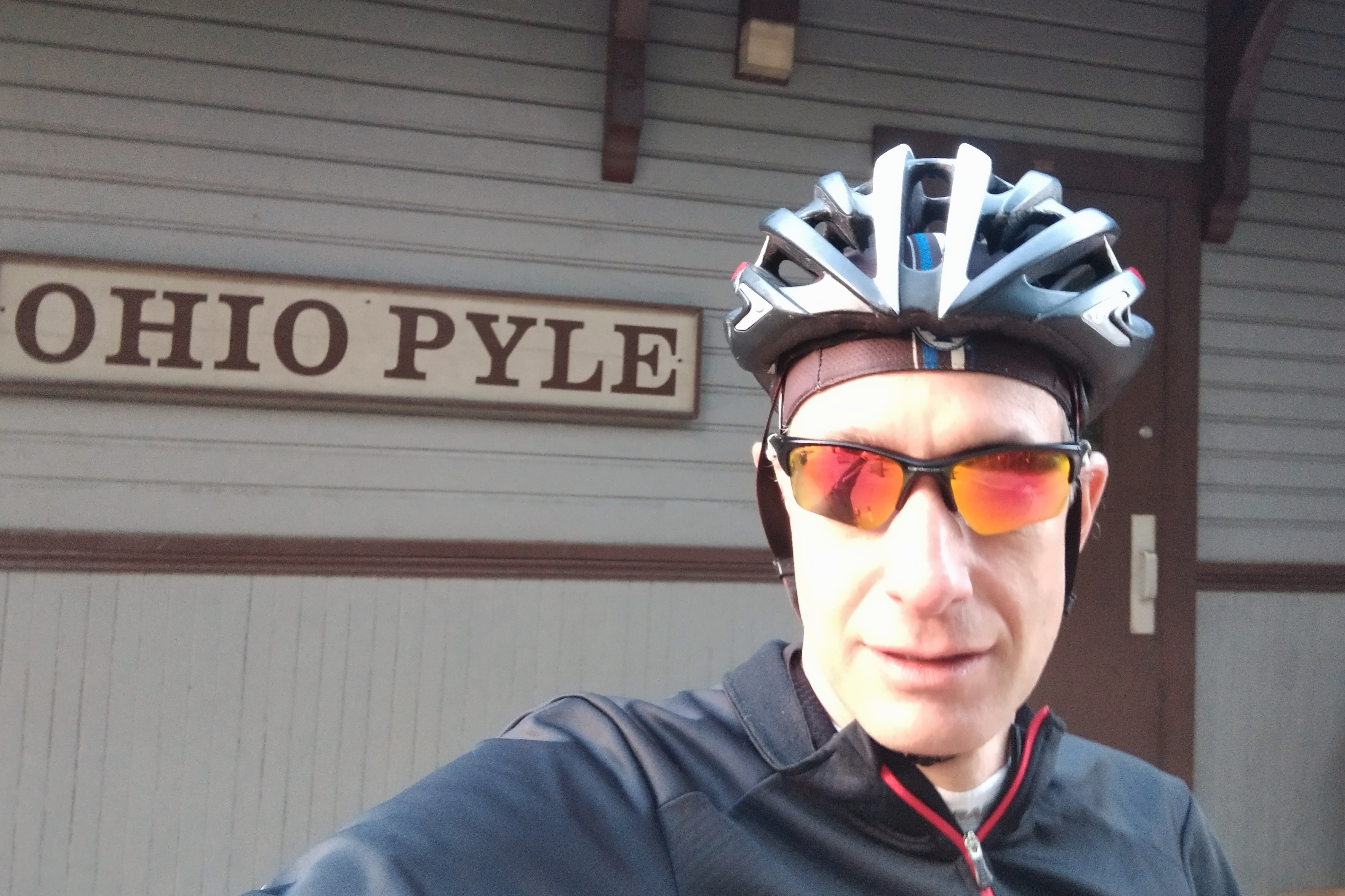
As planned, my bike was the first off the accompanying cargo truck. I grabbed it, did my final setup, and rolled out a little before 8am. No ceremonial group start for this group! Before leaving town, I stopped briefly to get some photos of the river and a selfie in front of the former Ohiopyle train depot at the Great Allegheny Passage (GAP) trailhead.

After that, it was just a whole lot of crushed limestone rail trail, with virtually no other people in sight. Although I wouldn’t call the scenery monotonous, it was definitely mile after mile of the same thing: a steep wooded hillside going upward on my left, a flat spot for the trail, and then a wooded hillside sloping down about 50 feet to the Youghioheny River on the right, with more woods on the far shore. It didn’t seem deserving of the local nickname “the Yough”, which is pronounced “Yuck”.

A little earlier in the year the trail would have been inundated with wildflowers; a little later, and you’d have beautiful fall foliage. But despite the odd timing, it was very scenic. There wasn’t much fog, which I ascribed to the rapidly-moving water, but the misty morning still provided ample photo ops.

About 18 miles into the ride we crossed through Connellsville, where the metric century riders had started their ride. There was a little more foot and bike traffic on the trail near these small towns along the way, especially as the day warmed up. However, past Connellsville the trail wasn’t quite as scenic as that section starting out in Ohiopyle.

The riding was easy, with the early sections being an imperceptible descent transitioning into pan-flat. My GPS registered a stunning 3.3 feet of climbing per mile, making it by far the flattest ride you’ll ever find around Pittsburgh. It was very comfortable riding… at least at first.

One of the downsides of the 80-mile VIP route was that there were no extra water stops; we wouldn’t reach our first one until mile 45, at Cedar Creek Park in Port Royal. By then it was 10:30am and I needed food and fluid, since my winter gloves prohibited eating anything I carried with me while riding. Sadly, all they had were unripe bananas and a horrible sugar-free “electrolyte drink” with the same nutritional “benefits” as the emetic ipecac. No sports drink at all! I settled for one Rice Krispy Treat and unadulterated water.

Rolling on, things got uncomfortable. The lack of any descending meant it was impossible to coast. I had to keep pumping my legs incessantly, which began to grate after three or four hours. And getting out of the saddle to stretch only reminded me that I’d climbed four of the steepest hills in Pittsburgh the day before. On top of that, the unforgivable lack of food and drink left me weaker and more depleted than usual. And with the temperature rising through the mid-60s, I was starting to poach inside my winter gear, despite the easy pace.

It was all topped off by the frustration of being unable to operate my bike computer, because the touchscreen wouldn’t respond to my full-fingered winter gloves. In a deliriously joyful flash of insight I realized that if I bent down toward my handlebars, I could operate the touchscreen with my one bare extremity—my nose!—but the screen became unreadable after three or four swipes of a sweaty, greasy nose.

An hour and a half of that kind of thing, and I arrived at the second rest stop: in Boston (PA). This is where everything turned around and started going right for me again. To begin with, Boston was my first sighting of familiar territory; it was the farthest I’d ridden down the GAP (or up the Yough) from Pittsburgh, which meant the end was getting closer.

It had turned into a beautiful day, so I stripped off my excess gear: winter jacket, arm warmers, winter gloves, and leg warmers. It felt great, but it took some time and effort to jam all that stuff into my saddle bag and jersey pockets!

More importantly, there was food! They had a variety pack of snacks, so I ate a bag of sour cream & onion potato chips, and a bag of barbecue potato chips, and a bag of cheese curls, and some of the dried fruit left in my pockets. Although they still only had water and that ipecac drink, I spent $2 on a bottle of Gatorade from the trailside souvenir shop, so I was able to get back onto my regular fueling protocol.

Things got even better after convincing myself to get back on the bike. The trail transitioned to asphalt, making for a much smoother and easier ride. While the crushed limestone surface hadn’t been bad, I’d worried about the chance of getting a flat tire.

In no time we reached McKeesport, which is my frequent turn-around point on my excursions from Pittsburgh. A few days earlier, there’d been a big coal train derailment that had caused a detour for trail users, but we used the usual route, seeing only a few workers finishing some cleanup.

90 minutes later, at 2pm I crossed the Allegheny and rolled down toward Heinz Field. I passed under the finish line balloon arch, but the event photographers weren’t in the mood to capture that moment. Still, I claimed my VIP finisher’s medal and rolled over to the food tent.

I spent some time munching at the finish line, cheering riders coming in and giving feedback to Ric, one of the event’s founders. I made sure to emphasize the near-fatal drink mixes.

After not-quite-enough rest, I hopped back on the bike for the ride home. Instead of going directly, I went up the Allegheny, climbed up through Highland Park, and across town. That added just enough mileage for me to finish with an even 100 miles, completing that sixth century of the year.

Not yet complete, however, was the desperately-needed cleaning of the bike, which—after 65 miles on a crushed limestone bike trail—was absolutely filthy. Ugh!

As expected, the 3-2-1 Ride was a nice experience, and I enjoyed being able to participate, after having been out of town last year. It was fun being able to ride back from Ohiopyle, over a long section of the GAP trail that I’ve never seen before. Although it shares the late-season time slot, it didn’t interfere at all with my Dirty Dozen training. It was nice to support a small but growing grassroots cycling fundraiser early in its history. And I added another $590 to my already impressive sum of money raised for charity, and specifically for cancer research, treatment, and prevention.

Lake Eerie

Jun. 23rd, 2017 09:10 am

One of my cycling goals for 2017 was to ride both days of this year’s Escape to the Lake MS Ride.

Last year I rode the 100-mile first day, which was brutally hot and my hardest ride in more than seven years according to Strava’s “Suffer Score”, but I avoided the logistical challenge of riding the 65-mile second day.

However, this year I convinced Inna to provide the extra support I needed to make riding both days possible by holding out the carrot of spending an extra day after the ride on the beaches of Lake Erie.

Ornoth riding MS Ride Day 1

Ornoth riding MS Ride Day 1

Bike MS Century Challenge medal

Bike MS Century Challenge medal

Ornoth crushing a hill

Ornoth crushing a hill

Ornoth finishing MS Ride Day 2

Ornoth finishing MS Ride Day 2

Ornoth at Lake Erie with finisher's medal

Ornoth at Lake Erie with finisher's medal

As the ride approached, I had three serious concerns: whether we’d have a repeat of last year’s brutal heat; lack of training from having been off the bike for five months this winter; and not having ridden more than 72 miles at a time so far this year.

To address my fitness concerns, I focused on training, and specifically the TRIMP charts provided by Strava and Stravistix, which I described back in this blogpost. It’s a model that provides quantitative metrics for fitness, fatigue, and overall form.

By keeping an eye on my numbers I could strategically decide when to train hard and when to rest. I arranged things such that I came into the ride about 4 percent more fatigued than last year, but that was more than offset by being 20 percent more fit. Numerically, Strava said my readiness had gone from last year’s -3 to a +7. Stravistix used different numbers but came to the same conclusion: an improvement from -6.7 to +9.9. The TRIMP charts were comforting and remarkably effective in getting me where I needed to be.

Saturday morning Inna drove me up to Moraine State Park where I checked in and got ready to ride. Right at 7am, just as I was about to line up, a thunderstorm came through, delaying the start by forty minutes while I scurried back to wait in the car.

After the storm’s passage, I found myself lined up at the back of the pack. Once we departed, I concentrated on making steady progress toward the front while simultaneously rationing my effort. Skipping the first two rest stops were helpful in that regard.

The first segment was more up-and-down than I remembered, and the roads were slick from the rainfall. But that soon burned off, and the terrain flattened out for the next two segments. The only curveball was a short detour in the middle of the third segment that added about a mile to our route. Finally a big hill led us into the third rest stop, where I quickly refueled and headed out. I was joined by a guy named Jay for the painless fourth segment, which led us into the lunch stop. By this time my stomach was starting to feel a little ooky, so I downed part of a ham and cheese sandwich and continued on alone through the fifth segment, which featured a few long, gradual hills.

Leaving the Cochranton rest stop at Mile 63, the landscape decides to assert itself. A very steep climb out of town eases off a little before continuing on for some distance, followed by a second long, slow climb. Then the 100-mile route forks off into open, rolling farmland punctuated by some leg-sapping spikers. By that point, my legs were tiring, but nothing like last year, and surprisingly no one seemed to be passing me!

After a brief rest at the Mile 81 rest stop, I pushed on through a very manageable penultimate segment, breezing past a couple of last year’s forced resting places. I stopped at a new rest stop at Mile 87 before climbing the big hill that followed. My power was down a lot over that last segment, but I successfully (i.e. without stopping) dragged myself over another long climb that heralded the final descent into Allegheny College, where we’d stay overnight.

I arrived at 2:43pm after 7 hours and 3 minutes, averaging 16 mph and 57 feet of climbing per mile over 102 miles: finally completing my first century ride of 2017! Between better fitness and a temperature that was 12-15 degrees cooler, I was a lot less blown at the end than last year. My 2016 ride’s “Suffer Score” of 465 still stands as the hardest ride I’ve ever recorded on Strava, while this year’s 305 only ranks as my 27th hardest, despite having shaved more than half an hour off last year’s ride time!

I checked in, stored my bike, got my bag, found my room, showered, and ate dinner. I felt good, but still decided to forego swimming and massage, choosing instead to relax in my dorm room and recharge my phone and bike computer.

I slept poorly, so at 5am Sunday morning I got up and had an early breakfast before getting kitted up, packing, putting my bag on the truck, fetching my bike, and lining up in the first group to depart at 7am.

Right from the gun, I concentrated on getting over the first big hill of the day and putting some space between myself and the rest of the riders. I skipped the first stop and made a quick in-and-out at the second. My legs were good, and I had little problem getting over the only other big climb of the day, at the start of the third segment. From there, although the route trended downward, it featured many more leg-sapping rollers than I had expected.

The penultimate section was bound to be difficult, turning west, straight into the teeth of an 18 mph headwind; however, it was nothing like the stories I’d heard about 2016’s Day 2 headwinds. The temperature was heating up, and at the final rest stop I washed off with an ice water towel and stuffed ice into my jersey pockets to melt while I rode. That last leg—finally crossing into Ohio!—was an easy descent to the lakefront park at Conneaut Ohio, aided by a tailwind and the absence of rolling hills.

I was one of the early finishers, completing 63 miles at 11am after 4 hours of riding, averaging over 17 mph and only 33 feet per mile of ascent, with a much more pleasant Suffer Score of 121.

I had time to wade in Lake Erie and take in some food—including two Dilly Bars!—while waiting for Inna to pick me up. I also chatted with my friend Kai and a couple other guys from the Saturday Performance Bike group rides, who all seemed in good spirits.

After the event, Inna and I reconstituted a tradition my friend Sheeri and I used to have following my Pan-Mass Challenge rides: taking Monday as an extra day off to play tourist and relax on the beach… With the obvious difference that this year we were on Lake Erie rather than Cape Cod.

Our Sunday night hotel room had a jacuzzi, but I didn’t have the time or energy to put it to use in-between dinner and two significant sporting events: the US men’s soccer team earning a draw in Mexico in World Cup qualifying on an astonishing goal, and the Pittsburgh Penguins scoring in the waning moments of regulation to win a second consecutive Stanley Cup title. Monday was spent enjoying one of eleven beaches on the peninsula of Presque Isle State Park before driving back to Pittsburgh for a good night’s rest.

Overall, it was a great weekend. The MS Ride was successful, enjoyable (i.e. much less painful), and a really great experience. I got plenty of sunshine, fresh air, and exercise. The saddle time will put me in better shape for the numerous long rides scheduled in July, August, and September. And I had a great time with Inna, both in terms of her support for my ride as well as sharing some fun times together afterward.

This post covers a very busy month of July, which included a solo century, the Tour de Cure, the 3-State Century, and more.

As usual, July began with Fourth of July weekend, which is always a perfect time to lay down some hefty miles, whether three or four rides in a row or a single century.

Bursh Creek covered bridge

Looking for my first long ride since June’s endo, I chose to do my first Pittsburgh solo century, and my third hundred-plus mile ride of the year. For a course, I cobbled together a flattish out-and-back route to Brush Creek Park. Just shy of Ellwood City, it covered some of the same ground as the final third of the 200k brevet that I did back in March.

Thanks to my early start (6:20am), the day began with a lot of mist and fog, and a surprising amount of wildlife: 6 rabbits, 4 deer, 2 groundhogs, and a horse being ridden down the road.

At the park that was my halfway turnaround point, I took a photo of my bike in front of a covered bridge before pushing on. I hadn’t ridden too hard, and continued to feel good until the last 15-20 miles. I struggled through the last 5-10 miles, stopping at a neighborhood convenience store to down a cola and a candy bar before finishing the job. I really need to do better with eating and drinking on long rides.

In the end, it was a nice ride, but pretty challenging toward the end.

Two weeks later came my first Tour de Cure charity ride for the American Diabetes Association, for which I again footed my own fundraising. That was my fourth century of the year. More importantly, it was also my first ever gran fondo, an endurance ride where riders are timed on certain segments of the course.

Ornoth climbing segment one

The weather was awesome, and I wore my Kraftwerk Tour de France jersey, a tricolor that looks a lot like the French champion’s jersey, in honor of both the ongoing tour as well as those affected by a terrorist attack in Nice. Around 80 riders took off with me at 7am for the century route.

There were three timed fondo segments, and I estimated my times using nearby Strava segments, to give myself a number to shoot for. Although I am reasonably pleased with my performance, it was nothing as compared to riders 30 years younger, who also had the support of an entire semi-pro team.

The first segment was 1.4 miles, featuring a half-mile climb. My estimate had been 6 minutes, and I actually traversed the Strava segment in 6:02. The second segment was a long, 6.7-mile time trial with some descending but minimal climbing. After estimating 22 minutes, I brought it home in 19:31. The final segment was a 1.7-mile brutal rolling climb. After a 10-minute prediction, I finished in 9:11. Out of a total of 36 gran fondo riders, I placed 25th, 20th, and 26th on those segments, placing 23rd overall, or 36th percentile. What do you expect from an old man?

I rode a fair amount of the day with a young guy named Eric, whom I’ve talked to at the Tuesday night Team Decaf rides, who was doing his first-ever century. I should also note that I beat him on two of the three timed segments, pipping him by a combined 19 seconds overall. Later in the day, at mile 66, he somehow managed to get his chain jammed underneath his bike’s chain catcher, which took us about 10 minutes to un-wedge.

I had mechanical issues of my own, too. Around mile 60, my right-side pedal, which I’d just had serviced by my local bike shop, started making sounds like it was about to fall apart. Fortunately, it hung together till the end, albeit making crunchy-poppy noises with every turn of the crank.

As for the ride planners, one obstacle they provided was a lack of ice at any of the rest stops, on a day which grew increasingly scalding. On the other hand, there was an impromptu rest stop with (warm) drinks left at the side of the road at mile 98; the last ten miles were all mostly downhill; and I was pleased to receive another finisher’s medallion.

The summary for this ride was pretty positive, but again the last 20 miles were quite a slog.

My next century—my fifth of the year and third of the month!—came a week later, at the Pittsburgh Major Taylor Cycling Club’s annual 3-State Century. I’ve only ever done one other three-state ride (MA/RI/CT), and that was years ago. After leaving home in Pittsburgh, we’d go straight west, spend all of three miles in West Virginia before crossing the Ohio River, travel in the state of Ohio for another three miles to the Pennsylvania line, then mostly follow the river upstream back to Pittsburgh.

Ornoth entering West Virginia

Although much of the route was flattish, there were three major climbs, all them coming in the first half of the ride; the ascents were actually much easier for me than the long, high-speed descents that followed each climb!

Although the route was only 93 miles (not even close to a century), my ride to the start and back home rounded me up to 112 miles, which allowed me to surpass 10,000 total miles on the “new” bike. It also fulfilled my goal of doing more centuries in 2016 than the mere four I did last year, which had been a record low.

By far the most salient feature of this ride was the heat. The day began at 70 degrees and climbed well into the upper 90s, and the NWS issued a region-wide heat advisory. New high temperature records were set in five out of six area weather stations, and in Pittsburgh it was the hottest day in four years. Normally I like it warm, but that was a little much. I coped by drinking lots of fluid, then finished the day pouring bottle after bottle of water over myself and stuffing ice into my jersey pockets.

On the other hand, I finished stronger than any of my other long rides this year. I even pulled two guys home over the final 17 miles of the route. For the first time this year, the heat was a bigger challenge than fatigue.

While I’d planned to take a personal rest stop on the way home at the foot of the 300-foot climb up to Squirrel Hill, I opted to press on due to gathering clouds, which developed into a very strong thunderstorm that hit about 40 minutes after I finished.

Although the heat made it difficult, I enjoyed the 3-State Century a lot, and probably finished stronger than any other century this year. It was a good, interesting day in the saddle, and I saw a lot of area roads that I hadn’t tried thus far.

Those constitute my major rides over the past month, but there were also a couple Team Decaf and Performance Bike group rides, plus several recovery rides. And a couple short trips to the LBS to fix the problems I was having with my pedals.

In equipment news, I picked up a cool new jersey and cap that are vaguely ska-oriented, which I’m sure you’ll see later, plus a couple Mondrian-themed cycling caps (dark and light replicas of the old La Vie Claire team kit).

Garmin Edge 820

But the thing that has me really excited is the announcement of the new Garmin Edge 820 cycling GPS unit. My first Edge 800 has served me very well since 2011, but it recently started suffering spontaneous power-offs, and several generations of GPS bike computers have come out since then. Among the features I’d gain with the 820 are: live weather, live cyclist tracking, live group tracking, WiFi downloads, ANT+ FE-C control of indoor trainers, Strava live segments, email and text notifications from my phone, Di2 electronic shifting integration, and third party data fields & apps written for ConnectIQ. The only reason I haven’t bought one already is because I want to wait for other users’ experiences and Ray Maker’s in-depth review to come ou. But you can rest assured that it’s item number one on my wish list.

It was a great month, and I’m looking forward to more new adventures in the waning days of summer.

Last weekend was my second century of the year and first Pittsburgh charity ride: the Bike MS Escape to the Lake, which goes from Moraine State Park an hour north of Pittsburgh to the shore of Lake Erie. Rather than do the whole route and deal with an overnight stay, I preferred to do the first day century route and quit there.

The forecast was unfavorable during the week leading up to the event, so I waited to register. But the calls for extreme humidity and thunderstorms abated at the last minute, convincing me to sign up at the starting line and personally fulfill my fundraising requirement.

Years as a PMC rider served me well in quickly registering, getting my bike ready, dropping my bag at the luggage truck, and lining up near the front of the staging area, directly behind the VIP riders. I chatted briefly with my randonneuse friend Stef before we were punctually sent off. I wore the green and black dazzle jersey that I’d worn with the Buildium team for last year’s Cape Cod Getaway.

MS Ride start
MS Ride
MS Ride finish
MS Ride medal

The first third of the ride was pleasant and gentle, with temperatures in the 60s and only a couple notable hills. I skipped the first two rest stops (miles 12 & 21), and finally refreshed my bidon at mile 33, then proceeded to the lunch stop at mile 48. Halfway done by 10am, I had averaged 17 mph and over 165 watts for three hours.

After lunch, the ride became more challenging. The temp had cracked 80°, and three big hills came in the 16 miles preceding the rest stop at mile 64. My speed dropped to 14 mph and my power to 140 watts, though I still had enough in the tank to pass a couple Amish buggies… one towing a canoe!

The final third of the century was a horribly brutal slogfest. Seven major hills were packed into the final 32 miles, with a very long 22 miles between the final water stop and the finish. The course turned west, straight into a painful sustained 16 mph headwind gusting to 26. Temps peaked well above 95°, with the rolling Pennsylvania farmland offering zero respite from the relentless sun. Although I was only the second rider to arrive at the last rest stop, I was completely tapped out; my speed subsequently dropped to 10 mph and my power below 100 watts.

It was incredibly difficult to finish that long final segment, and I had to pull off by the roadside four times to recuperate enough to press on. At one stop I watched Stef ride past, too overheated to chase her or even call out. I was just about ready for medical assistance, but I only had seven miles left, and once I got over the final hill, the last couple miles were a long, welcome downhill to the finish.

I finally coasted into Allegheny College in Meadville at 2:30pm. 102 miles in 7 hours 25 minutes. More noteworthy than my time was the climbing; at 5,958 feet, this ride had more ascending than New Hampshire’s Mt. Washington Century, and was only exceeded by the 200k I did two months ago. Strava would confirm this as probably the most difficult ride I’ve done in five years. The next morning my scale would report that I’d lost over three pounds, even after plenty of rehydrating.

At the finish I found lots of ice and cola, bag pickup in a blissfully air conditioned auditorium, and very welcome showers. After those things, there wasn’t a lot of time before the 4pm shuttle bus back to my car at the starting line. Volunteers loaded my bike onto a cargo truck and handed me my finisher’s medal, a detail I always wished the PMC had done.

I slowly recovered on the hour long bus ride. Although the rented school bus lacked air conditioning, we opened all the windows and I let my hair fly loose in the wind. After arriving back at Moraine State Park, I gathered my bike, dumped my bag in the car, and went for a refreshing wade in Lake Arthur.

After all the concern about thunderstorms leading up to the ride, we finally got some on-and-off showers during the hour drive home. The A/C felt absolutely wonderful!

It was a good ride, and I’m glad I did it, notching up my second century of the year, but I was also very glad not to have to saddle up and fight that headwind for the second day’s leg up to Lake Erie!

Here’s the PMC video I appeared in, as shown and broadcast at last weekend’s Opening Ceremony for the 2015 ride.

The footage is, of course, from the Saturday portion of last year’s cold, rainy ride. At 2:20 I ride by, clapping, the blue plastic lei I got at the first water stop trailing in the wind.

Amusingly, eight seconds later my riding buddy Tony also appears, wearing his green and blue Quad Cycles jersey in honor of the club and our hero and mentor, Bobby Mac.

Despite those brief appearances, I encourage you to watch the whole three and a half minute video. Entitled “Because of You”, it captures a lot of the emotion and the things that mattered about the PMC.

I couldn’t possibly think of a better video to appear in. It’s truly an honor to be included in it, even for just a brief second.

And I actually appeared in a second video shown at the Opening Ceremony! The second video, “Why I PMC”, closes at 2:15 with a still photograph of the riders leaving the Sturbridge start, with me placed dead center beneath the starting banner: the most prominent, in-focus person in a vast sea of riders.

Although I didn’t ride this year, my ghostly presence making this appearance during this year’s Opening Ceremony was a nice, unexpected farewell to an event I deeply love.

For the first time since 2000, I’m sitting at home rather than riding in the Pan-Mass Challenge.

It’s not any big surprise; I started planning my retirement from the nation’s largest charity ride three or four years ago. Of course, that doesn’t mean it doesn’t feel strange hanging out at home, rather than the usual: spending the weekend in the saddle with five thousand others who are rabid about raising money to combat cancer.

That might not sound like a normal August weekend to you, but it became normal to me over fourteen years as a PMC rider and “Heavy Hitter” fundraiser. So although skipping one bike ride shouldn’t seem like much of a change, in some ways it’s a complete departure from how I’ve spent every summer since the turn of this century.

The most obvious change is having free time that wasn’t sucked up by training and fundraising. It’s been nice not having to raise five or ten or fifteen thousand dollars this year. And although I still trained hard on the bike this year, my major events were all done before the end of June, giving me back six weeks that would otherwise be spent building up for the ride. This July I rode 136 miles; last July’s total was 456.

One thing I’ll miss about the PMC was that it gave me a structure for my vacation time: I always took a couple days off both before and after the event to relax. Not only will I miss the ride, but I’ll also miss the cape beaches, window shopping in Provincetown, and sightseeing around Cape Cod.

Sturbridge Street
Truro Street
Neponset path
Boston skyline from Nut Island

Of course, what I miss most is the sense of purpose that the PMC provided. There aren’t many things as rewarding as raising over a hundred thousand dollars to fight cancer, and being part of an organization that has raised a half billion dollars for that lifesaving mission. I won’t lie: I’ll miss that a lot. But I’m still happy with my decision, and this year I still participated by contributing money to the rides of two former Sapient co-workers.

Of course, that doesn’t mean I’m over it completely. Friday night I had to tune in to the opening ceremonies, which were live-streamed from Sturbridge. As always, the stories and my memories of the ride had me close to tears. Amusingly, one of the inspirational videos included a shot of me during last year’s ride, clapping in appreciation for the support of those lining the route. If I can track that footage down, I’ll share it here.

And although I didn’t ride the official PMC this weekend, I still did a memorial ride from Sturbridge to Truro.

While it takes PMC riders most of two days to get from Sturbridge to Truro—the last town before the finish in Provincetown—I did it in just half an hour. Of course, I only rode the seven miles from Sturbridge *Street* in Mattapan to Truro *Street* in Quincy! Sadly, I was unable to finish a “full” PMC, because there’s no Provincetown Street anywhere around Boston!

In addition to Sturbridge and Truro streets, my Saturday ride included some other bits worth mentioning. I was delighted to find that the half-mile crushed stone section of the Neponset River path has finally been paved; that was an awesome surprise!

Then I did the latter half of my former bike commute down to Quincy, including passing by the old office. After a quick stop at Truro Street (no Castle Hill in sight!), I went on to Hough’s Neck and Nut Island, where the grounds of a sewage treatment plant have been developed into some pleasant parkland and a pier with an excellent view of the Boston skyline, where I’d begun what wound up being a 40-mile ride (Strava log).

I guess it’s appropriate that as PMC weekend draws to a close this afternoon, I’m at home, packing my things for a move out of the region. The PMC has been a huge part of my life in Boston, and sitting it out has been a strange and unfamiliar feeling. I don’t know whether I’ll ever come back for another PMC, or whether I’ll find another event that’s as personally meaningful and rewarding.

As I leave New England, I’ll take with me a huge sense of pride in my 14-year run as a PMC rider, my athletic and fundraising achievements, as well as so many cherished memories.

But all of that pales in comparison to the research and treatment we’ve supported, and the many lives we’ve saved.

One of the ironies of being hired by Buildium was that they field a team for the Cape Cod Getaway MS Ride. Being well-known for my cycling, I was pretty much obligated to ride, despite having made a big deal about quitting the PMC—the big charity ride I’ve been involved with for 14 years—last year. Nonetheless, I was looking forward to the MS Ride, which took place a week ago.

Another interesting bit is that it is kind of a clone of my yearly Outriders ride. Both go from Boston to Provincetown, and the two rides take place on consecutive weekends. The big difference is that Outriders is a single 130-mile day, while the MS Ride is 175 miles over two days. Or at least it’s supposed to be…

The day before this year’s ride kicked off, the weather report was bad enough that the organizers decided to pre-emptively cancel Sunday’s 75-mile leg up Cape Cod from Bourne to Provincetown. They expected driving rain and winds above 50 mph, which made it impossible for the ferry to run and bring riders back to Boston.

Since the storm wasn’t going to arrive until Saturday night, they decided to still hold the first day’s 75-or-100-mile leg from Boston to Bourne. It dawned comfortably cool and somewhat overcast. After getting up early and packing my bag, I hopped on my bike for a 4-mile warm-up ride down to the start at UMass Boston.

Team Buildium
Mark and Tora
Saro
Alex at Dawn

At the start I met up with the rest of the Buildium team, including former Sapient colleague Andrew Blackwell, whom I hadn’t seen in more than a decade. In addition to local and remote employees, our 60-person team included friends and relatives, people from the Seattle-based company we recently acquired, and investors. I also spoke to old friend Johnny H, who was manning the Quad Cycles repair tent.

Finally the starting time came, but not before some speechifying. Near the end, the captain for Team Velox Rota spoke in memory of Bobby Mac, the Quad Cycles ride leader in whose memory I’d devoted last year’s final Pan-Mass Challenge ride. He quoted two of Bobby’s most famous sayings: You can go fast, you can go long, but you can’t go fast for long; and: Ride with love in your hearts and smiles on your faces. I was taken completely by surprise, and had to stifle the tears it evoked.

Finally we took off. The team rode together for the first 20 miles, giving me a chance to socialize and take photos (Flickr photoset). One of my favorites is of Sapient alum and Buildium founder and CEO Mike Monteiro riding the first dozen miles in his rubber Crocs, having forgotten to bring his cycling shoes.

When we reached the first rest stop, I took one look at the line for porta-potties and got right back on my bike. I was destined to leave the group behind at some point, because I was the only person who planned to do the 100-mile route rather than the 75, and it made sense to push on now, rather than hang around in line at the rest stop. But as I rode through the far end of the rest stop, my bladder was gladder when I saw another whole row of porta-potties with no lines, no waiting! After a quick pit stop, I took off, picking up speed to ride ahead at my own pace.

Over the next couple segments I paid the price for having ridden slowly with the rest of the Buildium team. I skipped the second rest stop and sliced my way through packs of hundreds of riders, getting myself up toward the front. Then I saw three team members at the side of the road, fixing a flat. While I stopped to make sure they were all set, I watched as hundreds of riders I’d just passed returned the favor. Hoping not to lose too much ground, I set back off again in pursuit.

I pulled into the lunch stop at mile 40, hoping I was ahead of the bunch, and only stayed long enough to eat a bag of chips and fill my water bottle with ice and cola. I saw two Buildium jerseys there, but quickly pressed on.

Between fast riding and brief (or skipped) water stops, I was finally outpacing the main body of the ride. The roads finally opened up a bit for me, to the point where I was often riding alone, with only a couple other riders in sight.

About 50 miles in, near the point where the 100-mile ride forked off from the 75, I finally recognized one of the roads we were on. For most of the morning, we’d taken a much more coastal route than the more-familiar Outriders ride, which goes inland quite a ways. The route had been interesting, although the crowds hadn’t given me much opportunity to sightsee as we passed through unfamiliar towns like Cohasset, Hingham, and Marshfield.

As I passed (and skipped) another water stop, the road I was on ended in a T. Both the Outriders ride and the 75-mile route went left toward Plymouth, while the 100 turned right, adding an extra 25 miles of new and unknown roads. Those back roads circled around through cranberry bogs and into the sandy woods of the Myles Standish State Forest before popping back out for a short stretch on a familiar favorite, Long Pond Road.

On that extra 25-mile spur, I stopped to refill at the 60-mile water stop in Middleboro, but skipped the next one at mile 74. At mile 82 the routes merged back together again at another rest stop. As I rolled up, I heard someone exclaim that there were just 16 miles left of the ride, and I still had a full bottle, so I decided to just push on, skipping both remaining stops.

Although I’d been riding fairly strong up until that point, I was starting to tire and lose power, and a stiff headwind kicked up in advance of the evening storm. As I plodded my way into Bourne, I passed the scene of an accident, with police attending to a rider lying on his back in the middle of the road. Fortunately, I later learned he was okay.

Just a couple miles later I turned onto Academy Road for the familiar approach into Mass Maritime Academy, where the PMC also overnights. I rode across the line at 1:58pm, having ridden 102 miles in a surprising 6 hours 11 minutes. I checked in and picked up my event tee shirt and finisher’s medal. And in a riding sense, that was the end of my first MS Ride.

Originally, between my company beach day and Outriders and the Cape Cod Getaway, I had been targeting riding over 400 miles in eight days. However, with Sunday’s 75-mile ride to Provincetown cancelled, I wound up with only 350, which isn’t that stellar an achievement; after all, I did 300 miles in three days for last year’s PMC!

More importantly, after spending time in Provincetown after Outriders, I wasn’t going to get back there again after all. A week earlier, I’d said some tentative farewells to Provincetown, and it seemed like those would be my final goodbyes. “P-town” and the ride up Cape Cod are among the things I will miss most about New England when I move.

Having arrived at MMA, I tried to follow my tried-and-true PMC arrival ritual: pick up my bag, shower, and find the massage tent. The bag was easy. The shower was a little more difficult because I first had to find my room in the maze of MMA dorms, but I eventually found the right undifferentiated passageway and the nearest men’s room. The showers were hot and semi-private, and very welcome.

The next order of business was finding the Buildium team tent, which didn’t take long. There were a couple riders there from our investors, but I was the first employee to arrive, and with four idle masseuses, I stepped up and took a well-earned turn on the table.

Then there was some food and socializing, but it was a good two hours before any other teammates arrived. After canceling Sunday’s ride, the organizers had allowed people to ride the 100-mile route even if they’d only signed up for the 75, and a large number of Buildians took advantage of that offer, most of them doing the first century of their lives. I was really proud and impressed with them, and glad to see them finish the day smiling.

By 8:30pm, the promised sprinkles began, the party started getting sloppy, and I chose to go back to the dorm to get a head start on sleep. As usual in the dorm, sleep was a rare commodity. I don’t think I got more than a couple hours of it before loudspeakers started barking instructions at 5am Sunday morning about gathering bicycles on trucks bound for Boston.

I went down to the cafeteria and discovered that some of our team had already hopped buses north, so apparently it was every man for himself. I went back to the room and packed up, then met up with Tora on her way out.

We went straight to the buses waiting outside, but despite having an umbrella, I wound up soaked to the bone by a wind-blown deluge. The wind gusted up to 57 mph, and we set records for rainfall and the lowest high temperature for that date. As we waited for the bus to leave, our company president, Dimitris, dragged himself on board. So much for his advice the night before of sleeping in late and gathering as a team!

After an hour on the bus, I was discharged into the UMass Boston parking lot where we’d started. Thankfully, I immediately spotted my bike and got ready to ride home. Needless to say, I had to fight the rain and the wind all four miles back to my condo, and left large puddles marking my route from the building’s entryway to my unit.

But by 8am I was standing in my bathtub, stripping off my sopping-wet jeans and tee shirt. At least I had the rest of the day to warm up, dry off, and recover from my first MS Ride!

Here’s the Strava GPS log, and here’s my Flickr photoset.

So that’s the story; what about the summary?

Overall, it was a good experience. I’m really proud and impressed by the company, which fielded a team of sixty riders, many of whom rode their first centuries, and who raised about $83,000 this year, making us the fifth largest fundraising team in the event.

The ride itself was nice, and I enjoyed doing a route that covered a lot of new ground. Of course, I’m very disappointed to have missed what was probably my last opportunity to ride up the cape to Provincetown, but canceling Sunday’s ride was definitely the right decision.

Naturally, there are big differences between the MS Ride and the PMC, starting with a fundraising minimum of $500, rather than $5,000, which relieved me of the PMC’s huge fundraising effort.

Starting in Boston allowed me to ride to the start, rather than having to get a hotel out in Sturbridge. Giving each team its own little tent—and its own masseuses!—was different, and seemed to work well. And I have to admit that I’ve always been disappointed that the PMC doesn’t give out any kind of finisher’s medals.

But the biggest difference was that this was the first charity ride I’ve ever done as part of a team, rather than as an individual. Rolling out as a group was cool, as was riding together (at least as far as the first water stop). Seeing other riders along the route wearing our team kit gave one an instant icebreaker. And I was guaranteed to have a big group of friends to hang out with at the finish. Those all made this ride a very different experience from my 14 years as a solo PMC rider.

So overall, despite losing Sunday to a monsoon, I really enjoyed doing the ride, and—for the first time—sharing it with so many of my friends and co-workers.

Like the rest of my life, the 2014 cycling season was a big pile of extremes.

I started this year on a high, receiving the silver lifetime achievement pin that the Pan-Mass Challenge gives to riders who surpass $100,000 in fundraising for cancer research. Just a few weeks later, the world changed forever when my hero and charity ride mentor Bobby Mac succumbed to pancreatic cancer. Up and down.

By mid-June, I was happily on pace for a record year, with the Outriders ride to Provincetown constituting my fourth century ride of the year. That night, on a one-mile ride home from the ferry dock, I had a bad solo crash that left me with a mild concussion. Even worse, the ER nurse botched an IV insertion, which left me with a huge hematoma and an unusable right arm. It was six weeks before I was well enough to do another long ride. Up and down again.

I wasn’t fully healed—and certainly not fully trained—when I completed the Mt. Washington Century in July as a final warm-up for my 14th and final Pan-Mass Challenge. By riding with my buddies Paul and Jay from the New York state line, I extended the PMC to a third day and 290 miles. I felt strong again, and was both proud and sad to ride in Bobby’s memory and to finish my PMC career having raised $111,222 for cancer research.

Shortly after the PMC, I noticed lingering pains in my abdomen. Eventually I was diagnosed with a balky gall bladder. I put myself back on a restrictive low-fat diet, and stayed off the bike in the interest of halting the accompanying weight loss. That pretty much put an end to my season, while I waited (and waited) for a surgery date. Up and down again!

Yesterday I completed my first ride post-surgery. It was nice to be out on the bike again, but it also sucked. It feels like I’ve lost all my conditioning: strength, endurance, cardio, speed, sprinting, climbing, bike handling, everything. Looks like we’ll be starting 2015 from scratch. Fortunately, since I live in the fucking tundra, I’ve got three and a half months left to hibernate before I have to address the fitness shortfall.

Despite my health problems blowing two gaping holes in my season, 2014 was still a great year. My 3,500-mile total was the most I’ve ridden since 2010, and I did set a new lifetime record of nine rides in excess of 100 miles. In fact, nearly 30 percent of my riding was in century+ rides! It makes me wonder how much more was possible if I had not run into so many health issues.

A lot of that was possible because I wasn’t working this year. Having just started a new job at Buildium, my opportunities to ride next year will be curtailed quite a bit. And I won’t be commuting, because it’s not worth riding the mere one mile to the office.

On the other hand, my new employer fields a 40-person team for the Cape Cod Getaway MS ride, which I’ll participate in. Like my annual Outriders ride, it goes from Boston to Provincetown, and it usually falls on the weekend after Outriders. Unlike Outriders, which goes 130 miles in one day, the MS ride wanders around, taking two days to do 175 miles. So it should be a walk in the park for me. It’s kind of nice to have a bit of cycling culture in the company, and to be able to step in with some instant cred. And as compared to the PMC, the fundraising is trivial.

So I guess I’m happy with 2014. It was a very eventful year, with many extreme highs and lows. But I still did a lot of riding, and enjoyed myself quite a bit.

At this point, there’s no saying what 2015 holds, save that I won’t have as much time to ride. Hopefully my digestive system will adapt to my new gall-bladder-less reality without inhibiting my riding. I think we’ll have to take the 2015 season day by day. But I’m eager to get through the winter and back out on the road!

Frequent topics