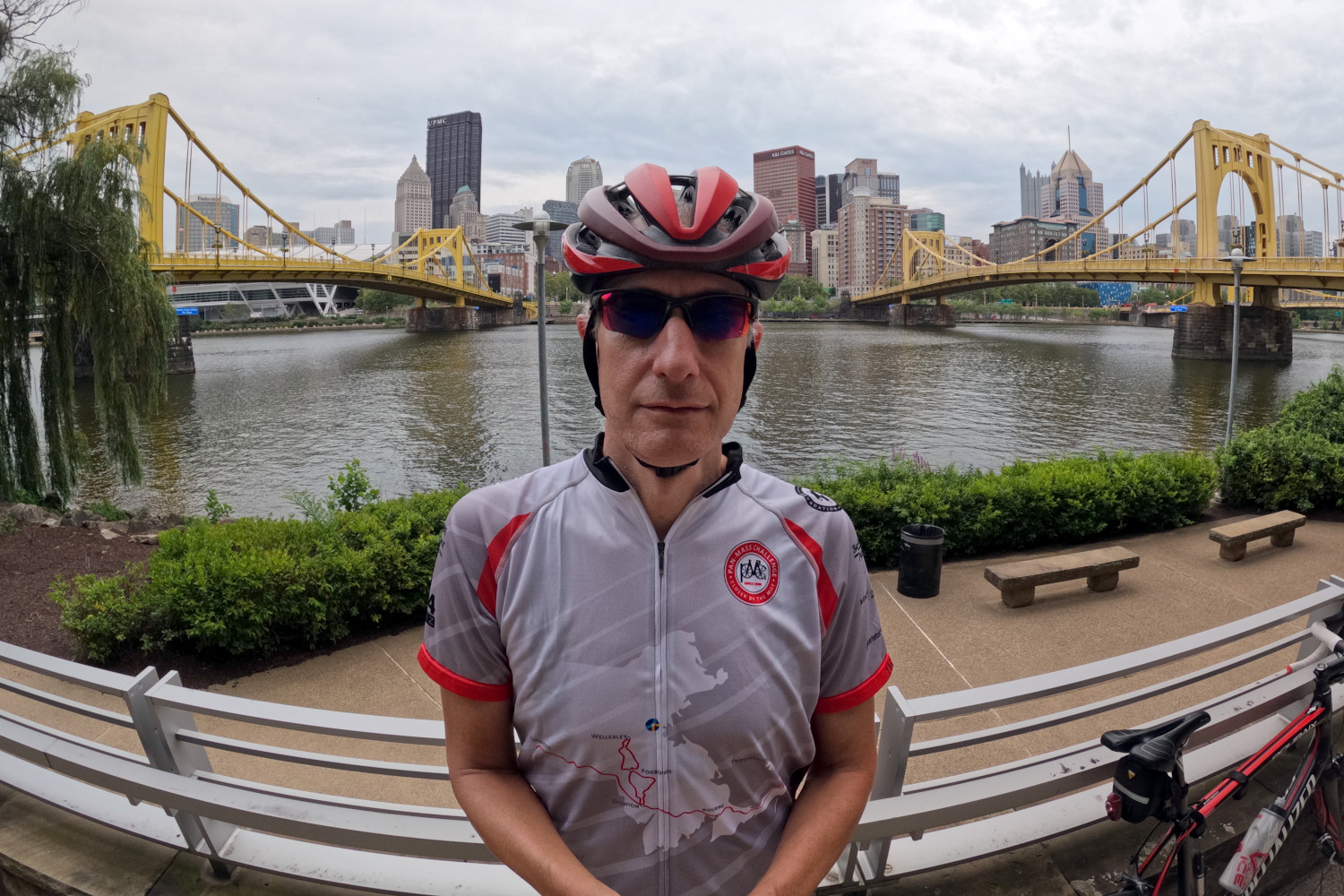
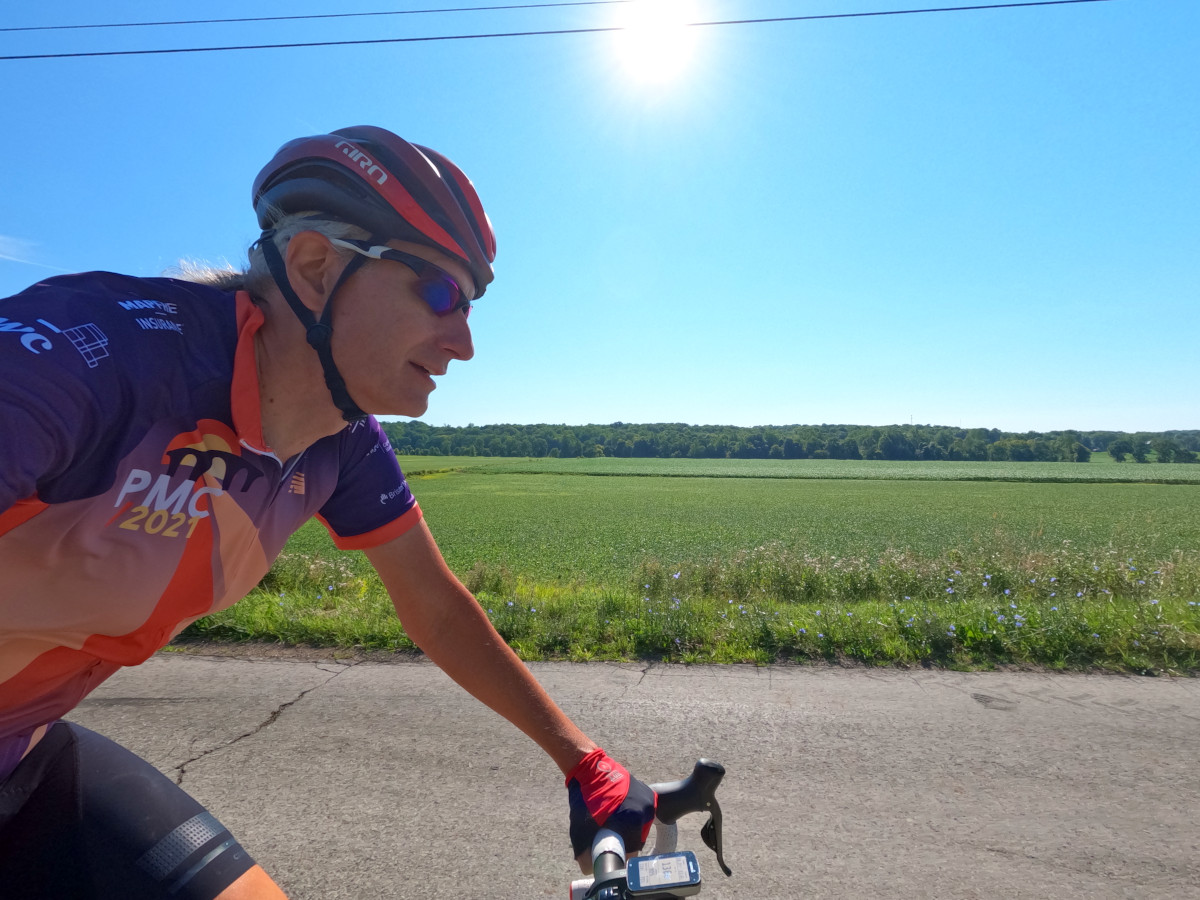
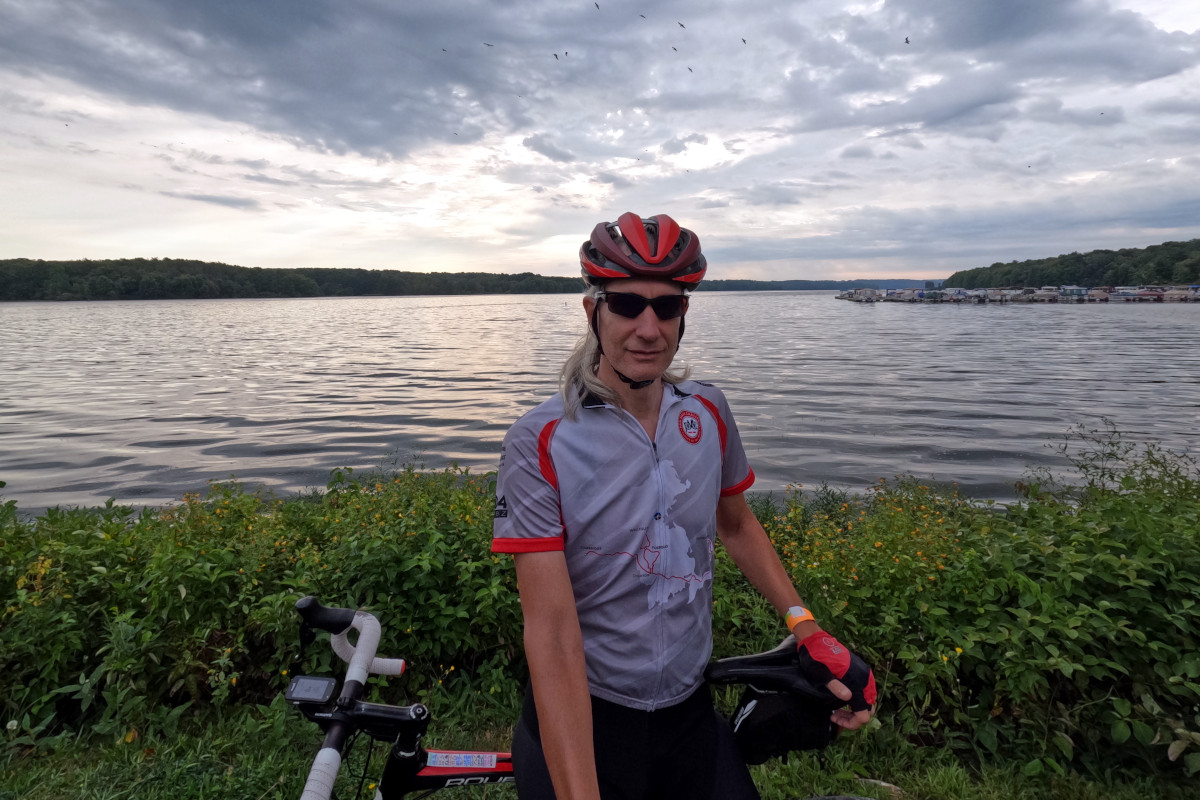
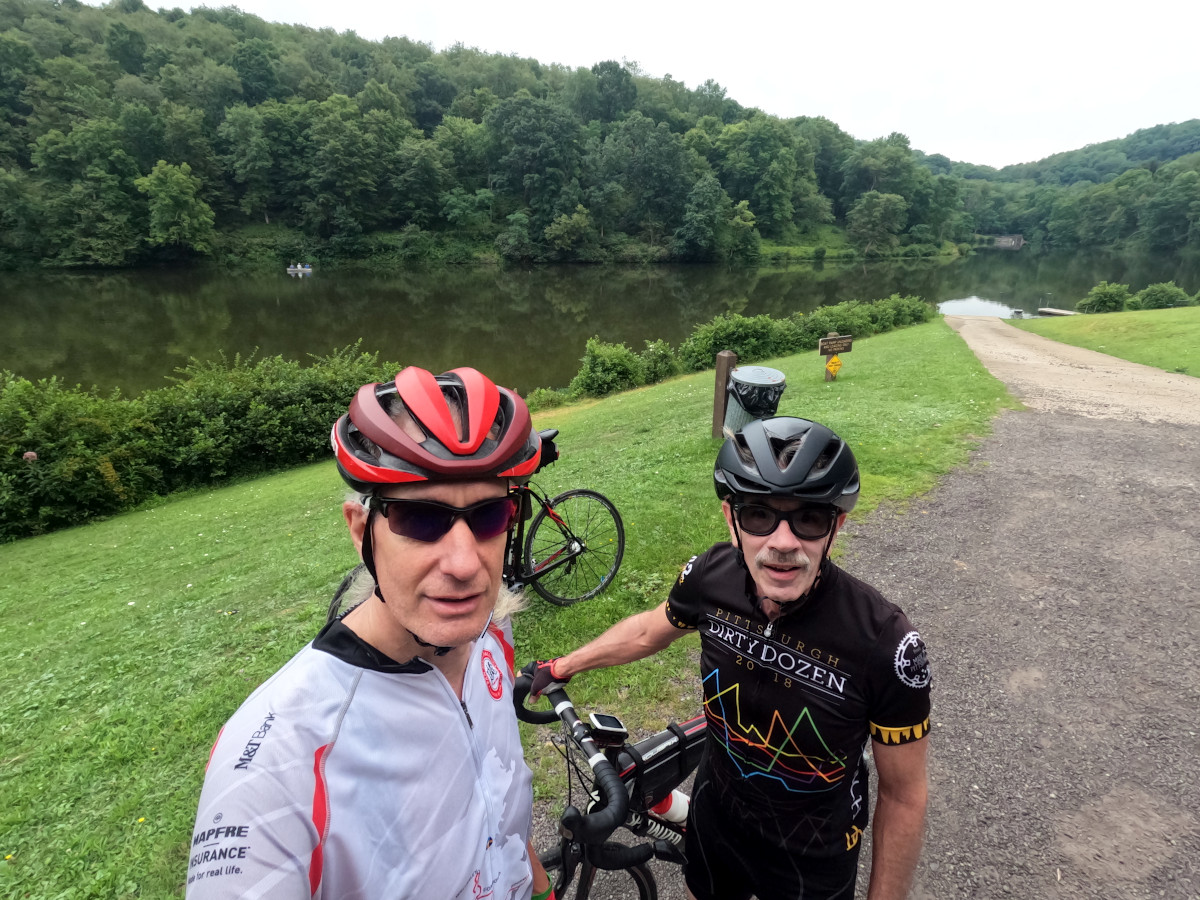
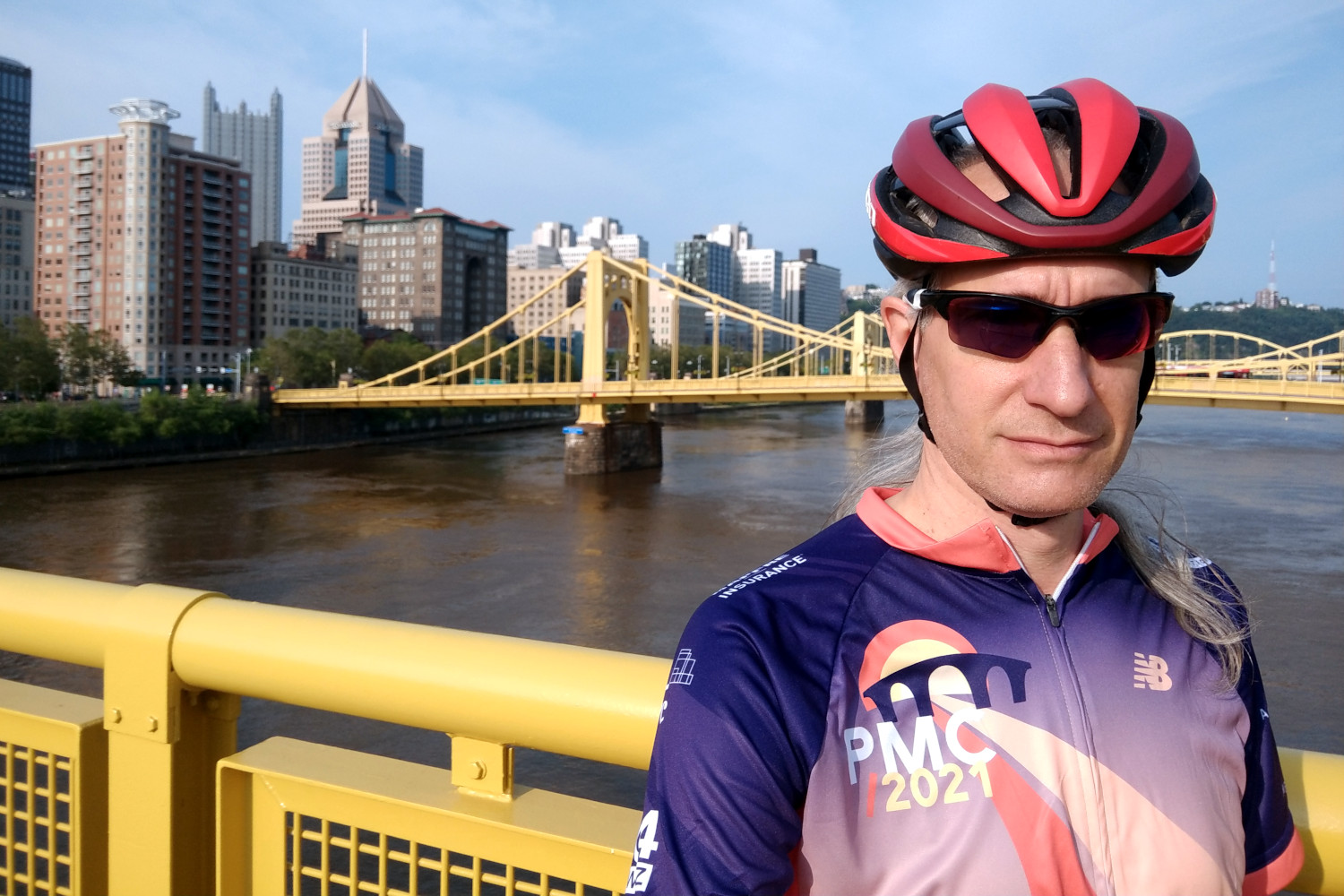
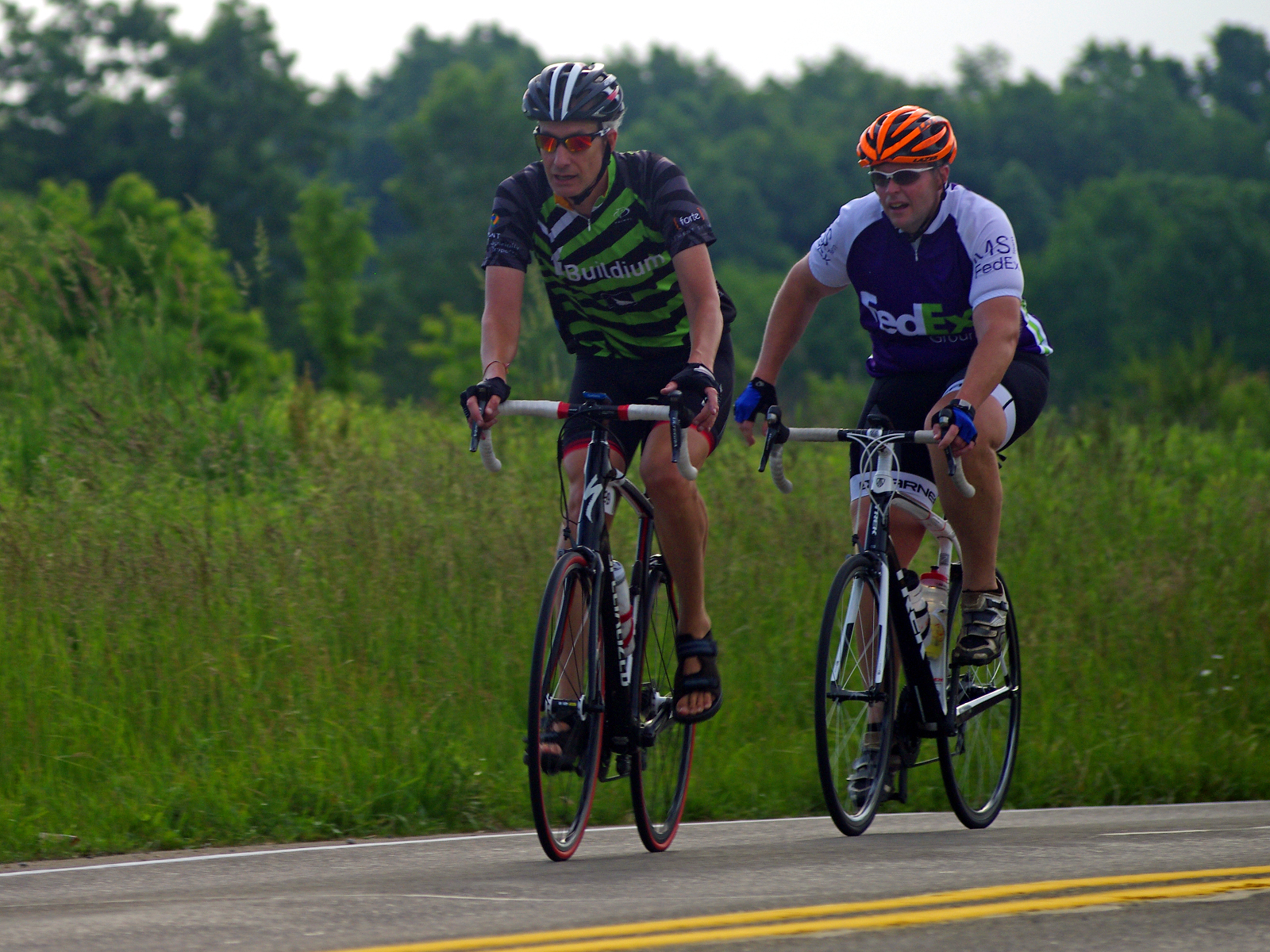
Ornoth modeling the 2025 Team Kermit jersey.

Ornoth modeling the 2025 Team Kermit jersey.

Just as 2024 was all about my late-season stroke and return to fitness, 2025 was defined by my heart surgery in March, and my post-op recovery.

Happily, the procedure went well, and after a two-month break, I was able to resume training, taking three months to build up to a successful remote Pan-Mass Challenge ride in August, followed in November by the 100-mile Livestrong Challenge.

In the end, 2025 was a very successful year, and there were lots of milestones and noteworthy highlights along the way. Here’s my year-in-review post to distill it all down to a coherent narrative.

My Original 2025 Goals

Last December 31st, my 2025 New Year’s Eve began with a visit to my cardiologist to schedule my PFO closure heart surgery, which I learned would take place on March 7th. After that appointment, I drove home, finalized my list of cycling goals for the coming year, and posted them in my 2024 annual summary blogpost.

At that time – just months after my stroke and facing impending heart surgery – it was hard to commit to any concrete goals, but here’s what I thought made sense at this time last year, and how it played out.

Stroke & Cardiac Recovery

The Amplatzer Talisman Patent Foramen Ovale Occluder they implanted inside my heart!

The Amplatzer Talisman Patent Foramen Ovale Occluder they implanted inside my heart!

Ornoth meets the sunrise, already four hours into his Day 1 PMC ride.

Ornoth meets the sunrise, already four hours into his Day 1 PMC ride.

Taking a quick break as a freight train passes Austin's 1947 Amtrak station.

Taking a quick break as a freight train passes Austin's 1947 Amtrak station.

Obviously, my primary goal was to get back to full health and fitness following my heart surgery.

I was off the bike for 10 days surrounding the March procedure, and wasn’t allowed to do any meaningful training for another month. Although I hoped to recover as quickly as I could, it would be a long, gradual process, exacerbated by my bike being in the shop for an unexpected two weeks.

However, from today’s vantage point, it went miraculously well. Just 2½ months after resuming training, I was able to complete the Fire Ant Tour: a metric century. That gave me the confidence to register for my big remote PMC ride, which I completed in August. And in November I rode the 100-mile Livestrong Challenge, which I’d missed in 2024 due to my stroke.

It took me four or five months to get back to my normal level of fitness and endurance, but I’m as confident and capable as cyclist today as I was before my stroke, and that’s an immensely satisfying feeling.

My 19th Pan-Mass Challenge

Although I listed riding another PMC as one of my goals for 2025, it was with a humongous questionmark. Would it even be physically possible?

After surgery in March, I would have barely enough time to recover, train up to adequate physical fitness, and do the necessary fundraising work. Thankfully, I suffered no physical setbacks, and on PMC weekend I completed my usual two-day, 300 kilometer remote PMC ride. It was incredibly heartening to show that I’d overcome my health issues, and a poignant reminder of what a blessing it is to be able to spend a long day in the saddle.

Given the Trump administration’s 44% cuts to the NIH budget, this year’s PMC fundraising was more important than ever, and I brought in a post-hiatus and post-pandemic record of $9,450 for the Dana-Farber Cancer Institute. I chose to earmark 25% of my fundraising for the pediatric neurological cancer lab favored by Team Kermit, and the rest was unrestricted, so that DFCI can use it wherever it is most needed.

That’s all I’ll say about this year’s PMC. For my full writeup – plus my 5-minute highlight video – be sure to check out my 2025 Pan-Mass Challenge Ride Report.

And look below for my Goals for 2026 and some exciting news about next year’s PMC!

More, Better Videos!

In terms of video, I could have done better. I made limited use of the new selfie drone and its expanded capabilities, but I did capture a number of short video clips here and there.

On the plus side, I pushed out another 30-second PMC ride jersey reveal, produced another PMC ride video, and gathered many of my little clips into a second yearly highlights reel, which appears just below.

I hope to do even better next year, especially since I recently picked up a wireless DJI mic that’ll hopefully allow me to capture decent in-ride audio.

Some Anticipated Purchases

When I wrote last year’s goals, I was grasping for anything I could, so I included a “goal” of pulling the trigger on several planned upgrades. That was kinda lame, since I always devote an entire section of my annual review to stuff I’ve bought, anyways.

But briefly: I made those expected purchases, as well as several others. As expected, 2025 was an interesting year in terms of equipment; however, I’ll enumerate all that in detail in the “Noteworthy Purchases” section below.

But taken as a whole, while 2025 won’t top my list of greatest cycling achievements, I’m absolutely delighted by the success I’ve had in achieving these goals and exceeding the expectations I had, coming into 2025.

Highlight Video

Here we go: a quick 2½ minute look back at some of this year’s highlights (or at least the ones I got on camera).

For my Pan-Mass Challenge buddies, you might see how many different PMC jerseys you can count!

Charts

Let’s start this section with a new chart to understand how my cycling has changed in recent years. Here’s how many kilometers I’ve logged each year since getting back on the bike as an adult cyclist 25 years ago.

Kilometers per Year: 2000-2025

There are two things I want to call out. The first is that I’ve ridden considerably more each year after 2018. As you can see, that extra ~4,000 km per year is almost entirely attributable to Zwift and the indoor trainer I purchased at the end of that year. And that trend has surprisingly continued even after our 2023 move to Texas.

The second thing has to do with 2025 in particular. This year I logged 9,500 kilometers in the saddle, split pretty evenly between the indoor trainer (47%) and the open road (53%). It might not look like much on the chart, but despite losing a big chunk of time due to my surgery, I still rode more this year than any year since 2021!

Now let’s look at my cycling Fitness numbers, which only go back to 2011. Still, that’s a full 15 years of Fitness data, as you can see in the following chart.

Cycling Fitness: 2011-2025

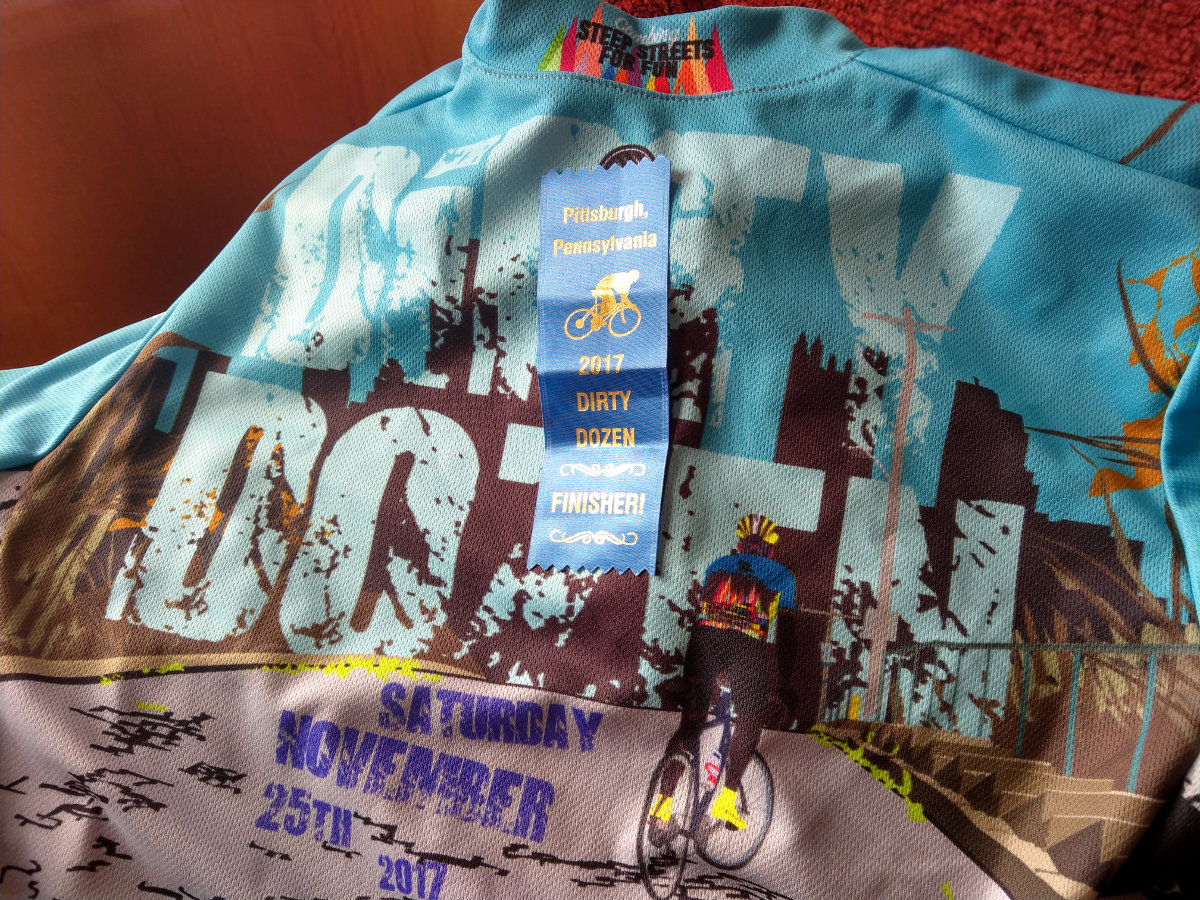
Looking at this, I’d concentrate on the right half of the chart. 2017 was a normal year, but it ended with my only Dirty Dozen ride, which left me shattered, leading to a very mediocre 2018.

But at the end of 2018, I bought an indoor trainer, which allowed me to begin each spring at a higher level of Fitness, leading to higher summertime peaks. In terms of Fitness, the four years from 2019 through 2022 were my lifetime peak.

My most recent inflection point was at the end of 2022 when we moved to Austin. Two years ago I wrote a blogpost entitled “The Shape of Things to Come”, considering how my riding might change following the move. I expected my Fitness to be much more steady throughout the year, with fewer lows during the winter months and fewer peaks in the summer. And, as you can see above, that’s exactly how the past three years played out.

Now, let’s look more closely at 2025:

Cycling Fitness: 2025 Calendar Year (vs. average)

Having regained my Fitness following my stroke, and with heart surgery coming in March, I spent January and February doing as much cycling as I could and maintaining a fairly high Fitness level.

March and April show two consecutive dips in my Fitness, as I recovered from heart surgery and then sat around doing nothing while my bike was serviced. My Fitness plummeted to its lowest point since I bought my new bike three years ago.

In May, June, and July, I was committed and focused on steadily rebuilding my Fitness in time for August’s two-day Pan-Mass Challenge. I was overjoyed to complete it, which also marked my maximum Fitness of the year.

For the rest of 2025, I tried to keep my Fitness at a reasonably high level, including a secondary peak leading up to November’s Livestrong Challenge century. Then things fluctuated a bit in December, while I recovered from a pulled hamstring and broken toe.

The Centuries

Crossing the finish line after 100 miles of the Livestrong Challenge.

Crossing the finish line after 100 miles of the Livestrong Challenge.

Last year, I wrote that – due to my age and health issues – I might have ridden my last 100-mile ride. I’m happy to tell you it wasn’t true. This year I trained back up and knocked out two imperial centuries. You already know what they were, but here are my ride reports:

  • 8/3: Remote PMC Day 1 Century This year’s Pan-Mass Challenge was my 111th imperial century and a signal accomplishment in my recovery from stroke and heart surgery.
  • 11/2: Livestrong Challenge A full year after my stroke, I enjoyed a triumphant return to the Livestrong Challenge, capping an insanely busy week that included a big concert the night before my 112th 100-mile ride.

My Year in Zwift

For the first time since the COVID lockdown, I rode nearly as many kilometers on my indoor trainer using Zwift as I did outdoors. And because Zwift usually gives me several things to talk about, I’m going to put all the Zwift-related business into this new section. And since there’s so much of that this year, I’m just gonna do bullet points.

Modeling the Level 100 jersey in front of Zwift's Austin-inspired 360 Bridge.

Modeling the Level 100 jersey in front of Zwift's Austin-inspired 360 Bridge.

Ornoth (in his Didi the Devil cap) leading the PMC group ride on Zwift.

Ornoth (in his Didi the Devil cap) leading the PMC group ride on Zwift.

  • I started the year at XP Level 81 and successfully made my way to Level 100, which is the highest you can go… for now! This was a huge achievement that was 7 years and 34,000 kilometers in the making (see blogpo).
  • When I reached Level 85, Zwift sent me a free pair of Zwift Play controllers, which replaced my old ones that had been malfunctioning. But Zwift also decided to stop making them.
  • Zwift started granting experience points for regular outdoor rides, with four outdoor kilometers earning the same XP as one km in Zwift. Yaay!
  • Zwift held big events to introduce major expansions and new routes in France and New York City, plus a handful of miscellaneous other routes.
  • By completing the “Tour Fever” Climb Portal challenge, I earned a full Didi the Devil cycling kit. While I usually wear the in-game PMC kit, my avatar still wears the skullcap with devil horns from the Didi kit.
  • Zwift introduced a handful of new in-game bikes, but also implemented ways for users to earn five levels of upgrades for their bikes, and the ability to unlock (frankly stupid looking) “halo” bikes.
  • They also introduced a major new long-term challenge: the Factory Tour, which eventually unlocks “lightning socks”.
  • Zwift also finally added TSS points, Fitness, and Form charts and trendlines: the same data I’ve tracked and charted for the past 14 years.
  • They also replaced the beloved double-XP Tour of Watopia with a new Zwift Unlocked Tour. It still grants 2x XP, but they moved the time frame from late winter (when you’re building fitness for spring) to mid-autumn (when you should be relaxing), which is disappointing.
  • The PMC’s Zwift group rides decreased from weekly to monthly, and moved to 7am on Saturdays. Not a huge fan, but we’ll make it work somehow.

All this (plus the XP bonus for keeping a weekly ride streak alive) actually kept me Zwifting throughout the summer, when I would normally put the indoor trainer away. There’s no denying that Zwift has been a major contributor to both my recovery from medical issues and my overall fitness each year since 2019.

Noteworthy Purchases

It was a good year for shopping, and there’s a lot to cover. To conserve spacetime, let’s divide this year’s purchases into two groups and just list them out.

First the new kit:

  • Two pair of Craft bibshorts, which were discounted by 20% after I talked with customer support
  • A new pair of Shimano SD501 cycling sandals to replace my old ones
  • The 2025 Team Kermit cycling jersey
  • Of course, the 2025 Pan-Mass Challenge jersey
  • A blue & gold Reggie Miller “BoomBaby” cycling jersey
  • Doublewide wrist sweatbands for Zwifting and occasional outdoor use; although I never used to sweat, having it running down my arms has been a problem since moving south!

A lot of my cycling equipment purchases were covered in my October blogpost “Rolling Resistance”, so here’s just a quick enumeration:

  • My inexplicably slow and expensive tune-up included new brake pads, chains, bar tape, and cassettes (I erroneously ordered the 30-tooth version rather than the 34), and a long-awaited firmware update for my Di2 shifters.
  • New Pirelli P-Zero clincher tires were great, if prone to cuts, but TPU plastic inner tubes proved completely unusable.
  • Fanttik battery-powered pocket air compressor/inflator has been a lifesaver.
  • I enthusiastically recommend the Rehook Tyre Glider to easily mount & dismount even stubborn tires; I will never ride without one!
  • Replaced my outer chainring, after I bent the old one when I dropped the bike.
  • Installed a pair of cheap but very useful plastic enlargers for the hidden buttons on my Di2 shifters.
  • A new CamelBak Podium Ice water bottle (plus a new dishwasher to clean them!)
  • DJI Mic Mini Bluetooth microphone to capture quality audio to go with the video I capture while riding (to debut next year).

Finally… This might be a bit odd, but it’s worth mentioning three products that I was eagerly awaiting, but did not purchase. Coincidentally, all three were announced on the same day: September 9th! Those were:

Wahoo Kickr CORE 2 indoor trainer
My original Kickr CORE – from 2018! – is still working fine after 34,000 simulated kilometers, and the new, revised version doesn’t have any compelling improvements, other than being $250 cheaper. It can wait.
Garmin Rally 210 SPD power meter pedals
Similarly, the second generation of my power meter pedals aren’t significantly better than my old ones, and come with a 10% price increase. Plus they’re a whopping 60% more expensive than Assioma’s equivalent power meter pedals! No thanks.
Garmin Edge 850 GPS bike computer
I’m a huge fan of advanced bike computers, but Garmin’s newest generation is a big step backward compared my two year old Edge 840. Garmin cut the battery life in half; they removed the solar charging feature; its weather maps are awkward and crash the unit; and they raised the price 30-40%! Those are the kind of “improvements” I can live without.

Additional Highlights

Riding past Salado Creek on the Volksride 100k.

Riding past Salado Creek on the Volksride 100k.

Friday Truancy group ride on Austin's Pfluger Pedestrian Bridge.

Friday Truancy group ride on Austin's Pfluger Pedestrian Bridge.

The Bicycle House ride regrouping at Walnut Creek Park.

The Bicycle House ride regrouping at Walnut Creek Park.

Ornoth's 2025 cycling calendar/log.

Ornoth's 2025 cycling calendar/log.

Other than that, Mrs. Lincoln, what else stood out about 2025? Here’s a small handful of significant bits.

Outside of my centuries, I did a few noteworthy event rides. My first long ride after surgery was June’s Fire Ant metric century (my third year). And my late-season included doing the Barrow Volksride metric for the first time. And I made it out to the Circuit of the Americas F1 track once in May, just before they closed it up for the year (they didn’t open for their usual fall dates).

Between surgery, Zwift, and event rides, I didn’t do as many Friday Truancy group rides (about 20), and when I did I was mostly alone off the back, as I’m really not able to hold the pack’s pace anymore. But I tried a half dozen Saturday morning shop rides out of Bicycle House, and those went really well (except for having to get up at 6am on a weekend).

I also reported out on my experience consulting with a nutritionist, which was marginally useful.

In one of the more noteworthy developments, I finally canceled my paid membership on Strava, which is why you won’t see my “Strava Year in Sport” summary image for this year. Although they’re the default social network for cyclists, in recent years Strava has taken numerous corporate actions that are overtly hostile to their users. I complained about them in last year’s annual summary, and somehow it got even worse in 2025! Those actions have included: banning all users from posting any links in activities, comments, or posts; claiming ownership of users’ data; surprise price increases; lack of new feature development and bug fixes, especially on the website; drastically restricting their API and thereby breaking numerous popular third-party tools and services with no warning; and filing a frivolous lawsuit against Garmin – their closest business partner and number one data provider – for requiring the exact same data attributions that Strava themselves force on their third party developers. Strava’s corporate “leadership” is deluded, out of touch, and utterly out of control, and I (along with many other users) are done giving them money to enable their asinine, hostile behavior. Don’t let the door hit you in the face as we leave, Strava!

Blogposts

I only post about once a month, but when I do, my articles are kinda long and jammed with detail. Here’s this year’s inventory, in case you wanna dig deeper into any particular topic:

Goals for 2026

So that was 2025. Let’s talk about next year’s goals, because now that I’m fully back, there’s some big things I’m looking forward to. Let me share ’em with you…

Surpass 100,000 Adult Cycling Miles

In the arbitrary milestone category, I am about to surpass 100,000 miles of riding since I took up cycling as an adult back in 2000.

100,000 miles is a common lifespan of the typical family car. It’s the equivalent of riding around the Earth at the equator… four times. Or perhaps it’ll make sense if I tell you that it’s like traveling the whole Oregon Trail 46 times, without dying of dysentery!

That also means I’ve averaged nearly 4,000 miles a year for the past 25 years. That’s a measure of how devoted I’ve been to this particular pastime.

With good weather and only a couple hundred miles left to go, I ought to tick this one off soon. Look for a commemorative blogpo before the end of January.

Return to Boston to celebrate my 20th PMC and $150,000 in fundraising

Yes, it’ll be my 20th Pan-Mass Challenge. Yes, I’m coming back to Boston to do the in-person ride for the first time since 2014! It’ll be my 15th traditional PMC, having ridden my last five alone and remotely in Pittsburgh or Austin. And in 2026 the PMC will be inaugurating a new starting location in Worcester, rather than the traditional (and now former) start in Sturbridge. Very exciting!

Plus, I have a huge fundraising goal: to surpass a lifetime total of $150,000 raised for cancer research at the Dana-Farber. Raising the necessary $10,000 is a makeable stretch goal, and I’m asking you and all my amazing sponsors past and present to help. Plus if fundraising goes exceptionally well, it could also mark my return for a 10th year as a PMC “Heavy Hitter”.

The PMC has always been the most important highlight of my year, but next year’s PMC is going to be out-of-this-world special, and deeply emotional. I hope you will be part of it too, in one way or another!

Conclusion

My Previous
Annual Summaries

2024 2023 2022 2021
2020 2019 2018 2017
2016 2015 2014 2013
2012 2011 2010 2009
2008 2007 2006 2005
2004 2003

So that’s 2025 in the books.

Starting with last year’s stroke, and through my heart surgery nine months ago, I had no idea whether I’d be able to continue riding. After eight long months of uncertainty, I’ve worked my way back to full fitness and proved that – even in my sixties – I’ve still got what it takes.

Despite my age and health challenges, 2025 was a surprisingly successful and memorable year, highlighted by covering more ground than any year since 2021, strong performances in my solo PMC and Livestrong century rides, tripping Level 100 in Zwift, raising another $9,450 for Dana-Farber, as well as all the other bits I’ve mentioned in this writeup.

After nearly a year of uncertainty, today life as a cyclist is pretty much back to normal again, and that’s an incredibly rewarding and reassuring feeling.

And it’s great to be able to look forward to an exciting 2026 season, featuring a very special trip back to Boston to ride and enjoy and celebrate my 20th Pan-Mass Challenge, with renewed confidence and free of worry.

Ready? Let’s do it!

Volksriden

Oct. 23rd, 2025 03:26 pm

Since imperial centuries have become as rare as hen’s teeth for me, I guess I have to start reporting out on the metric centuries I do, or at least the 100 km “event rides”.

After a post-PMC lull, which included last month’s trip to South Carolina, my October was focused on building back up to fitness in preparation for the upcoming Livestrong Challenge. Two weeks before Livestrong, there was a nearby event ride that I figured would be a great warm-up.

2025 Barrows Volksride

So last Saturday I rode the Barrows Volksride. It was my first 100 km ride since my PMC, 2½ months ago. And it had been 18 months since I did a “new-to-me” organized event as a first-time rider.

As I was focused on building fitness, I decided not to taper my training, only taking one day off the bike to freshen the legs somewhat.

Ironically, during that rest day I discovered the Real Ale Ride down in Blanco, another local event which took place at the same time. Both are put on by breweries (something I feel pretty iffy about), but raise money for their local volunteer fire departments. With Austin cycling events being pretty rare to begin with, it seems stupid for these two fundraisers to take place on the exact same day.

For the Volksride, at 8am three or four hundred riders set out on the roads around Salado and Holland, Texas. The delightful mid-October weather started out around 22° C, with scattered clouds. A 13 kph wind out of the south was at our backs for the first third of the ride, allowing us to easily roll along at 38 kph with minimal effort. There was a long section of fresh chipseal, but it was well-packed, and thus not too painful. The biggest negative was the morning sun directly in our faces, occasionally blinding us.

For the first time in a big event ride, I broke out my HoverAir selfie drone and captured some video as I rode past Summers Mill on Salado Creek, but it wasn’t smart enough to get the framing I wanted. As I stopped to retrieve it, it recalcitrantly kept its distance, until I sneakily turned and leapt up to snag it out of mid-air.

Although the ride mostly featured flat farmlands, there were two noteworthy hills right after the second water stop, 40 km into the ride. After that point, the route turned south into the teeth of a 24 kph headwind, making progress a hard, painful slog for the next 30 km.

After 90 minutes of fighting the wind, I reached the final rest stop at 10:54am. Temps had risen to a record 30° C, but at least the steady wind kept the heat from building on the roads. As we zig-zagged north and west, I’d hit segments where I could easily cruise, and others where you had to fight for every meter.

My lower back started complaining, so I took numerous opportunities to stand and ride out of the saddle. My fitness held out until the very last corner, when I started feeling the first hints of leg cramps. I looked forward to working those out with my impact massager later in the evening.

Just 250 meters later, I crossed the ride’s finishing gate at 12:06pm. I’d accrued 102 km in just over 4 hours, with a modest but surprising 730 meters of climbing. More importantly, I’d gained 240 points of Training Stress (TSS), and yet another big finisher’s medal to add to my trophy case.

But the important part here is to give you my impression after doing this ride for the first time. Overall, it was a pretty good ride. It was a nice, unchallenging route (save for the wind), and it made for a pleasant morning in the saddle, accruing training load. I’d consider returning, although I might also want to try the Real Ale Ride too, which is held in a lumpier – but potentially more scenic – section of the Hill Country.

And now we look ahead, toward the next big challenge…

This is just a placeholder to direct you to my 2025 Pan-Mass Challenge Ride Report. It contains the full details of this year's “Reimagined” PMC ride, which I rode solo at home in Austin. As always, a lengthy writeup is supplemented with photos, videos, maps, charts, and GPS tracklogs.

Like 2024, this year I created a 5-minute ride summary video montage, which you see below. I hope you enjoy it!

This year’s ride report also includes a big announcement about next year’s ride, which I hope you’ll read.

Friday I had heart surgery. Even though it was via intravenous catheters and I should fully recover, the recuperation period is still gonna blow a hole in my training and fitness. So this is a good time to get you caught up on what I’ve been up for the past two months, and where things go from here.

So far, 2025 has been a little bit of up-and-down, and a little bit of in-and-out. I took a bit of a break when the calendar flipped, and then it was an odd mix of indoor and outdoor riding, mostly dictated by Austin’s variable winter temps.

Riding with the CEO on a PMC Zwift group ride

Pacing the CEO on a PMC Zwift group ride

Video of Austin's Friday Truancy group ride rolling out

Brilliant Texas skies along Walnut Creek trail extension

Brilliant Texas skies along Walnut Creek trail extension

On the indoor side, I’ve logged about 1,000 km on Zwift, focusing primarily on riding a dozen+ new routes, advancing another four XP levels, and participating in eight delightful PMC group rides, which have just finished up for the season.

But knowing that a surgically-induced enforced break was coming, I did my best to ride outdoors as much as the weather would allow. February in Austin began and ended delightfully, allowing me to rack up over 500 real-world kilometers on a dozen rides, including my first two Friday Truancy group rides since my stroke at the start of October.

My final ride before the operation was last Wednesday’s 80 km trip out the Southern Walnut Creek path to Manor, which was my longest ride – indoor or out – since my stroke. It also marked my max Fitness level for the year (a pretty moderate 56 CTL), having finally recovered all the Fitness I’d lost by resting at the start of January.

So that brings us to the beginning of March, and Friday’s heart surgery. If you want all the details, you can read the accompanying post in my general blog, but here I’ll limit myself to the short- and long-term impacts to my riding.

In the short-term, the surgery is going to require some recuperation time, which means time off the bike. It’s really important that the two incisions into major veins in the hips are allowed to close up and fully heal before attempting any kind of exercise. If things go well, this week I’ll start doing some short walks. A week after that I might introduce some low-intensity work on my partner’s elliptical trainer. Then some easy rides on my indoor trainer. But for the next month I have to always keep my heart rate below an extremely mild 100-110 bpm.

I’ll have some post-op testing and a followup with my cardiologist in about three weeks, at which point I hope to get the green light for a gradual return to actual training. Over the next several weeks of minimal exercise, my Fitness is going to plummet, and April and May will be spent trying to get back to last week’s Fitness level.

And what will the rest of the year look like? It’s hard to say until after that followup appointment. I think I can expect a full return to endurance riding, but when and how long that’ll take is unknown. I’m almost certainly not doing the events I’d hoped to do in April: the American Stroke Association’s CycleNation charity spin-bike ride; and the Red Poppy Ride century. But I might be ready for June’s 100k Fire Ant Tour. We’ll see how it goes.

And what about riding remotely for August’s Pan-Mass Challenge? As I said in December’s annual summary post, that’ll remain a complete unknown until May, so I’ll defer my registration until I have more clarity. Hopefully I’ll be in shape to make it a good couple days of riding, to “properly earn” my sponsors’ donations to DFCI, even if perhaps it might fall short of the traditional 300 kilometers.

But I do expect I’ll be able to return to the endurance riding that I love. It’s just a question of when, and how long it’ll take to train back up to the fitness I need to complete such rides.

But until then I guess I’ll take a few weeks of enforced relaxation!

Every year has its ups and downs, and its major milestones. But every so often something happens that is so significant that you can divide your whole cycling career — perhaps even your entire life – into “before” and “after”.

2024 started quite well; I was riding consistently, tried some new things, made a few events, but missed a few others. In the first nine months of 2024, I knocked out 7,000 kilometers, an average of 25.75 km per day.

Showing off the Austin skyline during my Pan-Mass Challenge ride.

Showing off the Austin skyline during my Pan-Mass Challenge ride.

And then there was October 4th: my stroke. Thankfully it was extremely minor, but it negated all my plans and goals as a cyclist in an instant. It reduced everything I’d done before then to history, forcing me to begin again from scratch.

The good news is that I’ve recovered remarkably well. As I mentioned in my first post following my stroke, I’ve prioritized riding the indoor trainer over riding outside. Since I got back on the bike in mid-October, I’ve logged another 2,000 km, or about 25 km per day, a rate which is almost even with my pre-stroke riding.

My plan was to get back out on the road this spring to test my capabilities. But that’s the future; for now, let me look back on the past year and give you an idea how things went both before and after October 4th.

All told, I knocked out a total of 9,250 kilometers, or the distance between London and Tokyo, or from Los Angeles to Rome. That actually surpassed my 2023 total by 1,000 km, and my riding was split 63% outdoor rides and 37% Zwift.

As for whether I met the goals I’d set for myself…

My Original 2024 Goals

Ushered in 2024 with a New Years Day Pan-Mass Challenge group ride on Zwift.

Ushered in 2024 with a New Years Day Pan-Mass Challenge group ride on Zwift.

I returned to the Fire Ant Tour metric century for a second year.

I returned to the Fire Ant Tour metric century for a second year.

Tried the Team Tacodeli group rides, but barely saw anyone but these two…

Tried the Team Tacodeli group rides, but barely saw anyone but these two…

I was again a regular at the Friday Truancy group rides, tho I struggled to keep up.

I was again a regular at the Friday Truancy group rides, tho I struggled to keep up.

Last year at this time, things were still up in the air following our move to Austin, so my 2024 goal-setting exercise was short on specifics. But I did call out three specifics areas of focus.

More 100k and Century Rides

2024 was a little better than 2023 in terms of long rides, but there were also a lot of missed opportunities.

On the plus side… I did complete two centuries: my first Red Poppy Ride, and my solo Pan-Mass Challenge Day 1. As for metric centuries, I rode my second Fire Ant Tour, plus two solo rides out to Manor, one of those comprising my PMC Day 2.

But the list of excuses and missed rides is regrettably long. I didn’t feel ready for the early-season Pedaling the Prairie or the two-day Texas MS 150. I skipped the Tour de Boerne so that I could make a rare kyūdō practice at the outdoor range. I canceled my planned Katy Flatland Century when I learned that the local Trek club was hosting a long tour around Austin, which I still missed because I contracted COVID. And my second Livestrong Challenge eluded me when I had a stroke two weeks before the event.

So I was both happy and a tiny bit disappointed with the first nine months of the year. And after my hospitalization, long rides just weren’t in the cards anymore.

Find My Group Ride Niche

I continued my frustrating quest to find enthusiast-level group rides in Austin.

Continuing last year’s trend, I regularly attended the Friday Truancy rides, making 28 of them before being sidelined by my stroke. However, for the first time in my life I was utterly incapable of keeping up with the group. So, for me, these still wound up being essentially solo rides: group rides in name only.

I did try riding with Team Tacodeli on Monday evenings, which were shorter and at a more moderate pace. I joined them five times in June, but three of those were only attended by two other riders, and once I was the only rider to show up at all! Then they went on summer hiatus, and that was the end of that. To my knowledge they haven’t resumed on any regular basis since.

So despite giving Team Tacodeli a fair shot, I still haven’t found what I’m looking for.

A Big Pan-Mass Challenge

On a much more positive note: after skipping the event in 2023, I enjoyed a tremendously successful return for an 18th PMC ride. In brief, it was:

  • My first PMC ridden remotely in Austin
  • My first PMC as a member of Team Kermit
  • My first PMC as a sexagenarian
  • The ride went really well
  • I enjoyed creating an awesome 2024 PMC highlight video
  • And I raised $7,300 for cancer research; a stunning 62% increase over my previous ride (2022), bringing my lifetime fundraising total to $130,800

My ride video and all the deets live in my 2024 PMC Ride Report.

So in terms of meeting the goals I’d set for 2024, I’d say I did okay. It certainly could have been better, but I’m still happy with how it went.

Charts

Because I kept riding throughout the winter of 2023-2024, I had virtually no drop-off in my Fitness level, as measured by my Chronic Training Load (CTL) numbers.

Previous years – including my first year in Austin – featured a lot of variability, characterized by peaks in Fitness during the summers, and troughs in the winter. In contrast, my Fitness stayed almost constant throughout 2024. Thus it wound up being my most consistent year on record, as you can see in the following chart.

Cycling Fitness: 2011-2024

To quantify how steady it was: in the decade from 2012 to 2023, the standard deviation of my Chronic Training Load averaged 16.7 – and it was never less than 11.7 – but in 2024 it was just 4.9! And it was actually a mere 3.5 before I contracted COVID in July and my stroke in October, which were the only noteworthy hiccups in my training all year.

Another way of looking at it is to compare my Fitness with my long-term average, as you see in the following chart, which zooms in on 2024:

Cycling Fitness: 2024 Calendar Year (vs. average)

In a February blogpost, I predicted that my my natural response to having rideable weather year-round would produce a much flatter curve than in previous years. I projected that my Fitness would be higher than average during the winter months, but during the extreme heat of summer it would never reach my usual peaks… and might even decline slightly from springtime highs. And that’s exactly what happened in 2024.

Basically, this is what I think it’s gonna look like to be a year-round cyclist in Austin.

The Centuries

Big turnout at the start of the Red Poppy Ride, my first century of the year.

Big turnout at the start of the Red Poppy Ride, my first century of the year.

Early morning haul down Lime Creek Road toward Volente on my 2024 Pan-Mass Challenge century.

Early morning haul down Lime Creek Road toward Volente on my 2024 Pan-Mass Challenge century.

All I can say is that two is better than one. After one lone imperial century in 2023, I was eagerly planning for Livestrong to bring my 2024 tally to three, but greater concerns intervened. But the two I did complete were:

5/11: Red Poppy Ride

Although marred by a flat tire and criminally bad route markings, this was a delightful return to long-distance riding, and a big relief after the bad experience I had on the 2023 Livestrong Challenge (blogpo). But this ride’s challenges still prompted me to invest in new tire levers and a tire jack.

8/3: Remote PMC Day 1 Century

I’ve already covered this above, but my 110th century and 18th PMC was the biggest high point of my year.

It’s still a little premature to say for sure, but it’s worth mentioning: considering my age and health issues, it’s possible this was the last imperial century that I will ever ride.

Noteworthy Purchases

This year’s spending report falls into two main categories: a ton of mostly minor maintenance stuff, and not one but two automated selfie camera drones.

The first of those drones – the HoverAir X1 – created the entire category of selfie drones, and would have been the best purchase of the year on its own, after giving me the ability to take pretty decent video footage of myself while riding.

But later in the year they released the X1 PRO, which took the groundwork laid by the X1 and improved upon it immensely. I’ll spare you the details, and instead point you to my Gear of the Year blogpost for a full writeup. But in summary, it’s a fantastic piece of equipment that I hope to make even more use of in the upcoming year.

Here’s a two-minute compilation video I made that only uses footage from the original X1. Starting next year perhaps I’ll add a new section to my year-in-review post for an annual cycling highlight video!

Beyond that, my purchases were all pretty regular stuff.

In terms of new kit, I got a new cycling jersey for riding the 2024 Pan-Mass Challenge, and ordered three sets of PMC-branded fingerless gloves. As a team rider, I also purchased a 2024 Team Kermit jersey, and received a couple PMC-branded insulated (non-cycling) water bottles that our team captain had surplused from the ride organizers.

After struggling with hydration on last year’s Livestrong ride, I picked up a bottle of SaltStick electrolyte gelcaps. I’d used them back in Massachusetts in 2010 for cramping, but hadn’t noticed any obvious benefit; however, I was willing to give them another shot in order to help me deal with Texas’ heat. Results continue to be inconclusive.

Routine maintenance included buying inner tubes, CO2 canisters, a new tire, a replacement saddle bag, helmet padding inserts, and a new heart rate monitor. Also had to replace a battery cover on my Garmin power meter pedals, which I’d over-tightened and had to destroy to get into. And I got a new electric shaver (for the legs, of course).

In hopes of alleviating some of my tire-changing worries, I replaced my Park Tool tire levers with ones from Pedro’s, and a funky tire-seating device called the Rehook Tyre Glider; but I actually didn’t get to test either of those, so I can’t say they were of any value. I also tried my hand at patching punctured inner tubes with vulcanizing glue patches, which was an almost universal failure.

So really, aside from the selfie drones, it was a pretty underwhelming year in terms of equipment.

Additional Highlights

Dramatic backdrop on the new Walnut Creek bike path extension to Manor during my PMC Day 2 ride.

Dramatic backdrop on the new Walnut Creek bike path extension to Manor during my PMC Day 2 ride.

A stunning sunset atop Turn 1 at the Circuit of the Americas F1 track.

A stunning sunset atop Turn 1 at the Circuit of the Americas F1 track.

Unlocked Level 80 on Zwift’s indoor trainer platform.

Unlocked Level 80 on Zwift’s indoor trainer platform.

Proved there was no drop in my FTP after my stroke on Zwift’s new “The Grade” hill climb.

Proved there was no drop in my FTP after my stroke on Zwift’s new “The Grade” hill climb.

Team Kermit group photo at the finish line of the 2024 Livestrong Challenge.

Team Kermit group photo at the finish line of the 2024 Livestrong Challenge.

Obviously, the highest-impact unplanned event of the year was my stroke, and starting my cycling life over from scratch. So far, my recovery seems near complete, even though I’ve kept my focus strictly on the indoor trainer so far. And I also recovered from my first bout of COVID in July.

But before my stroke, there were still some nice surprises. The Southern Walnut Creek trail was extended another nine kilometers to the town of Manor, which could serve as a gateway for rides farther to the northeast of Austin. And I made two trips down to the Circuit of the Americas Formula 1 track for Bike Nights, which is the same number of sessions I made in 2023. Sadly, illness forced me to miss their first actual post-sunset “under the lights” night ride.

Life on the indoor trainer was eventful. My Kickr CORE smart trainer got its first firmware updates in 2½ years, adding automatic calibration, which is a nice convenience. I also picked up Zwift Play handlebar-mounted controllers, which provide several convenient functions, including virtual shifting (which I disliked) and in-game steering.

Within Zwift’s virtual world, I began the year at Level 62 and finished at Level 81, although after four poorly-conceived redesigns, they’ve botched the XP system so horribly that levels just don’t mean that much anymore. In addition to an updated heads-up display, Zwift introduced a couple dozen new routes, including two small but noteworthy expansions: The Grade, a hilly section which features a short-form FTP test; and an updated copy of Zwift’s original 8 km Jarvis Island loop. So it took some work for me to reinstate my “Route Hero” status. And after having avoided the initial hoopla, I finally checked out Zwift’s Climb Portal, and had the pleasure of riding up Mt. Fuji while that route was featured back in May. Four years later, I’m still waiting for Zwift to bring it to their permanent Japan-inspired Makuri map.

But I have to call out two of my formerly-favorite vendors, who made stupid, user-hostile decisions that have me seriously reconsidering doing business with them.

Garmin Screws Its Users

I’ve been using Garmin’s portable GPS units to plan routes and record rides since 2000, using the original yellow eTrex, the eTrex Vista, the bike-specific Edge 800 and Edge 820, and about 18 months ago I picked up their newest bike computer, the Edge 840 Solar, which I reviewed here.

For the past two and a half decades, when you connected a Garmin GPS to your computer, it would appear as a disk drive that you could interact with just like any other: copying and moving files on and off the unit as desired. It was incredibly convenient, and one of my top criteria when evaluating bike GPS units.

However, a December update disabled disk access in favor of MTP, simulating an Android device that the user cannot interact with directly.

This is an immense pain in the ass for me. I have automated programs that rely on disk access to automatically save copies of my logs after every activity I complete. Furthermore, I use disk access to backup all my user data, settings, and key system files quarterly. Garmin’s change means there is no way for my programs to read anything on the device, or for me to manually copy files from it.

So far I’ve been able to decline installing the update that does this, but that also means forgoing all future fixes and enhancements. There are shareware programs that give some limited access to MTP volumes, but they’ll never be as scriptable as the simple file system disk interface.

As I said, being able to programmatically read files from the unit is one of my most important criteria when buying a bike GPS. If Garmin is no longer going to support that, it forces this longtime Garmin user to very seriously consider moving to their competitors.

Strava Screws Its Users 

Despite being the incumbent athletic social network, Strava has a long history of lack of innovation and user-hostility. But this year they’ve shown a newfound ability to screw their customers.

First, there was their amateurish handling of a substantial price increase, which was never publicly announced and varied pricing dramatically by country.

Next, Strava alienated or outright forbade the API-based applications that most athletes rely on. By prohibiting third-party applications from showing one user’s data to anyone but that user, they immediately destroyed a whole ecosystem of communities that rely on their data, including athlete coaching, athlete leaderboards, and the ability to sync Strava data with other platforms. Strava has stupidly banned the very apps that make it useful to its customers!

Finally, in another completely unannounced change, Strava stepped up its effort to get rid of spammers. But in typical Strava fashion, they completely botched it. Instead of using technology to identify problematic users, they simply decided one day to ban every Strava user from using URLs. Suddenly overnight, and without any notice, any link posted in a user profile, an activity description, or a post simply disappeared, with no error message or notice. Worse yet, this was so poorly coded that even decimal numbers like “30.4 kilometers” were deleted for looking too much like those dreaded URLs!

This is all just so typical Strava, and it absolutely underscores the company’s completely user-hostile orientation. Needless to say, I’m unlikely to renew my paid subscription when it comes up for renewal next spring.

Blogposts

In recent years, I’ve had less to say in blog form, and loaded more of those things into my usual ride reports or my annual year in review. But here’s this year’s inventory:

Goals for 2025

Ornoth's 2024 cycling calendar/log

Ornoth’s 2024 cycling calendar/log

My 2024 Strava Year in Sport summary

My 2024 Strava Year in Sport summary

For the past few years, this section could have been shortened to just “more of the same”. I wish I could say the same again for 2025, but my life as a cyclist has changed at a fundamental level, forcing a complete reset in my expectations. So we start with my most basic and important goal:

Stroke & Cardiac Recovery

While the symptoms of my stroke have long passed, the followup continues, with several hematology and cardiology visits planned.

I have two more months of relative normailty, but then I will have cardiac surgery to repair a hole between my atria, and will be under doctor’s orders for absolutely zero exercise for all of March and into April.

Once I’m cleared to exercise again, cycling life will start from scratch all over again, while I first test whether I’m okay to ride, then rebuild some fitness, and finally test my endurance and learn what demands my body will still be capable of meeting.

My questions won’t have changed much since I came home from the hospital: Will I be able to participate in group rides? Can I still do a metric century? An imperial? Will I be able to trust my body again? Can I ever return to what used to be “normal”?

My 19th Pan-Mass Challenge?

Sadly, the PMC is once again a big question mark. While I really want to do it, I won’t have any idea what’s physically achievable until May, at earliest.

Even if I were in perfect health, there are still a lot of questions up in the air. Would I try to simulate the full 2-day, 300 km route? Would I still do it in August, or perhaps choose a different time? Would I ride as a member of Team Kermit or return to being a solo rider? And will I have time and energy to fundraise?

Like everything else, I won’t have any way to answer these questions until I get through my upcoming heart surgery.

More, Better Videos!

Whatever riding I do, I hope to capture it with the newer, more capable HoverAir X1 PRO autonomous selfie drone. With video quality, subject tracking, and speed all improved, I’m excited to see what I’ll be able to do with it, and equally excited to share the results with you in this cycling blog and on my Strava feed.

My trusty steed waits, ready for another summer in the Texas sun.

My trusty steed waits, ready for another summer in the Texas sun.

Some Anticipated Purchases

Having spent the past three months on the indoor trainer, I’ve been sitting on a few ideas for next year’s cycling upgrades, including the following:

On the bike: After two years and almost 18,000 kilometers, my bike could probably benefit from its first thorough tune-up. And some new bar tape.

Cycling kit: Although my current ones are only 18 months old, I could probably use a couple new pairs of bibshorts. And my Shimano cycling sandals really need to be replaced.

As for tires: I’m really tired of struggling to get my Conti GP5000 tires mounted on my tubeless-ready rims, so when they wear out, I’m going to replace them with Pirelli P-Zero tires and see how that goes. And I’m perpetually on the fence about whether I should try running lighter and higher-performance latex or TPU inner tubes, instead of the much more convenient and economical default latex. Maybe next year we’ll give those a shot; just don’t expect to ever see me going tubeless!

My Previous
Annual Summaries

2023 2022 2021
2020 2019 2018
2017 2016 2015
2014 2013 2012
2011 2010 2009
2008 2007 2006
2005 2004 2003

Conclusion

2024 started well, but ended on a sour note. The high points that I’ll remember include a very successful first solo Austin PMC ride, and the purchase and videos captured with my first autonomous selfie drone.

But by far the most defining moment of the past year was my stroke. It was a miracle that I came away from it without any significant loss of function, but also a very grim reminder that one’s time is limited, and life can disappear in any instant. And my upcoming cardiac work casts an immense shadow onto 2025 and beyond.

It’s hard to get past that realization and return to making plans and setting goals as if nothing had changed.

And at the same time, it underscores how precious every day – and every ride – is, how big a blessing it is simply to be able to get out, travel around under our own power, and experience nature and the world around us.

That’s the attitude I’ll try to bring with me on every precious ride this year as I deal with my surgery, then try to recover enough to resume outdoor riding.

Happy 2025 to everyone I share these roads with!

Sorry this post is so late in coming. I’ve been sitting on it for months, but the slow holiday season gave me the time to compile the output you’ll see at the bottom of the page. So I’m really happy to finally be able to share it with you!

In the early days of my cycling career, despite thousands of hours in the saddle, cyclists rarely got images of themselves riding. Maybe a fellow rider with a compact digital camera might catch you in a blurry, blocky photo, or you might take part in an organized event that happened to have a competent film photographer on-course. But these were pretty rare opportunities.

That started to change around 2010. Cellphone cameras finally improved to the point where they produced tolerable images. But more important was the 2012 release of the GoPro Hero3 action camera, whose tiny form factor allowed riders to capture usable still images – and even video! – while riding. I still remember the eye-popping wow factor when GoPro first let you take broadcast-quality video from a device the size of a deck of cards, that was easily carried in a jersey pocket.

With the rise in popularity of selfie sticks, you could easily stop and take a quick static portrait. But if you wanted video footage of yourself riding, you still needed to have someone else operating the camera…

Until now. Imagine having an automated camera that has the ability to follow you around, taking professional-grade video from various angles, distances, and heights, without requiring anyone else to operate it. And best of all: it still fits in a jersey pocket!

My Friend, Buzz

My Friend, Buzz

Get ready to surpass the sense of awe you felt when you saw your first GoPro action clip, because last year a company called Zero Zero Robotics blazed the trail with the world’s first and best pocket-sized autonomous-tracking flying selfie drone!

I first heard about their original HoverAir X1 model last March and immediately snagged one. If you read this blog, or follow my Strava feed, or saw my 2024 PMC Ride Report, you’ve already seen what it can do. The drone folds up to the size of a paperback book. Whip it out, select a flight pattern, give it a second to lock onto you visually, and it’ll do its thing – hover in place while keeping you in frame, zoom away from you and back in, zoom high above you and back down, fly in an orbit around you, follow you from behind, float alongside you as you move, or look back from ahead of you as you move toward it – all the while taking pretty usable video (2.7K @ 30 fps). And best of all: you mostly don’t have to worry about the governmental airspace restrictions that apply to larger drones.

When I started using it, I was totally blown away, but at the same time I still wanted more. The usability was great, but it took time to set up some of the shot parameters using their phone app. Once programmed, the drone struggled in windy conditions, and couldn’t keep pace with me above 20 km/h, which is a pretty pedestrian pace on a bike. And it would get fatally confused if you flew it in low light, over a body of water, or above terrain with sharp ups and downs.

Of course, that didn’t stop me from using it to capture various shots of myself and my rides. I used it for half the shots in my 2024 PMC ride video, plus my 2024 PMC jersey reveal, and several clips attached to the ride logs I posted on Strava.

But I also didn’t use it as often as I’d anticipated. See, you really don’t want to fly this thing when there are other people (or riders) around, or if there are cars nearby. So it’s kinda relegated to solo rides on quiet bike paths or completely empty roads. It’s just not safe to let it fly around autonomously on mass participation events or typical roadways.

Soon after I purchased my X1, I started hearing rumors about a potential new model. Of course, I dismissed those as just hopeful speculation, given that until recently Zero Zero Robotics was nothing more than a couple PhD students building prototypes.

But right after I published my PMC ride video in August, we learned that the rumored update – actually two new models – were coming, and a crowdfunding campaign opened for early adopters. I was curious but not that invested, since I already had an X1. I didn’t need a new drone unless they completely addressed all the shortcomings that limited its usefulness to me as a cyclist.

But then I read the spec sheet on their new models, especially the consumer-level X1 PRO, which blew the original X1 away in every respect. Instead of shooting 2.7K video @ 30 fps, it can shoot 4K @ 60 fps and 1080p at 120 fps. Battery duration jumped from 11 minutes to 16. Follow speed jumped from 20 km/h to 42 km/h, with short bursts up to 60 km/h! Instead of programming flight parameters on the phone, you can now do so right on the device. It can now fly against 40 km/h winds, in low light, above water and snow, or over high elevation changes like balconies or cliffs! A new handheld beacon improves how effectively it can track you, while also allowing you to see what its camera sees in real time, and use voice commands to control the drone! They also improved collision avoidance, the distance it can go from the user, and slightly reduced the noise level. And the X1 PRO MAX model is even more capable!

Basically, they addressed almost every complaint anyone had about the original X1. The only downside is that the new model is slightly heavier, slightly larger, and more-than-slightly higher priced… but it still fits in a cycling jersey pocket!

I was so impressed – both with the original X1 as well as the new units’ specs – that I jumped in on the early bird crowdfunding campaign as one of their first 2,400 customers, and received my new drone in early October.

Unfortunately, it arrived the day I came home from the hospital following a minor stroke, so it has sat on a shelf while I recuperated and rode my indoor trainer exclusively. But that was probably a good thing, because the original, hurried software and firmware have received numerous updates to ensure they delivered the functionality they’d promised.

I look forward to sharing the improved video I’ll be able to take on the new X1 PRO when I return to the roads in the spring. But in the meantime, here’s a painless 2-minute compilation of footage I took with the original X1 to demonstrate what even the older unit can do:

And I have every intention of sharing many more – and much better – videos from the new X1 PRO in the coming year. Be on the lookout ferum!

This is just a placeholder to direct you to my 2024 Pan-Mass Challenge Ride Report, for the full details of this year's remote "Reimagined" PMC ride. As always, my lengthy writeup is supplemented with photos, videos, maps, and GPS logs.

This year, I also created the following 4½-minute summary montage. I hope you enjoy it!

It was the most of times; it was the least of times. My 2023 cycling year was very noteworthy, but in ways that were mostly peripherally related to riding my bike.

Welcome to the new hometown!

Welcome to the new hometown!

On the downside, I began the year off the bike for two months due to our move from Pittsburgh to Austin and subsequent discovery of a fatal crack in my beloved primary bike of the past ten years. Then I lost another month in September for a warranty replacement of the rear wheel on my new, successor bike. I only completed one century – my fewest since 2007 – and vomited right after finishing it. Throw in a couple frustrating flat tires, the challenge of navigating a new town, and the harsh reality of turning sixty years old. 2023 provided a litany of disappointments, and my Fitness and distance numbers reflected it.

But there were a lot of major high points, too. I got a brand new bike that I love, at a steal of a discount! I replaced my old, frail bike GPS with Garmin’s newest model, which has tons of cool new features and reliable battery life! I enjoyed meeting local cyclists and exploring my new hometown of Austin, and even got to bike on a Formula One race track! At my first Livestrong century, my old grammar school friend Scott came down from New Hampshire; it was also my first event as an official member of Team Kermit, and I got to ride with several old and new Pan-Mass Challenge friends who had flown in from Boston!

From an athletic standpoint, 2023 wasn’t a superlative year, but a decent one. And I’m pleased by all the memorable stuff that did happen.

My Original 2023 Goals

At this time last year, my bike and all my cycling gear was locked away in a moving van in an unknown location somewhere between Pittsburgh and Austin, while Inna and I spent our last couple days in Pennsylvania at her mother’s apartment.

Therefore I had no idea what cycling in Austin would be like, or even what our lives would look like when we got there. So it made no sense setting any specific goals for 2023. The new year was going to be imperfect, but that meant that whatever I did achieve would be gravy.

However, I did list four general themes that I thought would be foremost. They were:

Moving and Orienting in Austin

I knew this year’s biggest change would be finding my niche in a new city, and I did okay, as outlined in my Austin On-Ramp blogpost. However, I still need to put more energy into this, in every category of knowledge. I explored a few group rides, but there are several more that I haven’t. I’m familiar with a few bike shops, but still haven’t found “the one”. I’ve done a couple big event rides, but nowhere near as many as usual. Similar to my move to Pittsburgh in 2015, I’ve leveraged Strava’s Flyby feature and other riders to find some good routes for solo riding, but my options are still extremely limited. So orienting myself and finding my crew is still a work-in-progress.

All smiles on a scorching Friday Truancy group ride

All smiles on a scorching Friday Truancy group ride

Showing off the new 2023 Æthos

Showing off the new 2023 Æthos

Celebrating another XP-filled Tour of Watopia on Zwift

Celebrating another XP-filled Tour of Watopia on Zwift

Another looming concern with the move was coping with the Texas heat, and the summer of 2023 delivered, with no less than 78 days above 37°C (100°F). I continued to ride through it, but limited myself to short rides first thing in the morning… Except for the Friday Truancy group ride, which – despite being the most congenial group ride I found – was often a challenging mid-afternoon scorcher!

I knew I couldn’t commit to riding 10,000 kilometers this year, but thought I might be good for 8,000 KM – the same as last year – which I surpassed. In actuality, I rode at an 11,000 KM per year pace for nine months of the year, but couldn’t ride at all for the other three.

Amusingly, in last year’s writeup I mused that “I might go and buy myself a new steed”. That happened unexpectedly at the start of the year, right after the move, when a local shop discovered a crack in my old bike’s frame. More about that below, where I talk about the year’s purchases.

18th Pan-Mass Challenge and $125,000

I kinda knew that I wouldn’t be able to do a remote PMC ride this year. I had no idea what I could use for a route, what the August heat would be like, whether I’d have the time to do the required fundraising, or if I’d be in physical shape for 300 KM over two days. So I bagged it, and rode a lesser substitute: joining the PMC’s visiting Team Kermit to ride Austin’s Livestrong Challenge in September. Goal deferred; I’ll reconsider this in 2024.

Zwift Level 60

I also didn’t know how much I’d use the smart trainer in Austin, but I did rack up 3,400 indoor KM, which was was more than 2022. Although it can be prohibitively hot or cold to ride in our uninsulated and unheated garage, Zwift incentivized me by creating new roads and moving the Tour of Watopia from March to October. And in December I completed my fifth year on their platform.

I advanced from Level 53 to Level 58 on my slow and painful trudge toward Zwift’s pinnacle: Level 60. Then, with a month left to the year and 85% of the way through Level 58, Zwift moved the goalposts. On one hand, they made it easier to reach Level 60 by reducing the amount of XP needed to level up by about 75 percent. But at the same time, they made it harder to reach the top XP level by tacking on forty new levels, from 61 to 100!

The easier leveling let me zip through Level 59 and reach Level 60 in a matter of days, even finishing the year on Level 62. Although I achieved my goal of reaching Level 60, it’s just not as satisfying because Zwift made the last couple steps much easier to achieve.

Health and Turning 60

On the other hand, no one made the “Turning 60 years old” achievement any easier. I definitely checked that one off, and my flagging on-bike performance showed it, as I discussed in this blogpo.

Fortunately, my time in the saddle wasn’t limited by my health. A heart monitor investigating my cardiac palpitations produced a mostly clear result, with the interesting side-note of registering a sleeping low heart rate as low as 37 BPM! Otherwise there were the usual inconveniences: threw my back out, saddle sores, saddle abrasion, and the joys of colonoscopy prep.

The biggest health question I faced was how to manage heat and hydration in order to avoid problems like I experienced on September’s Livestrong century ride. Before moving to Texas, I could easily do a century without paying much attention to that equation, but now it’s something I really need to solve.

Charts

This year I made my Fitness charts a little wider, and added red vertical lines denoting significant dates. These make it a little easier to see major changes and some context for why they happened.

Let’s begin by comparing 2023 to previous years.

Cycling Fitness: 2011-2023

There’s really three things to note here. First, due to the move, I started 2023 at my lowest level of Fitness (as measured by CTL) since January 2017. Second, 2023 continued a clear trend of decreasing Fitness highs from my recent peak in 2021. As any stock analyst will tell you, a sequence of lower highs and lower lows makes for an unhappy trendline.

And finally, my level of Fitness in 2023 was quite similar to 2018, which was my last year without an indoor trainer; a year that was hampered by tons of travel, record-setting rain, plus malaise and fatigue following the intensely challenging Dirty Dozen ride the preceding fall.

That comparison to 2018 is extremely apt. If you count by Fitness or long rides or number of hours on the bike, 2023 was my worst year since 2018.

So let’s take a closer look at how 2023 unfolded in detail:

Cycling Fitness: 2023 Calendar Year (vs. average)

The year breaks down into five distinct periods: down, up, flat, down, and up; all of it swerving above and below the grey line that represents my average Fitness level throughout the year.

I didn’t ride at all in January, while we were still unpacking from our move. In February, I brought my beloved, ten year old bike to the shop for a major overhaul, only to learn that there was a crack in the frame. I put a few miles on my old folding bike while I waited for Specialized to decide whether I was eligible for their Assisted Replacement Policy, and then procure and assemble my new steed. After more than two months off the bike, my Fitness was at a six-year low, way behind where I’d normally be.

Then the “up” phase. When I finally received my new Specialized Æthos, I rode every day for two months straight, as shown by my steadily increasing Fitness in March and April. When my consecutive rides streak ended on May 1th, I was well ahead of my usual training, and at my peak Fitness for the whole year.

I rode regularly during the summer months from May into September, but coped with the Texas summer by only doing short rides, early in the morning, and focusing on the cheeky goal of being the rider who did the most ascents (within 90 days) of the notorious Ladera Norte climb. With no major events and low riding volume, my Fitness plateaued just below my seasonal average. Summer ended with a secondary Fitness peak in September following the Livestrong Challenge, my only imperial century of the year.

But my planned autumnal riding came to a screeching halt when I discovered that during the Livestrong ride, a rock strike had broken my carbon fiber rear wheel rim. I spent the next month off the bike completely, my Fitness plummeting again while I waited for Specialized to get me a warranty replacement.

Once that was fixed, I was back where I’d been in March: spending most of the fourth quarter recovering the Fitness I’d lost during my hiatus. But similar June’s recovery, I ended the year at a tertiary Fitness peak, well ahead of my wintertime average, and that will carry over into the nascent 2024 season.

In the end, it was a year dominated by stops and starts, but I still accrued a respectable 8,250 KM of riding.

The Centuries

I rode with Team Kermit at the Livestrong Challenge

I rode with Team Kermit at the Livestrong Challenge

Ornoth limping across the finish line

Ornoth limping across the finish line

Pæthos at autumnal Lake Austin

Pæthos at autumnal Lake Austin

But it was a terrible year in terms of long rides. Between bike repair woes, lack of fitness, unfamiliarity with the area, and prohibitive Texas heat, I only attempted one imperial century in 2023. That’s the fewest I’ve done in sixteen years, since 2007.

In fact, I only did seven rides over 100 KM (62 miles): four Zwift fondos on the indoor trainer, a ride down to the Veloway and back, the Fire Ant metric, and my one century, which was:

9/10: Livestrong Challenge

While I only did one – and suffered tremendously, vomiting shortly after finishing – at least it was noteworthy. It was:

  • My first and only century of 2023
  • My first imperial century in 11 months
  • My first century in Texas
  • My first century on my new bike: Pæthos
  • My first century with my new Garmin Edge 840 Solar bike GPS
  • My first event as an official member of Team Kermit
  • My first Livestrong ride

Noteworthy Purchases

In contrast, 2023 was an incredibly productive year for the “procurement department”. With so many new toys, I’ll try to keep it brief…

Topping the list is my new bike: Pæthos, a Specialized Æthos that Specialized gave me an unexpectedly generous discount on. It’s been a very worthy addition, carrying on the performance endurance lineage that my previously-favored Roubaix model abandoned when it went all comfort/gravel/gimmicky. I’m slowly transitioning my kit to match its understated “Chameleon Oil Tint / Flake Silver” (aka black & white) design. My only complaint was the short-lived carbon wheels, which Spesh replaced after the rear wheel broke on its first century ride. Otherwise it’s been a complete delight. In-depth review here.

With a new bike came a handful of new accessories. Hearing rumors of fragility, I picked up a spare seatpost clamp and derailleur hanger in case of breakage. Frustration with flat tires led me to pick up a bunch of spare inner tubes, a CO2 dispenser, and a new Lezyne mini-pump. The latter frees up the bottle cage mount that my old frame pump occupied, so I have finally added a second bottle cage, which will be handy for long rides in the Texas heat. Also a handful of plastic disc brake spacers.

There’s been lots of regular gear replacement as well, including a new Garmin HRM-Dual heart rate monitor, and two new pairs of Craft bibshorts. The new bike needed to be supplied with 28mm Conti GP5000 tires, and a new set of name tag stickers (this time in white, to match Specialized’s own logo decals).

After the bike, another huge development was upgrading my bike GPS head unit from my decrepit old Garmin Edge 820 to the long-awaited new Edge 840 Solar. It too has been an absolute delight, so it also warranted its own separate in-depth review. Since that writeup, Garmin has added the ability for the head unit to display images and photos in incoming text messages.

In addition to new daily-wear bibshorts, I gained a couple other bits of new kit. A jersey from the Buddhist Bike Pilgrimage: a ride I completed back in 2012. And a 2023 Livestrong Challenge jersey, which I earned for surpassing $500 in fundraising. And my very own 2023 Team Kermit jersey and bibshorts. The team uniform even included my very own Kermit the Frog stuffed doll for mounting on my helmet: a traditional (but decidedly non-aerodynamic) part of the team kit.

My most recent purchase was an Ekrin Bantam cordless massage gun, which has been delightful to use, but its effectiveness and safety are still under evaluation.

And finally, the most notable addition to my indoor pain cave was Zwift’s Play controllers. These mount to your handlebars and offer lots of shortcut buttons for in-game actions. But the most useful function they provide is the ability to steer, allowing you to position your avatar in or out of the draft or take an optimal line through corners.

Big sky fulla giant Ornoths at the Fire Ant Tour

Big sky fulla giant Ornoths at the Fire Ant Tour

Bike night at the Circuit of the Americas

Bike night at the Circuit of the Americas

Red Bud Isle (more green than red, akshually)

Red Bud Isle (more green than red, akshually)

Additional Highlights

Naturally, moving to a new city produced a lot of new experiences. I rode a challenging Fire Ant 100k up in Gatesville. I got to ride on Austin’s dedicated cycling circuit, the Veloway. I spent two evenings “zooming” around the Circuit of the Americas: Austin’s Formula One grand prix track. I joined more than a dozen Friday Truancy group rides. And it was great hosting old and new New England friends on Team Kermit rides in the lead-up to the Livestrong Challenge.

Flats – and a non-functioning frame pump – were a problem this year. I had to call a Lyft rideshare to get home after a quadruple snakebite on Blue Bluff, and also walked to The Peddler for repairs after taking a screw on 51st in Mueller. Hence all the new flat-repair equipment mentioned above.

I’m tempted to list out the two dozen Strava “Local Legend” achievements I earned by being the person who rode a segment more than anyone else in a 90-day period, but that’d be a waste. I’ll just mention the two biggies: becoming LCL on Austin’s infamous Ladera Norte climb, and the Friday Truancy ride’s spiker up the Arpdale to Cedarview Kicker.

In terms of Zwift highlights, the indoor training simulator released several enhancements. You can now capture short videos of your ride and share them directly to Strava. They added their new Climbing Portal, the Scotland world, the southern coastal road in Watopia, and introduced the Zwift Play controllers and the Repack Rush steering challenge. As mentioned above, they moved the popular double-XP Tour of Watopia to the fall, and introduced some major (and frankly asinine) changes to the XP system when they unveiled new levels 61 to 100. And there are rumors of more changes in the works.

Blogposts

Goals for 2024

Ornoth's 2023 cycling calendar/log

Ornoth’s 2023 cycling calendar/log

My 2023 Strava Year in Sport summary

My 2023 Strava Year in Sport summary

I knew that 2023 was going to be a chaotic year. Looking forward to 2024, I don’t know if I can plan on it being much better. I’m still learning about Austin and what is gonna work for me here, so most of my goals remain pretty vague.

More 100k and Century Rides

For various reasons, I haven’t done as many event rides as I hoped, so next year I’d like to do more. There’ll probably be another Livestrong ride, and I’m hoping to do the two-day Texas MS Ride in April, and possibly a repeat of the Fire Ant metric. Instead of limiting myself primarily to 100-mile events, as I’ve done previously, I’m thinking of signing up for more 100-kilometer rides, which seem more prevalent and feasible for a sixty year old riding in Texas heat.

Find My Group Ride Niche

I just don’t fit anywhere in Austin’s group ride scene, which is mostly divided between flat-out hammerfests for active racers, and short, plodding social rides for non-athletes. I’m hoping someday I’ll find a ride that splits the difference, much like Pittsburgh’s Team Decaf ride or Boston’s old Quad Cycles rides. There’s got to be more mid-tier endurance and charity riders like me in this area; but where are they?

A Big Pan-Mass Challenge

2024 is kind of a big year for both me and the PMC. It will be the organization’s 45th ride, and they will celebrate surpassing the immense and impressive $1 billion fundraising threshold. For myself, it would be my 18th ride, and bring my own fundraising to over $125,000. And it’d be my first PMC as a sixty year old.

I’m committed to ride, but still stumped by what it will look like. A 300 KM solo ride in August heat doesn’t sound very feasible. I’d consider returning to Boston for the in-person ride, but that’s impossibly expensive, between airfare, hotels, car rental, and transporting my bike. Plus the $6,000+ fundraising minimum is far beyond my current ability, and I’ll have to personally cover any shortfall. I could extend my Livestrong Challenge weekend riding while fundraising for the PMC instead of the Livestrong Foundation… But that’d be in October, rather than on the traditional PMC weekend in August.

There’s just no good option, but the decision needs to be made now, as the traditional PMC route will sell out before the end of January. I wish there was a better choice.

Conclusion

So 2023 was a mixed bag. I turned sixty, said goodbye to my beloved primary bike, was off the bike for three months, skipped the PMC, and only attempted one imperial century. But I also had fun exploring my new town, rode with Team Kermit, got a snazzy new bike, new GPS, a cordless massager, and lots more.

After less than a year, my settling into the Austin scene is far from complete, so that process will be ongoing. I’m looking forward to finding more people, places, and events to enjoy in 2024. Stay tuned to hear how it goes!

A lot has happened over the past two months while I was gathering real-world experience for my blogpo about the Austin cycling scene… A lot that is worth sharing, but which isn’t strictly Austin-specific. So I figured I’d share a bit of that while I continue exploring the town and gathering data.

MJ Friday Truancy ride

But if you need a short summary of what Austin has been like so far, here’s the lowdown. The weather is stellar. The roads are, as you’d expect, hit-or-miss. There’s a good variety of flat and short, steep hills, and I’ve done a fair bit of exploring. The drivers have been surprisingly tolerant. Fauna has included actual roadrunners and actual vultures. The bike shops each have significant issues they’re trying to work through. There’s tons of clubs and club rides, but they’re heavily biased toward early mornings, rather than daytime or evenings. There’s not much of an online community, and I’ve found shockingly few centuries and major organized events. But I’ve met several riders, who have all been reasonably welcoming. Overall grade: B-minus.

In terms of other developments, the biggest thing of note is that since I bought my new bike on February 23rd, I’ve ridden nearly every single day, either outdoor or on the indoor trainer. For 63 days from December through February, I did virtually zero riding while moving to Austin and then replacing my old bike; but I compensated for that by riding 68 days in a row! After a catastrophic start, my fitness is back to a normal level for late spring.

The new bike has performed almost flawlessly, save for a quadruple-snakebite flat that prompted an unplanned and expensive Lyft ride home. And a slightly-bent rear derailleur hanger when the Texas wind tipped the bike over while I’d left it leaning against a tree. I’m really pleased with the new bike, and I’m looking forward to putting it through its first century. In the meantime, I do have to replace my old heart rate monitor.

Between the indoor trainer and riding outdoors, I’ve put 2,550 KM on the new bike. 1,176 of those came in March, which was more than I’d ridden in any single month (winter or summer) in the past two years! Between winter weather and Zwift’s annual Tour of Watopia, I spent more time on the indoor trainer than I would otherwise have chosen to do, but I’m totally focused on outdoor riding now.

Speaking of Zwift, I’ve had fun with a new Zwift feature: 16-second video captures of my avatar riding around their virtual world. That matched up nicely with the short video feature that Strava introduced last summer, so now both my indoor and outdoor ride summaries can include video highlights… Very cool! And I’ve been making my way through Zwift’s new XP levels, from Level 53 to 56.

That’s all the factual shit; but the overall gestalt is pretty happy. I’ve got a nice new bike, an interesting new town and environment to explore, and incomparable weather. Although age has significantly reduced my top-end power and speed, my fitness and endurance are back up to normal levels following that long two-month hiatus off the bike. I’m pretty happy right now, and it’s only early May, so there’s a long, hot summer still ahead of me to (hopefully) enjoy.

And you can look forward to my Austin cycling scene blogpo in the next month or so.

I’ve already written (here) about turning my beloved R2-Di2 over to the manufacturer’s warranty team after discovering the frame was cracked. What follows is how my bike warranty claim played out and the introduction of my new riding partner.

Assisted Replacement Program

Specialized looked at my old bike and said the crack looked like impact damage, not a defect; but they still offered me 35% assistance on buying a replacement. That was great news, since bikes over 5 years old (mine was 10) get at best a 20% discount; usually a bike would have to be less than 3 years old to get a 35% discount.

Happily, that discount could be applied to other models. Despite riding Roubaixs for the past 18 years, I’m not very enthused by the newer versions, which have abandoned the performance endurance category that I inhabit. My other options were the aggressive, race-oriented Tarmac or their new lightweight climbing bike, the Æthos, both of which have positive reputations as solid, sporty performers. I would be delighted with either of those.

2023 Pæthos

2023 Pæthos

The big challenge was availability, since the post-Covid bike supply chain is still completely shot. To make the most of my chances, I pared all my criteria down to my two most important factors: at my height, I have to have a large 61cm frame; and to match the equipment and quality level of my old bike, I wanted Shimano Ultegra Di2 electronic shifting.

At first, even this stumped my rep Jack, but a national search yielded a single hit: a 61cm Æthos Expert with Ultegra Di2 sitting in a BikeSource shop in Denver, Colorado.

It took time to coerce BikeSource to part with the bike and then box it up and ship it out, but I was willing to patiently wait it out. Since my last pre-move Zwift ride: my old bike had spent three weeks in a box while we moved from Pittsburgh to Austin; then two weeks at the Trek store before they discovered the chainstay was cracked; two more weeks for evaluation at Specialized’s warranty depot; and a final two weeks to have my new bike packed, shipped, and built up. In the end, I was without a bike for over two months.

However, on 2/23/23 I drove to the Specialized warehouse and test-rode the new beast, then took it home for my first real ride on the new bike!

On one hand, picking the bike up was incredibly sketchy. I had to go to a windowless, unmarked building in Austin’s warehouse district and wait in one of two specific parking spots. I wasn’t allowed to go inside, but after texting, a young man with a bike met me at my car. After he took the bike inside for a couple adjustments, I rode it around the block a couple times as an acceptance test. Then I packed the bike into the trunk and was asked to pay by entering my credit card info at an unfamiliar website that he texted to me. It was the kind of sketchy experience you’d see in a film noir.

On the other hand, the young man – Jack, Specialized’s warranty rep, whom I’d worked with from Day One – had consistently exceeded my expectations. He’d offered a replacement discount that was nearly twice as generous as Specialized’s policy required. He was extremely knowledgeable and flexible, and he quickly found a replacement bike that fulfilled all my requirements, despite the ongoing supply chain disaster in the bike industry. He made the process easy and ensured that I came away happy and still a delighted Specialized customer.

Goodbye R2

Of course, this was also the end of the line for my old bike…

R2-Di2

R2-Di2

That bike – my second Specialized Roubaix, which I named R2-Di2 – was supposed to come into my life on April 15th 2013. However, that afternoon was the Boston Marathon, and as I sat in my condo a block from the finish line, two homemade bombs were detonated, killing three people and injuring hundreds. Needless to say, that New Bike Day was delayed by 24 hours and overshadowed by more consequential events. Here are links to that 2013 bike purchase, plus my experience of the bombing, and its Wikipedia article.

In the 10 years since then, R2 carried me for a total of 67,500 km (or 42,000 miles), 45,000 km outdoor, and an additional 22,500 on the indoor trainer. That included five Pan-Mass Challenges: two in Massachusetts in 2013 and my three-day 2014 ride; then, after a five-year hiatus, an indoor Covid PMC in 2020, an outdoor “reimagined” ride in 2021, and a weather-induced mixture of indoor and out in 2022, all taking place in Pittsburgh. Together we ticked off no less than 59 outdoor century+ rides plus 8 more on the indoor trainer.

R2 carried me for more distance and more century+ rides than any other bike I’ve owned. Despite it being my primary bike for longer than any other, I still feel like I could have happily ridden it for another decade. Its ride quality was unsurpassed: a wonderful balance of stiffness and compliance, performance and comfort, that instilled both confidence and ease. From Day One to the end, it felt like the perfect bike for me.

And so our sudden parting had left me stunned and saddened. There was no final ride, no final photograph, nor even time for a lingering glance of appreciation for the best riding companion I’ve ever known. Just a small bag with some parts I’d wanted to salvage. I’ll miss you and mourn you and remember you always, R2.

Hello Pæthos!

But this new bike… Let’s start out with what am I going to name this beastie? After all, names are important to me, as evinced by my previous choices: the Plastic Bullet and R2-Di2.

Specialized named this model the Æthos, which reminded me of ancient Greek words like ‘ethos’ and ‘pathos’. Bringing up the latter’s definition, I found it means “suffering; evoking compassion, pity, or sympathy”. Of course, one’s relationship to suffering is the essential core of both cycling and Buddhism, so the word has particular appeal to me, having written a blogpost about the link between the three as far back as 2003, before I even started practicing meditation!

So in a nod to how suffering is an essential aspect of cycling – and Specialized’s idiosyncratic spelling – my new bike will be known as “Pæthos” (with the long ‘ā’ pronunciation).

Vive la Différence

Now let’s focus on the bike itself. I haven’t ridden anything but a Roubaix since 2005, and the Æthos is a different model serving a different purpose. That’s good for me, because the Roubaix has recently gone from a stiffness-to-weight focused sporty endurance bike into a plush cruiser, compete with a gimmicky shock-absorber mounted to its mamachari-style riser handlebar.

I clearly wanted something racier than the Roubaix’s current generation, and – to my delight – the Æthos provides exactly that. It’s not a back-shattering race bike like the Tarmac, but more of a lightweight hill-climber, with classic round tubes and tastefully understated branding and paint.

Another big way that the new bike will feel different is because bike tech and equipment have changed dramatically in the ten years since I bought my last bike. That is most evident at the back end of the bike. We’ve jumped from 10-speed cassettes to 12, and fitted a long-cage derailleur that can handle a (much easier) 11-34 cassette, when the biggest I could go before was 11-28. Though I’ll be running a (slightly harder) 52-36 on the front, rather than a 50-34, so it all balances out.

Gone are the familiar quick-release skewers keeping the wheels in place, replaced by thru-axles. And I’ve finally had to give up my easy-to-maintain rim brakes, which have been supplanted by heavier but “better” hydraulic disc brakes.

Those disc brakes enable another big change: from alloy wheels with machined aluminum braking surfaces on the rims to all-carbon Roval C38 wheels. And I’m also experiencing deeper rim profiles and tubeless-ready wheels for the first time. I suppose I’ll have to actually try running tubeless at some point, but I’ll save that for a bit further down the road.

So the Æthos incorporates a lot of changes in bike design that have come about over the past decade. Combine that with it being a more performance-oriented model than both the new and old Roubaix models, and I’m expecting it to be a significant upgrade.

First Impressions

As this goes to press, Pæthos has accrued 160 outdoor km (including a 75 km longest ride) and 300 indoor km (including a 100 km longest ride). So after nearly 500 km I think I can verify that the new bike should suit me really well. I haven’t done a century on it yet, but that will come, and I’ll be sure to share my impressions in the inevitable ride report.

Although things didn’t begin very auspiciously: I don’t know whether it was a loose install by Specialized or my own fat fingers while transporting it home, but my gears were stuck in the smaller/easier front chainring for the entirety of my 20 km first ride! Happily, the fix was simply firmly re-attaching the Di2 electronic shifting cable.

Other than that, everything has been absolutely wonderful. I’m comfortable in the saddle and the bike is more eager to climb even the steepest gradients than my legs are. If I had to give up my old bike, the Æthos is exactly what I would have chosen to replace it with.

My few niggles are all minor. Putting the bike onto – and taking it off of – the indoor trainer is a bit more work thanks to the thru-axles. The deeper wheels require a little more attention in high winds. Riding a new bike on unfamiliar roads, I’m really timid descending, but that’s on me and temporary. And I haven’t yet given it a full-power sprint test; again, I’m still un-learning the habit of not sprinting that I picked up due to my old bike’s worn and unreliable chainrings.

But those are overshadowed by the bike’s overall performance and comfort so far. It’s exactly what I wanted: something more sporty and serious than the Roubaix, incorporating current technologies, and able to eat up long miles and help me over the humps when the road tilts skyward. And that’s exactly the kind of bike I need. Pretty darned good, for an emergency replacement during a supply chain collapse!

I hope we have a very long road ahead of us!


15-second Pæthos reveal video!

Pæthos full frontal

Pæthos full frontal

Pæthos head tube badge

Pæthos head tube badge

Pæthos cockpit

Pæthos cockpit

Pæthos top tube branding

Pæthos top tube branding

Pæthos cockpit

Pæthos cockpit

Pæthos seat tube & stays

Pæthos seat tube & stays

Pæthos drivetrain

Pæthos drivetrain

Pæthos drivetrain

Pæthos drivetrain

Pæthos crankset

Pæthos crankset

2022 began poorly. For the second year in a row, my winter training was interrupted by worrying chest pains, and also a lengthy scouting trip to Austin in April.

However, the majority of 2022 was pretty satisfying. Another year brought another incremental step toward normality following the Covid-19 pandemic. I got to enjoy many of the major events that Covid had interrupted, although I missed some opportunities due to weather and other considerations. As summer turned to fall, I was pretty pleased with how my season had gone.

Ornoth and the Allegheny River, with the downtown Pittsburgh skyline in the background.

Ornoth and the Allegheny River, with the downtown Pittsburgh skyline in the background.

The FTP test that set off my January chest pain and interrupted my training.

The FTP test that set off my January chest pain and interrupted my training.

The first Team Decaf group ride of 2022 at the Point State Park fountain.

The first Team Decaf group ride of 2022 at the Point State Park fountain.

Four friends' ride out to Sewickley, with Suraj, Ornoth, Ben, and Oscar.

Four friends' ride out to Sewickley, with Suraj, Ornoth, Ben, and Oscar.

Ornoth modeling the 2022 PMC Jersey with downtown Pittsburgh as a backdrop.

Ornoth modeling the 2022 PMC Jersey with downtown Pittsburgh as a backdrop.

But the year also ended abruptly. I spent some time off the bike in November, recovering from saddle sores and a tooth extraction, and that was followed by another two-week trip to Austin over Thanksgiving to secure housing. My early winter training was crowded out by the hectic insanity of packing up house in preparation for our move, which is currently in-process. Really… We said goodbye to all our belongings – including my bikes and indoor trainer – on Wednesday, and won’t see them again for a couple weeks!

2022 was a pleasant return to my “normal” summertime routine. However, it might be the last year I’ll enjoy the standard six-month summer cycling season I’ve always been accustomed to. I expect the seasonality of my riding might look somewhat different once I set my wheels down in Austin!

My Original 2022 Goals

As always, let’s begin with how well I achieved the goals I set out for myself when 2022 began…

Go 100% metric

My big New Years resolution was to go fully metric, and that was surprisingly easy. It was like learning a new language, but one with only a couple dozen words and prefixes, so it quickly became familiar to me, to the annoyance of my life partner.

Another 10,000 KM year

My January chest pains and our April travel immediately put me behind the pace I needed to ride 10,000 kilometers in 2022. And my late-year health issues, November travel, and packing meant this goal just couldn’t be met. But I still racked up a thoroughly enjoyable 8,000 KM.

While I’m on that topic, I should mention that 61% of that distance was outdoors, making 2002 the first year since 2019 that I’ve ridden more outside than I did indoors on Zwift!

More major events

This year I enjoyed several events that had been suspended or shortened in recent years due to Covid. In addition to 18 weekly Team Decaf group rides, I returned to the Absolutely Beautiful Country ride, the PMTCC 3-State Century, Pedal the Lakes, and Pittsburgh’s Every Neighborhood Ride. But travel, weather, and cancellations meant I still missed several annual favorites.

Video ride reports

I expected to put together a handful of ride videos this year, following last year’s purchase of a new GoPro action camera. Unfortunately, videos are a lot of work to assemble and put together, so I wound up doing just one 7-minute video for my “reimagined” 2022 Pan-Mass Challenge ride. Still, the GoPro was handy to carry around to capture still photos.

Although not full ride reports, I did capture and post a few brief video clips. Strava began allowing users to attach short videos to their activities, so I took advantage of that cool new feature several times.

Another remote PMC?

Although I attended 21 consecutive PMC group rides on Zwift over the winter, I delayed registering for my 17th Pan-Mass Challenge – my third riding remotely – due to my chest pains. At the last minute, the event I’d planned this year’s ride around changed its date, and then wet weather caused me to do a 130 KM indoor ride on Saturday, followed by a 170 KM outdoor century up to Butler and back. It wasn’t the ride I’d planned for, but it was still fun, and I raised another $4,500 for cancer research and treatment.

Zwift team time trial?

Although a TTT has been on my radar for several years, I’ve always been stymied by the chest pains that come when I push myself to my maximum. Needless to say, it was absolutely not happening this year. I might just have to let this one go.

Bike repairs?

My worn chainrings have become a huge issue, causing frequent chain drops when trying to sprint, but my options for fixing them remain very limited. All the bike shops I’ve gone to have told me the only thing I can do is scour Ebay for used, second-hand parts, which I’m reluctant to do.

I could, of course, replace my entire bike. I’d rather not do that because I really love my R2-Di2, and would rather keep riding it. But after our impending move, this might be something I can look into in the next year or so, once I know exactly what kind of riding I’ll be doing in our new location.

Charts

Every year I post and discuss my training and fitness as measured by my Chronic Training Load (CTL). That’s nice, but I update these charts after every ride, and I thought it might be cool to share that up-to-date data. So this year I added constantly-updated charts to a pinned/sticky post that will always appear at the top of my cycling blog. So now you can see how my year is going anytime you want, here.

But let’s talk about how my 2022 performance compares to previous years. Here’s the chart:

Cycling Fitness: 2011-2022

While it looks like a pretty good year, I never reached the same level of fitness I had in the previous three years. That’s because I started ramping up my training a lot later in the year, thanks to taking time off for chest pains and our trip to Texas. That was followed by a great summer, but I tailed off pretty quickly toward the end of the year due to health and relocation.

Now let’s zoom in on this year in more detail:

Cycling Fitness: 2022 Calendar Year (vs. average)

Here you can really see how much my fitness declined in January, and then again during that April trip to Austin. But after training back up in May and June, I enjoyed a productive summer, with six century-plus rides (the red dots). And note how my fitness plummeted due to health issues in October, travel in November, and packing and moving in December.

Still, six centuries is two more than I did last year. Let’s talk about those…

The Centuries

Rolling through flat, exposed Ohio farmland on the Akron Bike Club's ABC Century ride.

Rolling through flat, exposed Ohio farmland on the Akron Bike Club's ABC Century ride.

What passes for a Pittsburgh sunrise over Lake Wilhelm before setting out on the 2022 PtL ride.

What passes for a Pittsburgh sunrise over Lake Wilhelm before setting out on the 2022 PtL ride.

Ornoth & Phil at Tomlinson Run SP in West Virginia during the 3-State Century.

Ornoth & Phil at Tomlinson Run SP in West Virginia during the 3-State Century.

Ornoth & Phil receive their finishers' medals following the 3-State Century.

Ornoth & Phil receive their finishers' medals following the 3-State Century.

My new Garmin Rally XC200 power meter pedals!

My new Garmin Rally XC200 power meter pedals!

In addition to being two more than last year’s total, none of this year’s six centuries were simulated on the indoor trainer. I hadn’t done six or more outdoor centuries in one year since the good old days before Covid (2019)! And now I haven’t done an indoor “Zentury” in nearly two years (March 2021)!

Not that it was all great. The only reason why I didn’t do an early-season “Zentury” was because of my chest pain. Then I wanted to do the Pittsburgh Randonneurs 200k, but was away in Austin that weekend. I wasn’t trained up enough to do June’s two-day Escape to the Lake. I was rained out of doing my first Sunday in June. The Tour of Mercer County cancelled its century route due to insufficient registrants. The cursed Mon Valley Century cancelled yet again. And the Rough Diamond century on PMC weekend both changed its date on me, and then got rained out!

But neither you nor future-me want to read about rides I didn’t do, so let’s celebrate the long rides that did come off.

5/31: Bunola solo
This familiar route was an important test of both my cardiac health as well as my delayed training. I enjoyed the summery weather, but I really suffered from lack of form.

7/10: Absolutely Beautiful Country
Six weeks later, I drove to Ohio for one of my favorites – the ABC ride – which I last rode back in 2019. The weather was stellar, and my performance felt pretty normal. My only disappointment was that my power meter decided to conk out for the last 30 KM.

7/31: PMTCC 3 State Century
My friend Phil always seems to be my constant companion for this ride, and so it was in 2022. The day was temperate and a bit grey, providing (for once) unchallenging weather. It was a pleasant ride up until about 10 KM from the finish, when it started to drizzle. And then I pinch-flatted on a poorly-set railroad crossing on our finishing loop. But we made repairs and finished the ride.

8/7: Butler solo Reimagined Pan-Mass Challenge
I’d planned my “Reimagined” PMC as the Rough Diamond century on Saturday, but when they moved the date, I was left with no specific plan. When it rained on Saturday, I decided to do a shorter ride indoors, then made up the lost distance with a full outdoor century on a slightly-drier Sunday, using the familiar route up to Butler and back. It wasn’t the ride I’d hoped for, but it was successful enough.

9/3: Pedal the Lakes
Another ride I hadn’t done since 2019, the PtL route had been largely redesigned, broken into 50 and 110 KM loops. It wound up being an overcast, solitary ride, but pleasant, and I finished in exactly seven hours.

10/8: Every Neighborhood Ride
My final century was the always-challenging ENR, which I last rode back in 2018. I rode with the slower group and enjoyed a much less taxing ride. Between the pace, rest stops, and extending it to a full century, it was a 12-hour marathon. It seems appropriate that ENR was my last century before leaving Pittsburgh.

Noteworthy Purchases

This year’s most noteworthy addition has to be my Garmin Rally power meter pedals. I’ve wanted an SPD pedal-based power meter for many years, and I’m delighted with these.

A smaller but memorable change was when I got new brake pads, after suffering three straight flat tires when my worn, misaligned old pads wore through the sidewall of my tire! Gotta remember to keep an eye on that!

I also picked up the Fanttik Apex battery-powered tire inflator, mostly for our car’s steady leaks, but it also came with a Presta valve. However, its compressor is way too loud for indoor use, so I’ll probably only use it to top off before rides I’ve driven to, rather than packing my floor pump.

And I finally picked up something I’ve thought about for a long time: white brake hood covers! I’ll put these on next spring with some new white bar tape. Unfortunately, it doesn’t look quite as good as when I still had my bike’s stock white saddle, but maybe that can be switched up, too, depending on how long the R2-Di2 continues to be my primary vehicle.

Does a cardboard bike box and movers count as purchases? Perhaps not, but this is the first time I’ve ever had to box and ship a bike. Stay tuned to see whether that winds up being a success or a tragedy!

Additional Highlights

I’ve written enough about my chest pains interrupting my early-season training.

Aside from that, this year’s overarching theme has been enjoying my last season in Pittsburgh. But return visits are expected, due to intolerable Texas summers and Inna’s mother still living in Pittsburgh.

This year I was very consistent: I rode almost every single Tuesday, either the Team Decaf outdoor group rides or indoor PMC rides. I only missed a couple weeks, usually because I was in Austin at the time.

I was also pleased when a small riding crew spontaneously formed with locals Ben, Gary, Suraj, and Oscar. But it was also a year marred by friends having big crashes: Ben on a trip to Toronto, Suraj coming off multiple times, and a woman being seriously hurt on one of the Decaf rides.

Another big development was finally moving my blogs off Russian-owned Livejournal. As you know, my cycling blog now lives at https://ornoth-cycling.dreamwidth.org/ and also has a sticky post with my up-to-the-minute fitness charts.

In other social networking news, I started posting short videos of up to 30 seconds on Strava, and started using the ActivityFix plugin to automate some previously manual tasks when I post. And I started moving my fitness data over to the Elevate app rather than the browser plugin, which is being de-emphasized.

I did manage to assemble a video ride report for this year’s PMC ride. Although I haven’t used it yet, I also learned how to synchronize and overlay data from my bike computer on top of video, which could be fun and useful in some circumstances.

And there have been developments on the indoor training front, too. Zwift recently added roads in a new region called Urukazi, which is modeled after Japan’s Ryukyu Islands, and they’ve said that a small Scotland expansion will arrive in the next month or two. Another major update was their release of Levels 51 to 60, and I advanced to Level 53 on my last ride of the year. That also came with some new “fire socks” that leave a cool trail of fire during hard sprints. And I also unlocked the rider jersey from the “Long Riders” cycling anime series.

And then there was a final goodbye to the Plastic Bullet, my first road bike, which saw me through 30 centuries and seven PMCs.

Blogposts

Goals for 2023

Ornoth's 2022 cycling calendar/log.

Ornoth's 2022 cycling calendar/log.

My 2022 Strava "Year in Sport" summary, averaging 22 kilometers per day.

My 2022 Strava "Year in Sport" summary, averaging 22 kilometers per day.

That pretty much covers 2022. What does 2023 hold? Thanks to the move, I have almost no idea! But here’s a couple aspirational guesses:

Moving and Orienting in Austin

This will be a chaotic year, for sure. I’ll be trying to orient in a new city and region, trying to find riding friends, group rides, and some noteworthy major events. I’ll be dealing with Texas heat, belligerent redneck drivers, and SUV-centric roadway design. And I expect my usual seasonality to get all screwed up. After all, Texas presents the possibility of riding more through the winter, but will perhaps force me to ride less in the summer, reversing my usual annual riding pattern!

I certainly won’t be committing to any 10,000 KM distance goal this year, and might even find my time taken up by gainful employment for the first time in years. And then there’s also the possibility that I might go and buy myself a new steed, or at least repair the old one. The move is going to be the biggest change my 22-year cycling career has ever seen.

And for the Yinzers in the audience… Just getting out of our new house’s cul-de-sac is a short 15-20% climb, and there’s a certifiable Dirty Dozen-difficulty hill called Ladera Norte (“North Slope” in Spanish) just 4km from home . So I can’t throw those Pittsburgh climbing legs away just yet!

18th Pan-Mass Challenge and $125,000

Even my remote participation in this year’s PMC is in question. Will Texas provide a suitable outdoor course and tolerable weather – and will I be ready to fundraise and ride it – in August heat? I have absolutely no idea! But I’m on the threshold of $125,000 in lifetime fundraising for cancer research, which is a tempting milestone.

And perhaps a summer trip back to Boston might be in order sometime… although the traditional route’s $6,000+ fundraising minimum would be nearly impossible to meet.

Zwift Level 60

How much use will my indoor trainer get over an Austin winter? Or summer? I have absolutely no idea! But I do know that I’ll continue doing the weekly PMC virtual training rides and progressing toward Zwift’s new peak: Level 60.

Health and Turning 60

While I’m here expressing my hopes for 2023, how about just getting through the year without a cardiac scare or other health issues such as dental surgery, saddle sores, calf pain, whatever… While aging comes with inevitable limitations and loss of performance, it’d be nice to enjoy a healthy last summer before I turn the big six-oh. And maybe I should start giving some thought to how I want to spend this milestone birthday…

Conclusion

R2-Di2 at Mon Wharf with river tug hauling coal barges beneath the Fort Pitt Bridge.

R2-Di2 at Mon Wharf with river tug hauling coal barges beneath the Fort Pitt Bridge.

2022 saw the end of a seven year long chapter in Pittsburgh. I won’t try to summarize my time in Western PA; you need only read backwards through my blog to review those experiences. The cycling here has been superlative in both positive and less-positive ways, but in both cases it’s certainly been memorable, and I’m happy to have met some good people and gotten so much use of the topography of Western PA.

As the calendar transitions to a new year, I find myself making an immense, intimidating, and exciting change as Inna and I relocate to Austin. I hope you’ll stay tuned and continue to share this road with me!

This is just a placeholder to direct you to my 2022 Pan-Mass Challenge Ride Report, for the full details of this year's remote "Reimagined" PMC ride. As always, my lengthy writeup is supplemented with photos, videos, maps, and GPS logs.

This year, I also created the following 7m summary video. I hope you enjoy it!

If you log your rides to Strava and find yourself making the same changes to every Activity, you should know about the free ActivityFix utility.

ActivityFix banner

After you set it up, whenever you upload a new Activity, ActivityFix will automatically make whatever changes you’ve asked it to do.

What can you ask it to do? A ton! Almost any change you can imagine doing by hand to an Activity, except for changing its privacy settings. You can set up Rules to update the Activity Title and Description, Activity Type, Gear (bike) used, Map Type, and more.

You can include dynamic data derived from your Activity itself or set up custom counters. And each Rule can be triggered conditionally based on all kinds of criteria, giving you the ability to program all kinds of really powerful possibilities.

For example, here’s the Rules that I am currently using:

  1. For all Activities, automatically prepend the current date to the Activity Title, in my preferred abbreviated YYMMDD format.
  2. If Strava recognizes the Activity as a “Ride”, set Gear Used to my 2013 Specialized Roubaix road bike. But if the Activity is a “VirtualRide”, set Gear Used to my Wahoo Kickr CORE indoor trainer.
  3. If my Activity contains Wattage data from a power meter, set my Strava Map Type to show power; if there is no power data, set the Map Type to show heart rate.
  4. If the Activity is 100 miles or greater, append text to the ride description, using custom counters to say what lifetime century number it was, and what century number it was for the current year. The latter counter automatically resets when a new year begins.

And all of this happens instantly and without any intervention from me.

And that’s just a tiny smattering of what ActivityFix makes possible. Want to automatically add your annual total miles to date to the ride Description? No problem. Include the number of days counting down to a major event? Add your normalized power and average W/kg, but only for outdoor rides after 6pm on Tuesdays? Automatically hide commutes from your public feed? Or hide short warm-up rides on your indoor trainer? Hide all rides where your average speed was below 20 km/h? Yup, all of that and more. The unattainable is unknown at Zombo.com!

And ActivityFix is free like a free thing.

Want to hear moar? Here’s GPLama’s original 2021 review… But bear in mind that a ton of additional new features have been added in the seven months since this video was posted.

Judged against other years, my 2021 cycling season wasn’t bad. It was a refreshing return to a rough approximation of normality after the Covid-19 pandemic mostly cancelled the 2020 season.

In 2021, I enjoyed my first group rides, first centuries, and first major organized event in two years. I also achieved a new record level of fitness, reached Zwift’s maximum experience level, rode my 100th lifetime century, and completed my 16th Pan-Mass Challenge.

Summarized that way, it’s actually a hard year to beat! But I’ve got plenty more to say about it…

Modeling the 2021 PMC jersey in downtown Pittsburgh.

Modeling the 2021 PMC jersey in downtown Pittsburgh.

The first post-Covid Team Decaf group ride

The first post-Covid Team Decaf group ride

Ornoth & Phil overlooking the Ohio River during the Three-State century.

Ornoth & Phil overlooking the Ohio River during the Three-State century.

I completed 42 stages of Zwift's Tour of Watopia.

I completed 42 stages of Zwift's Tour of Watopia.

Banner for achieving Level 50 in Zwift.

Banner for achieving Level 50 in Zwift.

Celebrated completing another Pan-Mass Challenge, backed by my 16 PMC jerseys.

Celebrated completing another Pan-Mass Challenge, backed by my 16 PMC jerseys.

My Original 2021 Goals

A year ago, in the midst of the pandemic and with vaccines just starting to be manufactured, my goals for 2021 were only guesses. However, my predictions were pretty accurate.

Normality

I wanted to be comfortable stopping at convenience stores, so I could resume longer rides than I could on a single water bottle. Following my vaccinations in May, I finished a metric century on June 12th (writeup), and many more long rides thereafter.

I also longed to resume attending group rides, and did my first weekly Team Decaf ride on June 1 (writeup). Over the summer I’d join 14 of their 17 rides.

I wanted to return to my normal major events and century rides. However, most organizers shortened or cancelled their events. And after foregoing one century due to rain, I completed my first big event in two years on September 12: the PMTCC Three-State Century (writeup).

I also addressed my imbalance between indoor and outdoor riding. In 2020, 81% of my total 6,043 miles happened indoors. In 2021, I rode 6,215 miles (10,000 kilometers), and only 56% were on the trainer: a much healthier balance!

Zwift Level 50

After 2½ years, my biggest achievement to chase on Zwift was the game’s top experience level. In April I rode 42 (!) stages of the Tour of Watopia (since it offers double XP) and achieved Level 50 on April 27th, simultaneously setting an all-time fitness record (writeup).

But the cost for riding 860 miles in one month was a case of achilles tendonitis that kept me off the bike for the month of May. Oopsie!

Another Virtual PMC?

After riding all winter with several Pan-Mass Challenge luminaries on Zwift, I rode a second remote PMC, mimicking the distance and climbing of the traditional route. And happily rode outdoors instead of on the trainer!

Although different from the mass participation rides back in Massachusetts, I still enjoyed it, and raised 60% more for cancer research than last year. After 16 PMCs, my lifetime fundraising for Dana-Farber stands at $119,000! (writeup)

And my PMC fulfilled another of my annual goals:

My 100th Century+ Ride

This was the highlight of my year. I wanted to mark this achievement on a major organized ride, however that wasn’t possible. But even though I rode alone, finishing my lifetime 100th century+ on PMC weekend made it special. Read more toward the bottom of my PMC writeup.

Toronto Epic Tour Redux?

My registration for this 2020 ride – planned as a Herd cycling club gathering – was deferred to 2021, but with travel still inadvisable, I took the 50% refund they offered.

Which was fine; the 2021 Epic Tour was held on the same day as the PMTCC Three-State Century, which I rode instead, marking my first major event in two years.

Charts

This year’s fitness charts include a couple significant changes.

First: the static charts you see below are now available on a dynamic Fitness Charts page on my cycling website. They’re automatically updated after every ride to reflect my training throughout the year.

Second: the vertical scale changed on these charts to accommodate my new record fitness. For five years, my CTL (chronic training load) fit onto a vertical axis that ran from 0 to 100, but it now goes to 125, making everything look a little flatter than my previous summaries.

Let’s see what the charts say about my year:

Cycling Fitness: 2011-2021

This 11-year view shows that 2021 was incredibly similar to 2020. Let’s break down the similarities.

Both years began with steady winter training, ramping up to an early peak. In both years those were new fitness records.

However, in both years my fitness then fell quite substantially, dropping back to my long-term average at the end of May.

Over the summers, I maintained my level of fitness. My CTL followed a repeating up-and-down sawtooth pattern as I alternately trained hard, then tapered before major events, then completed a big ride, and recovered afterward. That pattern repeats all summer long.

As usual, my fitness tailed off in the autumn and I took time to recharge before another winter of indoor training.

Those are the similarities between 2020 and 2021. Zooming into this year’s chart in detail highlights some of the differences.

Cycling Fitness: 2021 Calendar Year (vs. average)

In 2020 I reached max fitness in January, whereas this year I timed my buildup a lot better, not peaking until the end of April.

The bad news: this year I lost as much fitness in the single month of May as I lost over four months in 2020, as tendonitis kept me from riding. That’s how I wound up back at the same point on June 1st.

However, another difference is that my fitness throughout this year was about 5% higher than 2020.

Which brings me back to that new fitness record, with my CTL reaching 103.97. Although it has no specific significance, breaking 100 CTL was a long-anticipated achievement, which only happened after my 860-mile blitz in April to reach Level 50 in Zwift.

But the biggest difference this year was how many centuries I completed. After doing 11 indoor centuries in 2020, this year I only did 4 (but three were outdoors)! So let’s talk about:

Riding with PMC President Jarrett Collins in the weekly Zwift group ride.

Riding with PMC President Jarrett Collins in the weekly Zwift group ride.

Proudly showing off the new in-game PMC jersey in Zwift.

Proudly showing off the new in-game PMC jersey in Zwift.

Sunrise on the castle climb in Zwift's new Japan-themed world.

Sunrise on the castle climb in Zwift's new Japan-themed world.

Enjoying the view from a rooftop ride in Zwift's new Neokyo expansion.

Enjoying the view from a rooftop ride in Zwift's new Neokyo expansion.

The Centuries

Starting with the unadorned list:

There are several reasons why I completed only four rides beyond 100 miles.

After doing 11 of them in 2020, I was sick and tired of indoor centuries, so I only did one of those. Solo centuries didn’t excite me, so I completed my PMC ride, plus one other. And Covid limited me to one major event.

I wasn’t motivated to push myself hard, following an intense two years that included 24 centuries (12 indoor/12 outdoor) and 12,600 total miles. After all that, I needed a relaxed year.

But it could also be… aging. Having another year on the odometer, my tolerance for high-intensity efforts is waning. Of course, I’ll continue fighting it, but I don’t relish the effort, since we know how that story inevitably ends.

Additional Highlights

Since indoor riding made up half my mileage, I’ll share a couple noteworthy developments on Zwift.

I began the year as a regular on weekly Pan-Mass Challenge group rides on Zwift that were led by Jarrett Collins, the newly-named PMC President. Those were suspended over the summer, but resumed in November.

To everyone’s delight, Jarrett got Zwift to approve an in-game PMC jersey that riders can unlock for their avatars to wear. The design honors the red tee shirts from the first Pan-Mass Challenge, in 1980. It quickly replaced the Zwift “Level 50” jersey I’d previously preferred!

Zwift also released a major new world called Makuri Islands. The fictionalized version of Japan was released in two phases: “Yumezi” features rural Japanese villages and countryside, and “Neokyo” is a neon-lit urban analogue to Tokyo. Both were well-received, but everyone’s holding their breath, hoping that a Mt. Fuji-like climb will materialize.

In the real world, health issues remained top-of-mind. May was torpedoed by achilles tendonitis, heart palpitations, and Covid vaccinations. I also addressed a longstanding irritation by swapping out my saddle (writeup). Seasonal asthma slowed my autumn riding, and aging-related performance declines remain an annoyance.

Another challenge was getting replacement bike parts due to the collapse of the bike industry’s supply chains in the pandemic’s wake, as well as Mavic’s receivership. My LBS jerry-rigged my recalcitrant rear wheel, but I can’t put high power through the pedals due to worn chainrings that I can’t replace.

Finally, in 2021 I gathered a collection of Strava Local Legend awards, which go to whomever has ridden a road segment most frequently. Here’s some of the segments I was named Local Legend on this year:

Riverview Park is the center of Pittsburgh's cycling universe.

Riverview Park is the center of Pittsburgh's cycling universe.

The Team Decaf group ride stops to admire the Pittsburgh skyline from the Fineview overlook.

The Team Decaf group ride stops to admire the Pittsburgh skyline from the Fineview overlook.

Noteworthy Purchases

Despite the bike industry’s disarray, I made several beneficial acquisitions.

Not a purchase, but (as mentioned above) I swapped out my extremely worn saddle for a less-used one off one of my other bikes. It’s not brand new, but don’t tell that to my butt! (writeup)

My biggest purchase was the new GoPro Hero 10 action video camera and accessories. It was too late in the year to produce much, but I have huge hopes for future rides. Tho I did create this 72-second vid:

Also on the topic of optics… Back in 2015, I bought plastic HydroTac stick-on bifocals that adhere to any pair of glasses with water: perfectly functional and cheaper than prescription sunglasses! This year I bought stronger ones and stuck ‘em on my Oakley sunglasses and some clear lenses I bought for night riding.

For evening and nighttime rides, I added a new headlight: a Niterider Lumina OLED 1200. Featuring LED bulbs and lithium batteries, it’s immensely better than my old AA-powered incandescent one. Along with the action cam, this was my best purchase of the year.

Having trouble procuring my preferred Michelin Power Endurance tires, I tried a pair of Continental GP5000s, a new model in a popular line of road tires. I like them a lot, although I miss my Michelins’ red sidewalls.

Also replaced the Shimano SM-BTR1 battery for my Di2 electronic drivetrain. After 8½ years, its original battery had lost capacity, and I needed a replacement, since they’re being discontinued.

I occasionally replace the caps on my Camelbak Podium Ice insulated water bottles due to mold. I bought four replacement lids after learning they were recently redesigned, making them easier to clean.

Finally, I got new ice cube trays. These ones are nicely-sized. I also got these thinking 2” cubes would work inside a hydration pack, but that proved unnecessary once I was vaccinated and could stop at convenience stores to refuel.

My 2021 cycling calendar/log.

My 2021 cycling calendar/log.

My 2021 Strava "Year in Sport" summary, averaging 62 minutes and 17 miles per day.

My 2021 Strava "Year in Sport" summary, averaging 62 minutes and 17 miles per day.

Blogposts

Goals for 2022

2021 was a big improvement over Covid-plagued 2020. But what will 2022 look like? I’ve got a whole checklist of idears:

  • Going 100% metric
    I’m taking the plunge. Far broader than just cycling, this impacts cooking, weather, travel, health… Don’t you think it’s about time?
  • Another 10,000 km year
    Here is where that transition begins. Having ridden 10,000 km in two of the past three years, my goal for 2022 will be to make it three out of four.
  • More major events
    Most ride organizers are resuming full-length events in 2022. I’m excited to revisit events I’ve missed since 2019.
  • Video ride reports
    It’s been eight years since my last ride video, and the GoPro should produce immensely better results. I wanna see what I can do with it.
  • Another remote PMC?
    I’ll probably sign up for a 17th Pan-Mass Challenge, again remotely. I’m awaiting the event jersey reveal, and considering potential routes. One remote possibility is a two-day, 200-mile ride crossing Western PA from south to north, ending on the shore of Lake Erie.
  • Zwift team time trial?
    I don’t race, but the Herd sponsors several teams for the WTRL team time trial series. The format is intriguing, so I’d like to try it out.
  • Bike repairs?
    This will be a concern until the bicycle industry recovers. My biggest problem is putting down sprinting power without my chain falling off my worn chainrings.

That’s 2021… It could have been better, but it was a big improvement over 2020, and there were several memorable highlights. 2021 fulfilled my hopes of getting closer to normality, and leaves us with the promise of an almost normal year as we roll into 2022.

Unlike other rides which appear here, I post all my Pan-Mass Challenge ride reports as pages on the cycling section of my personal website.

So if you're interested in reading about my 15th PMC — my first as a virtual rider due to the Covid-19 pandemic causing the real-world ride's cancellation — you'll find my writeup, photos, videos, screenshots, charts, maps, and stats at the following link:

Ornoth's 2020 Virtual PMC Ride Report

To make this late-season update a little more interesting, I decided to do a video update.

thumb

The TLDR is this: contrary to expectations, my season ended quite abruptly, but not before a record-shattering 2019. Now, with snow flying in Pittsburgh, I’m mostly transitioning back to the indoor trainer and my virtual Zwift world, amidst daydreams and scheming for 2020.

There won’t be much more to tell before my usual end-of-year summary, but that’ll be a big post, as I hope to do justice to this exceptional year. But for now, here’s a quick audiovisual update:

I've posted one-minute hyperlapse videos of the five hardest hills in the Dirty Dozen, compiled from my on-bike action cam footage, so here’s a quick and painless run-thru if you’re interested in seeing how it went.

Or rather, it would be painless, except for the usual nausea-inducing camera shake associated with action cams. The hyperlapse helps, but only so much.

Also bear in mind that since the camera was mounted to my bike at a fixed angle, even steep hills appear flat because the bike—and thus the camera—are both tilted up at the same angle. The best way to judge the incline is by features at the sides of the road. And by other riders weaving back and forth, falling off their bikes, and walking…

1-Minute Dirty Dozen: Logan (4x)

1-Minute Dirty Dozen: Suffolk (6x)

1-Minute Dirty Dozen: Boustead (6x)

1-Minute Dirty Dozen: Eleanor (6x)

1-Minute Dirty Dozen: Tesla (10x)

No cutesy lead-in, just the unadorned fact that I completed Pittsburgh’s legendary, epic, ridiculously evil Dirty Dozen ride. And it was awesome!

This blogpost starts out with the high-level whys and hows, followed by a lot detail about the ride and each of the thirteen hills, and ends with my advice, hints, and tips for anyone considering riding the Dirty Dozen. Along with a chunder of photos and links to numerous videos.

Two riders share a kiss while waiting for a train to pass before climbing Hill 5 (Logan).

Weaving back and forth across Hill 5 (Logan), this rider nearly took me out.

Ornoth descending Hill 6 (Rialto) from the neighborhood of Troy Hill.

Video of Ornoth (around 0:16) rolling up Hill 6 (Rialto).

Two riders hit the deck and two others are stopped early on Hill 7 (Suffolk).

Video of Ornoth (in black) amongst a group of riders (around 3:02) to the top of Suffolk St.

Group 3 after Hill 8 (Sycamore), with helmet-less Ornoth left of center, looking down.

Great closeup action shot of Ornoth ascending Hill 9 (Canton Ave).

Video of Ornoth tackling the lower half of Canton Ave (from 2:43 onward).

Video of Ornoth conquering the upper half of Canton Ave (10:50 to 11:00).

Video of my Canton Ave ascent taken from my front wheel. Camera vibration warning!

Ornoth on the final ramp of Hill 12 (Eleanor) with the Birmingham Bridge in the background.

Ornoth still climbing that final ramp of Hill 12 (Eleanor).

Gasping for air, just rolling over the top of Hill 12 (Eleanor).

This is on the flat bit (Flowers Ave) at the start of the final climb. My shadow appears more eager than I am to face Hill 13 (Tesla).

The yellow hospital FALL RISK wristband I hung from my saddle... Very appropriate for the Dirty Dozen!

My 2017 Dirty Dozen jersey and that precious, hard-won official finisher's blue ribbon!

The tired-but-happy look of an official Dirty Dozen finisher!

What is it?

Spend the Saturday after Thanksgiving riding your bike up the traditional thirteen steepest hills in Pittsburgh. None are less than 20% max incline, some are over 30%, and at 37% Canton Ave is the steepest street on the entire planet! I am talking absolutely out-of-your-skull ludicrous amounts of pain.

Uhh, that sounds stupid. Why do it?

Each rider has their own motivations, but it usually boils down to the obvious: it’s a remarkable challenge. Do you have the muscle strength to survive the unforgiving length of Suffolk? Do you have the technical skill needed to ride up Canton without falling off the planet? Do you have the mental strength to look at a wall like Berryhill or Boustead and not give up and cry? And do your legs have the endurance to ride thirteen of these unforgiving bastards back-to-back? And can you do all that on cold, blustery day in late November?

Because it’s such a ridiculously extreme challenge, finishers earn lifetime bragging rights and respect. It’s a unique ride you can only do here in Pittsburgh. And between the cheering crowds and the camaraderie of other riders, it’s a whole lot of fun.

The race—yes, it actually is a race, if only for an inhumanly strong few—drew my attention long before I thought about moving to Pittsburgh. Since I was regularly here to visit Inna, years ago I checked out the local bike scene and discovered the event, even watching the live video feed streamed over the internet for several years.

When I moved here two years ago, I missed the 2015 event by just four days. Even if I was in no condition to ride, I would have enjoyed spectating and playing photographer.

Once here, I resolved to ride in 2016, and my resolve was doubled that spring, after the event’s colorful founder—two-time Race Across America winner Danny Chew—was crippled in a bike crash. I registered, scouted out eleven of the thirteen hills, riding them for a combined total of 21 ascents, and participated in the first of seven preparatory group rides…

Then my mother was hospitalized and I spent the next five months in Maine, missing the ride and resignedly watching the live video feed for another year. I consoled myself by creating a tool to compare the steepness of multiple road segments, including the Dirty Dozen hills.

How did I prepare?

This being my first attempt, and knowing I wouldn’t be racing for points, I took a step back and considered what my goals were. At the most basic, I wanted to have fun and to learn a lot. But my stretch goal was to become an “official” finisher, completing all thirteen hills without crashing, stopping, dabbing, or losing uphill progress.

You do not want to go into the Dirty Dozen without training for the rigors of climbing steep hills. My strategy, as with every ride I do, was: train by doing the same kind of riding you expect to encounter in the event. And with eleven of the thirteen Dirty Dozen hills within striking distance, the plan was obvious: climb those goddamned hills!

For eight weeks preceding the race, I spent one midweek day doing solo rides of the hills, both to build up my strength as well as to recon the hills themselves, learning where they were hardest and where I could back off and conserve my strength.

Then, each weekend I would join the weekly group training rides organized by the Western PA Wheelmen. Those started out doing 3-4 hills at a time, graduated to doing 6-7 at a time, and culminated by riding the entire course two weeks before the event, leaving ample time for recovery before race day.

As early as the second group ride I was joining others for “extra credit”, doing an additional four hills for a total of eight at a time. That gave me a lot of confidence that my body could withstand an entire day of hills. My self-assurance grew further when I successfully completed the group ride that covered the first seven hills in the rain!

As I described in my pre-ride blogpost, the final, full-course training ride was a brutally cold 17° ride, and I was disappointed by having to dab no less than four times for various reasons, including insufficient strength to finish off the last two hills.

When the training rides were done, I’d ridden every hill at least three times, some a dozen times, with a combined total of 75 ascents. I was as well prepared as possible. I was pretty confident, except for the difficulties I’d had on that last training ride. And I was really scared.

Although the forecast had called for temps rising from 38 to 50° with 30% chance of rain, I woke up to a pleasant surprise Saturday morning: clear skies and a temperature of 48°, heading toward the mid-50s! I donned my new 2017 Dirty Dozen jersey underneath my thermal jacket.

I set out at 8:15am and ran into other riders heading in the same direction, including one with my friend Ryan. I overheard them saying it was the best weather in the history of the event!

The Start

I swooped into the Bud Harris bike track at 8:30 and was greeted by friends Stef and Jim directing traffic. Stef had come back for the event from her new home in Vermont. She was going to marshal the fourth of four groups of riders—the “Party Bus”—but said she was sure she’d run into me out on the course. Sorry Stef, I wasn’t about to let that happen!

By 8:45 I was signed in and ready. They’d had a lot of last-minute registrations, and people were saying there were a record 450-500 riders for this 35th Dirty Dozen.

I moseyed over to the track infield and chatted with some training ride buddies, including Jeremiah, who has become famous for riding the event on a ponderous HealthyRide rental bike. We waited for the various groups to line up, which would be released in waves staggered by 5-10 minutes.

The first group were the cyclists racing for points on each hill. The second group were experienced cyclists. I had considered starting in Group 2 and then taking a long rest break halfway through the ride and falling back to a later group, but scrapped that idea when they announced that they were limiting Group 2 to riders below age 40.

So it would be either Group 3 or Group 4. The Group 4 Party Bus is slow and waits for everyone, and is filled with inexperienced riders who are dangerous and have no idea what they’re getting into. Since the danger presented by other riders was my biggest fear, I lined up with Group 3.

At 9:30 my group took the ceremonial lap around the track before hopping onto Washington Boulevard for the neutralized ride across the Highland Park Bridge over the Allegheny River to Aspinwall. Way too soon, we turned into a residential area on the flat along the river. The 2-mile ride barely counted as a warmup before the first hill.

Hill 1: Center Ave, Guyasuta St

Center Ave is just a nice warmup hill. You pass under the Route 28 highway and climb a really steep grade that only rates as middling-steep for the Dirty Dozen. After a quarter mile and 200 feet of climbing, it levels out into a second neighborhood. As you catch your breath, you wonder, “Was that all?”

The answer of course is “no”, but you do get a whopping six blocks of near-flat road to recover before turning onto Guyasuta, which stair-steps another 150 feet over another quarter mile without forcing you to go into the red.

Hill 1 will wake you up and get your legs warmed up. And it does make the first selection, turning back the worst of the tourists and newbies who aren’t ready for the challenge. For the real riders, that big rest in the middle is awfully forgiving, making it one of the easier hills we’d face.

According to Strava, Center/Guyasuta is 0.6 miles, gaining 377 feet in altitude, for an average grade of 11%. In training, I’d ridden Hill 1 four times.

Setting a precedent I would follow all day, I decided to ride at the back of the group. Although the weaker riders would be there, I would at least have the ability to regulate how close I got to them, and I could choose my own pace up each hill. It’s important to remember that your speed doesn’t matter in this race; what matters is that you don’t stop, and that you conserve enough strength to complete all 13 hills.

I eased up Center at a slower pace than I’d done in any of my training rides. Halfway up Guyasuta, I caught up with my riding buddy Phil, who has accompanied me on numerous rides. We finished the hill together, with my time a leisurely 8:01.

Unlike the training rides, where the group enjoyed plenty of recovery time at the top of each hill, we immediately set off for the next. If I had been closer to the front, I would have had more time to rest, but that would have meant taking more risk by riding in the middle of the pack.

One of the implications of climbing the steepest hills in town is that nearly every ascent is followed by an equal—but by definition longer and more gradual—descent. Over the neutralized 4 miles we’d drop 400 feet back down Kittanning Pike to the riverside in Sharpsburg for the next climb.

Hill 2: Ravine St, Midway Dr

If Hill 1 was a nice warmup, Hill 2 proceeds to the next level. Ravine/Midway is a carbon copy of Center/Guyasuta, but without that six-block rest zone in the middle. Another moderate climb, it passes under Route 28, then up a challenging slope, climbing 250 feet over a third of a mile.

The route used to bear left onto Sharps Hill Rd, but now the ride turns right onto Midway, which hairpins back on itself, then—like Guyasuta—climbs another 150 feet over a quarter mile. Strava says Ravine/Midway is also 0.6 miles, rising 404 feet at a 13% grade. Also like Center, I’d ridden it four times in training.

The last time I rode it, two weeks before the race, Midway had been partially milled, and I was concerned about what it might be like on race day. However, it had been freshly paved, which was wonderful.

Again, I paced myself casually to the top, following Phil before eventually passing him. Although I again finished in my slowest time all year (8:19), by the top I was getting kinda sweaty.

Before 2016, from this point the route went out Dorseyville Rd to Hill 3: Berryhill Rd. Although it’s short, it’s the first extremely steep hill, and a real kick in the teeth. Strava would tell you that Berryhill rises 164 feet in just a tenth of a mile at 17%.

You approach Berryhill at the end of a fast descent down Brownshill Rd, and—unlike most other hills—you get a demoralizing full view of its impossible slope rising ahead of you. Many riders are too gobsmacked to downshift before they hit the incline, which causes an immense pileup of riders. Berryhill is the first bloodbath.

Typically, the town of O’Hara closes Berryhill for the season once snow flies; it’s the only Dirty Dozen hill that closes. In 2016, with Danny not in charge, his backup organizers decided to replace Berryhill with a different hill back on the Pittsburgh side of the Allegheny. Needless to say, it wasn’t the same challenge as Berryhill.

Despite warm temperatures and no snow, this year the organizers again opted to forego Berryhill and repeat the 2016 route. For my money, it’s not a real Dirty Dozen without Berryhill. In training for this year, I only rode Berryhill three times, suspecting it might be replaced again.

So after gathering up at the Midway Dr VFD, instead of heading toward Berryhill we rolled up to Kittanning St and down into Etna. From there we took the 62nd St Bridge back over the Allegheny for a brief visit to Lawrenceville, passing Group 2 as they came back across the bridge in the opposite direction. In three miles we approached the alternate version of Hill 3.

Hill 3 (alternate): 57th St, Christopher St

Turning off Butler onto 57th St one starts a gentle 6-8% grade. After a jog onto Christopher, the grade becomes a steady 13%: it’s a hill, but not one where you need to get out of the saddle until a steeper bit at the end.

“Hill 3-B” is three times as long as Berryhill, but lacks the challenging slope. 57th/Christopher climbs 258 feet in a third of a mile (13% average). It’s simply not a Dirty Dozen hill. But having expected the change, I had rode Christopher St five times before the event.

By Hill 3-B I had determined which of the weaker riders posed any danger, so I gave them a wide berth. It was another calm, steady ascent, but my 5:13 wasn’t a new slowest time.

As warm riders regrouped at the top, ride marshal Jason generously offered to carry riders’ discarded layers of clothing in his panniers!

We enjoyed the descent down Stanton and the three miles right back across the 62nd St Bridge, hopping back onto the ride route right at the base of the next climb.

Hill 4: High St, Seavey Rd

Right off the main drag in Etna, High St ramps up to a pretty respectable slope. Then it takes a cambered right turn, followed by switchback reversing to the left onto Seavey. This right-left chicane is the most memorable and challenging feature of Hill 4, and provides a rare—and sometimes demoralizing—opportunity to see other riders just above or below you as you climb the terraced hillside.

After the switchback, Seavey stair-steps, giving you a brief rest before a steep kick to the top. Altogether, High/Seavey is a third of a mile, and gains 224 feet (12%). I also rode High St five times in training.

Because of the view, Hill 4 drew our first sizable crowd of spectators cheering us on. I went wide through the turns, avoiding the steeper inner line, and made it up nicely, despite a headwind blasting me right at the end. Finishing in 4:33, I set another slowest time of the year. I was flawlessly executing my strategy of taking it as easy as possible!

A lumpy three miles brought us down to Millvale Riverfront Park, the first rest stop, at 11:25am. I tucked away my gloves because it was too warm, and I wanted a good grip on the bars for the next section of the route.

After a 25-minute break we rolled out, only to get caught behind a train for 3-4 minutes at a level crossing. A couple blocks later, we were delayed another 3-4 minutes waiting for a garbage truck to come down the hill we wanted to go up. It brought back memories of the 2014 Dirty Dozen, when a belligerent garbage truck driver had blocked the way up Hill 4.

With four hills complete, you might start getting comfortable with the idea of nailing this ride. But the first four hills are nothing more than a friendly warmup, and all conception of “friendly” hills is about to come to a screeching halt.

Hill 5: Logan St

Mere blocks from the rest stop, you’re faced with the steep slope, narrow roadway, and broken pavement of Logan Street. Logan is only a quarter mile, but it climbs a full 244 feet (20% average). The first section through some trees, although steep, doesn’t seem terrible, but the trees part to reveal a veritable wall that ramps up in front of you, and it just keeps getting steeper. This is not a manageable slope like Center or Ravine, and it’s not a steep-but-short sprint like Berryhill. The last tenth of a mile is an unfailing 100% effort, and even that doesn’t guarantee that you’ll make it to the top, because the road surface can be slick, causing many falls. I had slipped out and nearly fell yards short of the top on one of the rainy group training rides.

Hill 5 is the first serious kick-ass hill on the route, and you have to be both strong and a skilled bike handler to overcome it. Logan is where any lingering casual riders whimper, fall over, and die.

I inched up the lower section, then clawed my way through the steep bit, dodging numerous participants walking up the hill, and yelling at one rider who weaved back and forth across the road toward me. Like many of the Dirty Dozen hills, Logan saves its steepest slope for the very top, and I had to pour everything I had left into a vicious sprint to the line.

I had done four ascents of Hill 5 in training, and as expected my time of 4:06 was the slowest I’d done all year.

From Logan, we rode for a mile along the top of the ridge, enjoying views of downtown before diving back down toward the Allegheny. Just mind the construction zone where half the road has fallen off the side of the cliff into the woods below…

Hill 6: Rialto St

Once upon a time, the pig farmers living at the top of this ridge—called Pig Hill—used to herd their swine through a narrow, muddy path straight down the cliff to the slaughterhouse at the riverside. This being Pittsburgh, they poured some concrete down the hill and called it “Rialto Street”. At some point they built some stairs along the side, too, just to make it even narrower.

Not being satisfied with this ridiculous “street”, they decided to build a five-way traffic light-controlled intersection right at the bottom of this stupendously steep street, controlling both sides of the Route 28 divided highway, the busy 31st Street Bridge over the Allegheny, another road from Herrs Island, and River Ave. It is a complete and utter cluster, and you’d better have good brakes if you go down that hill.

The good news for riders is that Hill 6 is a short, monotonic sprint of a hill. Climb 123 feet up Rialto in about 750 feet (18%), and you’re done before your body even registers the effort. The bad news is that before you can climb it, you have to carefully inch down it, somehow come to a sudden stop at the bottom to avoid getting splattered on the divided highway, then turn around in a tiny space and climb back up the stupidly narrow road from a dead stop, while other riders are still descending toward you.

This was where my partner Inna had chosen to watch the event. I called out to her as I started my descent, and she got some nice footage of me as I powered back up. Although I had no opportunity to stop, it was encouraging and gratifying for her to share in the event by cheering me on.

Although it does take an intense sprint effort, Rialto is one of the easier hills, which is a blessing, sandwiched as it is between two of the most difficult. On the other hand, car traffic makes it difficult to train on it on your own, so I only rode it four times before the event. Although I completed it in just 1:56, that was still my slowest time of the year.

Between hills the riders would chat, and this is as good a place as any to note how many comments I got. Several people asked about my hub-based Nut-R GoPro camera mount; a couple asked about my little Ass Saver clip-on fender; and one asked about my Di2 electronic shifting. Everyone loved the yellow “FALL RISK” wristband that I’d picked up during my mother’s hospitalization, which I’d attached to a loop on my saddle; that was particularly appropriate for a Dirty Dozen rider! And a guy who knew me from group rides observed that I wasn’t wearing my usual Shimano cycling sandals.

Leaving Rialto, we had a mile and a half of descent before hitting East Street, which in turn comprises a half mile of climbing. This is another section where conserving energy is important, because when you make the left onto Suffolk, you’re gonna need every ounce of strength you’ve got left.

Hill 7: Suffolk St, Hazelton St, Burgess St

After dipping beneath I-279, there’s a sharp, steep climb back up the other side. As the road curves around to the right, you expect the slope to level off, but it never does. It just keeps going, and then gets even steeper. A quarter mile later you see the top of Suffolk and claw your way up to a flat that looks like the top of the hill.

But that’s only the first section, and just when you think you’ve crested the hill, you’re immediately faced with another viciously steep ramp on Hazelton that you somehow have to power up. If you make it up that, there’s still a left turn onto Burgess, which isn’t as steep, but it makes up for it by being paved in granite setts, aka Belgian block, which most people wrongly call “cobblestones”. Altogether the three sections of Suffolk/Hazelton/Burgess are 0.4 miles and gain 358 feet (16% average).

For me, Hill 7 is the hardest of all the hills. It’s long, it’s steep, there’s nowhere to ease off and recover, and before it ends it hits you with the demoralizing wall on Hazelton and the Belgian block on Burgess. It’s a hard, long, intense challenge that will take everything you’ve got, and then some. Like Logan, I also rode it four times in training.

I was wary of Suffolk because on my ill-fated final training ride, I had been taken out by another rider on the lower section coming up from underneath I-279. So for the event, I took a wide line around that corner and was glad I did when I saw two riders come together and fall, stopping two more riders, in exactly the same place I’d been taken out two weeks before.

I nursed my way up to the top of Suffolk, dodging the spectators, weaving riders, walking riders, and riders sitting on the roadside with leg cramps. When I reached the flat bit between Suffolk and Hazelton, I used all the room I could to soft-pedal and rest, nearly getting walked into by a pair of oblivious spectators.

Attacking the narrow ramp on Hazelton, I trailed another weaving rider who just happened to swerve out of my way as I got onto the setts of Burgess, then bounced my way up the rough surface to the top. I finished in 6:37, which is a decent time for me.

I had my thermal jacket partially unzipped to vent the heat from that effort, and the 55° air temperature would work perfectly for me all day. I unzipped my jacket before the hot climbs; enjoyed the cool breeze on the descents, which felt lovely; and zipped it up once I fully cooled off again.

After Suffolk you have lots of time to recover, as the four-mile transfer to the next hill includes a long descent, winds through downtown, and crosses two rivers on two bridges to get from the north side to the south side.

Hill 8: Sycamore St

From the Monongahela riverside, Sycamore climbs straight up Mount Washington to the overlooks on Grandview Ave. Thankfully, Sycamore is another one of the middling-hard hills, rising 296 feet in 0.4 miles (12%). It begins moderately hard, gets a little harder before hitting a cambered switchback. Then it eases off for a quick rest before a final kick that isn’t too difficult.

Four weeks before the Dirty Dozen, Sycamore had been milled, making for a treacherous, gravely ascent during the height of training season. Thankfully, a new surface was laid down a week before the race.

The climb wasn’t bad, but there were a lot of cars trying to get down the hill at the same time. Having stopped to let us pass, many of the occupants were screaming encouragement. There was some runoff water on the road surface in places, which I instinctually avoided, lest I lose traction. I was surprised that there were no spectators near the switchback.

Since it’s easy for me to get to, I had ridden Sycamore eight times in training; three of those while it was milled, and once to check out the new surface. I finished in 7:00, which was a slow time, but faster than when the road had been milled!

A short but painful section of cobbles leads the riders to the Mt. Washington overlook, where a group photo is traditional. I took the opportunity to bleed air pressure from my tires, so that I’d have maximum traction on the upcoming setts of Canton Ave.

The next two hills are three miles away down in Beechview, in Pittsburgh’s south hills. They’re hard to get to for two reasons: first, it requires riding on two extremely busy high-speed arterials; and second, you have to traverse two major hills and valleys to get there.

The second of those intermediate hills—Crane Ave—would qualify as a Dirty Dozen hill in any city other than Pittsburgh. Climbing 263 feet in a half mile (9%), it’s a long, steep climb that inevitably causes tiring riders to whine. It also loads some extra fatigue into your legs: the perfect preparation for the steepest street on the whole damn planet!

Hill 9: Coast Ave, Canton Ave

From the Banksville Road divided arterial, you turn onto Coast Ave, which is the start of Hill 9. Although the entire Coast/Canton hill rises 106 feet in a tenth of a mile (135), you have a gentle 50-foot climb up Coast before the left onto Canton.

Canton is only 200 feet long, but you climb 65 feet in that distance. It’s a full-out 30-second sprint, but you’re at the top before your body has time to react to the effort. From a physiological standpoint it’s one of the easiest hills on the course.

But at 37% grade, Canton is the steepest public street in the world, and it is totally unlike any hill you’ve ever ridden. It’s a special kind of challenge, for many different reasons.

First, it asks whether you have the mental strength to even look at that stupid, obscene hill and not give up. Then there’s the technical challenge of riding something steeper than you’ve ever experienced. If you put your weight too far forward, your back wheel will lose traction, slide out, and you’ll fall; but if your weight is too far back, your front wheel will lift right off the ground and you’ll lose control and fall. And trying to swerve back and forth across the narrow street ain’t gonna help you.

During the Dirty Dozen there are additional complications. You need to make it up amongst lots of other riders, who will be at the limits of their control and likely to fall in front of you or into you. You also need to block out the hundreds of screaming spectators lining the street, drawn by the spectacle of widespread carnage.

But those are just the obvious challenges. Like stalking a lion on safari, Canton is wily and treacherous, and you should not approach it casually.

At the bottom, the road is cambered wildly, so the left side of the street is a dramatically steeper grade than the right. Furthermore, trees and shrubs encroach into the road, blocking the left third of the street. There’s deadfall and moss making the surface very treacherous, and don’t forget the likely complications of November rain and snow and salt, as well.

And then there’s the surface. You start out on nice, sticky asphalt. As the incline begins, it switches to broken concrete, with broad cracks filled with grass or nothing or maybe a pile of leftover asphalt. Then, at the point where the slope requires the most traction, you drop off the concrete surface onto loosely-joined Belgian block setts. You have to somehow lay down maximum power on the steepest slope while bouncing along atop the granite paving stones and hopefully avoiding the occasional holes left by missing stones. Then pull yourself over a thin strip of concrete and back onto some asphalt to crest the hill. So you have to manage four changes of road surface on top of everything else you’re supposedly focusing on.

On the training ride when I first attempted Canton, I started bouncing around and immediately lost traction when the road transitioned from cement to setts. I went back down and dropped about 20 PSI of air from my tires to get better traction, then decided to take it easy until I had gotten firmly onto the Belgian blocks before putting down maximum power; those two changes seem to have unlocked the hill for me. But heading into the race, I had only ridden it two times in my life.

Coming up Banksville just prior to 2pm, I chatted with Phil, which completely distracted me from thinking about all those things I should have been worrying about. Once I turned onto Coast and soft-pedaled to fall well behind the rest of the field, I could hear the band and screaming crowd who had come out to watch the spectacle.

Since there is no such thing as momentum on a hill that steep, I slowly approached the turn, only looking up long enough to register that my way wouldn’t be clogged with fallen bodies or riders walking their bikes up or down the hill (the video actually shows I would thread the needle between three of them). Then I looked straight down at the road in front of me, blocked out absolutely everything going on around me, rolled slowly over the edge of the cement surface onto the Belgian block, and gunned the living hell out of it.

Not thinking about anything but laying down power, I tracked arrow-straight right up the hill, bouncing around but managing to keep traction and forward progress. And in 30 seconds it was done, and I was looking for a place to park the bike.

My time was 2:47, but like everything else, times on Canton aren’t what they seem. Most of that was spent pussyfooting my way up Coast, saving my strength and letting the carnage play out for the rest of the group in front of me before my rabid sprint to the top.

Since I blocked everything out of my mind, it was nice to find some video footage so that I could later hear the cheering and look at what was going on around me while I was locked on: in the Canton Zone. Someone got a nice still of me, and I appear in this video at 2:43 and this video at 10:50. And then there’s my own on-bike POV video

Since we’re often at the top of Canton for some time as people who fail to crest the hill the first time try again (and again), that’s also where the race’s second rest stop is located. I took on a banana and Gatorade, and put some air back into my rear tire to handle the mere 30% grades remaining.

After a 15-minute break, we set off for Hill 10. Along the way, a kid tried to race me up the steep hill behind Canton. I let him go, saying, “I’d race ya, but I’ve got four more hills to ride!”

Hill 10: Wenzell Ave, Boustead St

People are usually elated after Canton. They’ve beat nine hills, including the steepest one of all. It’s all “downhill” from here, right?

No, no it isn’t. There’s a lot of difficult riding still ahead, starting just three blocks later, when you are smacked in the face by Boustead, which is nearly as steep as Canton, but longer, and you get a nice long view of the ridiculous wall ahead of you.

There’s a moderately steep (80 feet in a tenth of a mile) climb up Wenzell before the turn onto Boustead, which has a little dip in it before it launches skyward, climbing another 120 feet in a tenth of a mile. The Wenzell/Boustead combo is 220 feet in 0.3 miles (12% average). But it gets viciously steepest right at the top. Like Canton, I had only ridden Boustead twice in training.

On my final training ride, I’d cleared Boustead, but it had cost me, and after that I hadn’t had the strength to complete two of the three hills that remained. So Boustead was the hill I was most afraid of coming into the race. I was concerned about whether I would be strong enough to get over it, and if I did, would I have anything left in the legs for the three hills after that?

The wily old veterans Phil and I hung back before hitting the hill ourselves. Halfway up, I found myself having to swerve back and forth across the road to make it up, but at least I knew I wasn’t interfering with anyone behind me! At it steepest, when I was about to bust, I pulled out all the stops in a full-bore sprint, which somehow got me far enough over the crest to crawl toward the line. It was deathly hard, even at my slowest time of the year (5:58).

After commiserating with the others at the top, we had another four-mile ride back up to the south side, along those busy arterials and back over two climbs that were very meaningful (to the legs) but utterly meaningless (in race terms). That included descending P.J. McArdle, which was surprisingly free of runoff water from the hillside above, which usually makes it very dangerous.

Hill 11: Welsh Way

Welsh Way is a clone of Rialto: same monotonic incline, same narrowness, same shortness; the only differences are that there’s no divided highway at the bottom to contend with, and you go up it first, then have to come right back down again, because it’s a dead-end street.

For my money, Welsh is the easiest of the Dirty Dozen hills. It’s manageably steep, 123 feet of climbing, and only 800 feet long (11%). And it’s the last easy hill amongst the satanic hills that precede and follow it. Though on these narrow ones you do have to watch out for other riders, especially out-and-back streets like Rialto and Welsh, where riders are going up/down while you’re going down/up.

Along with Sycamore (Hill 8), hills 11-13 are all close to home, so I’ve done them many times in training. For Welsh, that came to nine ascents.

Hill 11 was an opportunity for me to take it slow and easy as I kept my distance from other riders. My 3:11 time was on the slow side, but what surprised me was the number of riders who were cramping up, or that had to stop and walk the hill: the easiest hill of them all!

At the top, the group took a long, unexpected 10-minute rest; I was thankful for the recovery time, because I was dreading Hill 12. After coming back down Welsh Way, there’s a little more than a mile before you get to the next climb: the one most cyclists fear more than any other.

Hill 12: Barry St, Holt St, Eleanor St

And here we have it: the last truly vindictive hill. Many people think Eleanor is harder than Suffolk; I disagree, because Hill 12 does offer riders a precious mid-climb rest, but I can definitely see where they’re coming from. Barry/Holt/Eleanor climbs 343 feet over 0.4 miles at 15%. If it’s not the hardest, it’s the next one on the list, and by this point your legs are completely used-up.

Riding along the flat of Josephine Street, Barry is a sudden switchback up and to the right. You climb up to a 90-degree turn, which reveals a hard drag leading up to a steeper ramp in the distance. This is another one where you have to save your strength for the end.

That distant ramp is a one-way the wrong way, but we go up it anyways. After two tenths of a mile and 150 feet of climbing, you turn 90 degrees into Holt St, leveling off quickly for a very short breather, followed by tiny second kick, then a longer breather as you soft-pedal on the blessedly well-placed flat bit of Holt. Milk it for every picosecond of recovery you can, because…

Then you’ll see riders turning left onto Eleanor St and climbing at an unbelievable angle. You hit it and are faced with a long, steep slope: 25% grade, or 130 feet over a little more than a tenth of a mile. It’s a slow drag for several blocks and it just keeps getting steeper the farther you go. Finally the road bears right and you fight your way gasping over the final—even steeper!—rise to the line. Like Welsh, I’d ridden Eleanor nine times before the race.

I was noticeably much slower than normal up Barry. I barely managed the ramp between Barry and Holt, only to be pinched with two other riders in a two-foot space between a guardrail and a line of cars waiting to come down.

While I soft-pedaled as slowly as possible on the flat, one rider asked if we had finished the hill, and several riders passed me before they realized they still had the entire painful length of Eleanor to go. And therein is the best demonstration why you scout these hills before the race.

Even with my precious extra picoseconds of rest, Eleanor was a hard, long, painful death march. The three riders just in front of me were swerving wildly in slow-motion back and forth across the narrow road, but I watched gratefully as every one of them gave up and veered off onto the flat side-streets a mere third of the way up.

I heard “Ride of the Valkyries” played inexpertly on trumpet up ahead, and the cheers of a boisterous crowd of spectators. Just like on Boustead, on the vicious final kick near the top—where I’d dabbed on my last training ride—I reached the end of my strength, but somehow dug deeper and managed a leg-searing low-speed “sprint” over the top. My 7:34 was—can you guess?—my slowest time of the year. You can see my progress near the top in photos one, two, and three.

The neighborhood—bless them, including the trumpeter!—have a big party and rest stop in a garage on Cobden St, at the top of Eleanor. Between that celebration, waiting for the slower riders, and recovering before setting off for the final hill, there’s always a happy little extra time to rest here. Just one hill left; what a wonderful thought! If I rest up here, and take it easy on the approach, I might just be able to make it up the horrible final climb…

After 15 minutes, we set off on the long 4-mile transfer, ripping down the Josephine descent, over the Hot Metal Bridge across the Monongahela, then down Irvine Street to Hazelwood. Along the way, ride marshal Jason reminded people of the after-party taking place at a local brewery… and that the celebration had officially started 49 minutes ago!

Hill 13: Flowers Ave, Kilbourne St, Tesla St

Way too soon for my legs—but not too soon for my shadow!—we took a left turn off the main drag onto Flowers Ave, where the ride’s longest hill begins. However, it starts out perfectly flat, becomes a false flat, then a turn onto a slightly steeper—but still easy—ramp. A turn onto Kilbourne: another long climb that—at about 15% grade—doesn’t warrant the term “steep”.

That long lead-up is just there to soften you up. Kilbourne ends at a flat spot where you can gather your breath before the final sprint. At this point you’ve climbed 280 feet over three-quarters of a mile. Turning onto Tesla reveals another short but intimidatingly steep wall that is all that stands between you and the finish line.

Although it’s by far the longest, people don’t put Hill 13 on their list of the hardest climbs. It’s not that bad until the end, but it’s a hard battle getting up the punishingly steep final slope, especially with the residue of 12 other ludicrous climbs already weighing down the legs. It’s another 140 feet of climbing, jammed into a little more than a tenth of a mile. The flat sections make it misleading, but the entirety of Flowers/Kilbourne/Tesla is 430 feet of climbing over 0.9 miles (9% average).

But eventually it tops out in a tiny neighborhood: six houses sandwiched between a cemetery and a huge water storage tank. And, thankfully, the finish line.

As I turned onto the flat part of Flowers, I passed three riders stopped off the road, cramping: cramping on the flat! That wasn’t the only time I was grateful to have ridden 75 Dirty Dozen hills in training!

Tesla is my “local” hill, so I’m very familiar with it. Having done Hill 13 a dozen times in the past two months, I took my time on the preliminary slopes of Flowers and Kilbourne. Then I did everything I could to recover, slow-biking on the flat spot at the top of Kilbourne. I didn’t have any strength left for the final ramp up Tesla, but it had to be done, and it was all that stood between me and my goal of being an official Dirty Dozen finisher… And more importantly, putting an end to this long day’s interminable pain and suffering!

I hit the base of the hill with everything I had, which was damned little. I don’t know how I made it even halfway up. When the slope reached its most punishing, I tried to pull out the stops and sprint over the crest, but there just wasn’t any more strength to call on. But somehow I clawed my way over the magical point where the grade lowers just a little, then crawled up the remaining slope toward the water tower just ahead.

A spectator ran right up to the rider in front of me and made noises and hand gestures like he was revving a motorcycle engine. I think that was supposed to be encouraging. Then a kid came up to that rider and handed him… a blue ribbon? A *finisher’s* ribbon!!! I rolled slowly toward him and claimed one for myself: “Pittsburgh Pennsylvania; 2017 DIRTY DOZEN; FINISHER!” (the righteous caps and exclamation point are theirs).

Finish

With my blue ribbon clutched in my teeth, I coasted through the small crowd and off to the side and panted for a while, recovering and trying to sort out my feelings.

I was filled with an incredible sense of accomplishment and satisfaction. I’d surpassed all the goals I’d set for myself: I had enormous fun, learned a ton (which you’ll see below), and successfully finished the entire event without crashing, stopping, or dabbing. In this later stage of a long life that’s been filled with lots and lots of cool shit, finishing the Dirty Dozen ranks as Certified Cool Shit.

After catching my breath, I went over and chatted briefly with my buddy Mike, who had also ridden in Group 3, and got him to take a picture for me. I think it’s a perfect representation of the moment. It’s clear that I’m exhausted, but also really, really happy, and you won’t find another picture of me with a more genuine smile.

However, my fellow riders were dispersing, many headed toward the after-party. Few people were hanging around, since that neighborhood doesn’t like our presence. It was 4:15pm and time for me to go home.

Epilogue

Thankfully, home is only two miles from Hill 13, with much of it flat or downhill before a shallow climb to the apartment. Along the way, my odo ticked over 50 miles for the day. I pulled into our driveway 8 hours and 15 minutes after leaving, having climbed 5,971 feet, well more than a vertical mile.

After having been preoccupied and anxious leading up to the event, it was wonderful to have it over and done with. I piled up a plate of leftover turkey and observed a heartfelt Thanksgiving meal. It was only then that I understood the real meaning of Thanksgiving: not having to even consider riding any of those verdammten Dirty Dozen hills for six months or more!

Although I’d proclaimed this would be my toughest challenge, going by feet per mile of ascent it was number four, and Strava’s “suffer score” feature, which measures heart rate and duration, lists it as number 51. My preparation helped me go into the event strong. I was lucky and a little wily in managing to avoid any crashes and falls, and you couldn’t have asked for better weather. There’s no guarantee that the experience would be similar in the future, or for anyone else, but for me it was a damned fine day all around.

Will I do it again? That’s impossible to say. At my age, it requires a lot of dedicated training, and willingness to ride in inclement conditions. I’ll surely do those hills again from time to time, and maybe some of the group training rides, which were fun. But the full event is an immense undertaking, and I’m not sure whether it’s something I want to commit so heavily to. We’ll see.

For now, I’m completely happy and satisfied to have completed it once.

Strategies to Beat the Dirty Dozen

When I was preparing for my first Dirty Dozen, I looked all over the place for advice, hints, and tips. So I want to offer this distilled advice to other cyclists considering this event.

Here are several of the things I learned. All this preparation and training might not be easy, but in my opinion this is how to beat the Dirty Dozen and have a good time doing it.

The most obvious first step is to know what you’re up against. Don’t go into the event unprepared; this isn’t an event you want to take lightly, unless you’re someone with a deep affinity for failure.

Pre-ride all the hills at least a couple times, so that you intuitively know when you need to give 100%, and—more importantly—where you can rest and let your legs recover. You can recover a lot of muscle power by backing off for just a few seconds. Use the organized training rides to learn valuable pointers from the veterans who have done it before.

Second, prepare your body. Climbing is all about your power-to-weight ratio. Maximize your power by training for the effort you have to put out. Build up the necessary strength over time by riding those hills. The full-course group ride two weeks before the race is valuable for getting your body used to doing not just 4-6 hills, but all thirteen. At the same time, make it easier on yourself by losing any extra weight you’re carrying.

Unless you’re racing, your only goal is not to dab; don’t worry about your time or speed, because no one cares about your finish time. Knowing how to pace yourself and conserve your strength is the most important thing to learn. That means saving your strength for the worst part of any given hill, but also conserving your energy over the duration of the entire course. Even knowing how long and how hilly the neutral sections are can be a valuable way to manage your effort and recovery.

Know what your equipment needs are. How low of a set of gears do you need to make it through the day? What tires—and what tire pressures—will give you enough traction to make the hills? What clothing are you going to need in order to endure the alternating max efforts, freezing descents, and lots of standing around in the cold? What can you take off your bike in order to make it lighter?

I ran a low gear of 34x28 (32 gear-inches), which is a moderately easy gear for a standard compact chainset. I would have run a larger cassette—a 30 or 32—but my older Ultegra Di2 won’t take anything bigger than a 28. On the other hand, the electronic system produced much more reliable shifting under load than a mechanical groupset.

Then there’s climbing technique. Most riders know that you use much less energy seated than when you get out of the saddle and stand to power over a rise. But with hills this steep and long, you need to be able to alternate between both techniques to balance muscle fatigue, even at extreme slopes. Pulling up on the handlebars helps, but your biceps can wind up cramping. And as I said in the section on Canton Ave the steepest slopes require a mastery of balance. You need to know where your balance point is, especially on wet Belgian block at a 37% incline.

Though your strength and equipment and technique will always be secondary to external conditions. These steep roads don’t get much maintenance, so they have potholes, broken-up surfaces, can be off-camber, or even paved with granite setts. You might encounter loose gravel, sand, or salt spread across the road, or spots made slick by snow, ice, wet leaves, or just leaked automotive fluids. And sometimes your way can be blocked by cars or something else completely out of your control.

Now take all of that, and try to do it amidst 400 riders of mixed ability, all riding at different paces, many of them completely unprepared for the conditions. In that situation, your biggest threat comes from other riders weaving in front of you, dropping their chains, falling into you, or blocking you and forcing you to stop. While you’re fighting the hill and the road surface, you have to watch for dangerous riders.

Finally, you need to be psychologically prepared. The best advice I have here is to explicitly not psych yourself up; treat the event as if it were just another fun weekend out. Take all the stress and pressure out of it, and you’ll be better able to deal with whatever comes up.

As for dealing with the pain and suffering… I’m sorry, but that’s what you signed up for. You have to welcome the worst the course can throw at you. Think about the bragging rights you’ll gain and the stories you’ll have!

Finally, enjoy the camaraderie of your friends and fellow Dirty Dozen riders, as well as the spectators’ encouragement and awe. Whether you finish the course or wind up walking several of the hills, have fun, because if there’s one phrase that captures the essence of the Dirty Dozen, it’s “ridiculous fun!”

Aside from a couple ride reports, the last real update I posted was back in March, and a lot has happened in the intervening ten weeks.

Instead of going chronologically, I’ll organize this post along four major themes. I’ll start with some major repairs I faced, and the challenges presented by the woefully incompetent local bike shop. Then I’ll talk about a pile of new equipment I’ve purchased and tested. I’ll describe several notable rides; and that will naturally segue into a discussion of the downs and ups of my fitness level and training. Ready?

Ksyrium Exalith
Ride of Silence
Flight & Antarctic
Collapsed roadway
Guns of Saratoga
Overlooking Downtown from Team Decaf ride
Ornoth's MS Ride

Originally, my repair situation was a whole long blogpost onto itself, so you should be thankful I’m constrained to posting a short summary now. The short version is that after an April 1 recovery ride, I discovered cracks in the rim of my rear wheel on R2 (my primary bike). On 4/6 I ordered a replacement, and began using my old bike, the Plastic Bullet (PB) while waiting for the new wheel to arrive.

But on 4/14, three days before an early-season 130-mile group ride, the PB’s rear wheel started making a horrible screeching noise when I coasted. The mechanic at my LBS said it was probably rideable, so I took a chance and rode it during the 200k. But the problem prevented me from ever coasting. Much of all that got documented in the 200k ride report which you can read here.

But my issues were far from over. Five days later, I attempted to bike out to a meditation retreat at the local zen center, only to have a spoke break on that same rear wheel. Now both of my bikes were out of commission, and would stay that way until…?

May 4, after waiting four whole weeks, I finally got R2 back with its fancy new wheel (details below). For the Plastic Bullet, it took longer. They were able to replace the broken spoke, but all they could do for the screeching freehub was to give it some lube. And that took them an unbelievable five weeks!

If I were to tell the whole story, I’d go on at length about how the shop couldn’t diagnose the freehub and even told me it couldn’t be the issue; how they said they didn’t need a deposit to order my wheel, only to call me back and demand one the next day; the numerous times they told me they’d call me back same-day, but never called at all, ever.

The topper came when I needed to register the new wheel with Mavic’s warrantee program. The bike shop didn’t know the wheel’s product number nor their own vendor number and refused to get them for me. At their insistence, I had to call Mavic myself and pretend to be a shop employee to get the info I needed! Bullshit of the highest order.


But let’s transition from their shitty service to the interesting new equipment I’ve received in the past couple months. It’s much more positive.

As mentioned, I’ve got a new rear wheel on the R2: a Mavic Ksyrium Pro Exalith. I’ve ridden Mavic Ksyriums forever and love their warrantee replacement program, but Mavic is now offering Ksyriums with a new braking surface coating called “Exalith”, which also requires special brake blocks. Visually, the brake tracks are black, rather than the standard silver of brushed aluminum, giving the wheel an all-black stealth look. The other difference is that the brake surface coating has a pebbly texture, which causes the brakes to produce a loud mechanical whine whose pitch is proportional to the bike’s speed. It’s significant enough that derpy recreational riders sometimes think I have paper or something caught in my brakes or chainstays. So far I’m really pleased with the new hoop.

Along with wheels, I’m also running new rubber. Michelin recently replaced its popular but quickly-wearing Pro4 line of tires, so I ordered a set of the new Power Endurance tires. Although I ordered standard 23mms, the vendor sent larger 25mm tires, but I decided to run them rather than sending them back because the larger size has become much more popular recently. My observations have been consistent with what people have been saying: I can run them at lower pressure (90 pounds rather than 100), which smooths out the ride on Pittsburgh’s horrible roads, without incurring much additional rolling resistance. It’s hard to compare the Powers with the old Pro4s without conflating that with the move from 23mm to 25, but I’m hopeful that the new rubber will have better longevity than the fragile old Pro4s.

During a trip to Boston I stopped by the Oakley store and picked up white ear socks and new red-orange lenses for my Half Jac sunglasses. That was mostly for style reasons, but the lenses are interesting in that they give everything a very strong blue tint.

Revisiting an older purchase, I was able to move the Hydrotac stick-on magnification bifocal lenses from my old sunglass lenses to the new ones. Those have functioned absolutely wonderfully since I picked them up last Xmas. They’re perfectly positioned to enable me to read small map details on my Garmin, while retaining normal distance vision looking up-road. Great purchase and highly recommended over expensive prescription bifocal sunglasses.

I recently took shipment of two Ass Savers (red and white, to match the bike), light little plastic wings that attach to the saddle rails and extend backward to provide a stubby little fender. They’re not big enough to prevent a roostertail in the rain, but they will keep some of it from soaking one’s backside with water and road grime. They’re great for those uncertain days with a threat of light showers, when you don’t want to break out a big, ugly clip-on fender for a mostly sunny ride.

Another cool gadget that won’t see frequent use is my new Nut-R. Basically, it replaces the nut at the end of an axle’s quick-release skewer, and provides a wheel-level mounting point for a GoPro action cam or anything that uses a GoPro-compatible mount. It’s an awesome idea, and it’ll come in handy for documenting interesting rides. While I haven’t done much with it yet, you can watch my first test video here.

Finally, I also bought a big pack of disposable latex gloves. Those are really useful when cleaning or working on the bike, which I’d formerly always done bare-handed. Dur. Sometimes the simplest little things can go un-thought-of, even for someone who has been riding as long as I have!

All those acquisitions have turned out really good, and as a result I’m pretty delighted.


But now it’s time to turn to my actual rides. If you watch my Strava page you’ll have seen these already, but if not, here’s a brief summary. Follow the links to see my comments, stats, maps, and more photos.

After a really good March, April pretty much sucked. A trip to Maine, an extended period of cold and rainy weather, and a long list of mechanical woes kept me off the bike for nearly the entire month. The only exception was the huge McConnell’s Mills 200k brevet that I somehow managed to get in. But that ride is already described in detail here.

May began with getting R2 back in working order, but still very little riding, as iffy weather continued. On May 12 I had a bit of fun, going down to the local bike track to perform my own individual hour record, which I wrote about here.

On the 18th I participated in the Ride of Silence, a casual ride in remembrance of all the cyclists who have been injured of killed on the road. Strava log.

The next day I had a bit of fun setting a new tag for the Tag-o-Rama game. Believe it or not, there’s a neighborhood south of town where Arctic Way runs parallel to Antarctic Way, with Flight Way connecting the two. My hint read: “Although there are several ways to get from the south pole to the north pole, there’s only one official way. But by thinking a mile and a half outside of the box, I didn’t have to use the airport to find the shortest flight from pole to pole.” Strava log.

The day after that I was up for a long ride, so I set off from Pittsburgh to Bagdad… Bagdad Pennsylvania, that is, on the banks of the Kiskiminetas River. Quite an adventure, having to traverse two stretches of woefully collapsed road, a mile of climbing, and heat. Strava log.

Then there were two rides in Saratoga Springs NY, while visiting Inna’s father. A 72-mile jaunt up to Summit Lake (Strava log) was followed by a damp recovery ride through the Saratoga battlefield park (Strava log). And then no riding for the last week of May, which was spent camping in the Berkshire hills of western Massachusetts.

That brings us up to June, which has been even better. The first highlight was a day that featured two rides, beginning with my first group ride out of the Performance Bike shop in East Liberty (Strava log). Nice, friendly group, but nothing too strenuous. Later in the day I rode 30 miles out to Sarver (Strava log) to meet up with Inna and friends at an enchanting Lantern Fest.

A few days later I also checked out my first group ride by Team Decaf, which was equally friendly and more challenging. Looks like a good group, although their evenings-only rides are pretty short. Strava log.

Then there was last weekend’s very challenging Escape to the Lake MS Ride, which was my second century of the year. That’s got its own recent writeup, which I posted earlier today here.

The final bit of catchup isn’t quite so glamorous: 50 miles into a 60-mile ride through Export PA, on the way to pick up another Tag-o-Rama game tag, I hit a grapefruit-sized stone in the road and endoed. Nothing major, but a surprising amount of road rash along the right side: elbow, back, hip, knee, ankle. I irrigated it with bottled water from the next convenience store, and rode home, but it was sufficient to warrant a quick trip to an urgent care clinic to have it dressed. Strava log.

And that brings us up to now.


The last thing to talk about is the ebb and flow of my training and fitness.

If you’ve read along this far, you can probably guess how it’s gone. At the end of March, my fitness was way ahead of schedule, but the only meaningful ride I did over the next six weeks was that 200k, so I basically atrophied. My fitness on May 9th was no better than where I’d been all the way back on March 8.

The Bagdad and Saratoga rides brought me back a bit, but they were followed by another idle week in the Berkshires. Some progress was made, but the consistency just hasn’t been there.

June has been better, with more frequent riding, some group rides, and the big MS ride. And I earned June’s Strava climbing achievement after whiffing on April and May but completing March’s.

Overall, I’ve successfully completed the March 200k and last week’s MS ride, which were my first two big target rides of the year. Now I’ve got several weeks of training time before my next big rides. The question from here forward is whether the effort from the past four weeks can be sustained for a while leading up to my next two target events: centuries in the third and fourth weeks of July.

I’ll try to keep you posted!

Here’s the PMC video I appeared in, as shown and broadcast at last weekend’s Opening Ceremony for the 2015 ride.

The footage is, of course, from the Saturday portion of last year’s cold, rainy ride. At 2:20 I ride by, clapping, the blue plastic lei I got at the first water stop trailing in the wind.

Amusingly, eight seconds later my riding buddy Tony also appears, wearing his green and blue Quad Cycles jersey in honor of the club and our hero and mentor, Bobby Mac.

Despite those brief appearances, I encourage you to watch the whole three and a half minute video. Entitled “Because of You”, it captures a lot of the emotion and the things that mattered about the PMC.

I couldn’t possibly think of a better video to appear in. It’s truly an honor to be included in it, even for just a brief second.

And I actually appeared in a second video shown at the Opening Ceremony! The second video, “Why I PMC”, closes at 2:15 with a still photograph of the riders leaving the Sturbridge start, with me placed dead center beneath the starting banner: the most prominent, in-focus person in a vast sea of riders.

Although I didn’t ride this year, my ghostly presence making this appearance during this year’s Opening Ceremony was a nice, unexpected farewell to an event I deeply love.

Frequent topics