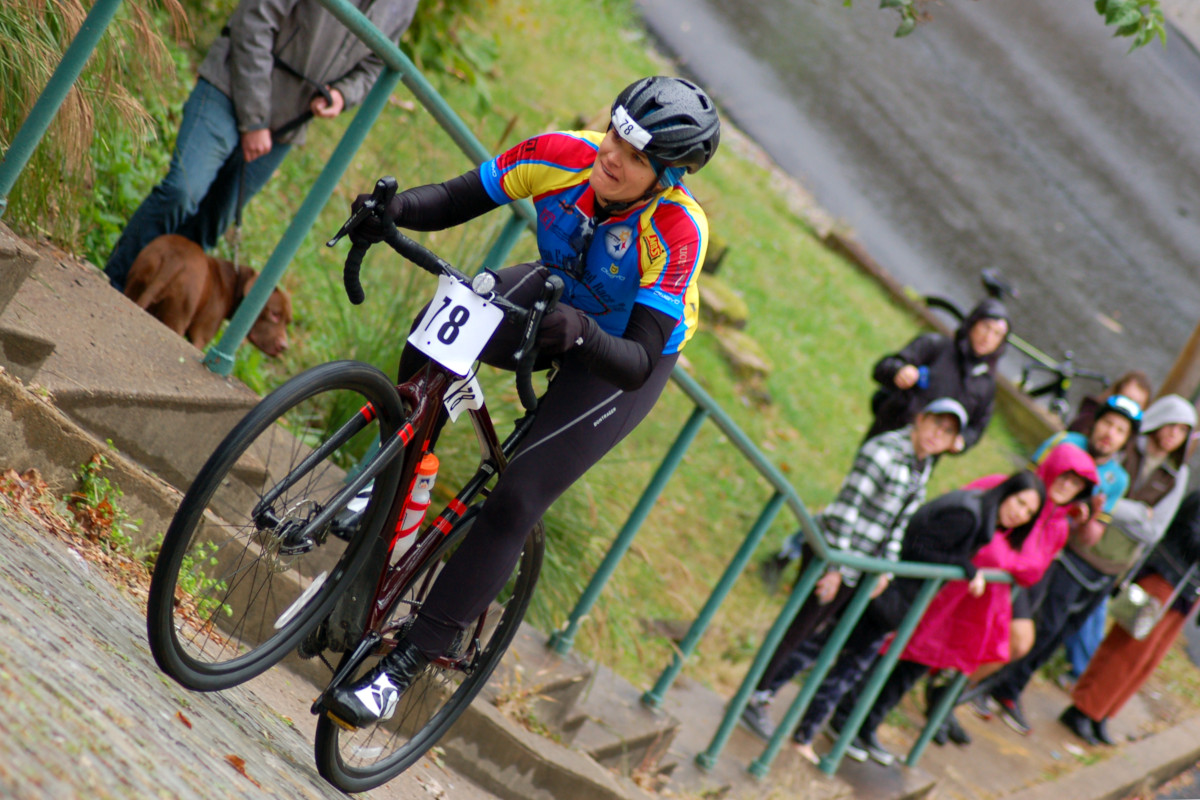
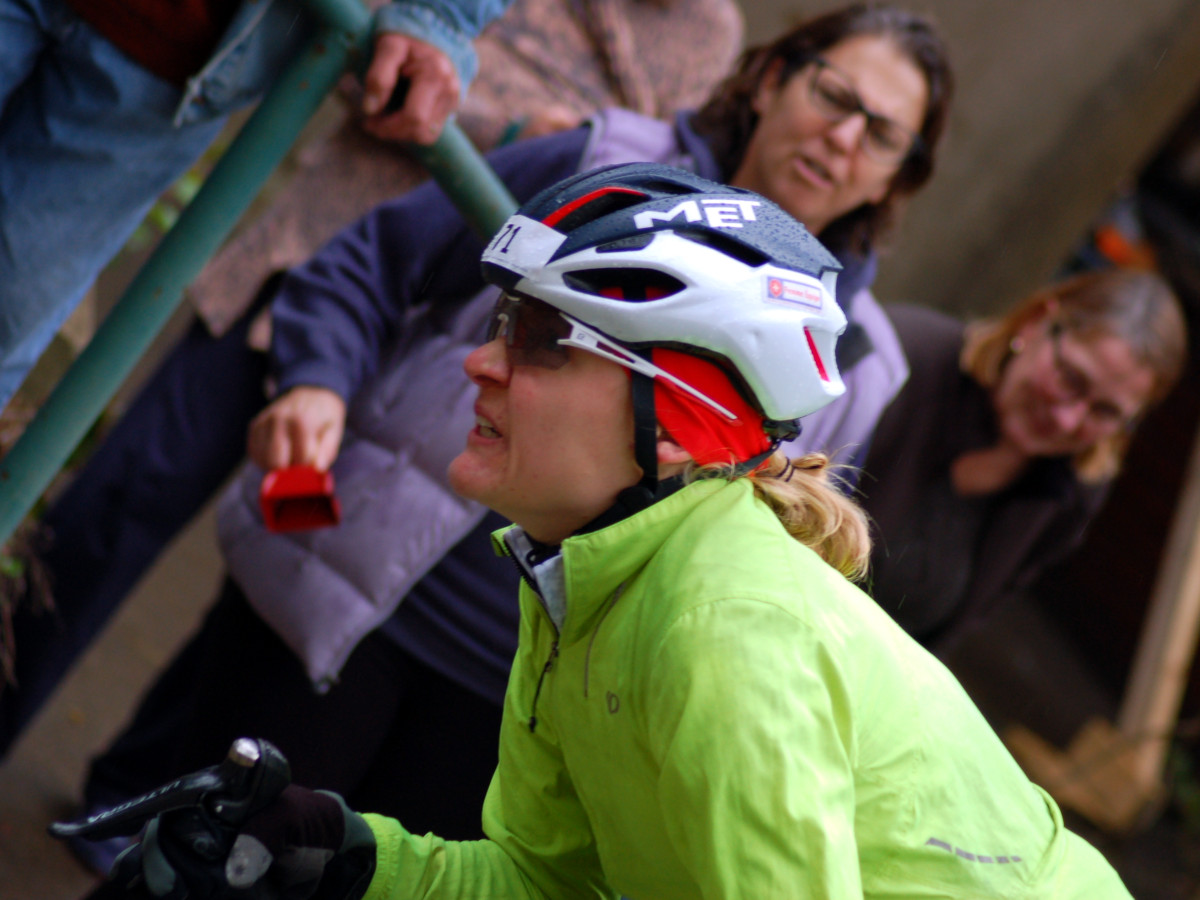
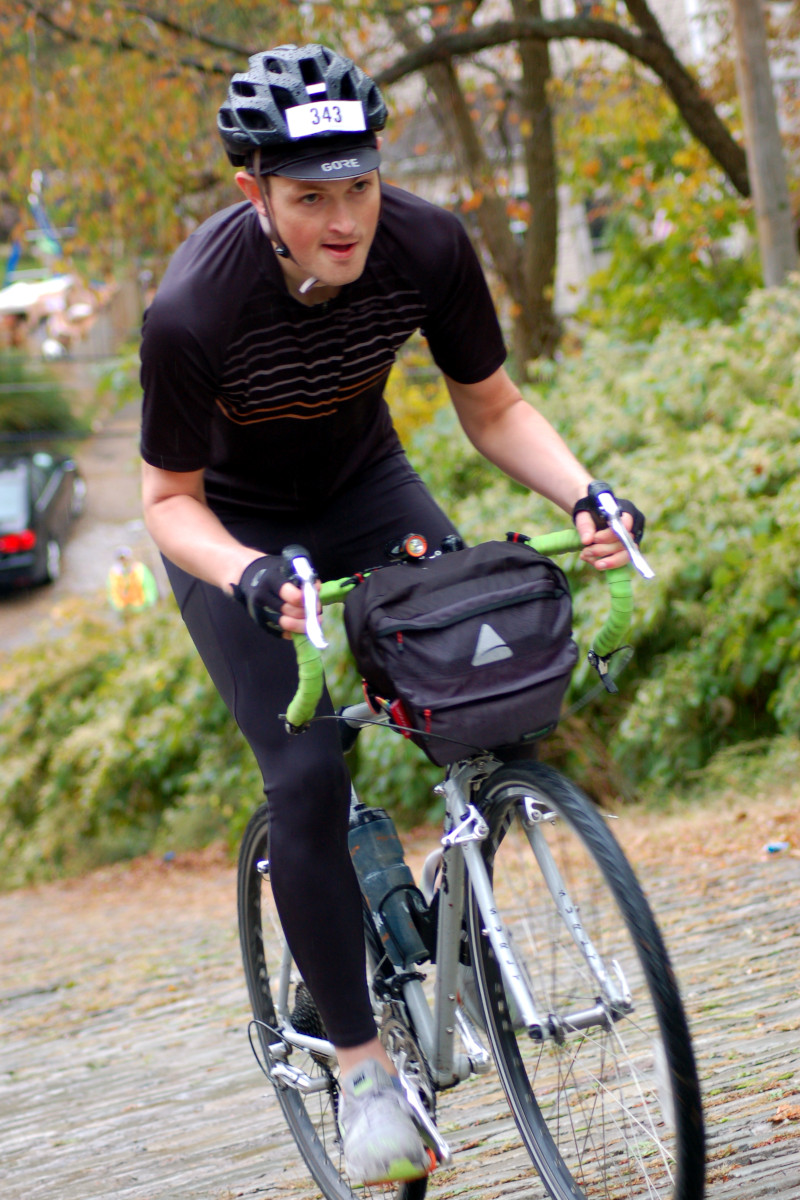
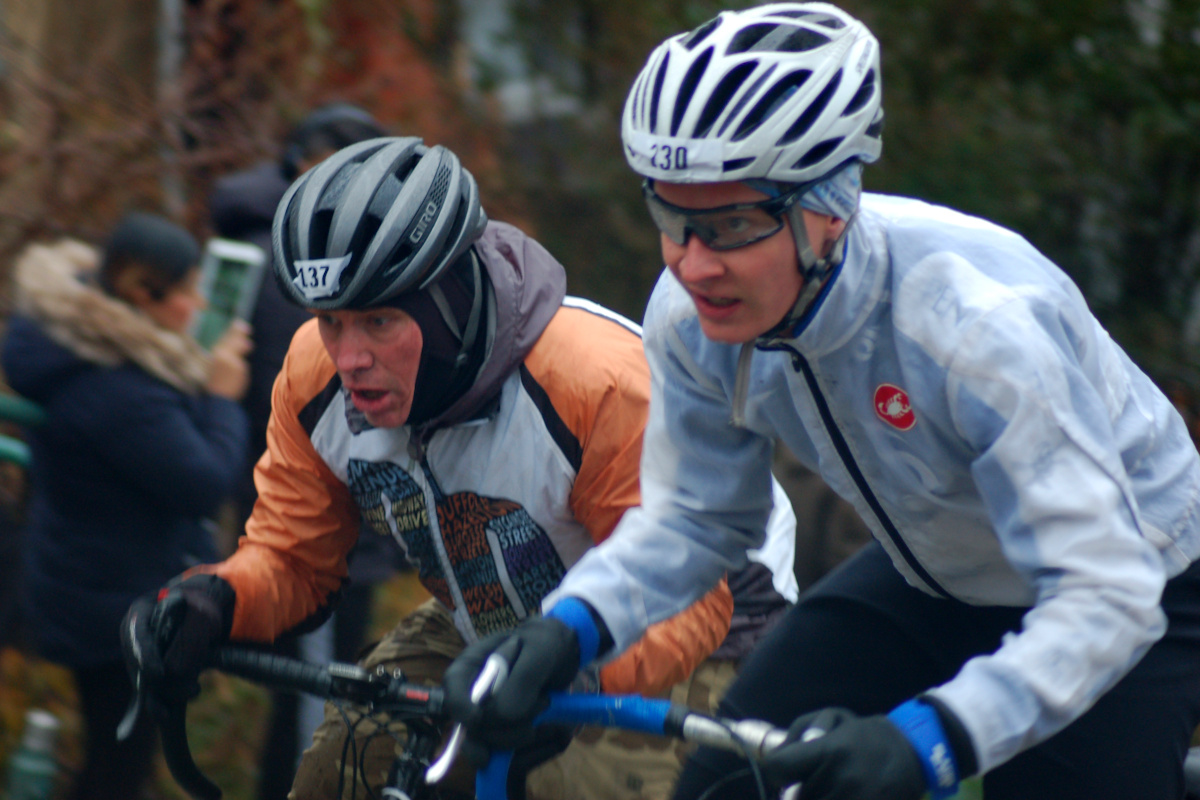
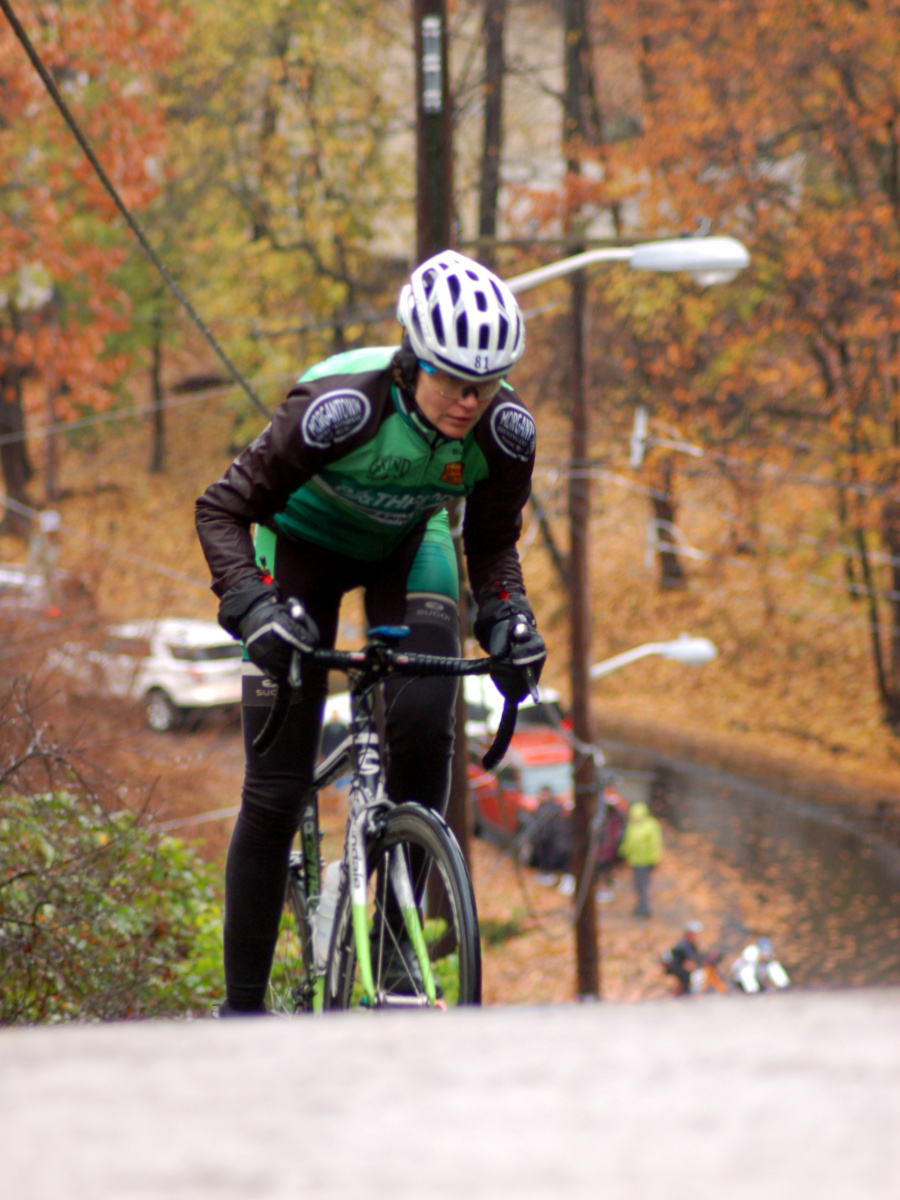
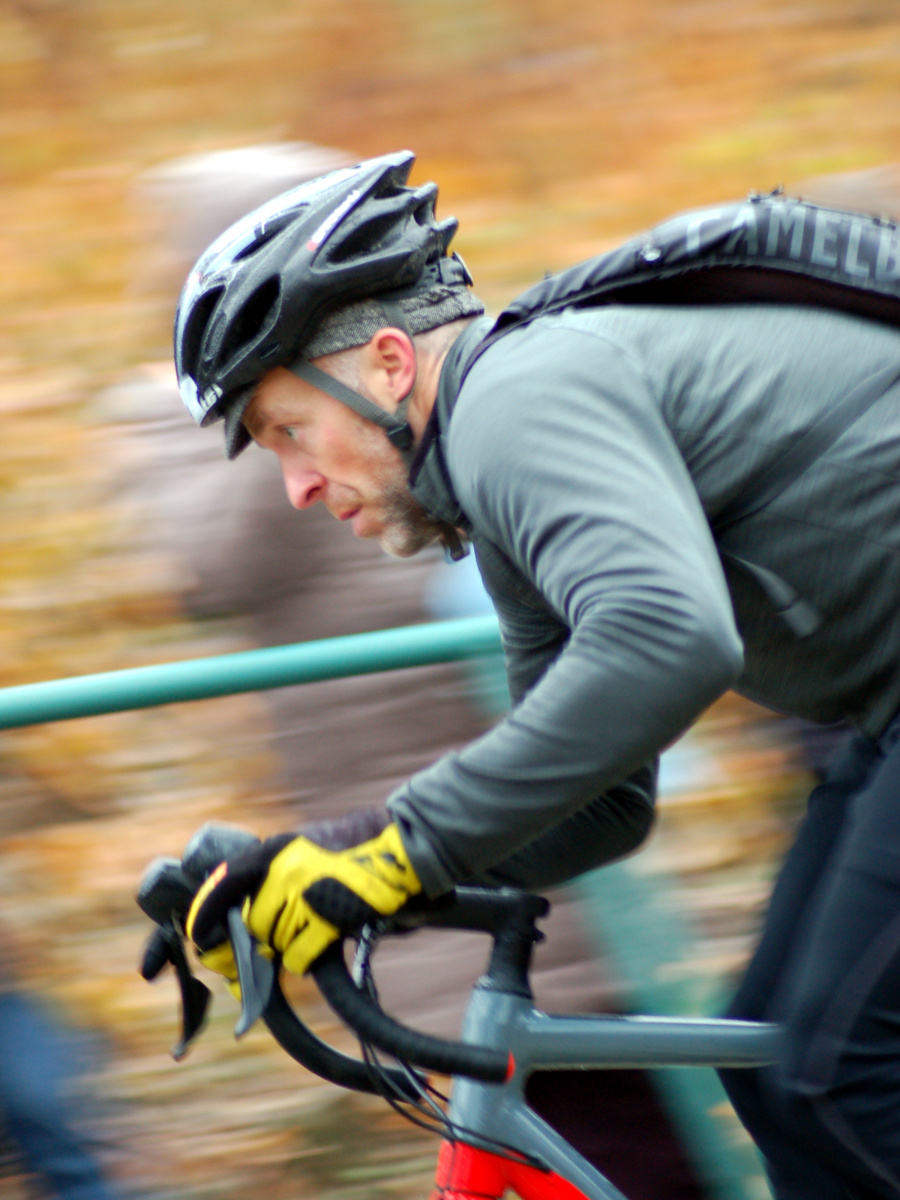
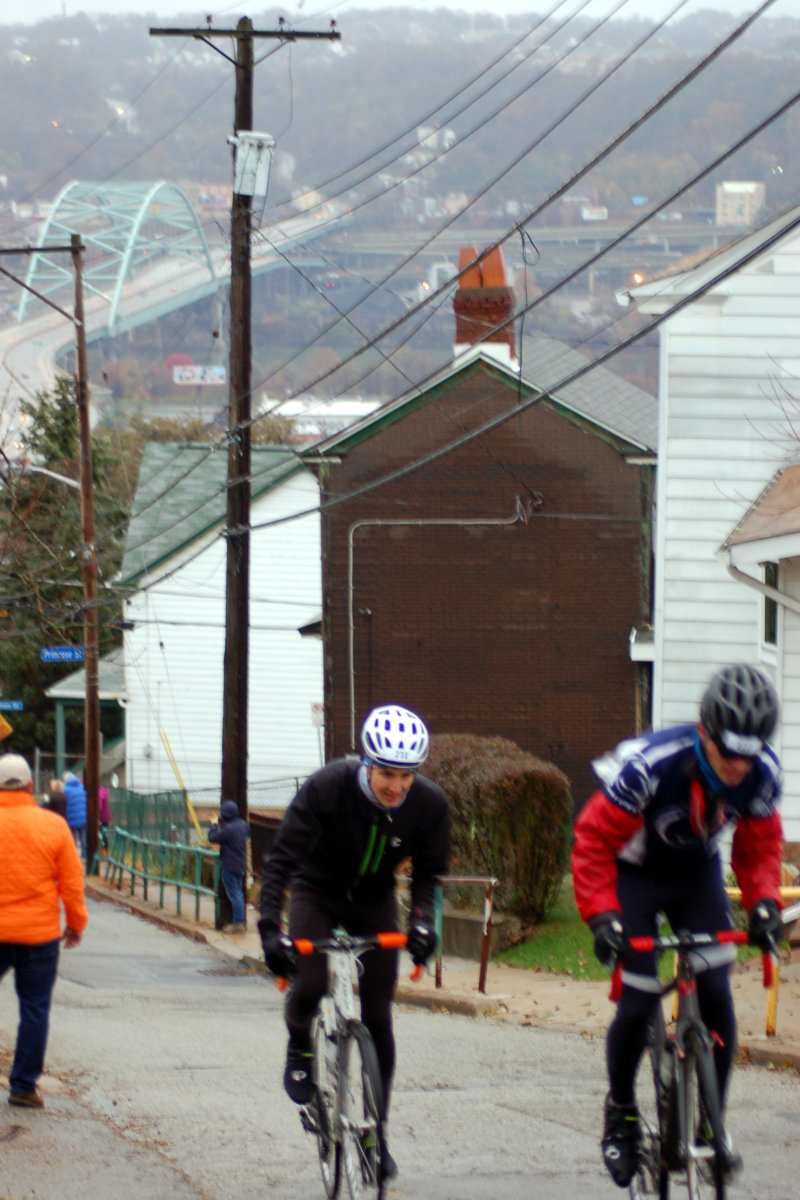
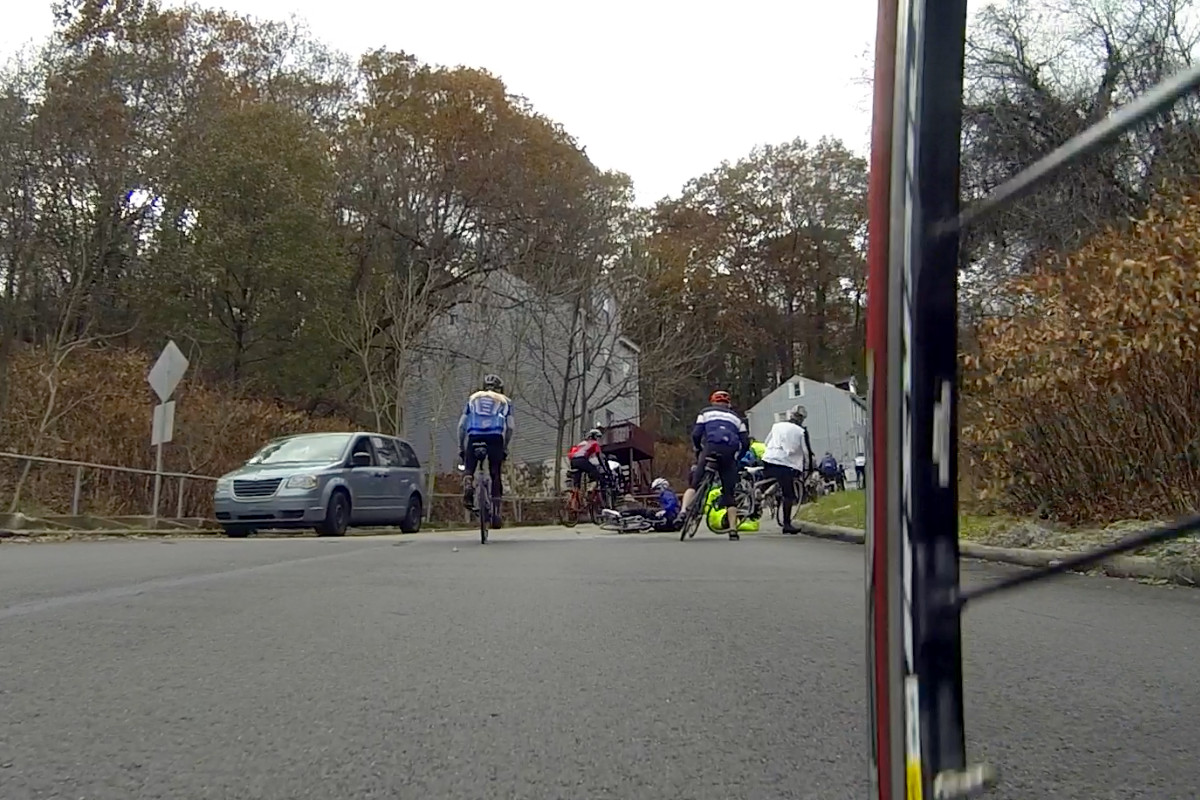
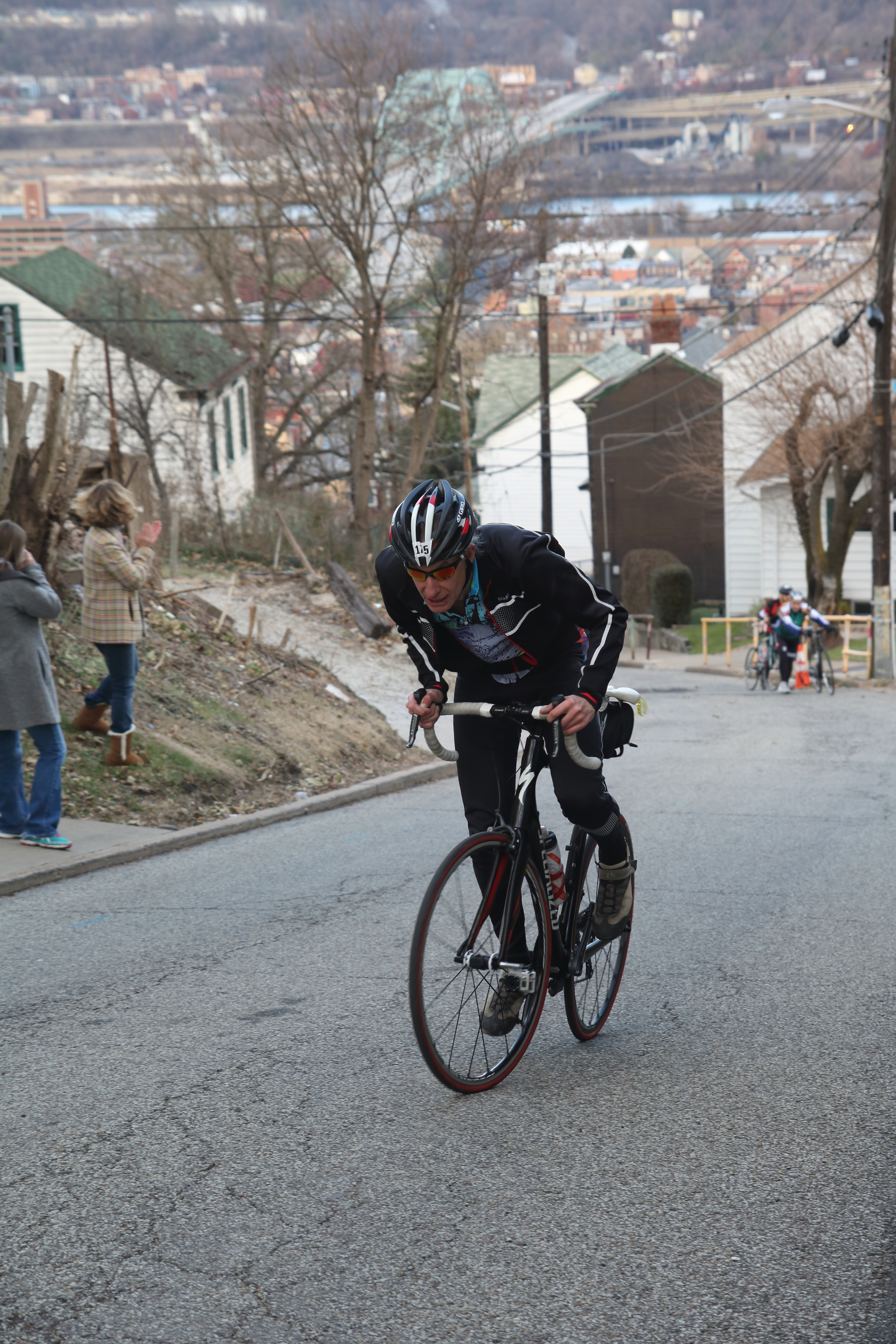
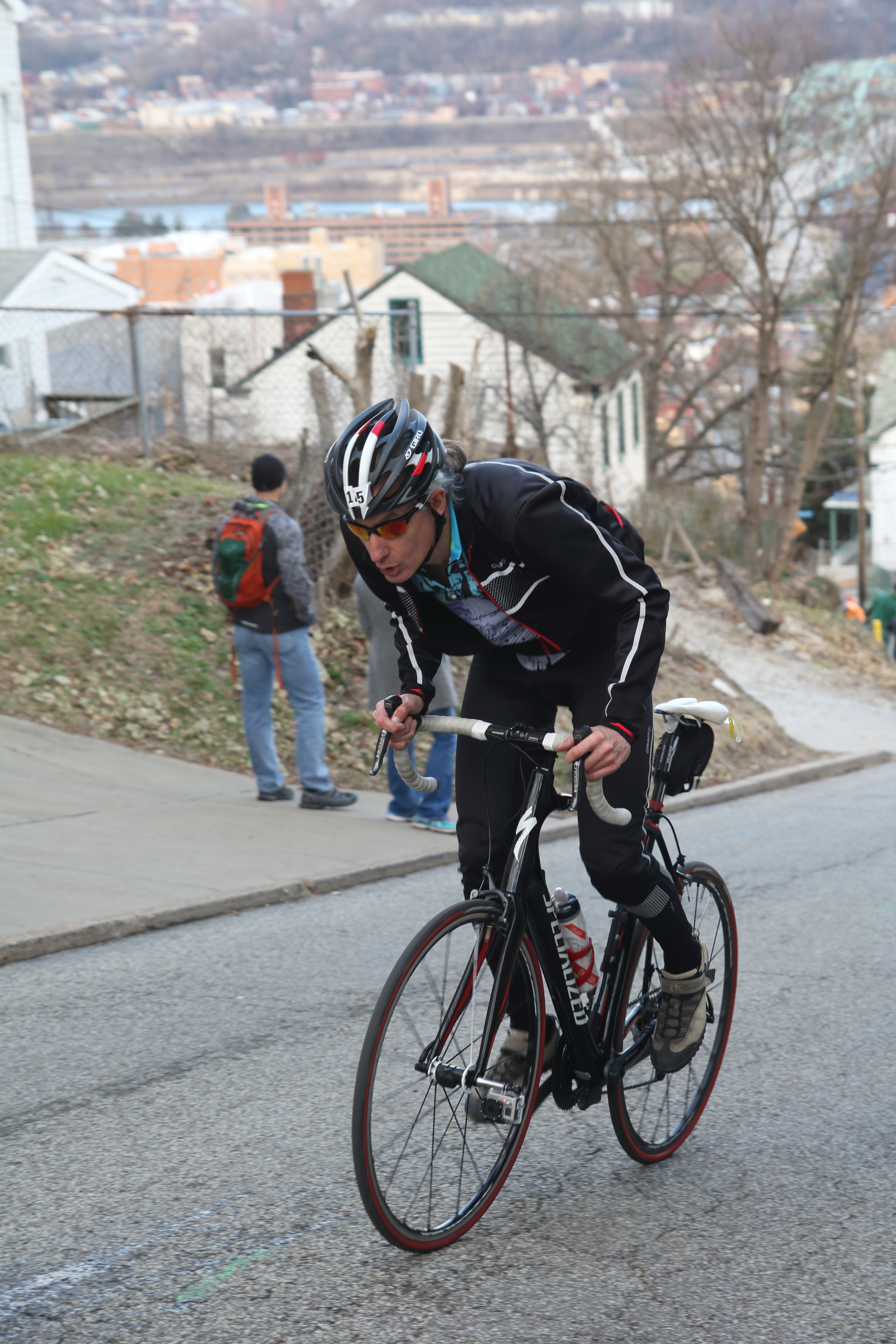
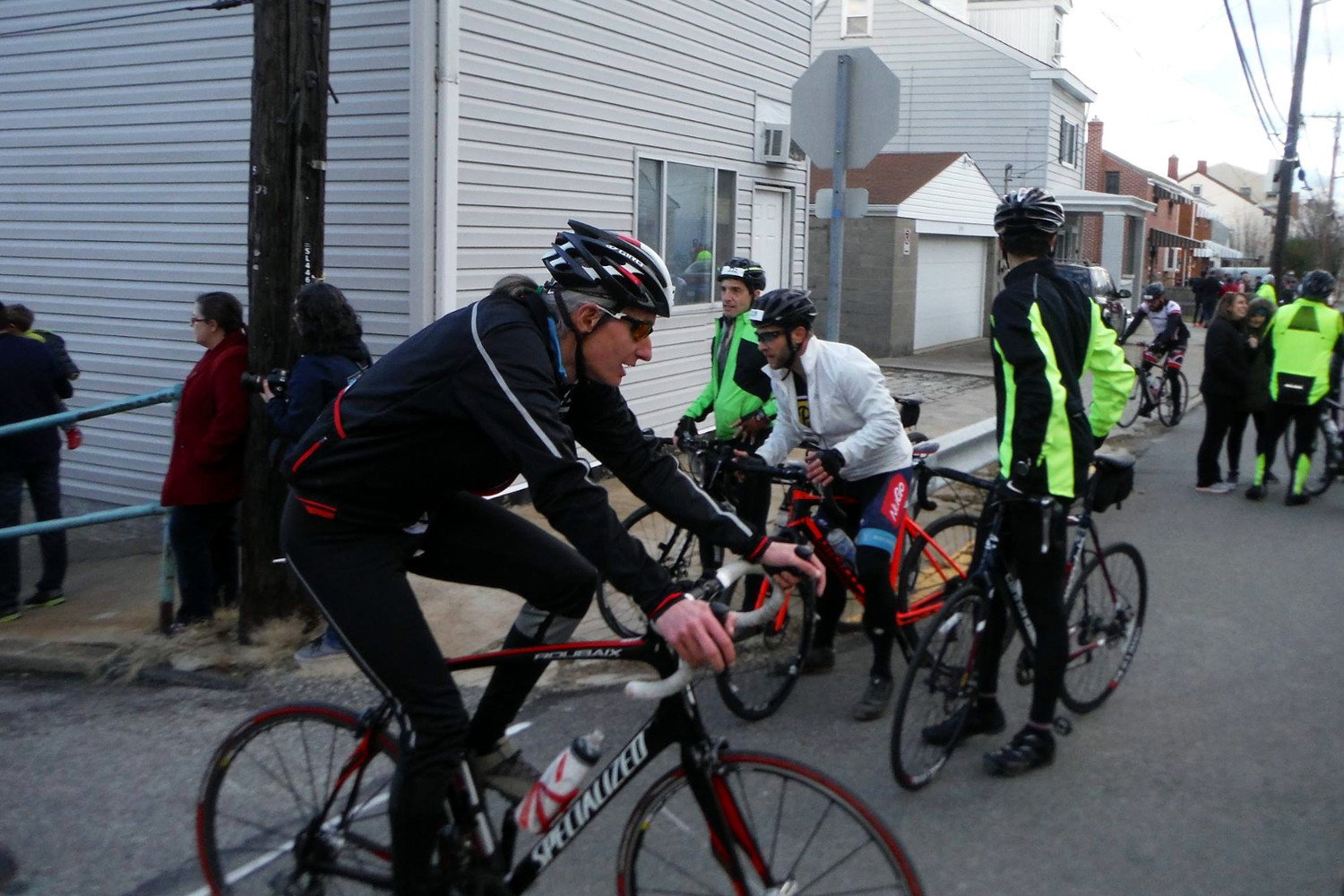
Four years after successfully conquering Pittsburgh’s infamous Dirty Dozen ride (documented here), I’m still suffering PTSD. So instead of training up and riding this year, I once again chose to photograph the riders, as I did in both 2018 and 2019.

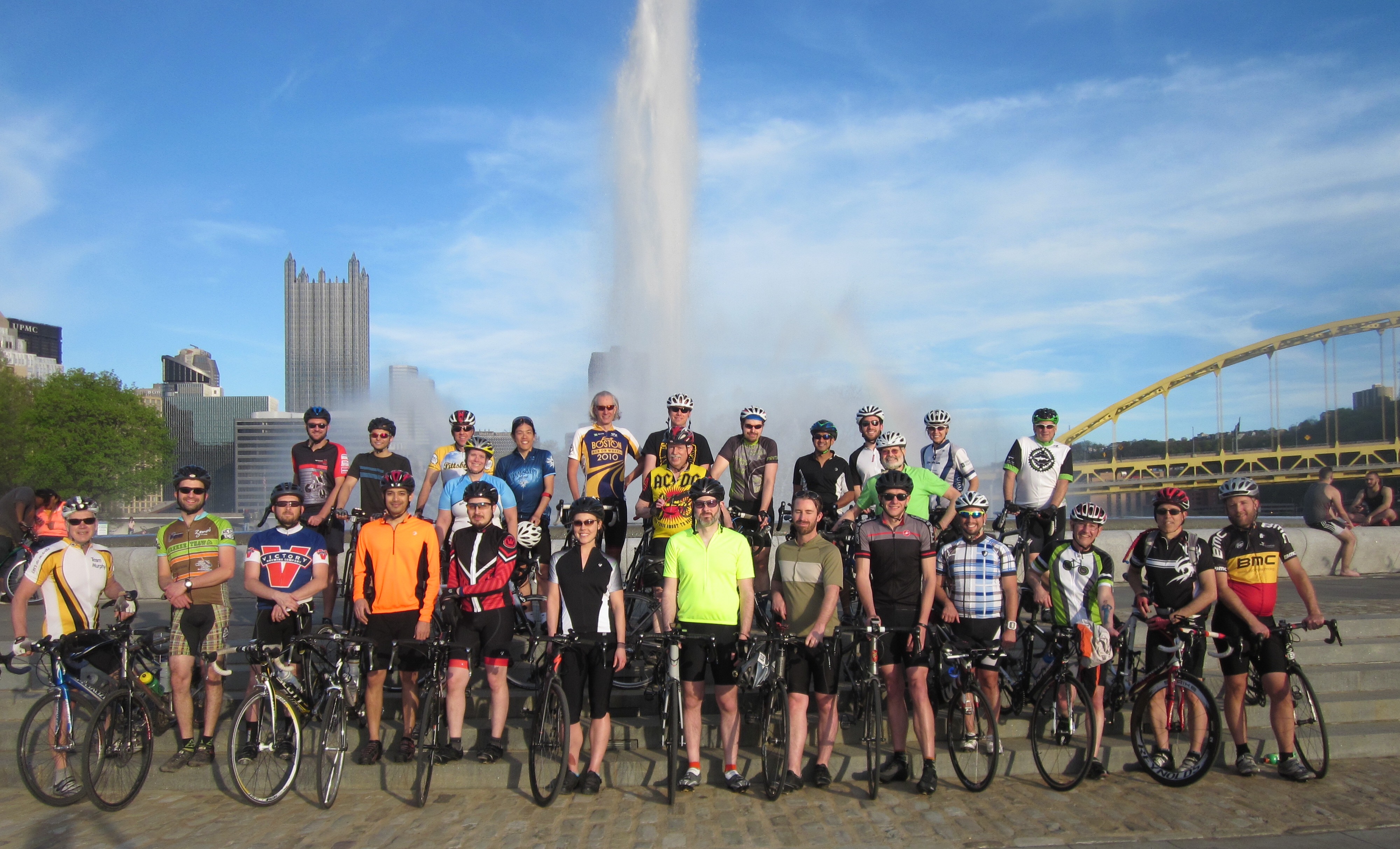
Dirty Dozen riders

It made perfect sense. After doing eleven indoor centuries in 2020, this year I just wasn’t motivated for the intense training that would be required. On top of that, my bike’s in pretty bad shape thanks to the unavailability of replacement parts due to supply chain issues. As if that wasn’t enough, this year had pretty typical Dirty Dozen weather: cold drizzle and temps in the 40s.

So I packed up my archaic dSLR and hit the slopes on foot, hitting four strategic locations: hill #6 Logan, hill #9 Canton, hill #10 Boustead, and hill #12 Eleanor. Yes, the numbers have changed, because of tweaks to this year’s course; Berryhill is back in, but the route still begins with Christopher, which this year stands in for Rialto, which was declared too difficult and dangerous to use.

During the long waits between grouped categories of riders, you often find yourself recognizing and/or chatting with other folks who have come out to spectate. At Eleanor, this year I chatted with an aspiring future Dirty Dozen rider named Ryan who had pored over my 2017 writeup to learn about the ride and the course. It’s always a delight when I find someone who has benefited from any of my writing, and especially my Dirty Dozen and Pan-Mass Challenge reports, so that was one of the day’s several highlights.

This year I came home with 414 photos, a tiny sampling of which appear below. To see the rest of my 86 curated shots, go visit my 2021 Dirty Dozen Flickr album. And for previous years, here are links to my 2019 blogpost & 2019 Flickr album, and my 2018 blogpost & 2018 Flickr album.

And as always: click for teh bigness.

Dirty Dozen riders Dirty Dozen rider
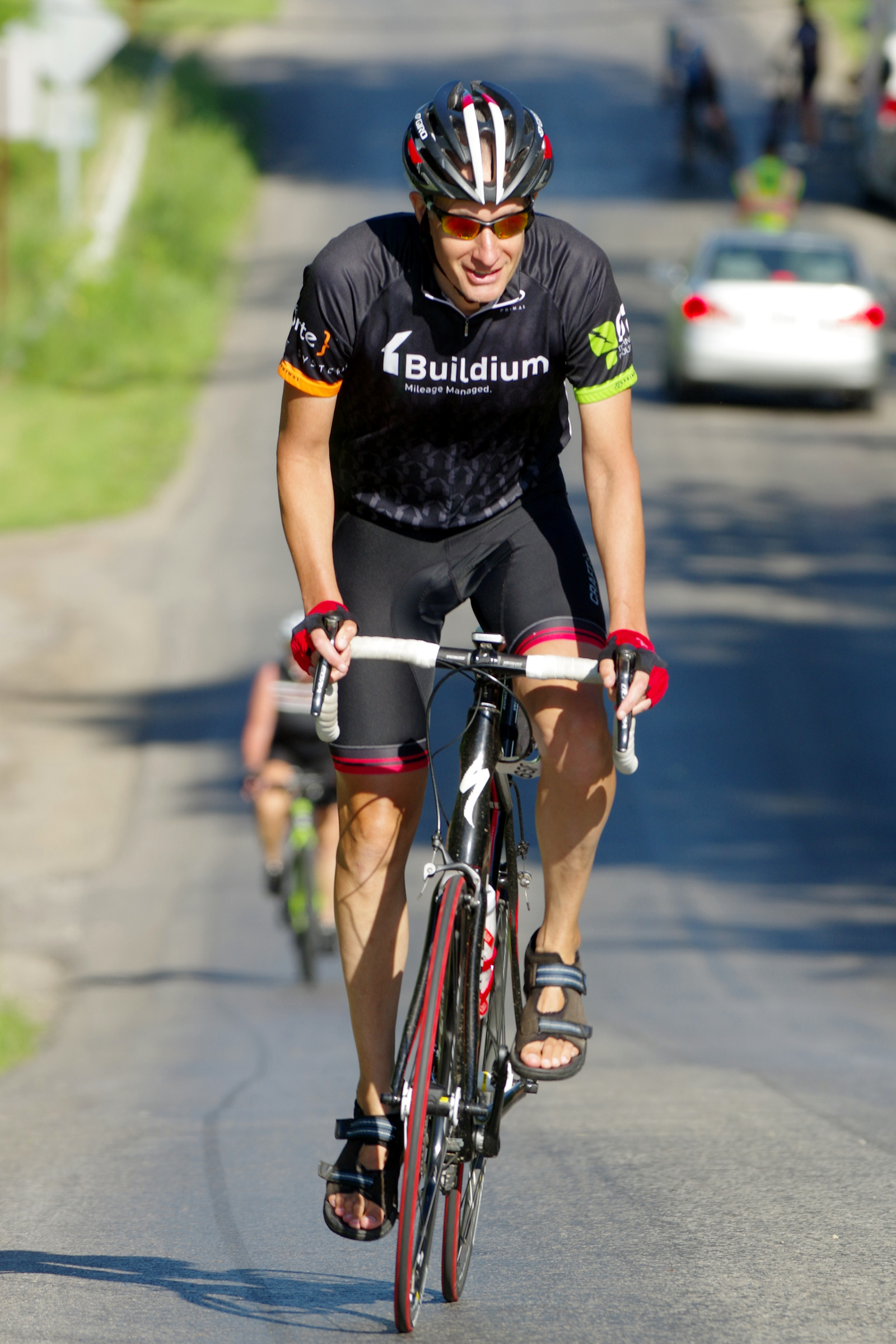
Dirty Dozen rider Dirty Dozen rider Dirty Dozen rider
Dirty Dozen rider Dirty Dozen rider
View the Full Album

Another year, another edition of Pittsburgh’s signature Dirty Dozen ride.

Although I conquered the challenging course in 2017, I wasn’t in physical or mental condition to ride last year; instead I threw my camera bag over my shoulder and played photographer, bagging 350 action shots while driving frantically between the course’s five steepest hills, trying to simultaneously keep pace with seven different groups of riders.

Dirty Dozen rider

Despite this year's record-smashing cycling season, over the past two months I was plagued by a strained achilles, a lingering cold, plus a week of travel. I didn’t do any of the Dirty Dozen group training rides, and was in no shape to approach those hills on a bike myself. So I spent another day documenting other riders’ suffering and triumphs.

That’s okay tho, because I really enjoy the rare opportunities I get to play cycling photographer.

This year I was a little more judicious about where I deployed, dropping last year’s ambitious five hills down to three, only one of which (#10: Canton) was a repeat. Before that, I started the day at #4: High/Seavey, which isn’t a hard hill, but has a nice switchback and hillside cemetery backdrop that are ideal for photography. And afterward I ended with #13: Kilbourne/Tesla, hoping to catch some dramatic facial expressions on the final hill, which has a short but painfully steep finish.

Despite the event moving up a month into October, the weather was still cool, and sporadic sprinkles arrived just in time to make Canton a slippery, leaf-strewn trainwreck, and Tesla a wet, dispiriting finale. Thankfully, it was much less painful for a photographer than for the riders, as my biggest complaint was the muted, overcast lighting!

This year I came home with 260 photos, a tiny sampling of which appear below. You can see my 51 personally-selected shots in my 2019 Dirty Dozen Flickr album. And if you’d like, here are links to last year’s DD blogpost, and last year’s DD Flickr album.

Dirty Dozen rider Dirty Dozen rider
Dirty Dozen rider Dirty Dozen riders Dirty Dozen rider
Dirty Dozen rider Dirty Dozen rider Dirty Dozen rider: ambushed
View the Full Album


As planned, I didn’t ride, but spent the day photographing this year’s Dirty Dozen race.

This has already been the second-wettest year in Pittsburgh history—with more than a month left to overtake the all-time record!—and race day was commensurately rainy. I was glad not to be riding!

Dirty Dozen Riders

I played leapfrog with the nine separate groups of riders all day, hitting the five toughest hills: Logan (#5), Suffolk (#7), Canton (#9), Boustead (#10), and Eleanor (#12).

I was out from 10am to 5pm, and took about 350 shots. I weeded those down to 67 decent pics that I shared on my Flickr photostream. Then those got culled down to the ten that you see on this page.

When I asked for Inna’s help selecting the keepers, she made an interesting observation. Whereas I’d focused on close-ups to capture the pain and human drama of the ride, she was more interested in establishing shots that captured the ridiculous steepness of the hills. It was a good lesson to put more thought into thematic considerations next time I shoot an event.

But overall, given that I wasn’t riding, it was a pretty enjoyable way to spend the day, and I got to cheer on (and socialize with) a bunch of my riding buddies.

And despite standing around in the rain all day and walking several steep hills, it was a hell of a lot less painful than riding them all!

In addition to the following small selection, you can see my edited collection of 67 photos in my 2018 Dirty Dozen Flickr album.

Dirty Dozen Riders Dirty Dozen Rider Dirty Dozen Rider
Dirty Dozen Rider: Jeremiah Dirty Dozen Rider Dirty Dozen Riders
Dirty Dozen Rider Dirty Dozen Rider Dirty Dozen Rider
View the Full Album

It’s almost time: time for the 2018 Dirty Dozen, Pittsburgh’s signature cycling event, where participants ride up 13 of the steepest streets in this ludicrously hilly city.

After missing out in 2015 and 2016, last year I was finally able to participate, and conquered the official course, to my great satisfaction. However, after a lot of reflection, I’ve decided I won’t be riding again this year.

2018 Dirty Dozen jersey

2018 Dirty Dozen jersey

While last year’s event was fun and a very memorable achievement, it probably was also the most painful ride I’ve ever done. While cyclists often have love/hate relationships with challenging rides, the Dirty Dozen definitely maxed me out on the “hate” side of the equation. Having done it once and earned my finisher’s ribbon, why suffer even more?

Mentally and physically exhausted after last year’s event, I continued to push myself harder than I wanted to in order to complete my end-of-year goal of climbing 250,000 vertical feet. Between those two events, I lost all my hill-climbing desire. Well into 2018’s training season, I was still demoralized, lacking any sort of motivation at all. After making 83 ascents of Dirty Dozen hills in the fall of 2017, I didn’t climb a single one in the following ten months.

In mid-September, I grudgingly did three of the easiest hills and was okay. Although I was behind on training, I began to entertain the remote possibility of doing this year’s ride. Then a couple days later there was one fateful night…

First some background. In my writeup of last year’s race, I described the passage from the top of Logan (Hill #5) down to Rialto (Hill #6) thus: “Just mind the construction zone where half the road has fallen off the side of the cliff into the woods below…”

Well, last February an entire section of that road (Pittview Ave) did indeed “fall off the side of the cliff”, and nine months later it’s still impassable. Since that’s the one and only way down from Logan (short of turning around and gingerly riding back down), there has been talk about skipping Logan this year, and riding some other hill in its place.

Veteran Pittsburgh riders knew exactly the roads to consider: Ferndale and Dornbush, which are equal in difficulty to the hardest Dirty Dozen climbs. One Tuesday evening, when the regular Team Decaf ride leaders were absent, Dirty Dozen marshals Jason and Chris led us down to the East Hills to scout out those two roads. When we got to Ferndale, I looked up at the blatantly stupid slope and immediately knew I wasn’t going to ride this year’s Dirty Dozen. It hurt so much just looking at it, and—like just about everyone else in the group—I was too scared to even consider attempting that climb. No… fucking… way… period.

Still, I missed the camaraderie among the riders, so I decided I’d at least do some of the weekly training rides that lead up to the event. It’s a seven-ride series, where the first four rides each tackle one quarter of the full ride, then two that do each of the two halves of the ride, and the final ride doing the entire route two weeks before the official Dirty Dozen.

The first training ride was nice, doing the first three hills, plus the alternate version of Hill #3, all of which are easy (relatively speaking). I managed. A week later we did Hills 4-7, where I ran out of strength and had to pause for a dizzy spell partway up Burgess before finishing it. I missed the third training ride due to the intense joys of colonoscopy prep, and never resumed them afterward.

So no, I won’t be riding that sadistic sufferfest this Thanksgiving, and given how the season has gone, I’m not terribly surprised or disappointed. Been there, done that, paid the price, and got the finisher’s ribbon. As I said above, why suffer even more? Tho I reserve the right to ride sometime in the future, if my preparation is up to it.

Additionally, by not riding I have my first opportunity to see the race as a spectator. I hope to drive around town, leapfrogging the riders, playing “Event Photographer”. For decades I’ve wanted to shoot some of my favorite rides, but that’s always been trumped by actually participating in each event; but this year is the perfect chance to camp out and get some awesome action shots of a ride I really love… and really, REALLY hate.

So instead of dreading facing the ride or moping for missing it, I’m having fun getting excited about shooting it. Assuming all goes well, my results will be posted around the end of the month!

I rarely write up rides of less than 100 miles, but given how disappointing 2018 has been, it’s worth mentioning how nice Sunday’s Pittsburgh Randonneurs Kittens & Puppies 100k (that’s 62 miles) was.

We started 25 miles down the Ohio River in Monaca PA, then headed north along the Beaver River—almost to Ellwood City—then paralleled the PA Turnpike northwest to New Middletown OH, and back along the same route.

Ohio River Beaver

So what was so good about it?

First and foremost, the weather was stunning, and the view from the start on the Ohio riverbank was gorgeous. We’ve had 14 inches more rainfall than average this year, which soaked or canceled several events and regular weekly rides. So we were very appreciative of a beautifully sunny late summer day. Later some high clouds from Hurricane Florence rolled in, which conveniently kept the afternoon heat at bay.

The Kittens & Puppies route is a gentle welcome for new randonneurs, being shorter and less hilly than their typical routes. So the ride was relaxed and enjoyable, and my legs appreciated a break after my first couple days of pre-Dirty Dozen hill work,

I also got to ride with friends I haven’t seen much this year, including De’Anna and Jim.

I enjoy riding with randonneurs, because they keep a perfect pace: a good clip, with businesslike rest stops, but easy enough to keep riders from blowing up. It’s the perfect middle ground between group rides composed of either hammerheads trying to ride each other into the ground or lazy tourists who are horrified at expending any effort at all.

Not a highlight, but something to be thankful for: at one point I missed a turn and made a sudden, sharp retracement in a patch of gravel. Both wheels skidded out from under me, but I somehow managed to keep it up, and no apparent harm was done to tires or wheels.

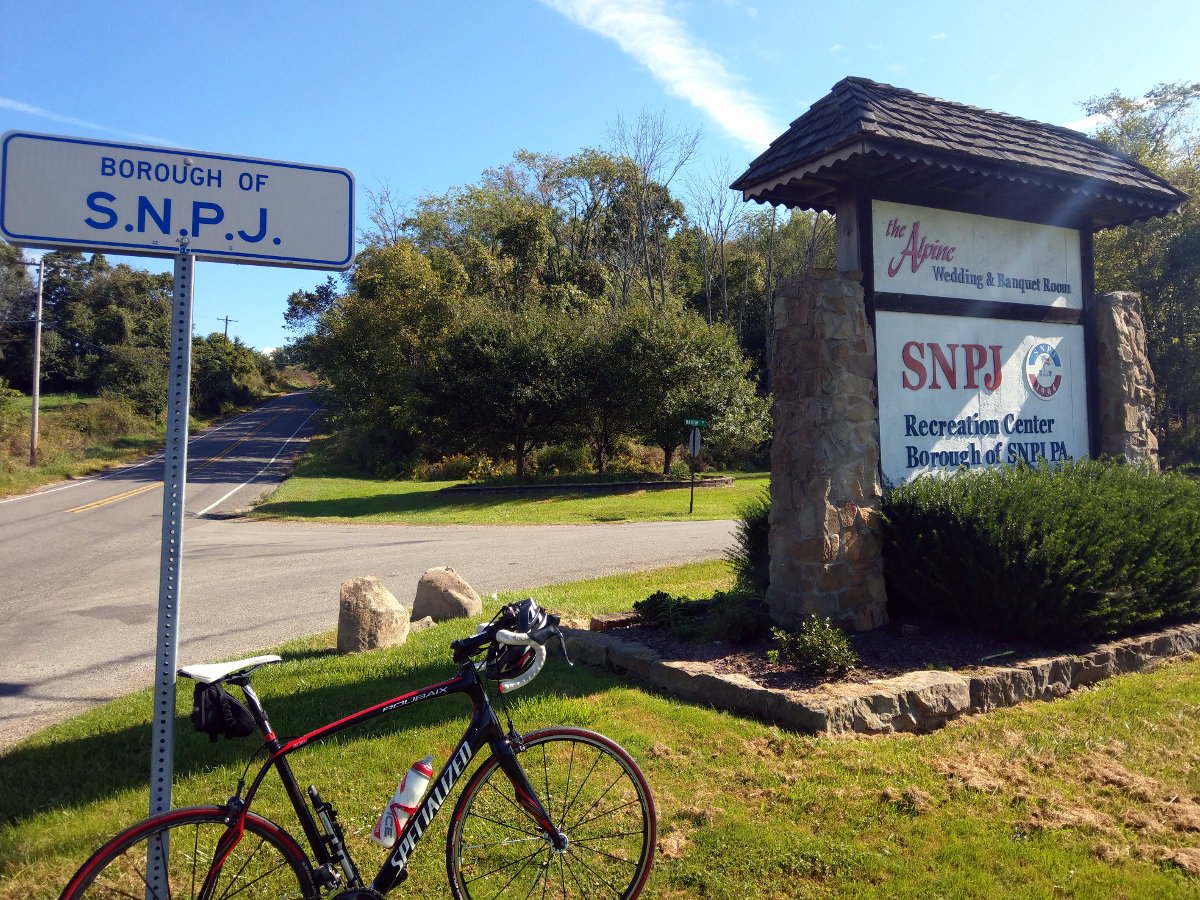
S.N.P.J. Pennsylvania

S.N.P.J. Pennsylvania

Two-thirds through the outbound leg, I took a four-mile detour off the route in order to check in at a place I’d always wanted to visit: the oddly-named town of S.N.P.J. Pennsylvania.

The turn-around rest stop was a sandwich shop, where the cashier chose not to charge me for the cola I grabbed. I’m not sure whether that was because I’d waited and let a couple other customers precede me or if it was some other “thing”.

After the ride, four of us stopped at Yolanda’s Pizza, where I acquired a much-anticipated pepperoni, sausage, and ham calzone.

But above all, it was nice to be out there and enjoy one of the few beautiful days we’ve had all year.

The outlook for the rest of 2018 is cautious. I won’t be training as hard for this year’s Dirty Dozen, but I’ll probably do a few of the friendly prep rides. I may or may not do the event itself—that’ll depend on weather and how I feel—but if I do, it’ll be as a fun ride that I won’t take terribly seriously.

My second year riding in Pittsburgh somehow felt both pleasantly normal as well as superlative and memorable in so many ways. Overall, I rode a ton, befriended some good folks, grew more familiar with my new hometown, set some new records, met all my goals, vanquished Pittsburgh’s hardest challenge, and had a blast doing so. Here’s my year in review…

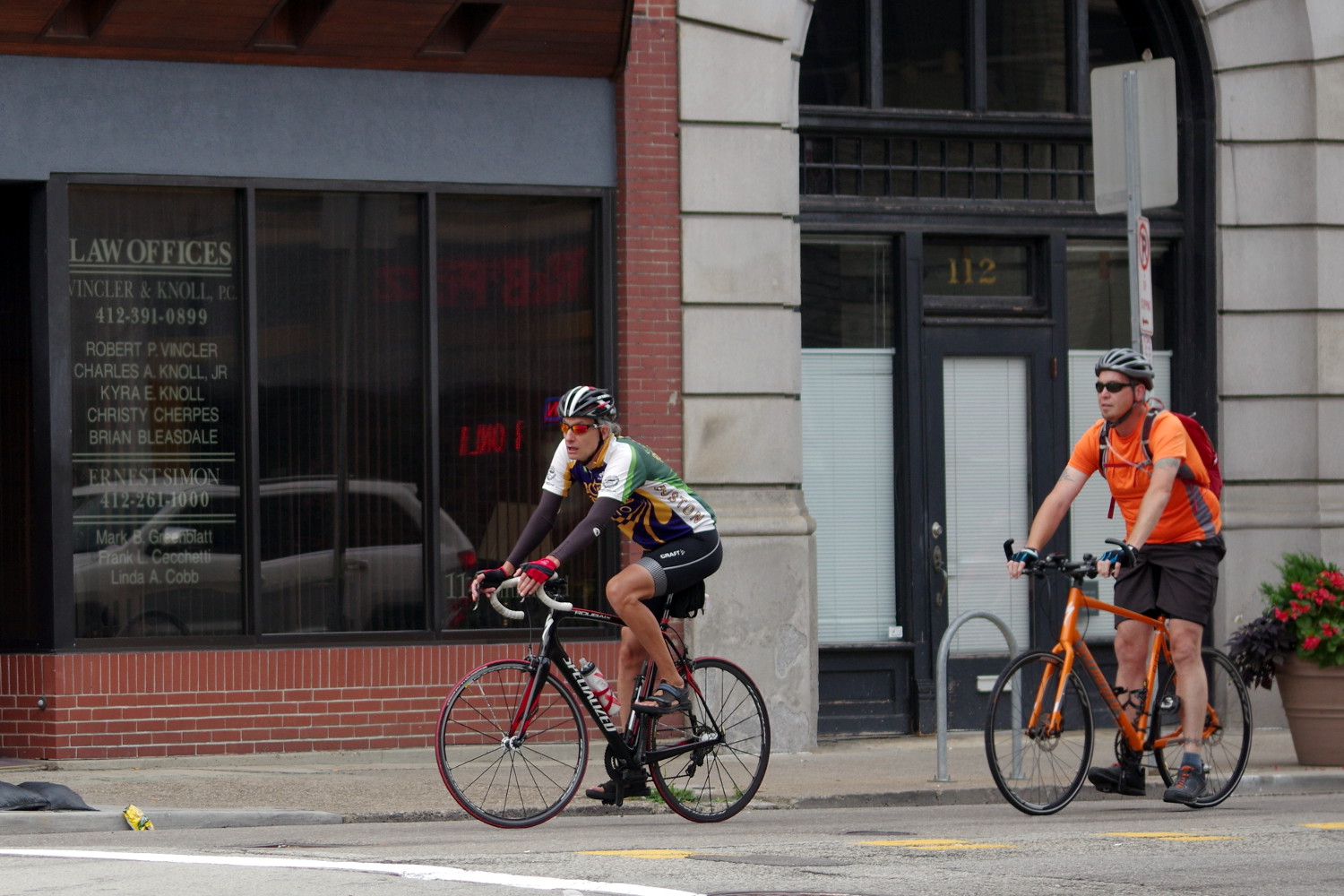
Team Decaf group ride at the Point

Team Decaf group ride at the Point, with Ornoth back center

Ornoth crushing a hill

Ornoth crushing a hill on the Escape to the Lake MS ride

Ornoth & Monica finishing the 100k

Ornoth & Monica finishing the Pittsburgh Randonneurs' 100k populaire

Ornoth leading a pack through the city

Ornoth leading a pack through the city during PedalPGH

Ornoth descending Dirty Dozen Hill 6 (Rialto) from the neighborhood of Troy Hill.

Video of Ornoth (in black) amongst a group of Dirty Dozen riders (around 3:02) to the top of Suffolk St.

Great closeup action shot of Ornoth ascending Dirty Dozen Hill 9 (Canton Ave).

Video of Ornoth conquering the upper half of Canton Ave (10:50 to 11:00).

The tired-but-happy look of an official Dirty Dozen finisher!

Ornoth's 2017 Cycling Calendar

My Original 2017 Goals

This time last year, I set four explicit goals for 2017.

Purchase and learn how to use a new Garmin Edge 820 GPS cyclo-computer. This was the first thing I did upon getting back to Pittsburgh in February. The 820 has a lot of new features, some of which actually work. The D-Fly integration with my electronic shifters has mostly worked, despite the added drain on the Di2’s battery, and I’ve enjoyed perusing my shifting data on di2stats.com. I created my own custom data field (feet of ascent per mile) for display on the 820, and got Shimano’s E-TUBE app working such that I can update my shifters’ firmware from my phone. While the 820 didn’t live up to what it should have been, it’s been a steady performer and a worthwhile purchase. Read my full Garmin Edge 820 review.

Ride both days of the 2017 Escape to the Lake MS Ride. My partner Inna’s support made this weekend expedition possible, and it was a lovely experience. Not only did I get to complete the event and finish on the very shore of Lake Erie, but Inna and I stayed and spent an extra day lounging on the lakeside beaches of Presque Isle State Park. It was very reminiscent of my Cape Cod trips with Sheeri back when she supported my Pan-Mass Challenge rides. Read my Escape to the Lake ride report.

Complete the 2017 Woiner Cancer Foundation 3-2-1 Ride. This became a primary goal after I missed the 2016 ride during my mother’s hospitalization. In 2017, they offered a special 80-mile route to VIP fundraisers from 2016 (which I qualified for), so on October 1st I saddled up for a long, chilly, flat ride along the Great Allegheny Passage from Ohiopyle back to Pittsburgh, most of it on crushed limestone rail trail. I enjoyed exploring some new territory while further increasing the amount of money I’ve raised for cancer research. Read my 3-2-1 Ride report.

Attempt my first Dirty Dozen race. Climbing the city’s 13 steepest hills, including the steepest public street in the world, this is an immense challenge, and the city’s most infamous ride. I missed last year’s edition while caretaking my mother, but this year I participated in all the training rides, then enjoyed an immensely fulfilling and memorable ride on race day, earning hard-won lifetime bragging rights. Unquestionably the highlight of the year. See my training rides blogpost, my full Dirty Dozen ride report, and my time-lapse videos of the most difficult hills.

Additional Highlights

Achieving all my explicit goals guaranteed that I had a good year. But there was an awful lot more to 2017 on top of that…

  • Further deferring my job hunt gave me the entire year off to devote to cycling, and I made good use of the opportunity. I topped 4,000 miles for the first time since 2010. And I shattered my record for number of rides per year; this year’s 154 rides is about double number of rides I used to do in Boston.
  • I continued meeting and befriending lots of local cyclists, which has been rewarding, and one of the biggest overall themes for 2017. It’s nice when someone recognizes you, which is happening regularly now, so I’m starting to feel more like a known community member than an unfamiliar outsider.
  • I attended both the Spring Rally and Fall Rally organized by the Western Pennsylvania Wheelmen, and got a snazzy new WPW jersey.
  • I claimed 13 more tags in the BikePGH forums’ Tag-o-Rama cycling and photography game, placing me within the Top 20 players. It’s been an interesting way to learn more about the city. See all my Tag-o-Rama photos.
  • I was quoted (anonymously) in BikePGH’s summary of their survey of cyclists’ attitudes toward self-driving vehicles, and re-quoted in the Pittsburgh Post-Gazette’s article covering the survey. I was righteously amused. Read my self-driving vehicle blogpost.
  • I participated in the National Bike Challenge, confirming that I’m around the Top 10% most active cyclists locally, state-wide, and nationally. Read my National Bike Challenge blogpost.
  • I joined a half dozen other BikePGH forum readers in playing Velogames’ annual Tour de France fantasy league. It was interesting, but my team selections placed me near the middle of the pack. Oh well!
  • I picked up an attractive graphic poster of the “Hell of the North: Paris-Roubaix”, which is hung above my desk at home.
  • I continued to maintain BikingPGH’s Annual Ride Calendar, as I described here, and also iterated on my paper-based cycling wall calendar. Both have been useful planning tools that I’ll continue working on for 2018. Here’s a link to the full size 2017 version.
  • I picked up two absolutely pivotal pieces of kit: a thermal cycling jacket and a pair of thermal full-leg bibs, both from my favorite manufacturer: Craft. Those have utterly transformed my relationship to cold-weather riding, and made even the 17° Dirty Dozen practice ride a pleasant experience.
  • My Strava trophy case added badges for completing climbing challenges and gran fondos for April, May, June, July, and August, plus a gran fondo for October. Ironically, despite training for and completing the Dirty Dozen, as well as my 250,000-foot climbing goal, I failed to earn Strava’s climbing challenge badges for October, November, or December!
  • That 250,000-foot goal, as well as the six centuries I rode in 2017, are highlights that I’ll discuss in more detail in the next section.

The Charthouse

Last year’s annual summary included a chart showing that my first year riding in Pittsburgh utterly shattered all the previous climbing records set during my years in Boston.

In 2017, I eclipsed last year’s record, surpassing a quarter million feet of climbing (47 vertical miles), more than double the climbing I’d ever done back in Boston. My 62 feet of ascent per mile ridden is also a new record. You can see an updated version of that climbing chart by reading my 250,000 foot blogpost.

Also in last year’s summary, I used the Strava Premium and Stravistix TRIMP “fitness and freshness” charts to tell the story of my year and put it into context with previous years, so I’ll do that again here. In 2017 I used the detailed TRIMP charts exhaustively in planning my pre-event training and recovery, which proved remarkably effective.

2017 TRIMP fitness chart

The above chart shows my fitness level over the past twelve months, with major rides highlighted. Obviously, I started the year with zero fitness after spending five months off the bike while caretaking my mother. You see a big jump when I got home in February, followed by a period of consolidation; another jump in mid-April, which kicked off a lengthy and consistent improvement leading up to my first century of the year: the two-day Escape to the Lake MS Ride in mid-June.

After finally notching that first 100-mile ride, my fitness stayed at a high level through my four summer centuries: the Akron Bicycle Club’s ABC Ride in July (a new event to me), followed a week later by the PMTCC 3-State Ride (when my fitness peaked), then August’s Every Neighborhood Ride, and PedalPGH (which were both long group rides that I extended into full centuries).

My fitness dipped noticeably during a two-week vacation in September before a quick spike for my first 3-2-1 Ride on October 1 (a long charity ride that I extended for my sixth and final century of the year).

The next two months were spent preparing for the Dirty Dozen ride, but hill climbs don’t accrue as much fitness benefit as endurance rides, so although I was gaining power, you see a jagged slight downward trend in fitness there. After the Dirty Dozen, my fitness remained high to the end the year, while I polished off my goal of climbing a quarter million feet in 2017.

2011-2017 TRIMP fitness chart

Tacking my 2017 fitness onto the end of the chart to depict my past seven seasons tells the same story in brief: beginning from ground zero, an initial kick, consolidation, and a second kick up to peak fitness. I stayed at a high level of fitness for a much longer time this year, thanks to training for November’s Dirty Dozen and my climbing goal-driven riding in December.

All that late-season riding drives the major difference between 2017’s curve and that of previous years: I’m ending the calendar year at a much higher level of fitness than ever before. Now, whether that will translate to better form next spring is an open question, and will depend on how much riding I do in January, February, and March.

I’m sure there’ll be days that call me outside for a ride, but right now I’ll happily take a couple months to rest and recover.

Goals for 2018

It feels kind of strange, but I’m going into 2018 without any major cycling goals.

Having two seasons under my belt, I’ve done all the new rides that I wanted to experience when I moved here, so I don’t feel like I have any unfinished business that needs particular attention.

I’m happy with my fitness, my equipment, my knowledge of the area, and the relationships I’ve been growing in the local cycling community.

So my overall attitude going into 2018 is: “Nothing specific, but more of the same, please.”

That said, there are a couple things I anticipate for 2018.

With a trip to Italy planned for May, I do hope to do some riding around the Tuscan hills, and hopefully spectate a stage of the Giro d’Italia, as well. That trip would probably be the highlight of my year, and it’s the only new experience I’m specifically targeting.

And there’s a rumor that GCN might be sending a crew to Pittsburgh next year, presumably for November’s Dirty Dozen, or at least a peek at the route. It would be fun to be involved with that somehow, although I’m not relishing the idea of doing that ride again!

And along the way, I’ll pass two milestones on my R2-Di2 bike seen here; I’ll eclipse 15,000 miles on it, which is just a round number, but at 16,800 miles I’ll surpass all the riding I did on my first bike—the Devinci hybrid seen here—reminding me that after five years “the new bike” ain’t quite so new as she used to was.

But other than those things, I’m happy to take 2018 as it comes. If it’s anything like how enjoyable and eventful 2017 was, I’ll have absolutely no cause to complain!

I've posted one-minute hyperlapse videos of the five hardest hills in the Dirty Dozen, compiled from my on-bike action cam footage, so here’s a quick and painless run-thru if you’re interested in seeing how it went.

Or rather, it would be painless, except for the usual nausea-inducing camera shake associated with action cams. The hyperlapse helps, but only so much.

Also bear in mind that since the camera was mounted to my bike at a fixed angle, even steep hills appear flat because the bike—and thus the camera—are both tilted up at the same angle. The best way to judge the incline is by features at the sides of the road. And by other riders weaving back and forth, falling off their bikes, and walking…

1-Minute Dirty Dozen: Logan (4x)

1-Minute Dirty Dozen: Suffolk (6x)

1-Minute Dirty Dozen: Boustead (6x)

1-Minute Dirty Dozen: Eleanor (6x)

1-Minute Dirty Dozen: Tesla (10x)

No cutesy lead-in, just the unadorned fact that I completed Pittsburgh’s legendary, epic, ridiculously evil Dirty Dozen ride. And it was awesome!

This blogpost starts out with the high-level whys and hows, followed by a lot detail about the ride and each of the thirteen hills, and ends with my advice, hints, and tips for anyone considering riding the Dirty Dozen. Along with a chunder of photos and links to numerous videos.

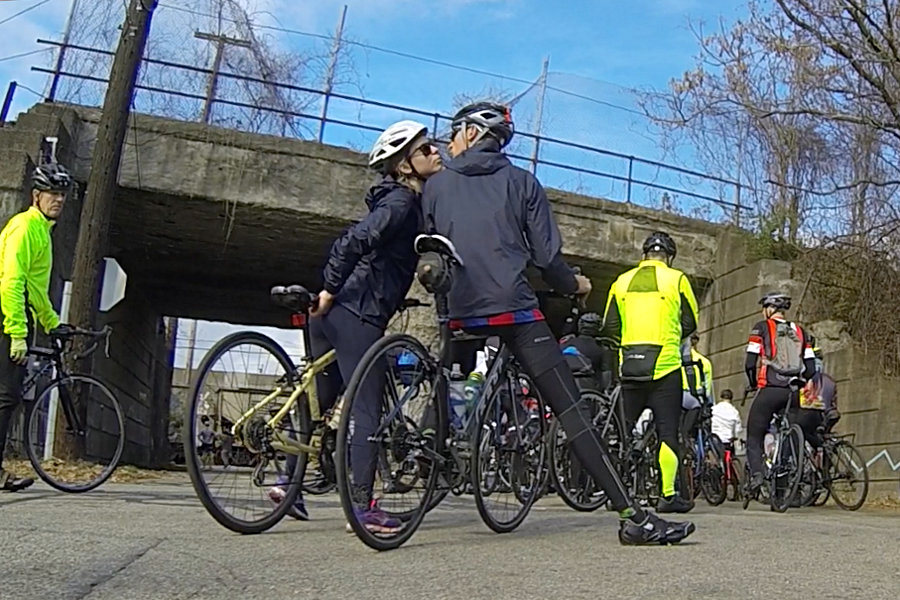
Two riders share a kiss while waiting for a train to pass before climbing Hill 5 (Logan).

Weaving back and forth across Hill 5 (Logan), this rider nearly took me out.

Ornoth descending Hill 6 (Rialto) from the neighborhood of Troy Hill.

Video of Ornoth (around 0:16) rolling up Hill 6 (Rialto).

Two riders hit the deck and two others are stopped early on Hill 7 (Suffolk).

Video of Ornoth (in black) amongst a group of riders (around 3:02) to the top of Suffolk St.

Group 3 after Hill 8 (Sycamore), with helmet-less Ornoth left of center, looking down.

Great closeup action shot of Ornoth ascending Hill 9 (Canton Ave).

Video of Ornoth tackling the lower half of Canton Ave (from 2:43 onward).

Video of Ornoth conquering the upper half of Canton Ave (10:50 to 11:00).

Video of my Canton Ave ascent taken from my front wheel. Camera vibration warning!

Ornoth on the final ramp of Hill 12 (Eleanor) with the Birmingham Bridge in the background.

Ornoth still climbing that final ramp of Hill 12 (Eleanor).

Gasping for air, just rolling over the top of Hill 12 (Eleanor).

This is on the flat bit (Flowers Ave) at the start of the final climb. My shadow appears more eager than I am to face Hill 13 (Tesla).

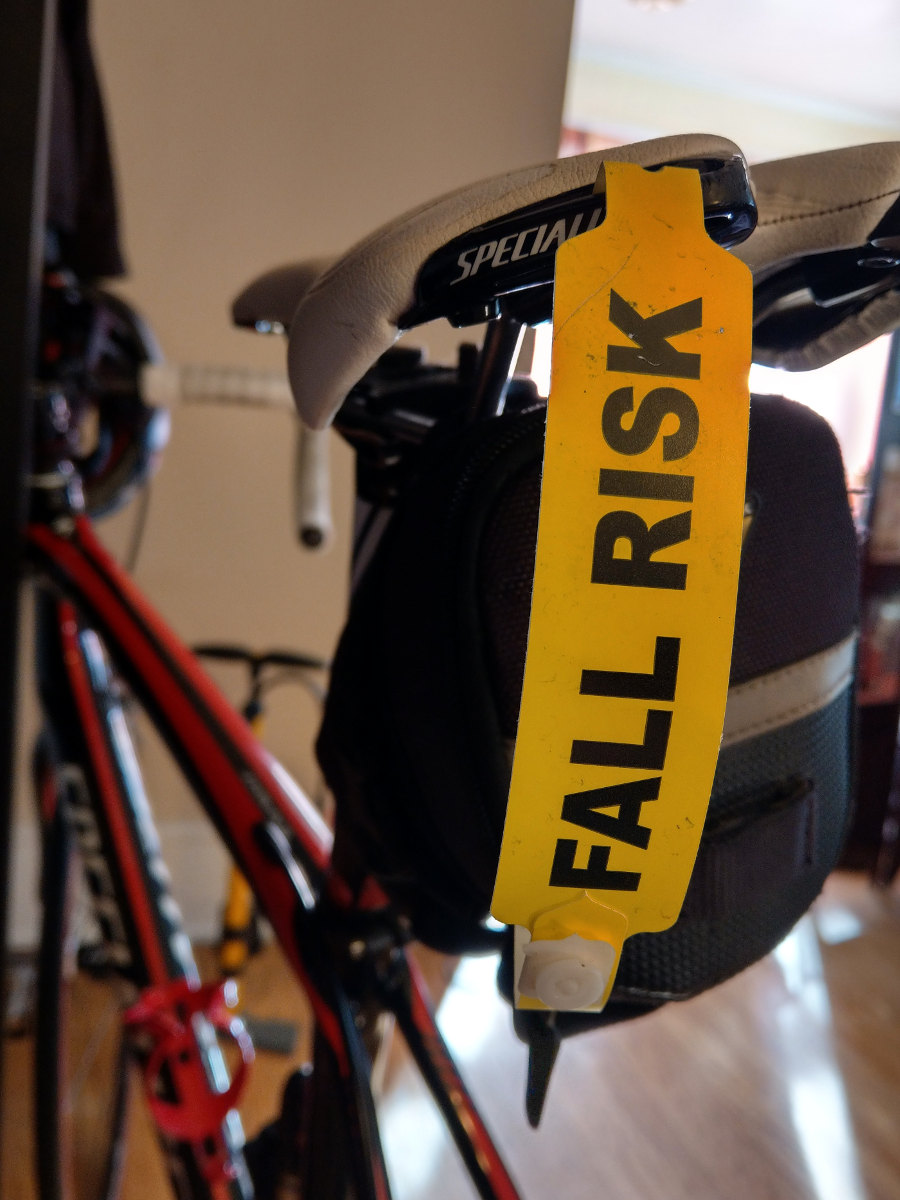
The yellow hospital FALL RISK wristband I hung from my saddle... Very appropriate for the Dirty Dozen!

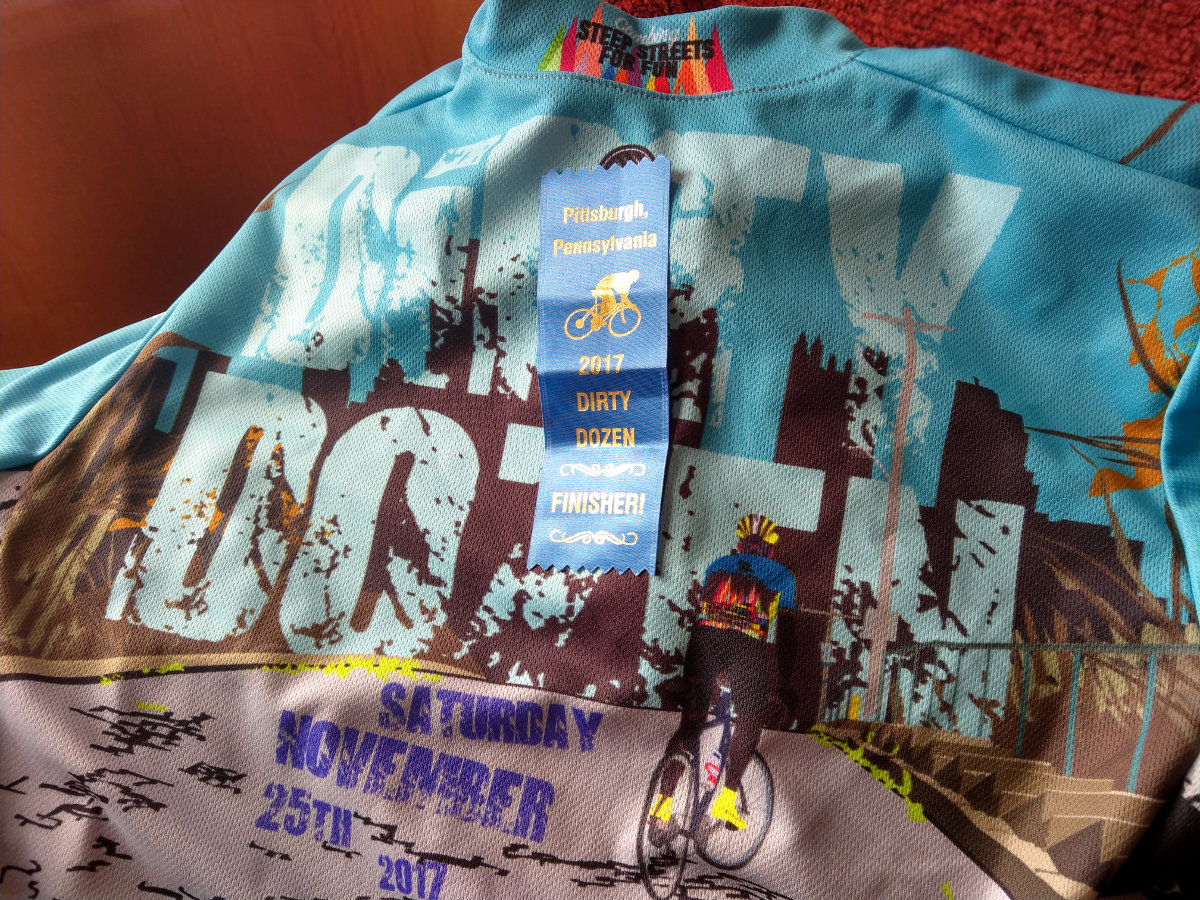
My 2017 Dirty Dozen jersey and that precious, hard-won official finisher's blue ribbon!

The tired-but-happy look of an official Dirty Dozen finisher!

What is it?

Spend the Saturday after Thanksgiving riding your bike up the traditional thirteen steepest hills in Pittsburgh. None are less than 20% max incline, some are over 30%, and at 37% Canton Ave is the steepest street on the entire planet! I am talking absolutely out-of-your-skull ludicrous amounts of pain.

Uhh, that sounds stupid. Why do it?

Each rider has their own motivations, but it usually boils down to the obvious: it’s a remarkable challenge. Do you have the muscle strength to survive the unforgiving length of Suffolk? Do you have the technical skill needed to ride up Canton without falling off the planet? Do you have the mental strength to look at a wall like Berryhill or Boustead and not give up and cry? And do your legs have the endurance to ride thirteen of these unforgiving bastards back-to-back? And can you do all that on cold, blustery day in late November?

Because it’s such a ridiculously extreme challenge, finishers earn lifetime bragging rights and respect. It’s a unique ride you can only do here in Pittsburgh. And between the cheering crowds and the camaraderie of other riders, it’s a whole lot of fun.

The race—yes, it actually is a race, if only for an inhumanly strong few—drew my attention long before I thought about moving to Pittsburgh. Since I was regularly here to visit Inna, years ago I checked out the local bike scene and discovered the event, even watching the live video feed streamed over the internet for several years.

When I moved here two years ago, I missed the 2015 event by just four days. Even if I was in no condition to ride, I would have enjoyed spectating and playing photographer.

Once here, I resolved to ride in 2016, and my resolve was doubled that spring, after the event’s colorful founder—two-time Race Across America winner Danny Chew—was crippled in a bike crash. I registered, scouted out eleven of the thirteen hills, riding them for a combined total of 21 ascents, and participated in the first of seven preparatory group rides…

Then my mother was hospitalized and I spent the next five months in Maine, missing the ride and resignedly watching the live video feed for another year. I consoled myself by creating a tool to compare the steepness of multiple road segments, including the Dirty Dozen hills.

How did I prepare?

This being my first attempt, and knowing I wouldn’t be racing for points, I took a step back and considered what my goals were. At the most basic, I wanted to have fun and to learn a lot. But my stretch goal was to become an “official” finisher, completing all thirteen hills without crashing, stopping, dabbing, or losing uphill progress.

You do not want to go into the Dirty Dozen without training for the rigors of climbing steep hills. My strategy, as with every ride I do, was: train by doing the same kind of riding you expect to encounter in the event. And with eleven of the thirteen Dirty Dozen hills within striking distance, the plan was obvious: climb those goddamned hills!

For eight weeks preceding the race, I spent one midweek day doing solo rides of the hills, both to build up my strength as well as to recon the hills themselves, learning where they were hardest and where I could back off and conserve my strength.

Then, each weekend I would join the weekly group training rides organized by the Western PA Wheelmen. Those started out doing 3-4 hills at a time, graduated to doing 6-7 at a time, and culminated by riding the entire course two weeks before the event, leaving ample time for recovery before race day.

As early as the second group ride I was joining others for “extra credit”, doing an additional four hills for a total of eight at a time. That gave me a lot of confidence that my body could withstand an entire day of hills. My self-assurance grew further when I successfully completed the group ride that covered the first seven hills in the rain!

As I described in my pre-ride blogpost, the final, full-course training ride was a brutally cold 17° ride, and I was disappointed by having to dab no less than four times for various reasons, including insufficient strength to finish off the last two hills.

When the training rides were done, I’d ridden every hill at least three times, some a dozen times, with a combined total of 75 ascents. I was as well prepared as possible. I was pretty confident, except for the difficulties I’d had on that last training ride. And I was really scared.

Although the forecast had called for temps rising from 38 to 50° with 30% chance of rain, I woke up to a pleasant surprise Saturday morning: clear skies and a temperature of 48°, heading toward the mid-50s! I donned my new 2017 Dirty Dozen jersey underneath my thermal jacket.

I set out at 8:15am and ran into other riders heading in the same direction, including one with my friend Ryan. I overheard them saying it was the best weather in the history of the event!

The Start

I swooped into the Bud Harris bike track at 8:30 and was greeted by friends Stef and Jim directing traffic. Stef had come back for the event from her new home in Vermont. She was going to marshal the fourth of four groups of riders—the “Party Bus”—but said she was sure she’d run into me out on the course. Sorry Stef, I wasn’t about to let that happen!

By 8:45 I was signed in and ready. They’d had a lot of last-minute registrations, and people were saying there were a record 450-500 riders for this 35th Dirty Dozen.

I moseyed over to the track infield and chatted with some training ride buddies, including Jeremiah, who has become famous for riding the event on a ponderous HealthyRide rental bike. We waited for the various groups to line up, which would be released in waves staggered by 5-10 minutes.

The first group were the cyclists racing for points on each hill. The second group were experienced cyclists. I had considered starting in Group 2 and then taking a long rest break halfway through the ride and falling back to a later group, but scrapped that idea when they announced that they were limiting Group 2 to riders below age 40.

So it would be either Group 3 or Group 4. The Group 4 Party Bus is slow and waits for everyone, and is filled with inexperienced riders who are dangerous and have no idea what they’re getting into. Since the danger presented by other riders was my biggest fear, I lined up with Group 3.

At 9:30 my group took the ceremonial lap around the track before hopping onto Washington Boulevard for the neutralized ride across the Highland Park Bridge over the Allegheny River to Aspinwall. Way too soon, we turned into a residential area on the flat along the river. The 2-mile ride barely counted as a warmup before the first hill.

Hill 1: Center Ave, Guyasuta St

Center Ave is just a nice warmup hill. You pass under the Route 28 highway and climb a really steep grade that only rates as middling-steep for the Dirty Dozen. After a quarter mile and 200 feet of climbing, it levels out into a second neighborhood. As you catch your breath, you wonder, “Was that all?”

The answer of course is “no”, but you do get a whopping six blocks of near-flat road to recover before turning onto Guyasuta, which stair-steps another 150 feet over another quarter mile without forcing you to go into the red.

Hill 1 will wake you up and get your legs warmed up. And it does make the first selection, turning back the worst of the tourists and newbies who aren’t ready for the challenge. For the real riders, that big rest in the middle is awfully forgiving, making it one of the easier hills we’d face.

According to Strava, Center/Guyasuta is 0.6 miles, gaining 377 feet in altitude, for an average grade of 11%. In training, I’d ridden Hill 1 four times.

Setting a precedent I would follow all day, I decided to ride at the back of the group. Although the weaker riders would be there, I would at least have the ability to regulate how close I got to them, and I could choose my own pace up each hill. It’s important to remember that your speed doesn’t matter in this race; what matters is that you don’t stop, and that you conserve enough strength to complete all 13 hills.

I eased up Center at a slower pace than I’d done in any of my training rides. Halfway up Guyasuta, I caught up with my riding buddy Phil, who has accompanied me on numerous rides. We finished the hill together, with my time a leisurely 8:01.

Unlike the training rides, where the group enjoyed plenty of recovery time at the top of each hill, we immediately set off for the next. If I had been closer to the front, I would have had more time to rest, but that would have meant taking more risk by riding in the middle of the pack.

One of the implications of climbing the steepest hills in town is that nearly every ascent is followed by an equal—but by definition longer and more gradual—descent. Over the neutralized 4 miles we’d drop 400 feet back down Kittanning Pike to the riverside in Sharpsburg for the next climb.

Hill 2: Ravine St, Midway Dr

If Hill 1 was a nice warmup, Hill 2 proceeds to the next level. Ravine/Midway is a carbon copy of Center/Guyasuta, but without that six-block rest zone in the middle. Another moderate climb, it passes under Route 28, then up a challenging slope, climbing 250 feet over a third of a mile.

The route used to bear left onto Sharps Hill Rd, but now the ride turns right onto Midway, which hairpins back on itself, then—like Guyasuta—climbs another 150 feet over a quarter mile. Strava says Ravine/Midway is also 0.6 miles, rising 404 feet at a 13% grade. Also like Center, I’d ridden it four times in training.

The last time I rode it, two weeks before the race, Midway had been partially milled, and I was concerned about what it might be like on race day. However, it had been freshly paved, which was wonderful.

Again, I paced myself casually to the top, following Phil before eventually passing him. Although I again finished in my slowest time all year (8:19), by the top I was getting kinda sweaty.

Before 2016, from this point the route went out Dorseyville Rd to Hill 3: Berryhill Rd. Although it’s short, it’s the first extremely steep hill, and a real kick in the teeth. Strava would tell you that Berryhill rises 164 feet in just a tenth of a mile at 17%.

You approach Berryhill at the end of a fast descent down Brownshill Rd, and—unlike most other hills—you get a demoralizing full view of its impossible slope rising ahead of you. Many riders are too gobsmacked to downshift before they hit the incline, which causes an immense pileup of riders. Berryhill is the first bloodbath.

Typically, the town of O’Hara closes Berryhill for the season once snow flies; it’s the only Dirty Dozen hill that closes. In 2016, with Danny not in charge, his backup organizers decided to replace Berryhill with a different hill back on the Pittsburgh side of the Allegheny. Needless to say, it wasn’t the same challenge as Berryhill.

Despite warm temperatures and no snow, this year the organizers again opted to forego Berryhill and repeat the 2016 route. For my money, it’s not a real Dirty Dozen without Berryhill. In training for this year, I only rode Berryhill three times, suspecting it might be replaced again.

So after gathering up at the Midway Dr VFD, instead of heading toward Berryhill we rolled up to Kittanning St and down into Etna. From there we took the 62nd St Bridge back over the Allegheny for a brief visit to Lawrenceville, passing Group 2 as they came back across the bridge in the opposite direction. In three miles we approached the alternate version of Hill 3.

Hill 3 (alternate): 57th St, Christopher St

Turning off Butler onto 57th St one starts a gentle 6-8% grade. After a jog onto Christopher, the grade becomes a steady 13%: it’s a hill, but not one where you need to get out of the saddle until a steeper bit at the end.

“Hill 3-B” is three times as long as Berryhill, but lacks the challenging slope. 57th/Christopher climbs 258 feet in a third of a mile (13% average). It’s simply not a Dirty Dozen hill. But having expected the change, I had rode Christopher St five times before the event.

By Hill 3-B I had determined which of the weaker riders posed any danger, so I gave them a wide berth. It was another calm, steady ascent, but my 5:13 wasn’t a new slowest time.

As warm riders regrouped at the top, ride marshal Jason generously offered to carry riders’ discarded layers of clothing in his panniers!

We enjoyed the descent down Stanton and the three miles right back across the 62nd St Bridge, hopping back onto the ride route right at the base of the next climb.

Hill 4: High St, Seavey Rd

Right off the main drag in Etna, High St ramps up to a pretty respectable slope. Then it takes a cambered right turn, followed by switchback reversing to the left onto Seavey. This right-left chicane is the most memorable and challenging feature of Hill 4, and provides a rare—and sometimes demoralizing—opportunity to see other riders just above or below you as you climb the terraced hillside.

After the switchback, Seavey stair-steps, giving you a brief rest before a steep kick to the top. Altogether, High/Seavey is a third of a mile, and gains 224 feet (12%). I also rode High St five times in training.

Because of the view, Hill 4 drew our first sizable crowd of spectators cheering us on. I went wide through the turns, avoiding the steeper inner line, and made it up nicely, despite a headwind blasting me right at the end. Finishing in 4:33, I set another slowest time of the year. I was flawlessly executing my strategy of taking it as easy as possible!

A lumpy three miles brought us down to Millvale Riverfront Park, the first rest stop, at 11:25am. I tucked away my gloves because it was too warm, and I wanted a good grip on the bars for the next section of the route.

After a 25-minute break we rolled out, only to get caught behind a train for 3-4 minutes at a level crossing. A couple blocks later, we were delayed another 3-4 minutes waiting for a garbage truck to come down the hill we wanted to go up. It brought back memories of the 2014 Dirty Dozen, when a belligerent garbage truck driver had blocked the way up Hill 4.

With four hills complete, you might start getting comfortable with the idea of nailing this ride. But the first four hills are nothing more than a friendly warmup, and all conception of “friendly” hills is about to come to a screeching halt.

Hill 5: Logan St

Mere blocks from the rest stop, you’re faced with the steep slope, narrow roadway, and broken pavement of Logan Street. Logan is only a quarter mile, but it climbs a full 244 feet (20% average). The first section through some trees, although steep, doesn’t seem terrible, but the trees part to reveal a veritable wall that ramps up in front of you, and it just keeps getting steeper. This is not a manageable slope like Center or Ravine, and it’s not a steep-but-short sprint like Berryhill. The last tenth of a mile is an unfailing 100% effort, and even that doesn’t guarantee that you’ll make it to the top, because the road surface can be slick, causing many falls. I had slipped out and nearly fell yards short of the top on one of the rainy group training rides.

Hill 5 is the first serious kick-ass hill on the route, and you have to be both strong and a skilled bike handler to overcome it. Logan is where any lingering casual riders whimper, fall over, and die.

I inched up the lower section, then clawed my way through the steep bit, dodging numerous participants walking up the hill, and yelling at one rider who weaved back and forth across the road toward me. Like many of the Dirty Dozen hills, Logan saves its steepest slope for the very top, and I had to pour everything I had left into a vicious sprint to the line.

I had done four ascents of Hill 5 in training, and as expected my time of 4:06 was the slowest I’d done all year.

From Logan, we rode for a mile along the top of the ridge, enjoying views of downtown before diving back down toward the Allegheny. Just mind the construction zone where half the road has fallen off the side of the cliff into the woods below…

Hill 6: Rialto St

Once upon a time, the pig farmers living at the top of this ridge—called Pig Hill—used to herd their swine through a narrow, muddy path straight down the cliff to the slaughterhouse at the riverside. This being Pittsburgh, they poured some concrete down the hill and called it “Rialto Street”. At some point they built some stairs along the side, too, just to make it even narrower.

Not being satisfied with this ridiculous “street”, they decided to build a five-way traffic light-controlled intersection right at the bottom of this stupendously steep street, controlling both sides of the Route 28 divided highway, the busy 31st Street Bridge over the Allegheny, another road from Herrs Island, and River Ave. It is a complete and utter cluster, and you’d better have good brakes if you go down that hill.

The good news for riders is that Hill 6 is a short, monotonic sprint of a hill. Climb 123 feet up Rialto in about 750 feet (18%), and you’re done before your body even registers the effort. The bad news is that before you can climb it, you have to carefully inch down it, somehow come to a sudden stop at the bottom to avoid getting splattered on the divided highway, then turn around in a tiny space and climb back up the stupidly narrow road from a dead stop, while other riders are still descending toward you.

This was where my partner Inna had chosen to watch the event. I called out to her as I started my descent, and she got some nice footage of me as I powered back up. Although I had no opportunity to stop, it was encouraging and gratifying for her to share in the event by cheering me on.

Although it does take an intense sprint effort, Rialto is one of the easier hills, which is a blessing, sandwiched as it is between two of the most difficult. On the other hand, car traffic makes it difficult to train on it on your own, so I only rode it four times before the event. Although I completed it in just 1:56, that was still my slowest time of the year.

Between hills the riders would chat, and this is as good a place as any to note how many comments I got. Several people asked about my hub-based Nut-R GoPro camera mount; a couple asked about my little Ass Saver clip-on fender; and one asked about my Di2 electronic shifting. Everyone loved the yellow “FALL RISK” wristband that I’d picked up during my mother’s hospitalization, which I’d attached to a loop on my saddle; that was particularly appropriate for a Dirty Dozen rider! And a guy who knew me from group rides observed that I wasn’t wearing my usual Shimano cycling sandals.

Leaving Rialto, we had a mile and a half of descent before hitting East Street, which in turn comprises a half mile of climbing. This is another section where conserving energy is important, because when you make the left onto Suffolk, you’re gonna need every ounce of strength you’ve got left.

Hill 7: Suffolk St, Hazelton St, Burgess St

After dipping beneath I-279, there’s a sharp, steep climb back up the other side. As the road curves around to the right, you expect the slope to level off, but it never does. It just keeps going, and then gets even steeper. A quarter mile later you see the top of Suffolk and claw your way up to a flat that looks like the top of the hill.

But that’s only the first section, and just when you think you’ve crested the hill, you’re immediately faced with another viciously steep ramp on Hazelton that you somehow have to power up. If you make it up that, there’s still a left turn onto Burgess, which isn’t as steep, but it makes up for it by being paved in granite setts, aka Belgian block, which most people wrongly call “cobblestones”. Altogether the three sections of Suffolk/Hazelton/Burgess are 0.4 miles and gain 358 feet (16% average).

For me, Hill 7 is the hardest of all the hills. It’s long, it’s steep, there’s nowhere to ease off and recover, and before it ends it hits you with the demoralizing wall on Hazelton and the Belgian block on Burgess. It’s a hard, long, intense challenge that will take everything you’ve got, and then some. Like Logan, I also rode it four times in training.

I was wary of Suffolk because on my ill-fated final training ride, I had been taken out by another rider on the lower section coming up from underneath I-279. So for the event, I took a wide line around that corner and was glad I did when I saw two riders come together and fall, stopping two more riders, in exactly the same place I’d been taken out two weeks before.

I nursed my way up to the top of Suffolk, dodging the spectators, weaving riders, walking riders, and riders sitting on the roadside with leg cramps. When I reached the flat bit between Suffolk and Hazelton, I used all the room I could to soft-pedal and rest, nearly getting walked into by a pair of oblivious spectators.

Attacking the narrow ramp on Hazelton, I trailed another weaving rider who just happened to swerve out of my way as I got onto the setts of Burgess, then bounced my way up the rough surface to the top. I finished in 6:37, which is a decent time for me.

I had my thermal jacket partially unzipped to vent the heat from that effort, and the 55° air temperature would work perfectly for me all day. I unzipped my jacket before the hot climbs; enjoyed the cool breeze on the descents, which felt lovely; and zipped it up once I fully cooled off again.

After Suffolk you have lots of time to recover, as the four-mile transfer to the next hill includes a long descent, winds through downtown, and crosses two rivers on two bridges to get from the north side to the south side.

Hill 8: Sycamore St

From the Monongahela riverside, Sycamore climbs straight up Mount Washington to the overlooks on Grandview Ave. Thankfully, Sycamore is another one of the middling-hard hills, rising 296 feet in 0.4 miles (12%). It begins moderately hard, gets a little harder before hitting a cambered switchback. Then it eases off for a quick rest before a final kick that isn’t too difficult.

Four weeks before the Dirty Dozen, Sycamore had been milled, making for a treacherous, gravely ascent during the height of training season. Thankfully, a new surface was laid down a week before the race.

The climb wasn’t bad, but there were a lot of cars trying to get down the hill at the same time. Having stopped to let us pass, many of the occupants were screaming encouragement. There was some runoff water on the road surface in places, which I instinctually avoided, lest I lose traction. I was surprised that there were no spectators near the switchback.

Since it’s easy for me to get to, I had ridden Sycamore eight times in training; three of those while it was milled, and once to check out the new surface. I finished in 7:00, which was a slow time, but faster than when the road had been milled!

A short but painful section of cobbles leads the riders to the Mt. Washington overlook, where a group photo is traditional. I took the opportunity to bleed air pressure from my tires, so that I’d have maximum traction on the upcoming setts of Canton Ave.

The next two hills are three miles away down in Beechview, in Pittsburgh’s south hills. They’re hard to get to for two reasons: first, it requires riding on two extremely busy high-speed arterials; and second, you have to traverse two major hills and valleys to get there.

The second of those intermediate hills—Crane Ave—would qualify as a Dirty Dozen hill in any city other than Pittsburgh. Climbing 263 feet in a half mile (9%), it’s a long, steep climb that inevitably causes tiring riders to whine. It also loads some extra fatigue into your legs: the perfect preparation for the steepest street on the whole damn planet!

Hill 9: Coast Ave, Canton Ave

From the Banksville Road divided arterial, you turn onto Coast Ave, which is the start of Hill 9. Although the entire Coast/Canton hill rises 106 feet in a tenth of a mile (135), you have a gentle 50-foot climb up Coast before the left onto Canton.

Canton is only 200 feet long, but you climb 65 feet in that distance. It’s a full-out 30-second sprint, but you’re at the top before your body has time to react to the effort. From a physiological standpoint it’s one of the easiest hills on the course.

But at 37% grade, Canton is the steepest public street in the world, and it is totally unlike any hill you’ve ever ridden. It’s a special kind of challenge, for many different reasons.

First, it asks whether you have the mental strength to even look at that stupid, obscene hill and not give up. Then there’s the technical challenge of riding something steeper than you’ve ever experienced. If you put your weight too far forward, your back wheel will lose traction, slide out, and you’ll fall; but if your weight is too far back, your front wheel will lift right off the ground and you’ll lose control and fall. And trying to swerve back and forth across the narrow street ain’t gonna help you.

During the Dirty Dozen there are additional complications. You need to make it up amongst lots of other riders, who will be at the limits of their control and likely to fall in front of you or into you. You also need to block out the hundreds of screaming spectators lining the street, drawn by the spectacle of widespread carnage.

But those are just the obvious challenges. Like stalking a lion on safari, Canton is wily and treacherous, and you should not approach it casually.

At the bottom, the road is cambered wildly, so the left side of the street is a dramatically steeper grade than the right. Furthermore, trees and shrubs encroach into the road, blocking the left third of the street. There’s deadfall and moss making the surface very treacherous, and don’t forget the likely complications of November rain and snow and salt, as well.

And then there’s the surface. You start out on nice, sticky asphalt. As the incline begins, it switches to broken concrete, with broad cracks filled with grass or nothing or maybe a pile of leftover asphalt. Then, at the point where the slope requires the most traction, you drop off the concrete surface onto loosely-joined Belgian block setts. You have to somehow lay down maximum power on the steepest slope while bouncing along atop the granite paving stones and hopefully avoiding the occasional holes left by missing stones. Then pull yourself over a thin strip of concrete and back onto some asphalt to crest the hill. So you have to manage four changes of road surface on top of everything else you’re supposedly focusing on.

On the training ride when I first attempted Canton, I started bouncing around and immediately lost traction when the road transitioned from cement to setts. I went back down and dropped about 20 PSI of air from my tires to get better traction, then decided to take it easy until I had gotten firmly onto the Belgian blocks before putting down maximum power; those two changes seem to have unlocked the hill for me. But heading into the race, I had only ridden it two times in my life.

Coming up Banksville just prior to 2pm, I chatted with Phil, which completely distracted me from thinking about all those things I should have been worrying about. Once I turned onto Coast and soft-pedaled to fall well behind the rest of the field, I could hear the band and screaming crowd who had come out to watch the spectacle.

Since there is no such thing as momentum on a hill that steep, I slowly approached the turn, only looking up long enough to register that my way wouldn’t be clogged with fallen bodies or riders walking their bikes up or down the hill (the video actually shows I would thread the needle between three of them). Then I looked straight down at the road in front of me, blocked out absolutely everything going on around me, rolled slowly over the edge of the cement surface onto the Belgian block, and gunned the living hell out of it.

Not thinking about anything but laying down power, I tracked arrow-straight right up the hill, bouncing around but managing to keep traction and forward progress. And in 30 seconds it was done, and I was looking for a place to park the bike.

My time was 2:47, but like everything else, times on Canton aren’t what they seem. Most of that was spent pussyfooting my way up Coast, saving my strength and letting the carnage play out for the rest of the group in front of me before my rabid sprint to the top.

Since I blocked everything out of my mind, it was nice to find some video footage so that I could later hear the cheering and look at what was going on around me while I was locked on: in the Canton Zone. Someone got a nice still of me, and I appear in this video at 2:43 and this video at 10:50. And then there’s my own on-bike POV video

Since we’re often at the top of Canton for some time as people who fail to crest the hill the first time try again (and again), that’s also where the race’s second rest stop is located. I took on a banana and Gatorade, and put some air back into my rear tire to handle the mere 30% grades remaining.

After a 15-minute break, we set off for Hill 10. Along the way, a kid tried to race me up the steep hill behind Canton. I let him go, saying, “I’d race ya, but I’ve got four more hills to ride!”

Hill 10: Wenzell Ave, Boustead St

People are usually elated after Canton. They’ve beat nine hills, including the steepest one of all. It’s all “downhill” from here, right?

No, no it isn’t. There’s a lot of difficult riding still ahead, starting just three blocks later, when you are smacked in the face by Boustead, which is nearly as steep as Canton, but longer, and you get a nice long view of the ridiculous wall ahead of you.

There’s a moderately steep (80 feet in a tenth of a mile) climb up Wenzell before the turn onto Boustead, which has a little dip in it before it launches skyward, climbing another 120 feet in a tenth of a mile. The Wenzell/Boustead combo is 220 feet in 0.3 miles (12% average). But it gets viciously steepest right at the top. Like Canton, I had only ridden Boustead twice in training.

On my final training ride, I’d cleared Boustead, but it had cost me, and after that I hadn’t had the strength to complete two of the three hills that remained. So Boustead was the hill I was most afraid of coming into the race. I was concerned about whether I would be strong enough to get over it, and if I did, would I have anything left in the legs for the three hills after that?

The wily old veterans Phil and I hung back before hitting the hill ourselves. Halfway up, I found myself having to swerve back and forth across the road to make it up, but at least I knew I wasn’t interfering with anyone behind me! At it steepest, when I was about to bust, I pulled out all the stops in a full-bore sprint, which somehow got me far enough over the crest to crawl toward the line. It was deathly hard, even at my slowest time of the year (5:58).

After commiserating with the others at the top, we had another four-mile ride back up to the south side, along those busy arterials and back over two climbs that were very meaningful (to the legs) but utterly meaningless (in race terms). That included descending P.J. McArdle, which was surprisingly free of runoff water from the hillside above, which usually makes it very dangerous.

Hill 11: Welsh Way

Welsh Way is a clone of Rialto: same monotonic incline, same narrowness, same shortness; the only differences are that there’s no divided highway at the bottom to contend with, and you go up it first, then have to come right back down again, because it’s a dead-end street.

For my money, Welsh is the easiest of the Dirty Dozen hills. It’s manageably steep, 123 feet of climbing, and only 800 feet long (11%). And it’s the last easy hill amongst the satanic hills that precede and follow it. Though on these narrow ones you do have to watch out for other riders, especially out-and-back streets like Rialto and Welsh, where riders are going up/down while you’re going down/up.

Along with Sycamore (Hill 8), hills 11-13 are all close to home, so I’ve done them many times in training. For Welsh, that came to nine ascents.

Hill 11 was an opportunity for me to take it slow and easy as I kept my distance from other riders. My 3:11 time was on the slow side, but what surprised me was the number of riders who were cramping up, or that had to stop and walk the hill: the easiest hill of them all!

At the top, the group took a long, unexpected 10-minute rest; I was thankful for the recovery time, because I was dreading Hill 12. After coming back down Welsh Way, there’s a little more than a mile before you get to the next climb: the one most cyclists fear more than any other.

Hill 12: Barry St, Holt St, Eleanor St

And here we have it: the last truly vindictive hill. Many people think Eleanor is harder than Suffolk; I disagree, because Hill 12 does offer riders a precious mid-climb rest, but I can definitely see where they’re coming from. Barry/Holt/Eleanor climbs 343 feet over 0.4 miles at 15%. If it’s not the hardest, it’s the next one on the list, and by this point your legs are completely used-up.

Riding along the flat of Josephine Street, Barry is a sudden switchback up and to the right. You climb up to a 90-degree turn, which reveals a hard drag leading up to a steeper ramp in the distance. This is another one where you have to save your strength for the end.

That distant ramp is a one-way the wrong way, but we go up it anyways. After two tenths of a mile and 150 feet of climbing, you turn 90 degrees into Holt St, leveling off quickly for a very short breather, followed by tiny second kick, then a longer breather as you soft-pedal on the blessedly well-placed flat bit of Holt. Milk it for every picosecond of recovery you can, because…

Then you’ll see riders turning left onto Eleanor St and climbing at an unbelievable angle. You hit it and are faced with a long, steep slope: 25% grade, or 130 feet over a little more than a tenth of a mile. It’s a slow drag for several blocks and it just keeps getting steeper the farther you go. Finally the road bears right and you fight your way gasping over the final—even steeper!—rise to the line. Like Welsh, I’d ridden Eleanor nine times before the race.

I was noticeably much slower than normal up Barry. I barely managed the ramp between Barry and Holt, only to be pinched with two other riders in a two-foot space between a guardrail and a line of cars waiting to come down.

While I soft-pedaled as slowly as possible on the flat, one rider asked if we had finished the hill, and several riders passed me before they realized they still had the entire painful length of Eleanor to go. And therein is the best demonstration why you scout these hills before the race.

Even with my precious extra picoseconds of rest, Eleanor was a hard, long, painful death march. The three riders just in front of me were swerving wildly in slow-motion back and forth across the narrow road, but I watched gratefully as every one of them gave up and veered off onto the flat side-streets a mere third of the way up.

I heard “Ride of the Valkyries” played inexpertly on trumpet up ahead, and the cheers of a boisterous crowd of spectators. Just like on Boustead, on the vicious final kick near the top—where I’d dabbed on my last training ride—I reached the end of my strength, but somehow dug deeper and managed a leg-searing low-speed “sprint” over the top. My 7:34 was—can you guess?—my slowest time of the year. You can see my progress near the top in photos one, two, and three.

The neighborhood—bless them, including the trumpeter!—have a big party and rest stop in a garage on Cobden St, at the top of Eleanor. Between that celebration, waiting for the slower riders, and recovering before setting off for the final hill, there’s always a happy little extra time to rest here. Just one hill left; what a wonderful thought! If I rest up here, and take it easy on the approach, I might just be able to make it up the horrible final climb…

After 15 minutes, we set off on the long 4-mile transfer, ripping down the Josephine descent, over the Hot Metal Bridge across the Monongahela, then down Irvine Street to Hazelwood. Along the way, ride marshal Jason reminded people of the after-party taking place at a local brewery… and that the celebration had officially started 49 minutes ago!

Hill 13: Flowers Ave, Kilbourne St, Tesla St

Way too soon for my legs—but not too soon for my shadow!—we took a left turn off the main drag onto Flowers Ave, where the ride’s longest hill begins. However, it starts out perfectly flat, becomes a false flat, then a turn onto a slightly steeper—but still easy—ramp. A turn onto Kilbourne: another long climb that—at about 15% grade—doesn’t warrant the term “steep”.

That long lead-up is just there to soften you up. Kilbourne ends at a flat spot where you can gather your breath before the final sprint. At this point you’ve climbed 280 feet over three-quarters of a mile. Turning onto Tesla reveals another short but intimidatingly steep wall that is all that stands between you and the finish line.

Although it’s by far the longest, people don’t put Hill 13 on their list of the hardest climbs. It’s not that bad until the end, but it’s a hard battle getting up the punishingly steep final slope, especially with the residue of 12 other ludicrous climbs already weighing down the legs. It’s another 140 feet of climbing, jammed into a little more than a tenth of a mile. The flat sections make it misleading, but the entirety of Flowers/Kilbourne/Tesla is 430 feet of climbing over 0.9 miles (9% average).

But eventually it tops out in a tiny neighborhood: six houses sandwiched between a cemetery and a huge water storage tank. And, thankfully, the finish line.

As I turned onto the flat part of Flowers, I passed three riders stopped off the road, cramping: cramping on the flat! That wasn’t the only time I was grateful to have ridden 75 Dirty Dozen hills in training!

Tesla is my “local” hill, so I’m very familiar with it. Having done Hill 13 a dozen times in the past two months, I took my time on the preliminary slopes of Flowers and Kilbourne. Then I did everything I could to recover, slow-biking on the flat spot at the top of Kilbourne. I didn’t have any strength left for the final ramp up Tesla, but it had to be done, and it was all that stood between me and my goal of being an official Dirty Dozen finisher… And more importantly, putting an end to this long day’s interminable pain and suffering!

I hit the base of the hill with everything I had, which was damned little. I don’t know how I made it even halfway up. When the slope reached its most punishing, I tried to pull out the stops and sprint over the crest, but there just wasn’t any more strength to call on. But somehow I clawed my way over the magical point where the grade lowers just a little, then crawled up the remaining slope toward the water tower just ahead.

A spectator ran right up to the rider in front of me and made noises and hand gestures like he was revving a motorcycle engine. I think that was supposed to be encouraging. Then a kid came up to that rider and handed him… a blue ribbon? A *finisher’s* ribbon!!! I rolled slowly toward him and claimed one for myself: “Pittsburgh Pennsylvania; 2017 DIRTY DOZEN; FINISHER!” (the righteous caps and exclamation point are theirs).

Finish

With my blue ribbon clutched in my teeth, I coasted through the small crowd and off to the side and panted for a while, recovering and trying to sort out my feelings.

I was filled with an incredible sense of accomplishment and satisfaction. I’d surpassed all the goals I’d set for myself: I had enormous fun, learned a ton (which you’ll see below), and successfully finished the entire event without crashing, stopping, or dabbing. In this later stage of a long life that’s been filled with lots and lots of cool shit, finishing the Dirty Dozen ranks as Certified Cool Shit.

After catching my breath, I went over and chatted briefly with my buddy Mike, who had also ridden in Group 3, and got him to take a picture for me. I think it’s a perfect representation of the moment. It’s clear that I’m exhausted, but also really, really happy, and you won’t find another picture of me with a more genuine smile.

However, my fellow riders were dispersing, many headed toward the after-party. Few people were hanging around, since that neighborhood doesn’t like our presence. It was 4:15pm and time for me to go home.

Epilogue

Thankfully, home is only two miles from Hill 13, with much of it flat or downhill before a shallow climb to the apartment. Along the way, my odo ticked over 50 miles for the day. I pulled into our driveway 8 hours and 15 minutes after leaving, having climbed 5,971 feet, well more than a vertical mile.

After having been preoccupied and anxious leading up to the event, it was wonderful to have it over and done with. I piled up a plate of leftover turkey and observed a heartfelt Thanksgiving meal. It was only then that I understood the real meaning of Thanksgiving: not having to even consider riding any of those verdammten Dirty Dozen hills for six months or more!

Although I’d proclaimed this would be my toughest challenge, going by feet per mile of ascent it was number four, and Strava’s “suffer score” feature, which measures heart rate and duration, lists it as number 51. My preparation helped me go into the event strong. I was lucky and a little wily in managing to avoid any crashes and falls, and you couldn’t have asked for better weather. There’s no guarantee that the experience would be similar in the future, or for anyone else, but for me it was a damned fine day all around.

Will I do it again? That’s impossible to say. At my age, it requires a lot of dedicated training, and willingness to ride in inclement conditions. I’ll surely do those hills again from time to time, and maybe some of the group training rides, which were fun. But the full event is an immense undertaking, and I’m not sure whether it’s something I want to commit so heavily to. We’ll see.

For now, I’m completely happy and satisfied to have completed it once.

Strategies to Beat the Dirty Dozen

When I was preparing for my first Dirty Dozen, I looked all over the place for advice, hints, and tips. So I want to offer this distilled advice to other cyclists considering this event.

Here are several of the things I learned. All this preparation and training might not be easy, but in my opinion this is how to beat the Dirty Dozen and have a good time doing it.

The most obvious first step is to know what you’re up against. Don’t go into the event unprepared; this isn’t an event you want to take lightly, unless you’re someone with a deep affinity for failure.

Pre-ride all the hills at least a couple times, so that you intuitively know when you need to give 100%, and—more importantly—where you can rest and let your legs recover. You can recover a lot of muscle power by backing off for just a few seconds. Use the organized training rides to learn valuable pointers from the veterans who have done it before.

Second, prepare your body. Climbing is all about your power-to-weight ratio. Maximize your power by training for the effort you have to put out. Build up the necessary strength over time by riding those hills. The full-course group ride two weeks before the race is valuable for getting your body used to doing not just 4-6 hills, but all thirteen. At the same time, make it easier on yourself by losing any extra weight you’re carrying.

Unless you’re racing, your only goal is not to dab; don’t worry about your time or speed, because no one cares about your finish time. Knowing how to pace yourself and conserve your strength is the most important thing to learn. That means saving your strength for the worst part of any given hill, but also conserving your energy over the duration of the entire course. Even knowing how long and how hilly the neutral sections are can be a valuable way to manage your effort and recovery.

Know what your equipment needs are. How low of a set of gears do you need to make it through the day? What tires—and what tire pressures—will give you enough traction to make the hills? What clothing are you going to need in order to endure the alternating max efforts, freezing descents, and lots of standing around in the cold? What can you take off your bike in order to make it lighter?

I ran a low gear of 34x28 (32 gear-inches), which is a moderately easy gear for a standard compact chainset. I would have run a larger cassette—a 30 or 32—but my older Ultegra Di2 won’t take anything bigger than a 28. On the other hand, the electronic system produced much more reliable shifting under load than a mechanical groupset.

Then there’s climbing technique. Most riders know that you use much less energy seated than when you get out of the saddle and stand to power over a rise. But with hills this steep and long, you need to be able to alternate between both techniques to balance muscle fatigue, even at extreme slopes. Pulling up on the handlebars helps, but your biceps can wind up cramping. And as I said in the section on Canton Ave the steepest slopes require a mastery of balance. You need to know where your balance point is, especially on wet Belgian block at a 37% incline.

Though your strength and equipment and technique will always be secondary to external conditions. These steep roads don’t get much maintenance, so they have potholes, broken-up surfaces, can be off-camber, or even paved with granite setts. You might encounter loose gravel, sand, or salt spread across the road, or spots made slick by snow, ice, wet leaves, or just leaked automotive fluids. And sometimes your way can be blocked by cars or something else completely out of your control.

Now take all of that, and try to do it amidst 400 riders of mixed ability, all riding at different paces, many of them completely unprepared for the conditions. In that situation, your biggest threat comes from other riders weaving in front of you, dropping their chains, falling into you, or blocking you and forcing you to stop. While you’re fighting the hill and the road surface, you have to watch for dangerous riders.

Finally, you need to be psychologically prepared. The best advice I have here is to explicitly not psych yourself up; treat the event as if it were just another fun weekend out. Take all the stress and pressure out of it, and you’ll be better able to deal with whatever comes up.

As for dealing with the pain and suffering… I’m sorry, but that’s what you signed up for. You have to welcome the worst the course can throw at you. Think about the bragging rights you’ll gain and the stories you’ll have!

Finally, enjoy the camaraderie of your friends and fellow Dirty Dozen riders, as well as the spectators’ encouragement and awe. Whether you finish the course or wind up walking several of the hills, have fun, because if there’s one phrase that captures the essence of the Dirty Dozen, it’s “ridiculous fun!”

The training rides are over. Now it’s time for the main event: my first ever Dirty Dozen, climbing 13 of the steepest hills in this stupidly hilly town. I give a little more background in this blogpost following last year’s first (and last) training ride.

It’ll probably be the most difficult athletic achievement of my life. It’s been a long time since I experienced the dread I felt when the “2017 Pittsburgh Dirty Dozen Bike Ride” event started showing up in the sidebar of my Facebook page last weekend!

My (center left) first time riding up the steepest street on the planet: Canton Ave! Yow!

My (center left) first time riding up the steepest street on the planet: Canton Ave! Yow!

This ride has been my sole focus for the past two months. In the middle of each week I did solo training rides on those hills, then group training rides organized by the WPW on the weekends.

There were seven of those official group training rides. The first four weeks introduced riders to each of the successive quarters of the route (3-4 hills per ride). The next two weeks stepped it up to traverse the first and second halves (6-7 hills per day). And then the final session a week and a half ago spanned the entire route, all 13 hills in one day!

That was a day for the Flahutes: the hard men. When I set out, it was 17°—setting a new daily low temperature record in Pittsburgh—and the wind chill was a mere 7°. Despite all my training and preparedness, I wound up dabbing four times: once on Suffolk when someone fell in front of me (video), once on Boustead to wait for a huge moving van, and on the last two hills because my legs were just done. And for the first time ever, I had serious biceps cramps from pulling so hard on the handlebars. That’s when I learned that there really is an immense difference between climbing 4-8 impossible hills and doing 13.

Since the middle of September, I’ve done every hill at least twice, some more than a dozen times. Add all those sessions together, and I’ve climbed a total of 75 Dirty Dozen hills. Aside from the as yet unknown (but usually inclement) weather (current forecast: 38-50° with 30% POP), I’m as ready as I could ever be.

Along the way I’ve learned a lot about these specific hills, and about how to tackle steep climbs in general. I’ll save all that for my post-ride report, once the pudding has been proofed.

If you’re sitting around bored next Saturday, the race is going to be live streamed by Cycling Fusion on perhaps Facebook Live or YouTube or Vimeo, and it should run from around 9am to 3pm or so.

Otherwise, stay tuned for the full ride report. It should be pretty superlative.

September’s been a dud as far as riding goes. It’s been unseasonably cold and rainy, I started the month still suffering from a summer cold, and to be honest even when the weather’s conducive I just haven’t had much desire to lay down the miles. Poop on that!

WPW Fall Rally: Morning on the Yough

WPW Fall Rally: Morning on the Yough

WPW Fall Rally: Soutersville Train

WPW Fall Rally: Soutersville Train

I skipped the Pedal the Lakes century up in Mercer County due to a showery forecast and the organizers’ persistent refusal to provide GPS route data, something which has become de rigueur for everyone else.

I had the opportunity to do a 1am night-start 200k brevet, but just couldn’t motivate myself. It was a cold night, a very hilly route, I haven’t got the form, and it was Inna’s last night at home before a long trip. Having seen the weary finishers—all three of them!—I’m glad I gave it a pass.

That 200k ended at the Western PA Wheelmen’s fall rally, which I did go to (at a more respectable 9am). It was still cold and foggy, but it wasn’t dark, and I only had to pedal 35 miles instead of 135! I still went off course twice, and it was hilly enough to dissuade my lazy ass from undertaking an additional 32-mile route after lunch.

On the other hand, I saw the 200k riders finish, got to socialize with a bunch of folks, picked up the snazzy new argyley WPW jersey I’d ordered, and got a free (surplus) WPW “ride leader” tech tee and wind vest.

This month of poop gets even worse going forward, as I’m leaving to join Inna for a week in Seattle and Victoria. There goes what’s left of my late-season fitness!

Unfortunately, I could really use that fitness, because with the change of seasons comes the transition from endurance riding to obscenely steep and painful hill repeats in preparation for my first infamous Dirty Dozen ride. And if I get enough climbing in, I’m hoping to hit a quarter million feet of ascending by the end of the year. But in order to do any of that, I need to re-find my lost bikey mojo.

The sole bright spot has been new advances with my Edge 820 bike computer. First, I was able to wirelessly connect my new phone to my Di2 electronic shifters, download new firmware patches, and install those patches myself. Previously, you had to pay a bike shop to have their mechanics do all that; and even when Shimano’s hardware and firmware supported it, my old phone didn’t. Now, when Shimano introduces new functionality, I can just download and install it myself. So that’s quite a convenience.

And after posting an idea for a new data field on Garmin’s product forum, I found a guy who wrote a ConnectIQ app called AppBuilder that you can download to your bike computer and program to calculate your own data fields, which is exactly what I did. So now, in addition to the regular fields that Garmin supplies, my bike computer now displays how many feet of ascent I’ve done per mile for the current ride. That’s something I’ve been following since moving from flat Boston to hilly Pittsburgh, and having my cyclocomputer display it for the current ride is pretty darned cool.

But the reckoning is coming… DD minus 10 and a half weeks.

Dirty DNS

Nov. 13th, 2016 10:15 am

For cyclists, the acronym DNS stands for “Did Not Start”. That’s the result they publish if you are registered for an event but unable to participate. And for me, that’s how my 2016 season ended.

On October 2 I participated in the first of seven group training rides leading up to Pittsburgh’s Dirty Dozen race. I had already crawled up eleven of those infamous thirteen hills for a total of twenty ascents, and I was planning on seven more weeks of hard, focused training followed by a memorable event.

2016 Dirty Dozen jersey

Four days after that first training ride, I flew to Maine to care for my 90 year-old mother, who had been hospitalized. With one very short exception, that’s where I’ve been ever since, and where I’ll remain for the immediate future.

I’ve only managed one easy ride in the past six weeks, and I missed the Woiner Cancer Foundation’s 321 charity ride, which I had registered and fundraised for. I was away from home for my birthday and missed the introduction to Japanese taiko drumming that I’d excitedly signed up for.

More importantly, I’ve been unable to train for the Dirty Dozen, and missed all of the remaining six group training rides (the final one, which does all thirteen hills, is taking place today). I haven’t built up the leg strength and stamina to take on Pittsburgh’s thirteen steepest hills; and my prior fitness level has plummeted due to six weeks with no exercise at all.

Realistically, even if I could fly to Pittsburgh over Thanksgiving weekend, I’m not in physical condition to ride my first Dirty Dozen this year. There’s just no way.

For several years, I watched the live video stream from the Dirty Dozen, trying to learn what I could about it. When I moved to Pittsburgh last fall, I arrived in town a week after Thanksgiving, just missing out on the opportunity to spectate, if not participate. But 2016 was going to be my year; my fitness was right up there, and I was excited to face the hills. Plus there was added incentive this year: to support ride founder Danny Chew, who was paralyzed in a crash a few months ago.

So you can imagine how disappointed I am to withdraw as a rider, plus be relegated to watching the internet broadcast rather than cheering the riders on from the roadside. It sucks, and it’s a lousy way to end an otherwise successful first year in Pittsburgh.

Not that I begrudge it. Family responsibilities obviously take priority over a bike ride. But it’s still a huge disappointment. The Dirty Dozen is Pittsburgh’s signature event, and it would have been one of the most noteworthy accomplishments of my cycling career.

Hopefully things will work out better next year.

Ornoth’s been playing with data visualizations again, and as usual the results are pretty cool.

Climbing hills is how cyclists measure themselves. We roam around the countryside, testing ourselves against short, steep hills; long, steady hills; and especially ones that are both steep and long.

Ascending each hill dozens of times, we become intimately familiar with every detail, having discovered where the slope increases, where the opportunities to recover are, and whether a rider should attack it aggressively or work his way to the top more slowly and conservatively.

Slope chart

When cyclists get together, hills are a natural topic of conversation: complaining about them, reminiscing about them, and comparing them to one another. This hill is longer, but that one’s steeper. But the first one is steeper right at the start. Or is it?

The one thing that’s missing from our conversations is quantitative data that allow you to objectively compare one hill with another, or even a whole set of hills. Ideally, that data would all be summarized in one simple chart that you could read at a glance.

You’d think the interwebs would have created such a thing, but I couldn’t find one. Tons of sites will show the elevation profile of one hill, but I couldn’t find any that would show multiple hills on the same chart. So I went and wrote one myself.

If you go to this page, you can enter the URLs for up to thirteen Strava “segments”. The easiest way for me to identify hills (or any road segments) is by leveraging Strava, the cycling activity tracking site.

Once you’ve told me what road segments you’re interested in, behind the scenes my page will fetch all the elevation data from Strava, then build a chart for you that displays the elevation profiles of every segment.

If you click on the thumbnail image at the top of this post, you can view a full-size example, although it won’t show the interactive features of the chart: you can hover the mouse over any line, and a tooltip will display the slope of the hill at that point; you can show and hide each segment; and zoom in closer to see greater detail.

My only disappointment is that it’s only as good as Strava’s data, which isn’t always as good as you’d want and expect.

It can be a bit of a chore chasing around Strava to find segment URLs, so I’ve created some example charts for you to play with.

The first one compares some noteworthy hills near Boston.

The next one shows the thirteen hills in Pittsburgh’s Dirty Dozen ride.

In addition to comparing local hills, this makes it easier for me to compare Boston’s hills with those in Pittsburgh, both to satisfy my own curiosity as well as to share with my cycling buddies back in Boston. Here’s an example chart comparing some hills from Boston and Pittsburgh.

But to satisfy your own curiosity, go to the input page to use whatever Strava segments you care about, from your neighborhood or anywhere in the world.

I hope you enjoy it! It was fun to develop, and I think it carries really interesting and useful information that no other site provides.

When I lived in Boston, autumn meant easy rides and enjoying being at peak fitness. But in Pittsburgh, it’s just the opposite.

Before the move, my entire season was structured to put me in peak form for early August and the Pan-Mass Challenge. Once that was over, I had three months or more to enjoy riding for pleasure, rather than for performance, before the weather put an end to my season. Sure, there’d probably be a fall century or two, but nothing I needed to train for, since I was already at peak form. Autumn rides in New England were part of the payback for all the painful spring and summer training.

The calendar is a little different here in Pittsburgh. Instead of having most of August free, I had two centuries and three very hilly metrics, right through Labor Day. So I couldn’t think about taking it easy until after the end of August.

From Labor Day onward, the calendar is mostly open for the rest of the year. I’ve got a very flat (and mostly crushed limestone) metric century 3-2-1 charity ride in the middle of October, but that’ll be a cakewalk.

Riders on Canton Ave

But there is one major event left on Pittsburgh’s annual cycling calendar, and it’s hard enough to destroy any notion of taking it easy: the Dirty Dozen.

For over thirty years cycling legend Danny Chew (who was recently paralyzed) has run the Dirty Dozen ride, where two or three hundred cyclists tackle thirteen of the steepest streets in this extremely hilly town. It’s Pittsburgh’s most legendary, mythical, signature cycling event.

How can I communicate how ridiculously steep these hills are? In Boston, if people want a workout, they might climb Park Ave hill up to the town’s water tower. Park Ave has a slope of 6 percent. None of the Dirty Dozen hills are less than 20 percent—several surpass 30 percent—and Canton Ave tops out at 37 percent, steeper than any other public street in the world. Steeper than anything you have ever seen in San Francisco, Los Angeles, or the Alps. Much steeper than anything professional cyclists tackle.

Imagine trying to ride up a ramp that’s steeper than a staircase. You might think that’s an overstatement, but the sidewalks along Dirty Dozen streets—when there are any—are in the form of stairs, as you can see here or here.

Needless to say, average riders—even proficient roadies—don’t undertake the Dirty Dozen without some very serious hill training. The ludicrous harshness of each hill, combined with trying to cajole your legs into doing no less than thirteen of them back-to-back, demand preparation via a very focused period of incredibly intense training.

For that reason, there’s a seven-week series of group training rides that run through all of October and most of November. They begin by tackling three hills per ride, then graduate to six, and culminate with a full practice run of all thirteen, two weeks before the race, which is held on the Saturday following Thanksgiving.

2016 first training ride

This year’s first training ride (GPS log) was held yesterday. It was wet and rainy, which provided a test of tire traction that two riders of our fourteen failed spectacularly. The biggest lesson I learned is that I need to replace the cleats on my winter shoes. No harm done.

The group ride covered the first three hills (Center/Guyasuta, Ravine, and Berryhill), and the fourth hill (High/Seavey) was optional. After finishing those, I went and added the 13th hill (Flowers/Kilbourne/Tesla), since it’s on my way home. It was my first time doing five DD hills in one ride, and I definitely felt it.

Over the past couple weeks, I’ve ridden eleven of the thirteen hills, for a total of 20 ascents. I haven’t gotten around to #9 Canton and #10 Boustead, since they’re very hard to get to. And there are two (#5 Logan and #7 Suffolk) that I haven’t completed without stopping, so I’m going to have to work up to those. And that’s gonna be a full-time job for the next eight weeks.

So unlike years past in Boston, there’s no easy wind-down of the cycling year in Pittsburgh; at least not if you’re going to ride the Dirty Dozen. And because they’re so intense and require recovery time afterward, intense hill repeats don’t combine well with the kind of long-distance rides I usually prefer. That means my lengthy endurance rides are over for this year; instead I’m embarking on a very steep and painful build-up to what will undoubtedly be the hardest and most challenging ride of my life.

WQED did a half-hour story during the 2010 Dirty Dozen ride. If you’re curious to learn more about the riders and the hills and the overall spectacle, it’s a pretty digestible nugget. You can find that here.

Normally I wouldn’t consider doing a long-distance ride like the Pittsburgh RandonneursMcConnell’s Mill 200k brevet this early in the season. April is way too cold for long rides, and there’s no way I could have completed the training required to be prepared for 130 miles.

On the other hand, this winter has been so mild that I’ve ridden more than usual this year. Although none of that riding was anything near century-length rides, I figured I had enough miles under my belt to consider undertaking the hilly 130-mile challenge.

That desire was reinforced when Pittsburgh suddenly found itself in the middle of an unprecedented week of cloudless sun and temperatures in the 70s. With sunny days at a premium here, there was no doubt I’d spend the weekend in the saddle, and the 200k seemed perfectly timed.

On the other hand, there was reason for trepidation. This wasn’t just any hilly ride. Out of all the rides I’ve done since getting a GPS, the Mt. Washington Century, which traverses three mountain passes and claims to be the most challenging century in New England, contains the most climbing: around 5,900 feet by my records. The brevet route climbs 8,800 feet, the equivalent of one and a half Mt. Washingtons! Not a ride for someone who hasn’t trained for it.

But wait; there’s more. I couldn’t do the ride on my current bike (R2-Di2) because a week earlier I’d discovered cracks in the wheel rim and was waiting for a brand new rear wheel to arrive at the bike shop.

In the meantime I’d been riding my old bike (the Plastic Bullet), but two days before the brevet, its rear wheel also started acting up, making a horrible screeching noise anytime I coasted at speed, which I eventually traced to the freehub. In theory it was rideable, so long as you constantly pedaled and didn’t ever coast…

So that was the decision I had to make the day before the event. 130 miles, ten hours in the saddle, far more climbing than I’ve ever done, on very limited training, without coasting, on a broken bike? Yeah, sign me up for that!

Ornoth hammering

So Saturday morning I found myself riding 8 miles to the start in Shaler, pedaling all the way. It was a pretty cold 52 degrees at 6am, but the forecast expected it to warm up a lot.

There were a mere eight starters, and I knew several of them from a ride down to Monongahela back in February. After photos and a briefing, we left the organizer’s house at 7am and immediately dove down a very steep 125-foot hill to the banks of the Allegheny. After having to brake and spin the pedals all the way down, I found myself off the back, but I caught up again easily.

The first segment was a flat 16 miles along the river on Freeport Street to Tarentum. The group mostly stayed together. My hands and feet (in my cycling sandals) went numb, but with the sun rising, warmer temps were coming. Thankfully, it was going to be a rare windless day.

From there, the route turned away from the river and up Bull Creek Road, one of many routes that follow stream beds up to the high plateau that surround the three rivers. But we soon left the stream valley and began the first serious climb of the day up Sun Mine Road.

That splintered our happy little group into shards, with myself and two experienced cyclists—Monica & Stef—leaving the rest of the group strewn along the climb in our wake. 23 miles into the ride, we now faced 100 miles of interval training: constantly rolling steep hills with zero flat to provide any respite.

Just after 10:30am we reached the West Sunbury country store that was the 53-mile checkpoint. The three of us refueled, and I jumped into the bathroom to quickly strip off my arm warmers, base layer, and cycling cap since the day had warmed substantially. The last one out of the store, I had to run to catch up to the girls as they left. It was then that I realized that after taking off my base layer, I hadn’t pulled the shoulder straps of my bib shorts up before putting my jersey back on! I stopped and quickly executed the reverse of the women’s “remove my bra straps without taking off my shirt” maneuver and set off to catch back up.

After passing through more hilly farmland, at noon we traversed Cooper’s Lake Campground. This is the site of the Society For Creative Anachronism medieval recreationist group’s huge Pennsic War, which my ex-wife and I attended three times, our first time being our honeymoon trip. Passing through the area brought back lots of memories, but it was hard to correlate 30-year old memories of a crowded campground with the open fields I saw as I rode past.

An hour later the temperatures were climbing toward 80 degrees, and with no shade in sight I was starting to fall behind Stef and Monica. I caught up with them at the 83-mile checkpoint at a 7-Eleven in Ellwood City. Stef left soon after I arrived, and that was the last we saw of her that day. Monica and I rode off after a rest, staying within shouting distance for the remaining 40 miles.

By half past two we hit the century mark while passing through the town of Cranberry. 7.5 hours, which is no record, but it’s pretty good, given the endless climbing we’d endured.

Half an hour later we stopped at another convenience store to refuel and rest. We’d take a couple more short stops for breathers over the remaining route, because I was flagging and Monica was having difficulty with her exercise-induced asthma. Another half hour had us passing through North Park and over the last major climbs of the ride.

Eventually we came out on Wible Run Road, a sustained stream-bed descent that led us finally back down into the valley of the Allegheny near the start.

A mile from the finish my GPS finally conked out. Losing the last mile of data isn’t a big deal, except that it included the vicious 12-percent grade climb back up to the organizer’s house, which reminded me a lot of the brutal finishing climb to the Mt. Washington Century, except shorter. Only later did the organizer reveal that he had chosen not to have us take an easier route to his home!

ACP 200k finisher medal

Monica and I pulled in at 4:56pm, just shy of 10 hours in the saddle. Stef, the only rider who finished ahead of us, had already checked in and gone home. The others drifted in and out over time while I waited for Inna to pick me up and munched on some well-earned pizza and soda.

Normally at this point I’d be all hyped up about getting my randonneur’s 200k finishing medal, but the organizing body and I had a parting of ways back in 2007, so I won’t be giving them the membership fee necessary to get the medal I earned.

So let’s do some context-setting here, because this was a milestone ride in many ways. My longest ride in Pittsburgh, longest ride and first century or double metric this year, first brevet in ten years, earliest in the year that I’ve ever done a century or 200k, exceeded my previous max climbing on any ride by 50 percent, probably only my sixth ride with more than a mile of climbing, and it also put me well over 50,000 feet of climbing (nearly 11 miles of vertical) so far this year.

Between the distance, the heat, the hills, and the broken bike, I’m pretty proud to have completed what will be one of the longest rides of the year, and notched my first century amongst the hills of western Pennsylvania.

Before I close, a quick review of how March went.

March was without question an excellent month: 400 miles of riding, with a stoopid 26,000 feet of climbing.

The month included exploration rides around McKeesport, Days Run up near Tarentum, Lowries Run into Emsworth, the GAP trail up to Boston (PA) and back, Dorseyville and Indianola, Munhall and the South Hills.

There were several particular highlights. One was finding and setting my first Tag-o-Rama locations, as described in an earlier post. I conquered four more of Pittsburgh’s brutal Dirty Dozen hills on the way to my first-ever Strava Climbing Challenge victory, although the worst of the hills— Barry/Holt/Eleanor—required a dab near the top after I pulled my shoe out of the pedal cleat. That same ride took me down the Montour Trail to the town of McMurray in memory of my mentor and hero Bobby Mac, where I stopped and had a memorial ice cream at a roadside stand that offered—appropriately enough—a “Dino Sundae”. My longest (now superseded, of course) was a 72-mile expedition out to Bakertown and over to Ambridge, where I came across a massive cheez ball spill in the middle of the woods in Sewickley.

So things seem to be going really well so far this year, aside from both bikes currently having broken rear wheels, of course.

A couple posts back I wrote: “Unless January and February get back to setting temperature records, you won’t see much from me in the next couple months.”

Pittsburgh from overlook
Serpentine Drive
North Shore Riverfront Park
Great Allegheny Passage in McKeesport
O'Hara Manor Park
Old Mill Road

Well, sometimes miracles do happen! January had five days above 50 degrees. Then February also had five days above 50°, plus five more days above 60°! And you can bet your sweet bippy that I took advantage of them.

So far in 2016, I’ve done 11 rides, which included some neighborhood explorations, plus:

  • The mostly ceremonial New Years Day Icycle Bicycle ride around town. (GPS log)
  • A processional ride in honor of a local rider who was killed. (GPS log)
  • A northside expedition out Fox Chapel, returning via Old Mill, Squaw Run, and Guyasuta. (GPS log)
  • Another expedition up the southside slopes, including stops at all the overlooks above the Monongahela and the ridiculous climb up Greenleaf. (GPS log)
  • Local explorations of Duck Hollow, Johnston Ave to Glen Hazel, the swoopy and dangerous Swinburne shortcut from Oakland to Greenfield, and discovering Parkview Blvd as a superior route to Homestead Grays.
  • A 65-mile riverside ride including Bunola River Rd up to Mon City and back with the Pittsburgh Randonneurs. (GPS log)
  • Another northside ride, going out Dorseyville and back via Saxonburg (GPS log).
  • Trying out my first and second Dirty Dozen hills. Tesla, the last hill on the Dirty Dozen route, is only a little ways from home. It’s mostly an easy hill until the last quarter mile, which shoots up painfully. But it’s short and doable, unless perhaps you’ve already covered a dozen insane climbs already… (GPS log)
  • And I also did Ravine/Sharps Hill, which is the second hill on the DD route. It’s much longer, starting out steep, getting much worse through its middle section, then ending with a long, straight uphill grind. That middle section was pretty damned hard. (GPS log)

It’s fun seeing the Dirty Dozen hills and conquering them, even if I’m taking them in isolation, rather than altogether.

So my stats for the past two months are actually really good. In the five preceding years back in Boston, I averaged only 4.2 rides and 94 miles by the end of February. But this year I’ve done 11 rides totaling 275 miles. So you can see that it’s been a great start to the year.

More significantly, by this time I normally would have accrued an average of 1,300 feet of climbing. My total this year is no less than 18,228 feet! Which reinforces the implication from my last post: that every ride in Pittsburgh is the equivalent of going out and doing hill repeats in Boston.

And I’ve been posting ride photos regularly, some of which appear here, but you can see more—plus new ones as they come in—on Instagram, Flickr, or Strava.

But now the calendar has turned to March, and genuine early season things are happening. The pros have opened up the European season with the Het Volk and Kuurne-Brussels-Kuurne cobbled classics, and the local randonneurs are ramping up for their characteristically early 200k and 300k brevets.

It might not be quite time to break out the SPD sandals, but I’ve gotten enough sun exposure to begin making progress on what the little woman calls my “distinctive markings”.

Hopefully March and April will bring more of that, please!

Frequent topics