No shit, there I was… lying in the hospital, being told I’d had a stroke, two weeks before this year’s Livestrong Challenge ride.

That was about six weeks ago. For my initial reactions, read this post and this followup in my general blog.

Here, in this post, I’ll talk specifically about the stroke’s implications for my cycling, as well as how it’s gone on the bike over the past month. Then I’ll circle back to my unexpectedly limited participation in Team Kermit’s Livestrong weekend.

Cycling Post-Stroke

When I came home three days after my stroke, I had the following concerns with respect to my cycling career:

  • How much numbness would I have in my left hand, and would there be any loss of control?
  • I’d been warned by the doctors to expect my stamina to be reduced. By how much? Would that affect both my strength and endurance?
  • How monomanically would I have to monitor my blood sugar and hydration, which are critical for both cyclists and stroke survivors?
  • Would I ever regain enough fitness to return to group rides?
  • Would I ever be able to get back to doing long rides? Metric centuries? Imperial centuries?
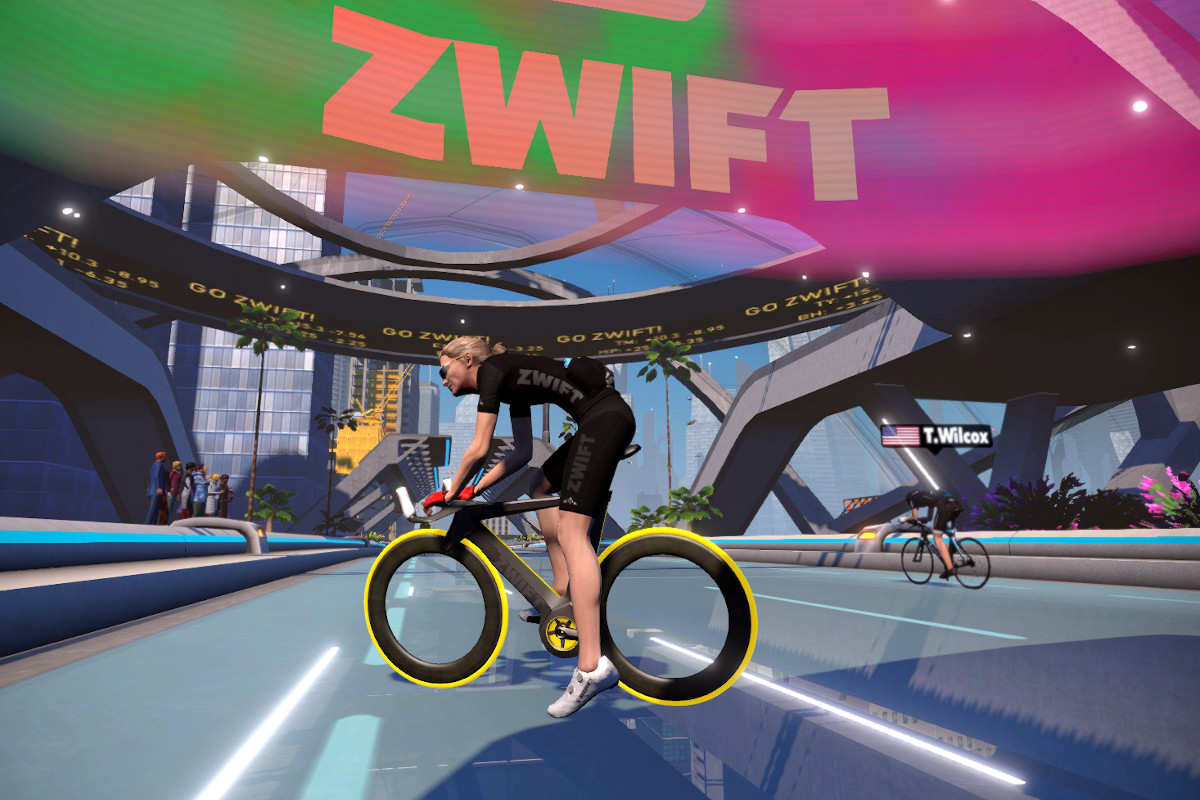
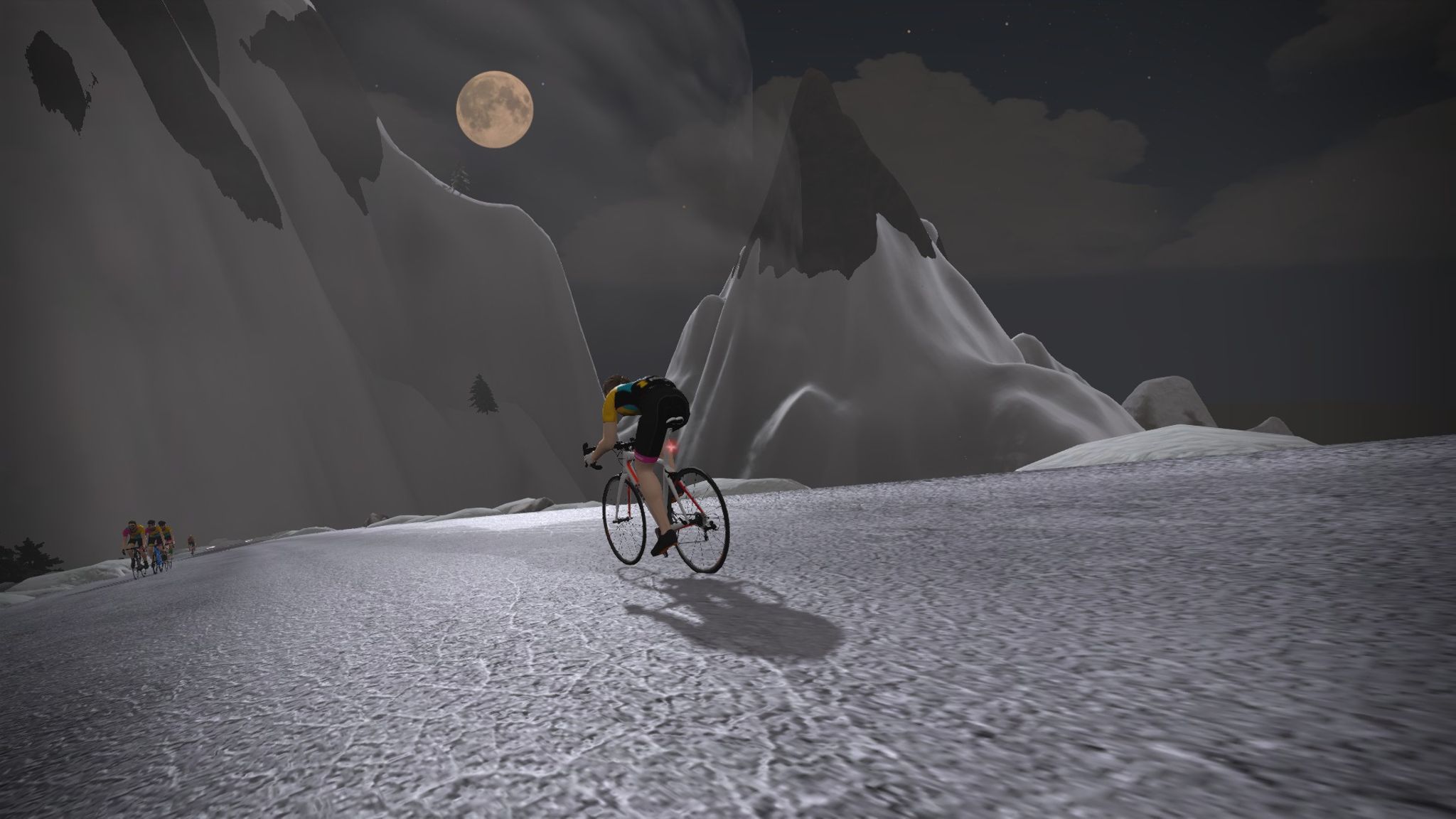
2024 Tour of Watopia

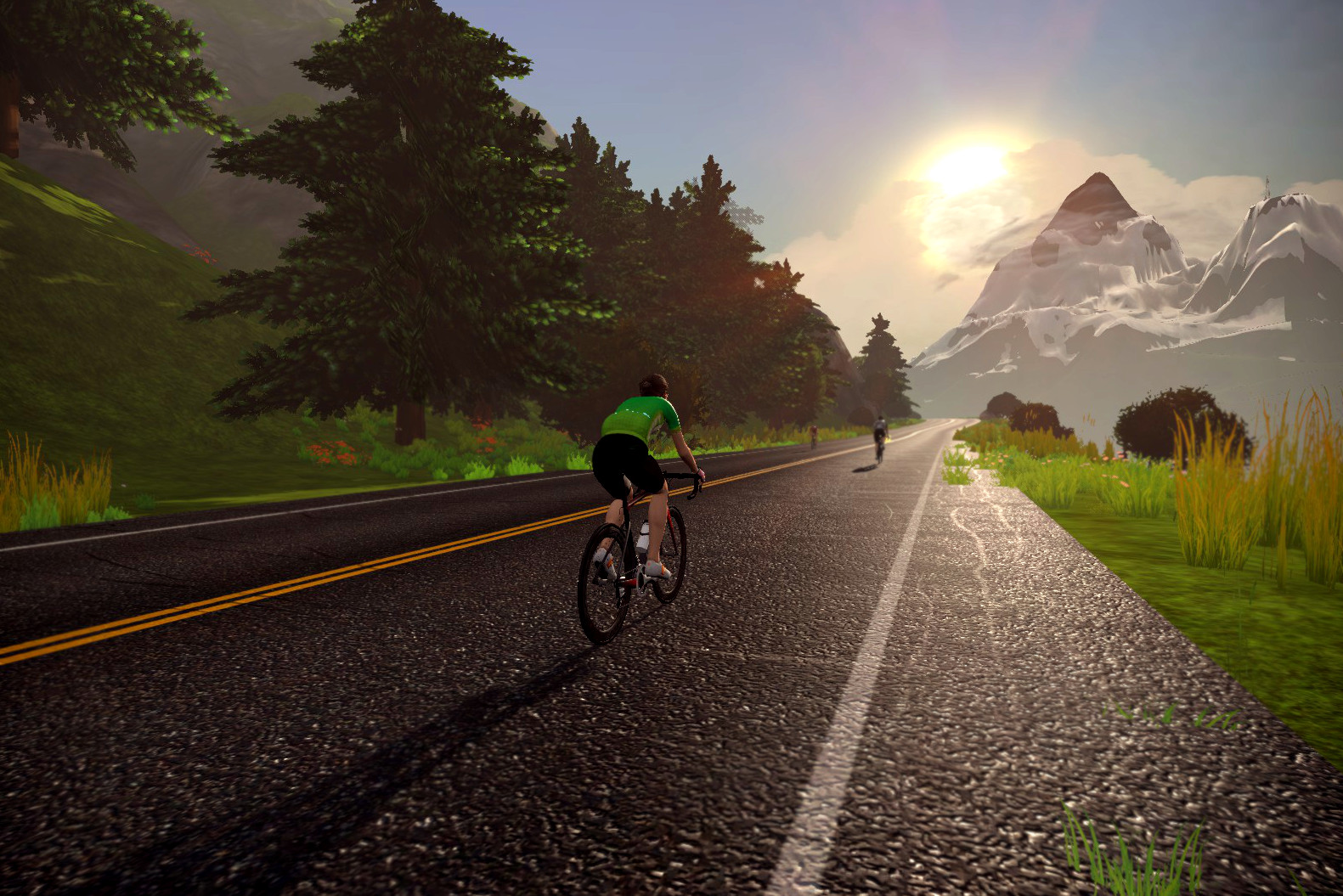
2024 Tour of Watopia

Having received nothing but encouragement from my medical team, my rehab plan was to start riding on the indoor trainer to learn my new limitations and regain confidence in my health before hopefully returning to the road.

So five days after leaving the hospital and eight days after my stroke, I updated my months-idle Zwift setup and did my first indoor trainer ride. It was a slow 45-minute, 20km effort where I gently ramped my heart rate up from 90 to 150 BPM and back. I wasn’t strong, but the ride was successful.

By chance, my resumption of indoor training coincided with the beginning Zwift’s popular six-week Tour of Watopia event, so I made regular use of those rides to rebuild a little lost fitness and a whole lot of lost confidence. Aside from some concerns about cardiac palpitations, it’s been mostly clear sailing since then, with rides up to 54 KM proving eminently feasible.

Despite doing a bunch of indoor riding, it took a while before I felt comfortable cycling alone, outdoor, away from the safety of home. Between that and my focus on Zwift, I’ve only done one short outdoor ride so far, but that went fine. At this point there’s really nothing stopping me from riding outdoors… up to a certain distance and intensity.

So a month later, do I have answers to my questions?

  • I’ve had zero numbness or loss of control. All’s well there.
  • My endurance actually seems all right. My raw sprint power is off a bit, but that might just be detraining while I was recovering, and I’d rather not push my heart until I’ve talked with my cardiologist.
  • I’m making major changes to my diet, but can still be more relaxed about high-glycemic foods on days that I ride. I really do need to master hydration. There’ll be a post on my experience with a nutritionist at some point in the future.
  • Even before my stroke, I was already off the back on competitive-paced group rides, so I may have to step away from them, or at least temper my expectations. Hopefully I can find some less pacey rides, although that’s been a challenge in Austin.
  • Although I haven’t tested myself, I think I’m still good for a metric century. But imperial centuries were already a big ask for a 60 year old, and they’re only getting harder, especially in the Texas heat! I just don’t know how many centuries I’ve got left in me… if any.

Some of my questions just won’t be answered until next spring, when I’ll have more information and hope to ramp my outdoor training back up again. I still have several upcoming diagnostic tests and followup appointments that could change my plans completely.

As for that event I had planned…

2024 Livestrong Challenge Team kermit

Livestrong Weekend

I registered for October’s 100-mile Livestrong Challenge back in May, not knowing that I’d have a stroke just two weeks before the event. Although I had just started riding my indoor trainer on Zwift, I had not attempted a single outdoor ride before the event. So there was no way I could do the ride.

As usual, my Boston-based PMC and Team Kermit buddies came to town. The Thursday before the event, I drove over to Jewboy Burgers to meet up with Steven, Christophe, and David as they refueled in the middle of their post-arrival shakedown ride.

On Friday I drove in to Mellow Johnny’s bike shop to pick up my ride registration packet, tee shirt, and rider swag. As a member of Team Kermit, I’d been given VIP tag #32, four places down from last year’s #28.

After leaving the shop, I synced up with Paulie and the riders at the start of the regular Friday Truancy group ride. We chatted before they set off, and I learned that local rider Clint is a longtime stroke survivor, which was both a new connection and an encouraging data point at a time when I needed them. After they rolled out to begin their ride, I went home and jumped on Zwift for an hour.

Sunday was Livestrong’s event day. While Team Kermit were out on the course, I started my day with an indoor ride. It was my token “Livestrong Challenge”, although at 32 KM it was the same distance as the event’s shortest route! After a shower and lunch, I drove into town to meet Team Kermit’s full contingent at the finish line. It was a delightful afternoon chatting with familiar PMC buddies as we waited for our two 100-mile riders to reach the finish.

I was, of course, disappointed that I had to cancel doing my own planned 100-mile Livestrong ride – which would have been my 111th imperial century – but this was one of those times when circumstances dictate that you just take the loss gracefully.

Looking Forward

The plan from here is pretty straightforward and definitely gradual.

Despite almost year-round cycling weather here in Austin, I’ll be concentrating mostly on Zwift until spring. First, it’s just safer for me to stay at home, especially as I gradually test myself on increasingly longer “distances”. Plus Zwift’s Tour of Watopia runs through November 19th, and that sweet double XP beckons. And they’ve added a couple dozen new routes for me to knock off. On top of all that, I will be hanging out with my PMC buddies on the weekly Pan-Mass Challenge Zwift group rides, which have also resumed. And I hope Zwift’s usual monthly gran fondo series will run again this winter, as well. So there’s lots of incentives to ride the indoor trainer for a while.

Outdoor rides will be a distant second priority. I’ll need to regain my comfort riding solo, then my confidence in riding longer distances. Whether I return to group rides or longer events won’t be answered until sometime in the spring. But with lingering health questions and cooler weather in the coming months, I’m happy to take my time building back up to that level of fitness. After all, if I were back in Boston – or even Pittsburgh – I wouldn’t be riding outdoors through the winter anyways!

Next spring I’ll have a much better handle on where I’m at both mentally and physically as I recover from an extremely harrowing brush with death. Things seem pretty good at the moment… Though, as I’ve learned, it can all change in any instant.

With over 25 years in the saddle, that’s long enough to divide my cycling career into eras. And having just begun a new era in Austin, it might be interesting to see what a typical year looked like in the past, how my riding pattern has changed over time, and what it might look like in coming years.

You probably know that I’ve long tracked the daily variations of my cycling Fitness using a metric that is usually called Chronic Training Load, as explained here.

Looking back over the Fitness data I’ve collected, I’ve grouped the past 12 years’ riding into four “eras”. Those are:

  • 4 years from 2012 to 2015, when I was living in Boston
  • 3 years from 2016 to 2018, when I was living in Pittsburgh
  • 4 years from 2019 to 2022, when I was still in Pittsburgh, but riding the indoor trainer through the winters
  • And my best guess for how things will change here in Austin

The following chart plots my average/typical Fitness over the course of a year for each of those eras. Commentary follows, below.

chart

Let’s start with the bottom, orange line. It shows my average Fitness over my last four years in Boston. Things to note:

  • I did essentially zero riding from December into March during the New England winters.
  • Every spring I started from near zero, rapidly building Fitness back up.
  • With nearly all major events crammed into a short 3-month summer, my Fitness peaked from June until PMC weekend at the start of August.
  • With my major events done, my Fitness dropped rapidly in the weeks following the PMC, before stabilizing at a lower level during the relaxed rides of autumn.
  • As the temperatures fell, so did my Fitness, declining rapidly over the holidays and long winter.

The next-higher, green curve represents my first three years’ riding in Pittsburgh. It’s extremely similar to the previous one, with some subtle differences:

  • With a slightly improved climate, I was able to do a bit more winter riding, especially in December and in March of the following spring.
  • My major events were more spread out, going from late May through September. And with no PMC ride, my Fitness didn’t spike at the start of August or drop off right afterward.
  • Thus I did more riding in August and September, and had a longer period of peak summer Fitness before ramping down in the autumn.

Now look at that almost flat blue line at the very top of the chart. That’s my average Fitness for my next four years in Pittsburgh. Although it looks radically different, the only change was using my new indoor trainer to maintain my Fitness over the winters. Here’s what jumps out at me from that line:

  • My Fitness held steady over the holidays, rather than its usual decline. This allowed me to start the new year with dramatically higher Fitness.
  • Starting from a higher base and being able to ride throughout the winter meant my buildup to peak form could be more gradual, running 5 months from January through May rather than 2-3 months.
  • My summertime peak covered the same duration, but my head start allowed my Fitness to peak at a noticeably higher level.

That brings us to last year’s move to Austin, Texas. How will my annual riding pattern change? Well, if you look at the red dashed line, I’ll tell you what I’m thinking.

  • I’ll still be using my indoor trainer, and milder winters will allow me to ride outdoors more often, so I expect a very flat pattern, without any huge seasonal dips.
  • I expect my Fitness will decline a little bit overall. There seem to be fewer long rides and routes in this area, and I’m also losing capacity as I progress into my seventh decade.
  • I expect January and February will continue to be my annual minimum Fitness, mostly because cold weather will make it unpleasant to ride the indoor trainer in our unheated garage.
  • And instead of summer being a single plateau, I expect my Fitness will peak once in late spring and again in early fall. In the middle there’ll be a noticeable dip, since Texas events tend to happen in spring and fall. I definitely won’t be riding as much during Texas’ brutal summer as I used to back in New England!

From all that, here are the factors that have shaped my annual riding pattern:

  • My acquisition of an indoor trainer at the end of 2018
  • The realities of seasonal changes and weather at my home locations
  • The number and schedule of major organized rides, especially the Pan-Mass Challenge
  • The availability of routes suitable for long solo rides
  • The lowered capabilities that have come with aging

Winnertime

Apr. 20th, 2020 11:24 am

At this time last year, I summarized my first winter using a smart trainer and Zwift to maintain fitness. Now this year's spring blogpost is due, even though the Corona virus and shelter-in-place orders will extend the indoor riding season into April, and May, and June, and...

But let’s start with the good news and winter happenings before turning to the more unpleasant, ominous future.

The Harrogate UCI World Champs course

The Harrogate UCI World Champs course

Epic KoM

Epic KoM

Scenic ride through Titans Grove

Scenic ride through Titans Grove

Not a bad day, for December!

Not a bad day, for December!

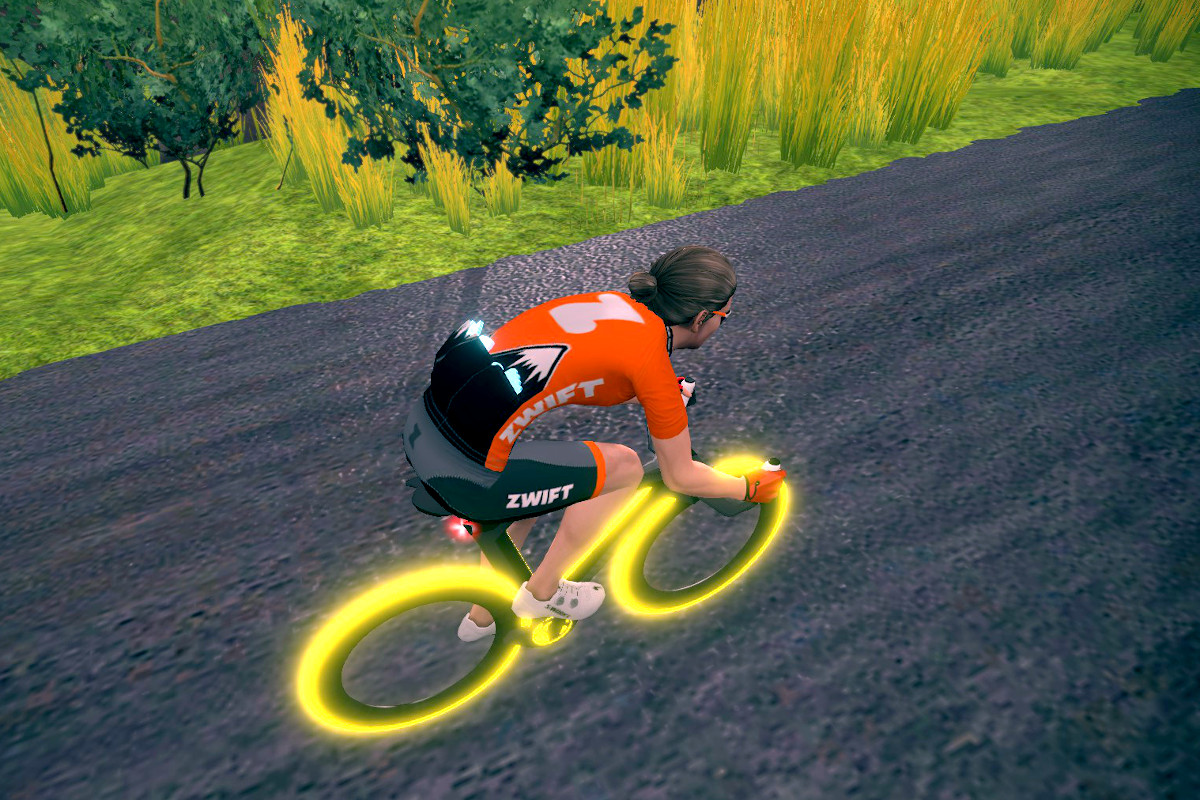
My Xmas gift: the Tron bike

My Xmas gift: the Tron bike

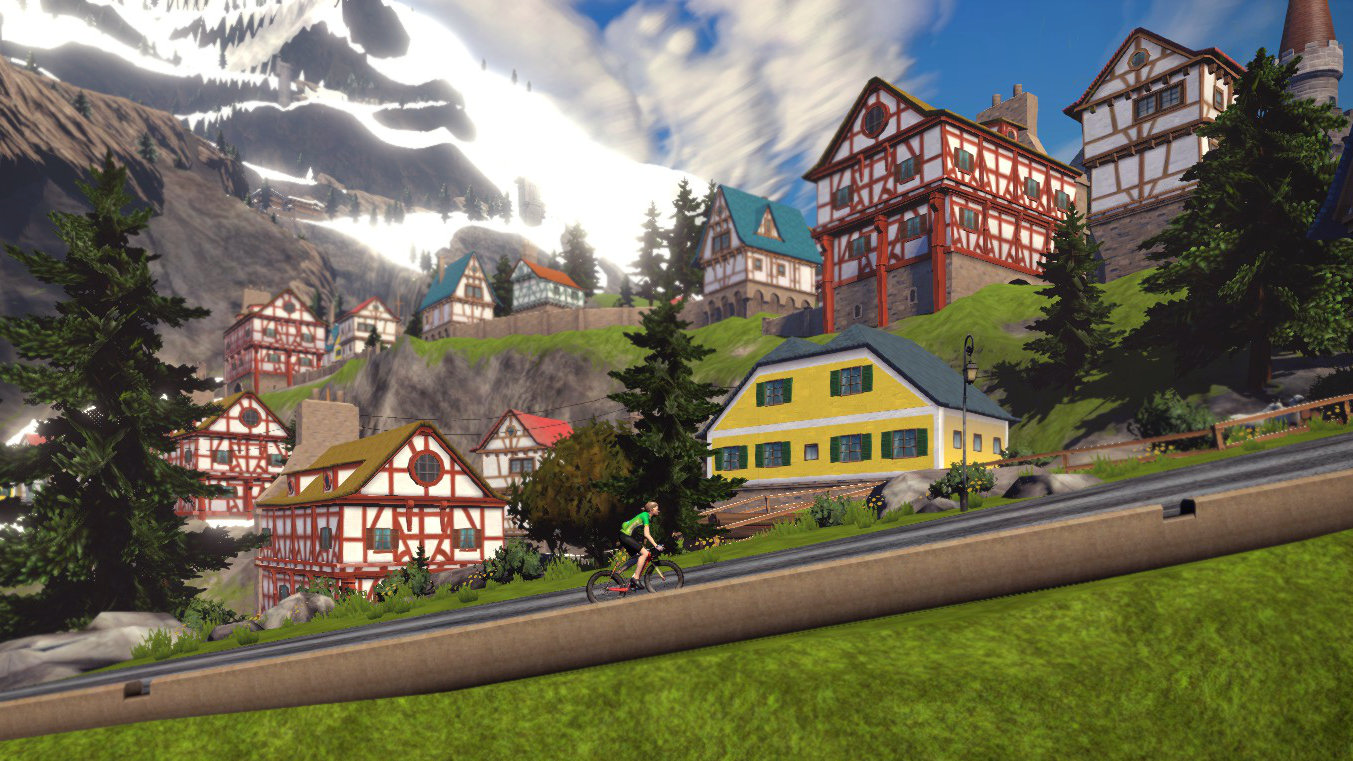
New Year's in the Italian village

New Year's in the Italian village

Combo Jersey

Combo Jersey

Halloween dinosaur on a mountain bike

Halloween dinosaur on a mountain bike

The Herd kit

The Herd kit

In the six months from October through March I rode 2,830 miles, 99 percent of them on the indoor trainer. I did one-third more riding than the previous winter, mostly because I didn’t get my trainer until December of that year.

In that time, Zwift has given us a lot of changes and additions. The most noteworthy were the addition of the undulating Titans Grove route, the Yorkshire UCI World Championship course, the short Crit City expansion, and a much needed redo of the half-baked Richmond (Virginia) UCI course. Zwift introduced mountain bikes and even tested steering in a short off-road path. And they debuted individual and team time trials, although I haven’t tried those as of yet.

And one has to mention how well Zwift have handled the dramatic and unexpected growth in usership resulting from the Corona virus lockdowns. A year ago, it was noteworthy if there were 10,000 to 15,000 people Zwifting simultaneously. Recently we’ve been topping out around 35,000: three times last year’s peak.

The biggest farce of the year has to be the Fence, a tool that community organizers have long begged for, to help keep group rides together. I found it inconvenient and fiddly. And ride leaders only transitioned their whining about fly-away riders to complaining about people merely riding close to the Fence. Plus Zwift botched the implementation so horribly that they had to withdraw the feature after a short time.

Meanwhile I made a few improvements to my own Zwifting setup. The biggest win was buying a smart outlet, which allowed me to turn on my cooling fan using my smartphone, without getting off the bike. I also wrote a background program called zwift-pic-monitor that automatically displays any screen shots I take while riding (normally Zwift saves each photo but doesn't show it). And I added a new IRL cycling jersey to my already large collection when The Herd—the club I ride with on Zwift—completed its long-awaited design.

On the negative side, I’ve been plagued by chain drops and slippage, particularly during high-power sprinting efforts. I’ve already installed a new chain, so I suspect my outer chainring is worn; however, I can’t verify or fix that at the bike shop until the current Corona virus lockdown is lifted.

That brings us to this winter's achievements; it’s quite a list.

In December I completed my first year on Zwift. Disappointingly, I never got the anniversary email they usually send out.

I finished the December 100-mile mission, the April 250k mission, the Italy and Everest challenges, the 5-stage Tour of London, the 7-stage Tour de Zwift, the 3-stage fondo series, and the 3-stage Haute Route Watopia. I rode 16 stages of the (nominally 5-stage) Tour of Watopia because they were doling out double experience points; but I only did one out of 3 stages of the Tour of Innsbruck. I earned the Zwift mountain bike & tires, acquired the Zipp 808/Super9 disc wheelset, and was awarded the much-coveted Meilenstein Lightweight wheels upon completing my 10th ascent of the formidable Alpe du Zwift.

I started the now-poorly-titled “off-season” at Level 26, and am currently at Level 38. But after two winters I’m only 56 percent of the way to the current max level (50) because it takes lots more XP to level-up at higher levels.

And then we get into the really noteworthy stuff...

After ascending 5.7 times the height of Mt. Everest, I earned Zwift’s Tron “Concept” bike. Everyone covets it because it takes a long time to get and has ostentatious glowing tires. Although noteworthy, it’s tacky and doesn’t perform any better than several “real” in-game bicycles, so it’s of little interest to me.

I earned the Masochist badge for completing 25 ascents of the Alpe du Zwift. That’s hard and also takes time to complete. A nice, respectable achievement. Tho I’ve just about given up on breaking the 60 minute ascent barrier.

I’ve already written about completing Zwift’s challenge for completing each of the in-game routes: first an initial 25 routes, then the full 67 routes. The second set was my most memorable and noteworthy achievement of the year, because it included several of Zwift’s hardest courses.

The longest of those routes was 107 miles, and I also extended the second-longest one to 100 miles. As you know, 100+ mile rides are how I judge my year. The following week I notched a third one by repeating the 33-mile Stage 1 of the Watopia Tour three times in one day.

With my usual real-world events being cancelled due to the Corona virus, I’m hoping to do rides on Zwift that match the distance and climbing of the outdoor centuries I’ll miss. The first of those was a challenging 200k (125 miles) with 8,400 feet of climbing that I completed yesterday, but that deserves its own separate blogpost. However, that means I’ve already completed four “Zentury” rides so far this year.

Mimicking my first IRL event is a segue to where my training stands now. In a normal year, I’d use this space to summarize my level of fitness and preparedness for the transition to upcoming spring events. Although outdoor riding is going to be severely curtailed, there’s still good reason to review where my fitness stands.

My Chronic Training Load (CTL) bottomed out around 50 at the end of October, as I recovered from a strained achilles, but the aforementioned route challenge motivated me to train hard through November, December, and January. By New Year's, my CTL had risen to 80, which exceeds my usual summertime peak. After those two Zenturies to complete the route challenge, my CTL maxed out at 98, setting a new and unexpected all-time fitness record—in January! Since then, I’ve let it subside back down to 75, which is still above my summertime peak form.

While recovering from last fall’s injury, I produced a disappointing 197W back in my November Functional Threshold Power (FTP) test; but in February I bounced back up to 215W, and a subsequent Alpe run bumped it up to 227W, which are both closer to what I would expect when I’m in form. I’ll see where I stand again in May.

Based on my CTL and FTP, I’m in great shape for whatever riding I'll do, indoors or out. But thanks to the Corona virus, it’ll be more of the former than the latter. All my group rides and major events in April, May, and most of June have been cancelled, and I expect that will also be the case through July at least.

It might make sense, then, to revisit the goals I set for this year. Ironically, four months ago, I wrote the following:

I don’t really expect to surpass my 2019 season, due to this year's confluence of circumstances. Will 2020 also feature great weather, limited travel, no job commitment, and an understanding partner who will loan me her car to get to distant rides? And can I continue to evade the growing concerns of age and health?

While I couldn’t foresee cancellation of the entire cycling calendar along with all other public gatherings, I was skeptical that 2020 would be as good as 2019. That was eerily prescient, huh? Barely two weeks into spring we knew that unless the trajectory of the pandemic suddenly changed, there would be no outdoor centuries for me this summer. We’re left now to do what we can with what we’ve got.

That’s why I can’t tell you how glad I am that I bought my smart trainer and started Zwifting in 2018, so that my indoor setup was up and running a year before we were ordered to shelter in place. I hesitate to imagine how stir-crazy I’d be now if I wasn’t set up for indoor riding!

But I’m not looking forward to spending one of my remaining summers inside. I already miss being warmed by the sun, fresh air, being out in nature, exploring new places, and making lasting memories. But putting miles down on the turbo is infinitely better than not riding at all… or being deceased.

Stay tuned, and stay indoors!

… come and join the Zwifting party!

So four months after buying a new indoor trainer, how did my winter training go?

It went well, according to my stats in Zwift. I rose from Level 0 to Level 20, completing the California and Everest Challenges, earning 32 out of 40 achievement badges. I finished the 9-stage Tour de Zwift, and 5 monthly fondo rides. I climbed the Alpe du Zwift (their facsimile of the real-world Alpe d’Huez) 5 times, and even earned an orange jersey for setting a fastest lap time on their Innsbruck course. I took 2 Step Tests and 2 20-minute FTP tests; in the former set, my Functional Threshold Power rose from 212 to 221; as measured by the latter it went from 198 to 210. And I finished with my first ever indoor/virtual century (more below).

Taking the start/finish banner

April Fools brought flaming roostertails!

Climbing the Alpe…

My first “Zentury”

Our Hero riding off into the sunset

I also made use of Zwift’s social element, joining a supportive team called “The Herd”. They have members all over the world, and I hope to join a gathering of them in September at the Leelanau Harvest Tour century in Traverse City MI. It’s cool having an open group audio channel with other riders who might not be in the same area (either on the virtual course or in the real world). I’ve befriended folks and have projected my usual offbeat presence. I created coroplast examples of Zwift’s thumbs-up “Ride On” symbol and posted a photo of me riding with them, which earned 115 Likes.

Let’s compare this winter (December, January, February, and March) to the previous two years. In the winter of 2016-2017 I rode 282 miles. In 2017-2018 I rode 535. Although Zwift miles aren’t quite the same as real-world distance, this past winter I logged over 1,900 miles (only 24 were outdoors)! That’s equivalent to my usual summertime riding volume. According to the Fitness (Chronic Training Load) charts I keep posting, I retained more Fitness this winter than ever, and by mid-January, I was back at a Fitness level I wouldn’t normally reach until the beginning of June!

This past Sunday was the final step of my winter training regimen: completing a “Zentury”. It was my first time ever doing a hundred miles on an indoor trainer. Obviously, it was my first century of 2019, and also the earliest in the year I’ve ever done a century (by 10 days).

In some ways, indoor miles are easier. There’s no traffic lights, no need to ever stop, and no wind to battle. For those reasons, indoor rides are generally faster; I completed 100 miles in 5h20m, when an outdoor one would usually exceed 7h. However, many people feel trainer miles are harder. After all, you can never rest or coast, which grows hard on the legs. In terms of TSS (Training Stress Score), my Zwift century ranked as my 14th most difficult ride, which puts it respectably among my harder centuries.

Thanks to Zwift, this winter has been an unqualified success. Back in December, when I set my annual goals for 2019, I came up with two: getting over the post-Dirty Dozen malaise that plagued me throughout 2018, and using Zwift to begin the 2019 season at a high level of fitness. As far as I’m concerned, we can check those two goals off already!

But all the positive numbers in the world don’t mean anything until I put them to the test outside, in the real world. Yesterday’s indoor century was part of an overall plan to be ready for 2019’s first outdoor event.

Next weekend is the longest ride of the year: the Pittsburgh Randonneurs’ annual spring 200k. Climbing 7,500 feet over 124 miles, it’s a massive challenge, and the perfect way to test whether all this Zwifting has improved my early-season form. I’m relying on it, because over the past 5 months, the only outdoor riding I’ve done was a casual 21 miles on New Years and one 31-mile ride last week.

I think Zwift has set me up for early-season success, but stay tuned for the pudding…

From start to finish, 2018 was a disappointment.

After the extreme effort to conquer the 2017 Dirty Dozen (blogpost) and my 250,000-foot climbing goal (blogpost), I fell into an enduring malaise and lack of motivation that lasted all of 2018. On top of that, three long trips—smack in the middle of training season—ensured I couldn’t get back into proper form in the spring.

A wet, grim start to Escape to the Lake Day 2

A wet, grim start to Escape to the Lake Day 2

As if that weren’t enough, 2018 was Pittsburgh’s wettest year in recorded history, washing out even more of my training. In July, when my travel was done, I struggled through my remaining four big events, eventually riding myself back into fitness just in time for the season to end.

If we only count outdoor road riding, I rode only 2,776 miles: my lowest total in five years (if we exclude the intentionally light year of my move from Boston to Pittsburgh). And it was by far the least amount of climbing I’ve done since the move. Though if we count the 486 virtual miles I did on the indoor trainer, my annual total rises to a more respectable 3,262: still 20 percent less than I rode in 2017.

2018 wasn’t entirely bad—there were a few minor highlights—but all told, it was a miserable year.

My Original 2018 Goals

I really didn’t have any cycling goals for 2018. In 2017 I had checked off everything I’d aspired to do in Pittsburgh, leaving nothing specific to reach for.

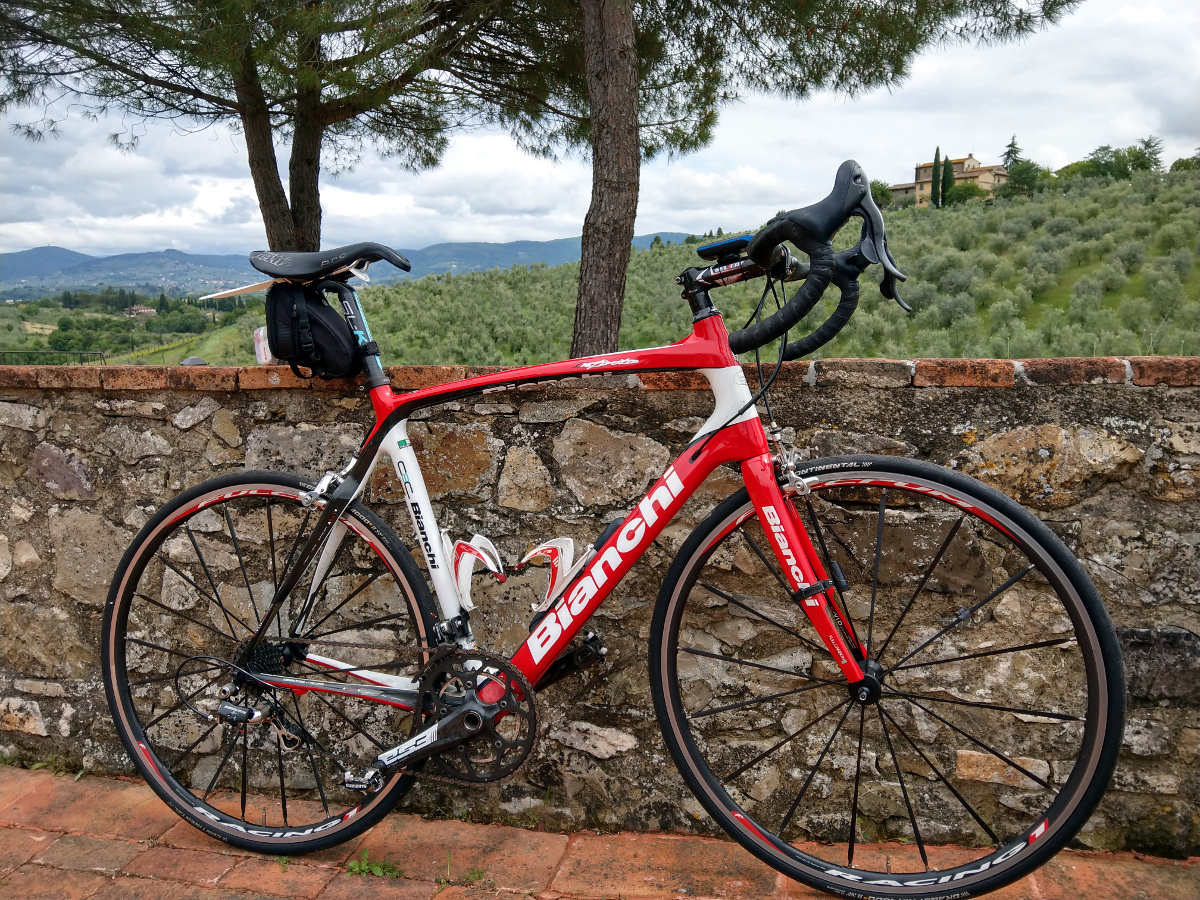
The only item I mentioned at the end of last year’s summary (blogpost) was a planned trip to Tuscany, where I hoped to enjoy some long European riding and even catch a stage of the Giro d’Italia elite cycling race. However, it rained the entire time, allowing only 80km of wet, uncomfortable riding; and I abandoned my Giro date due to a scheduling conflict (blogpost).

My rental Bianchi at our Tuscan villa

My rental Bianchi at our Tuscan villa

Morning light on the Pedal the Lakes century

Morning light on the Pedal the Lakes century

Tag-o-Rama pickup on Lemon Way, Downtown

Tag-o-Rama pickup on Lemon Way, Downtown

Orny descending a mountain in Zwift's Watopia

Orny descending a mountain in Zwift's Watopia

Dirty Dozen rider Jeremiah climbing Eleanor Street on a bikeshare tank

Dirty Dozen rider Jeremiah climbing Eleanor St. on a bikeshare

My 2018 cycling calendar

My 2018 cycling calendar

The Centuries

Another way I judge a year is how many 100-mile rides I complete; therefore, this year I’ve introduced this separate section to enumerate them.

In 2018, despite the weather, my travel, and lack of motivation, I matched 2017’s total of six centuries. I suffered more than usual on these long rides, either due to insufficient preparation or increasing age.

The first century was easy: a slow amble up the Montour Trail with friends De’Anna and Bill, which I spontaneously extended with a solo jaunt to Monongahela and back. But it was so unnoteworthy that it earned only passing mention in my entry for the second century of the year, which was…

The annual Escape to the Lake MS Ride (blogpost) was soggy and sloggy, with rain both days, compounded by an unannounced (and poorly signed) detour and relocated rest stop.

I made a road trip to Akron for my second Absolutely Beautiful Country ride (blogpost). Despite a flat course, it was still a sufferfest. After accidentally bringing only two right gloves, I rode bare-handed all day, which produced a painfully memorable sunburn.

August began with the always-difficult Every Neighborhood Ride (blogpost). This year I had to stop for a vicious cramp halfway up Forbes Avenue. After recuperating and cooling off at the Squirrel Hill rest stop, I fell back and finished the ride with the slow group.

Pedal PGH (blogpost) was as chaotic as usual. Extending the metric to a full century proved costly, as I needed breaks to let the legs recover while recuperating from the heat.

A week later, I drove up to Mercer County for my final century of the year. Though difficult, Pedal the Lakes (blogpost) was manageable, since I’d finally started coming into form… just in time for the season to end!

Additional Highlights

One 2018 highlight didn’t require much effort: picking up 25 tags in Pittsburgh’s Tag-o-Rama cycling/photography game. That was enough to break into the top ten players (out of 125). (blogpost)

I’ve already mentioned that Pittsburgh set a new all-time record for precipitation in a calendar year, receiving over one and a half times our normal rainfall. The resulting landslides washed away several roads, some of which still haven’t reopened ten months later. Many rides were canceled, including brevets, the Western PA Wheelmen’s spring and fall rallies, the Mon Valley Century, and numerous group rides. I only attended 5 out of 27 Tuesday night Team Decaf rides due to rain, and I bailed halfway through one of those due to a sudden mid-ride rainstorm!

The year was filled with other frustrations, as well. Several of those mentioned below are covered in more detail in a short mid-August blogpost tellingly titled “Yeah, Yeah, Bicycle”.

The local bike “advocacy” group decided to withdraw all support for BikeFest, a two-week cycling celebration it had run for 15 years.

My bike had several mechanical travails, ranging from a still-unresolved creak to a fancy new Di2 mount that promptly broke my Di2 junction box.

I spent $70 to re-stock my supply of powdered Gatorade mix, only to discover they’d changed the formula into an unusable dust that won’t mix with water and tastes just like burnt plastic.

And Strava completely ruined the training charts I relied on, which I’ll speak more of below.

I wasn’t in any shape—or mood—to ride this year’s Dirty Dozen hill climb, but that gave me the opportunity to play event photographer, which might have been more fun than actually riding! (blogpost)

The year’s biggest highlight happened in December, long after the riding season was done: my long-awaited purchase of an indoor smart trainer and membership on the Zwift multiplayer online cycling platform (blogpost). In addition to my first FTP test, I rode as “far” on the trainer in December as I did on the road in any other month in 2018! While it had no impact on the 2018 season, it has helped me get over my season-long malaise and should improve my form next spring.

The Charthouse

As mentioned earlier, Strava changed the math behind their “Fitness & Freshness” chart that I relied on for training and event tapering, and which I incorporated into my annual summaries as a graphical overview of the year.

Their “improved” metrics are completely worthless, but thankfully I’ve been able to recreate the TRIMP charts I relied on them for. Updated versions follow:

2018 TRIMP fitness chart

This first chart shows my fitness level over the past twelve months, with centuries highlighted.

What you’ll note is an overall saw-tooth pattern, with sudden gains from intense training followed by immediate backslides; i.e. a complete lack of sustained improvement.

You can see the dips during my travel dates: Southeast Asia in the latter half of March, a mini-dip in May during my week in Tuscany, and my meditation retreat in late June.

But even when I was home, each time I gained fitness, it declined again, rather than moving progressively higher. Every upward impulse is followed by a dip back down; I just couldn’t sustain a consistent string of training.

One easily-overlooked but hopeful sign is the upward trend throughout December. That’s the result of my new indoor trainer and Zwift membership. With any luck, I have already begun my positive fitness trend for the start of the 2019 season!

2011-2018 TRIMP fitness chart

The second chart shows how 2018 compares to previous years. Even though I began the year at a high level, over the summer I never attained the peak fitness of my previous six years. And that pretty neatly summarizes my year.

Goals for 2019

A year ago, I reluctantly set some vague goals for 2018; I’d done all the new rides I wanted to do, and didn’t see any specific challenges to undertake in the new year. In that respect, I’m in the same situation this year.

However, my lackluster 2018 was not a direct consequence of my lack of clearly-identified goals. I blame it all on horrible weather, lots of poorly-timed travel, and the fatigue and demoralization left over from a very demanding 2017.

Fortunately, I’m entering 2019 much fresher, and with no major travel plans. So long as we don’t set any new rainfall records, 2019 is bound to be better than 2018 was.

My primary goal for next year is simply this: to finally get beyond the malaise of 2018, to ride more, and get back to peak fitness this summer.

That’ll be aided by my secondary goal for 2019: spending the winter riding Zwift on the trainer, allowing me to enter the road season at a high level of fitness, and monitoring that by performing regular FTP tests throughout the year.

I needed a major change to shake me out of the funk that lingered over me all year, and Zwift is certainly different. I find myself actually looking forward to riding the indoor trainer and learning how to train more effectively by using its built-in power meter. I’m hopeful it’ll be the key that unlocks both my attitude and my fitness level for the 2019 season.

If I can achieve those two simple goals, I’ll be happy, and it will make possible any specific challenges I target as the year progresses. And so far it looks promising!

Obsessive-compulsive here has been logging his blood pressure weekly since 2014. That’s enough data points to provide a reliable test for the conventional belief that regular exercise lowers blood pressure.

An online search yields a common assertion that daily exercise can lower one’s blood pressure by 4-9 mmHg, although references are inconsistent about whether that refers to both both systolic and diastolic BP or just systolic. The effect is greater for people with existing high blood pressure than for those with normal readings.

Although I do try to ride in the winter, my volume of exercise is still far greater in the summer months, so the seasons make a logical way to compare periods of high versus low activity.

So I defined the winter as the six months from November through April, and the summer as May through October. Collating all my weekly observations and calculating the averages produced the following results:

My systolic blood pressure was 3.5 mmHg lower during the summer months, when I was more active.

My diastolic blood pressure was 3.9 mmHg lower in the summer.

My resting pulse (heart rate) was 2.1 beats per minute lower in the summer.

These all conform perfectly with conventional expectations. The magnitude of change is on par with going onto a strictly low-fat diet, losing 10-20 pounds of body weight, or taking a prescribed blood pressure medication.

I know, that’s not an especially interesting result. I guess “science is right again” stories just aren’t very newsworthy.

With my recent purchase of a thermal jacket and awesome thermal bib tights from Craft, I’ve become a lot more comfortable riding in colder temperatures. Matched with a balaclava and either thermal gloves or lobster mitts, I’m able to ride comfortably for hours at 20-40°.

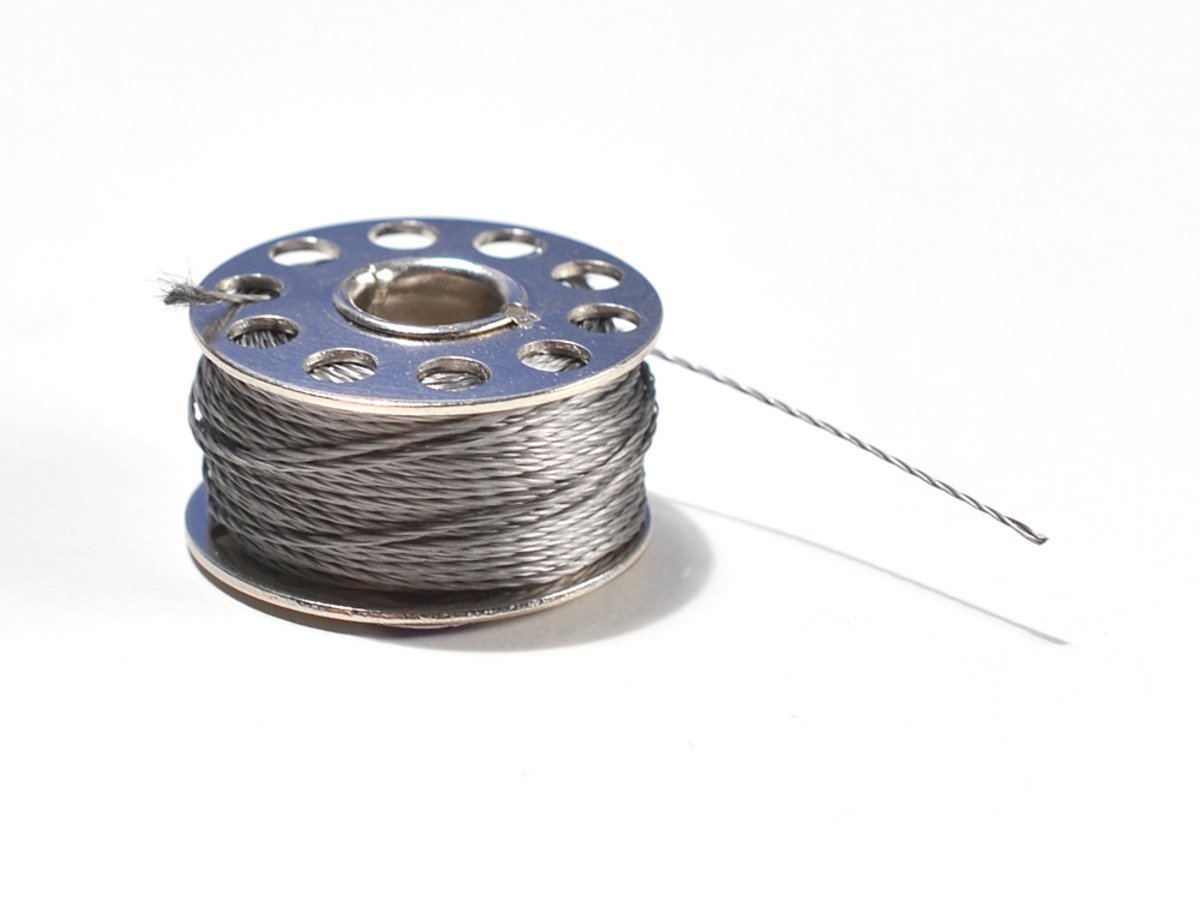
Adafruit strainless conductive thread

However, there’s always been one glaring problem with cold-weather rides: full-fingered gloves make it impossible to operate my new bike computer. Its capacitive touch-screen requires contact with skin to complete an electrical circuit to determine where the touch took place.

Although not a critical issue, it was most pressing (pun intended) when relying on the computer for navigational cues. But the computer just won’t respond to fingers insulated (in both thermal and electrical senses) within full-fingered gloves.

This difficulty first came up on the 3-2-1 Ride, a chilly century along the Great Allegheny Passage. Fortunately, being mostly on a bike path, the route didn’t require much navigational work. I easily made do by just bending down low over the handlebars and operating the touchscreen… with my nose!

In later months I’d also work it by removing the computer from its handlebar mount, bringing it up to my face, and rubbing it against my nose. But after a few swipes, it became apparent that a nose just isn’t a particularly good stylus, and a smear of nose grease really detracts from a screen’s legibility.

I considered buying some newfangled gloves with capacitive finger pads, but that seemed unnecessarily expensive, since both my sets of gloves are fairly new and otherwise work great. I looked into capacitive gel and dots that you could apply to the fingers, but those had pretty poor reviews.

Finally, I decided to spend ten bucks on a bobbin of conductive stainless steel thread, sewing it through the fingertip of my full-fingered gloves, lobster mitts, and my non-cycling winter gloves.

While it isn’t perfect, the conductive thread doesn’t work too badly, doing the trick more often than not. And that’s good enough, when the alternative is stopping and taking off one’s gloves in 17° weather!

I’d generally recommend the thread. It’s not too heavy gauge, so it’s plenty flexible and easy to work with. And, of course, it works just as well with capacitive cell phone screens as it does with bike computers.

However, there are a couple things to be aware of.

There’s no need to be cheap here, so buy reputable thread. There are plenty of people out there selling fakes.

Secondly, remember that the thread works by conducting the electrical charge from your body to the screen. Thus, you can’t just sew the outside surface of the glove; you have to go all the way through the material to the inside, ensuring that there’s a good contact with the flesh of your finger inside the glove as well as the screen. When the thread doesn’t work, it’s most likely because it’s not in solid contact with your finger.

And although it’s pretty easy to work with, trying to manipulate a sewing needle in the tiny, narrow inside of a glove’s finger can be difficult. It doesn’t have to be the cleanest sewing job, but you want it to be both effective and at least a little durable, so take your time.

Do that, and you can keep your gloves on and your fingers warm, and keep the nose-grease off your bike computer!

My second year riding in Pittsburgh somehow felt both pleasantly normal as well as superlative and memorable in so many ways. Overall, I rode a ton, befriended some good folks, grew more familiar with my new hometown, set some new records, met all my goals, vanquished Pittsburgh’s hardest challenge, and had a blast doing so. Here’s my year in review…

Team Decaf group ride at the Point

Team Decaf group ride at the Point, with Ornoth back center

Ornoth crushing a hill

Ornoth crushing a hill on the Escape to the Lake MS ride

Ornoth & Monica finishing the 100k

Ornoth & Monica finishing the Pittsburgh Randonneurs' 100k populaire

Ornoth leading a pack through the city

Ornoth leading a pack through the city during PedalPGH

Ornoth descending Dirty Dozen Hill 6 (Rialto) from the neighborhood of Troy Hill.

Video of Ornoth (in black) amongst a group of Dirty Dozen riders (around 3:02) to the top of Suffolk St.

Great closeup action shot of Ornoth ascending Dirty Dozen Hill 9 (Canton Ave).

Video of Ornoth conquering the upper half of Canton Ave (10:50 to 11:00).

The tired-but-happy look of an official Dirty Dozen finisher!

Ornoth's 2017 Cycling Calendar

My Original 2017 Goals

This time last year, I set four explicit goals for 2017.

Purchase and learn how to use a new Garmin Edge 820 GPS cyclo-computer. This was the first thing I did upon getting back to Pittsburgh in February. The 820 has a lot of new features, some of which actually work. The D-Fly integration with my electronic shifters has mostly worked, despite the added drain on the Di2’s battery, and I’ve enjoyed perusing my shifting data on di2stats.com. I created my own custom data field (feet of ascent per mile) for display on the 820, and got Shimano’s E-TUBE app working such that I can update my shifters’ firmware from my phone. While the 820 didn’t live up to what it should have been, it’s been a steady performer and a worthwhile purchase. Read my full Garmin Edge 820 review.

Ride both days of the 2017 Escape to the Lake MS Ride. My partner Inna’s support made this weekend expedition possible, and it was a lovely experience. Not only did I get to complete the event and finish on the very shore of Lake Erie, but Inna and I stayed and spent an extra day lounging on the lakeside beaches of Presque Isle State Park. It was very reminiscent of my Cape Cod trips with Sheeri back when she supported my Pan-Mass Challenge rides. Read my Escape to the Lake ride report.

Complete the 2017 Woiner Cancer Foundation 3-2-1 Ride. This became a primary goal after I missed the 2016 ride during my mother’s hospitalization. In 2017, they offered a special 80-mile route to VIP fundraisers from 2016 (which I qualified for), so on October 1st I saddled up for a long, chilly, flat ride along the Great Allegheny Passage from Ohiopyle back to Pittsburgh, most of it on crushed limestone rail trail. I enjoyed exploring some new territory while further increasing the amount of money I’ve raised for cancer research. Read my 3-2-1 Ride report.

Attempt my first Dirty Dozen race. Climbing the city’s 13 steepest hills, including the steepest public street in the world, this is an immense challenge, and the city’s most infamous ride. I missed last year’s edition while caretaking my mother, but this year I participated in all the training rides, then enjoyed an immensely fulfilling and memorable ride on race day, earning hard-won lifetime bragging rights. Unquestionably the highlight of the year. See my training rides blogpost, my full Dirty Dozen ride report, and my time-lapse videos of the most difficult hills.

Additional Highlights

Achieving all my explicit goals guaranteed that I had a good year. But there was an awful lot more to 2017 on top of that…

  • Further deferring my job hunt gave me the entire year off to devote to cycling, and I made good use of the opportunity. I topped 4,000 miles for the first time since 2010. And I shattered my record for number of rides per year; this year’s 154 rides is about double number of rides I used to do in Boston.
  • I continued meeting and befriending lots of local cyclists, which has been rewarding, and one of the biggest overall themes for 2017. It’s nice when someone recognizes you, which is happening regularly now, so I’m starting to feel more like a known community member than an unfamiliar outsider.
  • I attended both the Spring Rally and Fall Rally organized by the Western Pennsylvania Wheelmen, and got a snazzy new WPW jersey.
  • I claimed 13 more tags in the BikePGH forums’ Tag-o-Rama cycling and photography game, placing me within the Top 20 players. It’s been an interesting way to learn more about the city. See all my Tag-o-Rama photos.
  • I was quoted (anonymously) in BikePGH’s summary of their survey of cyclists’ attitudes toward self-driving vehicles, and re-quoted in the Pittsburgh Post-Gazette’s article covering the survey. I was righteously amused. Read my self-driving vehicle blogpost.
  • I participated in the National Bike Challenge, confirming that I’m around the Top 10% most active cyclists locally, state-wide, and nationally. Read my National Bike Challenge blogpost.
  • I joined a half dozen other BikePGH forum readers in playing Velogames’ annual Tour de France fantasy league. It was interesting, but my team selections placed me near the middle of the pack. Oh well!
  • I picked up an attractive graphic poster of the “Hell of the North: Paris-Roubaix”, which is hung above my desk at home.
  • I continued to maintain BikingPGH’s Annual Ride Calendar, as I described here, and also iterated on my paper-based cycling wall calendar. Both have been useful planning tools that I’ll continue working on for 2018. Here’s a link to the full size 2017 version.
  • I picked up two absolutely pivotal pieces of kit: a thermal cycling jacket and a pair of thermal full-leg bibs, both from my favorite manufacturer: Craft. Those have utterly transformed my relationship to cold-weather riding, and made even the 17° Dirty Dozen practice ride a pleasant experience.
  • My Strava trophy case added badges for completing climbing challenges and gran fondos for April, May, June, July, and August, plus a gran fondo for October. Ironically, despite training for and completing the Dirty Dozen, as well as my 250,000-foot climbing goal, I failed to earn Strava’s climbing challenge badges for October, November, or December!
  • That 250,000-foot goal, as well as the six centuries I rode in 2017, are highlights that I’ll discuss in more detail in the next section.

The Charthouse

Last year’s annual summary included a chart showing that my first year riding in Pittsburgh utterly shattered all the previous climbing records set during my years in Boston.

In 2017, I eclipsed last year’s record, surpassing a quarter million feet of climbing (47 vertical miles), more than double the climbing I’d ever done back in Boston. My 62 feet of ascent per mile ridden is also a new record. You can see an updated version of that climbing chart by reading my 250,000 foot blogpost.

Also in last year’s summary, I used the Strava Premium and Stravistix TRIMP “fitness and freshness” charts to tell the story of my year and put it into context with previous years, so I’ll do that again here. In 2017 I used the detailed TRIMP charts exhaustively in planning my pre-event training and recovery, which proved remarkably effective.

2017 TRIMP fitness chart

The above chart shows my fitness level over the past twelve months, with major rides highlighted. Obviously, I started the year with zero fitness after spending five months off the bike while caretaking my mother. You see a big jump when I got home in February, followed by a period of consolidation; another jump in mid-April, which kicked off a lengthy and consistent improvement leading up to my first century of the year: the two-day Escape to the Lake MS Ride in mid-June.

After finally notching that first 100-mile ride, my fitness stayed at a high level through my four summer centuries: the Akron Bicycle Club’s ABC Ride in July (a new event to me), followed a week later by the PMTCC 3-State Ride (when my fitness peaked), then August’s Every Neighborhood Ride, and PedalPGH (which were both long group rides that I extended into full centuries).

My fitness dipped noticeably during a two-week vacation in September before a quick spike for my first 3-2-1 Ride on October 1 (a long charity ride that I extended for my sixth and final century of the year).

The next two months were spent preparing for the Dirty Dozen ride, but hill climbs don’t accrue as much fitness benefit as endurance rides, so although I was gaining power, you see a jagged slight downward trend in fitness there. After the Dirty Dozen, my fitness remained high to the end the year, while I polished off my goal of climbing a quarter million feet in 2017.

2011-2017 TRIMP fitness chart

Tacking my 2017 fitness onto the end of the chart to depict my past seven seasons tells the same story in brief: beginning from ground zero, an initial kick, consolidation, and a second kick up to peak fitness. I stayed at a high level of fitness for a much longer time this year, thanks to training for November’s Dirty Dozen and my climbing goal-driven riding in December.

All that late-season riding drives the major difference between 2017’s curve and that of previous years: I’m ending the calendar year at a much higher level of fitness than ever before. Now, whether that will translate to better form next spring is an open question, and will depend on how much riding I do in January, February, and March.

I’m sure there’ll be days that call me outside for a ride, but right now I’ll happily take a couple months to rest and recover.

Goals for 2018

It feels kind of strange, but I’m going into 2018 without any major cycling goals.

Having two seasons under my belt, I’ve done all the new rides that I wanted to experience when I moved here, so I don’t feel like I have any unfinished business that needs particular attention.

I’m happy with my fitness, my equipment, my knowledge of the area, and the relationships I’ve been growing in the local cycling community.

So my overall attitude going into 2018 is: “Nothing specific, but more of the same, please.”

That said, there are a couple things I anticipate for 2018.

With a trip to Italy planned for May, I do hope to do some riding around the Tuscan hills, and hopefully spectate a stage of the Giro d’Italia, as well. That trip would probably be the highlight of my year, and it’s the only new experience I’m specifically targeting.

And there’s a rumor that GCN might be sending a crew to Pittsburgh next year, presumably for November’s Dirty Dozen, or at least a peek at the route. It would be fun to be involved with that somehow, although I’m not relishing the idea of doing that ride again!

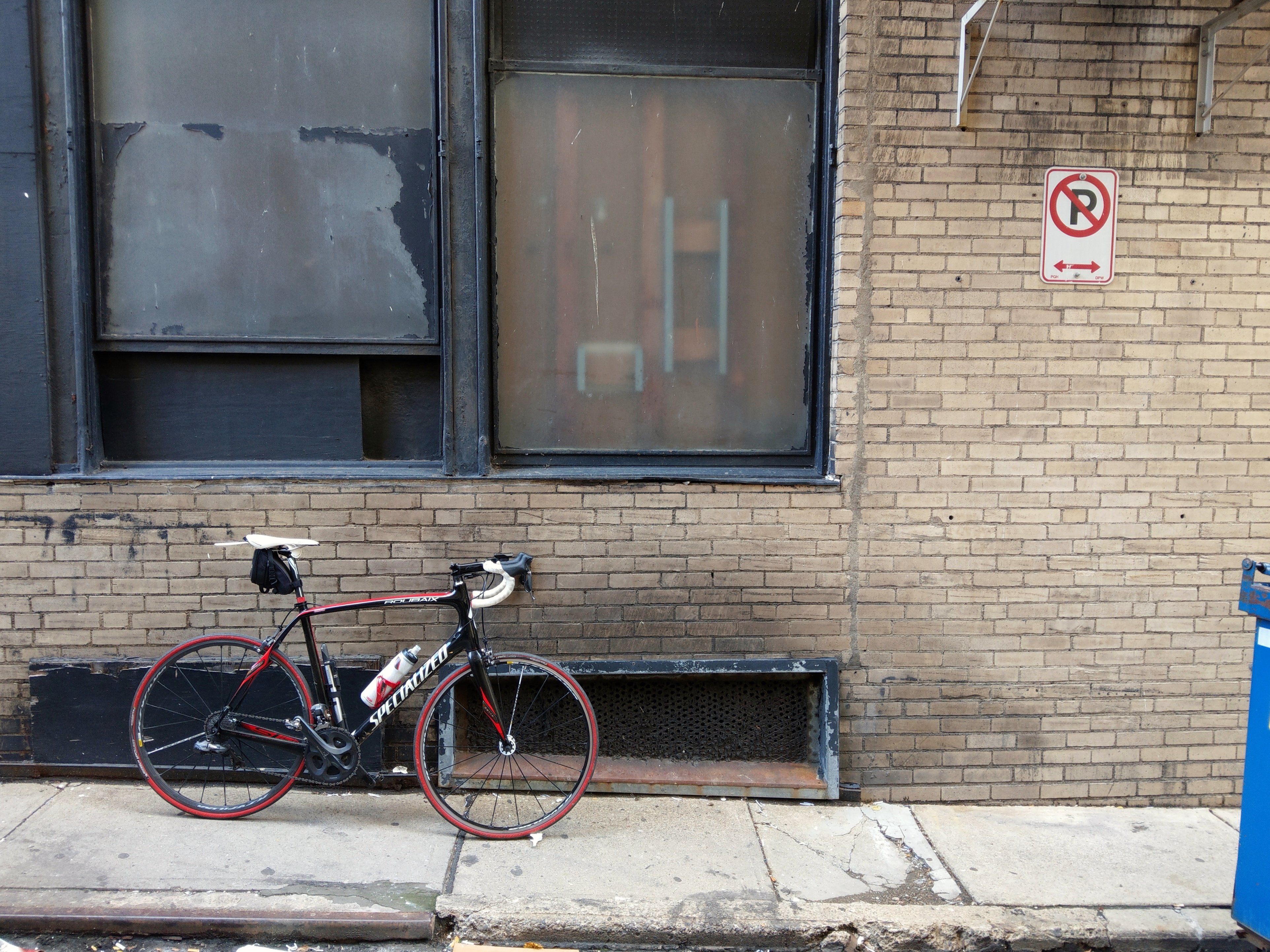
And along the way, I’ll pass two milestones on my R2-Di2 bike seen here; I’ll eclipse 15,000 miles on it, which is just a round number, but at 16,800 miles I’ll surpass all the riding I did on my first bike—the Devinci hybrid seen here—reminding me that after five years “the new bike” ain’t quite so new as she used to was.

But other than those things, I’m happy to take 2018 as it comes. If it’s anything like how enjoyable and eventful 2017 was, I’ll have absolutely no cause to complain!

I’ve been logging my weight every week since 2011, and the primitive data always left me with the impression that I put a little weight on in the off-season, then trimmed down to “race weight” during the summer. But I wasn’t really sure…

So I did what any OCPD data junkie would do and made a pivot table to average those six years worth of body weight data and charted the result. Here’s what my average year looks like:

Not wanting to humiliate anyone, rather than disclosing my weight, I’ve labeled my seasonal weight change as pounds above and below my long-term average weight.

Now, what did I learn?

First, it sorta confirmed my hypothesis of seasonally-correlated weight gain and loss. I do gain a little weight in the winter, and lose it in the summer.

However, as the flatness of the curve shows, the range of variance is surprisingly narrow. Leaving aside specious outliers, we’re basically talking about a range of plus-or-minus two pounds from average. So that big seasonal swing usually amounts to a total of just four pounds.

But the thing that most surprised me was that the timing was off.

I expected my weight loss to begin in February, when I typically commit to my training diet, and to start gaining it back in August, after all my major events are done and I take full advantage of being free of those dietary restrictions.

But in reality the transitions occur a couple months later than expected. Even though I start dieting in February, I keep gaining weight until May; and although I end my training diet in August, I keep losing weight until mid-November!

The poor correspondence between dieting and weight confused me for a minute, until I realized that there’s something else that has a better correlation with this data: my cycling.

Due to the weather, I don’t start riding in February; the overwhelming bulk of my riding takes place between late April and the beginning of December. Taking that into account, my seasonal weight change is far more closely correlated with my activity level during the cycling season than with my self-imposed training diet.

Obviously correlation doesn’t imply causation, and I don’t know if the same result would hold for anyone else, but I found that really interesting.

Coming back from four and a half months of forced inactivity is decidedly *not fun*. And I know from not fun.

Back on October 2nd of last year, I rode the first of this year’s Dirty Dozen group training rides. Then my mother got sick, and I had to go to Maine to care for her. Over the following 19 weeks I only managed one trivial ride, while my previous peak strength and fitness plummeted. I only resumed training on February 14th, about a week and a half ago.

Old Mill gravel road

Fortunately, my homecoming corresponded with Pittsburgh’s warmest February ever, with a record nine days in the 60s, and a couple well into the 70s.

After jonesing for the bike all winter, last week’s weather allowed me to ride five days consecutively, and in those five days I rode more often than I had in the previous five months! For the week, I rode six days out of seven, covered 167 miles, climbed more than two vertical miles, and burned a spare 7,800 kCalories.

From a training perspective, I was trying to alternate between long, hilly days, and “off days” featuring short but hilly rides, to permit muscle recovery but maintain the training impulse. I hit Center Ave & Guyasuta (the first Dirty Dozen hill) twice, and took the opportunity to go exploring up a very hilly Field Club Road and the gravel outer segment of Old Mill. It felt great to finally put the body to use after endless months of inactivity!

But ironically, that intense desire to be on the bike post-layoff quickly evaporated, being overshadowed by the frustration and immense painfulness of rebuilding my fitness from nothing. It always surprises me that a short ride that I’d normally consider a mere warm-up in the summer can be so excruciatingly painful as to be almost impossible following a short winter break. And this was the longest that I’ve been off the bike in eighteen years!

Normally I’ve valued my off-season, eagerly anticipating the opportunity to relax, do something other than pedal, and eat whatever I want. I’ve always laughed at the muscle-heads who train year-round, caught in the perpetual hamster-wheel of compulsively needing to be faster than all their buddies. While I do enjoy riding fast and long, I don’t have so much ego at stake in my performance. Age and experience give you perspective beyond such adolescent traps.

But shockingly, I’m starting to appreciate the idea of training all year round. Not so much out of a vain compulsion to avoid losing competitive fitness at all costs; rather, it’s to avoid having to endure the muscle-searing pain of rebuilding the strength and endurance one loses during the off-season!

Or, to put it more succinctly: springtime riding still sucks hard! I mean, it’s beautiful and delightful… but it hurts so much that I’d consider giving up my off-season just to avoid that torture.

Thankfully, even in Pittsburgh February heatwaves must come to an end, giving weak, out-of-shape cyclists a breather, and a good reason to sit back and write about the trauma of early-season training.

Will I see you out on the road sometime?

I toatally forgot to mention an important development in my 2016 season summary post! The evolution of my annual rides list!

Every winter, when there’s lots of desire to ride but little-to-no riding happening, one of the things that helps me cope is planning—or is it fantasizing?—about the season ahead: where I’ll ride, how far I’ll ride, and—most importantly—which major events I’ll participate in.

Annual Ride Calendar webpage

Major events like charity rides and centuries are an easy way to set goals for the year, and to structure your training plan.

Knowing which events you’ll commit to also lets you plan the logistics of making them happen. You not only want to set those dates aside on your calendar, but you might need to reserve transportation or a hotel room, or plan your charity fundraising effort.

Naturally, the dead of winter is an ideal time to make a list of the rides you want to do. Back in Boston, I had no problem making my list, because after fifteen years of riding, I already knew all the big organized rides. But when I moved to Pittsburgh, I first had to discover what rides were available to me.

But that wasn’t very easy. I found numerous organizations with ride calendars, but none of them were very useful. Some clubs had blank calendars that they didn’t maintain. Other clubs listed their own rides, but no one else’s. And surprisingly worst of all were the groups who tried to aggregate every ride known to man into one big munge that was both unreadable and hard to navigate!

When I looked at those sites—especially the aggregate calendars—the contrast with my succinct, regular one-page annual summary was stark. The information was out there, but it needed to be presented in a more reader-friendly way. In short, it was time to put on my information design hat.

The first task of an information designer is to understand what information the end-user needs, because everything else follows from that. In this instance, the intended audience is myself, which made it easy to just interview myself to find out what I really wanted!

Ironically, the criteria for including a ride isn’t very quantifiable. I wanted major rides that were “serious” and “nontrivial”. But what does any of that mean?

One way to define “major” is simply by distance. There are a lot of short rides, but you usually don’t plan your year around them. You could pick an arbitrary minimum length, like 50 miles, but that’s not perfect, because you might still make exceptions for some shorter rides.

Another way is repetition. Obviously, if a ride happens every week, it’s probably not a big deal if you miss any particular one. Whereas you might not want to miss a ride that takes place only once a year. But that’s not great either, because Pittsburgh has lots of little social rides which take place annually that you wouldn’t structure your season around.

Another obvious thing to think about is rides that require pre-registration, or which might fill up or sell out if you don’t reserve a spot early. You’d definitely want to note a ride like that in your calendar.

And anything that’s a significant event, where there will be lots of riders or people you want to see or some other significant reason to be there. But what’s “significant”? Again, it’s subjective.

Paper ride list

Ultimately, the criteria I use for including a ride on my list is whether it’s something I—or some other serious rider—would want to plan one’s season around, for whatever reason. Still vague and subjective, but it’s what seems to work for me.

In the past, I’ve usually kept my list of events for the season on a single sheet of paper, either in a chronological list or in a compressed year-at-a-glance calendar, like you see at left.

Last year, while composing my first Pittsburgh-area list, I posted a copy to the BikePGH message board in order to get feedback from other local riders. They pointed out several rides I’d missed, but they also suggested I share it by publishing it online.

So after some updates, I announced my creation of the Annual Rides Calendar, hosted on the BikingPGH wiki.

I’m very pleased with the result. The whole regional cycling calendar is distilled down to the absolute essentials, listing no more than six to eight serious rides per month, max, with links directly to the rides’ websites. It’s easy to scan by date in order to see both what’s coming up soon as well as a whole-season overview, without being cluttered to death with every little weekly ride across every neighborhood in Western Pennsylvania.

This new format calendar was useful last year, and the exercise of making it helped me gain familiarity with the big rides that take place here. Some other local cyclists have praised its usefulness, and I’m very pleased with it.

And now that the new year has begun, I’ve updated the Annual Rides Calendar for 2017!

I know a lot of cyclists here in New England whose idea of paradise is living in a place where one can ride year-round, where training rides and centuries aren’t stopped cold by winter’s ice and snow1.

Sure, it would be nice to have the choice of riding anytime one wants, but there are also advantages to having a limited riding season.

The easiest benefit to identify is that it provides one’s body a needed break. Training for endurance events is hard work2, and it puts a lot of stress on the body. By the end of the year, I’m physically drained and my muscles and joints need a couple months of rest in order to recuperate. By springtime, I’m refreshed and can attack the new season with renewed strength. Without that enforced time-out, I’d gradually lose strength and possibly cause greater damage to my joints as a result of overtraining.

What’s true of the body is also true for the mind: after months spent highly focused and motivated, one’s interest level wanes and one longs for a break. Mentally, I need that time to rest and recuperate just as much as my body does, so that when spring comes I’m eagerly looking forward to the long hours in the saddle and painful all-out efforts that training requires3. Without any break, my desire and motivation would gradually evaporate, and my performance would follow.

I find the same is true of anything I do. Whether it’s cycling, consulting, writing, travel, my meditation practice, or even relationships, I find it difficult to sustain intensely focused interest in something for years at a time without taking some kind of break.

Besides, taking a break from cycling frees up 10-20 hours a week, which I can devote to all the things I’ve been neglecting all summer (like career, writing, travel, my meditation practice, and relationships)!

But hey, why can’t you just leave the bike in the garage for a few weeks? Who says I’m obliged to ride all year ’round just because the weather’s conducive? Actually, that’s a solution that only a non-cyclist would offer.

A cyclist knows how the dynamic works. Most cyclists are competitive4. Whether it’s to put the hurt into one’s buddy on a big hill, or whether it’s simply to avoid having him put that hurt on you, no cyclist wants to lose ground (fitness- and performance-wise) to his buddies. Therefore, as long as the weather’s good, there’ll be someone out there doing hill repeats or interval workouts in an effort to get a leg up on the competition. And so long as that’s true, a cyclist trying to take an unforced break will still feel a strong obligation to ride, knowing that his buddies are out there getting stronger than him because they’re out there training5.

So although we might dream of a utopian world where it’s always sunny and warm, I’m very happy to live in a region where nature enforces an off-season. That way I don’t have to feel guilty about hanging it up for the winter, knowing that when spring comes I’ll have renewed desire to ride and my body will be ready6 for the challenges I’ll undertake.


1 Yes, one can ride year-round, even in New England. But I’ve never found true winter riding very useful endurance training. YMMV.

2 Yes, one can go into an endurance event with limited training, but one must do so with limited expectations. To thrive requires training.

3 Yes, at a certain point one’s training must focus more on intervals than mindless miles, but that’s only after one has a solid number of aerobic base miles, and distance training still has some benefits even after that.

4 Yes, most cyclists are competitive, but there are exceptions. They have wives.

5 Yes, more training volume isn’t always better. You need adequate rest, too, which a structured training program will provide.

6 Hopefully.

Downtime

Jan. 1st, 2010 12:46 pm

Things have been quiet on the cycling front.
The one item worth noting is that I had hoped to surpass my December monthly mileage record, which stood at 127 miles. My goal was actually 175 or 200 miles.

Thanks to favorable weather, I was already at 111 miles on December 4th. However, I only managed another 40 miles during the rest of the month. So the new record sits at 151. That’s okay; it’ll give me something to shoot for next year.

With that, we swap tires and clamp the bike into the indoor trainer, where it’ll stay until the end of March, most likely.

Although I’ll start using the trainer soon, I don’t plan on actually ramping up my training until March, anyways. I figure I deserve a good break after last year’s 4,000-mile season.

But I’m looking forward to receiving the 2009 Pan-Mass Challenge yearbook, and registering for my tenth PMC ride on Tuesday!

I was laid off on Wednesday the 17th. On Thursday the 18th I had my first bike ride in two months. The weather was nice, although I had to root around to find my cold-weather gear.

Good thing I did, too, because the next day it snowed all day long, the first real snowstorm of the year piling up nine inches of white stuff. While all my riding buddies were at work, I of course was out in the snow on the hybrid. I went when there were about 3-4 inches on the ground, and the riding was fine. Well, except for the return trip going right into 20 mph driven snow…

Although I may have more time to ride through the winter now that I’m unemployed, I have also recently borrowed a resistance trainer from one of my buddies. I haven’t gone very “far” on it as yet, so more details to follow. But so far it seems like it might give me a bit of a training advantage this spring.

2008 PMCYearbook

I’m nearly done reading Jamie Smith’s new book “Roadie: The Misunderstood World of a Bike Racer”. Despite my complete distaste for the pro cycling circuit (mostly due to perpetual doping scandals), I found it an entertaining read. I’ll also be using notes I took from it as the basis for next year’s Pan-Mass Challenge ride report, since it makes a number of good observations that would help explain cycling events to non-cyclists.

This year’s Pan-Mass Challenge yearbook is now available online. As always, it’s a good read. Also, this year my name appears twice: once as a $11,000-level fundraiser, and once for contributing over $2,000 myself. The latter was the result of my charitable match challenge to my (now former) employer. Check the yearbook out here.

Finally, registration for next year’s PMC ride opens a week from now for alumni Heavy Hitters, a week later for alumni, and a week after that for all riders. If you’re thinking about riding, now’s the time to firm up that decision.

Wednesday night, in antcipation of Boston’s first snowstorm of the year, I put the 700 x 40C tires on my old hybrid. It was still clear when I rode in Thursday morning, but the blizzard came on very quickly while I and my coworkers were out for lunch.

Even as early as 2pm, Boston’s roads were a complete logjam. No one was moving, anywhere in the city. Later, it wouldn’t be uncommon to hear how it took drivers five or six hours to drive as many miles, or that schoolchildren who were let out at 2pm were stuck on busses until 11pm.

By 5pm there was a good six or seven inches of snow on the ground, and although it was light, dry, powdery stuff, that’s the point at which biking in the snow goes from “fun” to “hard work” and “treacherous”. So I let all but 20 pounds of air out of my tires (for better traction) and made my way outside at the height of the storm.

Just getting from the office door to Canal Street was difficult, as no one had cleared the sidewalks. But once out in the street, I was fine. I followed a snowplow toward Causeway Street, moving well and enjoying the packed snow crunching beneath my tires.

Causeway and Nashua Streets were another story. They really hadn’t been plowed, which left half a foot of fluffy powder to wade through. However, they’re main arteries, and passing vehicles had packed some of the snow down in very slippery ruts. The combination is really hard for a bike to navigate through, but I managed to keep upright to Leverett Circle.

At Leverett Circle I hopped onto the Esplanade’s Paul Dudley White bike path, passing a father pulling his son around in a sled. The path was perfect: it had been plowed once at maybe 4pm, but now had maybe two inches of fresh powder that was an absolute pleasure to ride through. At 13 mph, I was making better time than the traffic on Storrow Drive, and the only discomfort I had was some cold snow falling and accumulating inside my balaklava. Even the couple small snowbanks left behind by the plows were easy to burst through at speed.

When I got to the footbridge to cross over Storrow to Dartmouth Street, I hit my only real roadblock. While the DCR had plowed the bike path, they understandably hadn’t cleared the footbridge, and I just couldn’t make it up a ramp clogged with seven inches of new snow, so I walked the bike to the top of the ramp, them rode across and down and over to Beacon Street, smirking at the six lanes of stopped traffic on Storrow.

Beacon Street was more of the same: three lanes of traffic, not moving an inch. Although the road was a bit slick, I managed to navigate between cars and trucks and busses the one block from Dartmouth to Exeter, passing maybe three dozen gridlocked vehicles along the way.

Both Exeter and Comm Ave were fairly well cleared, and easy to ride.

In the end, my two-mile commute, which usually takes 15 minutes, might have taken 20. I had fun, got some exercise, made it home very quickly and without stress, and got out to enjoy the fresh air and one of the most beautiful scenes of the year: the first snowfall.

Yet the people who think it’s preferable to sit trapped in a little metal box spewing carbon monoxide for seven hours on a five-mile commute call me “crazy” for biking home in a snowstorm.

Can I call for a sanity check, please?

Amazing. My last entry talked about how the last week in January was going to be my first week off the bike in over three years, and that it was due to a business trip to Seoul, unlike the knee problems that kept me off the bike for three weeks back in 2002.

I spoke too soon. Literally the very next day I developed a serious medical issue that would keep me off the bike for a while. On top of that, I was so exhausted after the week in Seoul that I passed out and gave myself a concussion. Those two things combined meant that my planned one week hiatus turned into two weeks off the bike, followed by another recovery week when I only managed one commute totaling six miles.

Fortunately, I’ve recovered quite a bit over the past month, so I guess I’m ready to get back into training. That’s good, because I have a 125-mile ride two months from now, and possibly a 190-mile ride three weeks later. Hopefully the weather will cooperate and make serious training a possibility this spring, otherwise I may have to skip the brevet series again this year.

The other thing to note is that I’ve started moving onto my new laptop, and that means the charts on my Training Page are being updated once again, after a three-month hiatus. The overall assessment is that this was my best winter season ever, until things went to hell at the end of January. Hopefully the charts will show a positive trend again very shortly! I'm really dying to put some serious miles on the Plastic Bullet, if only my body, my workplace, and the weather would all cooperate for a while!

After 1,100 hours and 16,000 miles on the bike, you have to figure it was about time for something to happen. Last night I was right hooked by an SUV on the way home.

I was eastbound on Comm Ave, one block from my house when a big, black SUV came around me just in time to make a right turn onto Exeter, right in my path. I slammed into their right front quarter and the bike and I were deflected to the right, throwing me onto my right side.

I rolled and skidded to a stop and took inventory. Fortunately, most of the impact was taken by the bulky winter clothing I had on. My right knee took the brunt of my fall, resulting in a couple good patches of road rash and bruises. My left forearm also seems to have been injured, although I have no idea what from: a side mirror? my handlebars? the road?

The driver, a young black woman, stopped and did a fair job of being apologetic, repeatedly claiming “I didn’t see you!!!”. I checked myself and the bike (the bike seems to have received less injury than I did) and got her name and digits before letting her go and going home to look myself over.

My arm and leg still sting and are quite swollen and very stiff, although there’s nothing to complain of beyond the usual minor crash damage.

I’ve thought back, and I can’t see how I could have done anything different to avoid the accident. I was well-lit, wearing light clothes, in a well-lit area, riding within the travel lane. Maybe I could have ridden more defensively, but I’m already pretty conservative, and to ride more so one would pretty much have to give up any hope of getting anywhere. I guess sometimes your number just comes up, and I do know that mine was overdue.

I guess I’m fortunate to have gotten out of it with nothing worse. And I suppose I can look at it as a relatively inexpensive lesson in defensive riding. But it definitely reinforces my distaste for people who drive SUVs.

Friday was an interesting day. Aside from a little October 29th flurry, it was our first real snow of the year. The forecast indicated some snow in the morning, possibly turning to rain, then back to snow by evening, with a total accumulation of 6-10 inches.

It was, of course, my first chance to freak out my coworkers by biking in to work through a storm. When I woke up, there were a couple inches of snow, but I had planned to get up and out before it got too bad. The roads looked passable, so I went for it. The ride in was complicated by the snow standing in the road margins where I usually ride, but for the most part it was completely navigable. I got in well before anyone else arrived at work, secretly pleased with myself.

When we went out at noontime, as promised it was raining heavily, mixing with sleety ice pellets. The streets were a wet, slushy mess. However, as the afternoon wore on, it turned back to snow. Really heavy snow. So heavy that you couldn’t see the ground from my eighth floor office. Just outside the city there were reports of snowfall at a rate of five inches per hour. Falling sideways because of the wind. Howling wind that exceeded fifty miles per hour. With lightning. It was very impressive.

By 5pm, the storm had entirely passed by, and the skies were clear. Of course, there were still eight inches of snow on the ground, and havoc on the streets. City public works hadn’t bothered plowing, and the snow on top of ice on top of snow had been packed into an inch-thick sheet as slippery as any skating rink. Drivers typically forgot everything they’d ever learned about driving in snow, and the result was city-wide gridlock.

I left work at 5:30, taking an extra moment to deflate my tires a bit to get extra traction. At first, Edwin Land Boulevard was a slog, because no one had driven in the right hand lane, leaving it a pile of impassable snow. However, once I turned onto Binney and all the way up Vassar I was on top of hard-packed ice. I could make great progress on that hard surface, so long as I didn’t try to stop or turn.

The only problem was that the same was true of the cars around me. It was kind of like a game of dodging dumpsters flying around at random in the dark of a winter night. Fortunately, I got safely to Mass Ave, which was solid gridlock.

The entire way from Vassar Street, across the Harvard Bridge, and up to Comm Ave was a riot. Mass Ave has two lanes in each direction, and it was packed solid with parked cars. Under normal circumstances, I’d ride up the right-hand margin—the breakdown lane—but it was full of unnavigable snow and the cars were blocking it. Instead, I went right up the middle, between the two lanes of stopped southbound traffic. My best estimate has me passing at least 250 cars in less than a mile. I can only imagine the thoughts that ran through drivers’ heads when they saw me ride by after they’d sat for hours without moving!

After that, Comm Ave was pretty easy, since it was mostly cleared. I count it an extremely successful ride: fun, safe, healthy, something that’ll awe my coworkers, and a source of endless amusement at the expense of stupid people who drive cars in the city.

If you haven’t biked in the snow, you’re really missing out on something special. You don’t have to head to the roads; many of Boston’s bike paths are plowed in the winter (the notable exception being the Minuteman). Although you’ll get lots of mystified looks, honestly it’s no colder than nordic skiing, and the experience is very similar. For more info, there’s a Boston bike path conditions report, a winter biking page on Massbike, and also the classic Icebike site.

I will say, however, that the expanse of ice on Binney and Vassar has me thinking about buying some Nokians

Took advantage of a 56-degree day to keep up the riding. Unfortunately, winter probably isn't the best time to undertake a 50-mile ride that includes climbing Summit Ave in Brighton, Prospect Hill in Waltham, and (for the first time) the short but painful Pine Hill in Lincoln, just across from Walden Pond. I think I'll take a nap now...

I did it! It took me ten weeks, but I finally caught up with and surpassed how much I'd biked during the 2001-2002 season! Yay! Now if only we could have a few days above 25 degrees, and a few days without 12-27" of snowfall, I'd be happy...

Frequent topics