Back in June, on my third Bicycle House shop ride, I had a flat tire. Replacing my inner tube (plus a second tube and CO2 cartridge given to me by the ride leader) required a trip to the bike shop to replenish my parts inventory. In turn, that was an opportunity to finally try some changes to my wheel setup that I’d been considering for more than a year.

New other stuff

One change I made was simply making use of a new-ish tool that had been sitting in a drawer for months. I’ve struggled for years with how difficult it is to mount and dismount my tires, especially in a roadside repair. And recently moving to tighter-fitting “tubeless-ready” tires and wheels made that problem significantly worse.

The Tyre Glider is a little blue plastic device that makes both removing and installing tires considerably easier, replacing traditional tire levers and bulky tire jacks. After finally pulling mine out and putting it to the test, I can say it delivers on its promise. Not only can I get stubborn tires onto the rim, but I also don’t run the risk of puncturing brand-new inner tubes while mounting them. Two greasy thumbs-up!

Another item I’d been contemplating for years was a pocket-sized battery-powered inflator, which could replace both my frame pump and CO2 cartridges. These innovative little devices have become commoditized, and I used Amazon Prime Day to pick one up at 30% off. It’s the Fanttik X10 Ace Mini, from the same brand that makes the larger inflator I use for our car. While I haven’t used the Ace Mini a ton, my early results have been very positive.

Having struggled (as I said above) with mounting my tubeless-ready Continental GP5000 tires onto my rims, I’ve wanted to try a different brand, to see if they might go on easier. I’d heard positive things about Pirelli P-Zeros, and discovered that they still offered an expressly non-tubeless clincher version, which would be an easier fit. I picked up a pair of those and have been running them ever since. They feel great, and my only complaint is that they don’t seem quite as durable as other tires I’ve used.

New tires

At the same time, I also picked up some Pirelli TPU (plastic) inner tubes that I was eager to try. They are considerably lighter than traditional butyl rubber tubes, and are more manageable than the third alternative: latex tubes. A lot of riders keep TPU tubes as spares because they’re lighter and more compact, but I’d rather run TPUs all the time and have a reliable old butyl tube as my emergency backup.

Because I swapped tires and tubes at the same time, I can’t say whether the changes in my bike’s ride-feel were due to the P-Zeros or the TPU tubes… probably a combination. On top of that, the differences were pretty subtle, and I’m not the best at discerning minuscule differences in ride feel.

In comparison to my previous tires and tubes, it’s possible the new combination of P-Zeros and TPU tubes felt lighter, rode smoother, was a little quieter, held air a little better, and had a little less rolling resistance. But any difference was slight.

But there were two huge differences that were specific to the TPU tubes.

First was price. At around $30, each TPU tube cost three times as much as a butyl tube. We’re not talking huge dollars here, but for triple the price, I expected a vastly superior product.

And then there’s durability, which is where I’ve struggled to justify running TPU tubes at all, even though I really, really wanted to switch over to them. My first TPU tube lasted just 180 kilometers: 5 rides, or 8½ hours of ride time. The second went flat just 23 km into its first ride. The third didn’t survive 3 rides, or 86 km. That’s your three strikes; yer out.

So while running TPU tubes, I had 3 flats in 290 km; in contrast, my last butyl tube had served for more than 7,800 km! At that rate, I could run butyl tubes for $10 per year, or burn through $2,900 per year on TPU tubes!

The confounding thing is that those TPU flats were all on my rear tire, while the TPU tube I installed on the front has served flawlessly for more than 2,000 km! I guess the real test will be to move that tube to the rear wheel and see how much longer it lasts…

While I might prefer TPU tubes’ ride feel, they’re just not worth the cost, especially because TPU tubes just don’t work in real-life usage. End of experiment.

New chainring

Before I close, I’ll share three other noteworthy purchases which don’t have anything to do with tires.

One was a set of plastic inserts from Risk that increase the size of the hidden buttons underneath Di2 shifter brake hoods. The stock buttons are really tiny, making them hard to activate. These simple inserts provide a larger active surface area, increasing the usability of those buttons. At $8 for four, they’re cheap, easy to install, and effective: just the kinda thing I like!

I also had to replace my big chainring, which was damaged during one of my many TPU flat repairs (long story). After I ordered the part, it took just 15 minutes for the Trek store to perform a while-you-wait installation. That’s a big improvement over the treatment I got at the Specialized shop earlier this year, which kept my bike for 15 days to do a simple tune-up!

And if you bike in Texas, you need to learn how to manage the copious amount of sweat you generate. So I’m currently testing the efficacy of double-width wrist sweatbands. So far, so good, but I’m afraid of getting even stupider (sic) tan lines, so we’ll see how that goes.

I might not have blogged much lately, but from an “equipment” perspective, it’s been an eventful summer!

I wasn’t planning on repeating last year’s Akron Bike ClubAbsolutely Beautiful Country” century. It was a really nice ride, but it’s a two-hour drive from Pittsburgh, which makes for a lot of driving on top of a 100-mile bike ride.

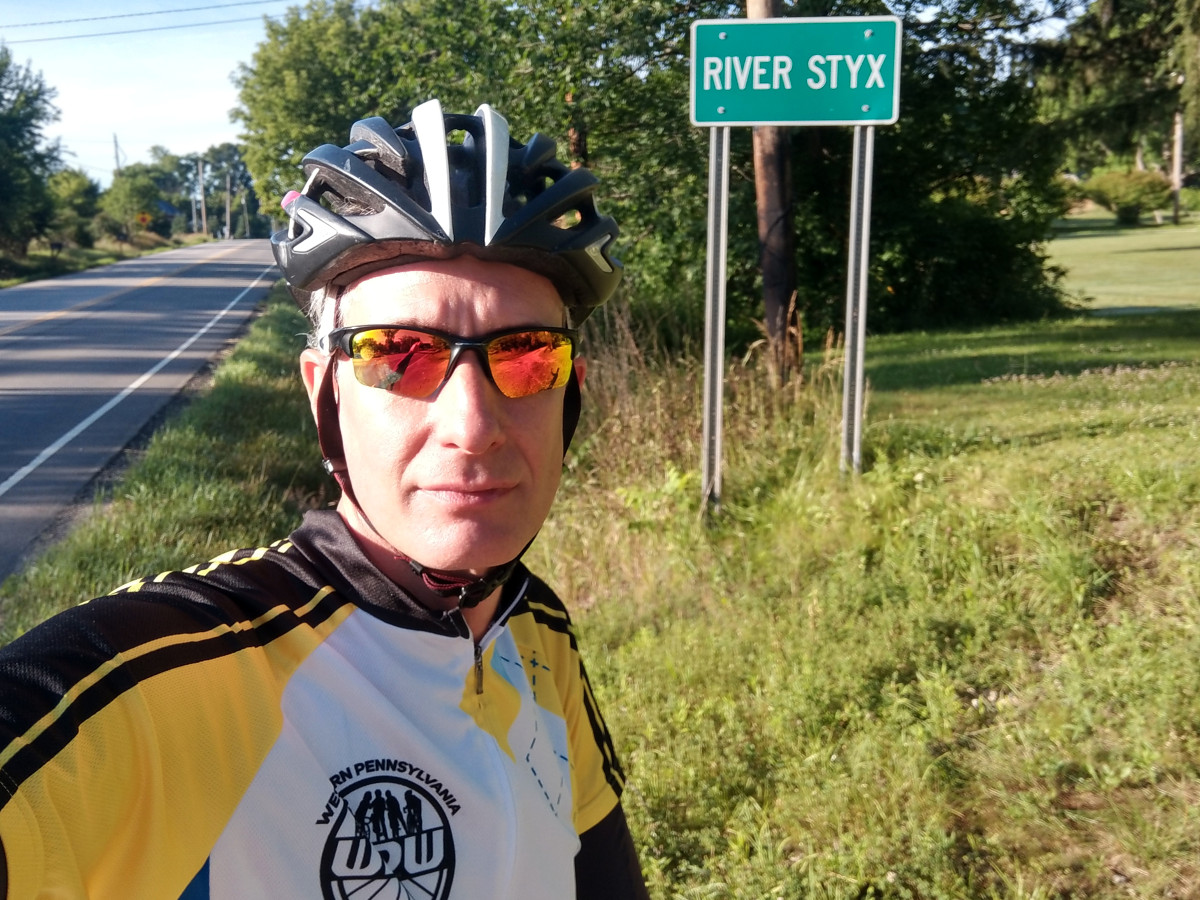
Selfies on the River Styx

Selfies on the River Styx

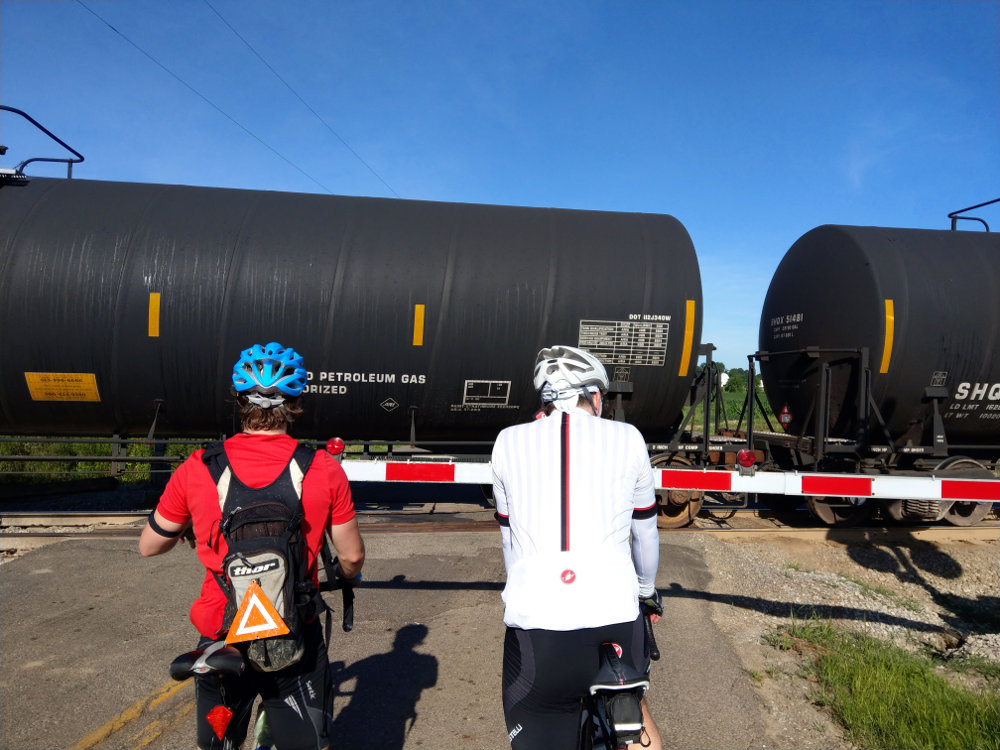
Level Crossing

Level crossing delay

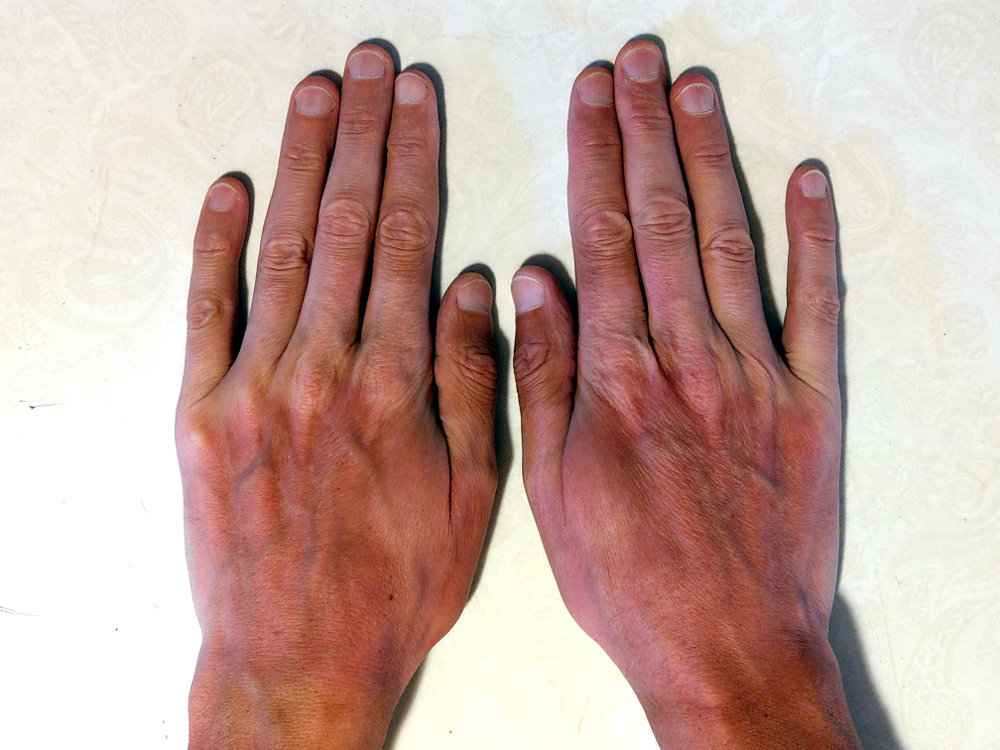
It Burns

Sunburned hands

However, having spent much of the first half of this year away from home, I was really under-trained and in desperate need of fitness before all the big summer rides. And with Inna still out of town, there was no one to inconvenience.

But the biggest reason to go was the weather. A week-long heat wave broke on Friday, leaving us with a delightfully temperate weekend. Sunny and less humid, with little wind, it was perfect weather for a long ride, so…

I got up at 3:45am Sunday “morning” and was on the road by 4:30, headed back to the city that gave us the Kent State massacre, Devo, and Chrissie Hynde.

During the drive, I noticed that almost all of Ohio’s roads are straight north-south or straight east-west, with very little variance. It made me wonder why they didn’t just name their cities by map coordinates. So if Cincinnati was called “A12” and Columbus was called “F5”, then you’d know that to get from one to the other you’d have to drive 5 units east and 7 units north. Seems like it would be a lot more efficient in a place like Ohio, since—with no diagonals—that’s just the way the roads work anyways.

Kitting up in the Copley High School parking lot, I discovered a packing mistake: the pair of cycling glove’s I’d brought were both right hands. The guy parked next to me offered to loan me a pair, but I demurred. Going bare-handed wouldn’t be any major discomfort, I thought. No big deal… If anything, it might hide or even out some of my characteristic cyclist’s tan lines.

At ten-to-seven I was in the saddle, dropping lots of riders in a desire to work up some body heat to ward off the morning coolth. Eighteen miles later, I stopped to get a selfie in front of the sign for the village of River Styx. It’s probably not an auspicious thing, crossing the River Styx with 82 miles still to ride…

Speaking of stopping, about 35 miles in I caught up with a couple riders who were stopped at a level crossing while a big freight train rolled by. Fortunately, the end (of the train) was near, and I was only delayed about three minutes.

About one-third done, I was already experiencing some physical difficulties. I was obviously undertrained and not ready for the distance, even on a flattish course like this, and by the end of the day my legs were cramping up. My knees were complaining loudly, thanks to inflammation picked up while on my recent meditation retreat. I was also having difficulty swallowing due to an undiagnosed throat irritation. The day eventually heated up, and on the last, 15-mile segment, I was so blown that I had to stop for a brief roadside rest before finishing.

This was countered by the excellent work done by the organizers at the rest stops. Twelve miles in, riders were offered donuts. At the halfway point, small sandwiches piled high with cold cuts and cheese. At Mile 70, the Dalton Dari-ette offered free ice cream! And all the stops had ice, which for me is always key.

I finally rolled back into the high school at 2:15pm. I had enjoyed the Ohio countryside and the beautiful day, but I was glad the suffering was finally over, and happily looking forward to getting into an air conditioned car for the drive back to Pittsburgh.

Pulling the bike out of the car trunk at home, I noticed that the plastic mounting tab for my Di2 electronic shifting junction box had broken. That’s an annoyance, since I’d just purchased and installed a new mounting bracket for it.

But more troublesome—though less costly—were the implications of spending seven hours in the July sun without gloves. The rest of my body has long-since adapted to sun exposure, such that I didn’t suffer any ill effects of going completely without sunblock; however, my hands have always been shielded by gloves, and the sensitive skin on the back of them isn’t seasoned to strong sunlight and got thoroughly sunburned. Lesson learned!

Nonetheless, I’m glad I went, and (mostly) had a good time. There aren’t many century rides to choose from here in Pittsburgh, and I’m happy to participate in and support those few that remain.

But whether I’m ready and willing to undertake another century happening weekend… We’ll see how well I recover!

Whenever I talk to people about electronic shifting, someone inevitably freaks out. “OH MY GHAWD WHAT IF YOU FORGET TO CHARGE YOUR BICYCLE AND IT STOPS SHIFTING IN THE MIDDLE OF A RIDE?!?!”

Obviously, electronic shifting isn’t for everyone. Like any system, it has advantages and disadvantages. I wouldn’t condemn anyone for their preference for mechanical shifters, just as I don’t expect to be condemned for generally preferring rim brakes over disc brakes.

Di2 battery

Di2 battery

However, let’s at least base our preferences on facts and reality, rather than “alternate facts” derived from wild conjecture and irrational fears.

In the case of electronic shifting, running out of battery power—whether thru actively depleting it without recharging or through letting the bike sit idle for months—will never be an issue for typical riders.

I started riding electronic in April 2013, more than four years ago, when I bought a bike featuring Shimano’s new Ultegra Di2 10-speed groupset. I’ve put 13,000 miles on that bike, or over 3,000 miles per year. And the data from my Di2 system tells me that on average I shift every 20 seconds while riding.

In all that time, I have never once depleted the battery. Was I a battery-charging maniac? Not at all. I usually charged it just three times per year: something like March, June, and September. And I virtually never had less than 50 percent charge, even if the bike sat idle for six months through the winter.

Until this year, I was getting 1,500 to 2,000 miles of riding on a charge. But in May I added another component to my system: the D-Fly wireless kit, which allows my electronic shifting system to communicate with my bike computer, to add gear shifting data to my ride logs and display what gear I’m in and how much battery I have left.

The D-Fly draws power from the battery to wirelessly transmit ANT+ data to the bike computer, so that noticeably reduced my overall battery life. But even with the D-Fly attached, I’m still getting two months and more than 1,000 miles of riding out of a single charge. Battery life simply hasn’t been an issue.

The people who cite battery life as a reason to avoid electronic shifting seem to think we’re still living in the 1980s, when NiCad batteries were state of the art. I have news for you: lithium batteries are lighter, smaller, have way higher energy density, don’t spontaneously discharge themselves over time, and don’t lose capacity by developing a “memory” after charging. Welcome to the 1990s; please update your expectations accordingly.

The only instance where battery life might be a limitation would be for ultra-endurance rides of greater than 1,200 miles where you couldn’t stop for an hour to recharge. I don’t know of anyone who rides 1,200 miles without sleep… Still, the obvious answer to that: carry a fully-charged spare.

For any normal rider, running out of juice is simply not going to be a concern.

Of course, I’m not saying electronic shifting is for everyone. I do appreciate the advantages of never breaking a shifter cable, never missing a shift, never worrying about crosschaining, and having gear and shifting data in my ride log. But I also acknowledge its drawbacks: it’s more expensive and can be really finicky to setup.

But running out of battery in the middle of a ride simply doesn’t happen, and anyone who says otherwise is either very misinformed, grossly incompetent, or intentionally lying to you.

Three months ago, I replaced my aging Garmin Edge 800 GPS cycling computer with the new Garmin Edge 820. After 52 rides and 1,400 miles, it’s time for an in-depth review.

I’m a data weenie. I was logging my weekly miles all the way back in 2000, and saving GPS tracks of significant rides using a handheld GPS long before GPS tracking was integrated into bike computers. So I’m sensitive to the features, usability, and reliability of my bike computer.

Edge 820 Di2 gearing & Strava Suffer Score page

I was really happy with the Edge 800, which I bought when they first came out in 2011. Over the years, Garmin introduced the newer Edge 810 and the larger Edge 1000, plus the smaller Edge 500 and 510, but the 800 was so good that I never felt the need to upgrade.

However, after six years, my Edge 800’s battery had begun to flag, and I was tempted by all the improved features and functions of the new units. Last July, when Garmin released a new unit in the 800 series, I read the reviews like a hawk, and finally picked up my unit in February, after I returned from my five-month stay up in Maine.

I’ll divide this review up into four sections: basic features and things I’m neutral about; features I don’t know much about because I didn’t test them; features I like and am excited about; and the things that disappoint me about the unit. Then the executive summary is at the end.

The Neutral

My biggest problem with my aging Edge 800 was battery life. I need a device that will record GPS data and provide navigational cues through at least a 9-hour 200k ride. I recently completed a 7-hour century ride, and had over 40 percent charge left, which means the Edge 820 can be expected to live up to its spec of 12-hour battery life.

I was a little concerned that the 820 has a smaller screen than the 800. On the other hand, it has better resolution. So far, reading the screen has not been a problem at all.

At a minimum, I need to be able to import GPX-formatted route data from the computer to the unit. No problem with the 820.

I also download all my raw GPS data (Garmin .FIT files) to my computer for archival. Thankfully, the 820 still supports this type of access.

Rather than coming with an SD card slot, this device has a fixed memory capacity of 8 GB. So far that hasn’t been an issue, and I can only see it becoming so if you were to load multiple continents’ worth of map data. Activity .FIT files don’t take up very much space at all.

Sometimes, if you were following a course and deviated from the path, my 800 would simply give up trying to navigate for you. The 820 hasn’t been bad, in that it tries to get you back onto the course.

Some folks have complained about the altimeter being off, or drifting during rides. I haven’t noticed a problem, given the understanding that barometric altimeters have limited accuracy by definition.

One new feature on the 820 is real-time weather alerts. This would be a cool feature, except it only receives major alerts like flash floods. Useful, but only rarely. Given that the device has a live Internet connection through a Bluetooth link to your cellphone, I’d rather see live local radar and notices of impending rain. There’s an app for that in Garmin’s ConnectIQ Store, but I haven’t tried it out yet.

Another new feature is the display of “recovery time” at the end of each ride. Basically, it’s a gratuitous, dumb feature. Recovery varies from person to person, and even a novice rider can sense how long they’ll take to recover from any given effort. I’ve turned that feature off.

One undocumented feature on the Edge 800 was the ability to set the boot screen text that displays when the unit powers up. I had set that to an inspirational message—“Always lead, never follow”—plus my phone number in case the unit was lost. I was happy to learn that the feature still works on the 820.

One evening, I learned that the Edge 820 automatically switches to an inverted-color display at night for better visibility. I’d love to say that’s an improvement, but it’s a feature that was also available on the 800; I had merely turned it off at some point!

The Unknowns

The Edge 820 comes with a power saving mode that comes on when the battery reserves start getting low. I haven’t tested it yet.

It also introduces an “incident detection” feature, where it’ll alert a contact if it thinks you’ve crashed. So many other users reported false positives that I have never turned the feature on.

Presumably you can load your own maps onto the unit. That’s a feature that existed on the Edge 800, but I’ve never felt any desire to mess with the maps that it came with. Though it might be a handy thing if you traveled or moved to a different continent…

Although Garmin did away with the idea of bike profiles, you can still set odometer values based on the sensors that are on each bike. Seems like a lot of work, and I don’t need total odometer readings while riding. I can just get that from the laptop.

The most exciting and useful feature that I haven’t had the opportunity to test is the Edge 820’s FE-C indoor trainer integration, which should allow the computer to set the trainer’s resistance level. In addition to using the Zwift social training app, theoretically you can follow a real-world course that you rode, and the unit will alter resistance to simulate the terrain. I’m looking forward to that, but that’ll require a very expensive trainer purchase, which I’ve been delaying.

The Positives

Edge 820 map page
Edge 820 Strava Live Segment page
Edge 820 Profile page
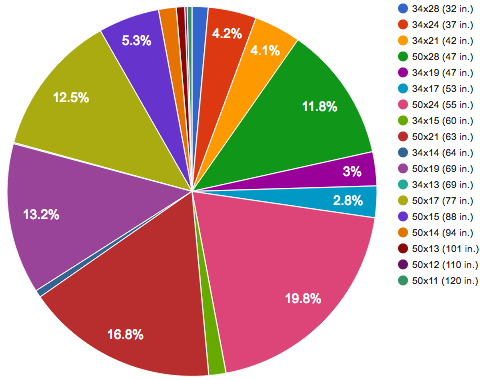
Di2stats.com gearing pie chart

Let’s start with the obvious. Coming from a seven year old model, the Edge 820 has updated maps, and lots of software updates, both built-in as well as regular firmware updates going forward. It’s nice to be back on a supported platform!

In addition to GPS satellites, the new unit also has the ability to receive signal from the Russian GLONASS constellation, making GPS locks faster, more accurate, and stable. I suspect this is also the reason why the regular signal stops/dropouts/starts I used to have near heavy infrastructure (e.g. bridges, railways) on the Edge 800 are almost completely gone.

With a Bluetooth connection to my phone, the Edge 820 will display incoming SMS messages, and notifications for incoming calls. It works well, and has been a nice convenience, given how many hours I’m on the bike.

For ultra distance rides, you can plug the Edge 820 into a portable battery pack and it’ll charge itself, while continuing to record ride data. To be honest, I think my Edge 800 could do this, but I never bothered to test it. However, I tested the 820 for this review, and it worked well.

With my Edge 800, after a ride I had to connect the device to my laptop and manually kick off a synchronization job to upload my data to Garmin Connect, then manually upload to Strava, as well. The 820 will use Bluetooth or Wifi to automatically upload ride data to both sites without a wired connection. Very convenient, especially when you’re away from home at a multi-day event.

Garmin has created an open API called ConnectIQ for developers to add their own apps and custom data fields to the unit. A favorite is the Strava Live Suffer Score data field, which displays how hard your ride is. I’ve got a great idea for my own custom data field, but setting up the required Windows dev environment is a huge bother.

The Edge 820 also will store your favorite Strava road segments and display a countdown and timer when you are on them, allowing you to measure your effort against your PR or the KoM holder in real time. It’s a cool feature, except for the discouraging Sad Trombone sound it makes when the record-holding time finishes before you do…

With an extra bit of hardware, the Edge 820 will communicate with your Shimano Di2 electronic shifting groupset. That allows me to display which chainring and cog I’m in (both numerically and graphically), as well as the system’s current battery level. It’ll beep when you’re at your absolute highest and lowest gears, and give you a text alert if the Di2 battery goes below 25 percent charge. On top of all that, all your shifting data gets added to your ride logs, which you can analyze later through sites like di2stats.com.

The Negatives

The touch screen is really poor… nearly unusable. Every interaction with the unit must be very deliberate, and often repeated. My unit is barely tolerable, but many people have simply given up and returned theirs for a refund. It’s terrible.

Scrolling and zooming the map are incredibly slow. Like, almost unusably slow. If there’s one thing a mapping GPS should get right…

Loading and calculating routes is even worse! If I have a stored GPS breadcrumb track, it shouldn’t take upwards of five minutes for the unit to begin offering navigation cues. Why would it take even longer than the Edge 800?

When I first started using the unit, it spontaneously turned itself off several times. Fortunately, after a little while, that stopped happening.

Along with SMS and incoming call notifications, it would be nice if the unit offered incoming email notifications, as well. Missed opportunity.

I had a lot of trouble setting my Max Heart Rate. By default, the unit will override any number you specify with whatever it gets from a heart rate sensor. But since HRM straps are notorious for occasionally giving ludicrously high readings (e.g. above 220 BPM), it kept resetting itself until I shut off the auto setting and entered a fixed HR max.

Presumably, the Edge 820 supports Live Track, where you can send a URL to a friend, and they can visit a site that shows where you are in real time. In my experience, the data connection to the phone is too fragile, and I’ve never gotten Live Track to work… not even once. Both Google Maps’ Location Sharing feature and the Glympse app work far better.

Then there’s Group Track, where you and your riding buddies can presumably “Live Track” each other, with the head unit displaying the locations of your other riding buddies in real time. Even if I had other riding buddies with compatible head units (not very likely), the fact that it depends entirely on the utterly non-functional Live Track feature means I can’t use it anyways.

That cool Shimano Di2 integration I talked about above took *way* more time, effort, and money than it should have. First, to get the Di2 to talk to the Garmin, I knew I had to order and add a tiny wireless transmitter and a cable to my Di2 system, plus the special tool to connect the cable. When that didn’t work, I learned that I also had to order and replace my old battery mount. Tiring of the runaround when that didn’t work, I brought it in to the bike shop, where they individually updated the firmware on every piece of my Di2 setup. That didn’t work, either, so I ordered a new front junction box, plus two more new cables. When those came in, we installed them and did two more whole rounds of firmware updates during several phone calls with Shimano support. Then we finally had to pair the Di2 transmitter with the Garmin, and iron out a few minor bugs in the system (not reading battery level, thinking it had 11 sprockets rather than 10). In the end, it took a couple months, three trips to the LBS, a few calls to Shimano support, seven new parts from four separate orders, and an extra $450 in parts and labor to set up, just for my head unit to display what gear I’m in. Had I known that at the beginning, I never would have bothered.

The Bottom Line

Ultimately, the unit mostly works, and is generally okay. It’s a good step up from my aging Edge 800. I like the auto-upload, custom data fields, Di2 integration, phone and text message notifications, and Strava Live Segments. And I’m hoping that the FE-C trainer integration works well. But none of those are must-haves, so I wouldn’t say I’m blown away by the new features.

On the other hand, a lot of people really hate the unit, and I can understand why. The touch interface is terrible, basic functions such as loading routes and map data are ridiculously slow, and key features like Live Track, Group Track, and incident detection simply don’t work.

While Garmin enjoyed a market-leadership position in GPS cycling computers for several years, riders who are frustrated with Garmin’s lack of responsiveness are turning to other vendors, now that quality alternatives are available like the Wahoo Element Bolt.

By all measures, the Edge 820 should have continued Garmin’s domination of the GPS cyclocomputer market. I really hope they have learned the drawbacks of releasing such a flawed product and do a better job next time. In the meantime, hopefully they’ll keep issuing firmware updates that fix the Edge 820’s broken features and provide more compelling functionality.

It’s still a good unit, but it’s definitely not the category-redefining product that I had hoped it would be.

It’s been seven weeks since my February post, which related my having ridden six days out of seven. After that, March was pretty much a write-off from a cycling standpoint, but April is coming together nicely.

I guess I can’t complain too loudly about being unable to ride in March. It was still winter, after all, and the weather was cold and rainy. I’ve aged out of the desire to ride in weather below 40 or 50 degrees. But even on the passable days, I found it hard to self-motivate. Trying to recover lost fitness each spring is always painful, but I’ve been more discouraged than usual this year, since I spent so many months completely off the bike.

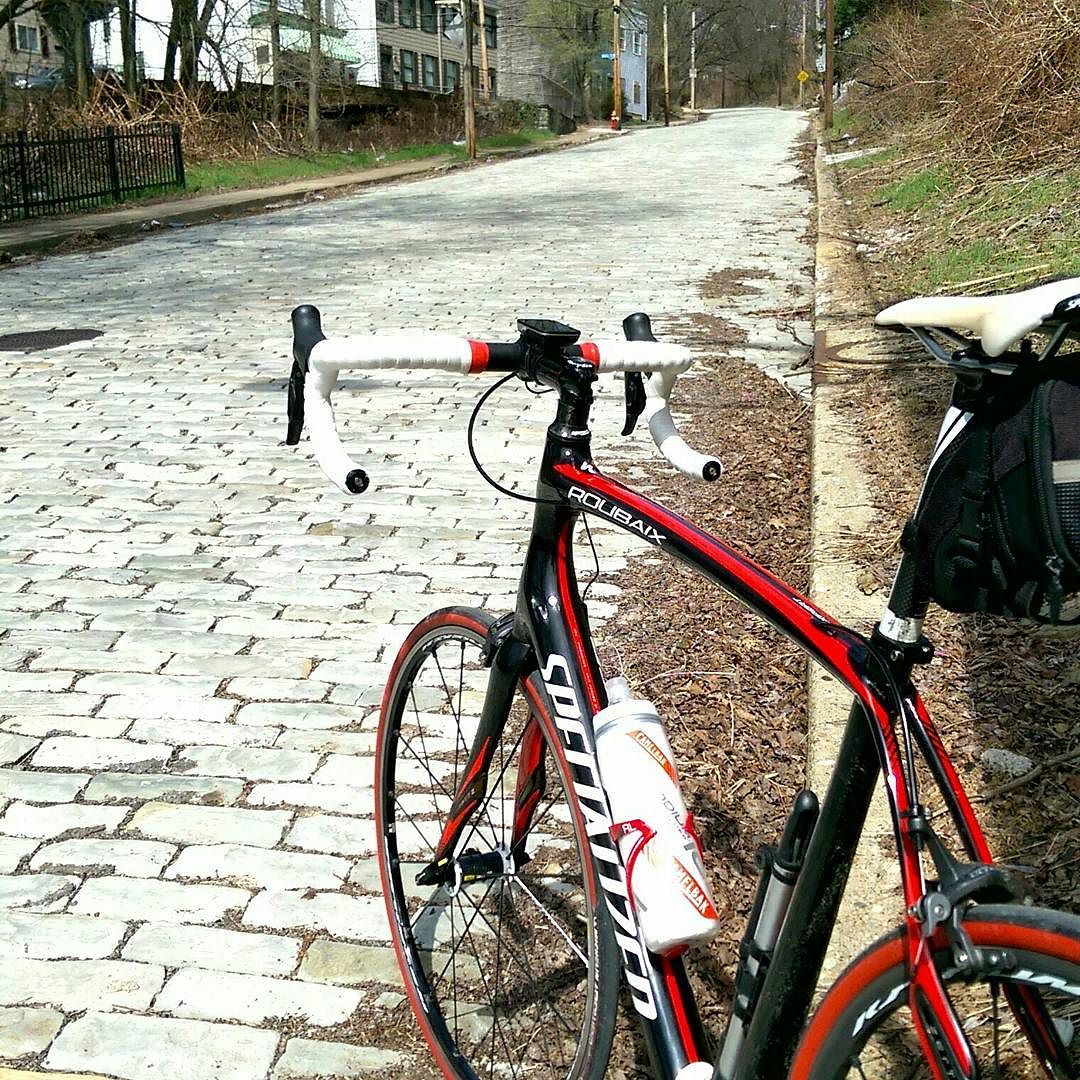
Spring is for cobbled climbs
Neighborhood switchback
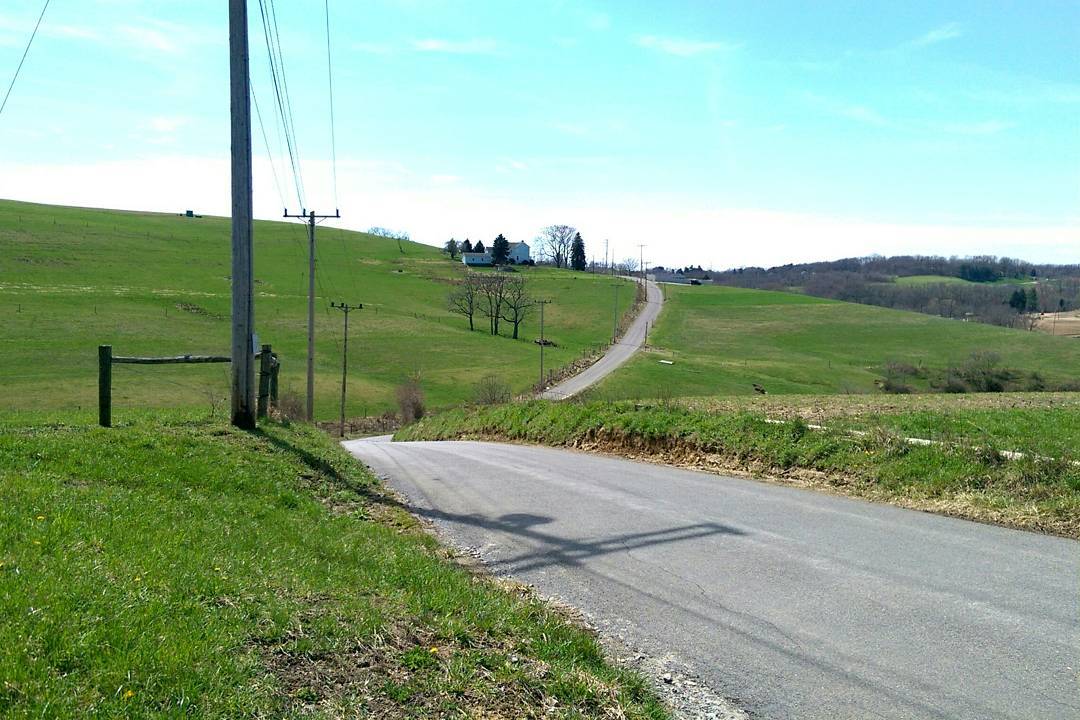
Rolling Pennsylvania farmland

Once you do motivate yourself to ride, there’s a certain amount of “training stress” that is necessary for building fitness, and that training stress is really good… until it isn’t. Working too hard too soon, without proper recovery time, leaves one with heavy legs, dreading heading out, intimidated by the traffic and so many hills to climb. There’s no real good way to tell when you’ve crossed that line from good stress to bad, but with repeated experience one learns to carefully monitor one’s desire to ride.

That was pretty much how March went for me. Although the Pittsburgh Randonneurs held a 100k and 200k in March and another 200k in early April, I skipped them all. They were earlier in the year than usual, which ensured that I was nowhere near trained up enough to succeed, and the early date also meant that the weather was near freezing. Not the kind of ride I’d enjoy.

Three good things did happen last month, tho. First, I got to play around with my new Garmin Edge 820 bike computer and get it all settled, including the frustratingly finicky Shimano Di2 integration; a full review of the unit will come after a little more road testing. I also picked up a Tag-o-Rama tag down in Turtle Creek, and set my new one in Garfield.

Finally, I learned of another alternate route up to Squirrel Hill (home) from the Eliza Furnace trailhead. Unlike the other two routes, which are kinda hilly, the new one is *obscenely* hilly, taking a couple switchbacks up a steep hill from Greenfield to Bigelow Street, which itself is a very long, steep uphill drag (involving both bricks and Belgian block) to the top of Hazelwood. It’s a nice workout, if I am capable of taking it on after whatever ride leaves me at the end of the EFT.

Although April began with a late-season snowfall, winter couldn’t hang on forever, and the past week provided great riding weather. Since last Sunday’s always-inspiring Paris-Roubaix, I’ve matched my February achievement of riding six days out of the past seven, but logged 236 miles rather than February’s mere 166.

On the 9th, I undertook a 33-mile ride east to visit the sites of two of Allegheny County’s seven active underground coal mine fires, some of which have been burning for more than fifty or sixty years!

The 10th I followed the route of a local club ride north for my first 50-mile ride in seven and a half months. The wind made it extra difficult, and my lack of training (and lack of acclimatization to the sun) produced a mild sunburn on my arms. It hasn’t taken long for my “distinctive markings” to return!

The 11th was a flat 30-mile recovery ride down the GAP bike path.

The 12th I went short (20 miles), but packed several really steep climbs to (further) stress the legs.

That was followed by my one rest day on the 13th.

With beautiful weather scheduled for Friday the 14th, I opted for a long 100k ride down Bunola Road to Monongahela, which wound up being 72 miles when bridge repairs necessitated a surprisingly pleasant and scenic detour up Raccoon Run and down Church Hollow. That capped my first 200-mile week in—believe it or not—nearly two years (since June 2015)!

Then on Saturday I got 30 more recovery-ish miles in my first group ride of the year with the Performance Bike crew. Hopefully I’ll get out one of these Tuesday nights for a spirited ride with the Team Decaf group.

But before I do that, I could use a day or two of recovery to consolidate my fitness gains and take the fatigue out of my legs. I figure it’d be nice to give the bike a rest too, since today is R2-Di2’s fourth birthday!

But the bottom line is that after a fallow March, the first half of April has featured a lot more miles in the saddle, with more expected. But happily, I can afford to take my time building up to peak fitness; with the Pittsburgh Randonneurs’ 200k rides already past, I don’t have any other significant events planned until mid-June.

Okay, I’ve put about 800 miles on the new bike, including two centuries and one epictacular 130-mile ride yesterday (more on that shortly); it’s time for the full-blown review.

When I set out on this (bike-buying) journey last fall, I knew it would be difficult to find a bike that would live up to my experience with my old steed, the Plastic Bullet. It served me very well, and I put 22,000 miles on it. So the bar was already set very high for the new bike.

For that reason, and because I wound up buying the exact same model, I won’t say that the R2 is a radical improvement. The geometry is almost identical, and even the curb weight is the nearly same as the old bike (the 2.5-ounce difference being about the weight of $3 in quarters).

That might sound underwhelming, but for me, finding a bike that can live up to the legacy of the Plastic Bullet (PB) is a really awesome thing. And I’m doubly appreciative of that, given the large spectrum of poorly-suited bikes that I test-rode! So despite it not being a quantum improvement, I’m absolutely and unreservedly delighted with the R2.

Although I make it sound like it’s just the same as my old bike, it’s really not. Aside from being sleek, shiny, and new, it’s no less than seven model years newer, with all the improvements and refinements that implies. I really think it rides noticeably better than the PB.

One change is that Specialized has tuned the bike a lot by altering the tube shapes. The beefier chain stays make the drive train stiffer, the thinner seat stays are more flexible to ease road feel, and the head tube (which is disproportionately large in my 61cm size) is less ugly/noticeable than before because the tubes arc and gracefully ease together where they join.

They also flattened the top tube like a squashed cylinder. That might not sound important, but it’s an unexpected convenience when stopped, when I (like many riders) will sit on the top tube. However, the lesser top tube height makes it a more difficult place to affix a name decal!

The handlebars are likewise flattened on top, providing a more ergonomic place for one’s hands. And of course the Roubaix’s classic polymer “Zertz” vibration-dampening inserts improved over the years, as well.

One of the more noticeable differences is that the R2 uses internal cable routing. That gives the bike a cleaner, refined look, but sometimes confuses me, because when I used to work on the PB on a repair stand, I’d stop a rotating rear wheel by reaching up to the top tube and yanking on the exposed brake cable that ran alongside it; no exposed cables on the R2!

A major difference that worried me initially was the move from a triple chainring to a compact double, and the consequent loss of top- and bottom-end gears. Of course, I never think about needing either an easier or harder gear during regular daily riding, but I have noticed it on hilly rides, where my old triple gave me both easier gears for steep climbs and higher top-end gears for faster descents. So far that hasn’t been a show-stopper for me, but we’ll just have to see how it goes. I expect mountainous rides will be more challenging than they used to be.

I was also concerned about the shifting reliability of the compact double (they tend to be balky because of the large difference in size between the large and small chainrings), but that has been admirably handled by the electronic brain drivetrain.

Which brings up the biggest, most obvious difference with the new bike: the Di2 electronic shifting, which I’ve pretty thoroughly described in a previous post. I can’t say it has been 100 percent flawless, but it’s definitely close (much closer than old-school mechanical shifters), and in the long run I’ll be very happy that I spent the extra money.

I recently toggled its software flag for multi-shift, which lets me swap two or three gears with one long button click. That makes it a lot easier to navigate urban streets, with all the stopping and starting you have to do in town, and has perfectly addressed the only complaint I had about my bike’s electronic brain. I’m only 60 days in, but Di2 has been a daily delight.

And there’s always the cool factor of the sound of electric servo motors moving the derailleurs into a new position. During my first group ride on the new bike, after one front chainring shift my buddy Joe called up to me from behind, “Dude… Are you a robot???”

Damned right! I’m a macheen!

So while you might not have noticed much enthusiasm in my comments to date, I’m absolutely delighted with the new bike. I went into the process with extremely high requirements, and R2-Di2 has surpassed even those expectations. I was looking for the best bike on the planet, and I’m very happy to say that I think I found it.

Ride on! Right, R2?

(Photo essay still forthcoming…)

Last fall, when I kicked off my search for a new bike, it was clear what I wanted: something just like my old bike, but better. The “Plastic Bullet”—a 2006 Specialized Roubaix Expert—had served me very well over the years, and I had nothing to complain about, save that it was showing the signs of age. Because of that, the new version of the Roubaix was at the top of my list when I started thinking about a new bike.

However, a lot has changed since 2006. There are a lot more bikes out there, and I didn’t want to stick with the Roubaix if there was something better to be had. So I decided to shop around and ride a bunch of bikes, exploring new technologies like disc brakes, electronic shifting, SRAM shifters, and so forth.

I tried everything out and enjoyed the process. I test-rode eight bikes, with a collective price tag of $32,300. I learned that I hate disc brakes, SRAM shifters, FSA components, integrated seatposts, and pretty much all bikes manufactured by Trek. On the other hand, I really liked Shimano’s electronic shifting, the Cervelo R5, and Giant Defy Advanced.

Roubaix

But above all, I learned that the Roubaix still seems to be the best all-around bike for me. It fits me and my style of riding well, does a great job absorbing road vibration, and strikes a good balance between ride-all-day comfort and ride-all-out performance.

To make a final decision, I had my LBS bring in a Roubaix that was nearly identical to the one I was looking at. After test riding it, I went home pretty well convinced that I’d be buying the exact same damned bike I bought back in 2006: a Specialized Roubaix Expert. I’d still have to special-order it though, because dealers simply don’t stock bikes my size.

An hour after that test ride, I received an email from the shop, indicating that the following week Specialized would be offering a manufacturer’s discount on that bike: a 20 percent price cut, or a $1,000 savings! Needless to say, I jumped at that. A long two weeks later, I took delivery.

So how is the new bike different from the Plastic Bullet? Aside from being newer, there are really only two significant ways.

One is the Shimano Di2 electronic shifting. I’m pretty excited about that, but I don’t need to say too much about it here, having already written about it in one of my test ride roundups back in September.

The other is that while both bikes are primarily clear-coat over carbon fiber, the new bike has red and white highlights (ironically, those are my high school colors), rather than blue and silver. So the blue tires are gone, and I’ll have some extra work coordinating accessories to match the new color scheme!

Which brings me to the real question: what to name it! This is also a little two-part story.

First, it’s my second Roubaix. To honor that, let’s call it Roubaix-2, or just “R2”.

Second, its most interesting feature is the electronic shifting: Shimano’s “Digital Integrated Intelligence” or Di2.

Put those together and you get the new bike’s moniker. Allow me to introduce you to R2-Di2! The reference to the iconic Star Wars robot is intentional, and appropriate for a bike with electronic shifting. It even makes cool robot noises as the servos shift the derailleurs to change gears!

Having only received it Tuesday, I haven’t got much to say about its riding characteristics just yet. I’ve still got to get it properly fitted and add a bunch of accessories to it before I share any pictures. So it’ll be a few weeks before I have a lot to share, but be patient; those’ll all come in due time.

Of course, saying hello to R2 means saying goodbye to “R1”: the Plastic Bullet. After seven years and 22,000 miles—including seven Pan-Pass Challenges and dozens of century rides—we’ve unrolled an awful lot of road together. It’ll still see the tarmac from time to time—on rainy days or city errands where I don’t want to break out the new bike.

But as of today, she’s second saddle. It’s time to start making a new history of travel adventures with the R2. Stay tuned!

It’s been a couple weeks, but I figured I should capture some notes from my first weekend of shopping for a new bike and doing test rides. Maybe this will be useful to you, maybe not.

Cervelo R5
Trek Madone 5.9
Trek Domaine 6.2
Giant Defy Advanced 1

On the process:

As the buyer, you’re in the driver’s seat. Take your time and check out everything the marketplace has to offer. Put the new innovations to the test. Ride a lot of bikes from all over the spectrum—even stuff you have no intention of buying—and have fun doing it. There’s a lot of good bikes on the market and it can be hard to choose between them, but in the end, something will speak to you.

The one thing to be careful about on test rides: remember that you’re evaluating the bike, not the fit or the gearing or the saddle or the derailleur adjustment or the wheels, because all those things can (and will) be changed. So what’s left? A little of this and that: road feel, frame fit and finish, handlebars and stem, weight…

On the SRAM gruppo:

SRAM wasn’t a player when I bought my last bike, and everyone crows about how great their gruppo is, so one of my first goals was to put it to the test.

What I found didn’t impress me. Their stuff’s light, but I think it’s poorly designed. My main complaints revolve around how their shift levers work: push halfway and you shift into a harder gear; push further and you shift into an easier gear; push farther still and you shift into a second or even a third easier gear. Great idea, right?

Wrong. First, when I jumped multiple gears I found it hard to calibrate whether I was downshifting two or three cogs. That can be annoying when you’re searching for just the right gear ratio.

Much worse things happen if you are on a steep ascent and go to downshift but only manage half a throw, which actually causes you to upshift into a harder gear! And if you already happen to be in the largest cog (easiest gear) and try to downshiftpast that, SRAM only blocks the far throw of the lever; it’s perfectly happy to accept half a throw, which again causes you to upshift: exactly the opposite of what the user intended. And that’s my definition of “bad design”.

Another thing I’m used to doing with my Shimano setup is shifting both front and rear simultaneously. By upshifting one while downshifting the other, I am able to make a smaller jump between gear ratios than if I just shifted the front chainring. On Shimano it’s easy, because you can throw matching levers; but on SRAM, it’s confusing, because you have to remember throw one lever halfway and the other one all the way.

So even though a lot of people juice over SRAM’s gruppo, I found a lot to dislike about it. Combine that with SRAM brakes’ weaker stopping power, and I’ve pretty much ruled them out right from the start.

On Shimano’s Ultegra electronic gruppo:

Another thing I wanted to try out was Shimano’s brand-new enthusiast-level electronic shifting. I’m not a huge fan of technology for its own sake, especially when you have to pay a big premium for it. On the other hand, a lot of people have been pleasantly surprised by the electronic Dura-Ace components, so I figured I’d ride these for myself, even if I was unlikely to spend money to have battery-powered servos to do my shifting for me.

The bottom line is that it’s just as slick as promised. The shifting was quick, smooth, effortless, and intuitive. It was nice… but I had expected it to be nice.

What I hadn’t expected were some of the implications. Because the electronic shifter cable isn’t under tension like mechanical cables, there’s no risk of a shifter cable ever snapping, which has happened to me two or three times on long rides. And since it’s not under tension, a new shifter cable doesn’t stretch, so there’s no need to go back to the bike shop to have derailleur adjustments done after a tune-up.

Not that you’d ever have to anyways, because the electronic shifters automatically adjust to keep the chain centered on the cogs. That means you’ll never have chainskip or balky shifts or need any adjustment of your drivetrain. Even if you do the most ridiculous crosschaining, the system adjusts the derailleurs and chainline to avoid the loud complaints that a mechanical setup would experience.

In other words, you wind up with a completely reliable, nearly foolproof, and maintenance-free drivetrain that you don’t have to think about at all. That has nearly sold me on Shimano’s Ui-2 gruppo.

The only things holding me back? It’s heavier than a mechanical gruppo. It’s a hell of a lot more expensive. And I have questions about its vulnerability in a crash scenario.

Definitely worth looking into if you’re in the market.

On Trek’s Domaine:

Another thing I wanted to try was the Trek Domaine. Trek is known for making Lance Armstrong’s bikes, but this brand new model is their first foray into the endurance bike market, which expects a fast bike with a longer wheelbase and more upright riding position.

Now, I’m biased against Trek. I’m usually not a fan of the favorite, whether it’s Lance Armstrong or Trek as the 300-pound gorilla in the mass-production bike market. But I wanted to give them the benefit of the doubt and ride this bike, since it ought to be a worthy entry into a fairly specific market.

It was also hard to get over Trek’s strident enforcement of how the name should be pronounced: doh-MAH-knee. As a designer, if you have to browbeat the user on something as basic as what your product is called, you’re probably doing it wrong.

I actually rode two Trek bikes—the other a Madone—and on both of them the chainstays flared out so wide that I found my heel kicking them on every pedal revolution. Both bikes were surprisingly heavy, too. The Doh-MAH-knee, despite being a comfort bike, did nothing to smooth the ride over rough pavement; it transmitted every shock, bump, and vibration from the road straight into the rider’s body.

I rode the Doh-mah-knee in the hopes that this new model would show me something that would overcome my natural aversion to Trek as a household name. While their bikes were okay, there was nothing outstanding about them that would lead me to choose them over more established and better performing endurance bikes.

The only thing that almost impressed me was Trek’s “Project One”, which basically allows you to choose what components your bike comes with. That’s a huge benefit over most bike companies, whose models only come in one or two configurations. But even Project One only lets you select from a very tiny spectrum of approved alternatives, so their vaunted configurability is actually not much more than a nominal advantage.

So don’t expect to see me riding up on a Doh-MAH-knee any time soon.

Frequent topics